
1 Proper development during the prenatal period depends
- Slides: 8
� 1. Proper development during the prenatal period depends on the right nutrients. This responsibility falls on the mother. � 2. The major nutrients that a mother needs during pregnancy are: a. Protein b. Iron c. Calcium d. Folic Acid 3. Pregnant women need folic acid within the first 28 days to help prevent neural tube defects, such as spina bifida.
� There are two choices for feeding newborn infants: 1. breast-feeding 2. bottle-feeding � The protein in breast milk is more easily digested and absorbed than cow’s milk. � The mother’s breast milk provides many essential nutrients and anti-bodies which help protect the baby from infection. �A woman who is breast-feeding should eat the same kinds of foods recommended during pregnancy and should drink plenty of liquids. � After the first four to six months, the baby will be ready for “solid” food.
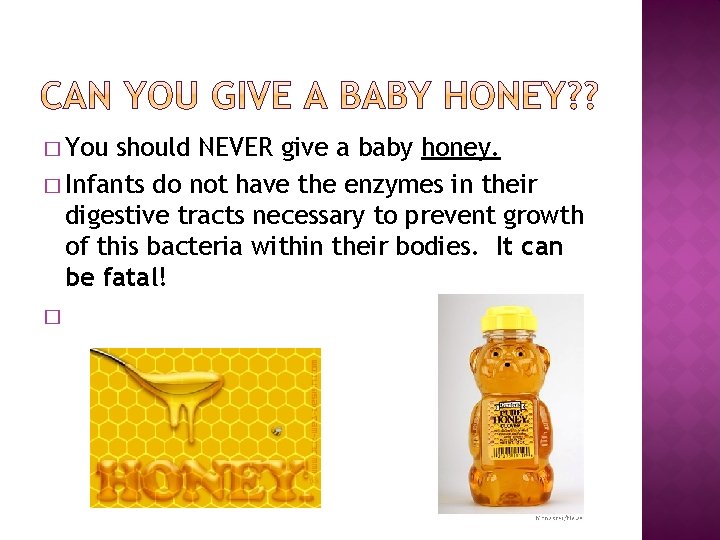
� You should NEVER give a baby honey. � Infants do not have the enzymes in their digestive tracts necessary to prevent growth of this bacteria within their bodies. It can be fatal! �
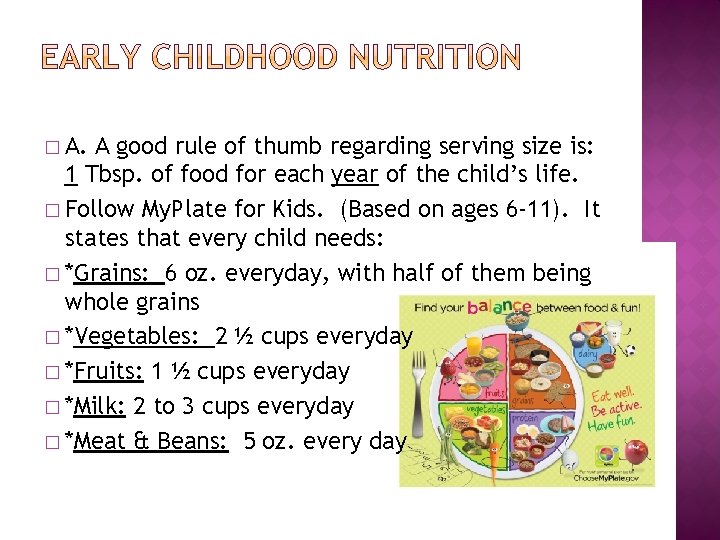
� A. A good rule of thumb regarding serving size is: 1 Tbsp. of food for each year of the child’s life. � Follow My. Plate for Kids. (Based on ages 6 -11). It states that every child needs: � *Grains: 6 oz. everyday, with half of them being whole grains � *Vegetables: 2 ½ cups everyday � *Fruits: 1 ½ cups everyday � *Milk: 2 to 3 cups everyday � *Meat & Beans: 5 oz. every day
� B. Children have very small stomachs that cannot hold very much food at one time. That’s why we give them snacks to help supply enough energy and nutrients. � Nutrient dense snacks could include: *juice, yogurt, milk, fruit, vegetables, cooked meat, unsweetened cereal, whole grain crackers � C. Make meals fun by serving foods that vary in color, texture, shape, size and temperature. � D. Eat meals with children and avoid using food as rewards or punishments. It gives children the wrong impression about the purpose of food.
� E. Don’t encourage children to become members of the “clean-your-plate society. ” Insisting that they finish all their food, even after their hunger is satisfied, can lead to overeating in later years. �(Eating habits and attitudes of children usually DO NOT change in adulthood. ) � F. When possible, let children choose what foods they want to eat for some meals. But encourage healthy choices.
� G. Teach children early how to prepare nutrient-rich foods by and for themselves. � H. Introduce foods one at a time, not all at once. � I. Children’s taste-buds are very sensitive. Avoid serving extremely spicy, sweet or sour foods. � J. Encourage kids to drink water instead of sugary drinks like juice mixes.