
1 Project Management Concepts 2015 Cengage Learning All
- Slides: 23
1 Project Management Concepts © 2015 Cengage Learning. All Rights Reserved. May not be scanned, copied or duplicated, or posted to a publicly accessible website, in whole or in part.
Chapter Concepts • Definition of a project and its attributes • Key constraints within which a project must be managed • Life cycle of a project • Definition of project management • Elements of the project management process • Identification and engagement of stakeholders • Implications of global project management • Project Management Institute • Benefits of project management © 2015 Cengage Learning. All Rights Reserved. May not be scanned, copied or duplicated, or posted to a publicly accessible website, in whole or in part.
Learning Outcomes • Define what a project is • List and discuss the attributes of a project • Explain what is meant by project objective • Define what is meant by project deliverable • Provide examples of projects • Discuss project constraints • Describe the phases of the project life cycle • Define and apply project management • Discuss the steps of the planning process • Identify the three elements of the executing process • Create a stakeholder register • Discuss stakeholder engagement • Discuss some implications of global project management • Discuss the Project Management Institute • List benefits of project management techniques © 2015 Cengage Learning. All Rights Reserved. May not be scanned, copied or duplicated, or posted to a publicly accessible website, in whole or in part.
Project Management Knowledge Areas from PMBOK® Guide Project Integration Management © 2015 Cengage Learning. All Rights Reserved. May not be scanned, copied or duplicated, or posted to a publicly accessible website, in whole or in part.
Project Attributes • • Clear objective Series of interdependent activities Various resources Specific time frame Unique, one-time endeavor Sponsor or customer Degree of uncertainty © 2015 Cengage Learning. All Rights Reserved. May not be scanned, copied or duplicated, or posted to a publicly accessible website, in whole or in part.
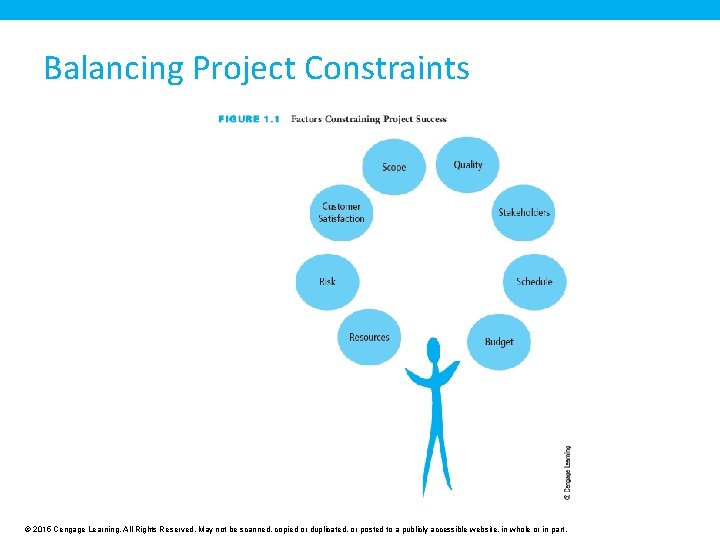
Balancing Project Constraints © 2015 Cengage Learning. All Rights Reserved. May not be scanned, copied or duplicated, or posted to a publicly accessible website, in whole or in part.
Project Manager Actions • Prevent, anticipate, overcome • Have good planning and communication • Be responsible © 2015 Cengage Learning. All Rights Reserved. May not be scanned, copied or duplicated, or posted to a publicly accessible website, in whole or in part.
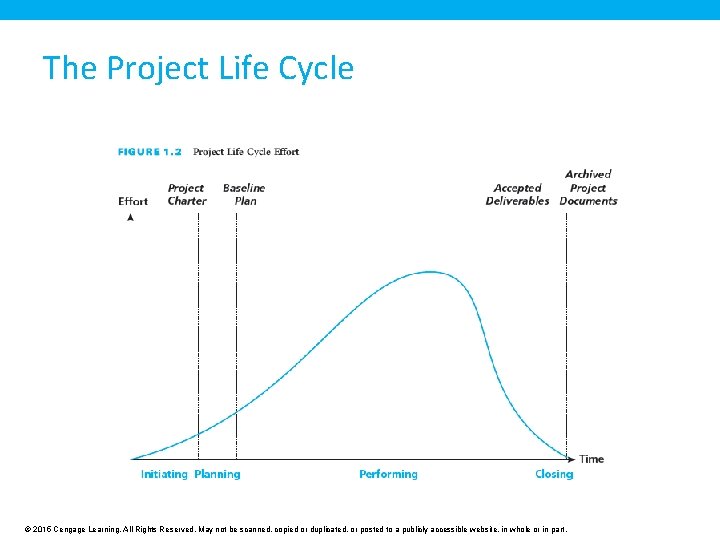
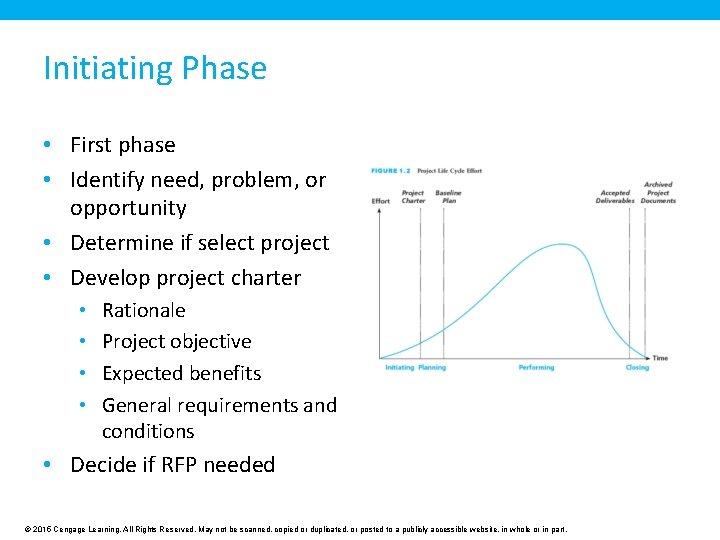
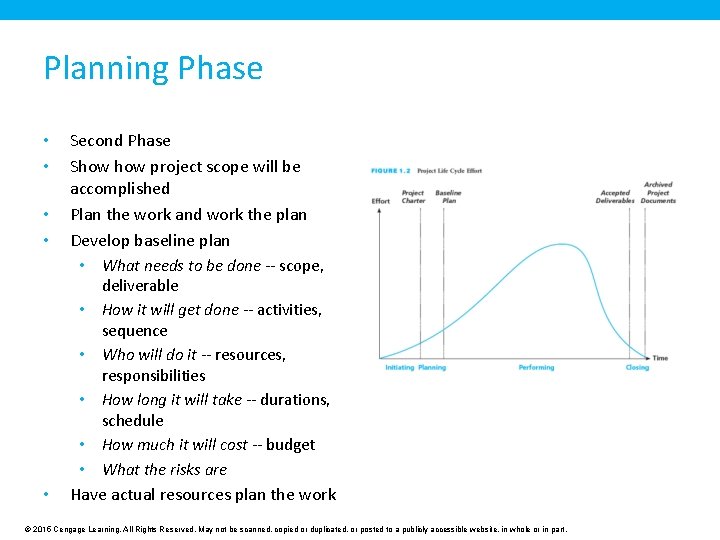
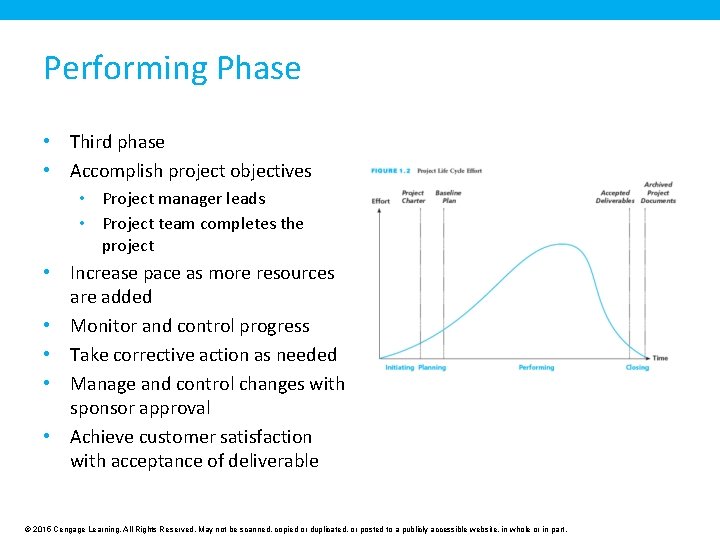
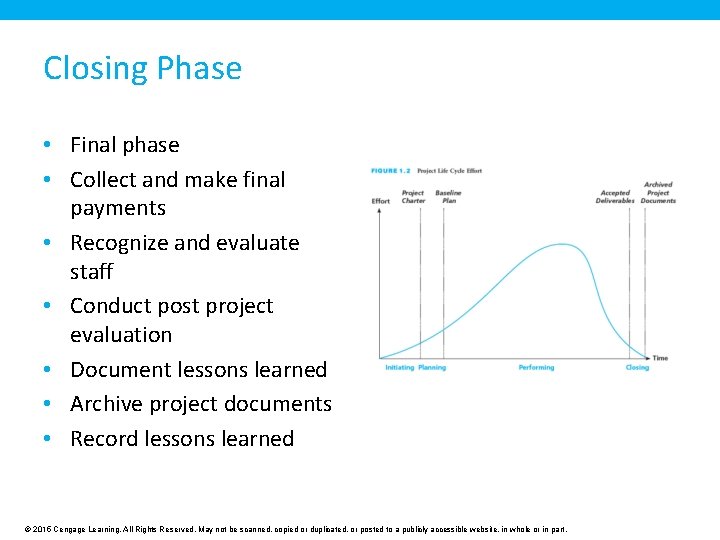
The Project Life Cycle © 2015 Cengage Learning. All Rights Reserved. May not be scanned, copied or duplicated, or posted to a publicly accessible website, in whole or in part.
Initiating Phase • First phase • Identify need, problem, or opportunity • Determine if select project • Develop project charter • • Rationale Project objective Expected benefits General requirements and conditions • Decide if RFP needed © 2015 Cengage Learning. All Rights Reserved. May not be scanned, copied or duplicated, or posted to a publicly accessible website, in whole or in part.
Planning Phase • • Second Phase Show project scope will be accomplished Plan the work and work the plan Develop baseline plan • What needs to be done -- scope, • • deliverable How it will get done -- activities, sequence Who will do it -- resources, responsibilities How long it will take -- durations, schedule How much it will cost -- budget What the risks are • • Have actual resources plan the work © 2015 Cengage Learning. All Rights Reserved. May not be scanned, copied or duplicated, or posted to a publicly accessible website, in whole or in part.
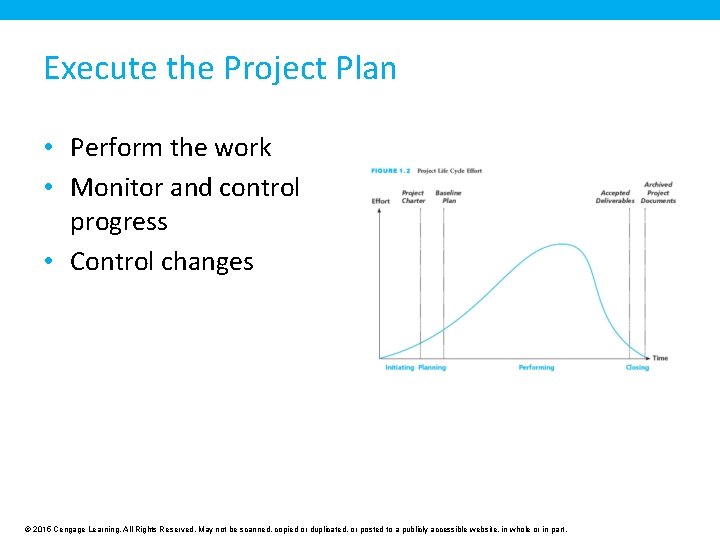
Performing Phase • Third phase • Accomplish project objectives • Project manager leads • Project team completes the project • Increase pace as more resources are added • Monitor and control progress • Take corrective action as needed • Manage and control changes with sponsor approval • Achieve customer satisfaction with acceptance of deliverable © 2015 Cengage Learning. All Rights Reserved. May not be scanned, copied or duplicated, or posted to a publicly accessible website, in whole or in part.
Closing Phase • Final phase • Collect and make final payments • Recognize and evaluate staff • Conduct post project evaluation • Document lessons learned • Archive project documents • Record lessons learned © 2015 Cengage Learning. All Rights Reserved. May not be scanned, copied or duplicated, or posted to a publicly accessible website, in whole or in part.
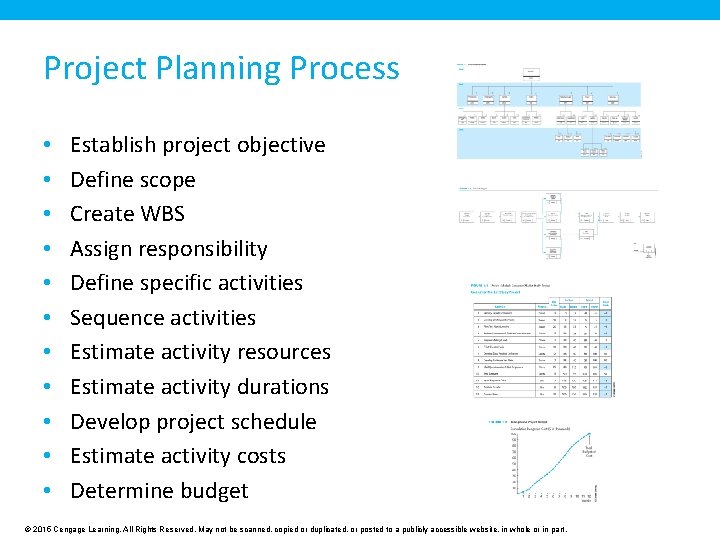
Project Planning Process • • • Establish project objective Define scope Create WBS Assign responsibility Define specific activities Sequence activities Estimate activity resources Estimate activity durations Develop project schedule Estimate activity costs Determine budget © 2015 Cengage Learning. All Rights Reserved. May not be scanned, copied or duplicated, or posted to a publicly accessible website, in whole or in part.
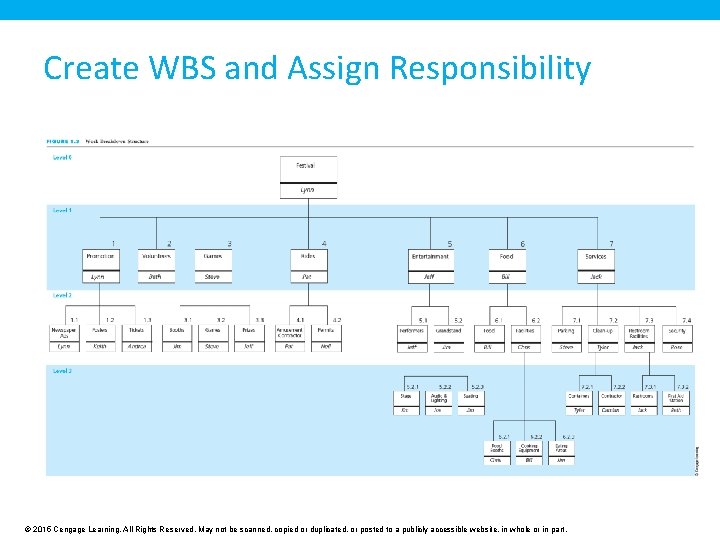
Create WBS and Assign Responsibility © 2015 Cengage Learning. All Rights Reserved. May not be scanned, copied or duplicated, or posted to a publicly accessible website, in whole or in part.
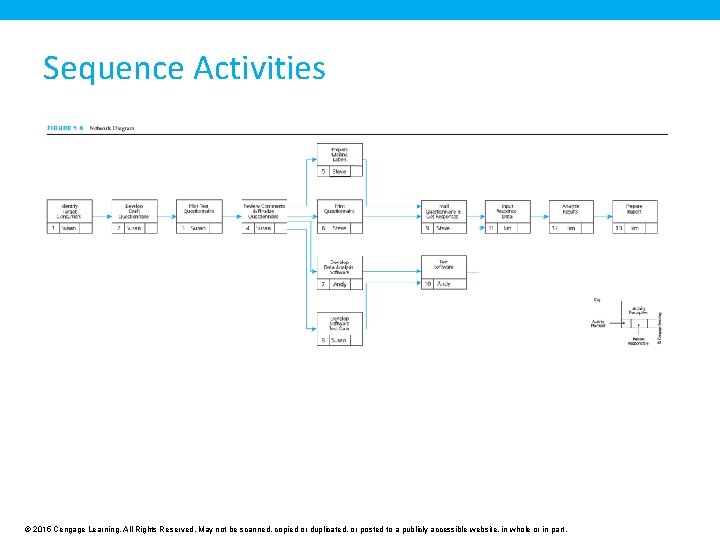
Sequence Activities © 2015 Cengage Learning. All Rights Reserved. May not be scanned, copied or duplicated, or posted to a publicly accessible website, in whole or in part.
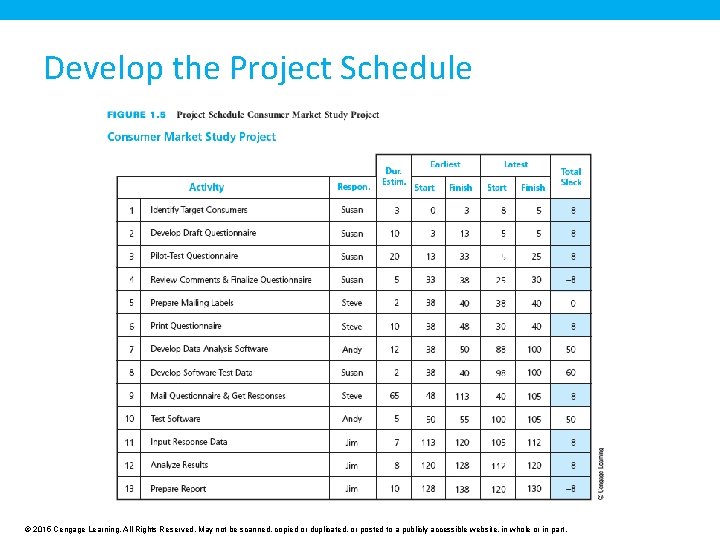
Develop the Project Schedule © 2015 Cengage Learning. All Rights Reserved. May not be scanned, copied or duplicated, or posted to a publicly accessible website, in whole or in part.
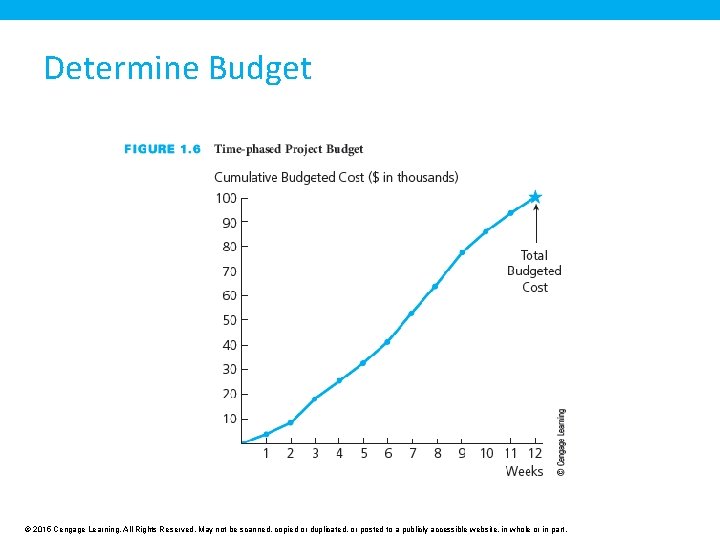
Determine Budget © 2015 Cengage Learning. All Rights Reserved. May not be scanned, copied or duplicated, or posted to a publicly accessible website, in whole or in part.
Execute the Project Plan • Perform the work • Monitor and control progress • Control changes © 2015 Cengage Learning. All Rights Reserved. May not be scanned, copied or duplicated, or posted to a publicly accessible website, in whole or in part.
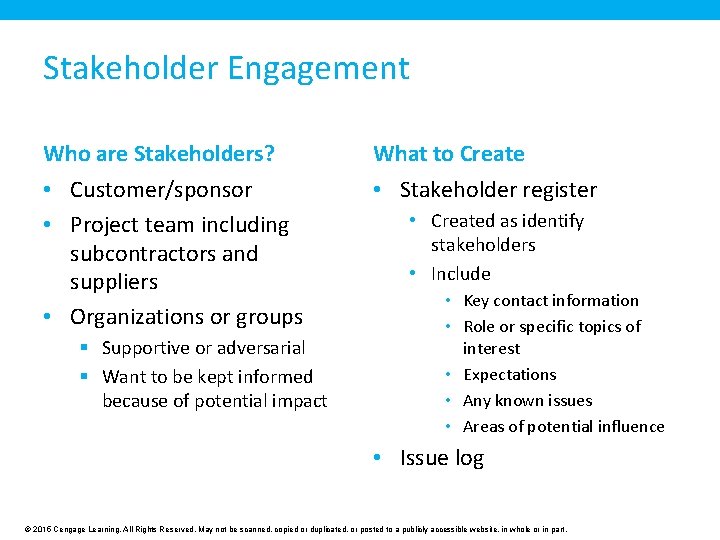
Stakeholder Engagement Who are Stakeholders? What to Create • Customer/sponsor • Project team including subcontractors and suppliers • Organizations or groups • Stakeholder register § Supportive or adversarial § Want to be kept informed because of potential impact • Created as identify stakeholders • Include • Key contact information • Role or specific topics of interest • Expectations • Any known issues • Areas of potential influence • Issue log © 2015 Cengage Learning. All Rights Reserved. May not be scanned, copied or duplicated, or posted to a publicly accessible website, in whole or in part.
Global Project Management Globalization Helpful Competencies • Adds a dimension of complexity • Changes project dynamics • Requires awareness of factors • Foreign language skills • Knowledge of • • • Cultural differences Currency Codes and regulations Business organization Political relations Workforce availability • Cultures • Geography • World history and contemporary events • International economics • Awareness of • Customs and etiquette • Geopolitical environment • Technology adoption and translation software © 2015 Cengage Learning. All Rights Reserved. May not be scanned, copied or duplicated, or posted to a publicly accessible website, in whole or in part.
Project Management Associations Project Management Institute Global Associations • Worldwide not-for-profit association of practitioners § ~500, 000 members in nearly 200 countries § ~270 chapters in >80 countries • >30 online communities for collaboration • PMBOK® Guide • PMI Code of Ethics and Professional Conduct • Certifications • www. pmi. org • Links available at www. cengagebrain. com © 2015 Cengage Learning. All Rights Reserved. May not be scanned, copied or duplicated, or posted to a publicly accessible website, in whole or in part.
Critical Success Factors • Planning and communication are critical to successful project management. They prevent problems from occurring or minimize their impact on the achievement of the project objective when they do occur. • Taking the time to develop a well thought-out plan before the start of the project is critical to the successful accomplishment of any project. • A project must have a clear objective of what is to be accomplished and defined in terms of end product or deliverable, schedule, and budget; and is agreed upon by the customer. • Involve the sponsor or customer as a partner in the successful outcome of the project through active participation during the project. • Achieving customer satisfaction requires ongoing communication with the customer to keep the customer informed and to determine whether expectations have changed. • The key to effective project control is measuring actual progress and comparing it to planned progress on a timely and regular basis and taking any needed corrective action immediately. • After the conclusion of a project, the project performance should be evaluated to learn what could be improved if a similar project were to be undertaken in the future. Feedback should be obtained from the sponsor or customer and the project team. • Learning and understanding the culture and customs of other project participants will demonstrate respect, help build trust, and aid in developing an effective project team; and it is critical for successful global project management. © 2015 Cengage Learning. All Rights Reserved. May not be scanned, copied or duplicated, or posted to a publicly accessible website, in whole or in part.
Summary • A project is an endeavor to accomplish a specific objective through a unique set of interrelated activities and the effective utilization of resources. • The successful accomplishment of the project objective could be constrained by many factors, including scope, quality, schedule, budget, resources, risks, customer satisfaction, and stakeholder support. • The project life cycle has four phases: initiating, planning, performing, and closing the project. • Project management is planning, organizing, coordinating, leading, and controlling resources to accomplish the project objective. The project management process involves two major functions: first establishing a plan and then executing that plan to accomplish the project objective. • Globalization changes the dynamics of a project and adds a layer of complexity that can adversely affect the project outcome if the project participants are not aware of what they can encounter regarding cultural differences and multinational economic transactions. • The Project Management Institute is a premier worldwide not-for-profit association for practitioners in the project management profession. • The ultimate benefit of implementing project management techniques is having a satisfied customer—whether you are the customer of your own project or a business (contractor) being paid by a customer to perform a project. © 2015 Cengage Learning. All Rights Reserved. May not be scanned, copied or duplicated, or posted to a publicly accessible website, in whole or in part.