
1 Problem Solving and Decision Making Skills Achala
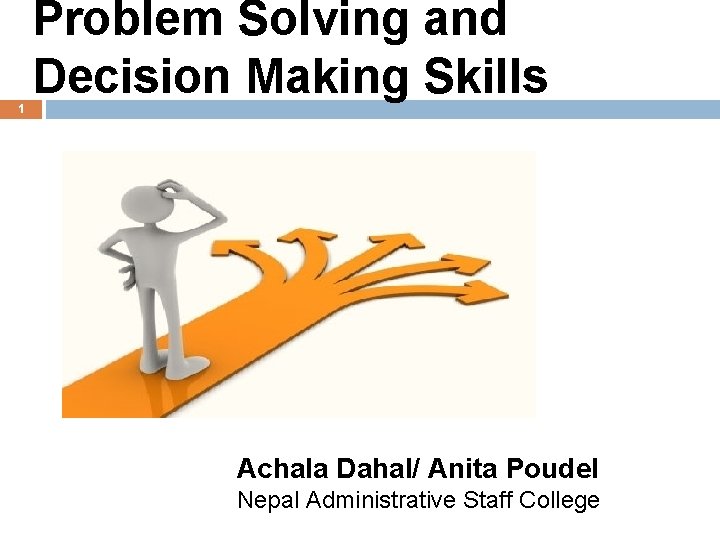
1 Problem Solving and Decision Making Skills Achala Dahal/ Anita Poudel Nepal Administrative Staff College
Session Outline 2 Meaning of Problem/Decision / Decision Making Styles and Types of Decision Making Rational decision making process Models of Decision making Traps in decision making
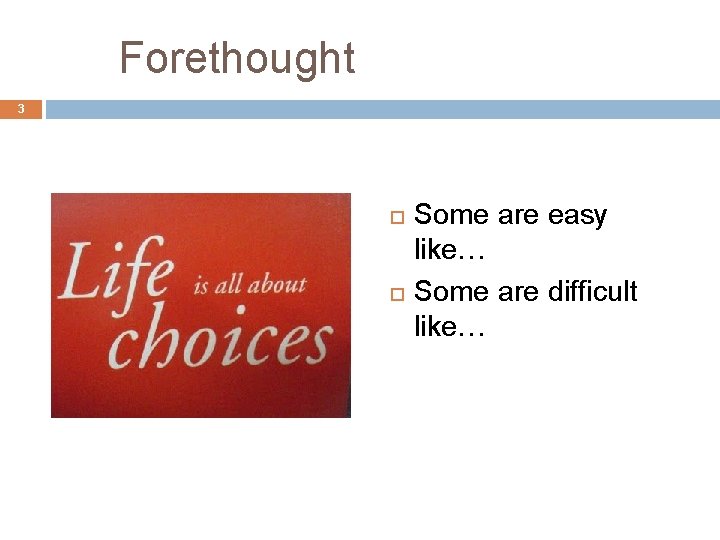
Forethought 3 Some are easy like… Some are difficult like…
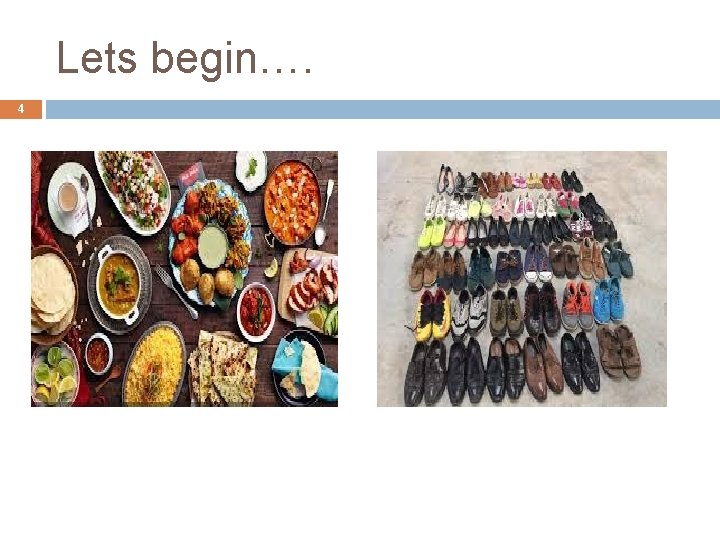
Lets begin…. 4

A Month of Mangsir 5

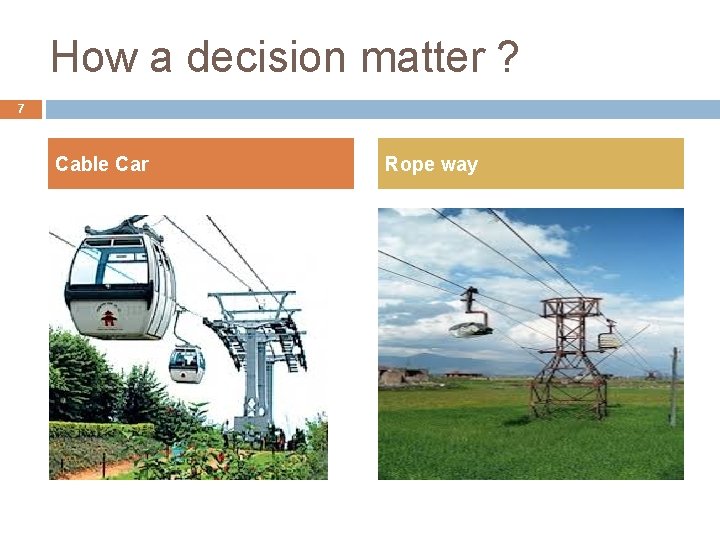
How a decision matter ? 7 Cable Car Rope way
Importance of Decision Making 8 A key role of an officer Whatever an officer does, he does through making decisions No organisations can be run without making decisions Carries long-term implications. Organisations grow or fail as a result of decisions made by its decision makers. The wellbeing of an organisation depends almost entirely on the quality of its decisions.
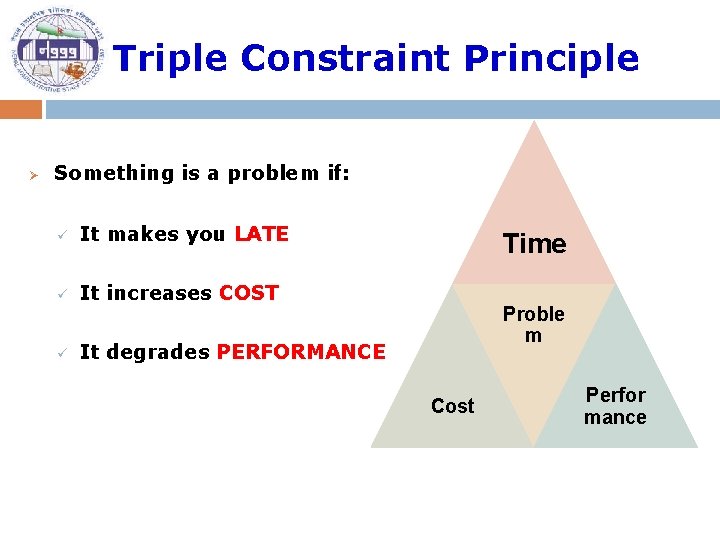
Triple Constraint Principle Ø Something is a problem if: ü It makes you LATE ü It increases COST ü It degrades PERFORMANCE Time Proble m Cost Perfor mance
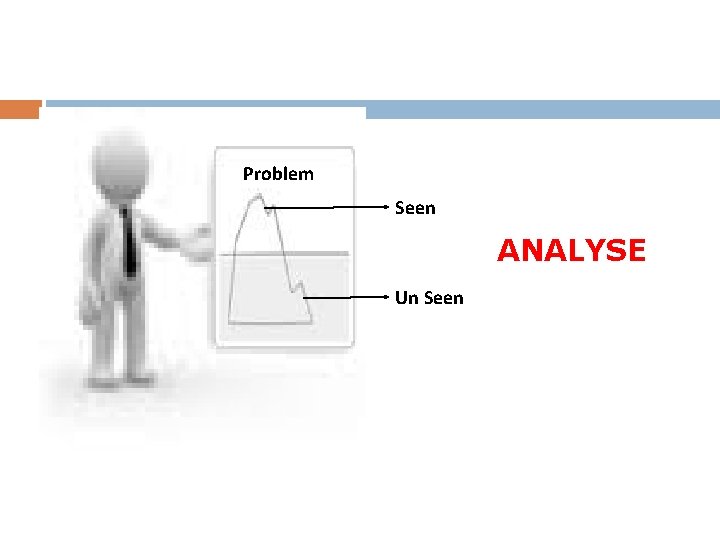
Problem Seen ANALYSE Un Seen
Problem 11 “In a day, when you don’t come across any problems- you can be sure that you are
Decision 12 “A Decision is a Judgment. ” - Peter Drucker A decision is a Choice between or among various alternatives. -
Decision making Combination of mental, physical and behavioral processes related to: �Rationale �Resources �Results �Resolution
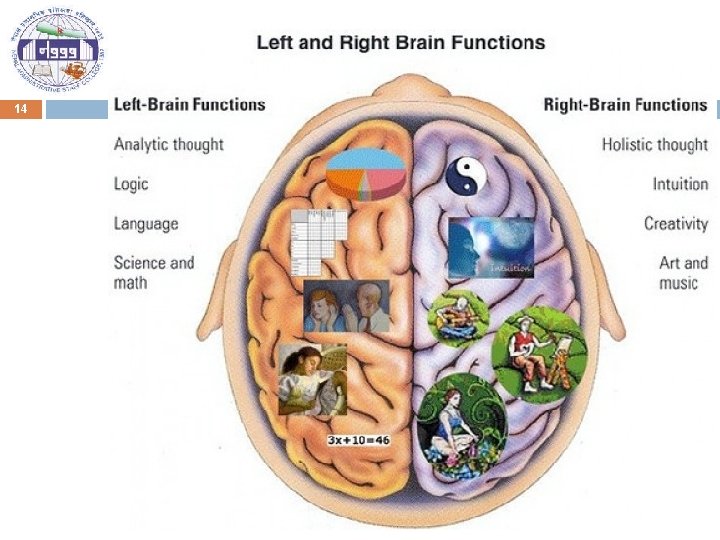
14
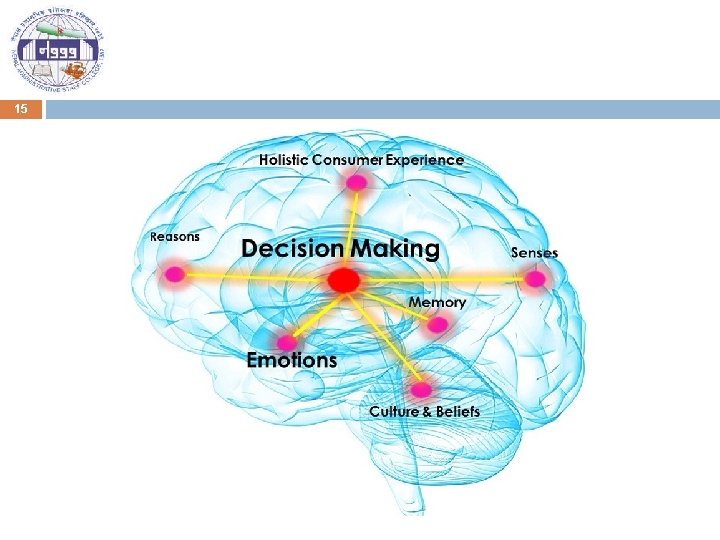
15
Decision Making Decision making is a cognitive process leading to the selection of a course of action among the alternatives, and enabling to act for producing desired results. Decision making is a series of logical steps to reach at the agreement for moving forward. Systematic response to a problem situation or forward moving through intelligence, understanding, analysis, rational logical selection, preparedness for implementation.
17 Krishna Seekh - Impact of decision making in our lives. mp 4 Summary ?
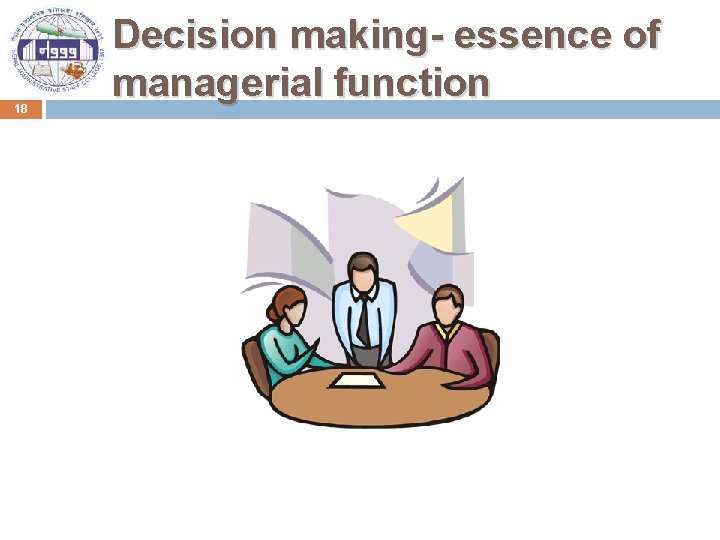
18 Decision making- essence of managerial function
Decisions in Planning What are the organization’s long term goals? What strategies best achieve these objectives? What should the organization’s short term objectives be? How difficult should individual goals be?
Decisions in Organizing How many employees should I have report directly to me? How much centralization should there be in the organization? How should jobs be designed? When should the organization implement a different structure?
Decisions in Leading How do I handle employees who appear to be low in motivation? What is the most effective leadership style in a given situation? How will a specific change affect worker productivity? When is the right time to stimulate conflict?
Decisions in Controlling What activities in the organization need to be controlled? How should those activities be controlled? When is a performance deviation significant? What type of management information system should the organization have?
23
Factors Influencing Decision Making Cognitive and personal biases Emotional bias Skills and competencies Situational factors Instrumental factors Technological factors Cultural factors
25 Exercise – Assessment – How good are your decision making.
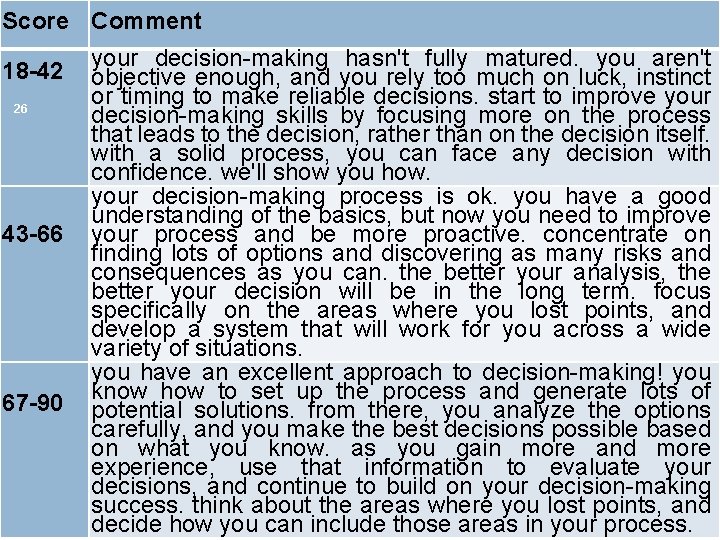
Score Comment 18 -42 26 43 -66 67 -90 your decision-making hasn't fully matured. you aren't objective enough, and you rely too much on luck, instinct or timing to make reliable decisions. start to improve your decision-making skills by focusing more on the process that leads to the decision, rather than on the decision itself. with a solid process, you can face any decision with confidence. we'll show you how. your decision-making process is ok. you have a good understanding of the basics, but now you need to improve your process and be more proactive. concentrate on finding lots of options and discovering as many risks and consequences as you can. the better your analysis, the better your decision will be in the long term. focus specifically on the areas where you lost points, and develop a system that will work for you across a wide variety of situations. you have an excellent approach to decision-making! you know how to set up the process and generate lots of potential solutions. from there, you analyze the options carefully, and you make the best decisions possible based on what you know. as you gain more and more experience, use that information to evaluate your decisions, and continue to build on your decision-making success. think about the areas where you lost points, and decide how you can include those areas in your process.
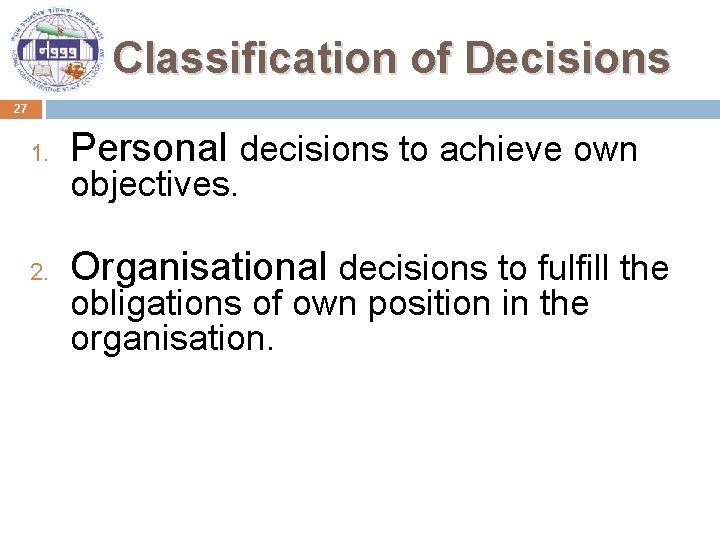
Classification of Decisions 27 1. Personal decisions to achieve own 2. Organisational decisions to fulfill the objectives. obligations of own position in the organisation.
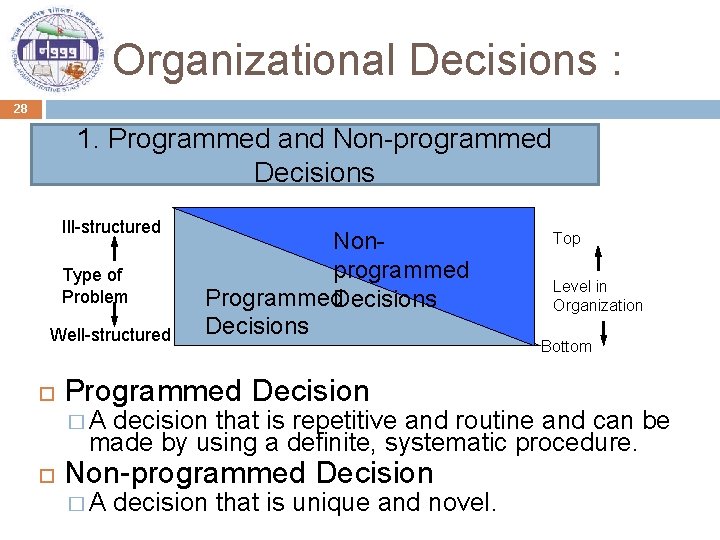
Organizational Decisions : 28 1. Programmed and Non-programmed Decisions Ill-structured Type of Problem Well-structured Nonprogrammed Programmed. Decisions Programmed Decision �A Top Level in Organization Bottom decision that is repetitive and routine and can be made by using a definite, systematic procedure. Non-programmed Decision �A decision that is unique and novel.
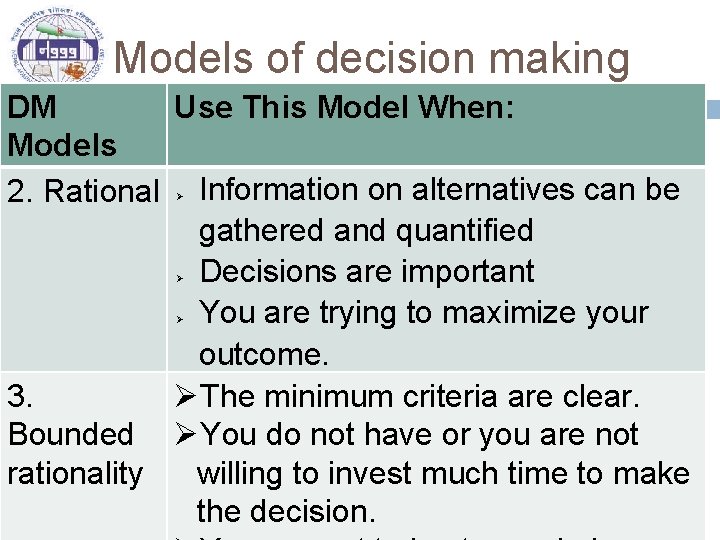
Models of decision making DM Use This Model When: Models 2. Rational Information on alternatives can be gathered and quantified Decisions are important You are trying to maximize your outcome. 3. ØThe minimum criteria are clear. Bounded ØYou do not have or you are not rationality willing to invest much time to make the decision. 29 Ø Ø Ø
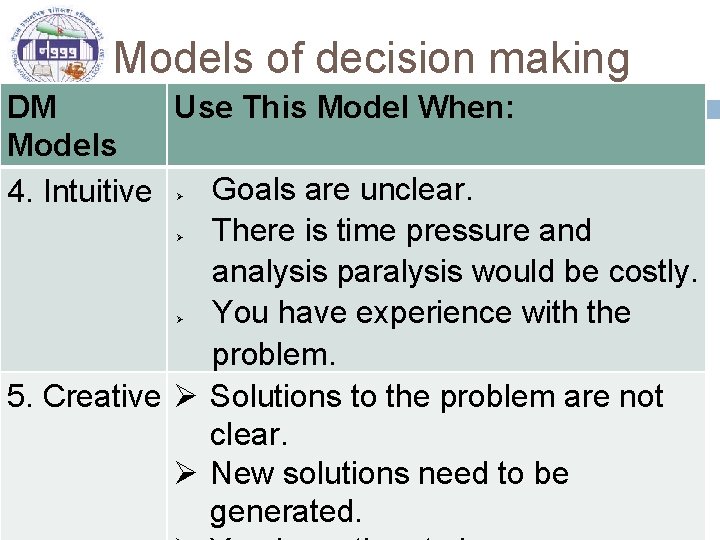
Models of decision making DM Use This Model When: Models Goals are unclear. 4. Intuitive There is time pressure and analysis paralysis would be costly. You have experience with the problem. 5. Creative Ø Solutions to the problem are not clear. Ø New solutions need to be generated. 30 Ø Ø Ø
Decision making tools 31 1. 2. 3. 4. 5. 6. 7. Problem Restatement technique SWOT analysis Pareto principle: 80% of unfocussed effort generates only 20% of results. The remaining 80% of results are achieved with only 20% of the effort Brainstorming Cause and effect Cost benefit analysis Six thinking Hat
32 Lets work on CASE STUDY
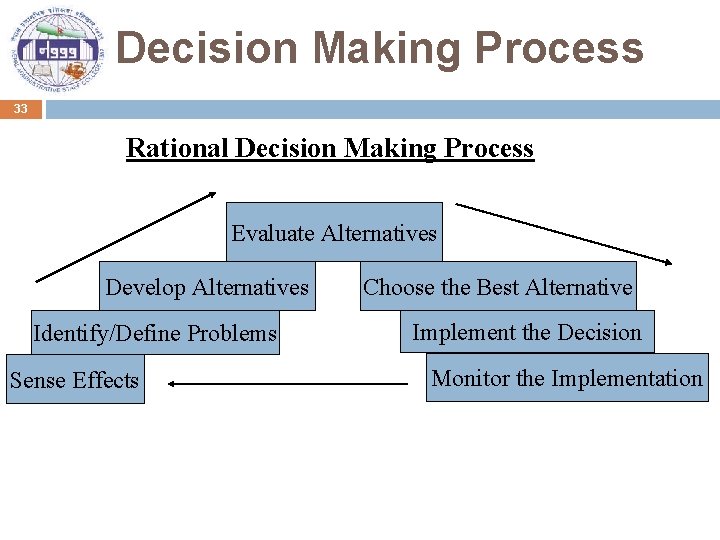
Decision Making Process 33 Rational Decision Making Process Evaluate Alternatives Develop Alternatives Identify/Define Problems Sense Effects Choose the Best Alternative Implement the Decision Monitor the Implementation
I Diagnose Problem/ Define the Objective 34 "A problem properly defined is a problem half solved. “ Define the problem Identify the decision objectives (what will happen when the problem has been solved) Identify the causes of problem To whom is it a problem? What kind of problem is it (attitude, understanding, competence, …)? Has this ever happened before? What is the potential magnitude of the
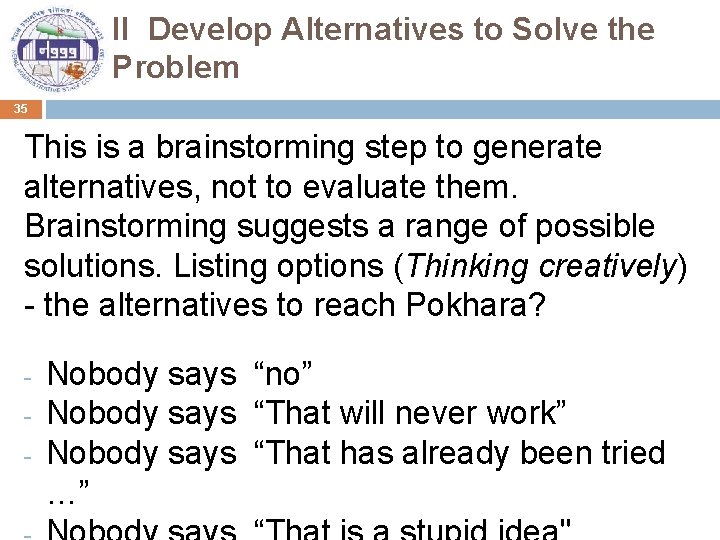
II Develop Alternatives to Solve the Problem 35 This is a brainstorming step to generate alternatives, not to evaluate them. Brainstorming suggests a range of possible solutions. Listing options (Thinking creatively) - the alternatives to reach Pokhara? - Nobody says “no” Nobody says “That will never work” Nobody says “That has already been tried …”
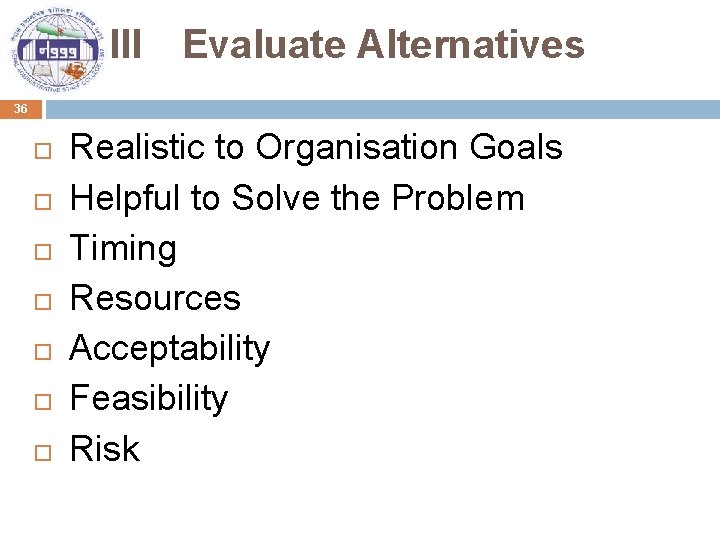
III Evaluate Alternatives 36 Realistic to Organisation Goals Helpful to Solve the Problem Timing Resources Acceptability Feasibility Risk
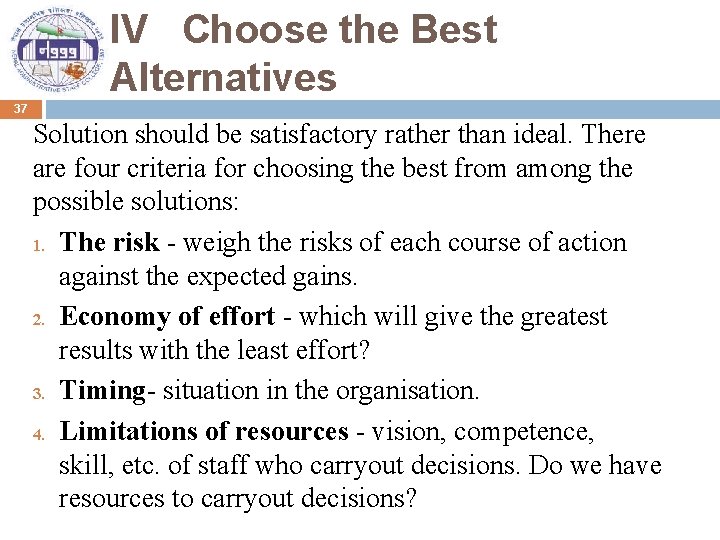
IV Choose the Best Alternatives 37 Solution should be satisfactory rather than ideal. There are four criteria for choosing the best from among the possible solutions: 1. The risk - weigh the risks of each course of action against the expected gains. 2. Economy of effort - which will give the greatest results with the least effort? 3. Timing- situation in the organisation. 4. Limitations of resources - vision, competence, skill, etc. of staff who carryout decisions. Do we have resources to carryout decisions?
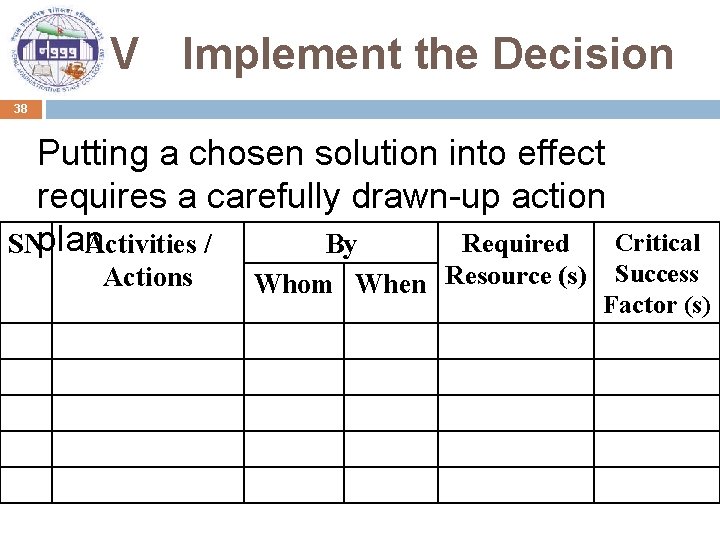
V Implement the Decision 38 Putting a chosen solution into effect requires a carefully drawn-up action Critical Required SNplan. Activities / By Actions Whom When Resource (s) Success Factor (s)
VI Monitor the Decision 39 Set dates for monitoring. Who will monitor? How and when? Is the solution effective? Are we still satisfied? Are there parts that need reworking? In the light of new data received, do we need to make any changes? Has there been any permanent improvement? Are we learning from experience? What new problems have we identified?
Making Real life Decision Makers must cope with: Inadequate information about the nature of 40 the problem and its possible solutions, The lack of resources to acquire more complete information, Distorted perceptions of the information available, The inability of the human memory to retain large amount of information, and The limits of their own intelligence to determine correctly which alternative is best. - Herbert Simon
Six Cs of Decision making 41 Construct: A clear picture of precisely what must be decided Compile: A list of requirements that must be met Collect: Information on alternatives that meet the requirements Compare: Alternatives that meet the requirements Consider: The “what might go wrong” factor with each alternative Commit: To a decision and follow through
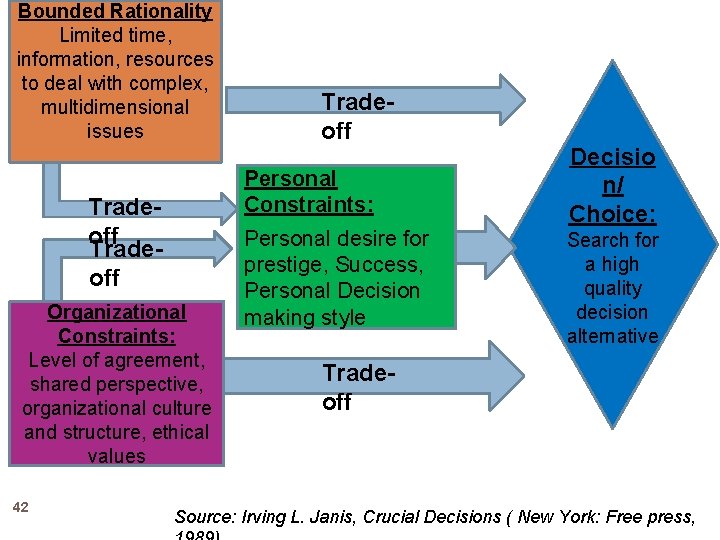
Bounded Rationality Limited time, information, resources to deal with complex, multidimensional issues Personal Constraints: Tradeoff Organizational Constraints: Level of agreement, shared perspective, organizational culture and structure, ethical values 42 Tradeoff Personal desire for prestige, Success, Personal Decision making style Decisio n/ Choice: Search for a high quality decision alternative Tradeoff Source: Irving L. Janis, Crucial Decisions ( New York: Free press,
Personal trap in decision making 43 Not willing to come out of comfort zone Fear and biasness in thinking and analysis Getting lost in minutia Seeking unanimous approval Willing to decide beyond authority
System trap in decision making 44 Too little, inaccurate or wrong information Overlook viable alternatives or waste time considering alternatives beyond realistic prospects Not following the six Cs Failure to clearly define the expected results Worst of all, failure to reach a decision
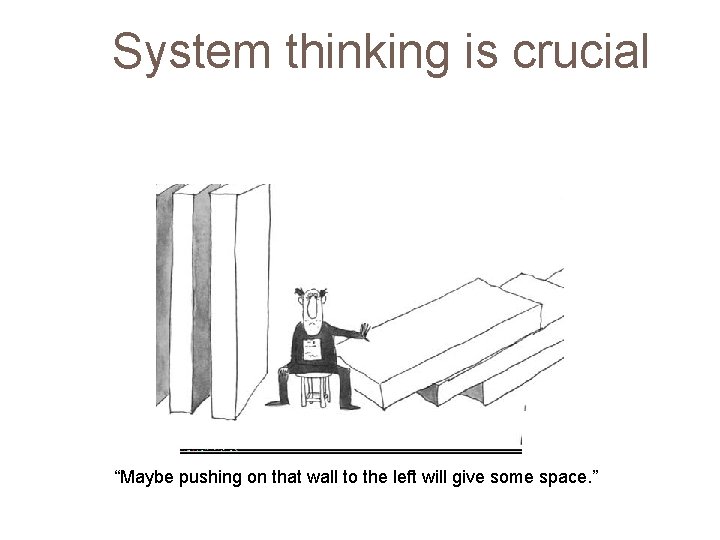
System thinking is crucial “Maybe pushing on that wall to the left will give some space. ” 45
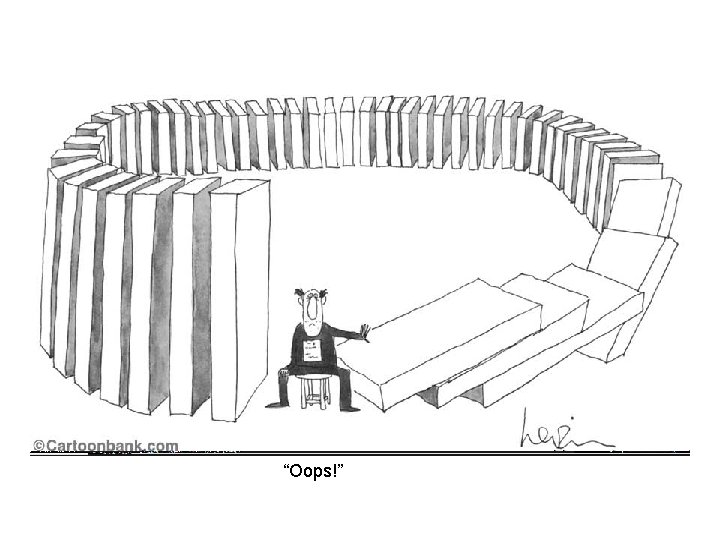
“Oops!” 46
Considerations Priority Ethics Standards Implementation Teams and Network Technicalities Indecisiveness and Decline Diversity Risk propensity
48
49 Lord Krishna introspects the basis on which we make our decisions. mp 4
50 “WE SELDOM HAVE TIME FOR THE IMPORTANT BECAUSE WE ARE WORKING ON THE IMMEDIATE AND THE IMMEDIATE IS SELDOM THE IMPORTANT” - Peter Drucker
51 “Think Laterally, and be creative. ”
- Slides: 51