
1 PRINCIPLES AND APPLICATIONS OF CLASSICAL CONDITIONING Chapter
- Slides: 46
1 PRINCIPLES AND APPLICATIONS OF CLASSICAL CONDITIONING Chapter 4
2
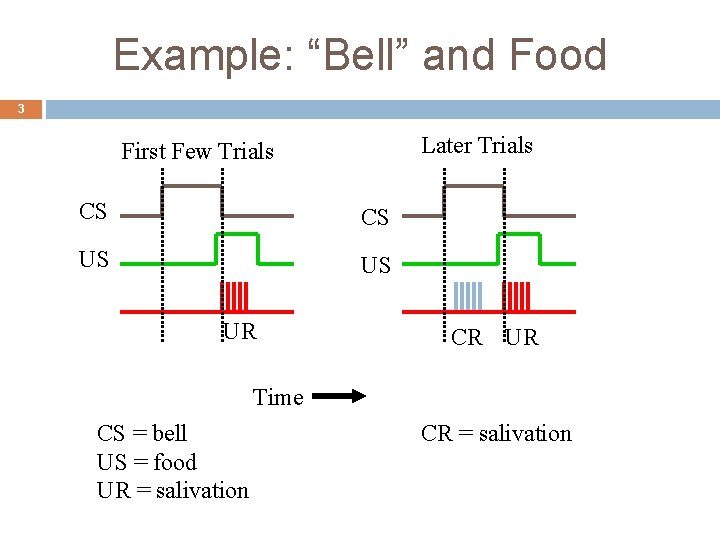
Example: “Bell” and Food 3 Later Trials First Few Trials CS CS US US UR CR UR Time CS = bell US = food UR = salivation CR = salivation
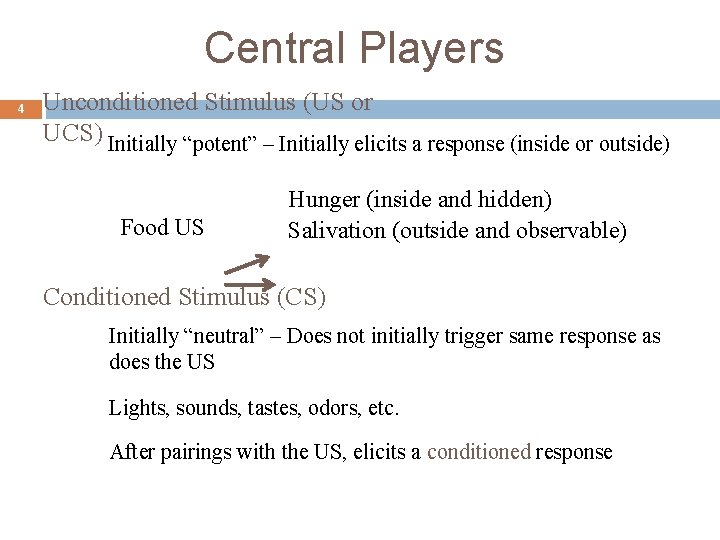
Central Players 4 Unconditioned Stimulus (US or UCS) Initially “potent” – Initially elicits a response (inside or outside) Food US Hunger (inside and hidden) Salivation (outside and observable) Conditioned Stimulus (CS) Initially “neutral” – Does not initially trigger same response as does the US Lights, sounds, tastes, odors, etc. After pairings with the US, elicits a conditioned response
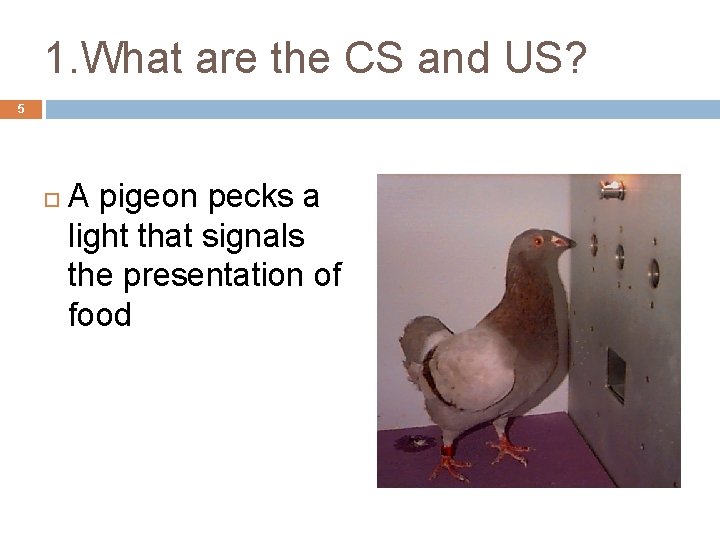
1. What are the CS and US? 5 A pigeon pecks a light that signals the presentation of food
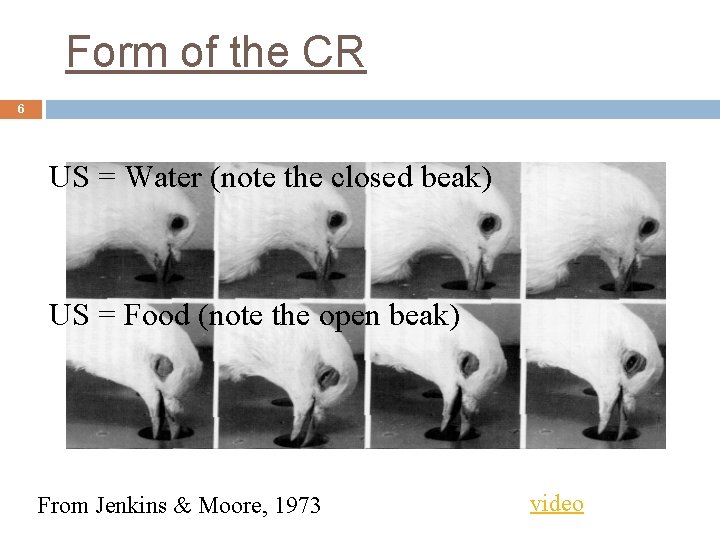
Form of the CR 6 US = Water (note the closed beak) US = Food (note the open beak) From Jenkins & Moore, 1973 video
Autoshaping (Sign Tracking) 7 When a localized CS and an “appetitive” US are paired, a CR is sometimes directed at the CS. Pigeons key light CS food US CR: peck key light CS Rats insert lever CS food US CR: lick lever • Long-box autoshaping • Omission training
Goal Tracking 8 When a localized CS and a “appetitive” US are paired, a CR is sometimes directed at the site of the US. Rats tone CS food US CR: check food magazine
Conditioning of Hunger 9 UCS: taste and smell of food UCR: internal physiological changes that prepare us to digest and metabolize food e. g. , secretion of saliva, gastric juices, insulin Important: insulin lowers blood sugar, which stimulates hunger, which motivates eating CS: Kitchen, refrigerator, sight of food, Tim Horton sign CR: Hunger as a conditioned response
Conclusions 10 1. Conditioned behaviour is “evoked” by the CS, it is not “chosen” by the organism 2. The situation, species, and procedures used can affect whether animals what the animal does. 3. Internal states can cause approach to the CS or the US in appetitive conditioning.
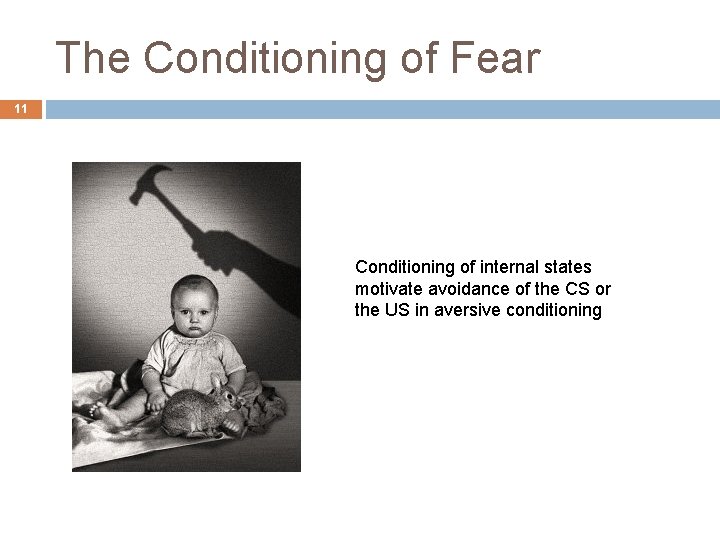
The Conditioning of Fear 11 Conditioning of internal states motivate avoidance of the CS or the US in aversive conditioning
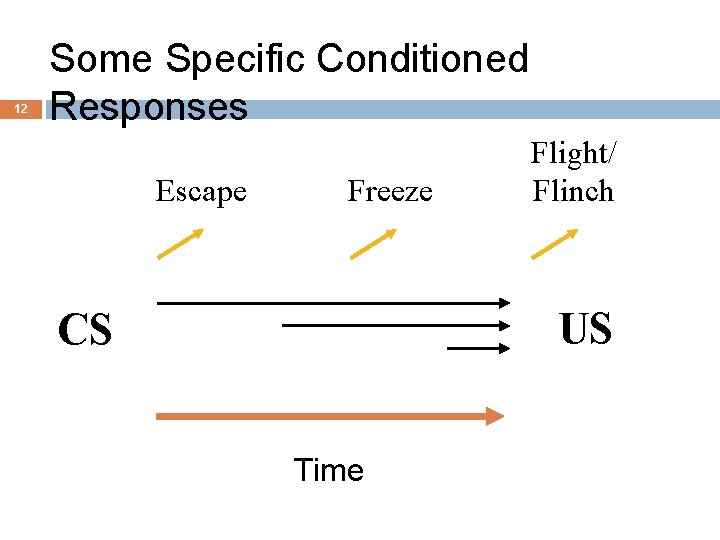
12 Some Specific Conditioned Responses Escape Freeze Flight/ Flinch US CS Time
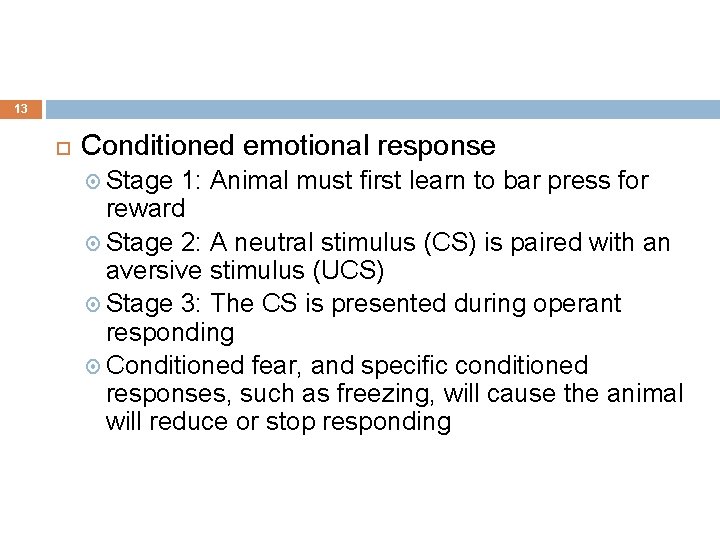
13 Conditioned emotional response Stage 1: Animal must first learn to bar press for reward Stage 2: A neutral stimulus (CS) is paired with an aversive stimulus (UCS) Stage 3: The CS is presented during operant responding Conditioned fear, and specific conditioned responses, such as freezing, will cause the animal will reduce or stop responding
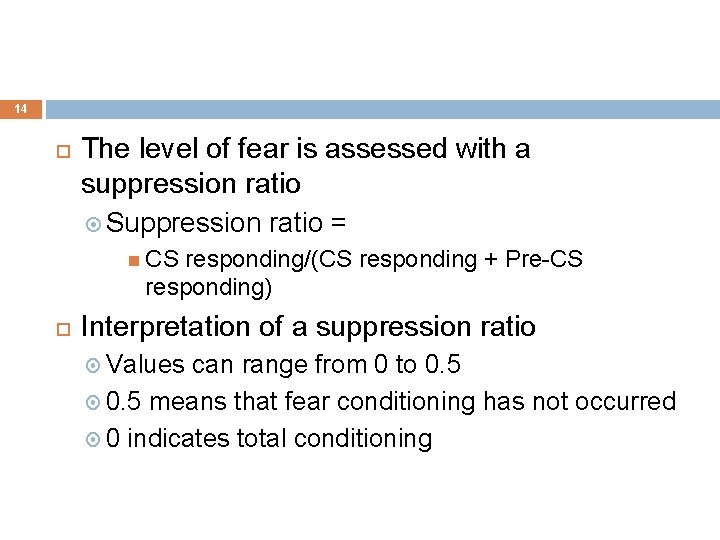
14 The level of fear is assessed with a suppression ratio Suppression ratio = CS responding/(CS responding + Pre-CS responding) Interpretation of a suppression ratio Values can range from 0 to 0. 5 means that fear conditioning has not occurred 0 indicates total conditioning
Conclusions 15 4. Conditioning of internal states motivates avoidance of the CS or the US in aversive conditioning 5. Form of CR changes with ISI (This is why conditioned suppression catches them all)
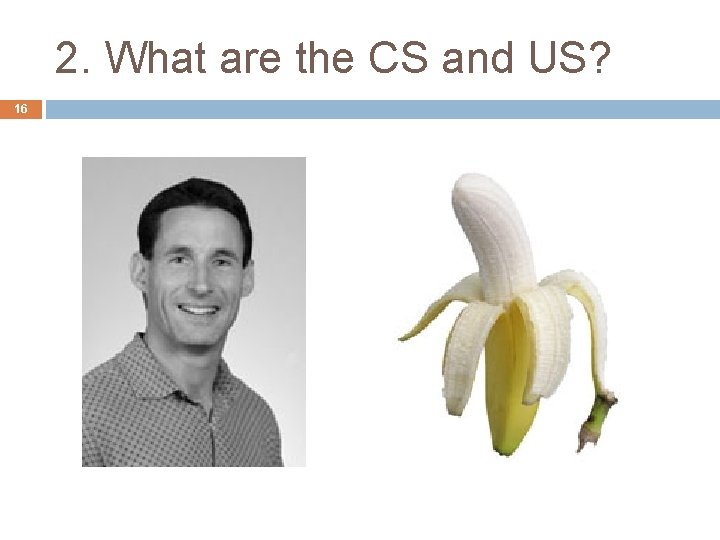
2. What are the CS and US? 16
Garcia Effect 17 The classic Flavor Aversion Experiments were conducted by Garcia et al. (1957) Although rats generally like saccharin very much, they found that rats would not consume saccharin if illness followed its consumption The illness did not result from the saccharin, though, but rather from either high doses of irradiation or from doses of Lithium Chloride
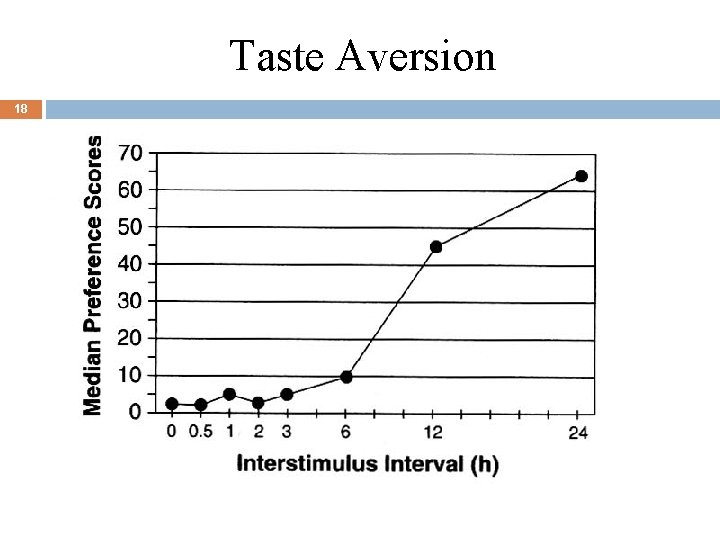
Taste Aversion 18
Flavor Aversion Learning 19 Flavor aversion: avoidance of a flavor that precedes an illness experience Flavor aversion develops rapidly Often after one pairing of flavor and illness May occur even if there is a long time interval between the flavor and the illness
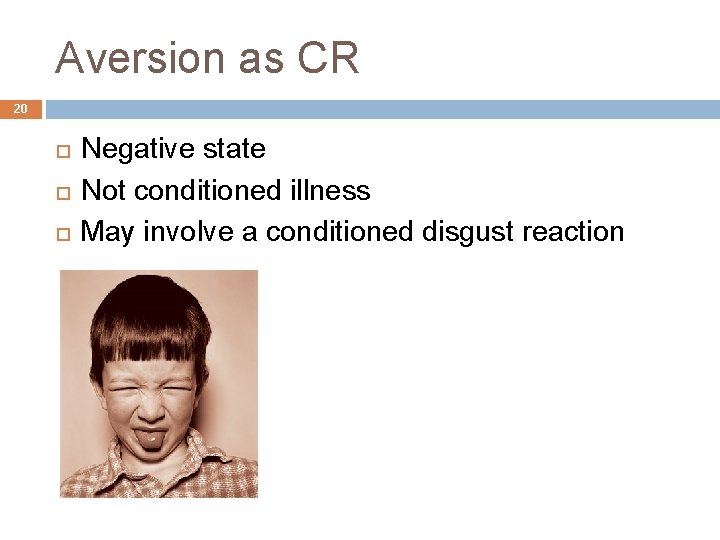
Aversion as CR 20 Negative state Not conditioned illness May involve a conditioned disgust reaction
Conclusions 21 6. What constitutes a “pairing” depends on the response system (There is no “optimal ISI”)
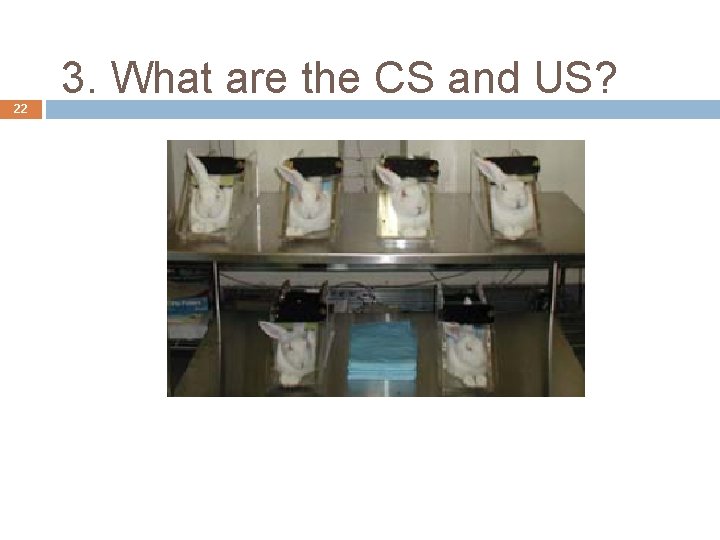
22 3. What are the CS and US?
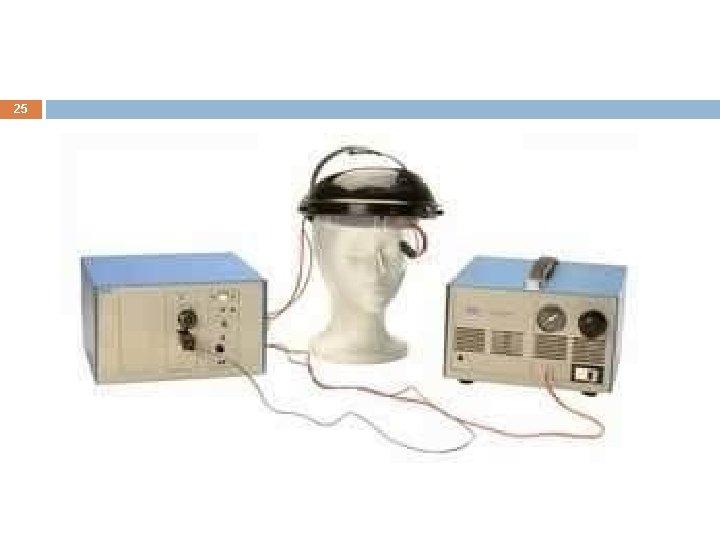
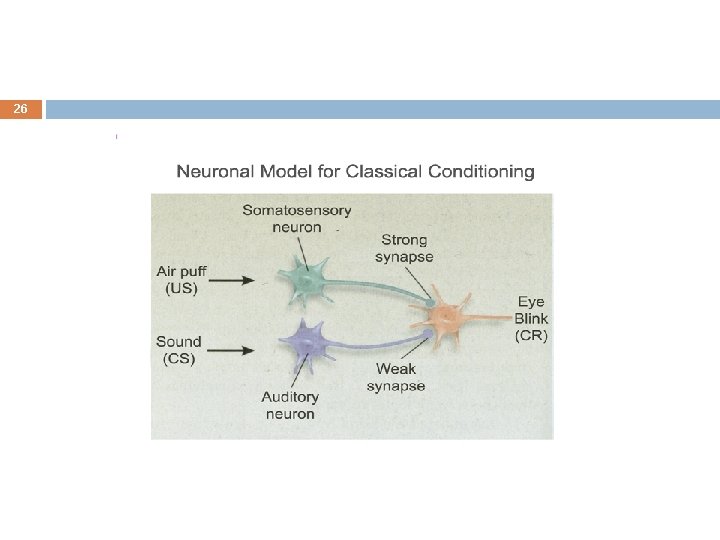
Eye Blink Conditioning 23 Procedure: CS: tone UCS: puff of air/paraorbital shock CR: blink UCR: blink
24 Noteworthy characteristics: UCR and CR differ slightly UCS elicits a rapid eyeblink response CS produces a slow, gradual closure of the eye Eyeblink It conditioning is slow may take up to 100 CS-UCS pairings to produce responding on 50% of trials
25
26
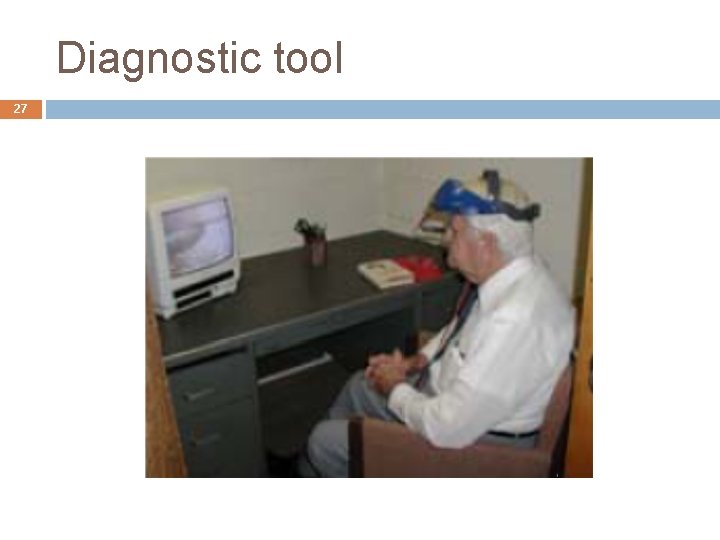
Diagnostic tool 27
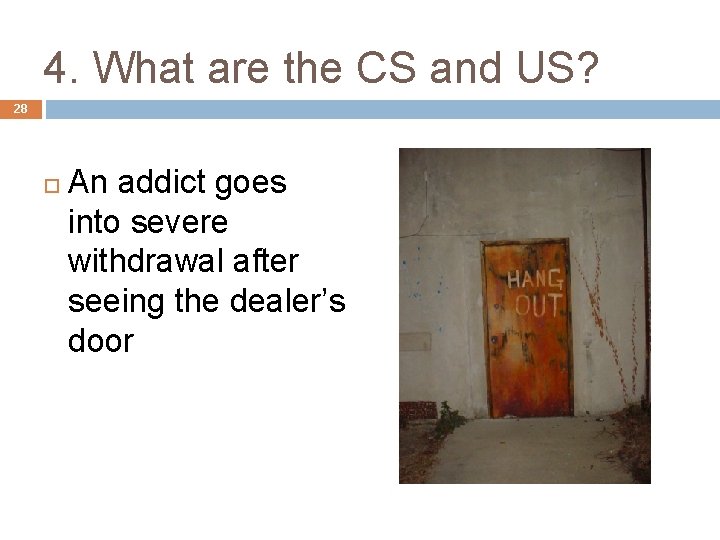
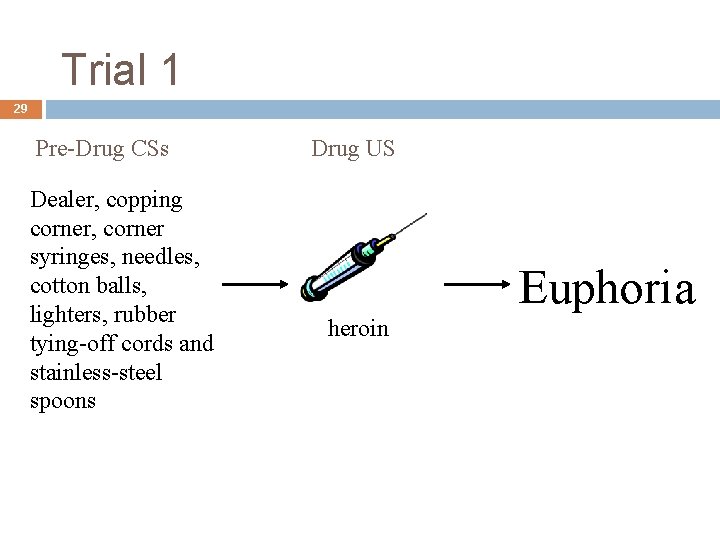
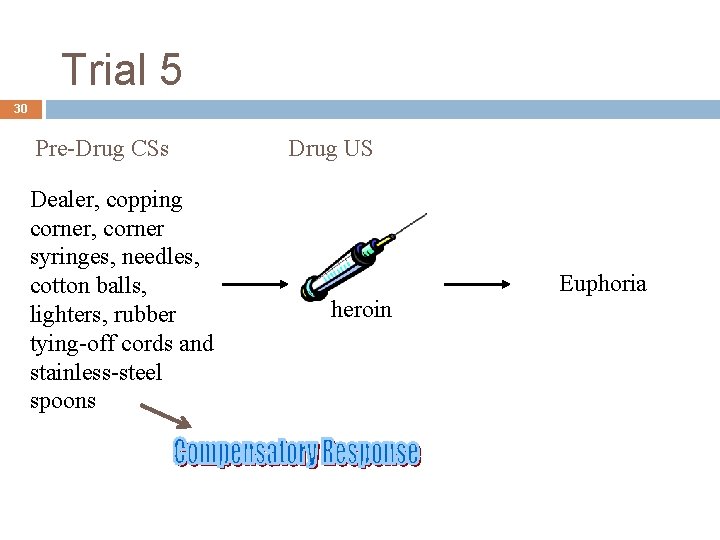
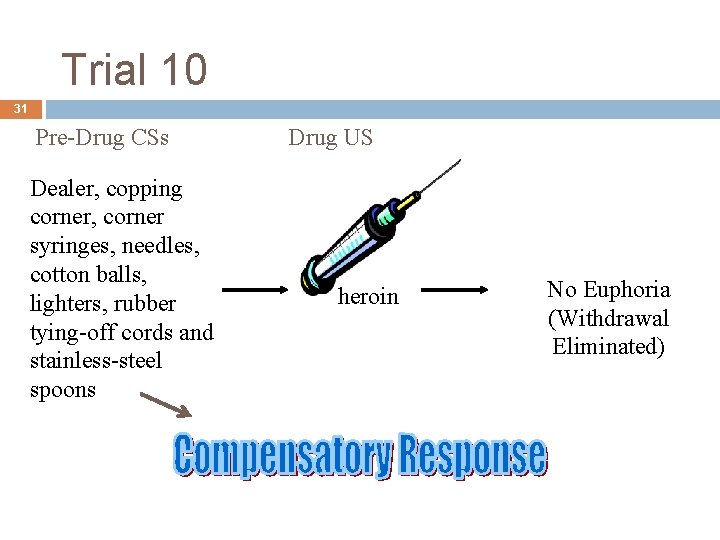
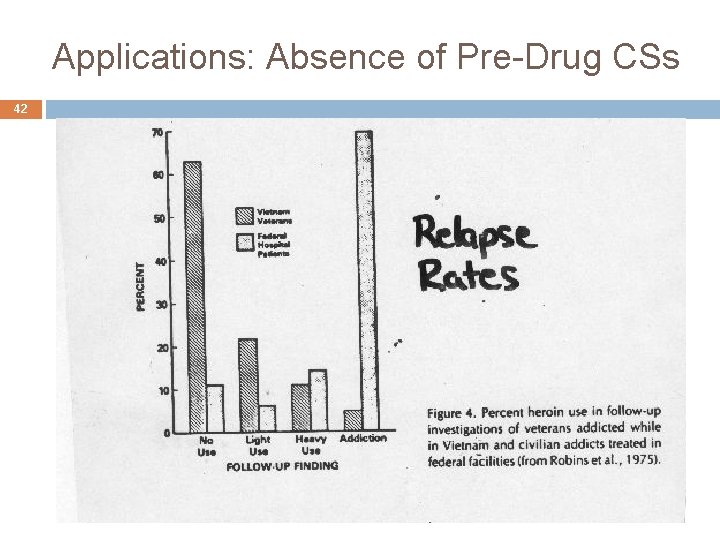
4. What are the CS and US? 28 An addict goes into severe withdrawal after seeing the dealer’s door
Trial 1 29 Pre-Drug CSs Dealer, copping corner, corner syringes, needles, cotton balls, lighters, rubber tying-off cords and stainless-steel spoons Drug US Euphoria heroin
Trial 5 30 Pre-Drug CSs Dealer, copping corner, corner syringes, needles, cotton balls, lighters, rubber tying-off cords and stainless-steel spoons Drug US heroin Euphoria
Trial 10 31 Pre-Drug CSs Dealer, copping corner, corner syringes, needles, cotton balls, lighters, rubber tying-off cords and stainless-steel spoons Drug US heroin No Euphoria (Withdrawal Eliminated)
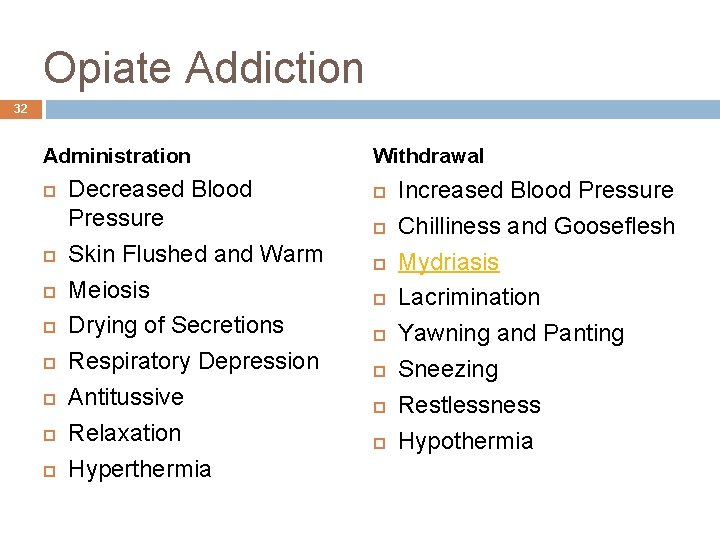
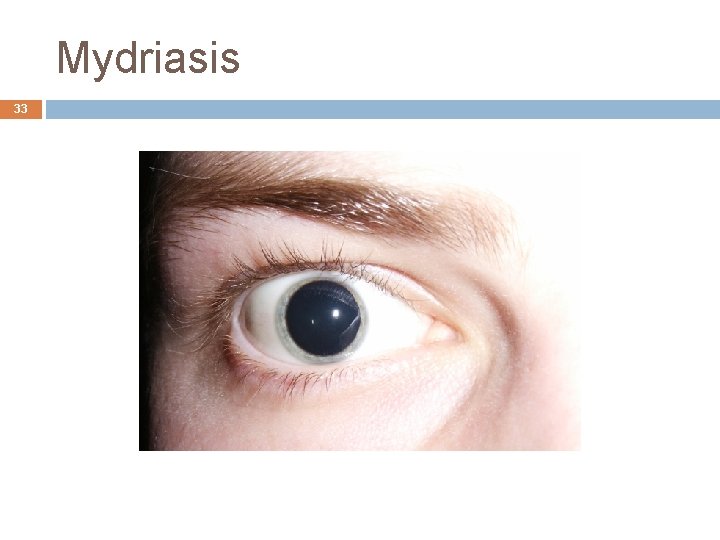
Opiate Addiction 32 Administration Decreased Blood Pressure Skin Flushed and Warm Meiosis Drying of Secretions Respiratory Depression Antitussive Relaxation Hyperthermia Withdrawal Increased Blood Pressure Chilliness and Gooseflesh Mydriasis Lacrimination Yawning and Panting Sneezing Restlessness Hypothermia
Mydriasis 33
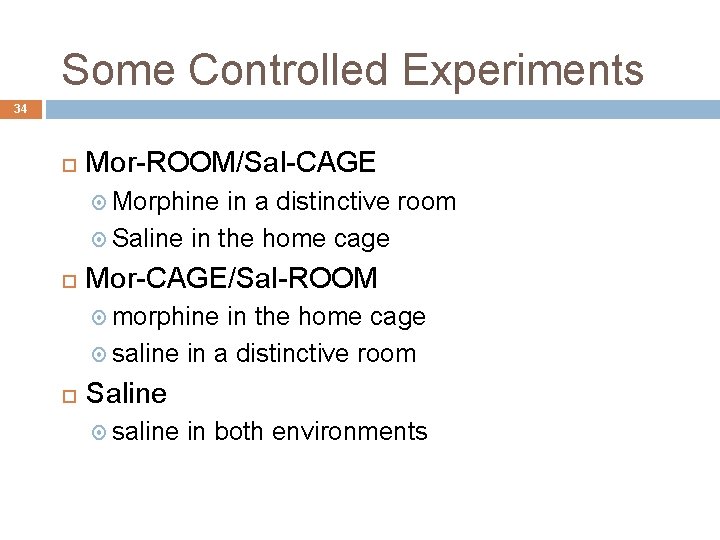
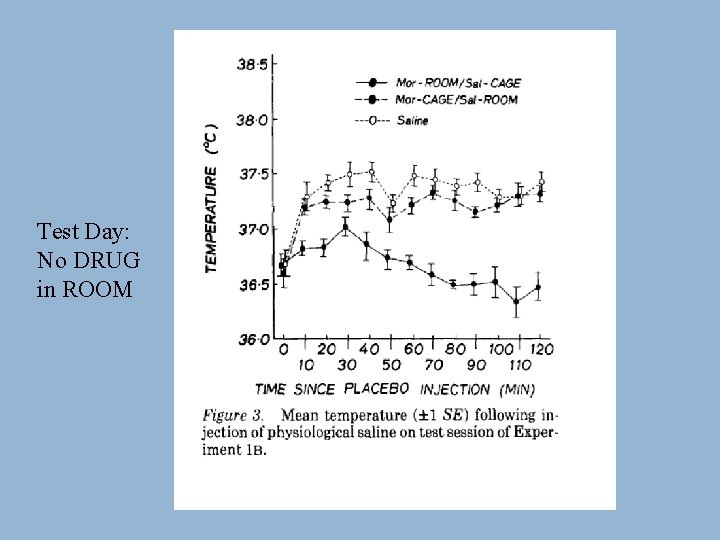
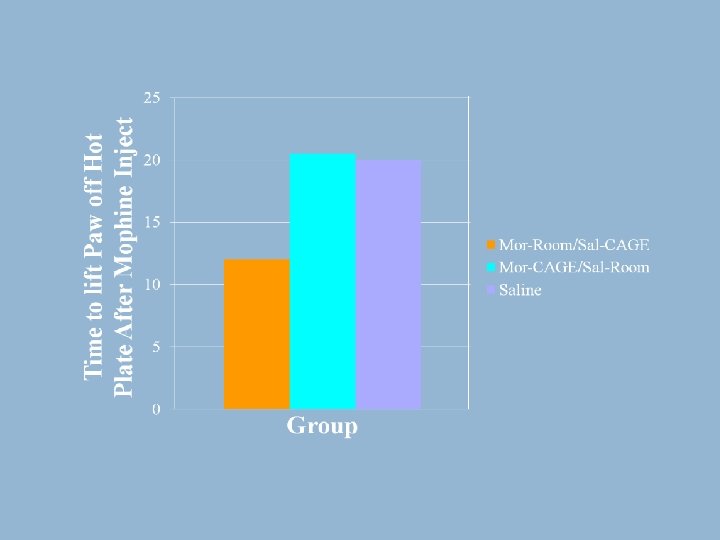
Some Controlled Experiments 34 Mor-ROOM/Sal-CAGE Morphine in a distinctive room Saline in the home cage Mor-CAGE/Sal-ROOM morphine in the home cage saline in a distinctive room Saline saline in both environments
Test Day: No DRUG in ROOM
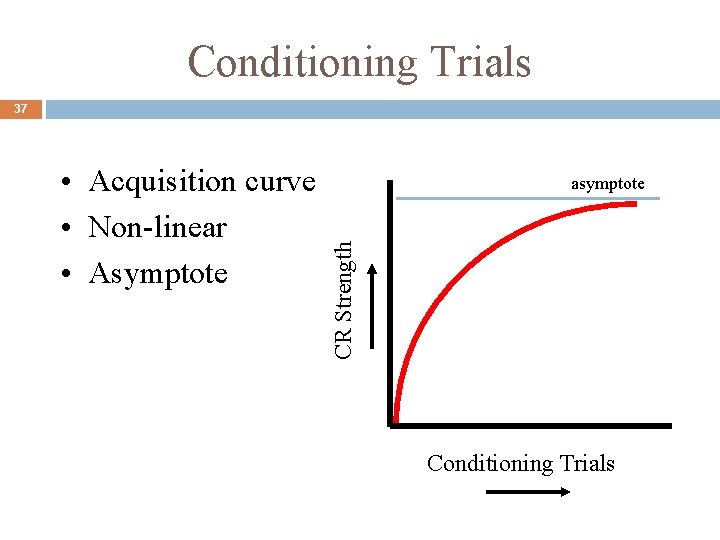
Conditioning Trials 37 asymptote CR Strength • Acquisition curve • Non-linear • Asymptote Conditioning Trials
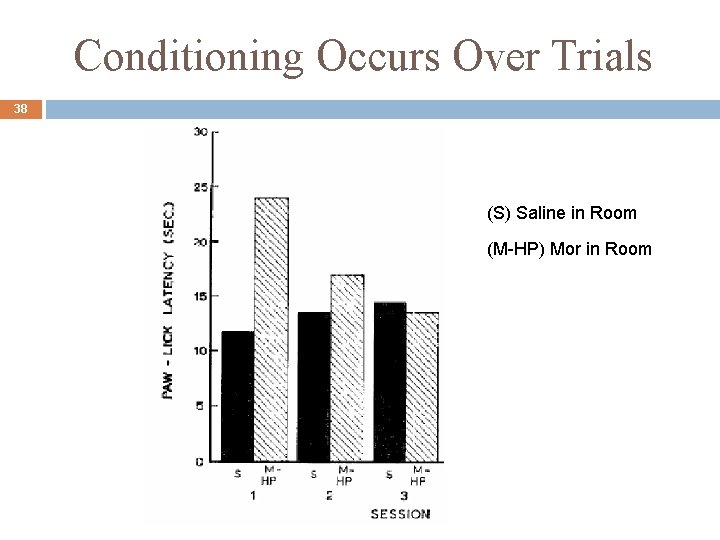
Conditioning Occurs Over Trials 38 (S) Saline in Room (M-HP) Mor in Room
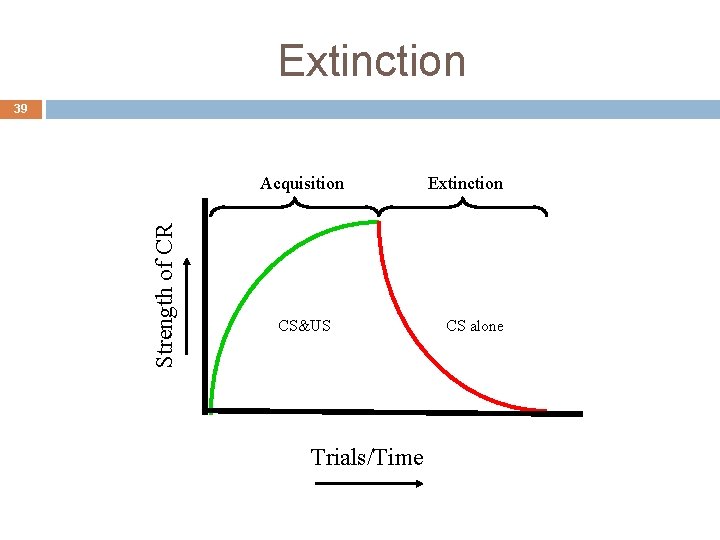
Extinction 39 Strength of CR Acquisition CS&US Trials/Time Extinction CS alone
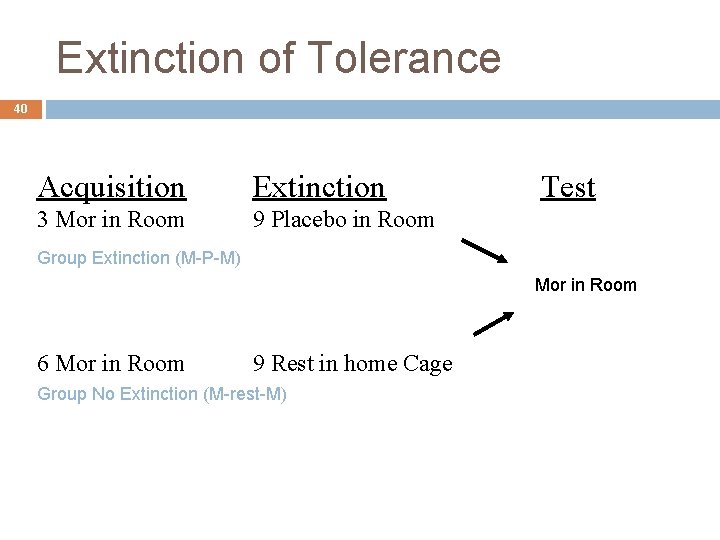
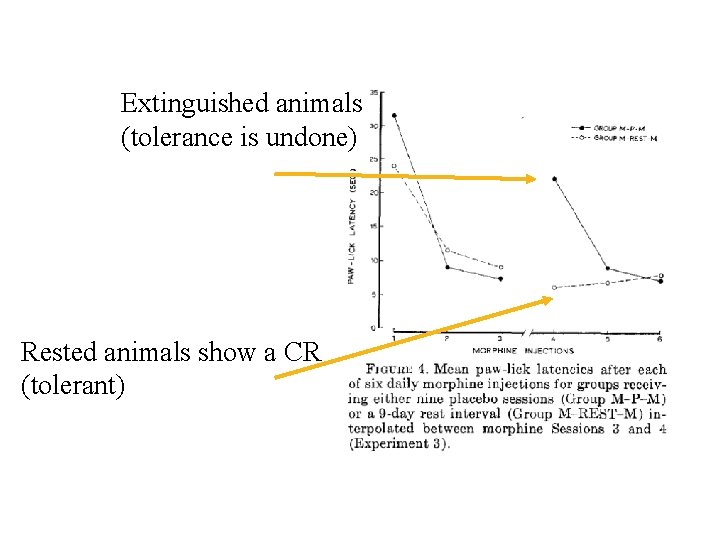
Extinction of Tolerance 40 Acquisition Extinction 3 Mor in Room 9 Placebo in Room Test Group Extinction (M-P-M) Mor in Room 6 Mor in Room 9 Rest in home Cage Group No Extinction (M-rest-M)
Extinguished animals (tolerance is undone) Rested animals show a CR (tolerant)
Applications: Absence of Pre-Drug CSs 42
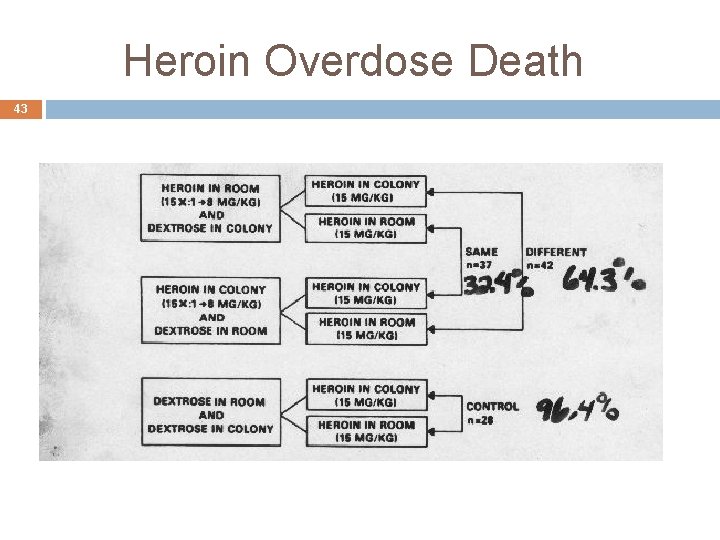
Heroin Overdose Death 43
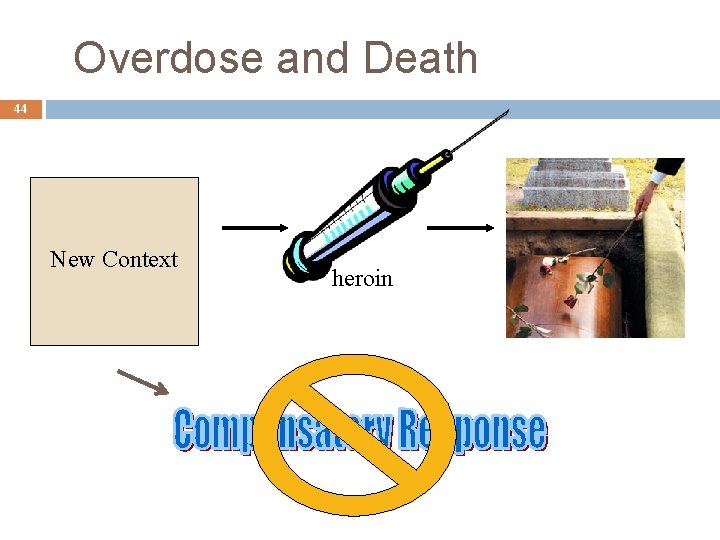
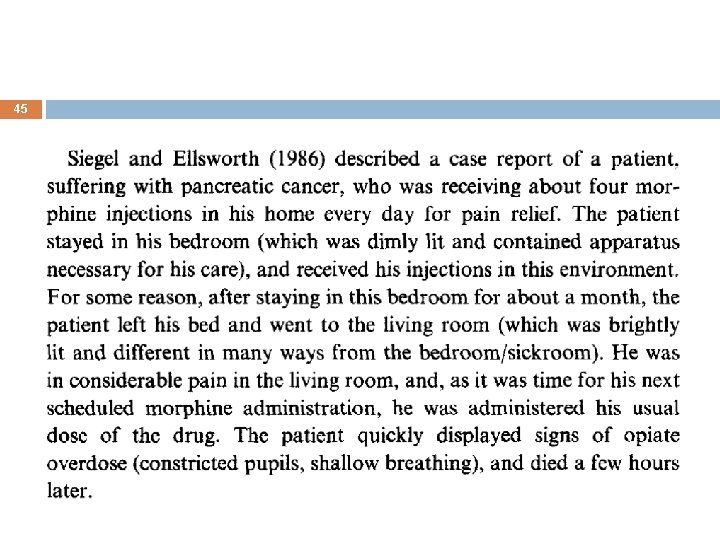
Overdose and Death 44 New Context heroin
45
Conclusions 46 7. Conditioned responses can be “compensatory”, bringing the organism back to homeostasis 8. Contexts can be conditioned (Best treatment for addiction is the original context).