
1 Preanesthesia evaluation and preparation of patient Dr













- Slides: 59
1
Pre-anesthesia evaluation and preparation of patient Dr. Mansoor Aqil Professor and Consultant Department Of Anaesthesia King Saud University Riyadh 2
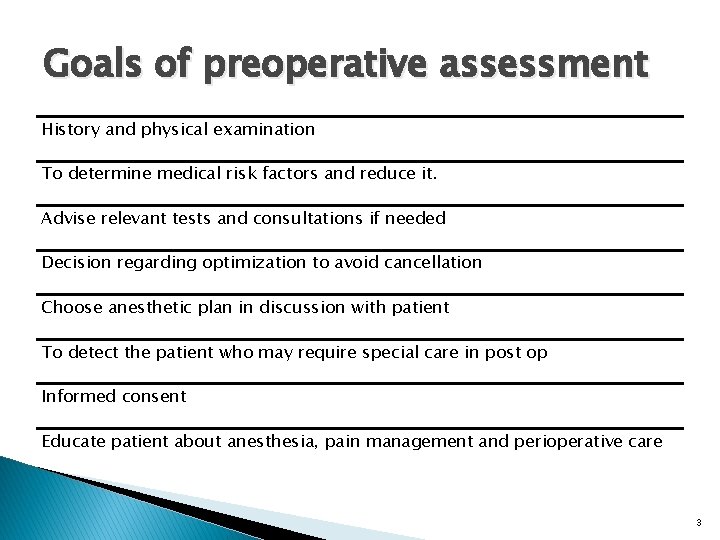
Goals of preoperative assessment History and physical examination To determine medical risk factors and reduce it. Advise relevant tests and consultations if needed Decision regarding optimization to avoid cancellation Choose anesthetic plan in discussion with patient To detect the patient who may require special care in post op Informed consent Educate patient about anesthesia, pain management and perioperative care 3
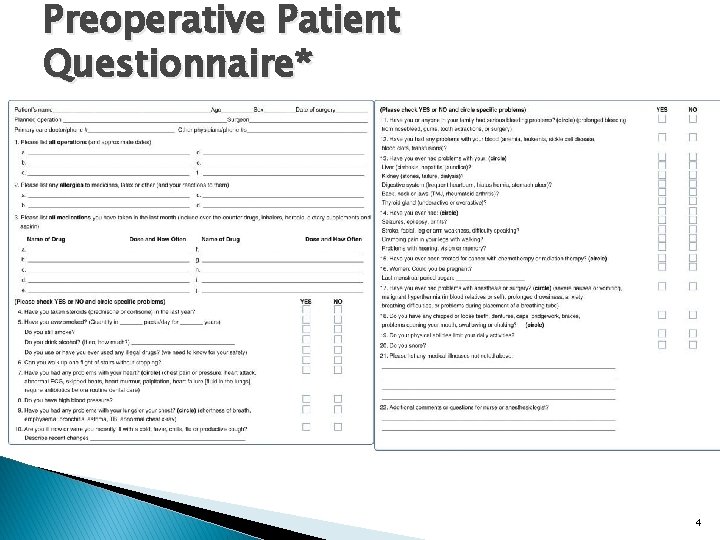
Preoperative Patient Questionnaire* 4
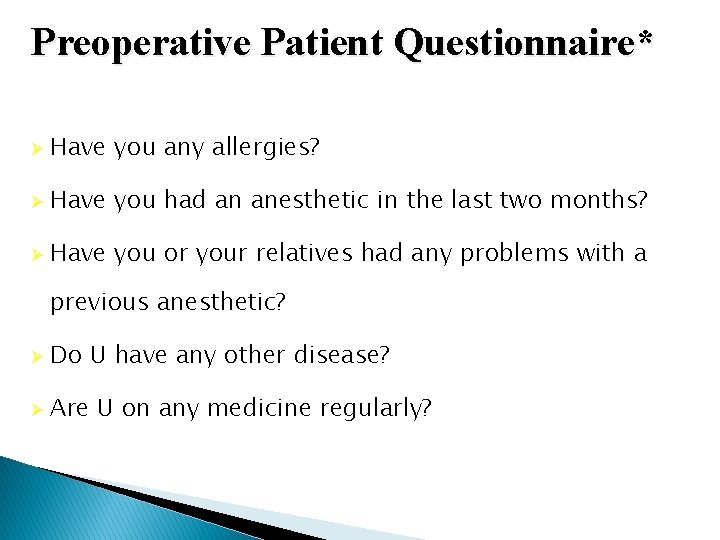
Preoperative Patient Questionnaire* Ø Have you any allergies? Ø Have you had an anesthetic in the last two months? Ø Have you or your relatives had any problems with a previous anesthetic? Ø Do U have any other disease? Ø Are U on any medicine regularly?
Anesthesia evaluation comprises � Patient history and medical records � Patient interview � Physical examination � Laboratory tests � Consultations � Preparation 6
When and where Days before schedule date in preoperative clinic Day before schedule date as inpatient Re-evaluation on admission and before anesthesia 7
Mortality related to anaesthesia Approx 1: 26, 000 anaesthetics One third of deaths are preventable Causes Inadequate patient preparation Inadequate postoperative management Wrong choice of anaesthetic technique Inadequate crisis management 8
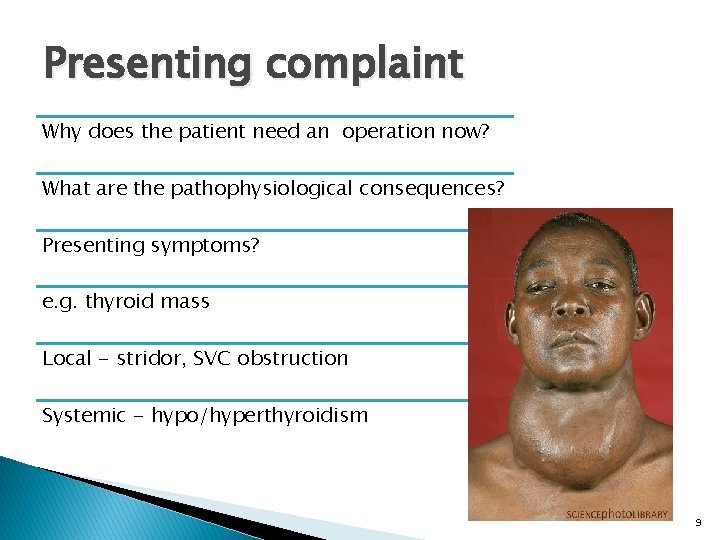
Presenting complaint Why does the patient need an operation now? What are the pathophysiological consequences? Presenting symptoms? e. g. thyroid mass Local - stridor, SVC obstruction Systemic - hypo/hyperthyroidism 9
Other medical conditions Other problems that may affect Peri-operative morbidity and mortality? � Respiratory disease � Cardiac disease � Arthritis � Endocrine disorders - diabetes, obesity etc � Do they need optimization? 10
Respiratory system assessment � Asthma � COPD HISTORY ◦ Onset ◦ Duration ◦ Progress ◦ Dyspnoea I. III. IV 11
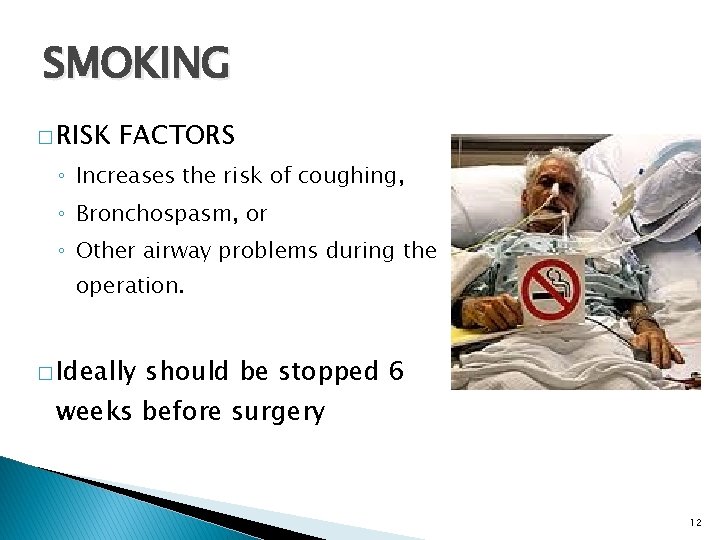
SMOKING � RISK FACTORS ◦ Increases the risk of coughing, ◦ Bronchospasm, or ◦ Other airway problems during the operation. � Ideally should be stopped 6 weeks before surgery 12
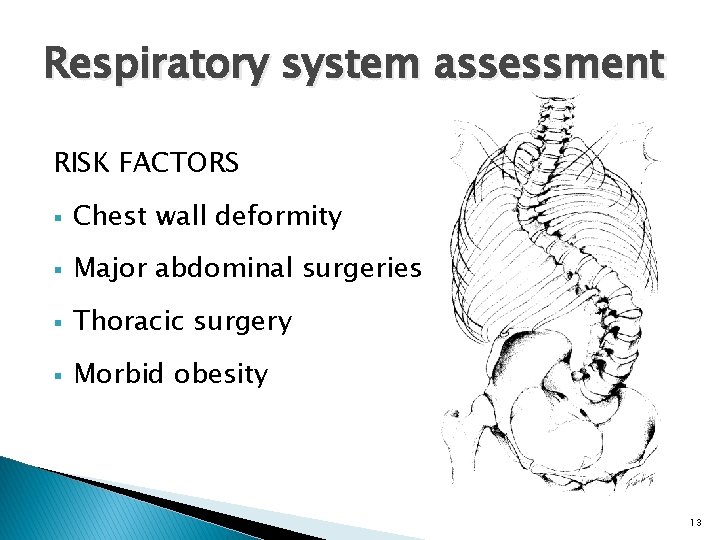
Respiratory system assessment RISK FACTORS § Chest wall deformity § Major abdominal surgeries § Thoracic surgery § Morbid obesity 13
CVS ASSESMENT � H/O Angina � H/O dyspnoea � Repeated � Look hospital admissions for risk factors q Diabetes Mellitus q Hypertension q Syncope attacks q Peripheral Vascular disease 14
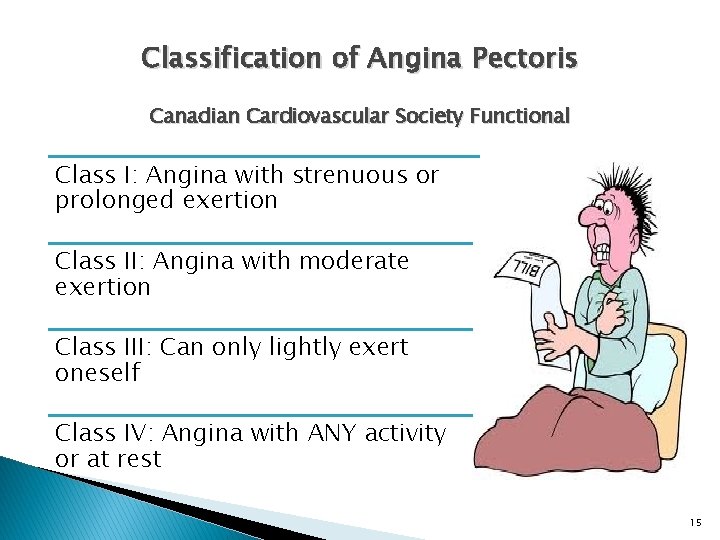
Classification of Angina Pectoris Canadian Cardiovascular Society Functional Class I: Angina with strenuous or prolonged exertion Class II: Angina with moderate exertion Class III: Can only lightly exert oneself Class IV: Angina with ANY activity or at rest 15
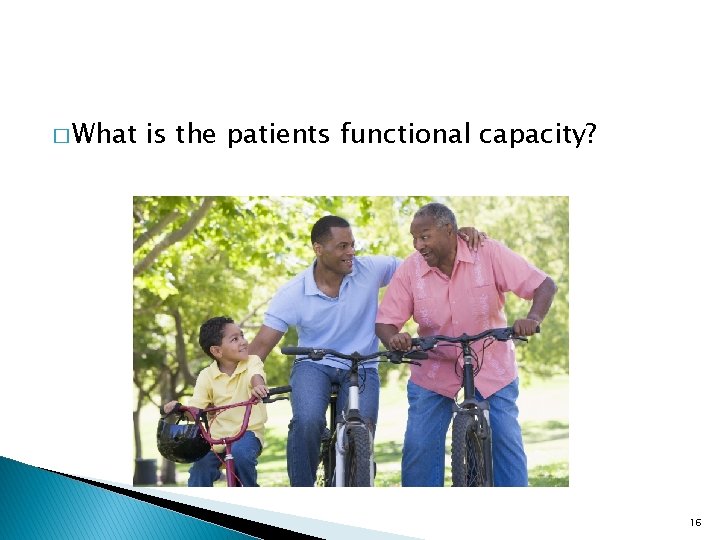
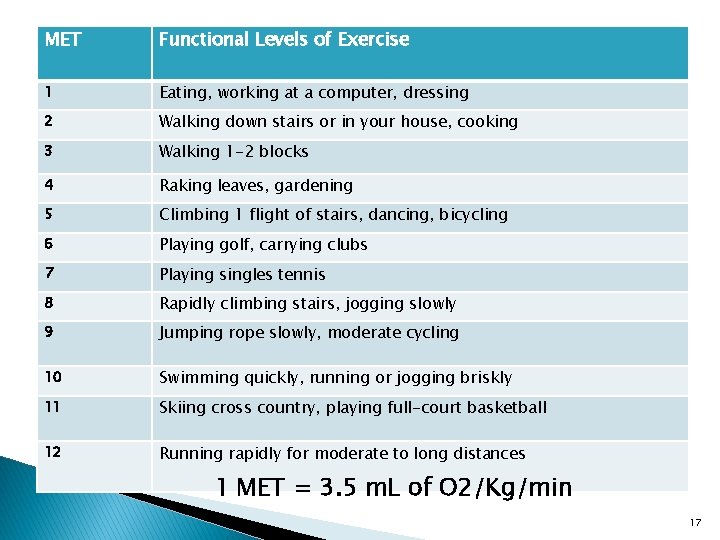
� What is the patients functional capacity? 16
MET Functional Levels of Exercise 1 Eating, working at a computer, dressing 2 Walking down stairs or in your house, cooking 3 Walking 1 -2 blocks 4 Raking leaves, gardening 5 Climbing 1 flight of stairs, dancing, bicycling 6 Playing golf, carrying clubs 7 Playing singles tennis 8 Rapidly climbing stairs, jogging slowly 9 Jumping rope slowly, moderate cycling 10 Swimming quickly, running or jogging briskly 11 Skiing cross country, playing full-court basketball 12 Running rapidly for moderate to long distances 1 MET = 3. 5 m. L of O 2/Kg/min 17
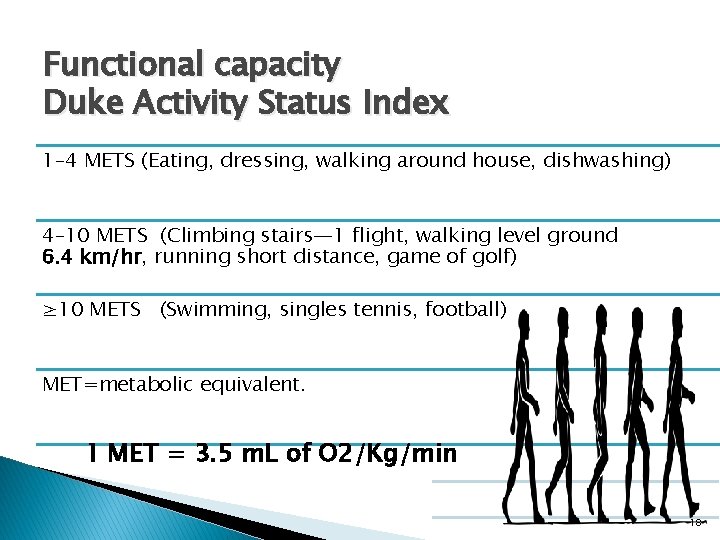
Functional capacity Duke Activity Status Index 1– 4 METS (Eating, dressing, walking around house, dishwashing) 4– 10 METS (Climbing stairs— 1 flight, walking level ground 6. 4 km/hr, running short distance, game of golf) ≥ 10 METS (Swimming, singles tennis, football) MET=metabolic equivalent. 1 MET = 3. 5 m. L of O 2/Kg/min 18
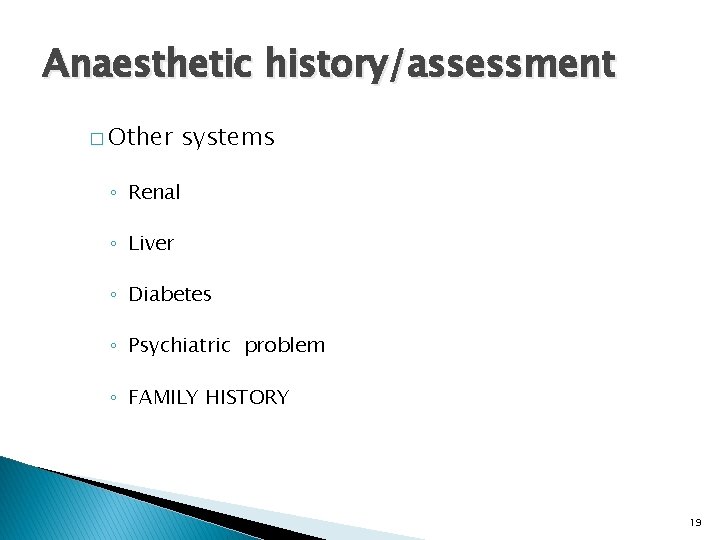
Anaesthetic history/assessment � Other systems ◦ Renal ◦ Liver ◦ Diabetes ◦ Psychiatric problem ◦ FAMILY HISTORY 19
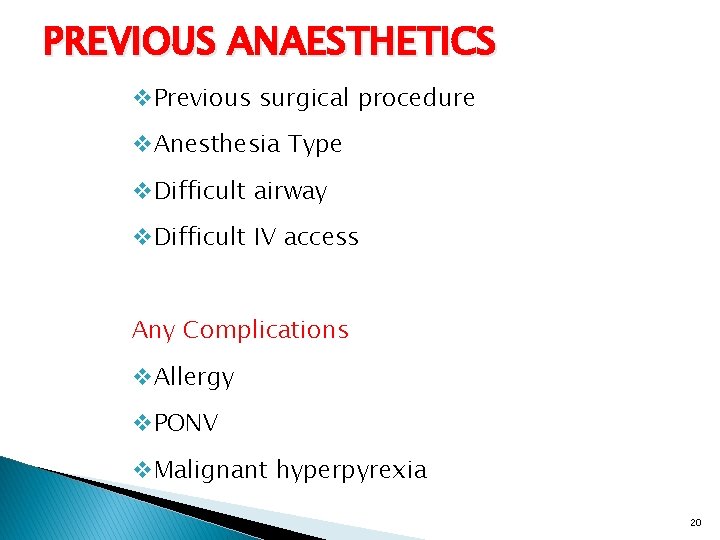
PREVIOUS ANAESTHETICS v. Previous surgical procedure v. Anesthesia Type v. Difficult airway v. Difficult IV access Any Complications v. Allergy v. PONV v. Malignant hyperpyrexia 20
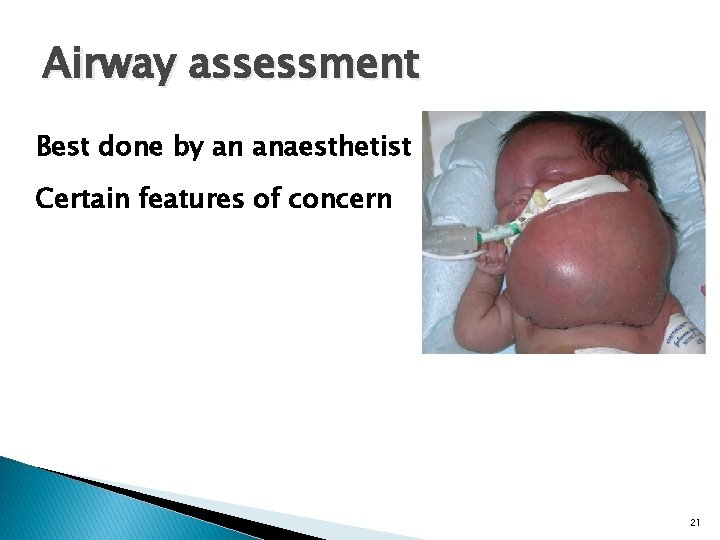
Airway assessment Best done by an anaesthetist Certain features of concern 21
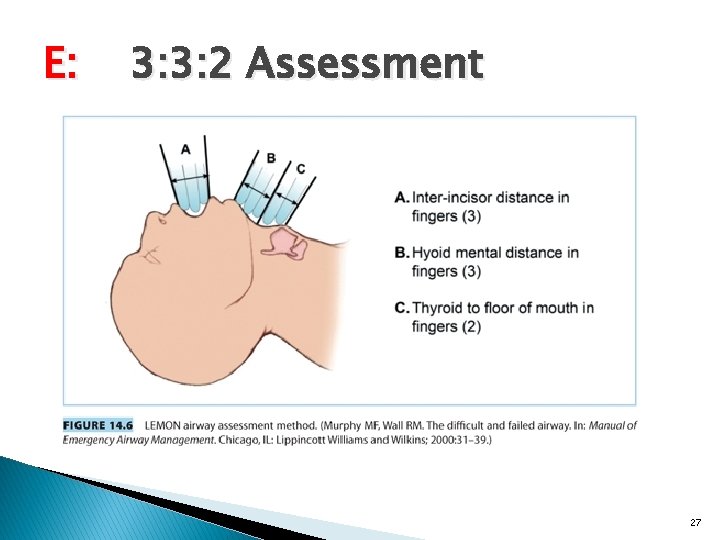
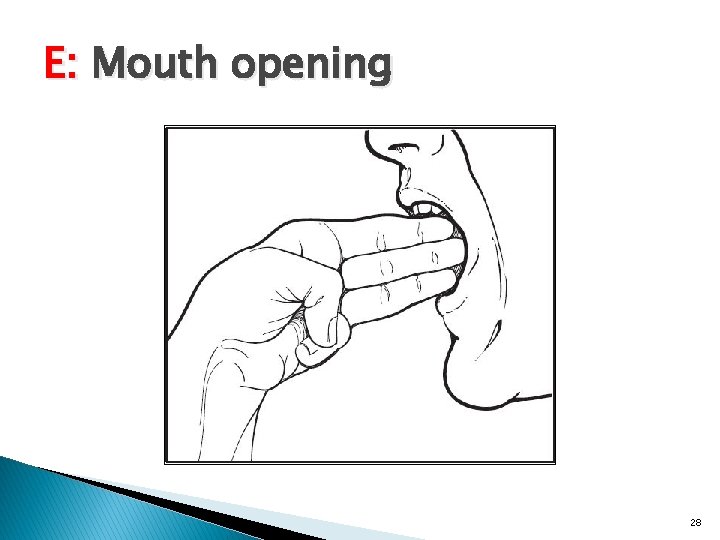
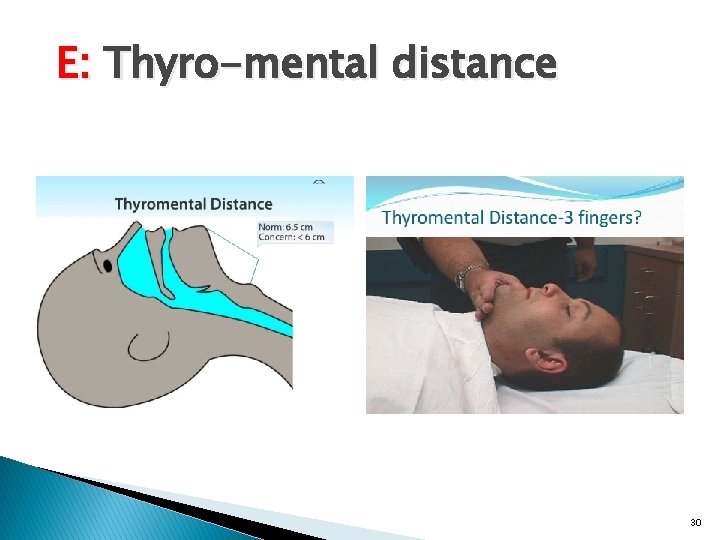
LEMON � Look: Externally. � Evaluate: Using the 3: 3: 2 � Mallampati classification. � Obstruction. � Neck mobility is desirable. 22
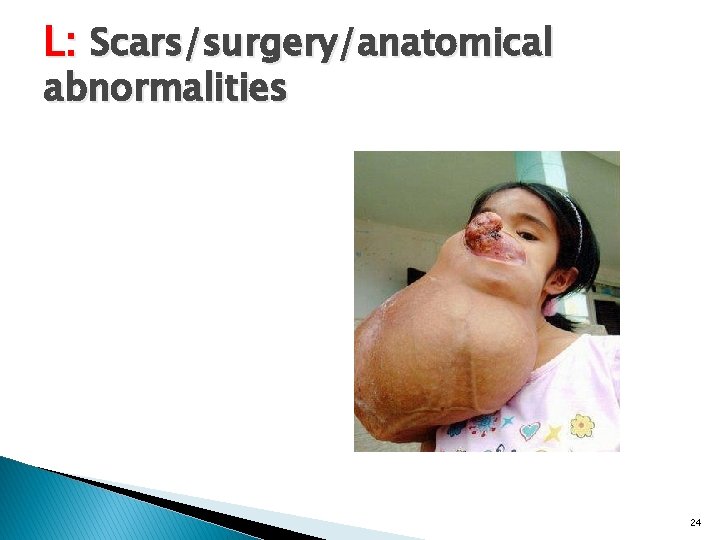
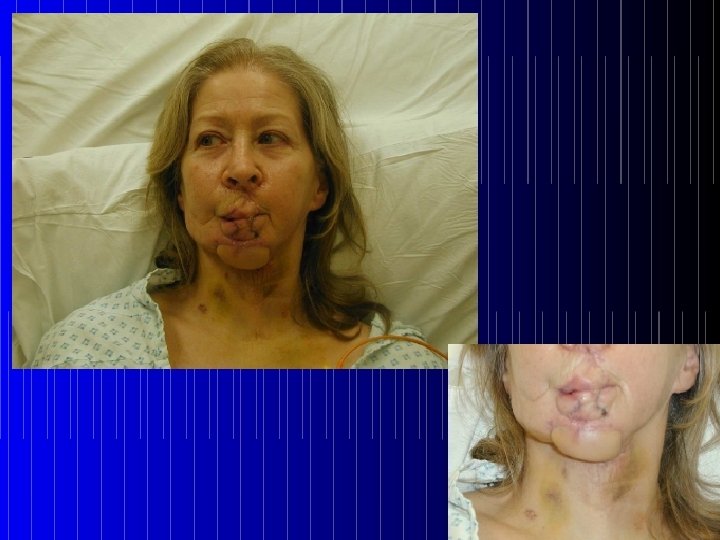
L: Scars/surgery/anatomical abnormalities 23
L: Scars/surgery/anatomical abnormalities 24
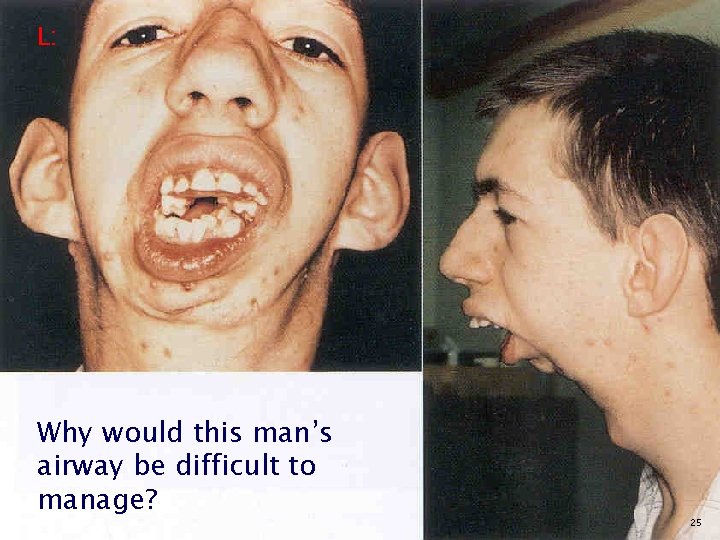
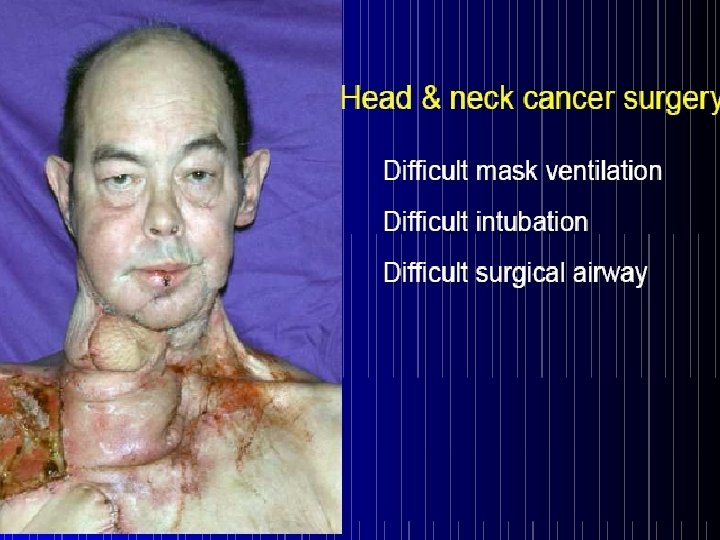
L: Why would this man’s airway be difficult to manage? 25
L: Why would this man’s airway be difficult to manage? 26
E: 3: 3: 2 Assessment 27
E: Mouth opening 28
29
E: Thyro-mental distance 30
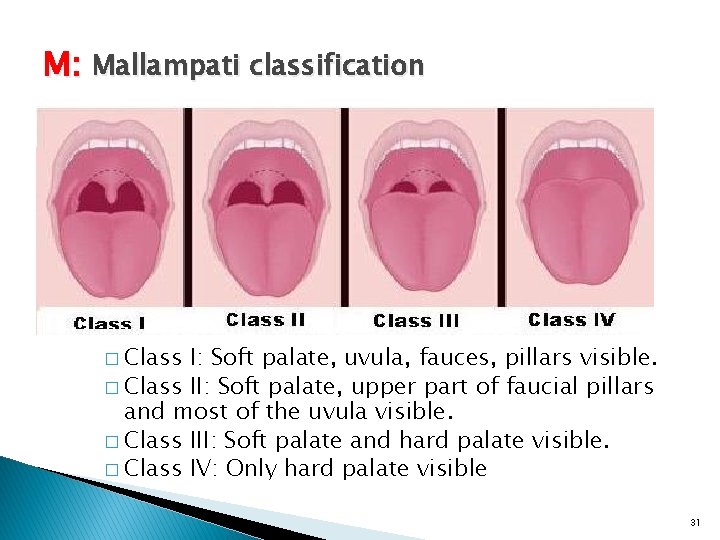
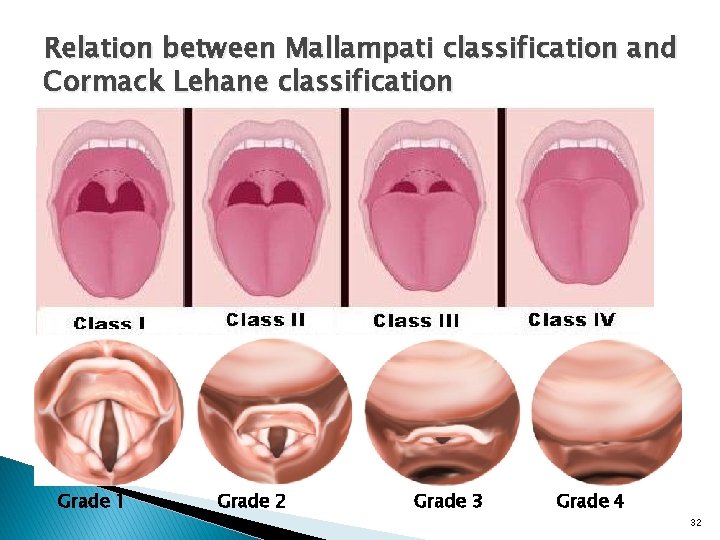
M: Mallampati classification � Class I: Soft palate, uvula, fauces, pillars visible. � Class II: Soft palate, upper part of faucial pillars and most of the uvula visible. � Class III: Soft palate and hard palate visible. � Class IV: Only hard palate visible 31
Relation between Mallampati classification and Cormack Lehane classification Grade 1 Grade 2 Grade 3 Grade 4 32
Laboratory testing ASA The Task Force Preoperative tests should not be ordered routinely Preoperative tests may be ordered, required, or performed on a selective basis for purposes of guiding or optimizing perioperative management. This may result in unnecessary OR delays, cancellations, and potential patient risk through additional testing and follow-up. 33
O: Airway obstruction 34
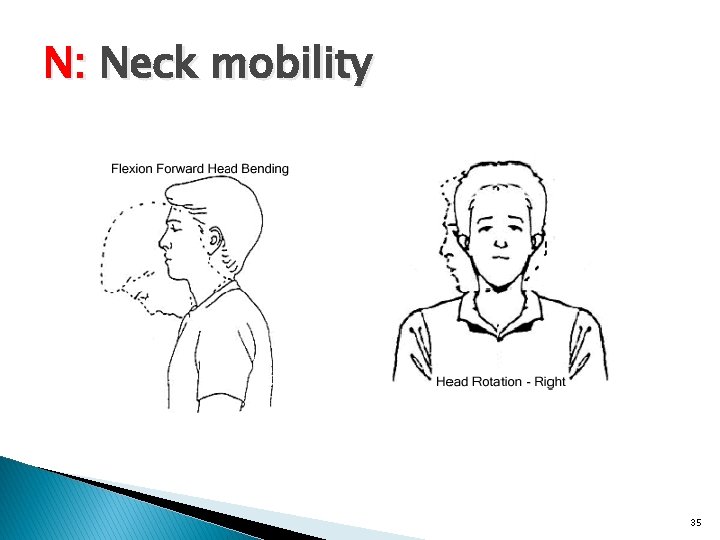
N: Neck mobility 35
36
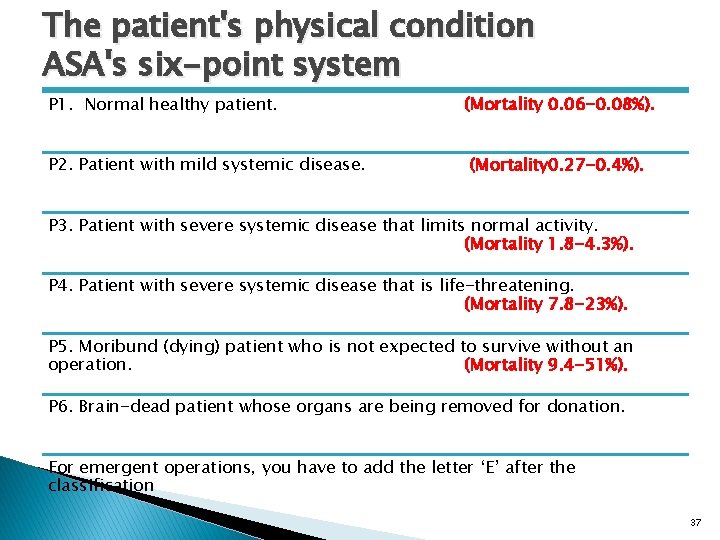
The patient's physical condition ASA's six-point system P 1. Normal healthy patient. P 2. Patient with mild systemic disease. (Mortality 0. 06 -0. 08%). (Mortality 0. 27 -0. 4%). P 3. Patient with severe systemic disease that limits normal activity. (Mortality 1. 8 -4. 3%). P 4. Patient with severe systemic disease that is life-threatening. (Mortality 7. 8 -23%). P 5. Moribund (dying) patient who is not expected to survive without an operation. (Mortality 9. 4 -51%). P 6. Brain-dead patient whose organs are being removed for donation. For emergent operations, you have to add the letter ‘E’ after the classification 37
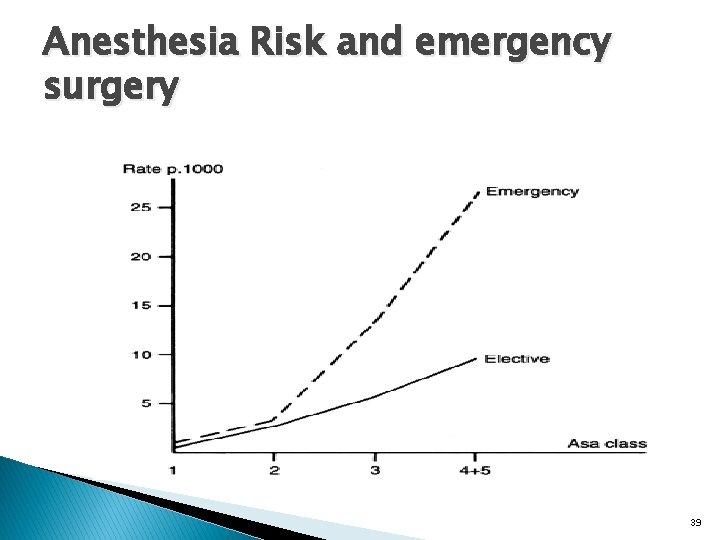
Relationship between ASA status and mortality 38
Anesthesia Risk and emergency surgery 39
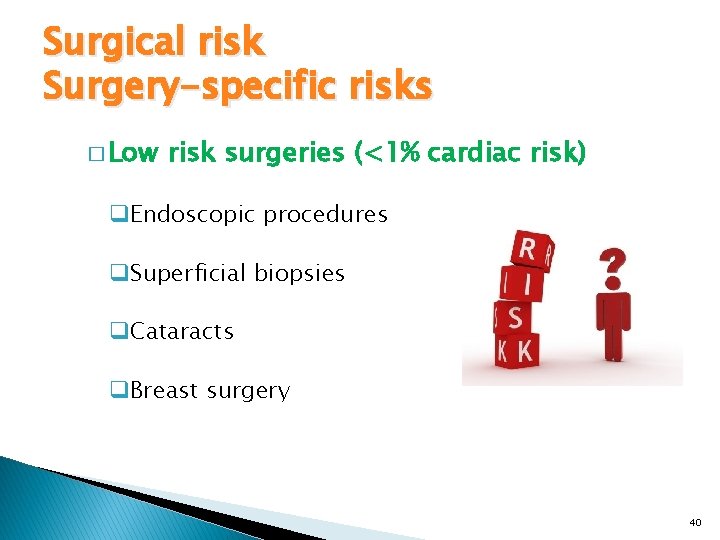
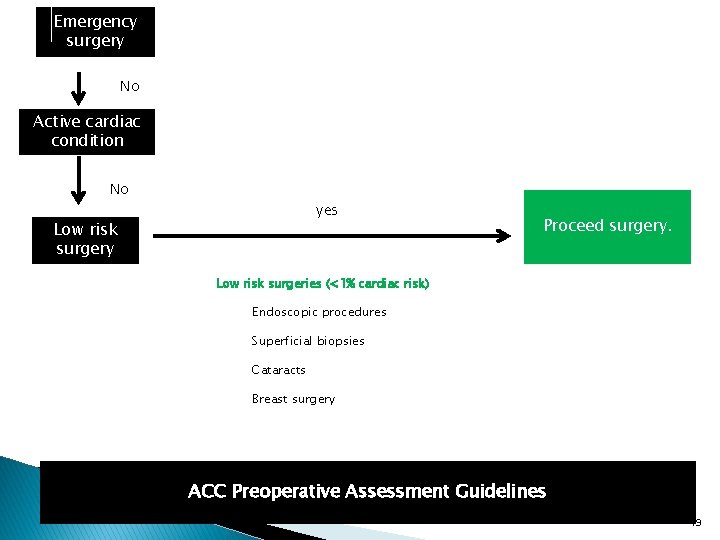
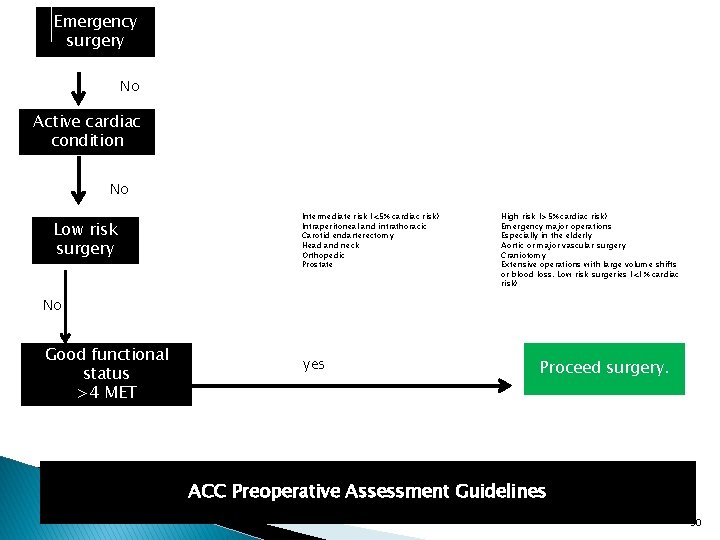
Surgical risk Surgery-specific risks � Low risk surgeries (<1% cardiac risk) q. Endoscopic procedures q. Superficial biopsies q. Cataracts q. Breast surgery 40
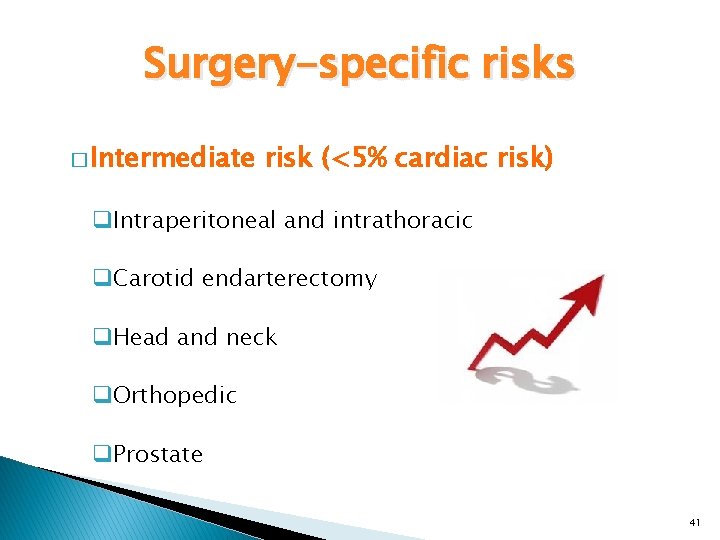
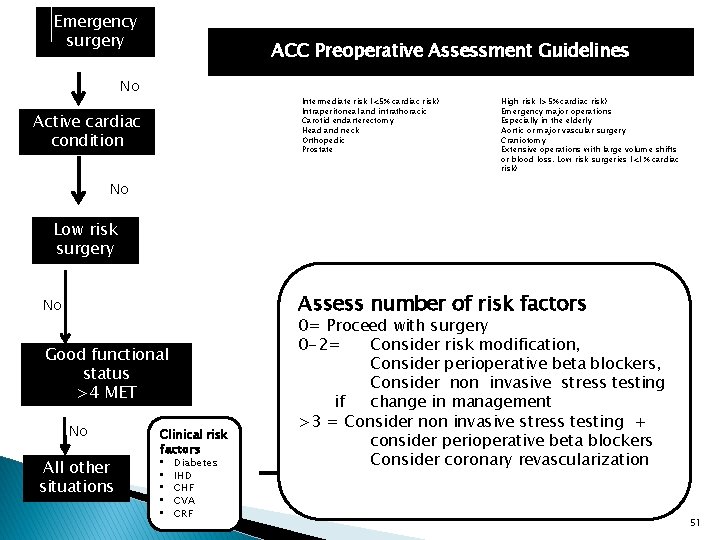
Surgery-specific risks � Intermediate risk (<5% cardiac risk) q. Intraperitoneal and intrathoracic q. Carotid endarterectomy q. Head and neck q. Orthopedic q. Prostate 41
Surgery-specific risks � High risk (>5% cardiac risk) q. Emergency major operations q Especially in the elderly q. Aortic or major vascular surgery q. Craniotomy q. Extensive operations with large volume shifts or blood loss. 42
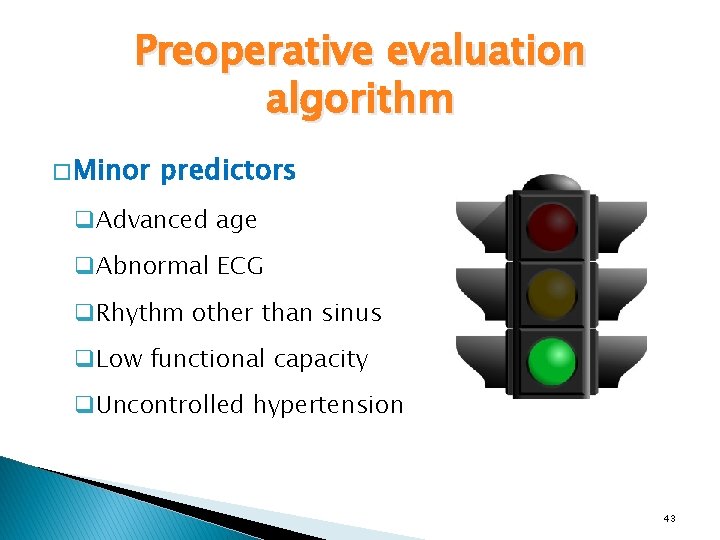
Preoperative evaluation algorithm � Minor predictors q. Advanced age q. Abnormal ECG q. Rhythm other than sinus q. Low functional capacity q. Uncontrolled hypertension 43
Preoperative evaluation algorithm � Intermediate predictors q. Mild angina pectoris (class 1 or 2) q. Prior MI q. Compensated or prior heart failure q. Diabetes mellitus q. Renal insufficiency 44
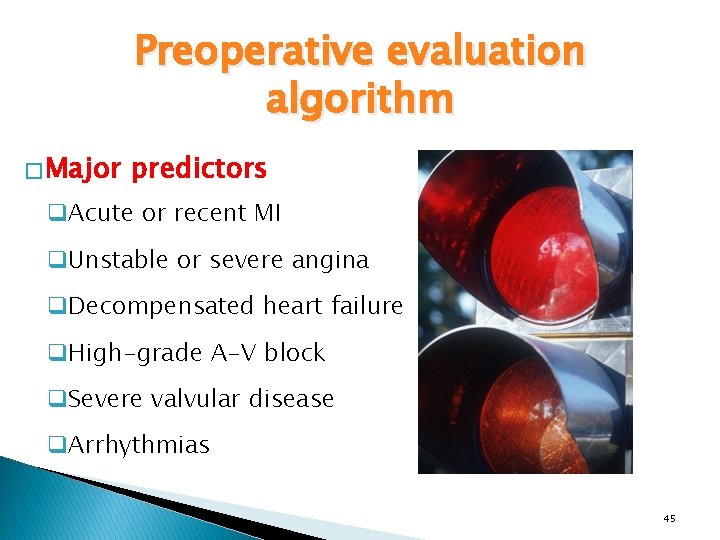
Preoperative evaluation algorithm � Major predictors q. Acute or recent MI q. Unstable or severe angina q. Decompensated heart failure q. High-grade A-V block q. Severe valvular disease q. Arrhythmias 45
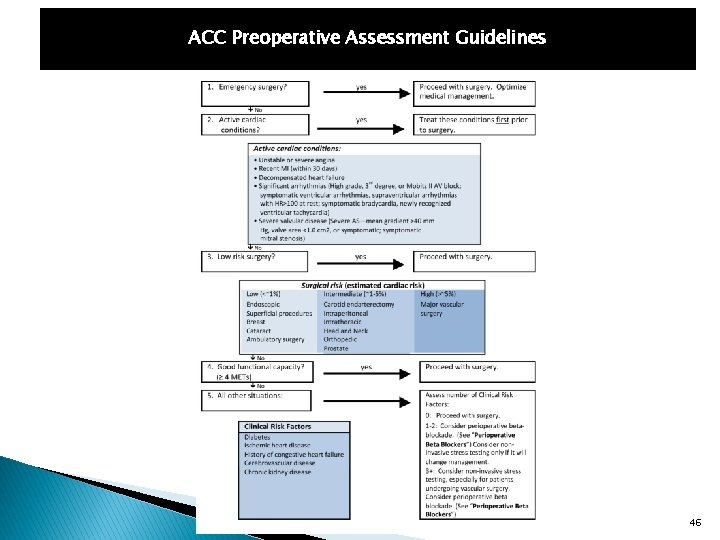
ACC Preoperative Assessment Guidelines 46
Emergency surgery yes Proceed surgery. Optimize medical management ACC Preoperative Assessment Guidelines 47
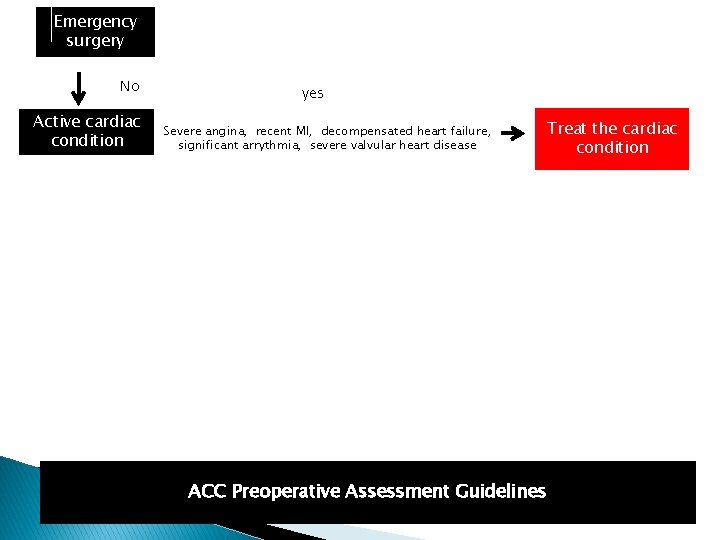
Emergency surgery No Active cardiac condition yes Severe angina, recent MI, decompensated heart failure, significant arrythmia, severe valvular heart disease Treat the cardiac condition ACC Preoperative Assessment Guidelines
Emergency surgery No Active cardiac condition No yes Low risk surgery Proceed surgery. Low risk surgeries (<1% cardiac risk) Endoscopic procedures Superficial biopsies Cataracts Breast surgery ACC Preoperative Assessment Guidelines 49
Emergency surgery No Active cardiac condition No Low risk surgery Intermediate risk (<5% cardiac risk) Intraperitoneal and intrathoracic Carotid endarterectomy Head and neck Orthopedic Prostate High risk (>5% cardiac risk) Emergency major operations Especially in the elderly Aortic or major vascular surgery Craniotomy Extensive operations with large volume shifts or blood loss. Low risk surgeries (<1% cardiac risk) No Good functional status >4 MET yes Proceed surgery. ACC Preoperative Assessment Guidelines 50
Emergency surgery ACC Preoperative Assessment Guidelines No Intermediate risk (<5% cardiac risk) Intraperitoneal and intrathoracic Carotid endarterectomy Head and neck Orthopedic Prostate Active cardiac condition High risk (>5% cardiac risk) Emergency major operations Especially in the elderly Aortic or major vascular surgery Craniotomy Extensive operations with large volume shifts or blood loss. Low risk surgeries (<1% cardiac risk) No Low risk surgery Assess number of risk factors No Good functional status >4 MET No All other situations Clinical risk factors • • • Diabetes IHD CHF CVA CRF 0= Proceed with surgery 0 -2= Consider risk modification, Consider perioperative beta blockers, Consider non invasive stress testing if change in management >3 = Consider non invasive stress testing + consider perioperative beta blockers Consider coronary revascularization 51
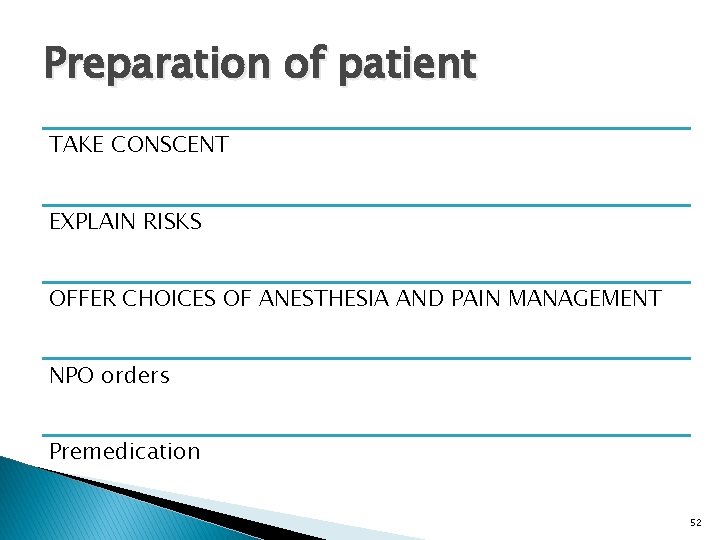
Preparation of patient TAKE CONSCENT EXPLAIN RISKS OFFER CHOICES OF ANESTHESIA AND PAIN MANAGEMENT NPO orders Premedication 52
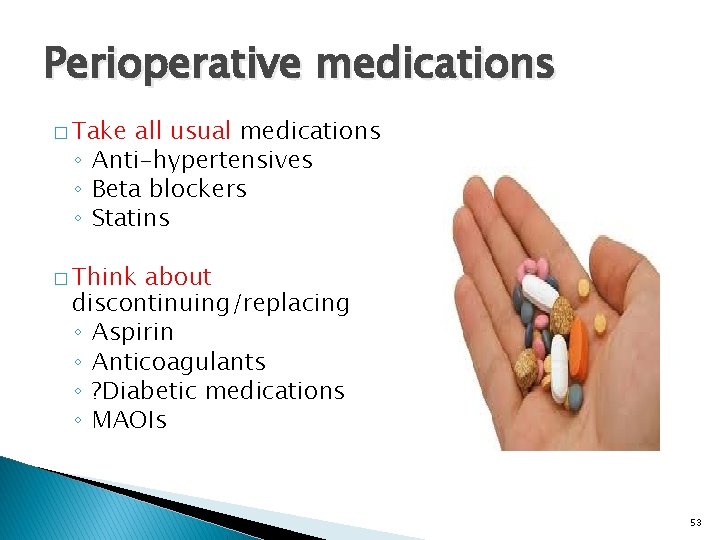
Perioperative medications � Take all usual medications ◦ Anti-hypertensives ◦ Beta blockers ◦ Statins � Think about discontinuing/replacing ◦ Aspirin ◦ Anticoagulants ◦ ? Diabetic medications ◦ MAOIs 53
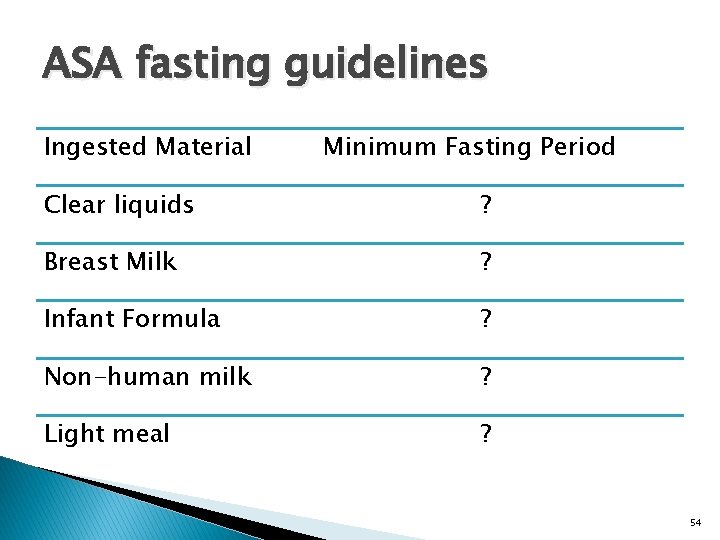
ASA fasting guidelines Ingested Material Minimum Fasting Period Clear liquids ? Breast Milk ? Infant Formula ? Non-human milk ? Light meal ? 54
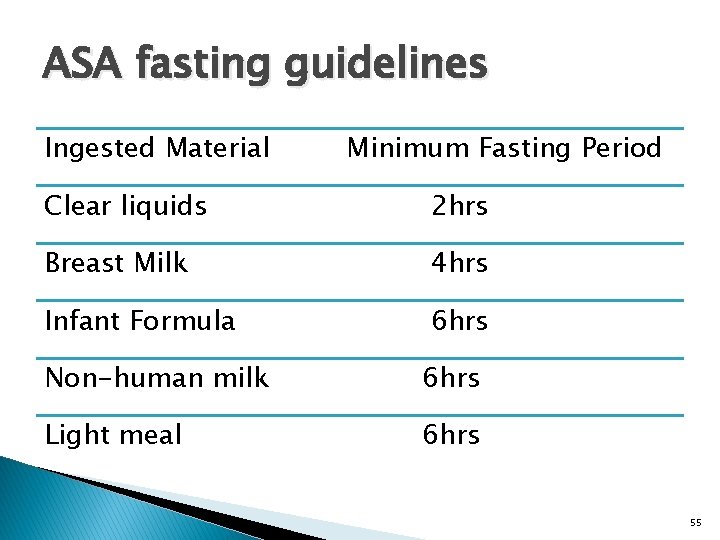
ASA fasting guidelines Ingested Material Minimum Fasting Period Clear liquids 2 hrs Breast Milk 4 hrs Infant Formula 6 hrs Non-human milk 6 hrs Light meal 6 hrs 55
PREMEDICATION PURPOSE : To allay anxiety, Reduce anesthetic drugs requirements Causes retrograde and ante grade amnesia Reduce need of intraoperative analgesia Drugs : Benzodiazepines, Narcotics, Antiemetic etc 56
57
Summary History and physical examination most important assessors of disease and risk ASA and functional status good predictors of risk Lab tests have some usefulness Lab tests add little in low risk patients May add false + ves Add expense 58
Questions 59