
1 Plant AdaptationsI Plants can survive in many
- Slides: 5
1 Plant Adaptations-I Plants can survive in many extreme environments. In order to survive in such environments, these plants need to have adaptations.
Warming (1909), on the basis of amount of water present in the soil, plants were classified into FOLLOWING groups. 2 1. 2. 3. 4. Hydrophytes – plants that occur in water e. g. Hydrilla, Pistia, Lemna, Wolffia etc. Mesophytes – those plants which prefer to grow in the habitats that are neither too dry nor too wet i. e. moderate amount of water. Which means the oxygen supply to root is also moderate. Those plants are unable to grow in wet and damp soils. Xerophytes - plants adapted to a dry habitat Helophytes – plants that occur in marshy places.
3 4. Oxylophytes- plants growing on acid soils 5. Halophytes – plants growing on saline soils 6. Psychrophytes – plants occurring on cold soils 7. Lithophytes- plants growing on rocks and stones 8. Psammophytes – plants occurring on sand gravels.
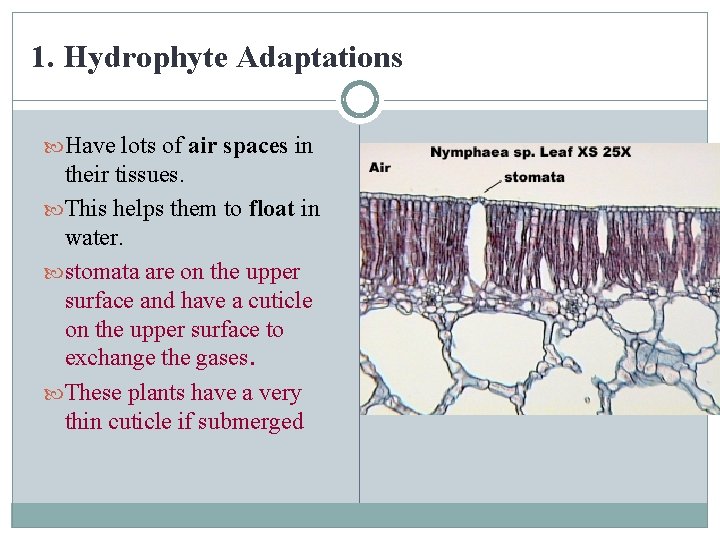
1. Hydrophyte Adaptations Have lots of air spaces in their tissues. This helps them to float in water. stomata are on the upper surface and have a cuticle on the upper surface to exchange the gases. These plants have a very thin cuticle if submerged
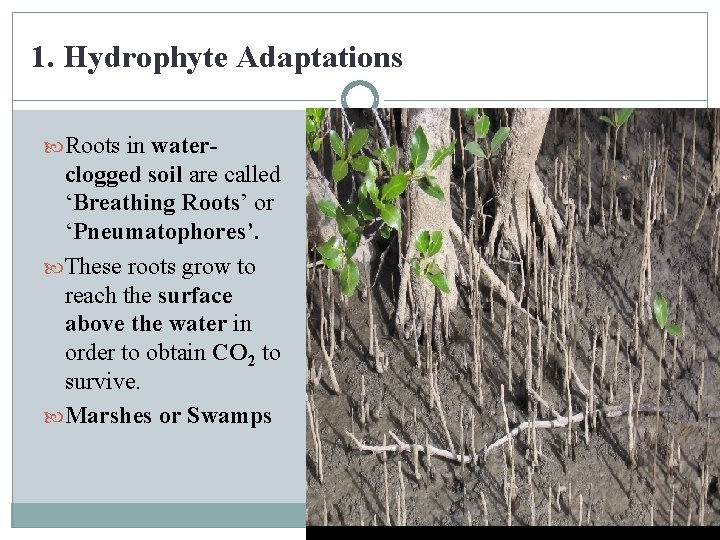
1. Hydrophyte Adaptations Roots in water- clogged soil are called ‘Breathing Roots’ or ‘Pneumatophores’. These roots grow to reach the surface above the water in order to obtain CO 2 to survive. Marshes or Swamps