
1 Physical Geology Lab 03 Volcanoes and Plutons
1 Physical Geology Lab 03: Volcanoes and Plutons Part 1 DR. GREGG WILKERSON
2 DOWNLOADS Lecture: Igneous Rocks Lab: Volcanoes and Plutons Igneous Rock Properties Igneous Rock Classification Table SOLUTIONS ARE IN RED
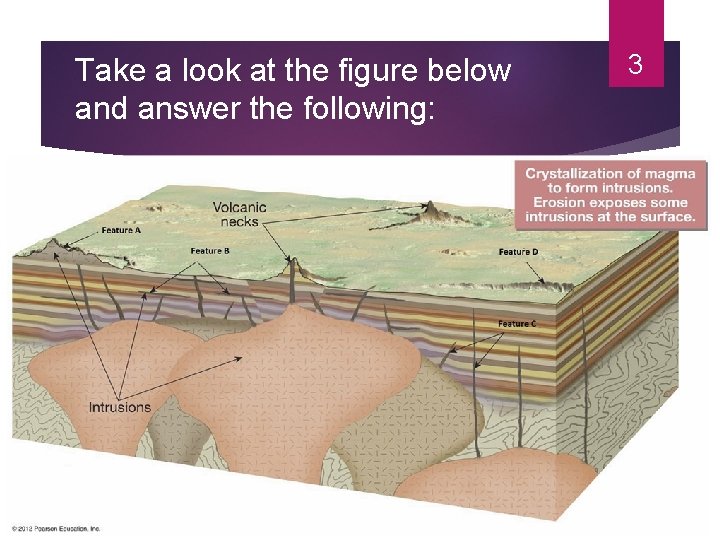
Take a look at the figure below and answer the following: 3

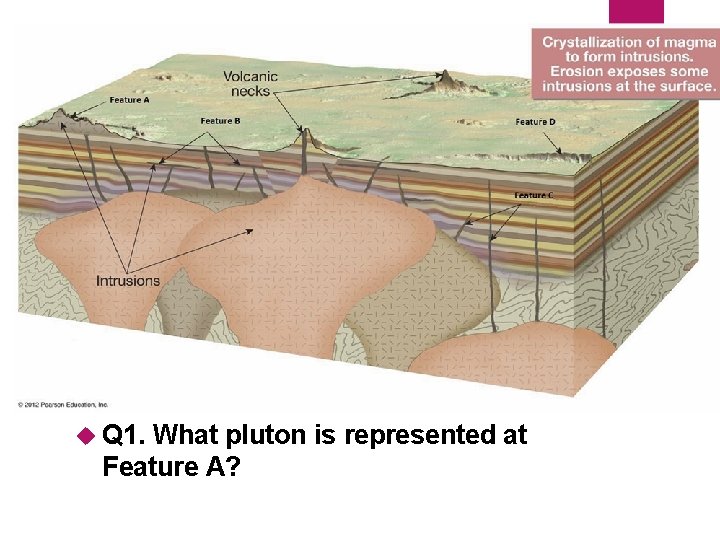
Take a look at the figure below and answer the following: 1. What pluton is represented at Feature A? ______________ 2. What plutons can you see at Feature B? _____________ 3. What are the plutons labeled Feature C? _____________ 4. What is Feature D? ___________ 5. What would Feature D result in? _______________ 6. Consider that these features are all produced from magma which is very hot. How would you be able to tell the difference between an ancient buried lava flow, and an ancient buried sill? ________________________ 7. In the figure are several intrusions. What would you call a group of these formed into a single body that covered 46 sq. km? _______________ 4
5 Q 1. What pluton is represented at Feature A?
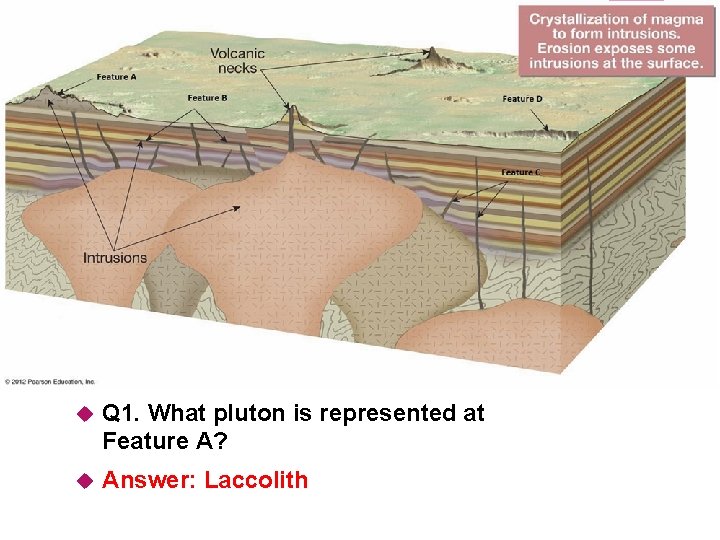
6 Q 1. What pluton is represented at Feature A? Answer: Laccolith
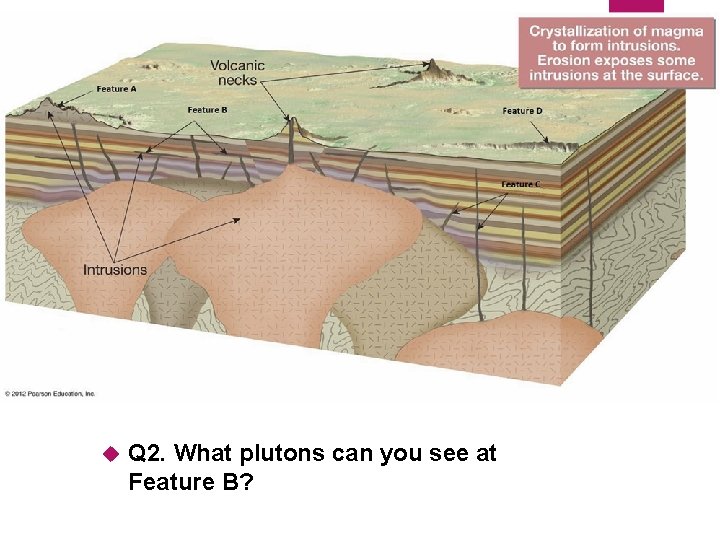
7 Q 2. What plutons can you see at Feature B?
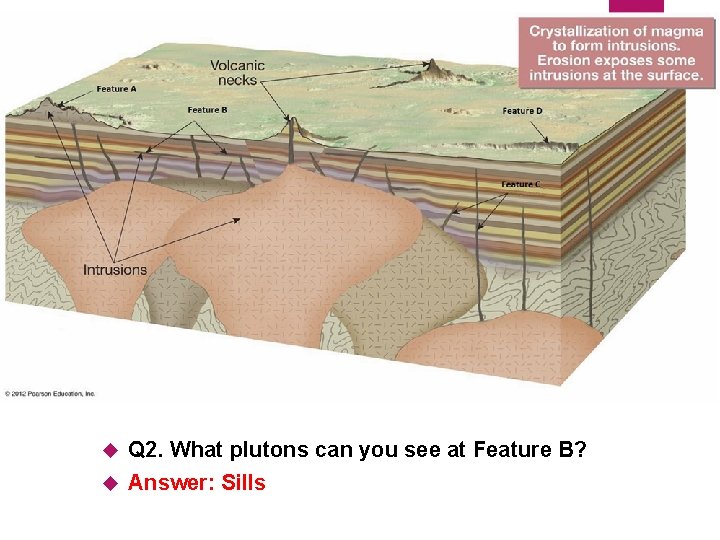
8 Q 2. What plutons can you see at Feature B? Answer: Sills
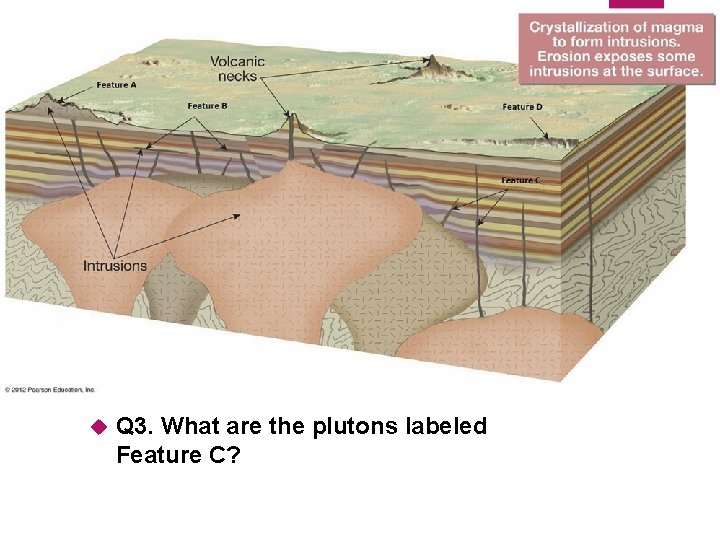
9 Q 3. What are the plutons labeled Feature C?
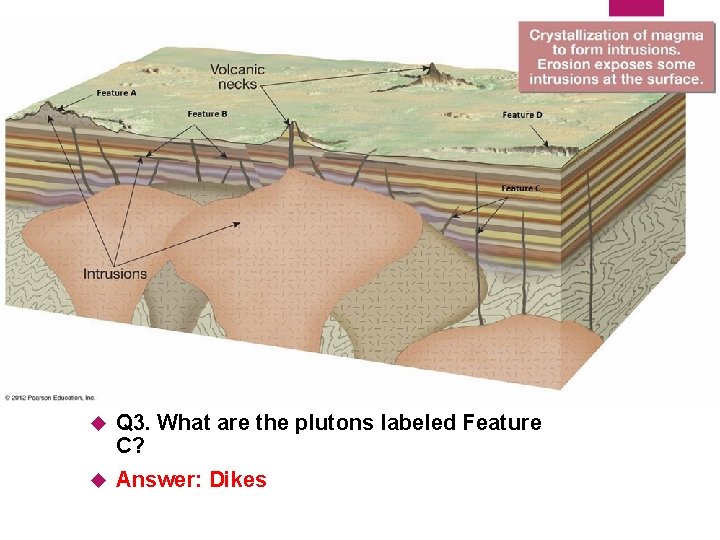
10 Q 3. What are the plutons labeled Feature C? Answer: Dikes
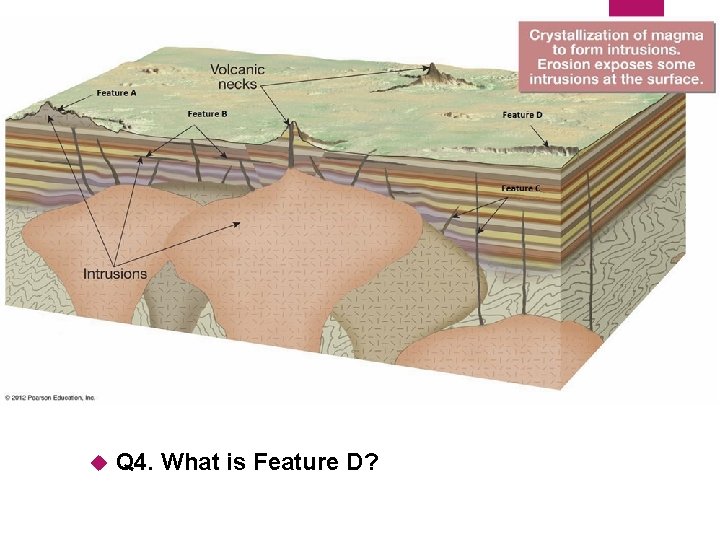
11 Q 4. What is Feature D?
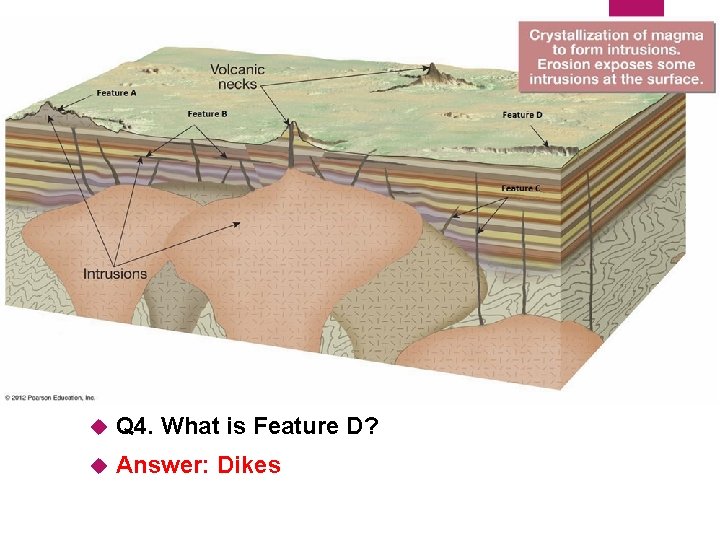
12 Q 4. What is Feature D? Answer: Dikes
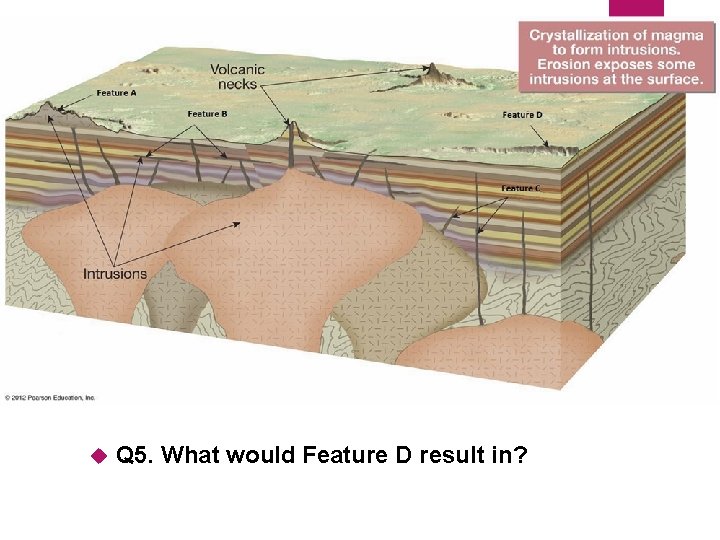
13 Q 5. What would Feature D result in?
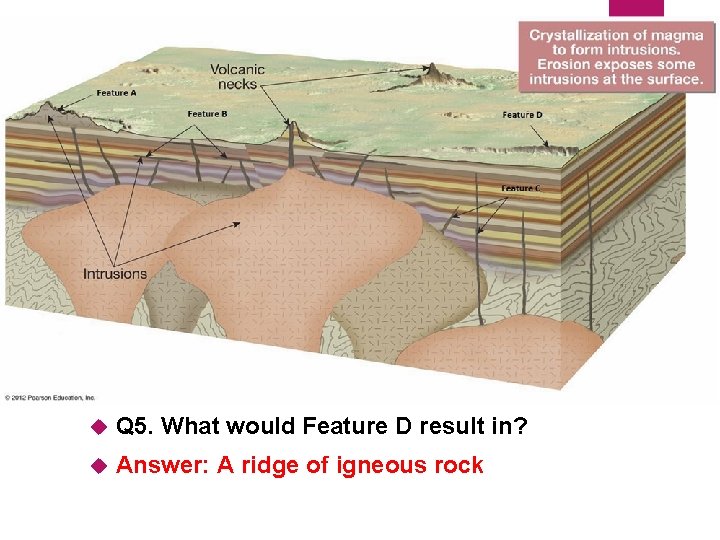
14 Q 5. What would Feature D result in? Answer: A ridge of igneous rock
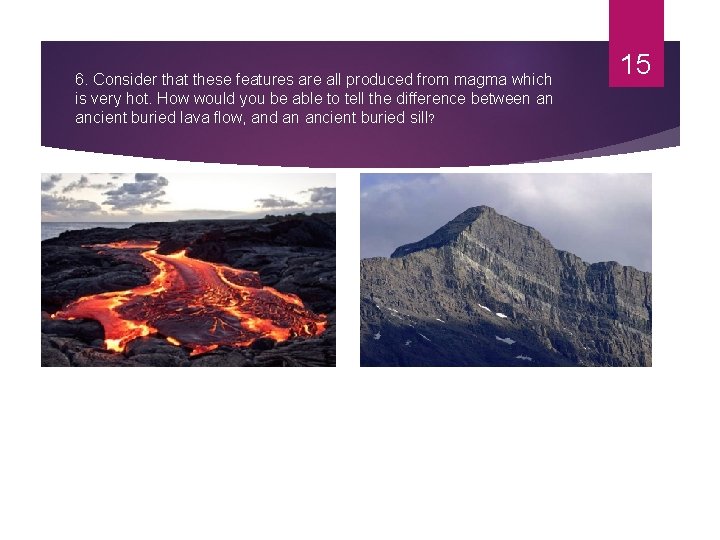
6. Consider that these features are all produced from magma which is very hot. How would you be able to tell the difference between an ancient buried lava flow, and an ancient buried sill? 15
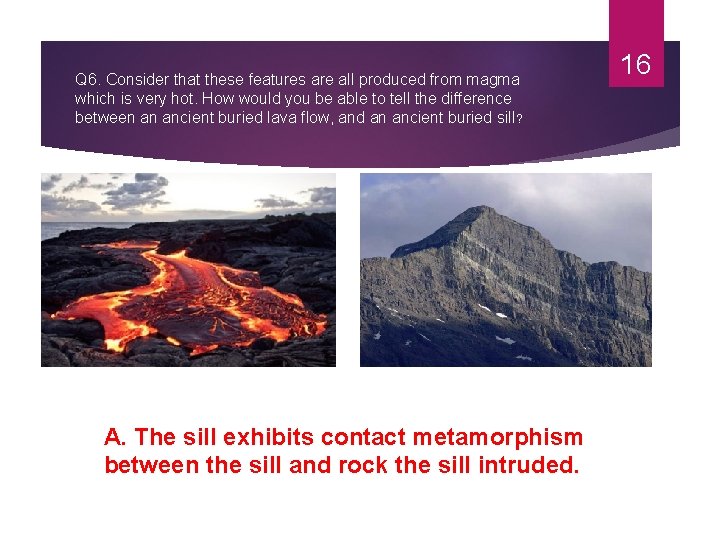
Q 6. Consider that these features are all produced from magma which is very hot. How would you be able to tell the difference between an ancient buried lava flow, and an ancient buried sill? A. The sill exhibits contact metamorphism between the sill and rock the sill intruded. 16
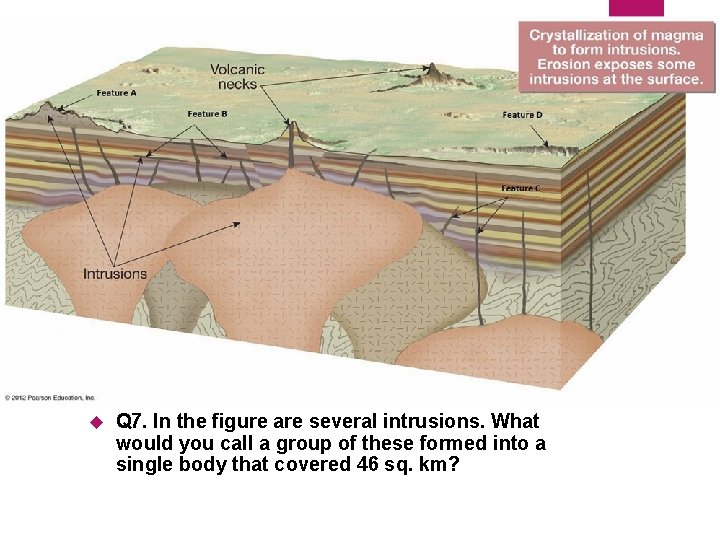
17 Q 7. In the figure are several intrusions. What would you call a group of these formed into a single body that covered 46 sq. km?
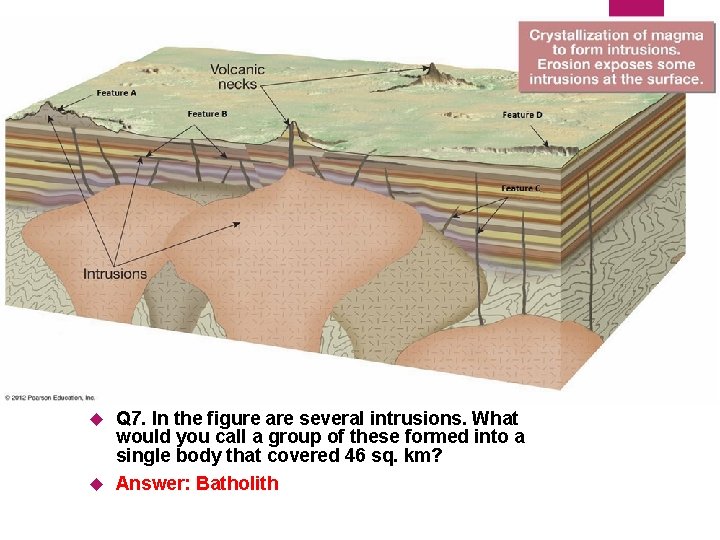
18 Q 7. In the figure are several intrusions. What would you call a group of these formed into a single body that covered 46 sq. km? Answer: Batholith
19 Relative Size of Volcanoes In the space below, make a simple sketch of two volcanoes. Using a scale of 1 cm = 10 km, draw Mt. Shasta (4. 3 km tall and 40 km wide) and Mauna Loa (9. 2 km tall and 119 km wide). Make a mark near the peak of Mauna Loa at 8. 8 km for Mt. Everest.
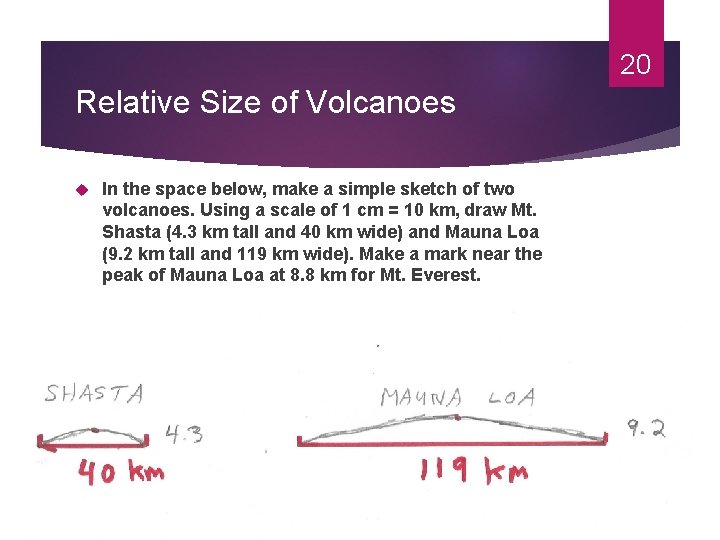
20 Relative Size of Volcanoes In the space below, make a simple sketch of two volcanoes. Using a scale of 1 cm = 10 km, draw Mt. Shasta (4. 3 km tall and 40 km wide) and Mauna Loa (9. 2 km tall and 119 km wide). Make a mark near the peak of Mauna Loa at 8. 8 km for Mt. Everest.
- Slides: 20