
1 PHYLUM NEMATODA WORM WEEK PHYLUM NEMATODA Over
- Slides: 20
1 PHYLUM NEMATODA WORM WEEK
PHYLUM NEMATODA • Over 28, 000 species have so far been described. • Commonly referred to as the roundworms. • Among the most abundant multicellular animals • Mostly free-living • Some are predators with teeth and other mouthparts, many are scavengers or parasites.
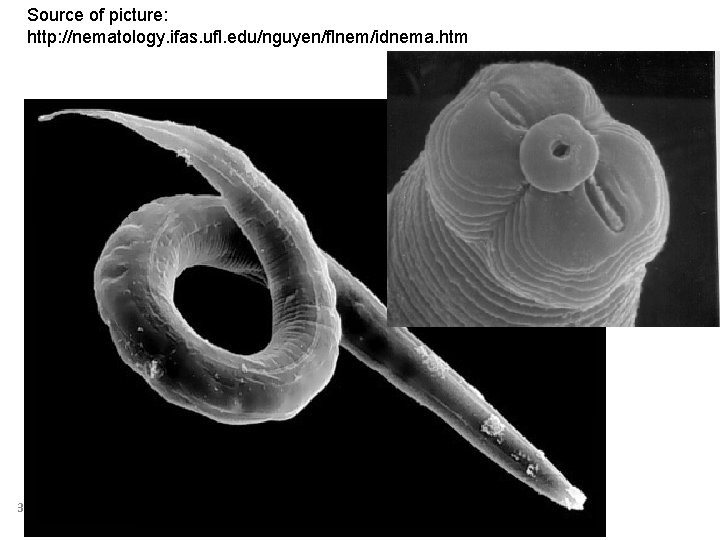
Source of picture: http: //nematology. ifas. ufl. edu/nguyen/flnem/idnema. htm 3 nematodes
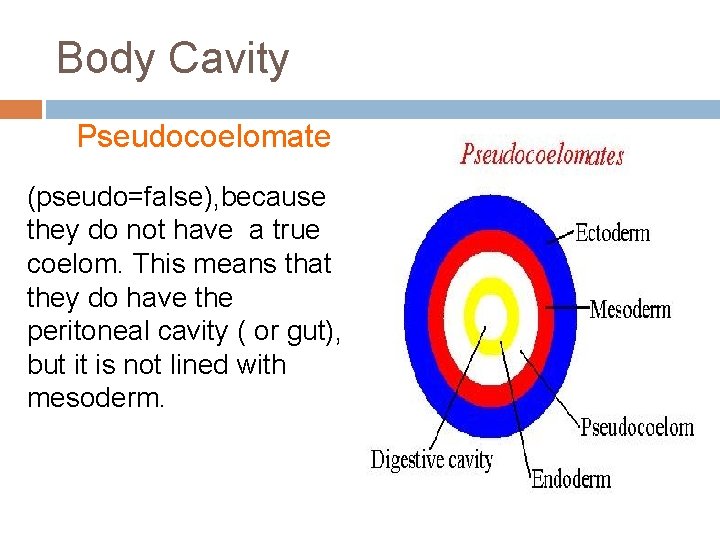
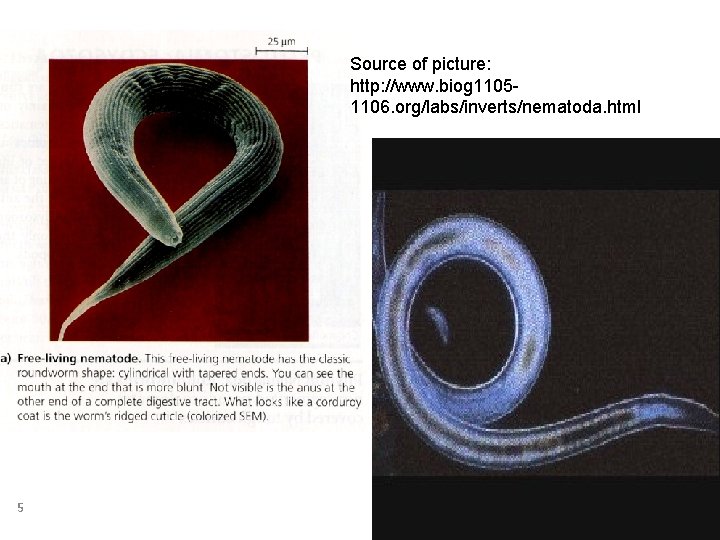
Body Cavity Pseudocoelomate (pseudo=false), because they do not have a true coelom. This means that they do have the peritoneal cavity ( or gut), but it is not lined with mesoderm.
Source of picture: http: //www. biog 11051106. org/labs/inverts/nematoda. html 5
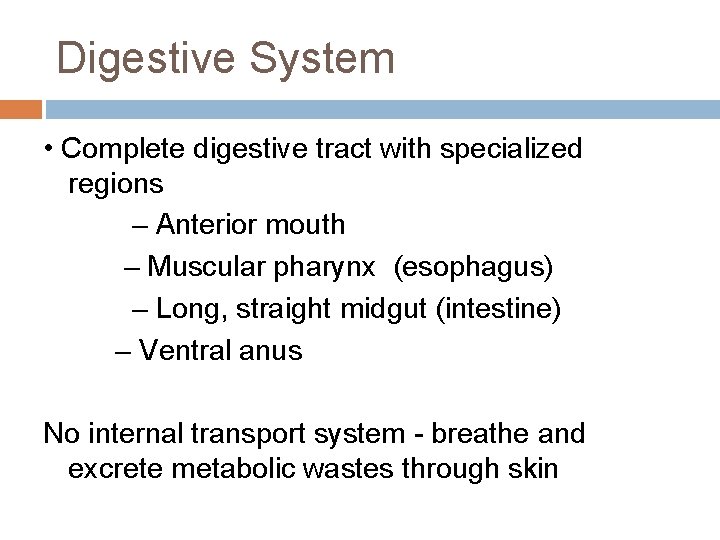
Digestive System • Complete digestive tract with specialized regions – Anterior mouth – Muscular pharynx (esophagus) – Long, straight midgut (intestine) – Ventral anus No internal transport system - breathe and excrete metabolic wastes through skin
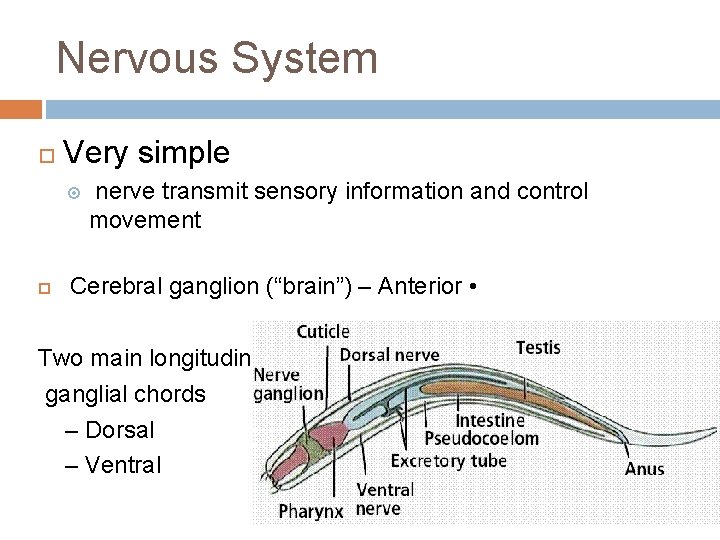
Nervous System Very simple nerve transmit sensory information and control movement Cerebral ganglion (“brain”) – Anterior • Two main longitudinal ganglial chords – Dorsal – Ventral
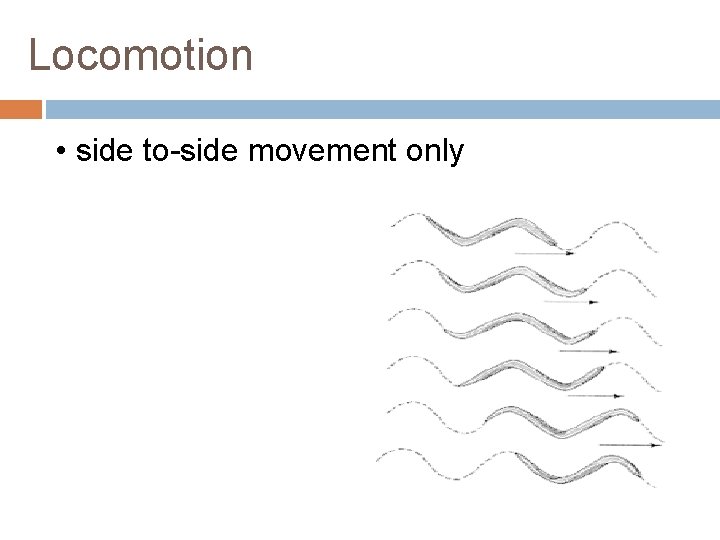
Locomotion • side to-side movement only
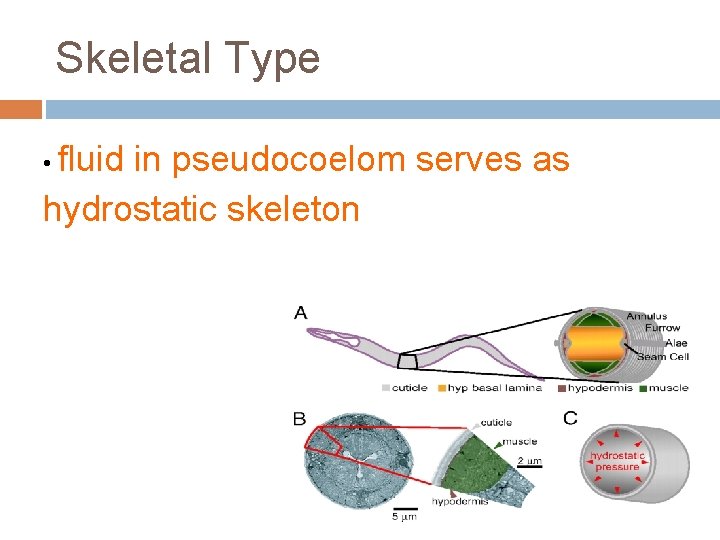
Skeletal Type • fluid in pseudocoelom serves as hydrostatic skeleton
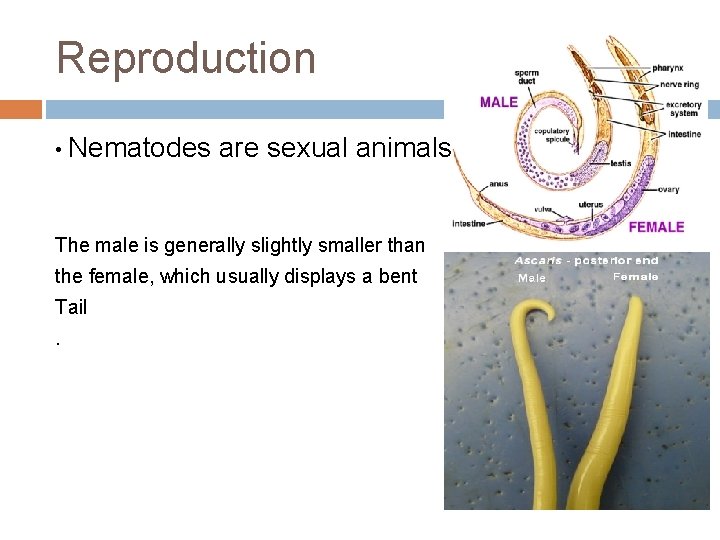
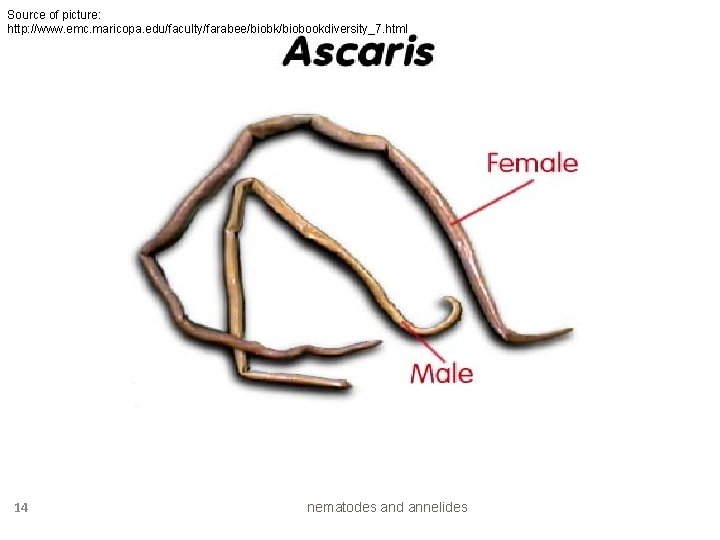
Reproduction • Nematodes are sexual animals The male is generally slightly smaller than the female, which usually displays a bent Tail.
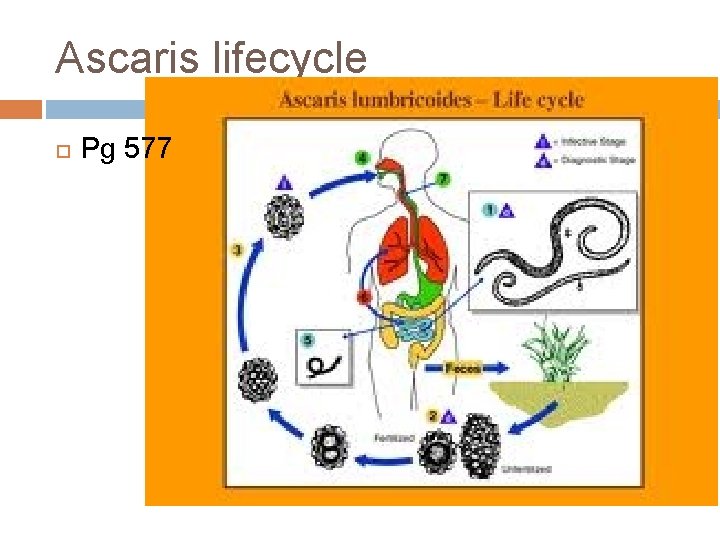
Ascaris lifecycle Pg 577
Life Cycle of A. lumbricoides • Eggs hatch in the intestine • Larvae migrate to the liver, then to the blood, then to lungs, pharynx, and back to the intestine • Mature and mate in the intestine • Eggs are released with the feces • Ingestion leads to infection of the next host
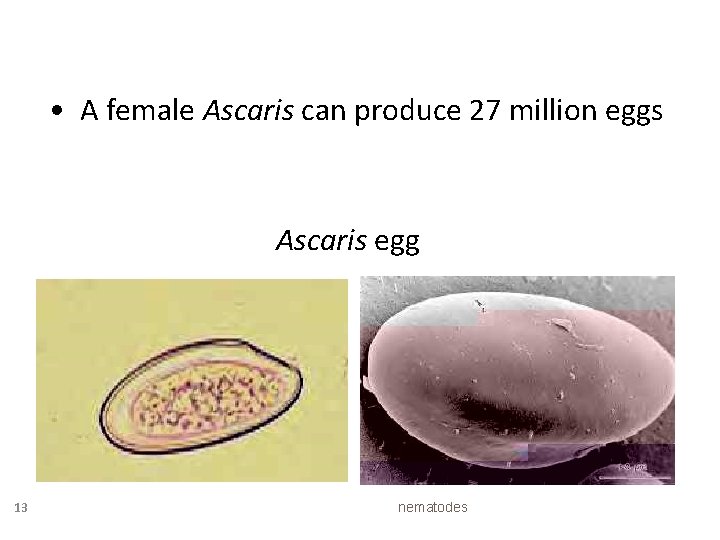
• A female Ascaris can produce 27 million eggs Ascaris egg 13 nematodes
Source of picture: http: //www. emc. maricopa. edu/faculty/farabee/biobk/biobookdiversity_7. html 14 nematodes and annelides
Ascaris lumbricoides ( Human roundworms) • Simple life cycle with one host • The host is humans or a few other mammals (endoparasite). • Infection comes from ingesting eggs • Ascarids are the largest nematodes 15 nematodes and annelides
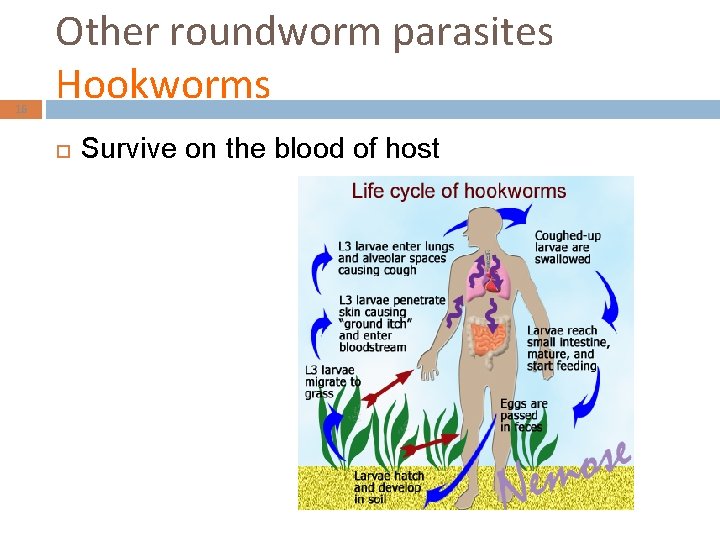
16 Other roundworm parasites Hookworms Survive on the blood of host
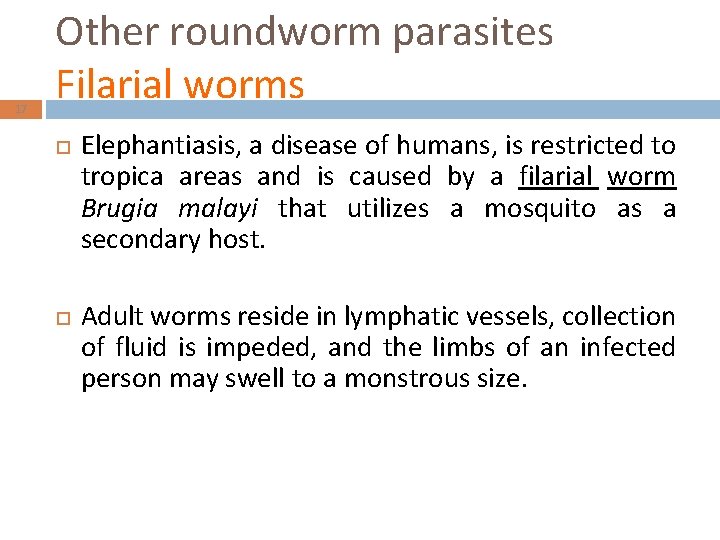
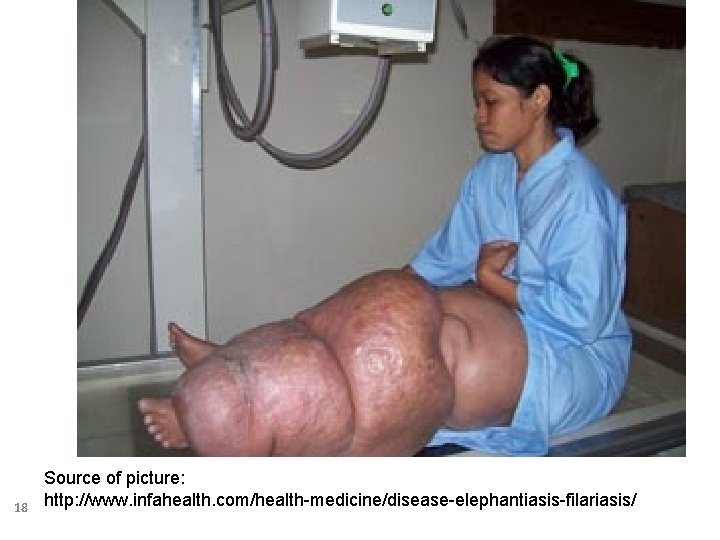
17 Other roundworm parasites Filarial worms Elephantiasis, a disease of humans, is restricted to tropica areas and is caused by a filarial worm Brugia malayi that utilizes a mosquito as a secondary host. Adult worms reside in lymphatic vessels, collection of fluid is impeded, and the limbs of an infected person may swell to a monstrous size.
18 Source of picture: http: //www. infahealth. com/health-medicine/disease-elephantiasis-filariasis/
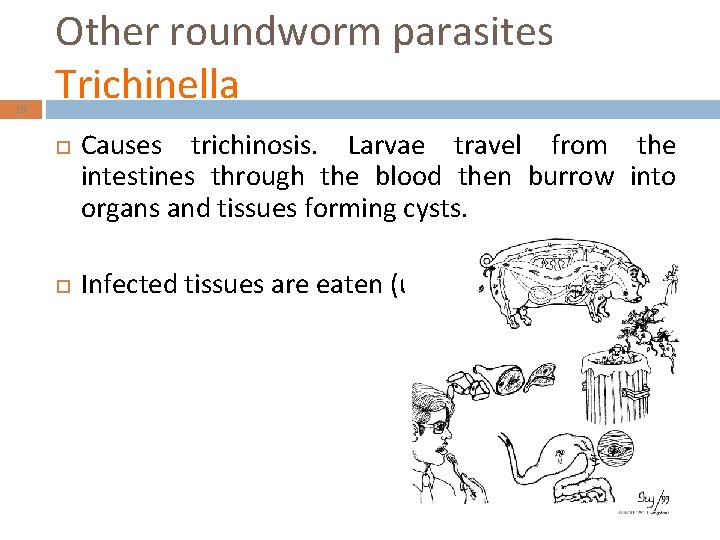
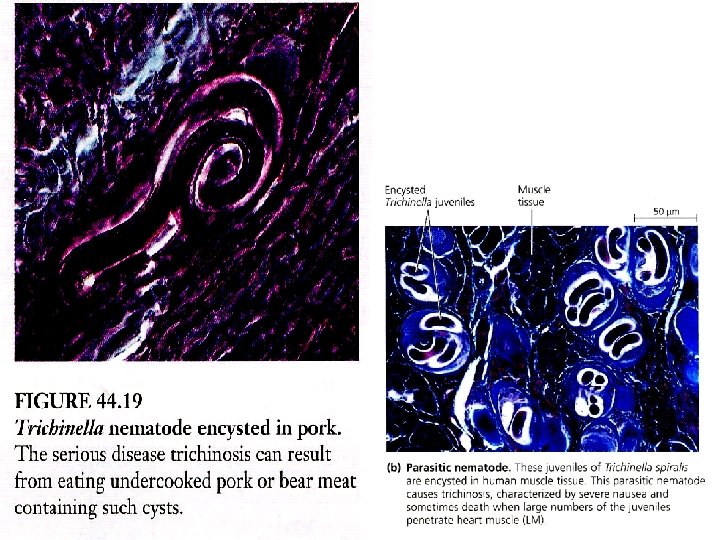
19 Other roundworm parasites Trichinella Causes trichinosis. Larvae travel from the intestines through the blood then burrow into organs and tissues forming cysts. Infected tissues are eaten (uncooked pork)
Nematoda : Trichinella sp. 20 nematodes and annelides