
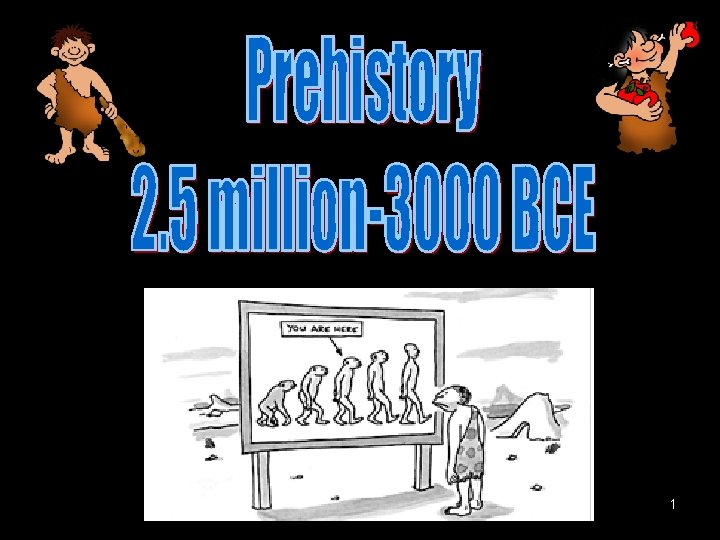
1 Painted depiction of Early Humans 2 Prehistory

- Slides: 24
1
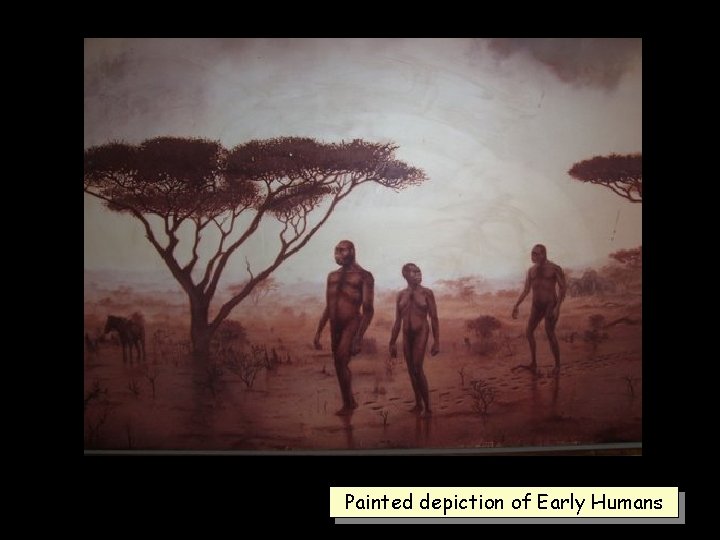
Painted depiction of Early Humans 2
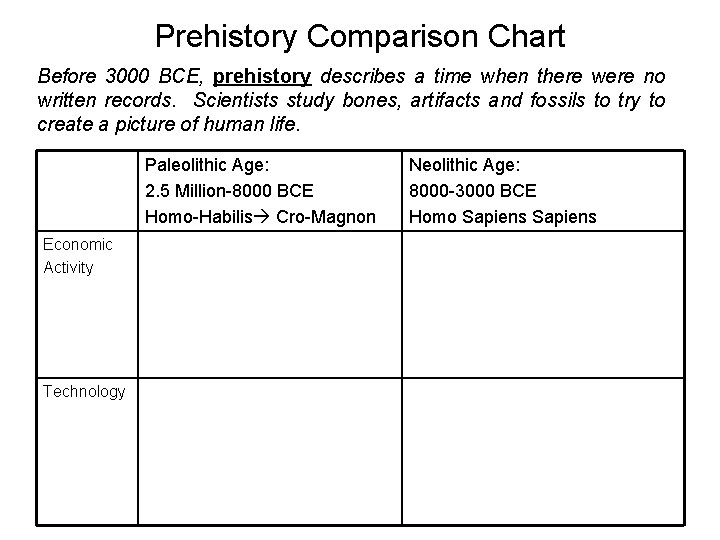
Prehistory Comparison Chart Before 3000 BCE, prehistory describes a time when there were no written records. Scientists study bones, artifacts and fossils to try to create a picture of human life. Paleolithic Age: 2. 5 Million-8000 BCE Homo-Habilis Cro-Magnon Neolithic Age: 8000 -3000 BCE Homo Sapiens Economic Activity Technology 3
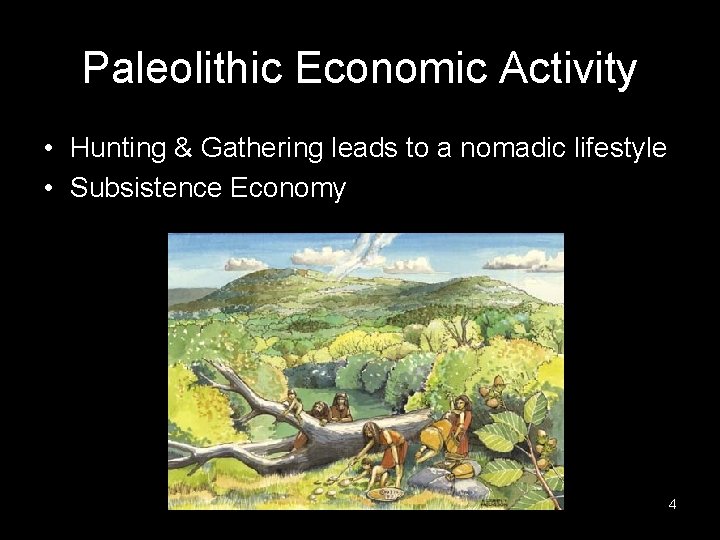
Paleolithic Economic Activity • Hunting & Gathering leads to a nomadic lifestyle • Subsistence Economy 4
5
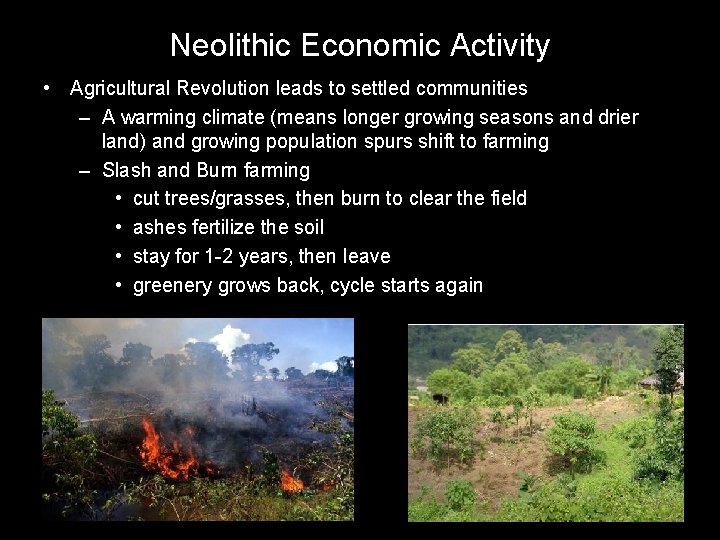
Neolithic Economic Activity • Agricultural Revolution leads to settled communities – A warming climate (means longer growing seasons and drier land) and growing population spurs shift to farming – Slash and Burn farming • cut trees/grasses, then burn to clear the field • ashes fertilize the soil • stay for 1 -2 years, then leave • greenery grows back, cycle starts again 6
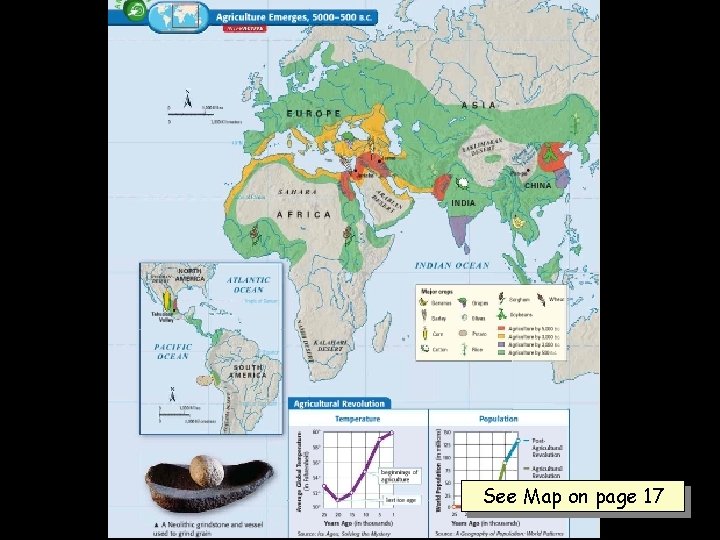
See Map on page 17 7
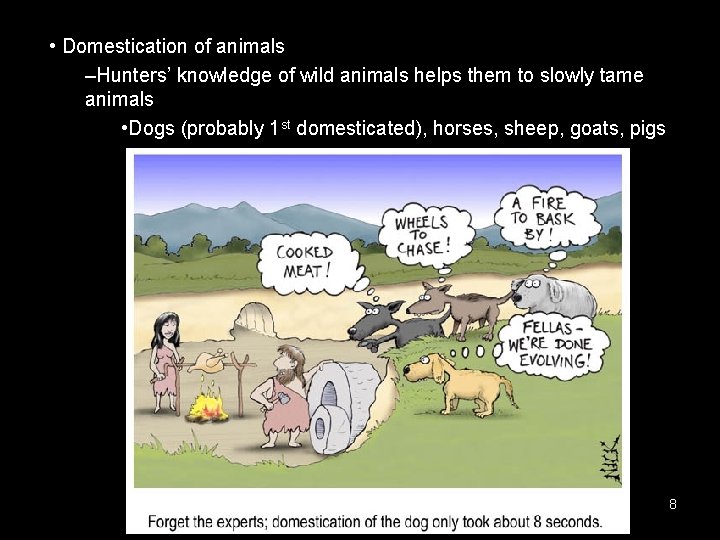
• Domestication of animals –Hunters’ knowledge of wild animals helps them to slowly tame animals • Dogs (probably 1 st domesticated), horses, sheep, goats, pigs 8
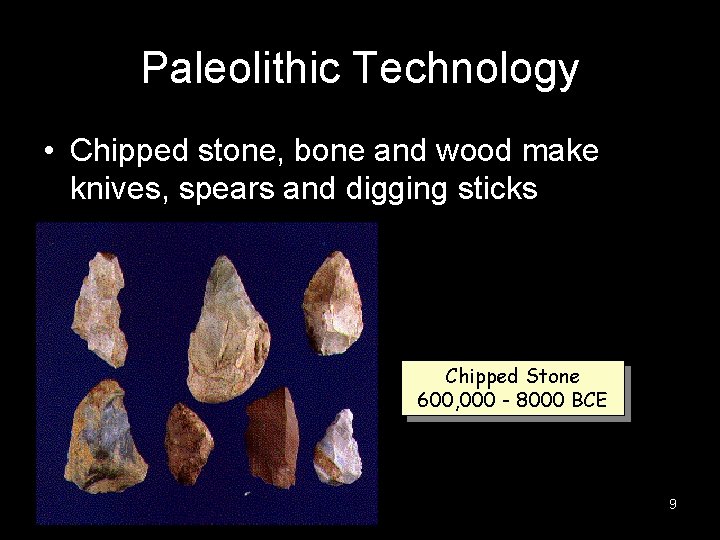
Paleolithic Technology • Chipped stone, bone and wood make knives, spears and digging sticks Chipped Stone 600, 000 - 8000 BCE 9
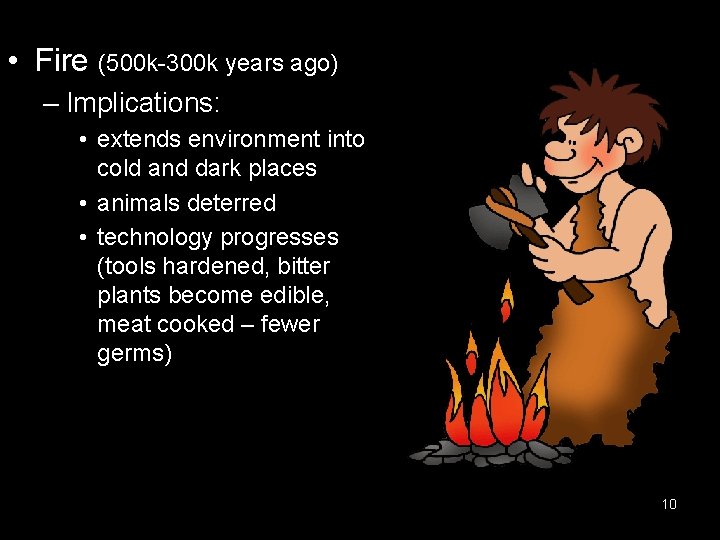
• Fire (500 k-300 k years ago) – Implications: • extends environment into cold and dark places • animals deterred • technology progresses (tools hardened, bitter plants become edible, meat cooked – fewer germs) 10
11
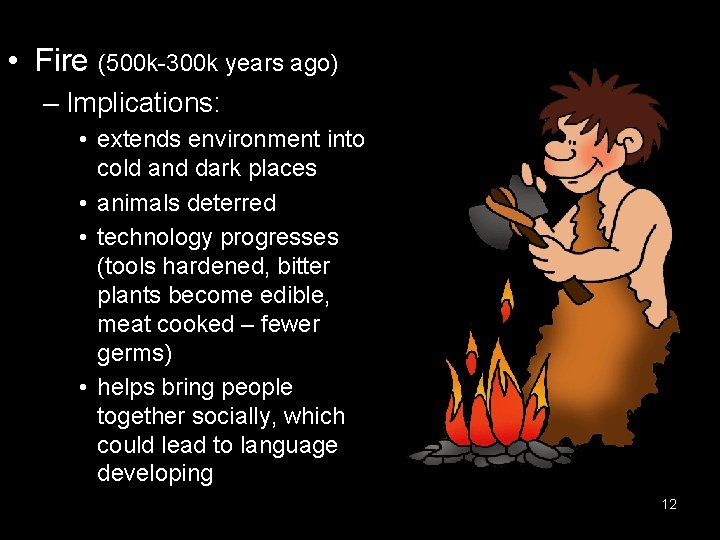
• Fire (500 k-300 k years ago) – Implications: • extends environment into cold and dark places • animals deterred • technology progresses (tools hardened, bitter plants become edible, meat cooked – fewer germs) • helps bring people together socially, which could lead to language developing 12
• Language – Implications: • allows easier cooperation among people in tasks of living and hunting • more productive hunting and gathering means a larger food supply, which leads to an increase in population • naming and classifying objects stimulates the mind and leads to reasoning and invention Ας μιλάμε Ελληνικά! 13
14
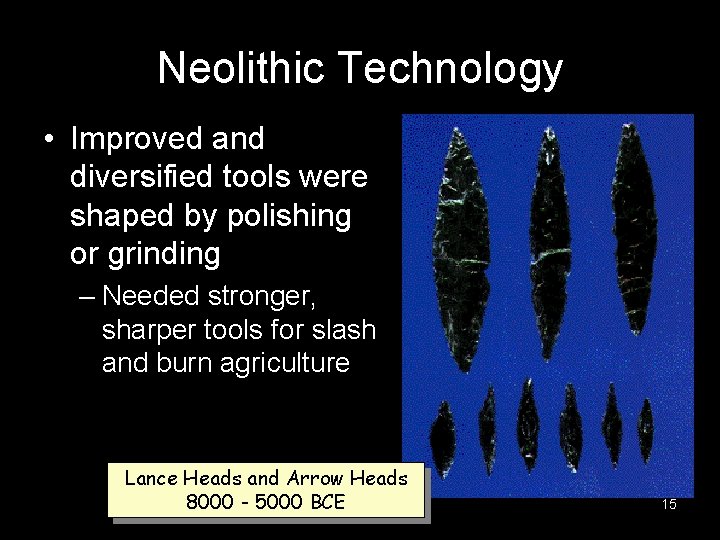
Neolithic Technology • Improved and diversified tools were shaped by polishing or grinding – Needed stronger, sharper tools for slash and burn agriculture Lance Heads and Arrow Heads 8000 - 5000 BCE 15
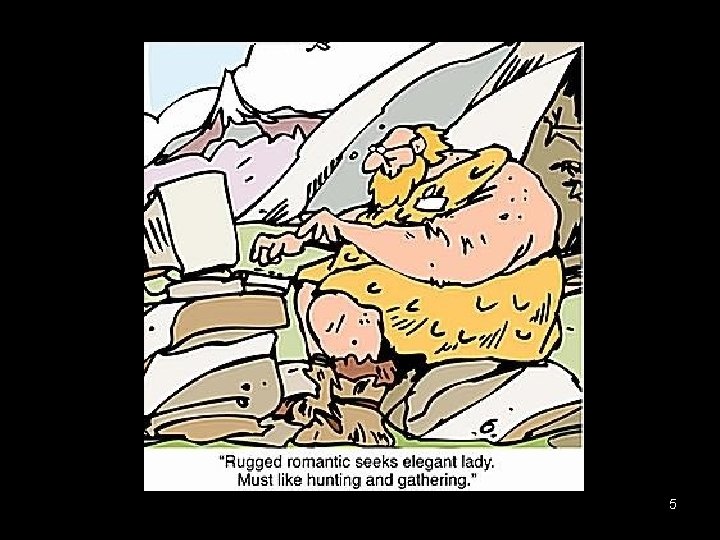
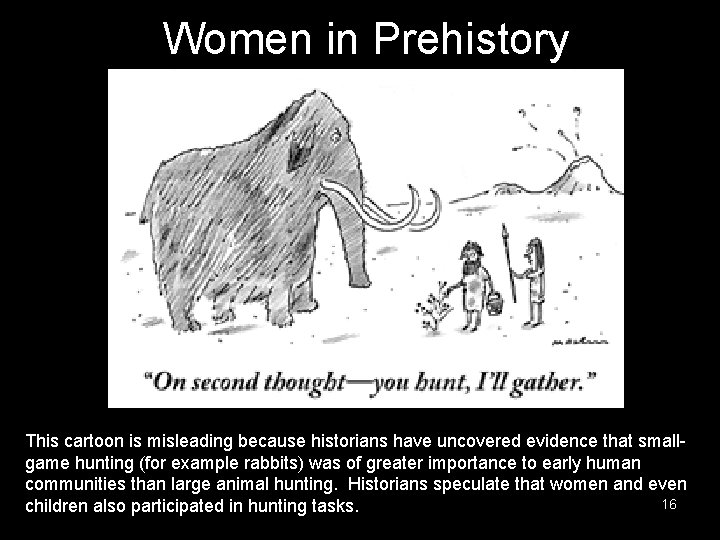
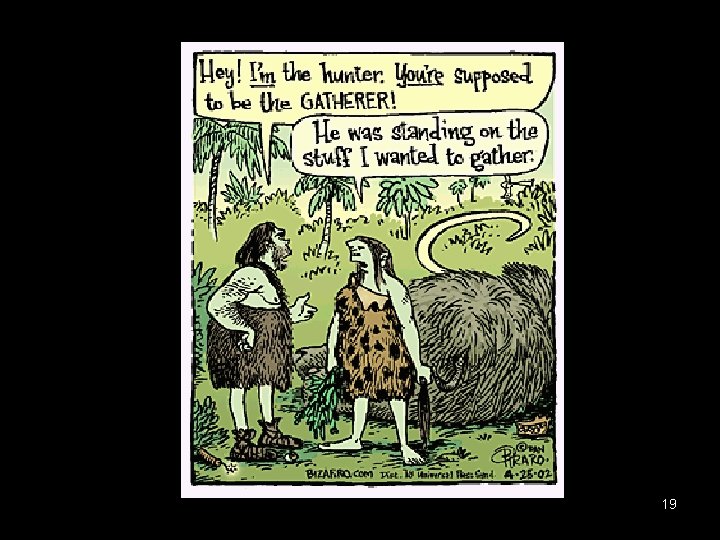
Women in Prehistory This cartoon is misleading because historians have uncovered evidence that smallgame hunting (for example rabbits) was of greater importance to early human communities than large animal hunting. Historians speculate that women and even 16 children also participated in hunting tasks.
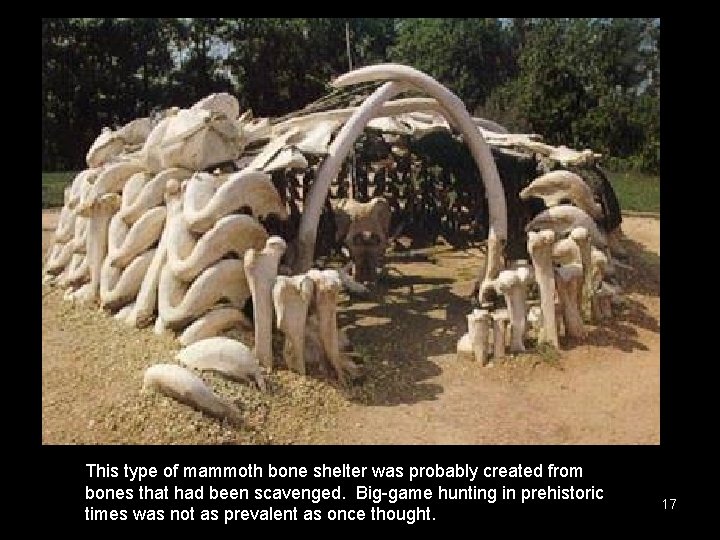
This type of mammoth bone shelter was probably created from bones that had been scavenged. Big-game hunting in prehistoric times was not as prevalent as once thought. 17
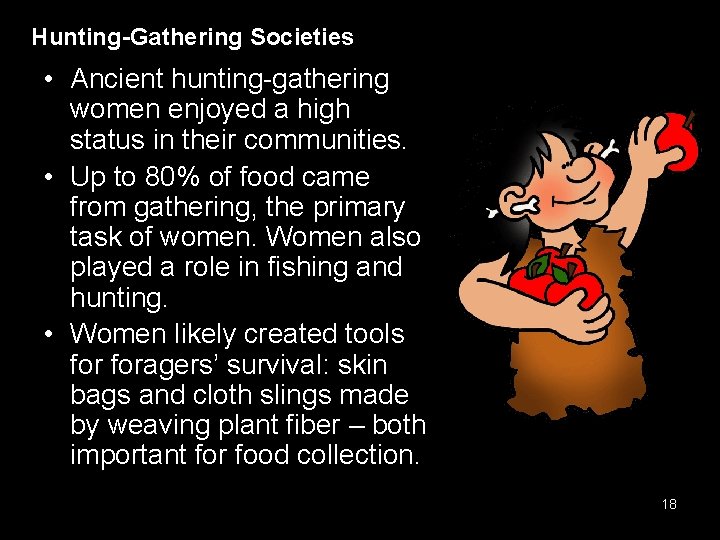
Hunting-Gathering Societies • Ancient hunting-gathering women enjoyed a high status in their communities. • Up to 80% of food came from gathering, the primary task of women. Women also played a role in fishing and hunting. • Women likely created tools foragers’ survival: skin bags and cloth slings made by weaving plant fiber – both important for food collection. 18
19
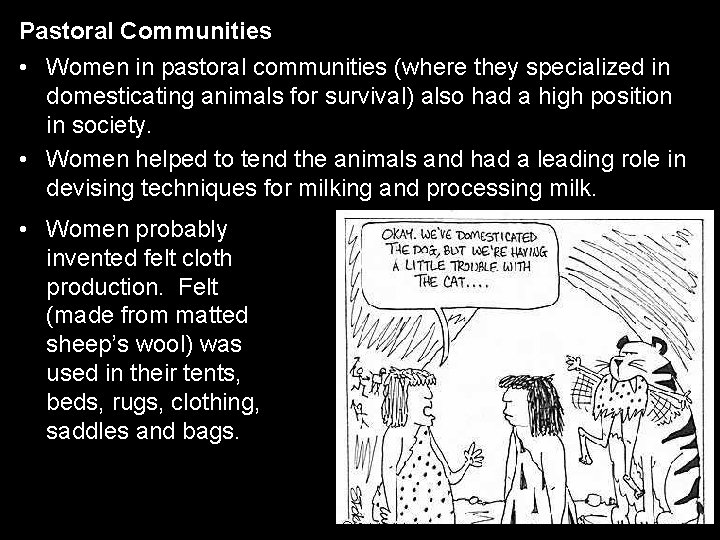
Pastoral Communities • Women in pastoral communities (where they specialized in domesticating animals for survival) also had a high position in society. • Women helped to tend the animals and had a leading role in devising techniques for milking and processing milk. • Women probably invented felt cloth production. Felt (made from matted sheep’s wool) was used in their tents, beds, rugs, clothing, saddles and bags. 20
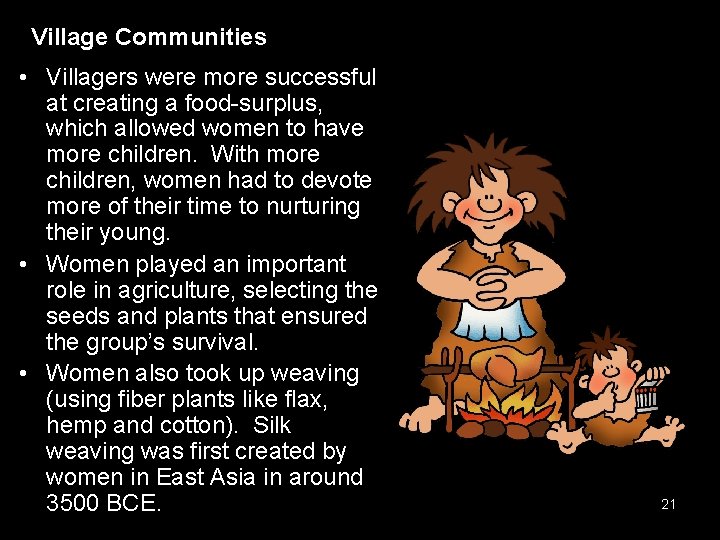
Village Communities • Villagers were more successful at creating a food-surplus, which allowed women to have more children. With more children, women had to devote more of their time to nurturing their young. • Women played an important role in agriculture, selecting the seeds and plants that ensured the group’s survival. • Women also took up weaving (using fiber plants like flax, hemp and cotton). Silk weaving was first created by women in East Asia in around 3500 BCE. 21
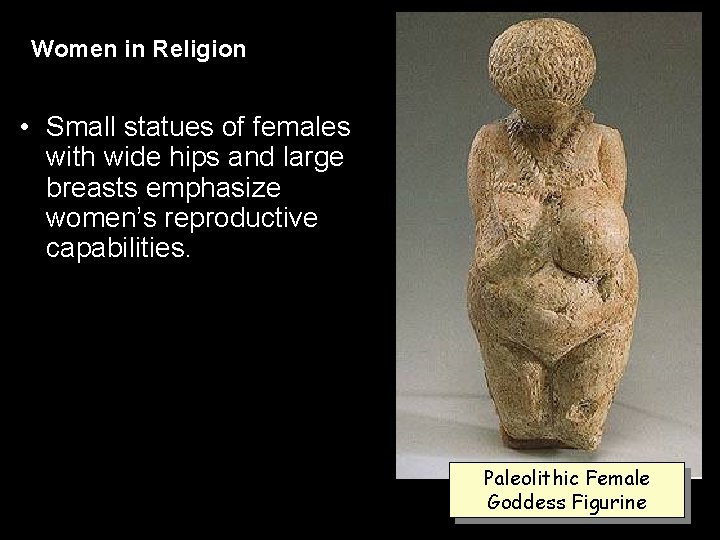
Women in Religion • Small statues of females with wide hips and large breasts emphasize women’s reproductive capabilities. Paleolithic Female Goddess Figurine 22
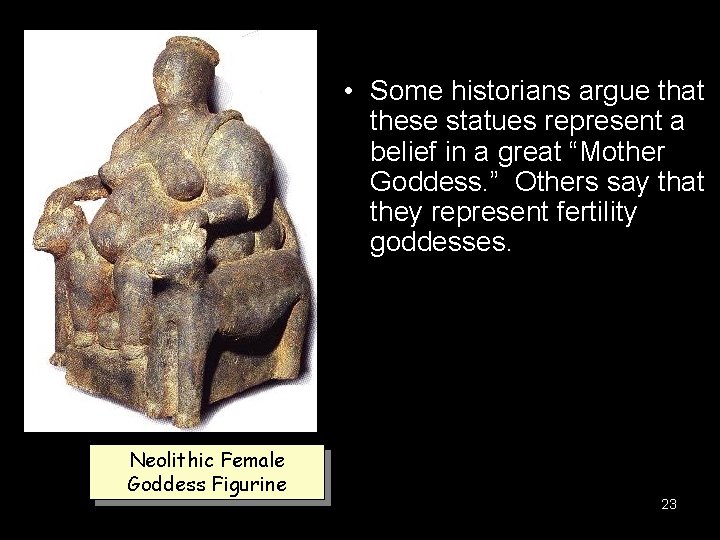
• Some historians argue that these statues represent a belief in a great “Mother Goddess. ” Others say that they represent fertility goddesses. Neolithic Female Goddess Figurine 23
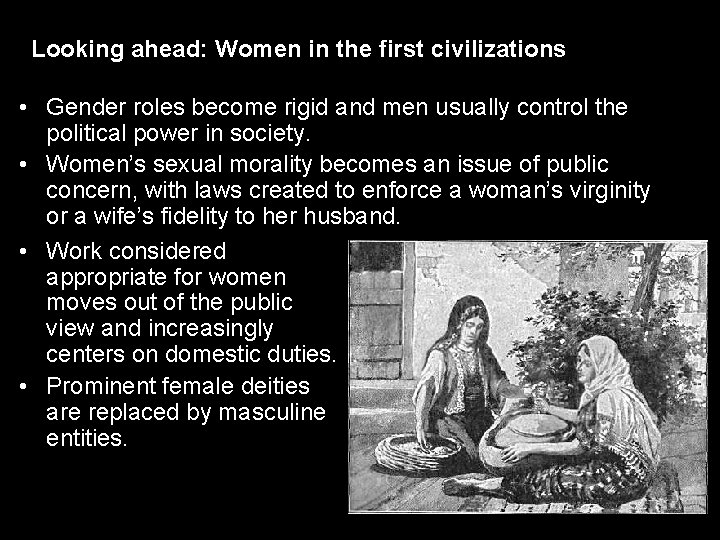
Looking ahead: Women in the first civilizations • Gender roles become rigid and men usually control the political power in society. • Women’s sexual morality becomes an issue of public concern, with laws created to enforce a woman’s virginity or a wife’s fidelity to her husband. • Work considered appropriate for women moves out of the public view and increasingly centers on domestic duties. • Prominent female deities are replaced by masculine entities. 24