
1 Overview of Fiberoptic Communication and Sensor Systems
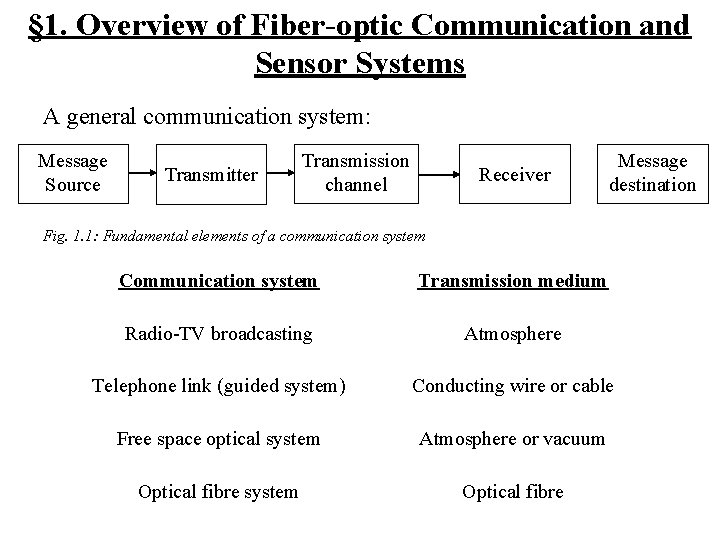
§ 1. Overview of Fiber-optic Communication and Sensor Systems A general communication system: Message Source Transmitter Transmission channel Receiver Message destination Fig. 1. 1: Fundamental elements of a communication system Communication system Transmission medium Radio-TV broadcasting Atmosphere Telephone link (guided system) Conducting wire or cable Free space optical system Atmosphere or vacuum Optical fibre system Optical fibre
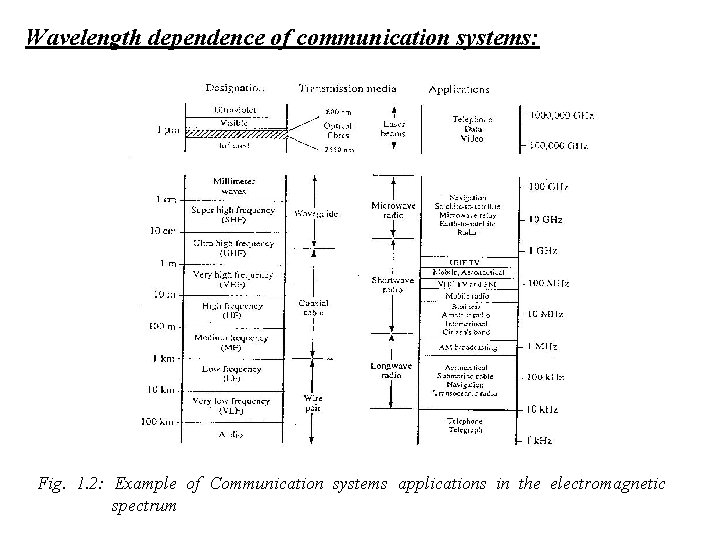
Wavelength dependence of communication systems: Fig. 1. 2: Example of Communication systems applications in the electromagnetic spectrum
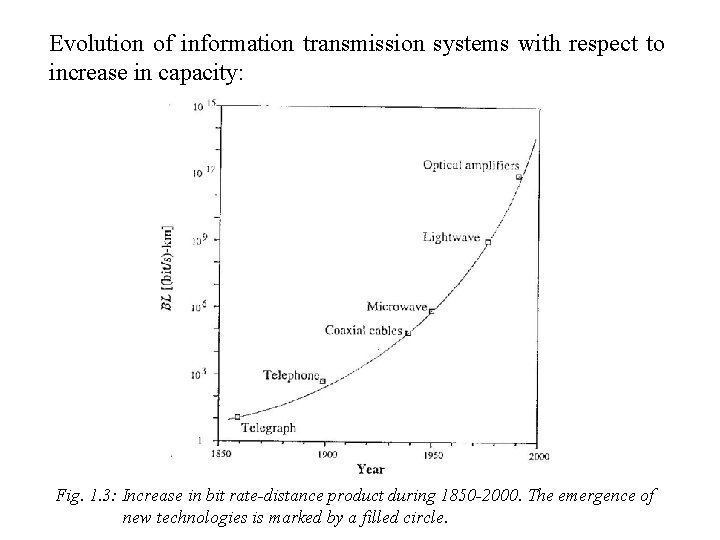
Evolution of information transmission systems with respect to increase in capacity: Fig. 1. 3: Increase in bit rate-distance product during 1850 -2000. The emergence of new technologies is marked by a filled circle.
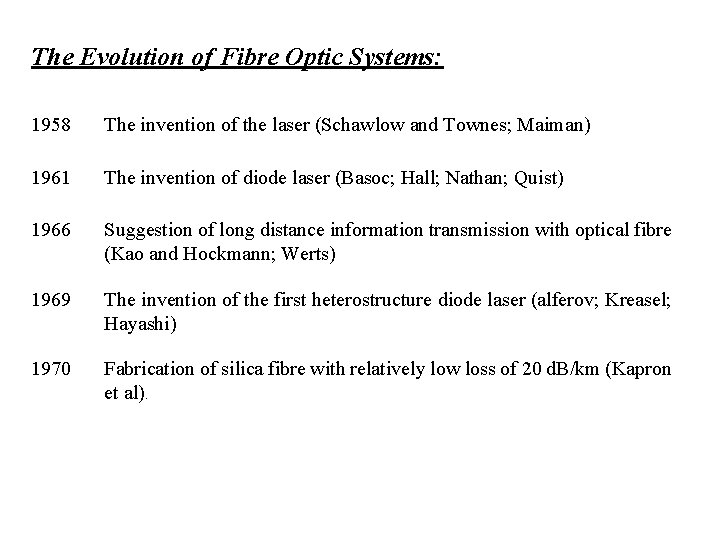
The Evolution of Fibre Optic Systems: 1958 The invention of the laser (Schawlow and Townes; Maiman) 1961 The invention of diode laser (Basoc; Hall; Nathan; Quist) 1966 Suggestion of long distance information transmission with optical fibre (Kao and Hockmann; Werts) 1969 The invention of the first heterostructure diode laser (alferov; Kreasel; Hayashi) 1970 Fabrication of silica fibre with relatively low loss of 20 d. B/km (Kapron et al).
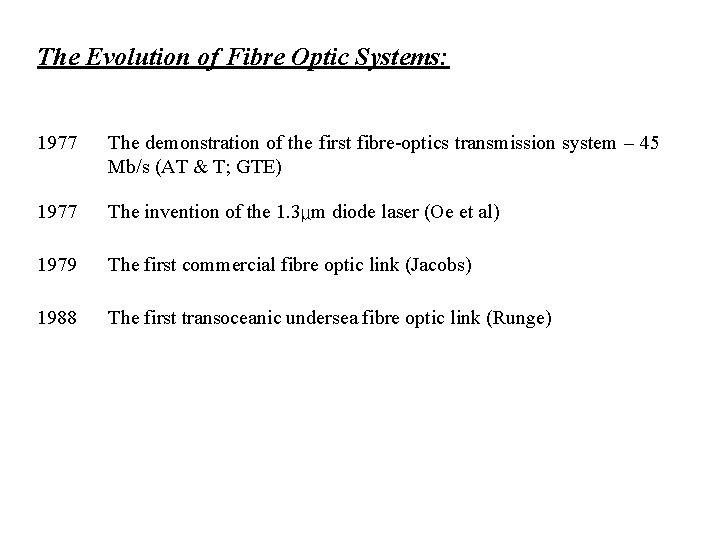
The Evolution of Fibre Optic Systems: 1977 The demonstration of the first fibre-optics transmission system – 45 Mb/s (AT & T; GTE) 1977 The invention of the 1. 3µm diode laser (Oe et al) 1979 The first commercial fibre optic link (Jacobs) 1988 The first transoceanic undersea fibre optic link (Runge)
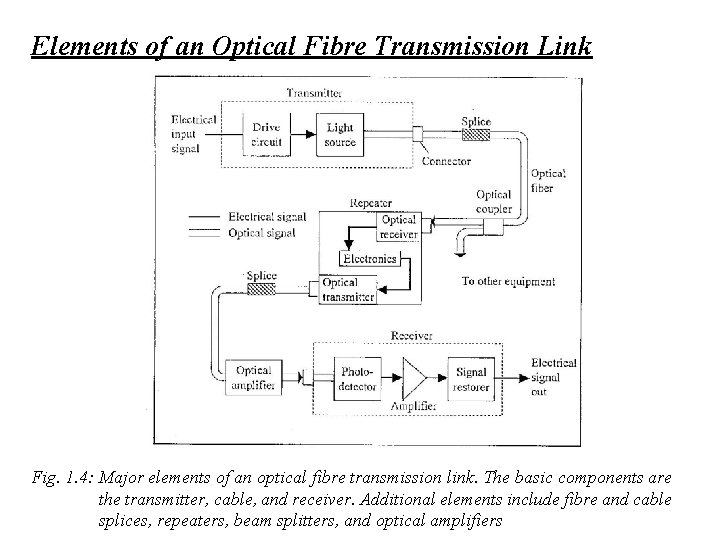
Elements of an Optical Fibre Transmission Link Fig. 1. 4: Major elements of an optical fibre transmission link. The basic components are the transmitter, cable, and receiver. Additional elements include fibre and cable splices, repeaters, beam splitters, and optical amplifiers
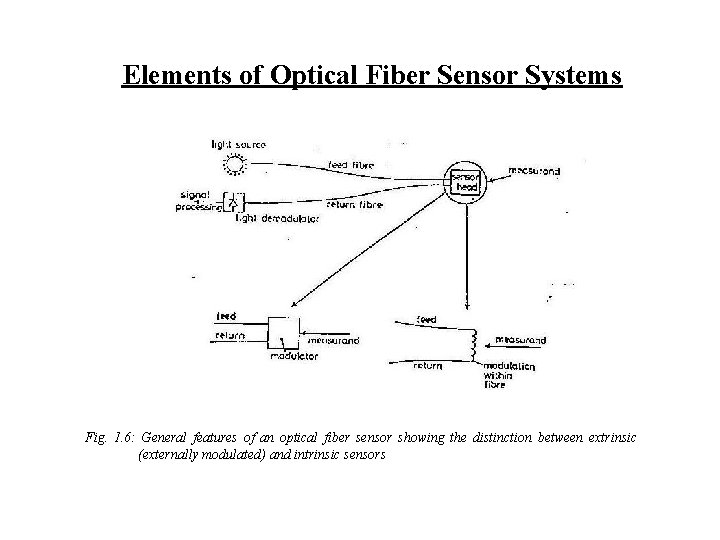
Elements of Optical Fiber Sensor Systems Fig. 1. 6: General features of an optical fiber sensor showing the distinction between extrinsic (externally modulated) and intrinsic sensors
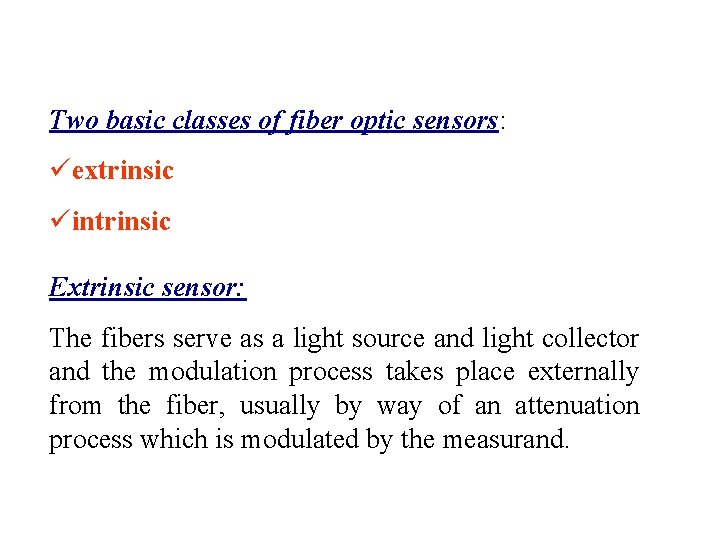
Two basic classes of fiber optic sensors: üextrinsic üintrinsic Extrinsic sensor: The fibers serve as a light source and light collector and the modulation process takes place externally from the fiber, usually by way of an attenuation process which is modulated by the measurand.
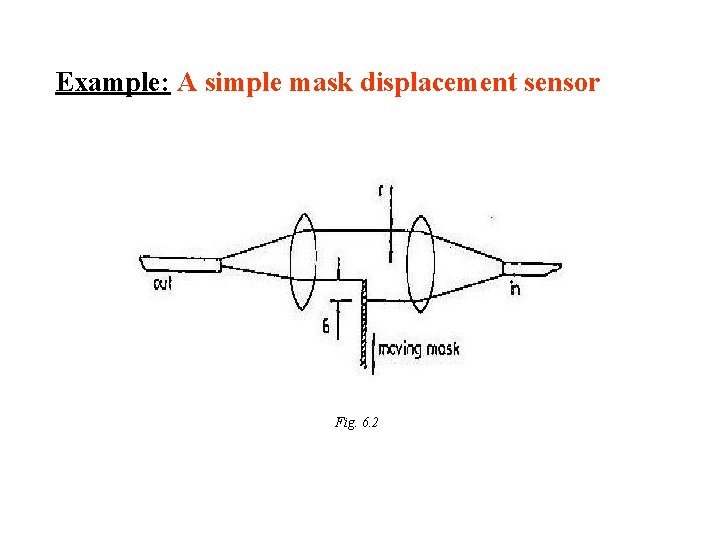
Example: A simple mask displacement sensor Fig. 6. 2
Intrinsic sensor: The fibers are used as both transmission media and sensing element. The measurand interacts directly with the light within the fiber. Phase, polarization and intensity of the light may all be modulated by using appropriately designed fiber and cable.
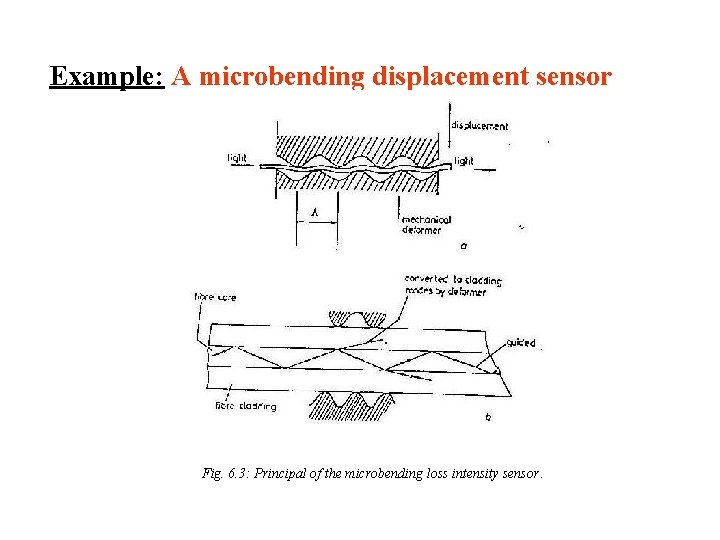
Example: A microbending displacement sensor Fig. 6. 3: Principal of the microbending loss intensity sensor.
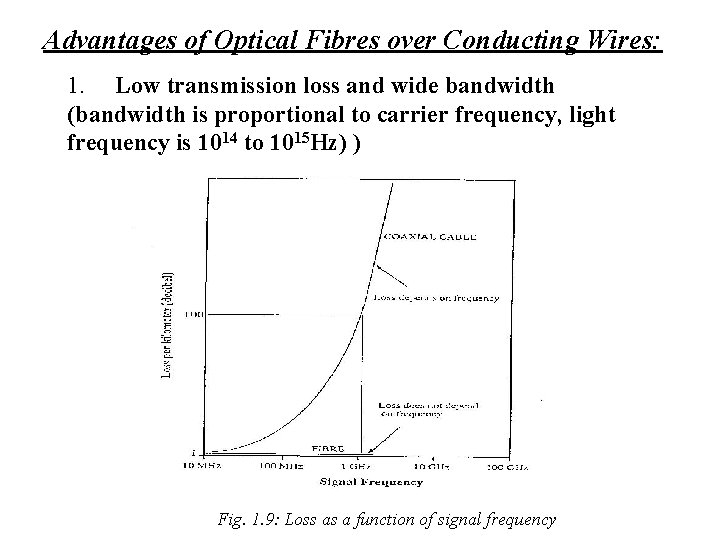
Advantages of Optical Fibres over Conducting Wires: 1. Low transmission loss and wide bandwidth (bandwidth is proportional to carrier frequency, light frequency is 1014 to 1015 Hz) ) Fig. 1. 9: Loss as a function of signal frequency
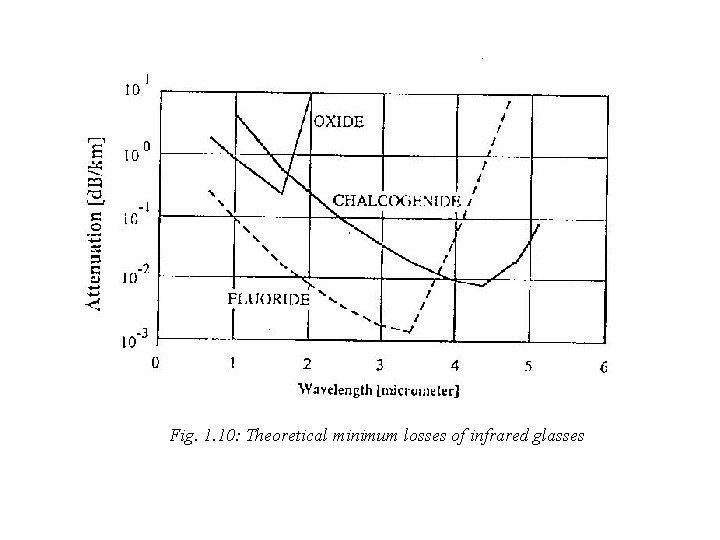
Fig. 1. 10: Theoretical minimum losses of infrared glasses
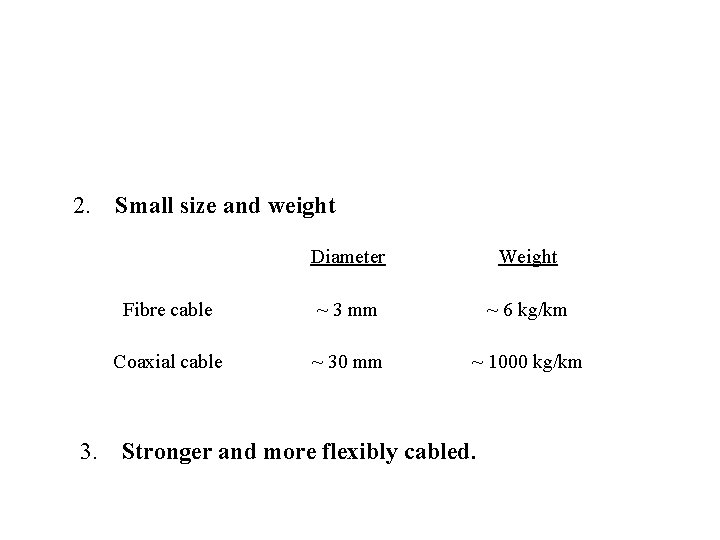
2. Small size and weight Diameter Weight Fibre cable ~ 3 mm ~ 6 kg/km Coaxial cable ~ 30 mm ~ 1000 kg/km 3. Stronger and more flexibly cabled.
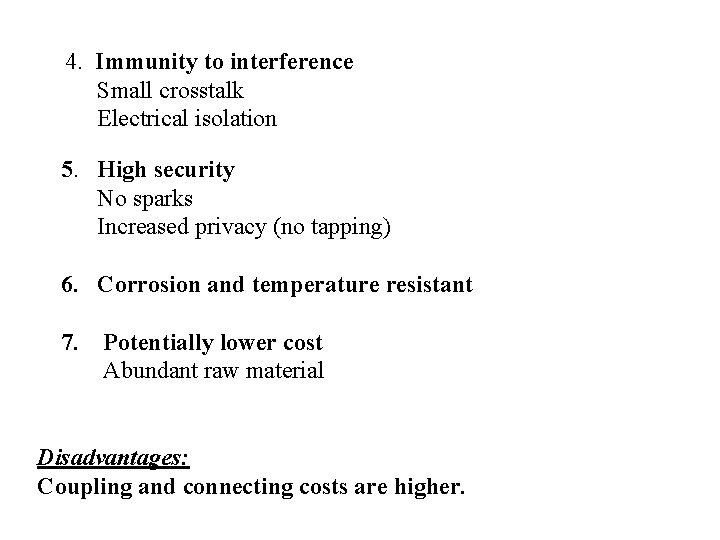
4. Immunity to interference Small crosstalk Electrical isolation 5. High security No sparks Increased privacy (no tapping) 6. Corrosion and temperature resistant 7. Potentially lower cost Abundant raw material Disadvantages: Coupling and connecting costs are higher.
- Slides: 15