
1 Oncotype DX Colon Cancer Assay Personalizing Risk



- Slides: 75
1 Oncotype DX® Colon Cancer Assay Personalizing Risk Assessment in the Management of Stage II Colon Cancer
2 Oncotype DX® Colon Cancer Assay The Challenge with the Stage II Colon Cancer Patient Oncotype DX Colon Cancer Assay Development & Validation Implications for Clinical Practice in Stage II Colon Cancer
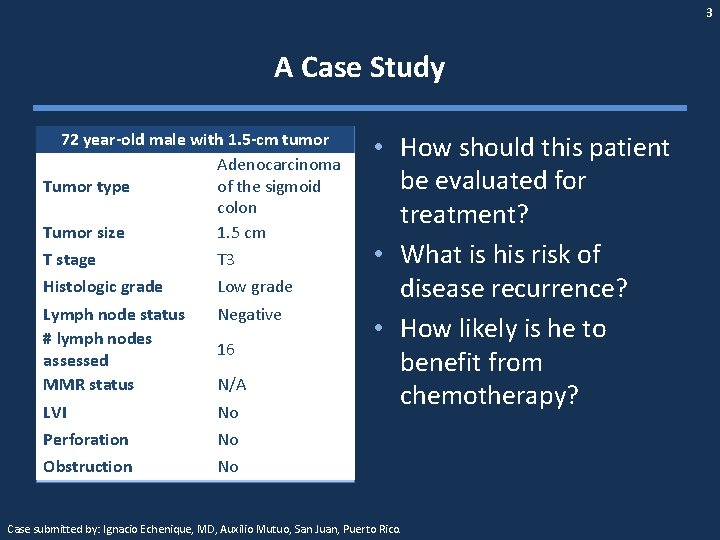
3 A Case Study 72 year-old male with 1. 5 -cm tumor Adenocarcinoma Tumor type of the sigmoid colon Tumor size 1. 5 cm T stage T 3 Histologic grade Low grade Lymph node status # lymph nodes assessed MMR status Negative LVI No Perforation No Obstruction No 16 N/A • How should this patient be evaluated for treatment? • What is his risk of disease recurrence? • How likely is he to benefit from chemotherapy? Case submitted by: Ignacio Echenique, MD, Auxilio Mutuo, San Juan, Puerto Rico.
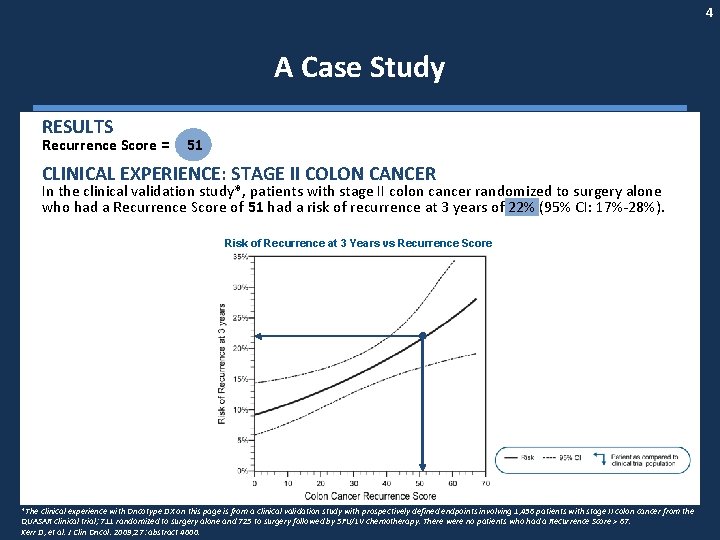
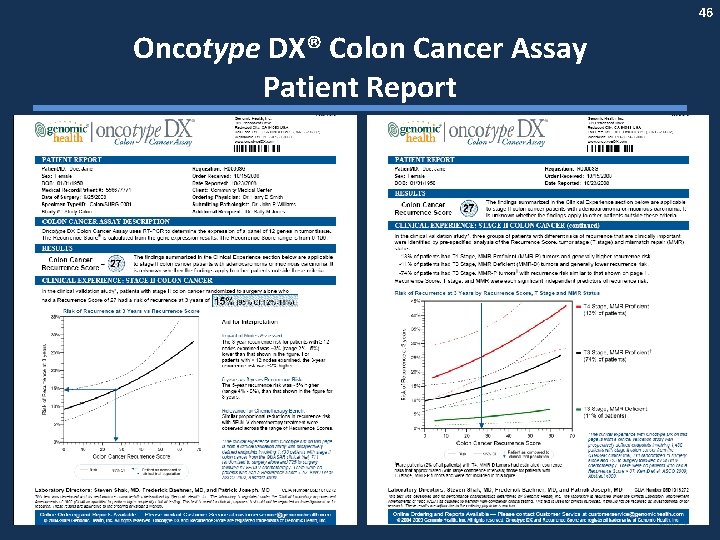
4 A Case Study RESULTS Recurrence Score = 51 CLINICAL EXPERIENCE: STAGE II COLON CANCER In the clinical validation study*, patients with stage II colon cancer randomized to surgery alone who had a Recurrence Score of 51 had a risk of recurrence at 3 years of 22% (95% CI: 17%-28%). Risk of Recurrence at 3 Years vs Recurrence Score *The clinical experience with Oncotype DX on this page is from a clinical validation study with prospectively defined endpoints involving 1, 436 patients with stage II colon cancer from the QUASAR clinical trial; 711 randomized to surgery alone and 725 to surgery followed by 5 FU/LV chemotherapy. There were no patients who had a Recurrence Score > 67. Kerr D, et al. J Clin Oncol. 2009; 27: abstract 4000.
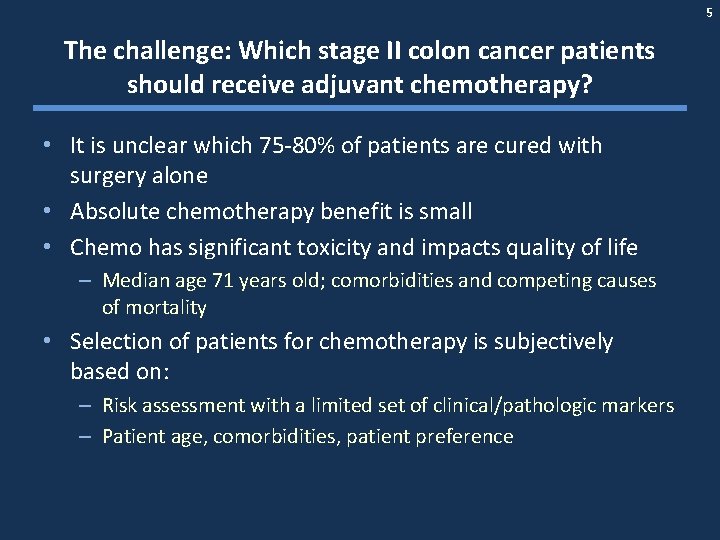
5 The challenge: Which stage II colon cancer patients should receive adjuvant chemotherapy? • It is unclear which 75 -80% of patients are cured with surgery alone • Absolute chemotherapy benefit is small • Chemo has significant toxicity and impacts quality of life – Median age 71 years old; comorbidities and competing causes of mortality • Selection of patients for chemotherapy is subjectively based on: – Risk assessment with a limited set of clinical/pathologic markers – Patient age, comorbidities, patient preference
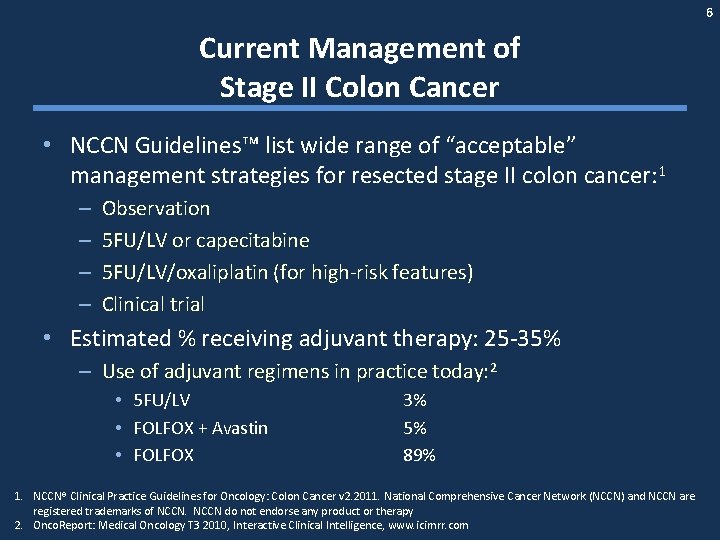
6 Current Management of Stage II Colon Cancer • NCCN Guidelines™ list wide range of “acceptable” management strategies for resected stage II colon cancer: 1 – – Observation 5 FU/LV or capecitabine 5 FU/LV/oxaliplatin (for high-risk features) Clinical trial • Estimated % receiving adjuvant therapy: 25 -35% – Use of adjuvant regimens in practice today: 2 • 5 FU/LV • FOLFOX + Avastin • FOLFOX 3% 5% 89% 1. NCCN® Clinical Practice Guidelines for Oncology: Colon Cancer v 2. 2011. National Comprehensive Cancer Network (NCCN) and NCCN are registered trademarks of NCCN do not endorse any product or therapy 2. Onco. Report: Medical Oncology T 3 2010, Interactive Clinical Intelligence, www. icimrr. com
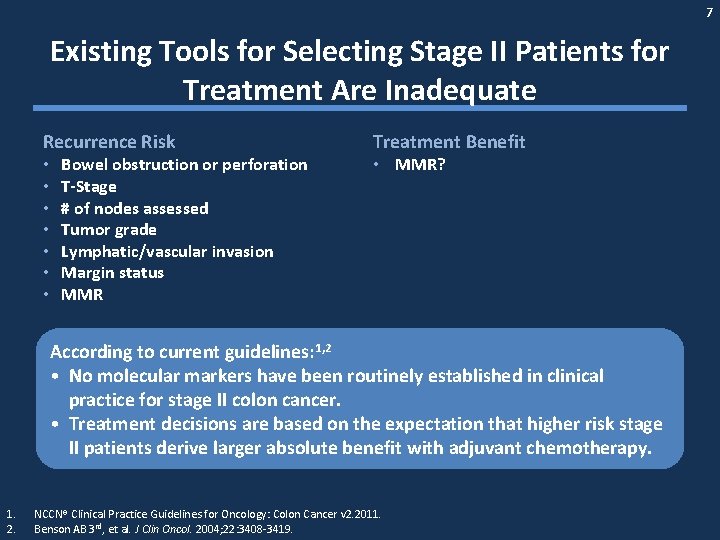
7 Existing Tools for Selecting Stage II Patients for Treatment Are Inadequate Recurrence Risk • • Bowel obstruction or perforation T-Stage # of nodes assessed Tumor grade Lymphatic/vascular invasion Margin status MMR Treatment Benefit • MMR? According to current guidelines: 1, 2 • No molecular markers have been routinely established in clinical practice for stage II colon cancer. • Treatment decisions are based on the expectation that higher risk stage II patients derive larger absolute benefit with adjuvant chemotherapy. 1. 2. NCCN® Clinical Practice Guidelines for Oncology: Colon Cancer v 2. 2011. Benson AB 3 rd, et al. J Clin Oncol. 2004; 22: 3408 -3419.
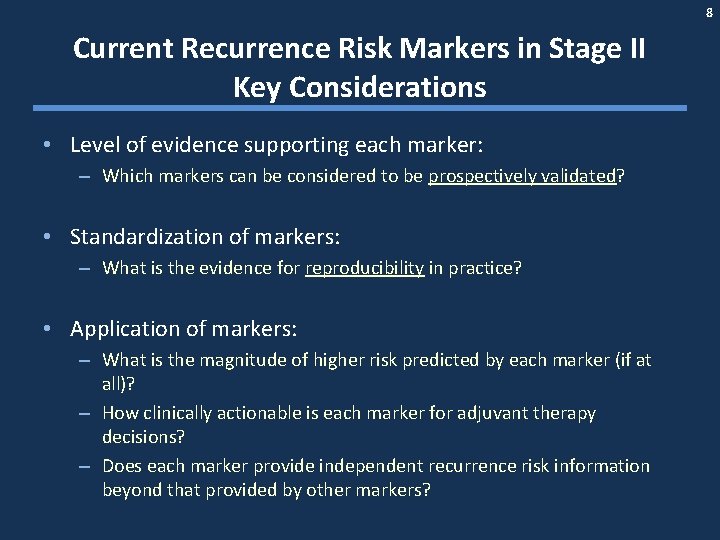
8 Current Recurrence Risk Markers in Stage II Key Considerations • Level of evidence supporting each marker: – Which markers can be considered to be prospectively validated? • Standardization of markers: – What is the evidence for reproducibility in practice? • Application of markers: – What is the magnitude of higher risk predicted by each marker (if at all)? – How clinically actionable is each marker for adjuvant therapy decisions? – Does each marker provide independent recurrence risk information beyond that provided by other markers?
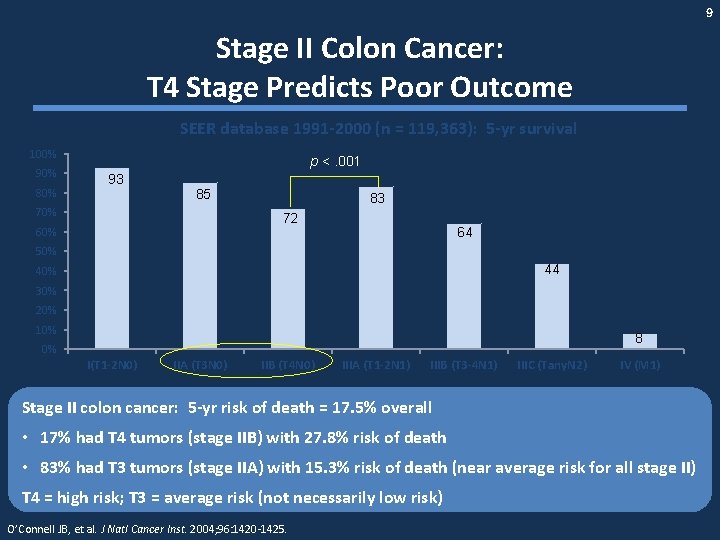
9 Stage II Colon Cancer: T 4 Stage Predicts Poor Outcome SEER database 1991 -2000 (n = 119, 363): 5 -yr survival 100% 90% 80% p <. 001 93 85 70% 83 72 60% 64 50% 44 40% 30% 20% 10% 8 0% I(T 1 -2 N 0) IIA (T 3 N 0) IIB (T 4 N 0) IIIA (T 1 -2 N 1) IIIB (T 3 -4 N 1) IIIC (Tany. N 2) IV (M 1) Stage II colon cancer: 5 -yr risk of death = 17. 5% overall • 17% had T 4 tumors (stage IIB) with 27. 8% risk of death • 83% had T 3 tumors (stage IIA) with 15. 3% risk of death (near average risk for all stage II) T 4 = high risk; T 3 = average risk (not necessarily low risk) O’Connell JB, et al. J Natl Cancer Inst. 2004; 96: 1420 -1425.
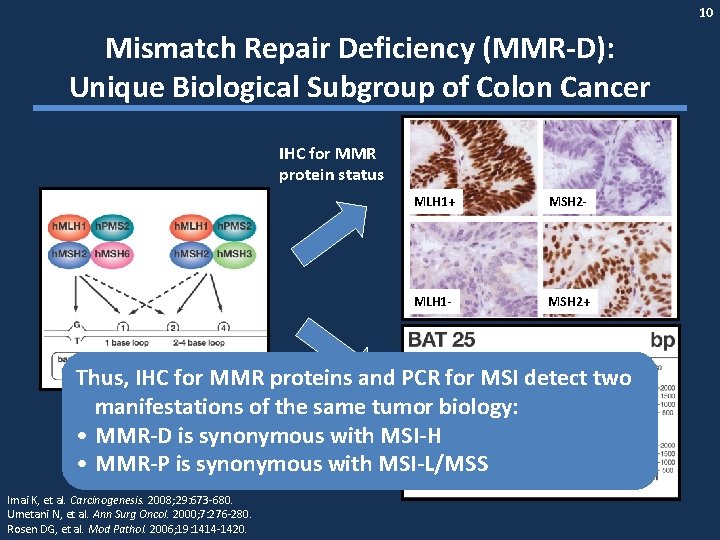
10 Mismatch Repair Deficiency (MMR-D): Unique Biological Subgroup of Colon Cancer IHC for MMR protein status MLH 1+ MSH 2 - MLH 1 - MSH 2+ Thus, IHC for MMR proteins and PCR for MSI detect two PCR on tumor manifestations of the same tumor biology: DNA for MSI • MMR-D is synonymous with MSI-H (microsatellite • MMR-P is synonymous with MSI-L/MSS instability) Imai K, et al. Carcinogenesis. 2008; 29: 673 -680. Umetani N, et al. Ann Surg Oncol. 2000; 7: 276 -280. Rosen DG, et al. Mod Pathol. 2006; 19: 1414 -1420.
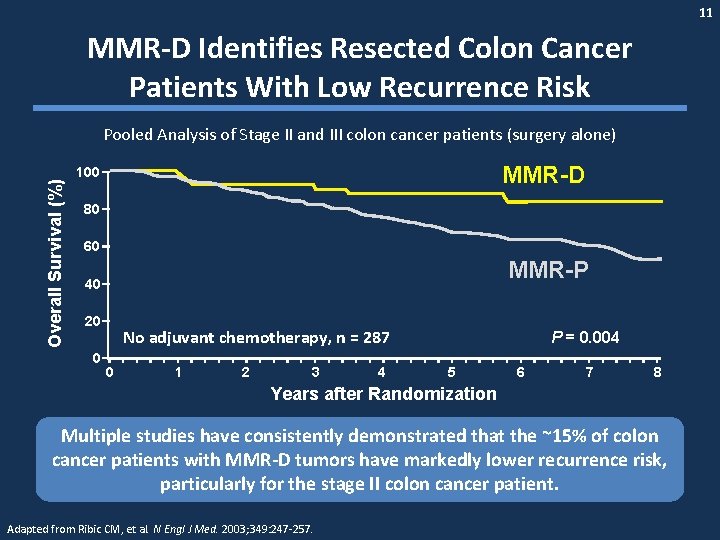
11 MMR-D Identifies Resected Colon Cancer Patients With Low Recurrence Risk Overall Survival (%) Pooled Analysis of Stage II and III colon cancer patients (surgery alone) MMR-D 100 80 60 MMR-P 40 20 0 No adjuvant chemotherapy, n = 287 0 1 2 3 4 P = 0. 004 5 6 7 8 Years after Randomization Multiple studies have consistently demonstrated that the ~15% of colon cancer patients with MMR-D tumors have markedly lower recurrence risk, particularly for the stage II colon cancer patient. Adapted from Ribic CM, et al. N Engl J Med. 2003; 349: 247 -257.
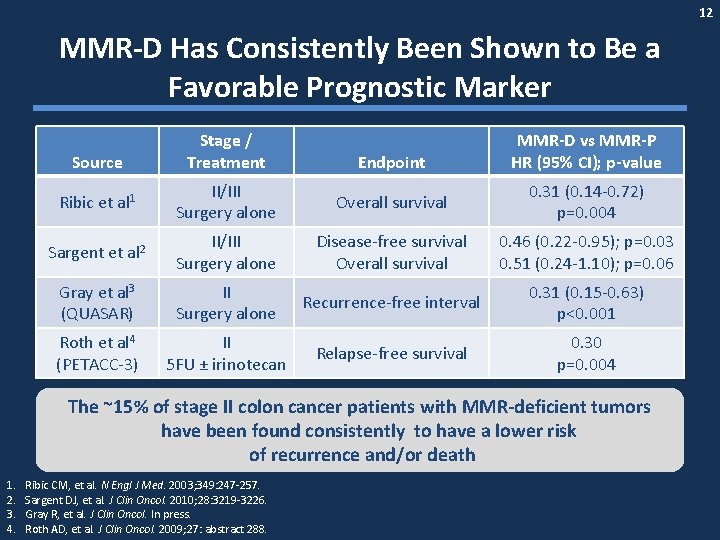
12 MMR-D Has Consistently Been Shown to Be a Favorable Prognostic Marker Source Stage / Treatment Endpoint MMR-D vs MMR-P HR (95% CI); p-value Ribic et al 1 II/III Surgery alone Overall survival 0. 31 (0. 14 -0. 72) p=0. 004 Sargent et al 2 II/III Surgery alone Disease-free survival Overall survival 0. 46 (0. 22 -0. 95); p=0. 03 0. 51 (0. 24 -1. 10); p=0. 06 Gray et al 3 (QUASAR) II Surgery alone Recurrence-free interval 0. 31 (0. 15 -0. 63) p<0. 001 Roth et al 4 (PETACC-3) II 5 FU ± irinotecan Relapse-free survival 0. 30 p=0. 004 The ~15% of stage II colon cancer patients with MMR-deficient tumors have been found consistently to have a lower risk of recurrence and/or death 1. 2. 3. 4. Ribic CM, et al. N Engl J Med. 2003; 349: 247 -257. Sargent DJ, et al. J Clin Oncol. 2010; 28: 3219 -3226. Gray R, et al. J Clin Oncol. In press. Roth AD, et al. J Clin Oncol. 2009; 27: abstract 288.
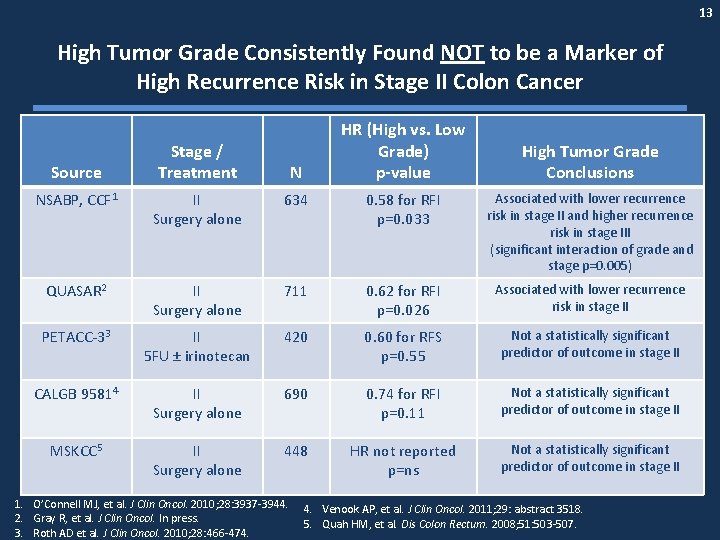
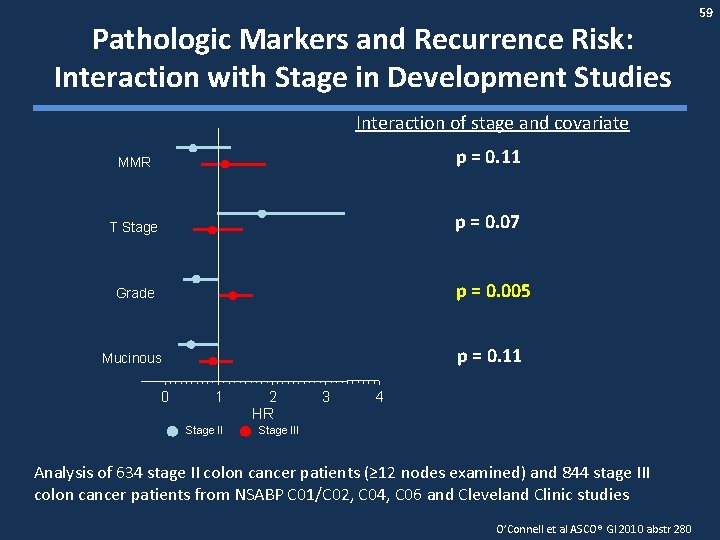
13 High Tumor Grade Consistently Found NOT to be a Marker of High Recurrence Risk in Stage II Colon Cancer Source Stage / Treatment HR (High vs. Low Grade) p-value N High Tumor Grade Conclusions NSABP, CCF 1 II Surgery alone 634 0. 58 for RFI p=0. 033 Associated with lower recurrence risk in stage II and higher recurrence risk in stage III (significant interaction of grade and stage p=0. 005) QUASAR 2 II Surgery alone 711 0. 62 for RFI p=0. 026 Associated with lower recurrence risk in stage II PETACC-33 II 5 FU ± irinotecan 420 0. 60 for RFS p=0. 55 Not a statistically significant predictor of outcome in stage II CALGB 95814 II Surgery alone 690 0. 74 for RFI p=0. 11 Not a statistically significant predictor of outcome in stage II MSKCC 5 II Surgery alone 448 HR not reported p=ns Not a statistically significant predictor of outcome in stage II 1. O’Connell MJ, et al. J Clin Oncol. 2010; 28: 3937 -3944. 2. Gray R, et al. J Clin Oncol. In press. 3. Roth AD et al. J Clin Oncol. 2010; 28: 466 -474. 4. Venook AP, et al. J Clin Oncol. 2011; 29: abstract 3518. 5. Quah HM, et al. Dis Colon Rectum. 2008; 51: 503 -507.
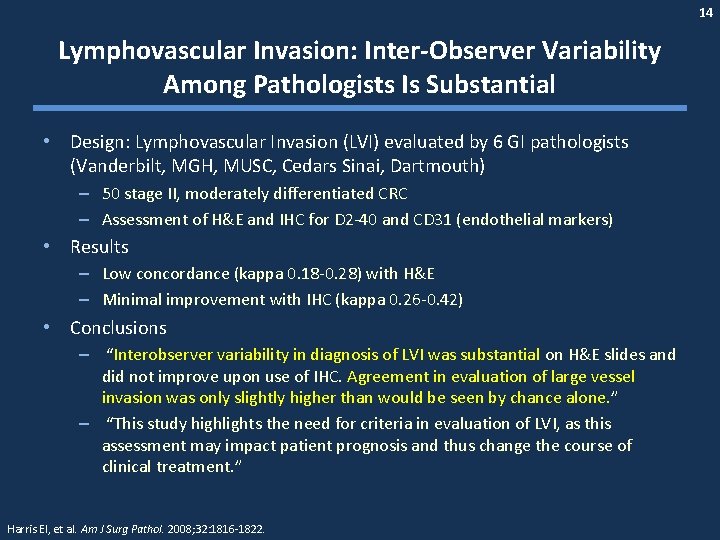
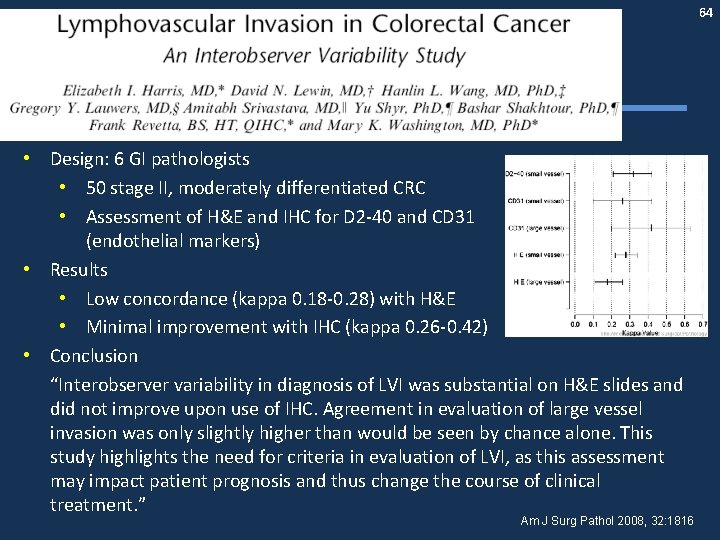
14 Lymphovascular Invasion: Inter-Observer Variability Among Pathologists Is Substantial • Design: Lymphovascular Invasion (LVI) evaluated by 6 GI pathologists (Vanderbilt, MGH, MUSC, Cedars Sinai, Dartmouth) – 50 stage II, moderately differentiated CRC – Assessment of H&E and IHC for D 2 -40 and CD 31 (endothelial markers) • Results – Low concordance (kappa 0. 18 -0. 28) with H&E – Minimal improvement with IHC (kappa 0. 26 -0. 42) • Conclusions – “Interobserver variability in diagnosis of LVI was substantial on H&E slides and did not improve upon use of IHC. Agreement in evaluation of large vessel invasion was only slightly higher than would be seen by chance alone. ” – “This study highlights the need for criteria in evaluation of LVI, as this assessment may impact patient prognosis and thus change the course of clinical treatment. ” Harris EI, et al. Am J Surg Pathol. 2008; 32: 1816 -1822.
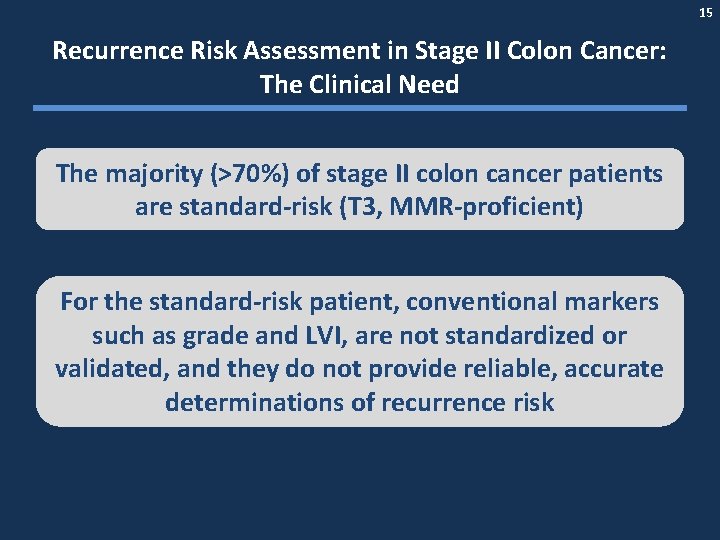
15 Recurrence Risk Assessment in Stage II Colon Cancer: The Clinical Need The majority (>70%) of stage II colon cancer patients are standard-risk (T 3, MMR-proficient) For the standard-risk patient, conventional markers such as grade and LVI, are not standardized or validated, and they do not provide reliable, accurate determinations of recurrence risk
16 Oncotype DX® Colon Cancer Assay The Challenge with the Stage II Colon Cancer Patient Oncotype DX Colon Cancer Assay Development & Validation Implications for Clinical Practice in Stage II Colon Cancer
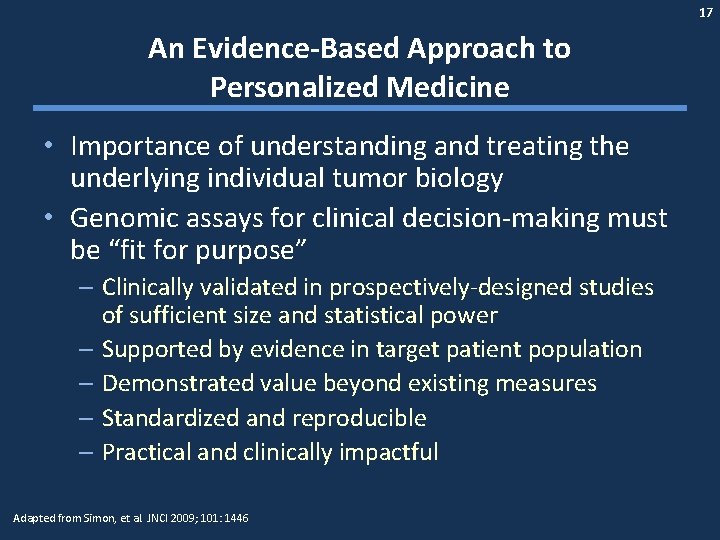
17 An Evidence-Based Approach to Personalized Medicine • Importance of understanding and treating the underlying individual tumor biology • Genomic assays for clinical decision-making must be “fit for purpose” – Clinically validated in prospectively-designed studies of sufficient size and statistical power – Supported by evidence in target patient population – Demonstrated value beyond existing measures – Standardized and reproducible – Practical and clinically impactful Adapted from Simon, et al. JNCI 2009; 101: 1446
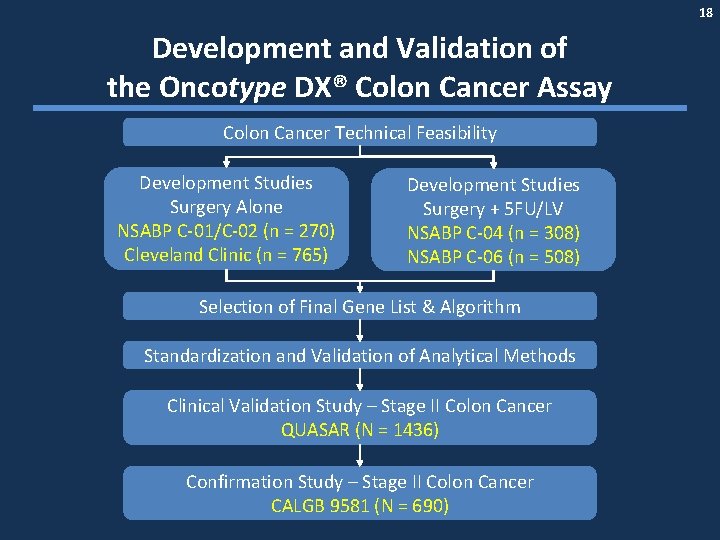
18 Development and Validation of the Oncotype DX® Colon Cancer Assay Colon Cancer Technical Feasibility Development Studies Surgery Alone NSABP C-01/C-02 (n = 270) Cleveland Clinic (n = 765) Development Studies Surgery + 5 FU/LV NSABP C-04 (n = 308) NSABP C-06 (n = 508) Selection of Final Gene List & Algorithm Standardization and Validation of Analytical Methods Clinical Validation Study – Stage II Colon Cancer QUASAR (N = 1436) Confirmation Study – Stage II Colon Cancer CALGB 9581 (N = 690)
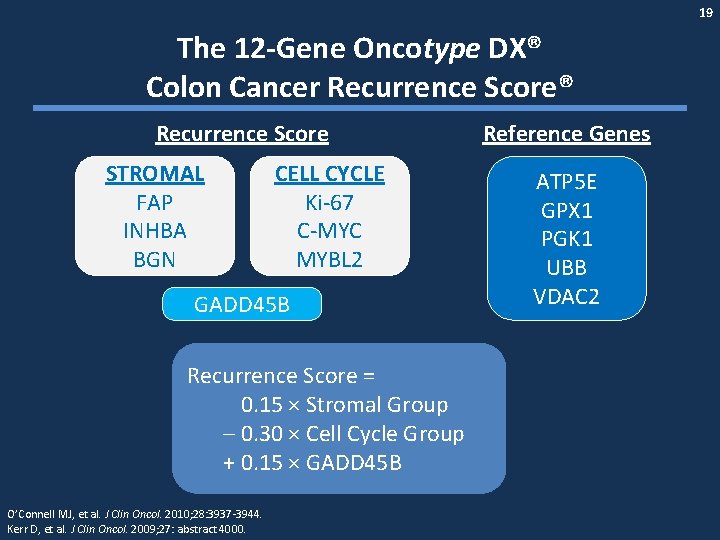
19 The 12 -Gene Oncotype DX® Colon Cancer Recurrence Score® Recurrence Score STROMAL FAP INHBA BGN CELL CYCLE Ki-67 C-MYC MYBL 2 GADD 45 B Recurrence Score = – 0. 15 × Stromal Group – 0. 30 × Cell Cycle Group + 0. 15 × GADD 45 B O’Connell MJ, et al. J Clin Oncol. 2010; 28: 3937 -3944. Kerr D, et al. J Clin Oncol. 2009; 27: abstract 4000. Reference Genes ATP 5 E GPX 1 PGK 1 UBB VDAC 2
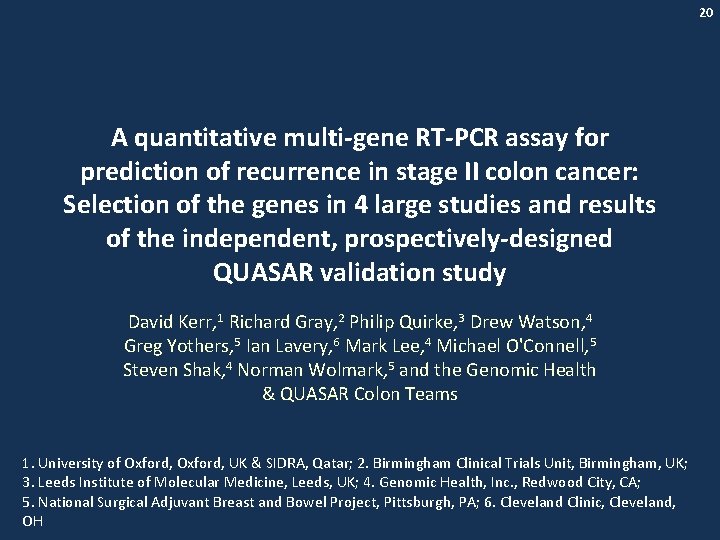
20 A quantitative multi-gene RT-PCR assay for prediction of recurrence in stage II colon cancer: Selection of the genes in 4 large studies and results of the independent, prospectively-designed QUASAR validation study David Kerr, 1 Richard Gray, 2 Philip Quirke, 3 Drew Watson, 4 Greg Yothers, 5 Ian Lavery, 6 Mark Lee, 4 Michael O'Connell, 5 Steven Shak, 4 Norman Wolmark, 5 and the Genomic Health & QUASAR Colon Teams 1. University of Oxford, UK & SIDRA, Qatar; 2. Birmingham Clinical Trials Unit, Birmingham, UK; 3. Leeds Institute of Molecular Medicine, Leeds, UK; 4. Genomic Health, Inc. , Redwood City, CA; 5. National Surgical Adjuvant Breast and Bowel Project, Pittsburgh, PA; 6. Cleveland Clinic, Cleveland, OH
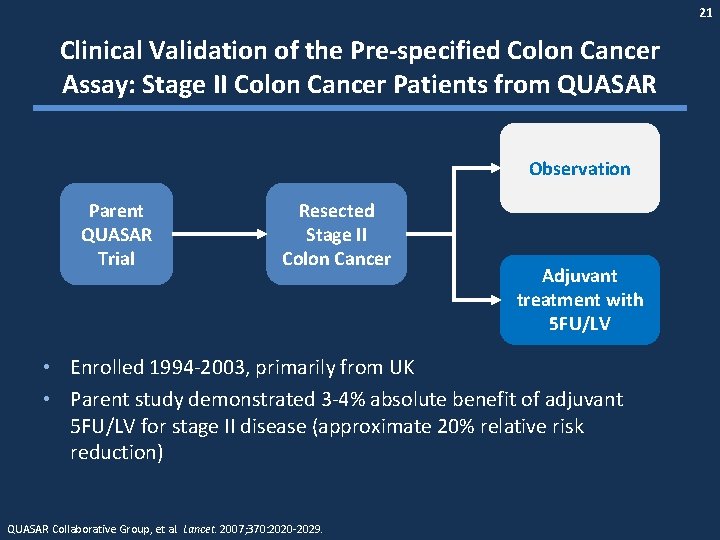
21 Clinical Validation of the Pre-specified Colon Cancer Assay: Stage II Colon Cancer Patients from QUASAR Observation Parent QUASAR Trial Resected Stage II Colon Cancer Adjuvant treatment with 5 FU/LV • Enrolled 1994 -2003, primarily from UK • Parent study demonstrated 3 -4% absolute benefit of adjuvant 5 FU/LV for stage II disease (approximate 20% relative risk reduction) QUASAR Collaborative Group, et al. Lancet. 2007; 370: 2020 -2029.
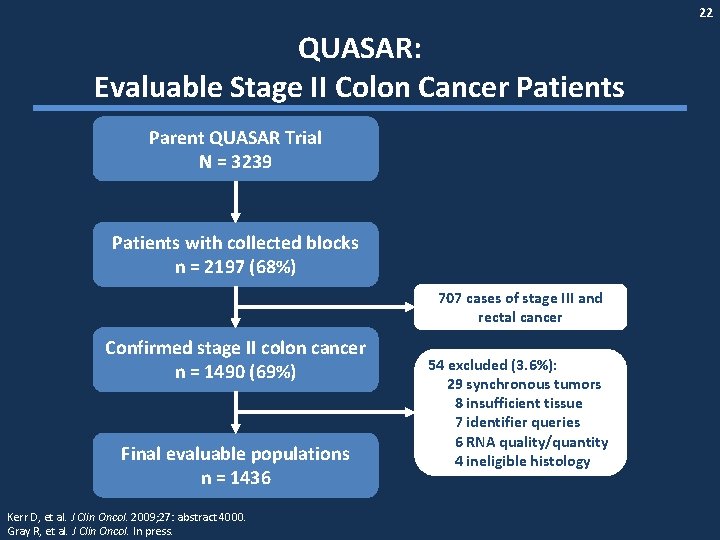
22 QUASAR: Evaluable Stage II Colon Cancer Patients Parent QUASAR Trial N = 3239 Patients with collected blocks n = 2197 (68%) 707 cases of stage III and rectal cancer Confirmed stage II colon cancer n = 1490 (69%) Final evaluable populations n = 1436 Kerr D, et al. J Clin Oncol. 2009; 27: abstract 4000. Gray R, et al. J Clin Oncol. In press. 54 excluded (3. 6%): 29 synchronous tumors 08 insufficient tissue 07 identifier queries 06 RNA quality/quantity 04 ineligible histology
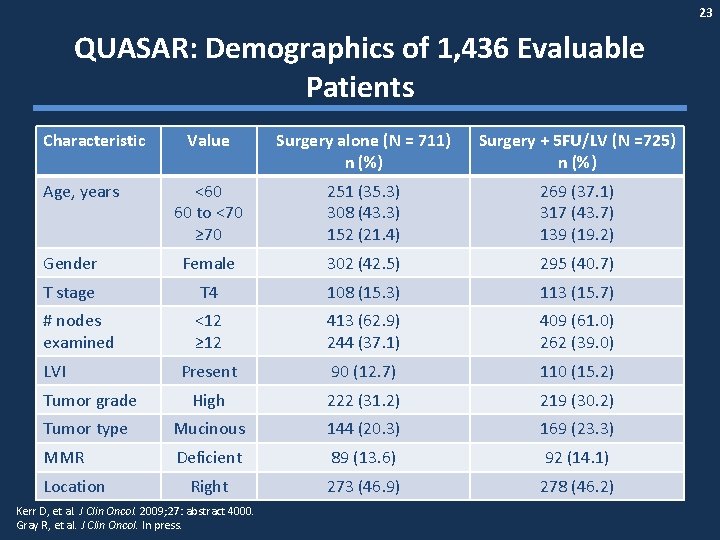
23 QUASAR: Demographics of 1, 436 Evaluable Patients Characteristic Value Surgery alone (N = 711) n (%) Surgery + 5 FU/LV (N =725) n (%) <60 60 to <70 ≥ 70 251 (35. 3) 308 (43. 3) 152 (21. 4) 269 (37. 1) 317 (43. 7) 139 (19. 2) Gender Female 302 (42. 5) 295 (40. 7) T stage T 4 108 (15. 3) 113 (15. 7) # nodes examined <12 ≥ 12 413 (62. 9) 244 (37. 1) 409 (61. 0) 262 (39. 0) Present 90 (12. 7) 110 (15. 2) Tumor grade High 222 (31. 2) 219 (30. 2) Tumor type Mucinous 144 (20. 3) 169 (23. 3) MMR Deficient 89 (13. 6) 92 (14. 1) Right 273 (46. 9) 278 (46. 2) Age, years LVI Location Kerr D, et al. J Clin Oncol. 2009; 27: abstract 4000. Gray R, et al. J Clin Oncol. In press.
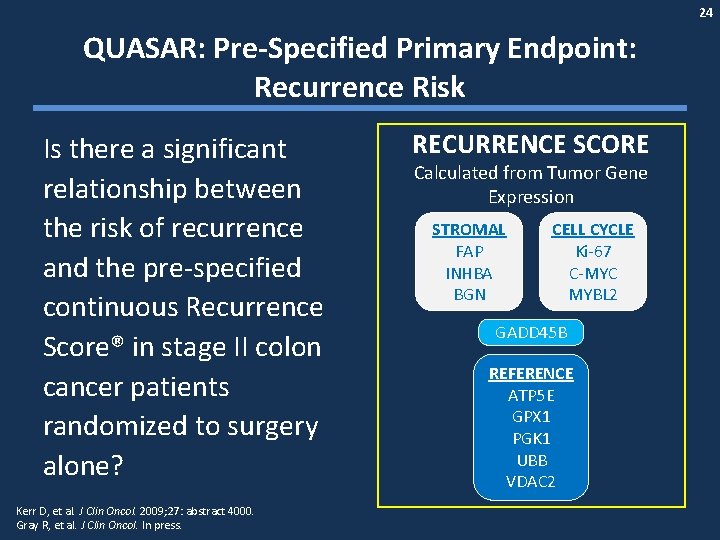
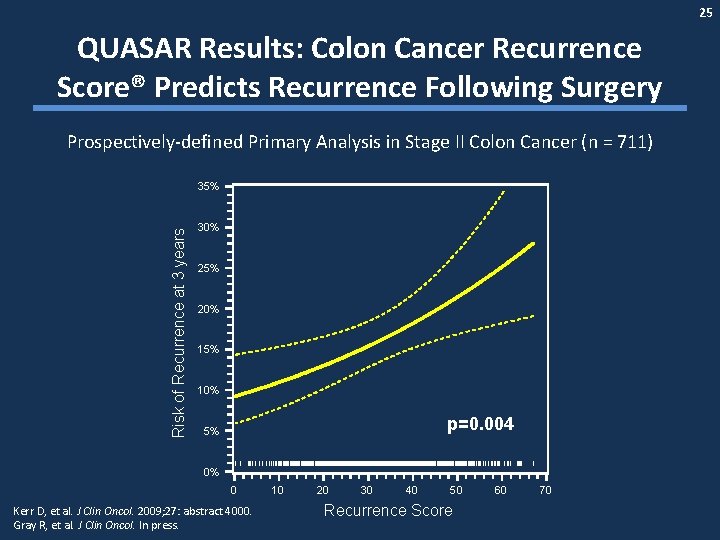
24 QUASAR: Pre-Specified Primary Endpoint: Recurrence Risk Is there a significant relationship between the risk of recurrence and the pre-specified continuous Recurrence Score® in stage II colon cancer patients randomized to surgery alone? Kerr D, et al. J Clin Oncol. 2009; 27: abstract 4000. Gray R, et al. J Clin Oncol. In press. RECURRENCE SCORE Calculated from Tumor Gene Expression STROMAL FAP INHBA BGN CELL CYCLE Ki-67 C-MYC MYBL 2 GADD 45 B REFERENCE ATP 5 E GPX 1 PGK 1 UBB VDAC 2
25 QUASAR Results: Colon Cancer Recurrence Score® Predicts Recurrence Following Surgery Prospectively-defined Primary Analysis in Stage II Colon Cancer (n = 711) Risk of Recurrence at 3 years 35% 30% 25% 20% 15% 10% p=0. 004 5% 0% | | ||||||||||||||||||||||||||||||||||||||||||||||||||||||||||||||||||||||||||||||| |||||| || ||||||| | |||||| 0 Kerr D, et al. J Clin Oncol. 2009; 27: abstract 4000. Gray R, et al. J Clin Oncol. In press. 10 20 30 40 50 Recurrence Score 60 | 70
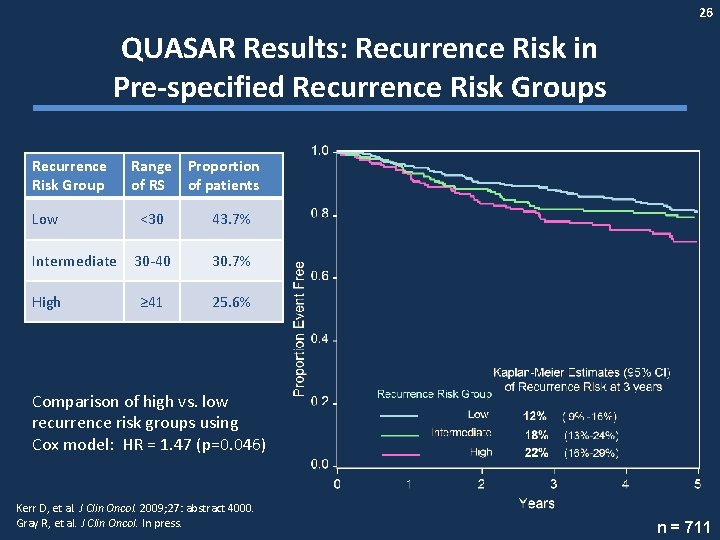
26 QUASAR Results: Recurrence Risk in Pre-specified Recurrence Risk Groups Recurrence Risk Group Low Intermediate High Range Proportion of RS of patients <30 43. 7% 30 -40 30. 7% ≥ 41 25. 6% Comparison of high vs. low recurrence risk groups using Cox model: HR = 1. 47 (p=0. 046) Kerr D, et al. J Clin Oncol. 2009; 27: abstract 4000. Gray R, et al. J Clin Oncol. In press. n = 711
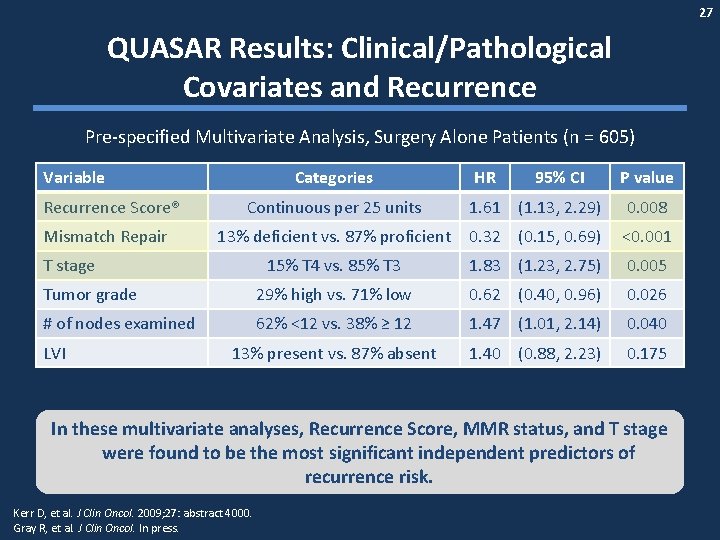
27 QUASAR Results: Clinical/Pathological Covariates and Recurrence Pre-specified Multivariate Analysis, Surgery Alone Patients (n = 605) Variable Recurrence Score® Categories HR 95% CI P value Continuous per 25 units 1. 61 (1. 13, 2. 29) 0. 008 13% deficient vs. 87% proficient 0. 32 (0. 15, 0. 69) <0. 001 15% T 4 vs. 85% T 3 1. 83 (1. 23, 2. 75) 0. 005 Tumor grade 29% high vs. 71% low 0. 62 (0. 40, 0. 96) 0. 026 # of nodes examined 62% <12 vs. 38% ≥ 12 1. 47 (1. 01, 2. 14) 0. 040 13% present vs. 87% absent 1. 40 (0. 88, 2. 23) 0. 175 Mismatch Repair T stage LVI In these multivariate analyses, Recurrence Score, MMR status, and T stage were found to be the most significant independent predictors of recurrence risk. Kerr D, et al. J Clin Oncol. 2009; 27: abstract 4000. Gray R, et al. J Clin Oncol. In press.
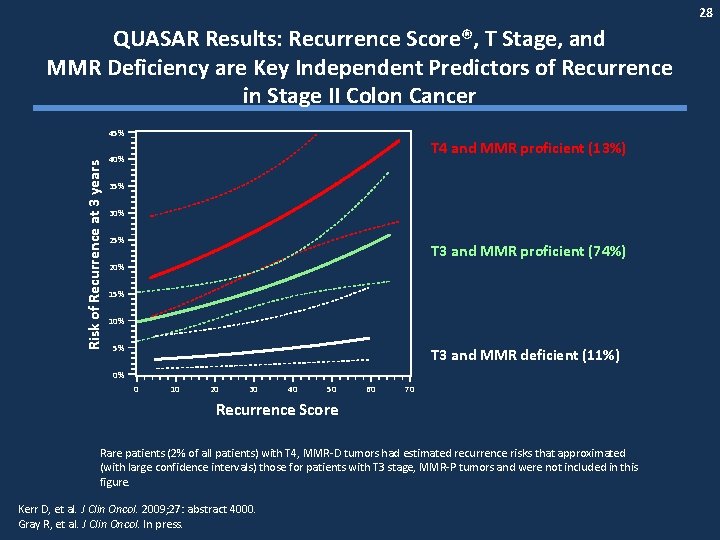
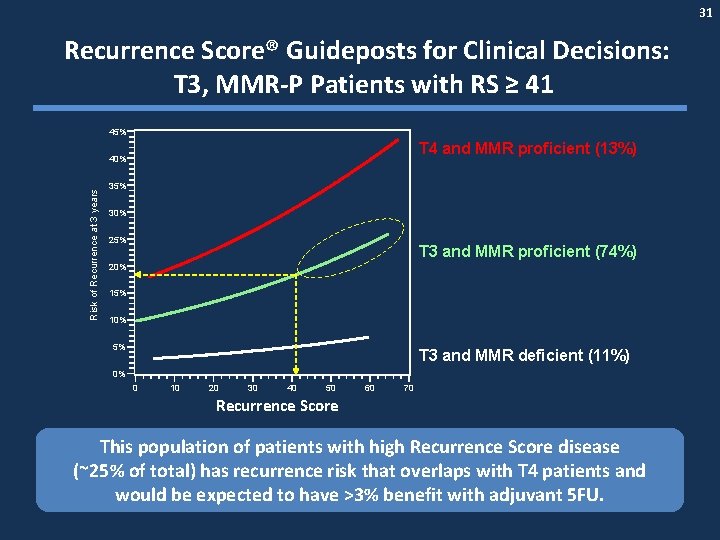
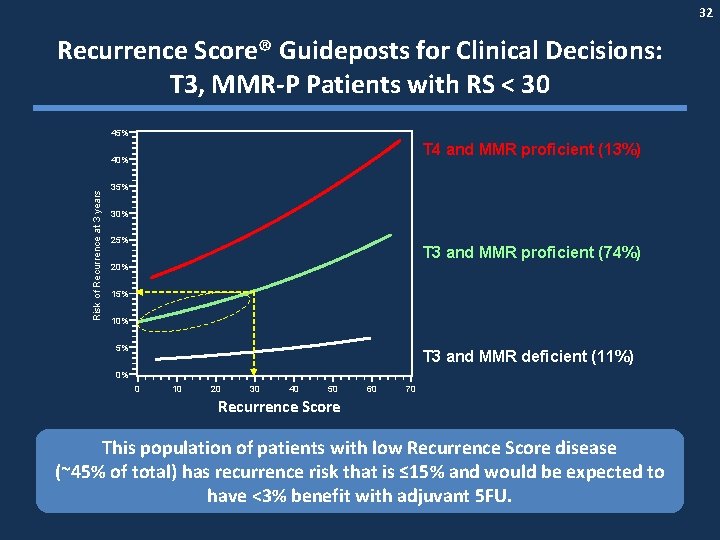
28 QUASAR Results: Recurrence Score®, T Stage, and MMR Deficiency are Key Independent Predictors of Recurrence in Stage II Colon Cancer Risk of Recurrence at 3 years 45% T 4 and MMR proficient (13%) 40% 35% 30% 25% T 3 and MMR proficient (74%) 20% 15% 10% 5% T 3 and MMR deficient (11%) 0% 0 10 20 30 40 50 60 70 Recurrence Score Rare patients (2% of all patients) with T 4, MMR-D tumors had estimated recurrence risks that approximated (with large confidence intervals) those for patients with T 3 stage, MMR-P tumors and were not included in this figure. Kerr D, et al. J Clin Oncol. 2009; 27: abstract 4000. Gray R, et al. J Clin Oncol. In press.
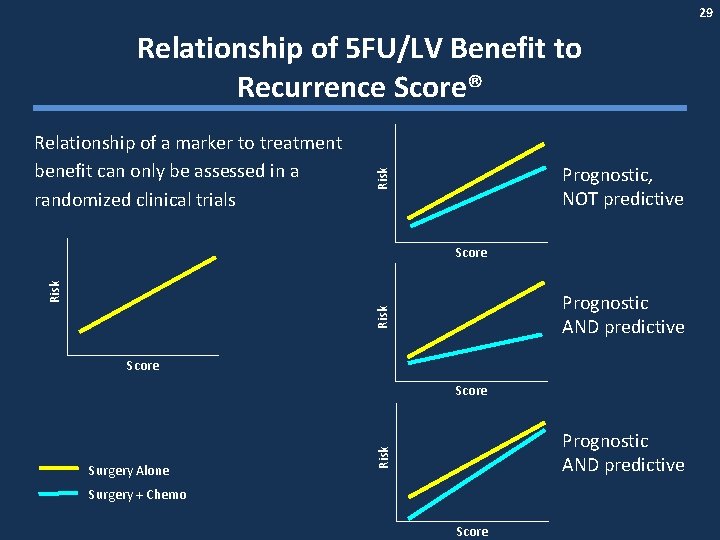
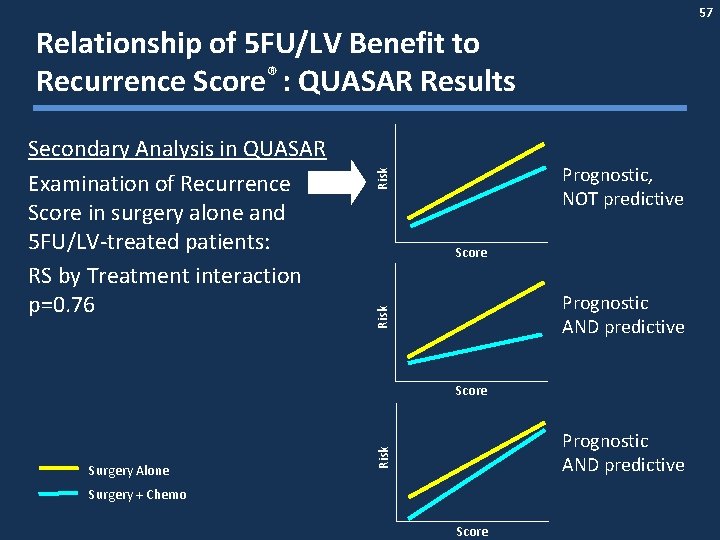
29 Relationship of 5 FU/LV Benefit to Recurrence Score® Prognostic, NOT predictive Risk Relationship of a marker to treatment benefit can only be assessed in a randomized clinical trials Risk Score Risk Prognostic AND predictive Score Risk Surgery Alone Prognostic AND predictive Surgery + Chemo Score
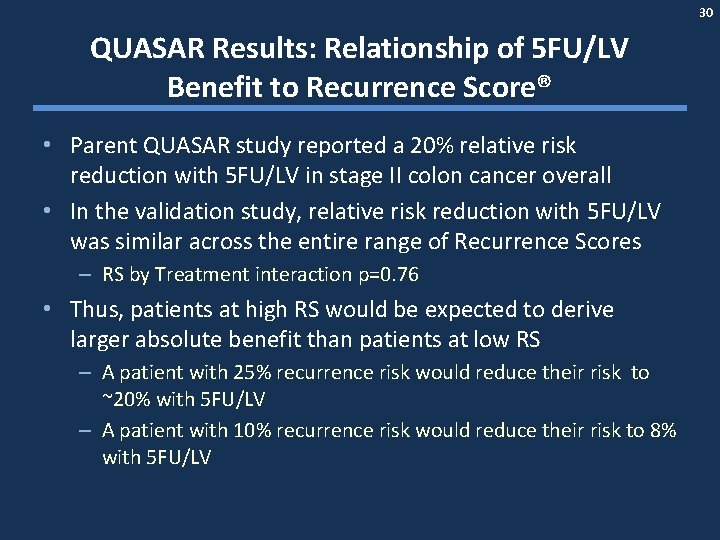
30 QUASAR Results: Relationship of 5 FU/LV Benefit to Recurrence Score® • Parent QUASAR study reported a 20% relative risk reduction with 5 FU/LV in stage II colon cancer overall • In the validation study, relative risk reduction with 5 FU/LV was similar across the entire range of Recurrence Scores – RS by Treatment interaction p=0. 76 • Thus, patients at high RS would be expected to derive larger absolute benefit than patients at low RS – A patient with 25% recurrence risk would reduce their risk to ~20% with 5 FU/LV – A patient with 10% recurrence risk would reduce their risk to 8% with 5 FU/LV
31 Recurrence Score® Guideposts for Clinical Decisions: T 3, MMR-P Patients with RS ≥ 41 45% T 4 and MMR proficient (13%) Risk of Recurrence at 3 years 40% 35% 30% 25% T 3 and MMR proficient (74%) 20% 15% 10% 5% T 3 and MMR deficient (11%) 0% 0 10 20 30 40 50 60 70 Recurrence Score This population of patients with high Recurrence Score disease (~25% of total) has recurrence risk that overlaps with T 4 patients and would be expected to have >3% benefit with adjuvant 5 FU.
32 Recurrence Score® Guideposts for Clinical Decisions: T 3, MMR-P Patients with RS < 30 45% T 4 and MMR proficient (13%) Risk of Recurrence at 3 years 40% 35% 30% 25% T 3 and MMR proficient (74%) 20% 15% 10% 5% T 3 and MMR deficient (11%) 0% 0 10 20 30 40 50 60 70 Recurrence Score This population of patients with low Recurrence Score disease (~45% of total) has recurrence risk that is ≤ 15% and would be expected to have <3% benefit with adjuvant 5 FU.
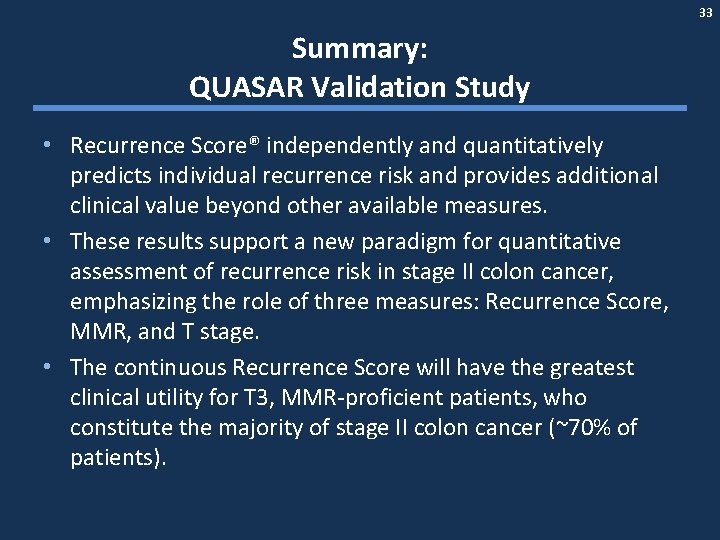
33 Summary: QUASAR Validation Study • Recurrence Score® independently and quantitatively predicts individual recurrence risk and provides additional clinical value beyond other available measures. • These results support a new paradigm for quantitative assessment of recurrence risk in stage II colon cancer, emphasizing the role of three measures: Recurrence Score, MMR, and T stage. • The continuous Recurrence Score will have the greatest clinical utility for T 3, MMR-proficient patients, who constitute the majority of stage II colon cancer (~70% of patients).
34 Validation of a 12 -Gene Colon Cancer Recurrence Score® in Stage II Colon Cancer Patients from CALGB 9581 A. P. Venook, 1 D. Niedzwiecki, 2 M. Lopatin, 3 M. Lee, 3 P. N. Friedman, 4 W. Frankel, 5 K. Clark-Langone, 3 C. Yoshizawa, 3 C. Millward, 3 S. Shak, 3 R. M. Goldberg, 6 N. N. Mahmoud, 7 R. L. Schilsky, 4 M. M. Bertagnolli 8 1. University of California, San Francisco, CA; 2. Duke University, Durham, NC; 3. Genomic Health, Redwood City, CA; 4. The University of Chicago, IL; 5. The Ohio State University, Columbus, OH; 6. University of North Carolina at Chapel Hill, NC; 7. University of Pennsylvania, Philadelphia, PA; 8. Brigham and Women's Hospital, Boston, MA Venook AP, et al. J Clin Oncol. 2011; 29: abstract 3518.
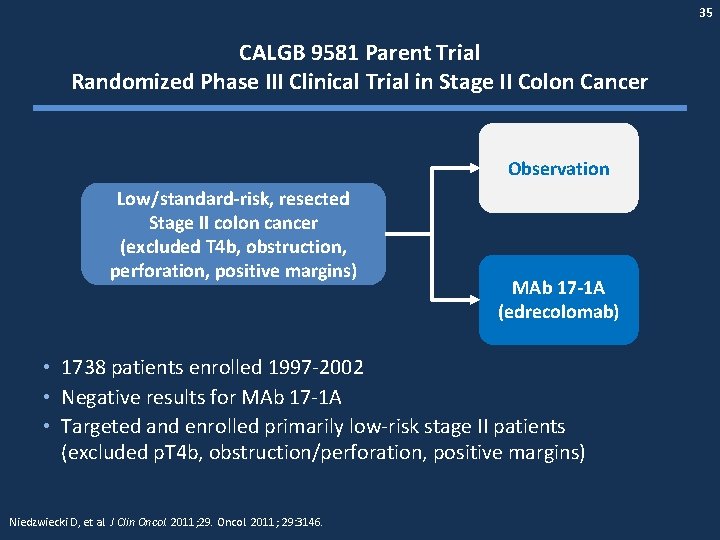
35 CALGB 9581 Parent Trial Randomized Phase III Clinical Trial in Stage II Colon Cancer Observation Low/standard-risk, resected Stage II colon cancer (excluded T 4 b, obstruction, perforation, positive margins) MAb 17 -1 A (edrecolomab) • 1738 patients enrolled 1997 -2002 • Negative results for MAb 17 -1 A • Targeted and enrolled primarily low-risk stage II patients (excluded p. T 4 b, obstruction/perforation, positive margins) Niedzwiecki D, et al. J Clin Oncol. 2011; 29: 3146.
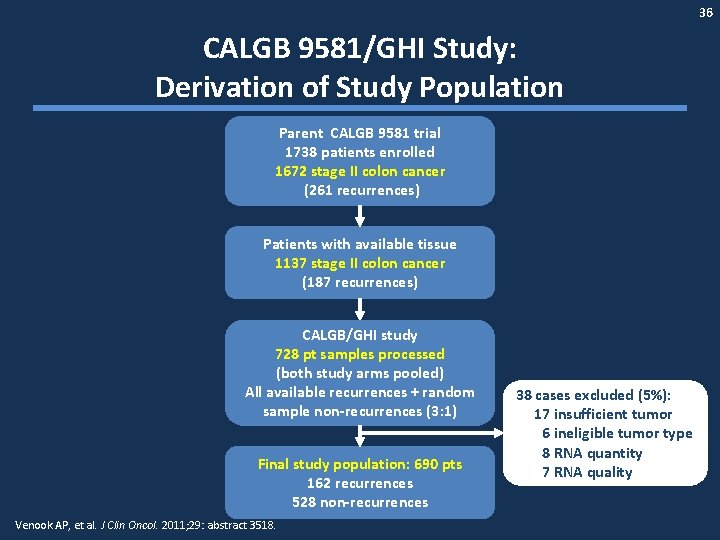
36 CALGB 9581/GHI Study: Derivation of Study Population Parent CALGB 9581 trial 1738 patients enrolled 1672 stage II colon cancer (261 recurrences) Patients with available tissue 1137 stage II colon cancer (187 recurrences) CALGB/GHI study 728 pt samples processed (both study arms pooled) All available recurrences + random sample non-recurrences (3: 1) Final study population: 690 pts 162 recurrences 528 non-recurrences Venook AP, et al. J Clin Oncol. 2011; 29: abstract 3518. 38 cases excluded (5%): 17 insufficient tumor 06 ineligible tumor type 08 RNA quantity 07 RNA quality
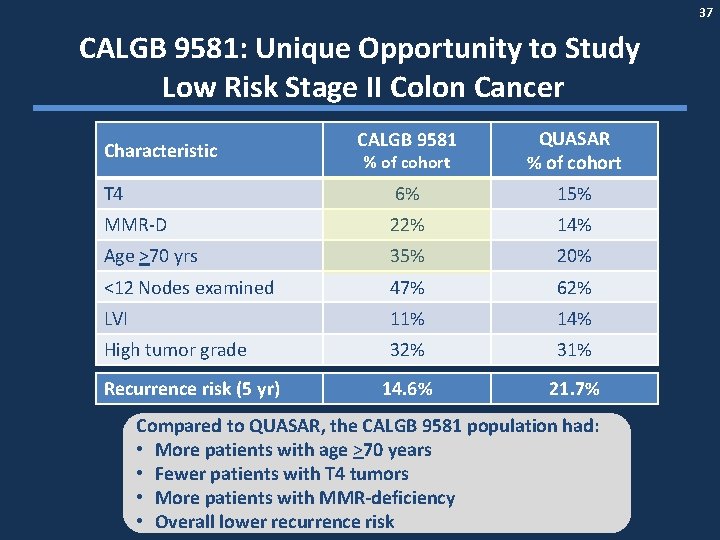
37 CALGB 9581: Unique Opportunity to Study Low Risk Stage II Colon Cancer CALGB 9581 % of cohort QUASAR % of cohort T 4 6% 15% MMR-D 22% 14% Age >70 yrs 35% 20% <12 Nodes examined 47% 62% LVI 11% 14% High tumor grade 32% 31% 14. 6% 21. 7% Characteristic Recurrence risk (5 yr) Compared to QUASAR, the CALGB 9581 population had: • More patients with age >70 years • Fewer patients with T 4 tumors • More patients with MMR-deficiency • Overall lower recurrence risk
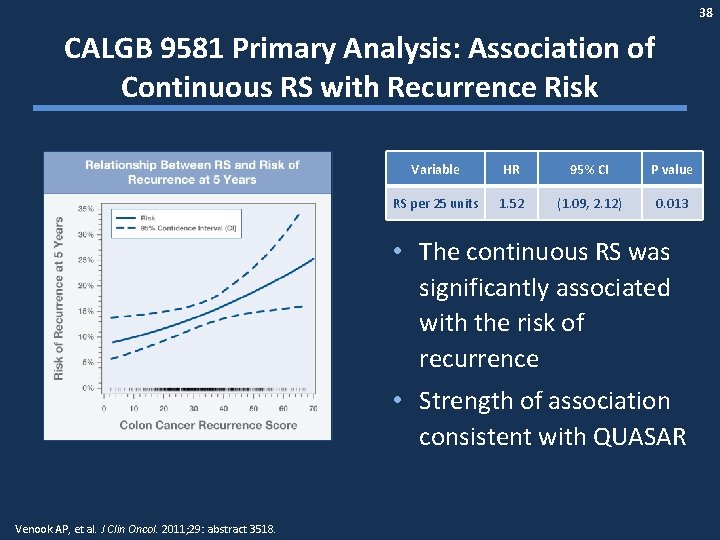
38 CALGB 9581 Primary Analysis: Association of Continuous RS with Recurrence Risk Variable HR 95% CI P value RS per 25 units 1. 52 (1. 09, 2. 12) 0. 013 • The continuous RS was significantly associated with the risk of recurrence • Strength of association consistent with QUASAR Venook AP, et al. J Clin Oncol. 2011; 29: abstract 3518.
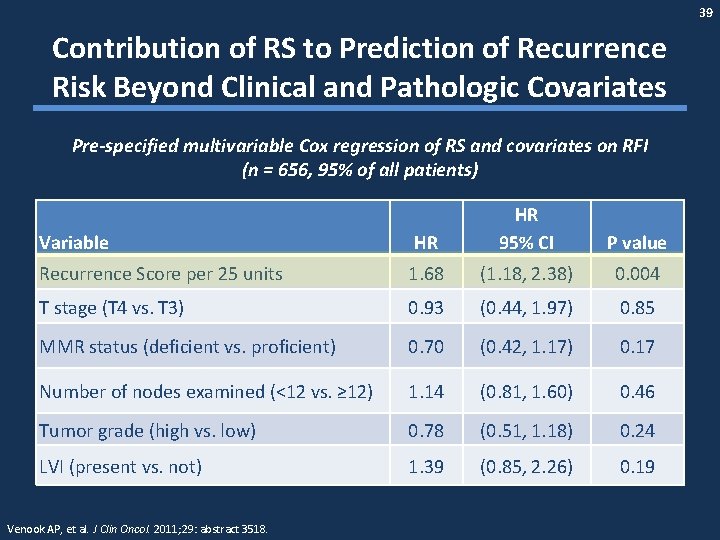
39 Contribution of RS to Prediction of Recurrence Risk Beyond Clinical and Pathologic Covariates Pre-specified multivariable Cox regression of RS and covariates on RFI (n = 656, 95% of all patients) Variable HR HR 95% CI Recurrence Score per 25 units 1. 68 (1. 18, 2. 38) 0. 004 T stage (T 4 vs. T 3) 0. 93 (0. 44, 1. 97) 0. 85 MMR status (deficient vs. proficient) 0. 70 (0. 42, 1. 17) 0. 17 Number of nodes examined (<12 vs. ≥ 12) 1. 14 (0. 81, 1. 60) 0. 46 Tumor grade (high vs. low) 0. 78 (0. 51, 1. 18) 0. 24 LVI (present vs. not) 1. 39 (0. 85, 2. 26) 0. 19 Venook AP, et al. J Clin Oncol. 2011; 29: abstract 3518. P value
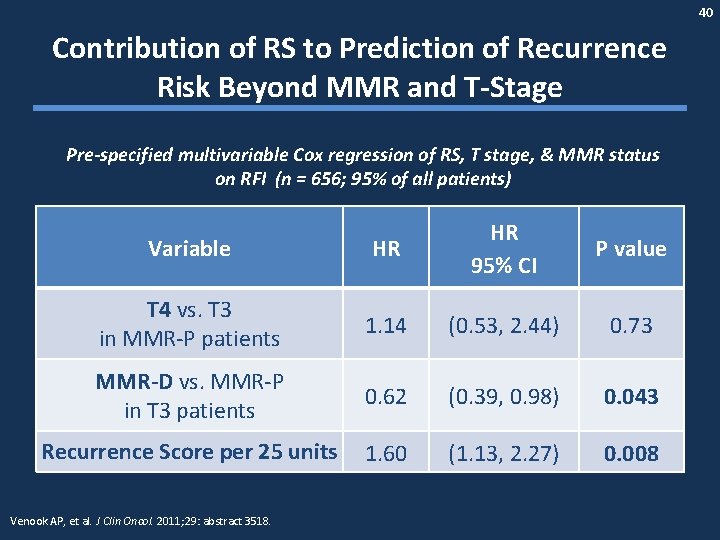
40 Contribution of RS to Prediction of Recurrence Risk Beyond MMR and T-Stage Pre-specified multivariable Cox regression of RS, T stage, & MMR status on RFI (n = 656; 95% of all patients) Variable HR HR 95% CI T 4 vs. T 3 in MMR-P patients 1. 14 (0. 53, 2. 44) 0. 73 MMR-D vs. MMR-P in T 3 patients 0. 62 (0. 39, 0. 98) 0. 043 Recurrence Score per 25 units 1. 60 (1. 13, 2. 27) 0. 008 Venook AP, et al. J Clin Oncol. 2011; 29: abstract 3518. P value
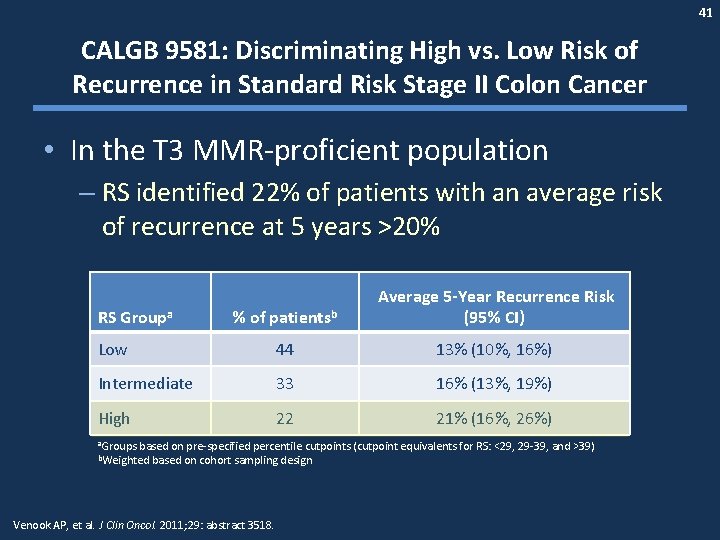
41 CALGB 9581: Discriminating High vs. Low Risk of Recurrence in Standard Risk Stage II Colon Cancer • In the T 3 MMR-proficient population – RS identified 22% of patients with an average risk of recurrence at 5 years >20% % of patientsb Average 5 -Year Recurrence Risk (95% CI) Low 44 13% (10%, 16%) Intermediate 33 16% (13%, 19%) High 22 21% (16%, 26%) RS Groupa a. Groups based on pre-specified percentile cutpoints (cutpoint equivalents for RS: <29, 29 -39, and >39) b. Weighted based on cohort sampling design Venook AP, et al. J Clin Oncol. 2011; 29: abstract 3518.
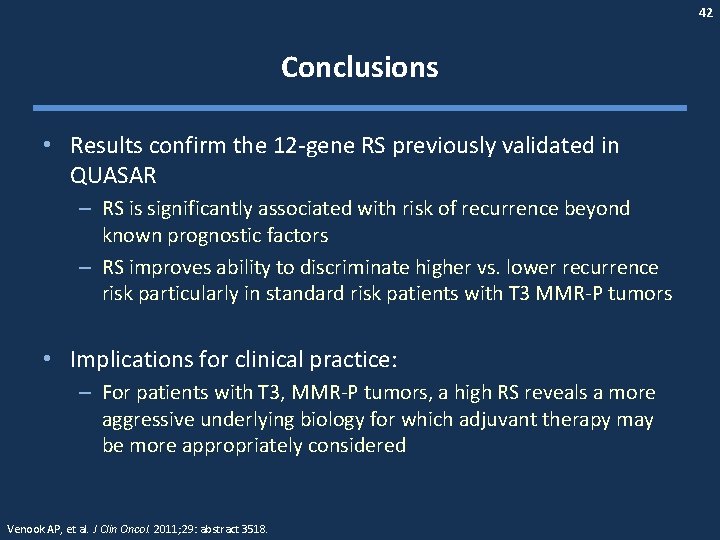
42 Conclusions • Results confirm the 12 -gene RS previously validated in QUASAR – RS is significantly associated with risk of recurrence beyond known prognostic factors – RS improves ability to discriminate higher vs. lower recurrence risk particularly in standard risk patients with T 3 MMR-P tumors • Implications for clinical practice: – For patients with T 3, MMR-P tumors, a high RS reveals a more aggressive underlying biology for which adjuvant therapy may be more appropriately considered Venook AP, et al. J Clin Oncol. 2011; 29: abstract 3518.
43 Oncotype DX® Colon Cancer Assay The Challenge with the Stage II Colon Cancer Patient Oncotype DX Colon Cancer Assay Development & Validation Implications for Clinical Practice in Stage II Colon Cancer
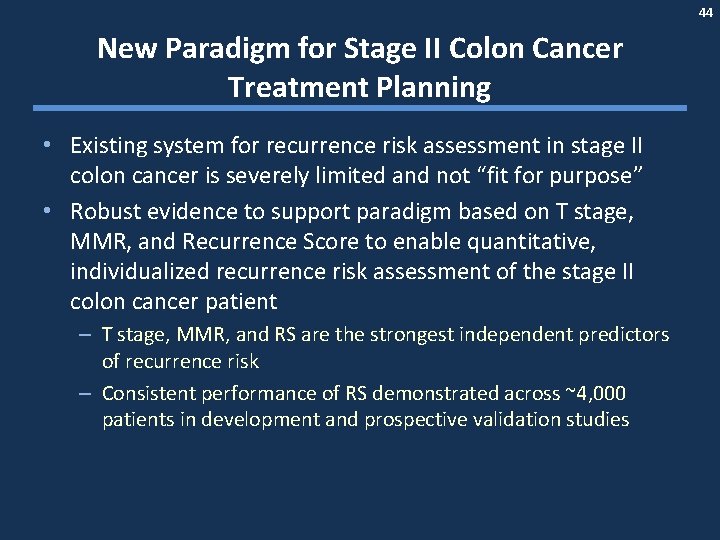
44 New Paradigm for Stage II Colon Cancer Treatment Planning • Existing system for recurrence risk assessment in stage II colon cancer is severely limited and not “fit for purpose” • Robust evidence to support paradigm based on T stage, MMR, and Recurrence Score to enable quantitative, individualized recurrence risk assessment of the stage II colon cancer patient – T stage, MMR, and RS are the strongest independent predictors of recurrence risk – Consistent performance of RS demonstrated across ~4, 000 patients in development and prospective validation studies
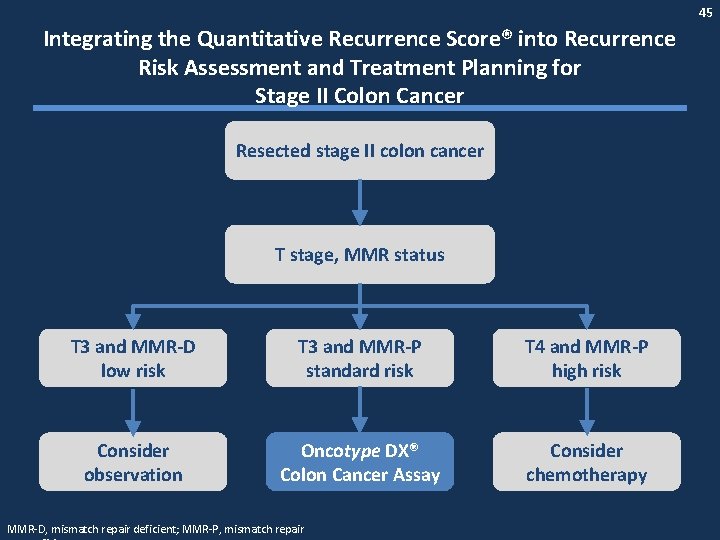
45 Integrating the Quantitative Recurrence Score® into Recurrence Risk Assessment and Treatment Planning for Stage II Colon Cancer Resected stage II colon cancer T stage, MMR status T 3 and MMR-D low risk T 3 and MMR-P standard risk T 4 and MMR-P high risk Consider observation Oncotype DX® Colon Cancer Assay Consider chemotherapy MMR-D, mismatch repair deficient; MMR-P, mismatch repair
46 Oncotype DX® Colon Cancer Assay Patient Report
47 Summary • Adjuvant chemotherapy decisions for stage II patients have been based on clinical and pathologic markers that do not accurately discriminate recurrence risk particularly for the standard risk patient. • The Oncotype DX® Colon Cancer Assay quantitatively predicts individual recurrence risk and provides clinical value beyond other available measures. • The Oncotype DX Colon Cancer Assay is the foundation of Genomic Health’s efforts to improve outcomes for patients with colon cancer.
48 APPENDIX
49 Supporting Slides on Oncotype DX Colon Cancer Assay Development & Validation
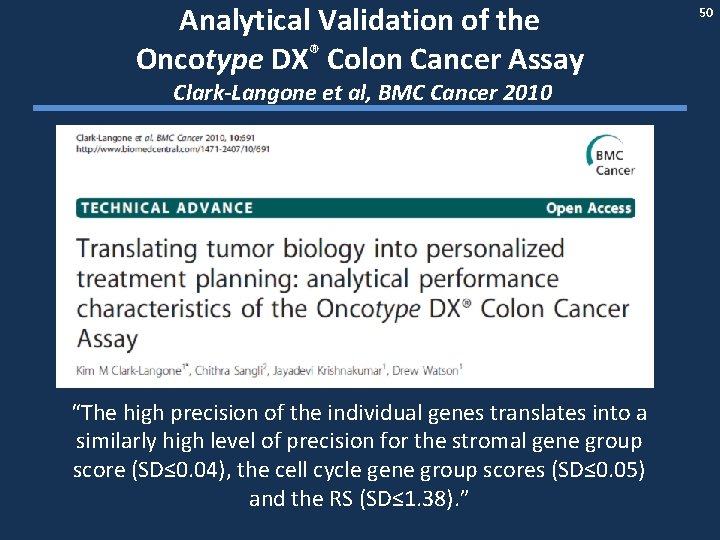
Analytical Validation of the Oncotype DX® Colon Cancer Assay Clark-Langone et al, BMC Cancer 2010 “The high precision of the individual genes translates into a similarly high level of precision for the stromal gene group score (SD≤ 0. 04), the cell cycle gene group scores (SD≤ 0. 05) and the RS (SD≤ 1. 38). ” 50
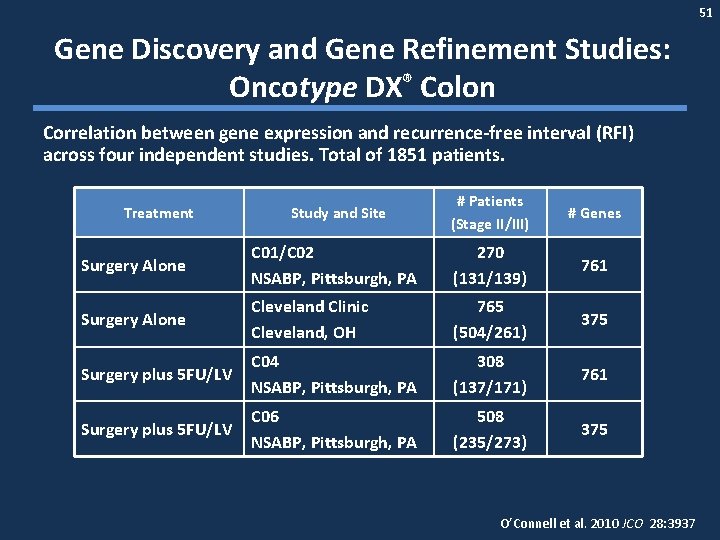
51 Gene Discovery and Gene Refinement Studies: Oncotype DX® Colon Correlation between gene expression and recurrence-free interval (RFI) across four independent studies. Total of 1851 patients. Study and Site # Patients (Stage II/III) # Genes Surgery Alone C 01/C 02 NSABP, Pittsburgh, PA 270 (131/139) 761 Surgery Alone Cleveland Clinic Cleveland, OH 765 (504/261) 375 Surgery plus 5 FU/LV C 04 NSABP, Pittsburgh, PA 308 (137/171) 761 Surgery plus 5 FU/LV C 06 NSABP, Pittsburgh, PA 508 (235/273) 375 Treatment O’Connell et al. 2010 JCO 28: 3937
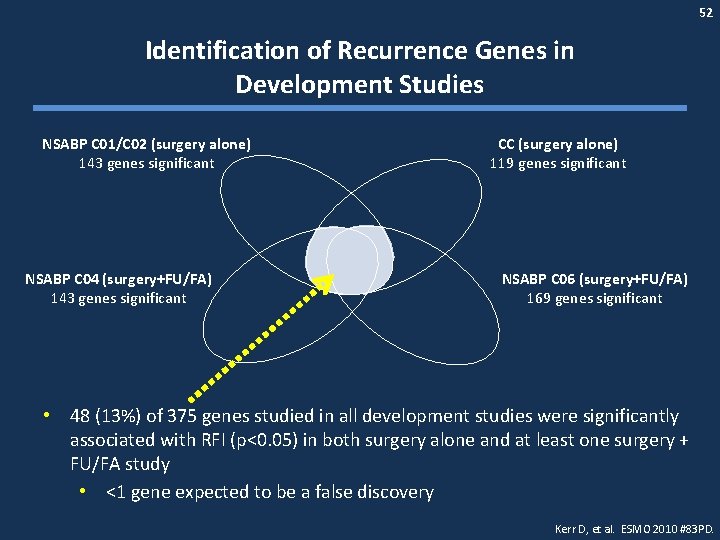
52 Identification of Recurrence Genes in Development Studies NSABP C 01/C 02 (surgery alone) 143 genes significant NSABP C 04 (surgery+FU/FA) 143 genes significant CC (surgery alone) 119 genes significant NSABP C 06 (surgery+FU/FA) 169 genes significant • 48 (13%) of 375 genes studied in all development studies were significantly associated with RFI (p<0. 05) in both surgery alone and at least one surgery + FU/FA study • <1 gene expected to be a false discovery Kerr D, et al. ESMO 2010 #83 PD.
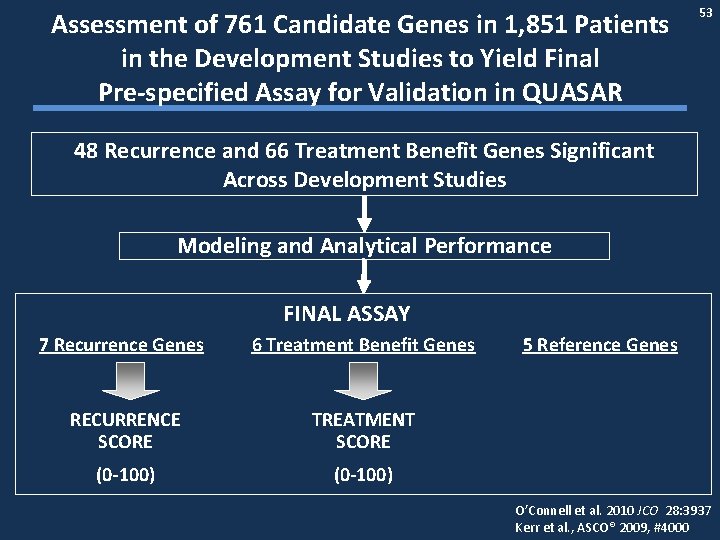
Assessment of 761 Candidate Genes in 1, 851 Patients in the Development Studies to Yield Final Pre-specified Assay for Validation in QUASAR 53 48 Recurrence and 66 Treatment Benefit Genes Significant Across Development Studies Modeling and Analytical Performance FINAL ASSAY 7 Recurrence Genes 6 Treatment Benefit Genes RECURRENCE SCORE TREATMENT SCORE (0 -100) 5 Reference Genes O’Connell et al. 2010 JCO 28: 3937 Kerr et al. , ASCO® 2009, #4000
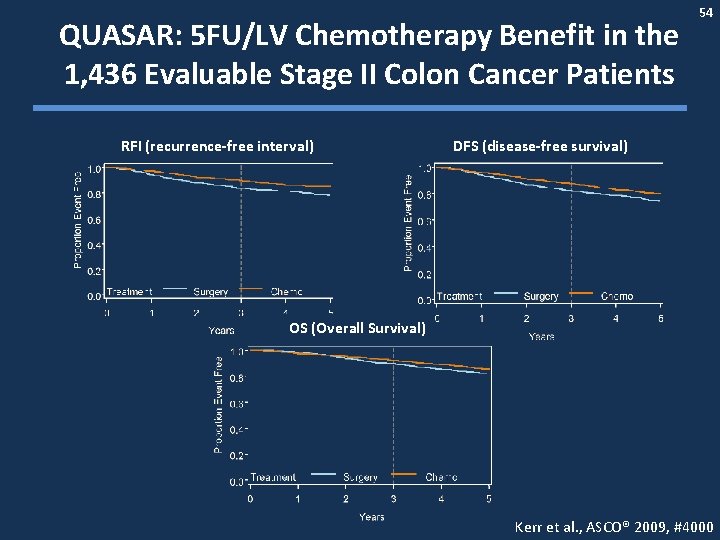
QUASAR: 5 FU/LV Chemotherapy Benefit in the 1, 436 Evaluable Stage II Colon Cancer Patients RFI (recurrence-free interval) 54 DFS (disease-free survival) OS (Overall Survival) Kerr et al. , ASCO® 2009, #4000
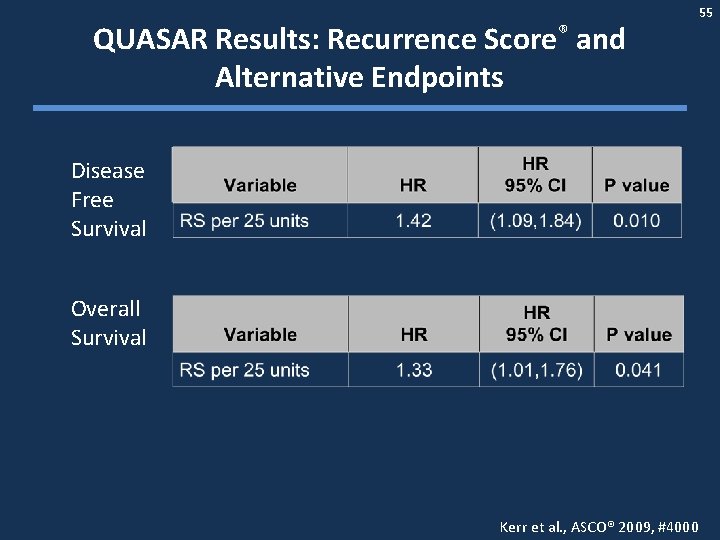
QUASAR Results: Recurrence Score® and Alternative Endpoints 55 Disease Free Survival Overall Survival Kerr et al. , ASCO® 2009, #4000
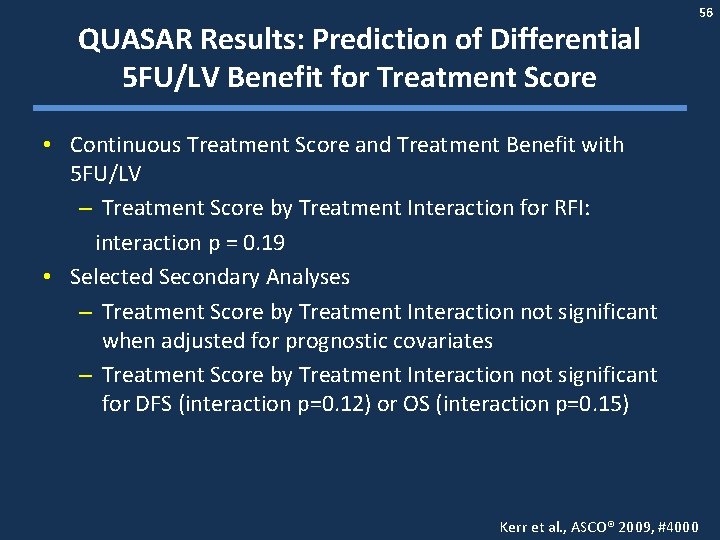
QUASAR Results: Prediction of Differential 5 FU/LV Benefit for Treatment Score 56 • Continuous Treatment Score and Treatment Benefit with 5 FU/LV – Treatment Score by Treatment Interaction for RFI: interaction p = 0. 19 • Selected Secondary Analyses – Treatment Score by Treatment Interaction not significant when adjusted for prognostic covariates – Treatment Score by Treatment Interaction not significant for DFS (interaction p=0. 12) or OS (interaction p=0. 15) Kerr et al. , ASCO® 2009, #4000
57 Relationship of 5 FU/LV Benefit to Recurrence Score® : QUASAR Results Risk Prognostic, NOT predictive Score Prognostic AND predictive Risk Secondary Analysis in QUASAR Examination of Recurrence Score in surgery alone and 5 FU/LV-treated patients: RS by Treatment interaction p=0. 76 Score Risk Surgery Alone Prognostic AND predictive Surgery + Chemo Score
58 Tumor Grade
Pathologic Markers and Recurrence Risk: Interaction with Stage in Development Studies Interaction of stage and covariate MMR p = 0. 11 T Stage p = 0. 07 Grade p = 0. 005 Mucinous p = 0. 11 0 1 Stage II 2 HR 3 4 Stage III Analysis of 634 stage II colon cancer patients (≥ 12 nodes examined) and 844 stage III colon cancer patients from NSABP C 01/C 02, C 04, C 06 and Cleveland Clinic studies O’Connell et al ASCO® GI 2010 abstr 280 59
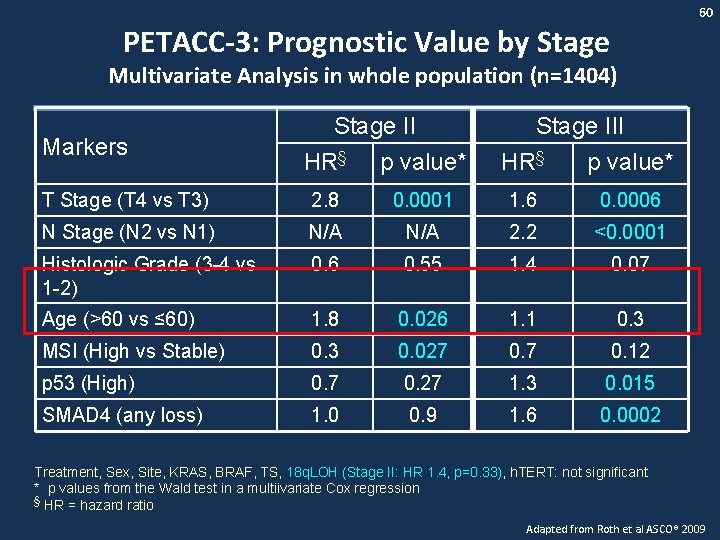
60 PETACC-3: Prognostic Value by Stage Multivariate Analysis in whole population (n=1404) Markers Stage II HR§ p value* Stage III HR§ p value* T Stage (T 4 vs T 3) 2. 8 0. 0001 1. 6 0. 0006 N Stage (N 2 vs N 1) N/A 2. 2 <0. 0001 Histologic Grade (3 -4 vs 1 -2) 0. 6 0. 55 1. 4 0. 07 Age (>60 vs ≤ 60) 1. 8 0. 026 1. 1 0. 3 MSI (High vs Stable) 0. 3 0. 027 0. 12 p 53 (High) 0. 7 0. 27 1. 3 0. 015 SMAD 4 (any loss) 1. 0 0. 9 1. 6 0. 0002 Treatment, Sex, Site, KRAS, BRAF, TS, 18 q. LOH (Stage II: HR 1. 4, p=0. 33), h. TERT: not significant * p values from the Wald test in a multiivariate Cox regression § HR = hazard ratio Adapted from Roth et al ASCO® 2009
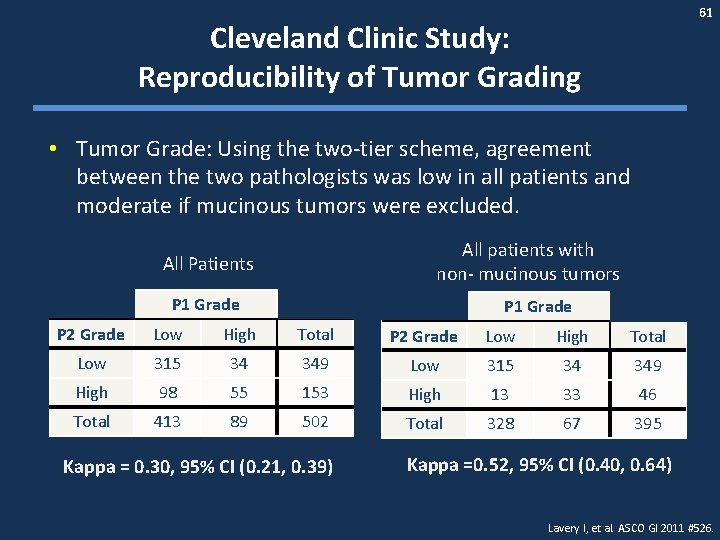
61 Cleveland Clinic Study: Reproducibility of Tumor Grading • Tumor Grade: Using the two-tier scheme, agreement between the two pathologists was low in all patients and moderate if mucinous tumors were excluded. All patients with non- mucinous tumors All Patients P 1 Grade P 2 Grade Low High Total Low 315 34 349 High 98 55 153 High 13 33 46 Total 413 89 502 Total 328 67 395 Kappa = 0. 30, 95% CI (0. 21, 0. 39) Kappa =0. 52, 95% CI (0. 40, 0. 64) Lavery I, et al. ASCO GI 2011 #526.
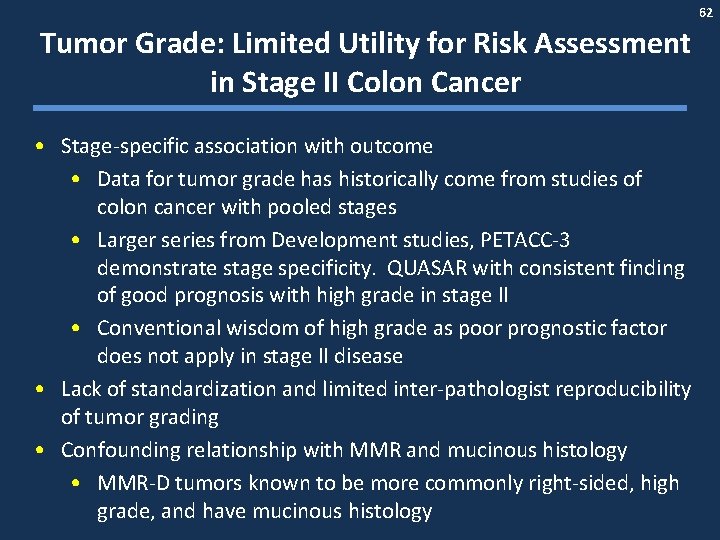
62 Tumor Grade: Limited Utility for Risk Assessment in Stage II Colon Cancer • Stage-specific association with outcome • Data for tumor grade has historically come from studies of colon cancer with pooled stages • Larger series from Development studies, PETACC-3 demonstrate stage specificity. QUASAR with consistent finding of good prognosis with high grade in stage II • Conventional wisdom of high grade as poor prognostic factor does not apply in stage II disease • Lack of standardization and limited inter-pathologist reproducibility of tumor grading • Confounding relationship with MMR and mucinous histology • MMR-D tumors known to be more commonly right-sided, high grade, and have mucinous histology
63 Lymphovascular Invasion
64 • Design: 6 GI pathologists • 50 stage II, moderately differentiated CRC • Assessment of H&E and IHC for D 2 -40 and CD 31 (endothelial markers) • Results • Low concordance (kappa 0. 18 -0. 28) with H&E • Minimal improvement with IHC (kappa 0. 26 -0. 42) • Conclusion “Interobserver variability in diagnosis of LVI was substantial on H&E slides and did not improve upon use of IHC. Agreement in evaluation of large vessel invasion was only slightly higher than would be seen by chance alone. This study highlights the need for criteria in evaluation of LVI, as this assessment may impact patient prognosis and thus change the course of clinical treatment. ” Am J Surg Pathol 2008, 32: 1816
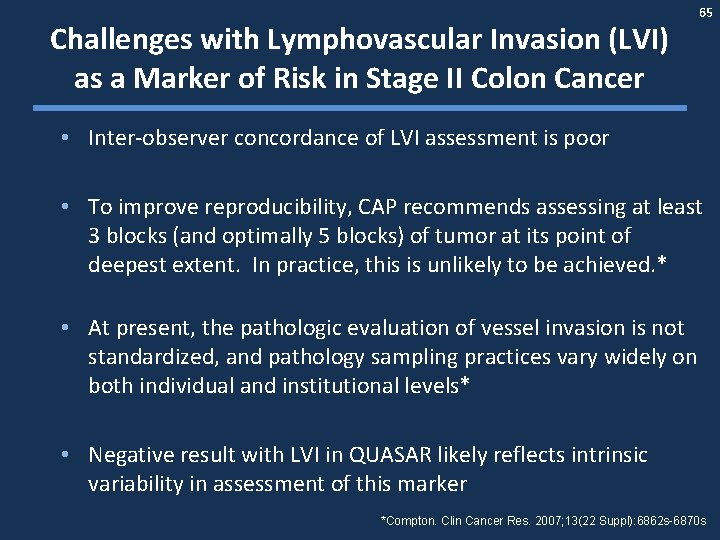
Challenges with Lymphovascular Invasion (LVI) as a Marker of Risk in Stage II Colon Cancer 65 • Inter-observer concordance of LVI assessment is poor • To improve reproducibility, CAP recommends assessing at least 3 blocks (and optimally 5 blocks) of tumor at its point of deepest extent. In practice, this is unlikely to be achieved. * • At present, the pathologic evaluation of vessel invasion is not standardized, and pathology sampling practices vary widely on both individual and institutional levels* • Negative result with LVI in QUASAR likely reflects intrinsic variability in assessment of this marker *Compton. Clin Cancer Res. 2007; 13(22 Suppl): 6862 s-6870 s
66 18 q Loss of Heterozygosity (18 q. LOH)
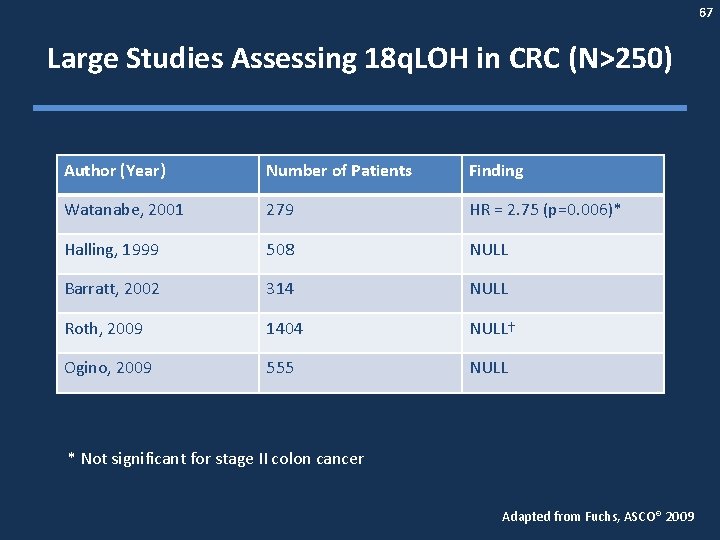
67 Large Studies Assessing 18 q. LOH in CRC (N>250) Author (Year) Number of Patients Finding Watanabe, 2001 279 HR = 2. 75 (p=0. 006)* Halling, 1999 508 NULL Barratt, 2002 314 NULL Roth, 2009 1404 NULL† Ogino, 2009 555 NULL * Not significant for stage II colon cancer Adapted from Fuchs, ASCO® 2009
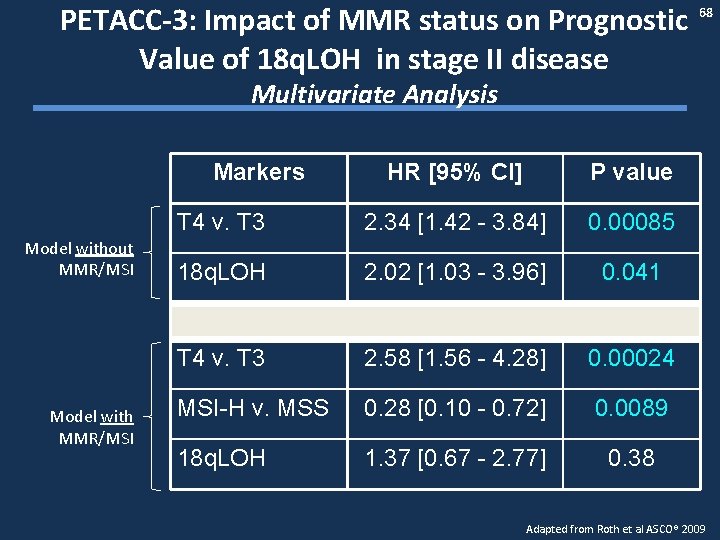
PETACC-3: Impact of MMR status on Prognostic 68 Value of 18 q. LOH in stage II disease Multivariate Analysis Markers Model without MMR/MSI Model with MMR/MSI HR [95% CI] P value T 4 v. T 3 2. 34 [1. 42 - 3. 84] 0. 00085 18 q. LOH 2. 02 [1. 03 - 3. 96] 0. 041 T 4 v. T 3 2. 58 [1. 56 - 4. 28] 0. 00024 MSI-H v. MSS 0. 28 [0. 10 - 0. 72] 0. 0089 18 q. LOH 1. 37 [0. 67 - 2. 77] 0. 38 Adapted from Roth et al ASCO® 2009
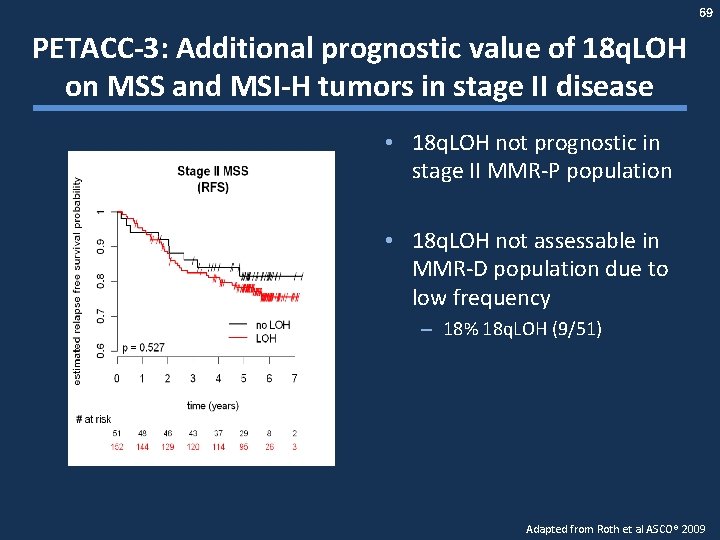
69 PETACC-3: Additional prognostic value of 18 q. LOH on MSS and MSI-H tumors in stage II disease • 18 q. LOH not prognostic in stage II MMR-P population • 18 q. LOH not assessable in MMR-D population due to low frequency – 18% 18 q. LOH (9/51) P = 0. 527 Adapted from Roth et al ASCO® 2009
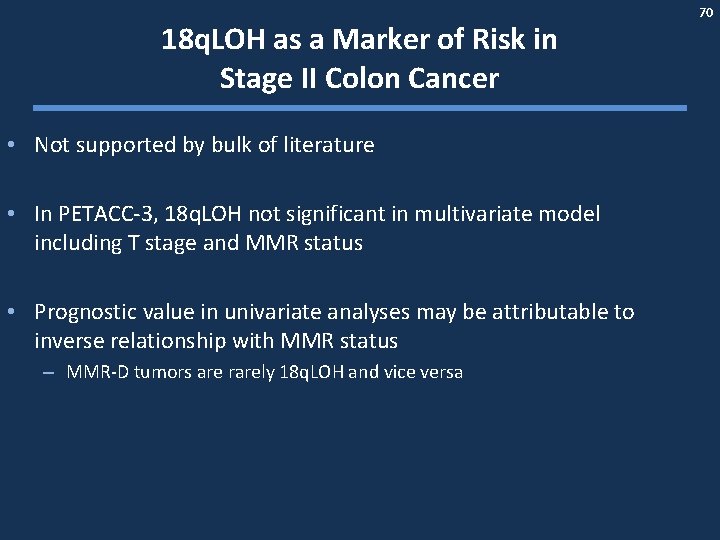
18 q. LOH as a Marker of Risk in Stage II Colon Cancer • Not supported by bulk of literature • In PETACC-3, 18 q. LOH not significant in multivariate model including T stage and MMR status • Prognostic value in univariate analyses may be attributable to inverse relationship with MMR status – MMR-D tumors are rarely 18 q. LOH and vice versa 70
Validation of a 12 -gene colon cancer 71 Recurrence Score in stage II colon cancer patients from CALGB 9581 A. P. Venook 1, D. Niedzwiecki 2, M. Lopatin 3, M. Lee 3, P. N. Friedman 4, W. Frankel 5, K. Clark-Langone 3, C. Yoshizawa 3, C. Millward 3, S. Shak 3, R. M. Goldberg 6, N. N. Mahmoud 7, R. L. Schilsky 8, M. M. Bertagnolli 9 1. University of California, San Francisco, CA; 2. Duke University, Durham, NC; 3. Genomic Health, Redwood City, CA; 4. Cancer and Leukemia Group B, Chicago, IL; 5. The Ohio State University, Columbus, OH; 6. University of North Carolina at Chapel Hill, NC; 7. University of Pennsylvania, Philadelphia, PA; 8. The University of Chicago, IL; 9. Brigham and Women's Hospital, Boston, MA Venook AP, et al. ASCO 2011. Abstract 3518 (poster presentation).
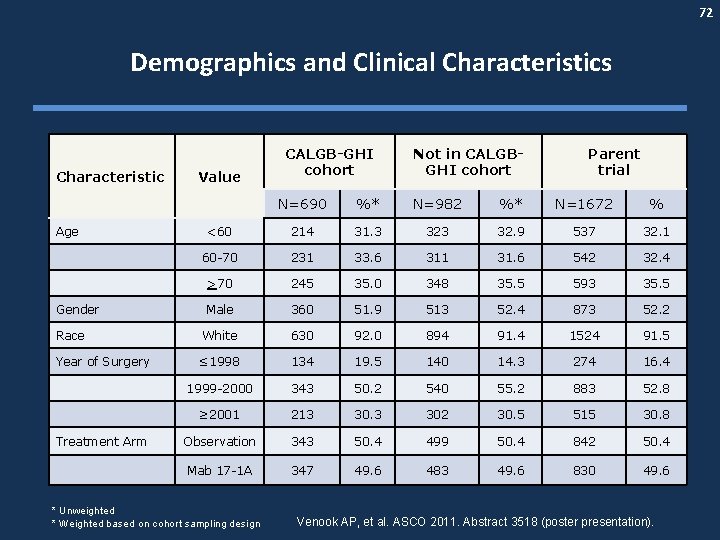
72 Demographics and Clinical Characteristics Characteristic Value CALGB-GHI cohort Not in CALGBGHI cohort Parent trial N=690 %* N=982 %* N=1672 % <60 214 31. 3 32. 9 537 32. 1 60 -70 231 33. 6 311 31. 6 542 32. 4 >70 245 35. 0 348 35. 5 593 35. 5 Gender Male 360 51. 9 513 52. 4 873 52. 2 Race White 630 92. 0 894 91. 4 1524 91. 5 Year of Surgery ≤ 1998 134 19. 5 140 14. 3 274 16. 4 1999 -2000 343 50. 2 540 55. 2 883 52. 8 ≥ 2001 213 302 30. 5 515 30. 8 Observation 343 50. 4 499 50. 4 842 50. 4 Mab 17 -1 A 347 49. 6 483 49. 6 830 49. 6 Age Treatment Arm * Unweighted * Weighted based on cohort sampling design Venook AP, et al. ASCO 2011. Abstract 3518 (poster presentation).
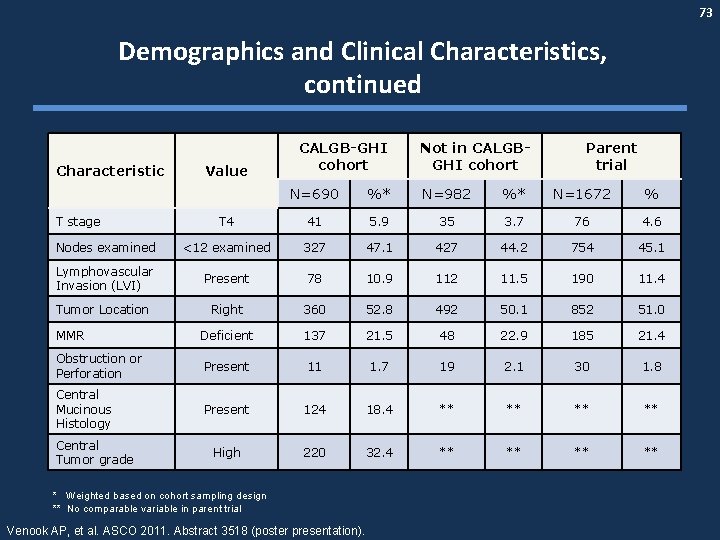
73 Demographics and Clinical Characteristics, continued Characteristic Value CALGB-GHI cohort Not in CALGBGHI cohort Parent trial N=690 %* N=982 %* N=1672 % T 4 41 5. 9 35 3. 7 76 4. 6 Nodes examined <12 examined 327 47. 1 427 44. 2 754 45. 1 Lymphovascular Invasion (LVI) Present 78 10. 9 112 11. 5 190 11. 4 Tumor Location Right 360 52. 8 492 50. 1 852 51. 0 Deficient 137 21. 5 48 22. 9 185 21. 4 Obstruction or Perforation Present 11 1. 7 19 2. 1 30 1. 8 Central Mucinous Histology Present 124 18. 4 ** ** High 220 32. 4 ** ** T stage MMR Central Tumor grade * Weighted based on cohort sampling design ** No comparable variable in parent trial Venook AP, et al. ASCO 2011. Abstract 3518 (poster presentation).
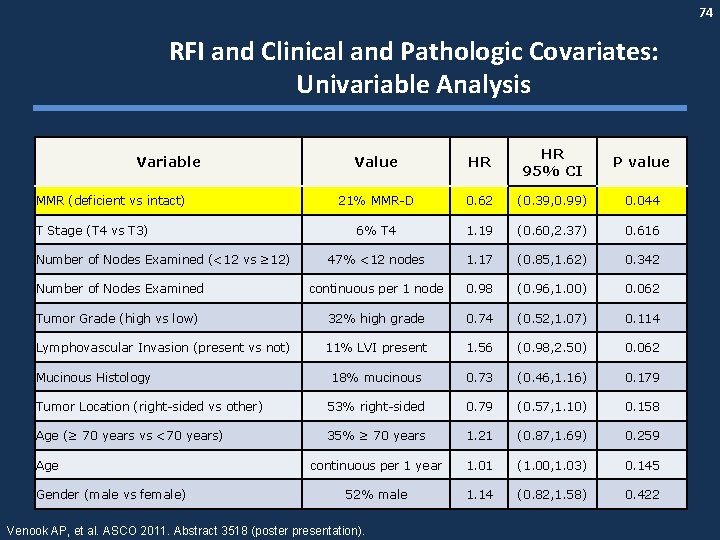
74 RFI and Clinical and Pathologic Covariates: Univariable Analysis Value HR 95% CI P value 21% MMR-D 0. 62 (0. 39, 0. 99) 0. 044 6% T 4 1. 19 (0. 60, 2. 37) 0. 616 47% <12 nodes 1. 17 (0. 85, 1. 62) 0. 342 Number of Nodes Examined continuous per 1 node 0. 98 (0. 96, 1. 00) 0. 062 Tumor Grade (high vs low) 32% high grade 0. 74 (0. 52, 1. 07) 0. 114 Lymphovascular Invasion (present vs not) 11% LVI present 1. 56 (0. 98, 2. 50) 0. 062 18% mucinous 0. 73 (0. 46, 1. 16) 0. 179 Tumor Location (right-sided vs other) 53% right-sided 0. 79 (0. 57, 1. 10) 0. 158 Age (≥ 70 years vs <70 years) 35% ≥ 70 years 1. 21 (0. 87, 1. 69) 0. 259 continuous per 1 year 1. 01 (1. 00, 1. 03) 0. 145 52% male 1. 14 (0. 82, 1. 58) 0. 422 Variable MMR (deficient vs intact) T Stage (T 4 vs T 3) Number of Nodes Examined (<12 vs ≥ 12) Mucinous Histology Age Gender (male vs female) Venook AP, et al. ASCO 2011. Abstract 3518 (poster presentation).
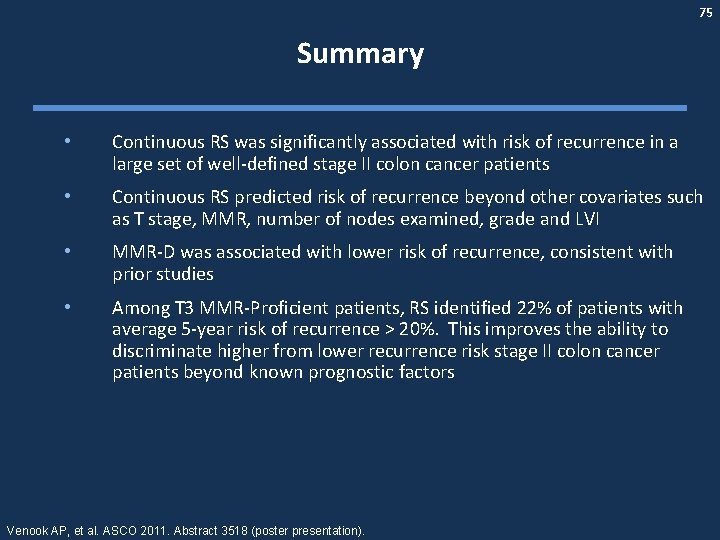
75 Summary • Continuous RS was significantly associated with risk of recurrence in a large set of well-defined stage II colon cancer patients • Continuous RS predicted risk of recurrence beyond other covariates such as T stage, MMR, number of nodes examined, grade and LVI • MMR-D was associated with lower risk of recurrence, consistent with prior studies • Among T 3 MMR-Proficient patients, RS identified 22% of patients with average 5 -year risk of recurrence > 20%. This improves the ability to discriminate higher from lower recurrence risk stage II colon cancer patients beyond known prognostic factors Venook AP, et al. ASCO 2011. Abstract 3518 (poster presentation).