
1 of 7 Boardworks Ltd 2009 Pathogens and
1 of 7 © Boardworks Ltd 2009
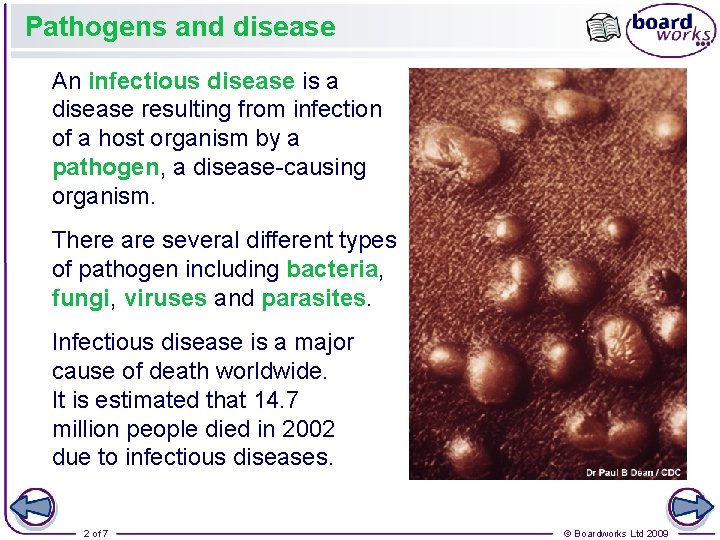
Pathogens and disease An infectious disease is a disease resulting from infection of a host organism by a pathogen, a disease-causing organism. There are several different types of pathogen including bacteria, fungi, viruses and parasites. Infectious disease is a major cause of death worldwide. It is estimated that 14. 7 million people died in 2002 due to infectious diseases. 2 of 7 © Boardworks Ltd 2009
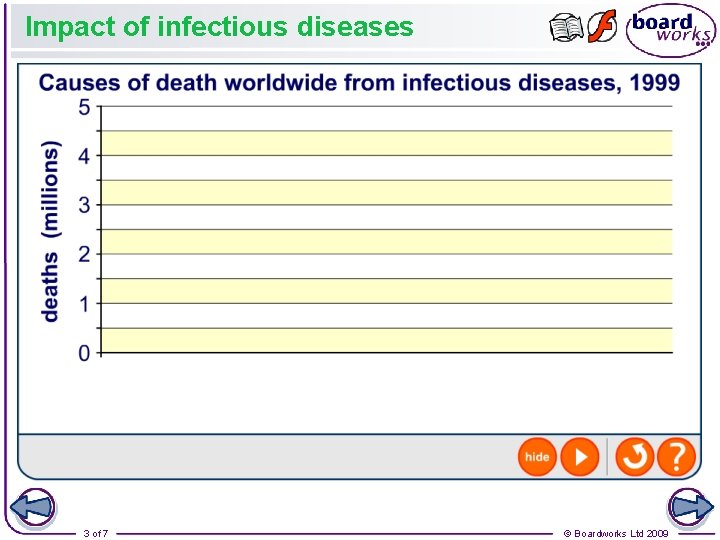
Impact of infectious diseases 3 of 7 © Boardworks Ltd 2009

Different types of pathogens 4 of 7 © Boardworks Ltd 2009
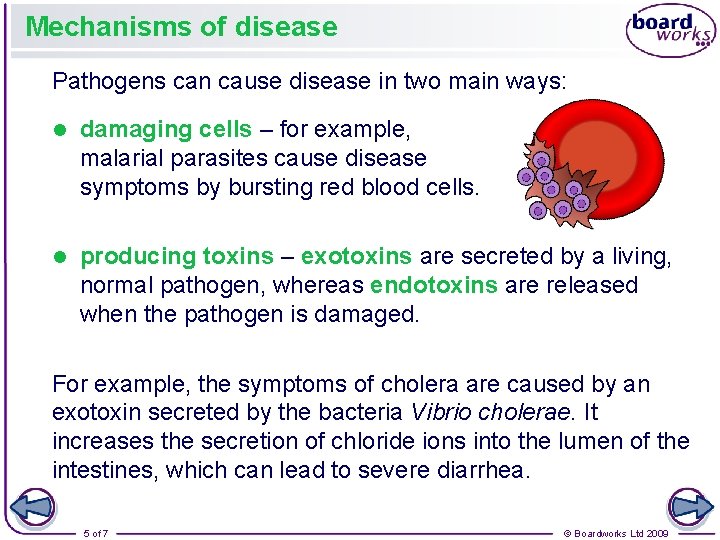
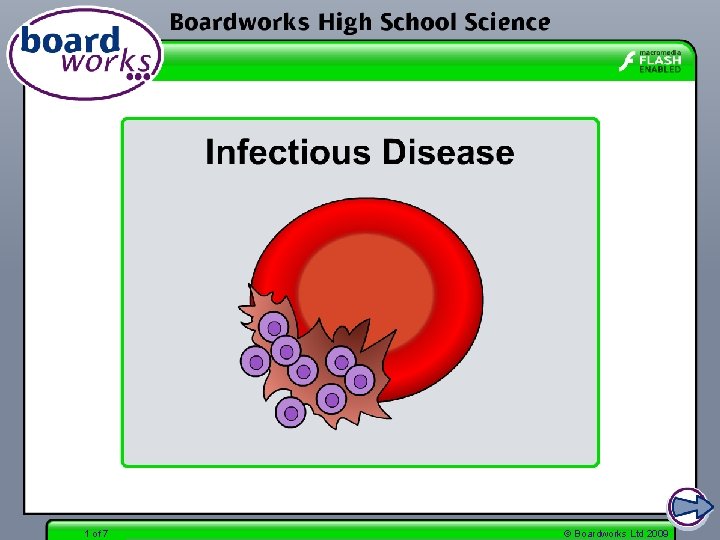
Mechanisms of disease Pathogens can cause disease in two main ways: l damaging cells – for example, malarial parasites cause disease symptoms by bursting red blood cells. l producing toxins – exotoxins are secreted by a living, normal pathogen, whereas endotoxins are released when the pathogen is damaged. For example, the symptoms of cholera are caused by an exotoxin secreted by the bacteria Vibrio cholerae. It increases the secretion of chloride ions into the lumen of the intestines, which can lead to severe diarrhea. 5 of 7 © Boardworks Ltd 2009
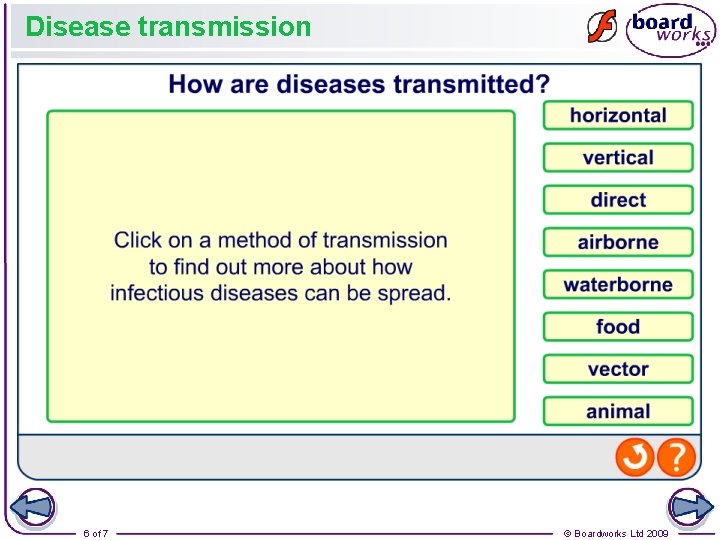
Disease transmission 6 of 7 © Boardworks Ltd 2009
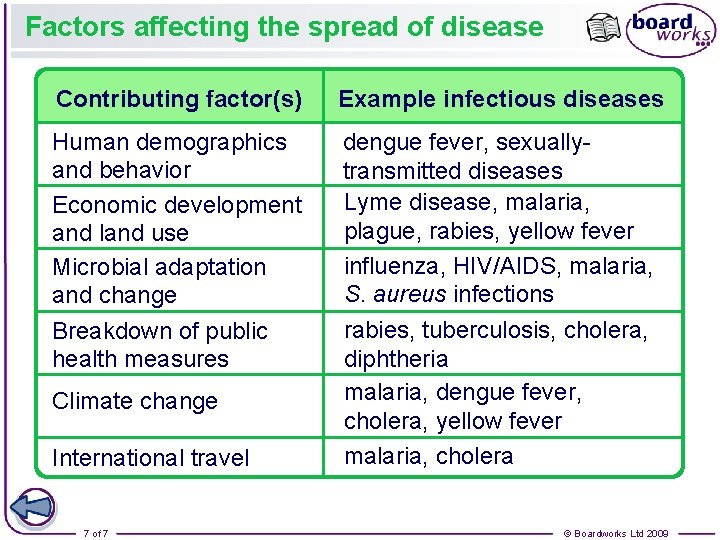
Factors affecting the spread of disease Contributing factor(s) Example infectious diseases Human demographics and behavior Economic development and land use Microbial adaptation and change Breakdown of public health measures dengue fever, sexuallytransmitted diseases Lyme disease, malaria, plague, rabies, yellow fever influenza, HIV/AIDS, malaria, S. aureus infections rabies, tuberculosis, cholera, diphtheria malaria, dengue fever, cholera, yellow fever malaria, cholera Climate change International travel 7 of 7 © Boardworks Ltd 2009
- Slides: 7