
1 of 33 Boardworks Ltd 2008 2 of
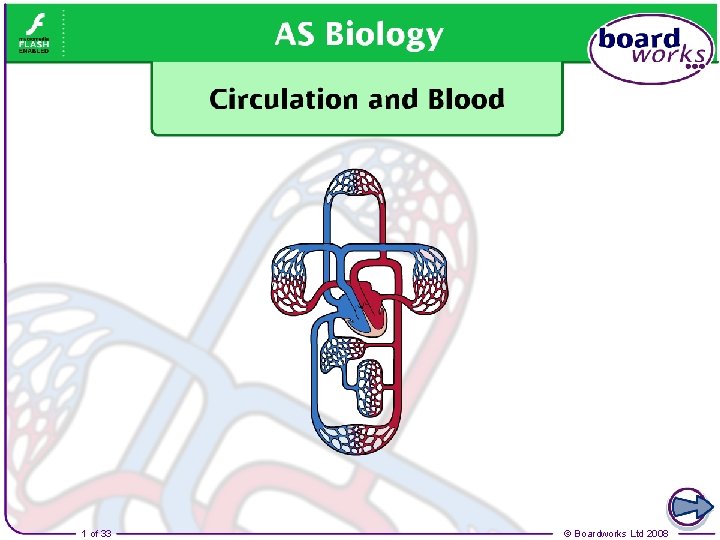
1 of 33 © Boardworks Ltd 2008
2 of 33 © Boardworks Ltd 2008
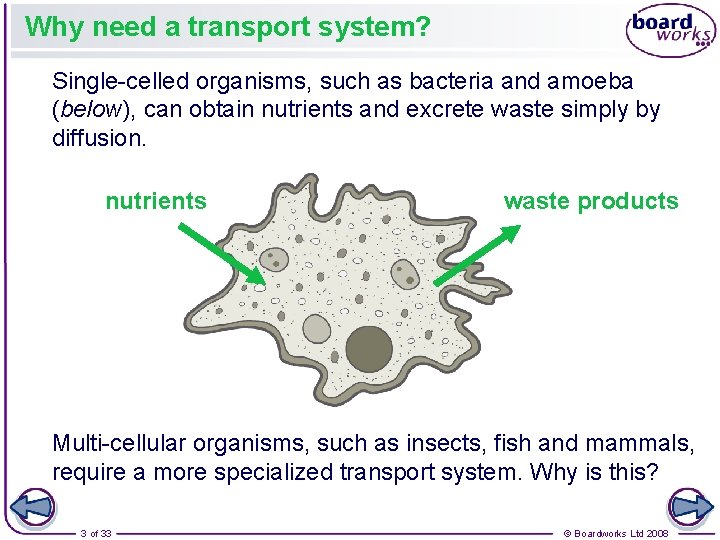
Why need a transport system? Single-celled organisms, such as bacteria and amoeba (below), can obtain nutrients and excrete waste simply by diffusion. nutrients waste products Multi-cellular organisms, such as insects, fish and mammals, require a more specialized transport system. Why is this? 3 of 33 © Boardworks Ltd 2008
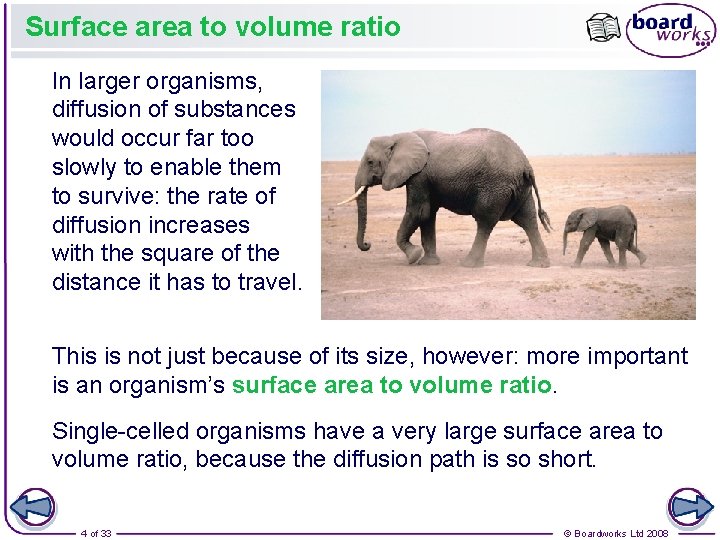
Surface area to volume ratio In larger organisms, diffusion of substances would occur far too slowly to enable them to survive: the rate of diffusion increases with the square of the distance it has to travel. This is not just because of its size, however: more important is an organism’s surface area to volume ratio. Single-celled organisms have a very large surface area to volume ratio, because the diffusion path is so short. 4 of 33 © Boardworks Ltd 2008
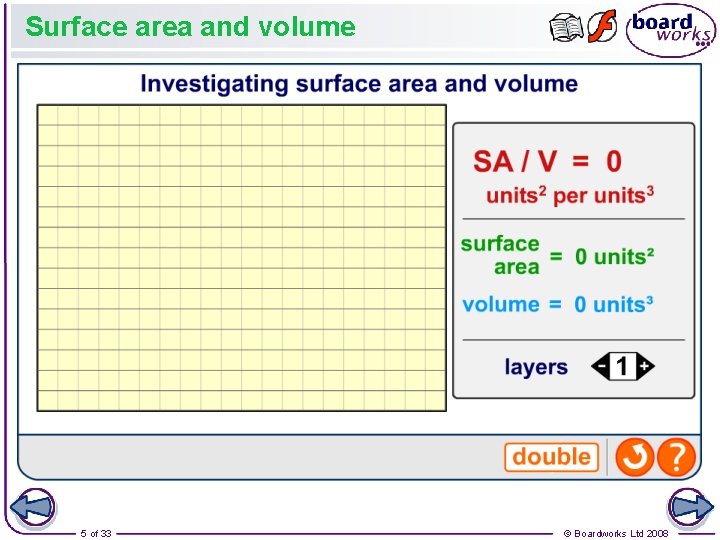
Surface area and volume 5 of 33 © Boardworks Ltd 2008
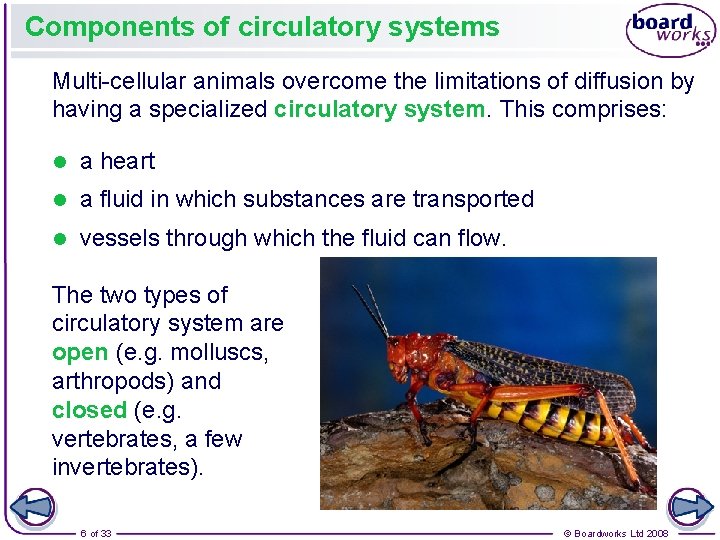
Components of circulatory systems Multi-cellular animals overcome the limitations of diffusion by having a specialized circulatory system. This comprises: l a heart l a fluid in which substances are transported l vessels through which the fluid can flow. The two types of circulatory system are open (e. g. molluscs, arthropods) and closed (e. g. vertebrates, a few invertebrates). 6 of 33 © Boardworks Ltd 2008
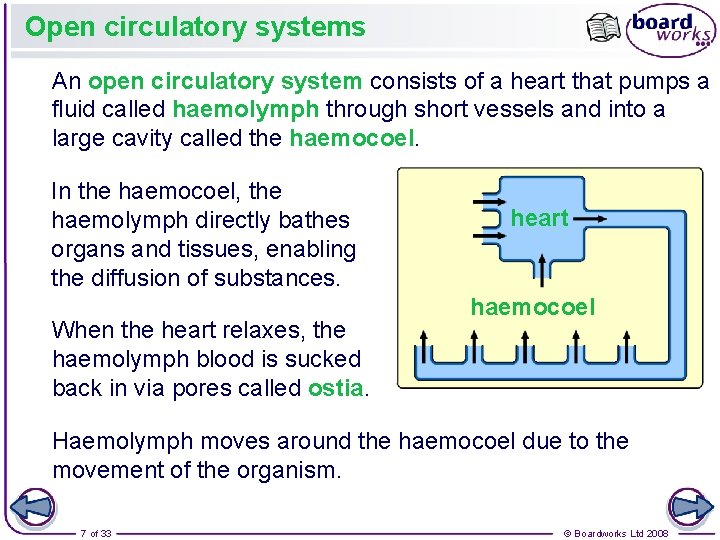
Open circulatory systems An open circulatory system consists of a heart that pumps a fluid called haemolymph through short vessels and into a large cavity called the haemocoel. In the haemocoel, the haemolymph directly bathes organs and tissues, enabling the diffusion of substances. When the heart relaxes, the haemolymph blood is sucked back in via pores called ostia. heart haemocoel Haemolymph moves around the haemocoel due to the movement of the organism. 7 of 33 © Boardworks Ltd 2008
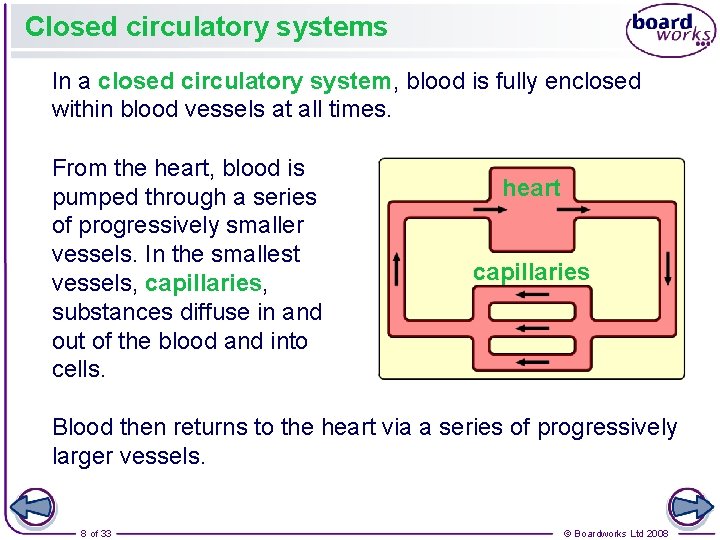
Closed circulatory systems In a closed circulatory system, blood is fully enclosed within blood vessels at all times. From the heart, blood is pumped through a series of progressively smaller vessels. In the smallest vessels, capillaries, substances diffuse in and out of the blood and into cells. heart capillaries Blood then returns to the heart via a series of progressively larger vessels. 8 of 33 © Boardworks Ltd 2008
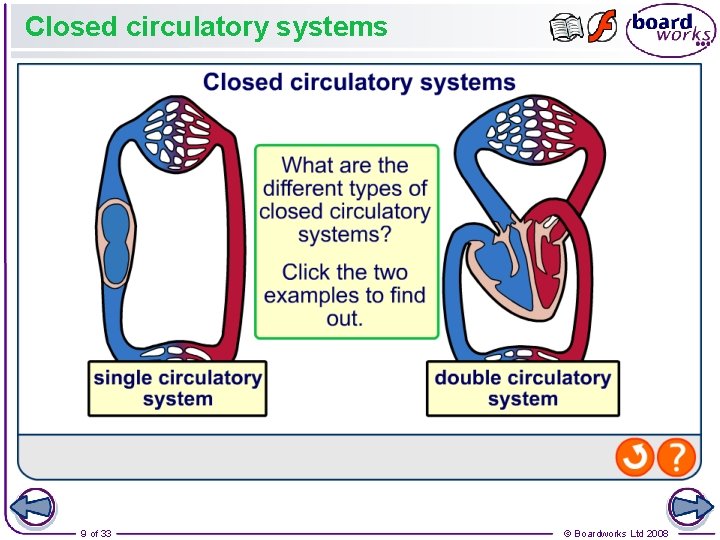
Closed circulatory systems 9 of 33 © Boardworks Ltd 2008
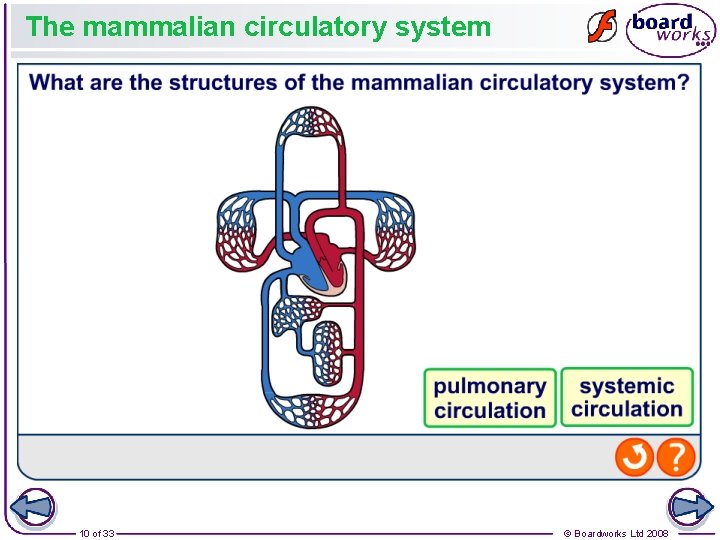
The mammalian circulatory system 10 of 33 © Boardworks Ltd 2008
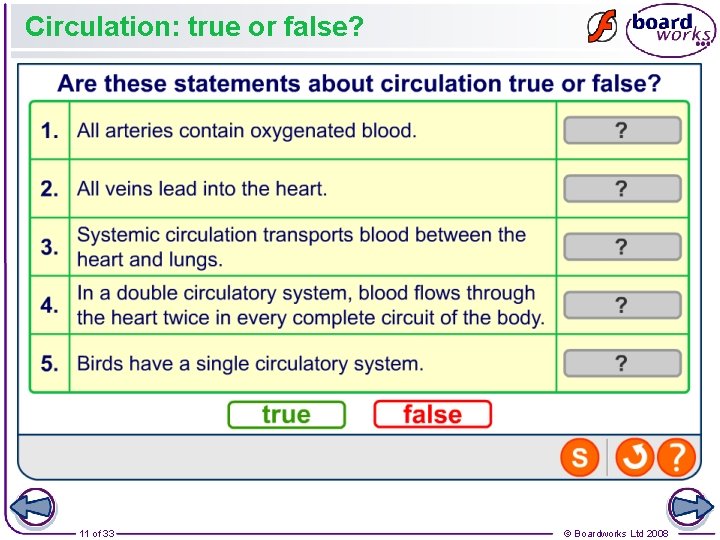
Circulation: true or false? 11 of 33 © Boardworks Ltd 2008
12 of 33 © Boardworks Ltd 2008
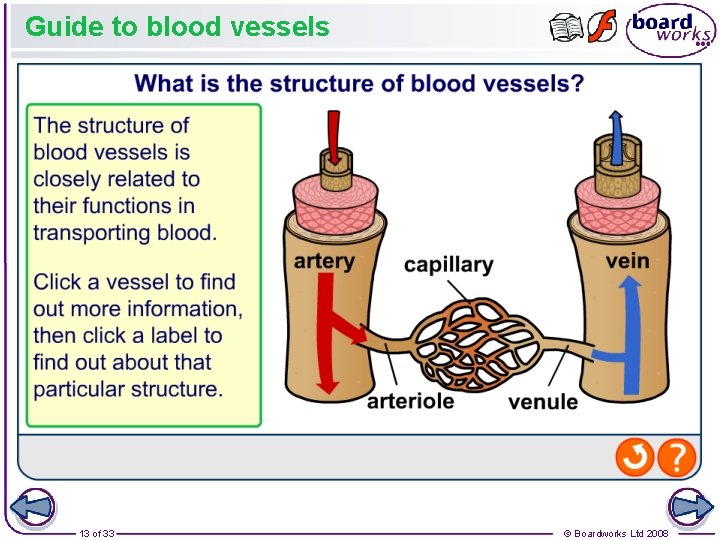
Guide to blood vessels 13 of 33 © Boardworks Ltd 2008
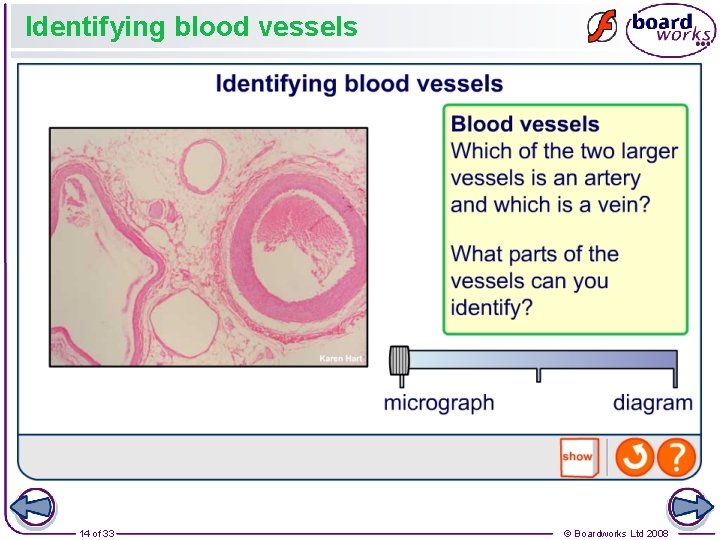
Identifying blood vessels 14 of 33 © Boardworks Ltd 2008
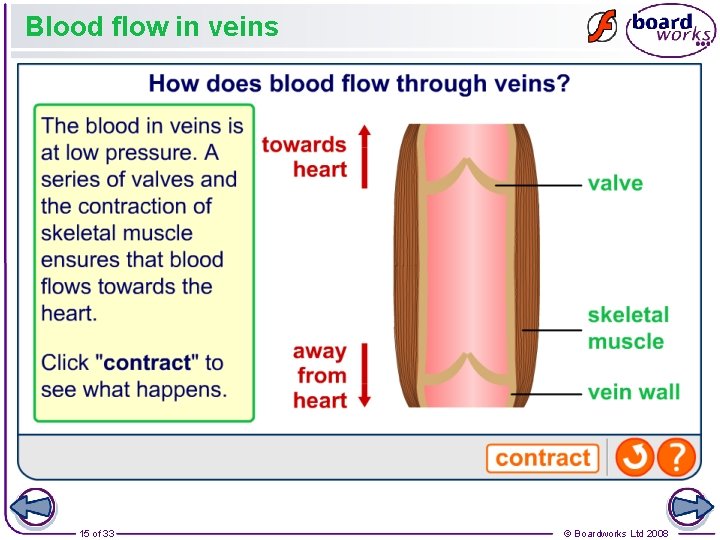
Blood flow in veins 15 of 33 © Boardworks Ltd 2008
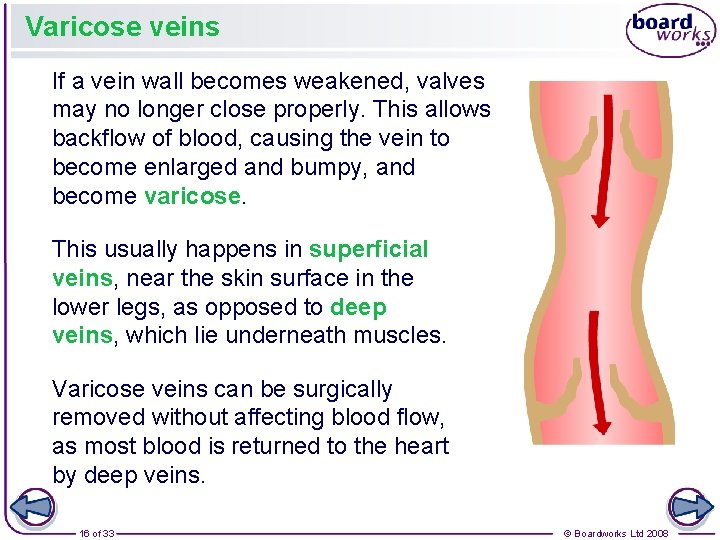
Varicose veins If a vein wall becomes weakened, valves may no longer close properly. This allows backflow of blood, causing the vein to become enlarged and bumpy, and become varicose. This usually happens in superficial veins, near the skin surface in the lower legs, as opposed to deep veins, which lie underneath muscles. Varicose veins can be surgically removed without affecting blood flow, as most blood is returned to the heart by deep veins. 16 of 33 © Boardworks Ltd 2008
Maintaining high blood pressure Blood pressure is the main force that drives blood from the heart around the body. l During systole (heart contraction), blood is pumped through the aorta and other arteries at high pressure. The elastic fibres of arteries enable them to expand allow blood through. l During diastole (heart relaxation), the blood pressure in the arteries drops. The elastic recoil of the artery walls help force the blood on. As blood moves through smaller arterioles into capillaries, and then into venules and veins, its velocity and pressure drop continuously. 17 of 33 © Boardworks Ltd 2008
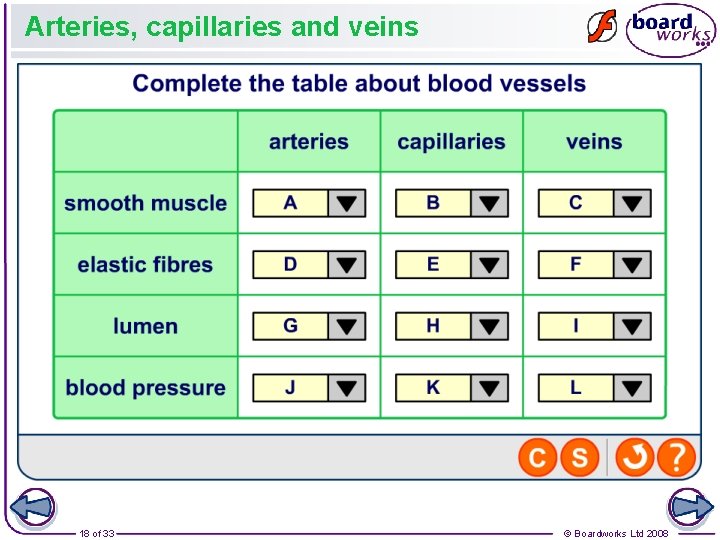
Arteries, capillaries and veins 18 of 33 © Boardworks Ltd 2008
19 of 33 © Boardworks Ltd 2008
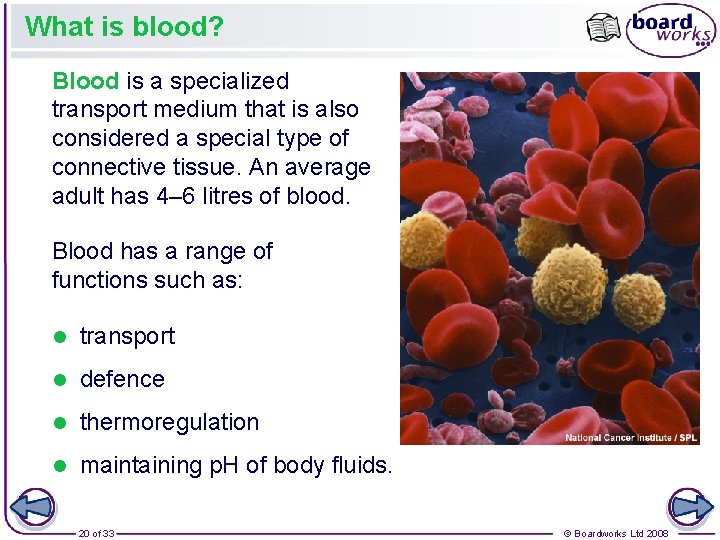
What is blood? Blood is a specialized transport medium that is also considered a special type of connective tissue. An average adult has 4– 6 litres of blood. Blood has a range of functions such as: l transport l defence l thermoregulation l maintaining p. H of body fluids. 20 of 33 © Boardworks Ltd 2008
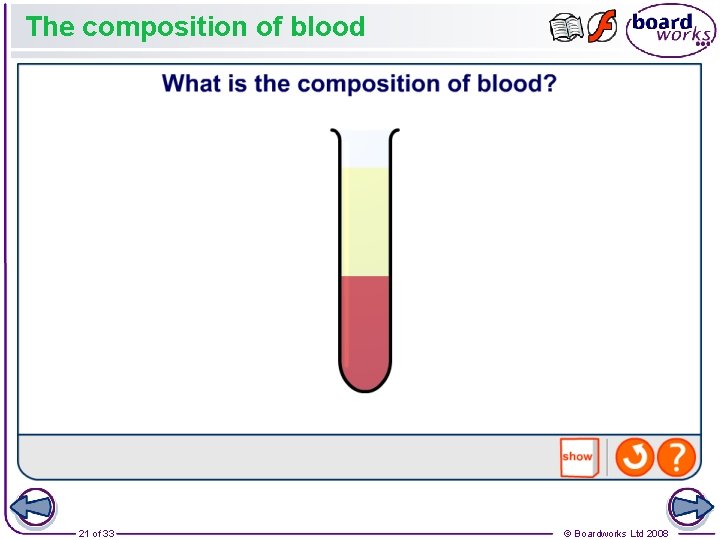
The composition of blood 21 of 33 © Boardworks Ltd 2008
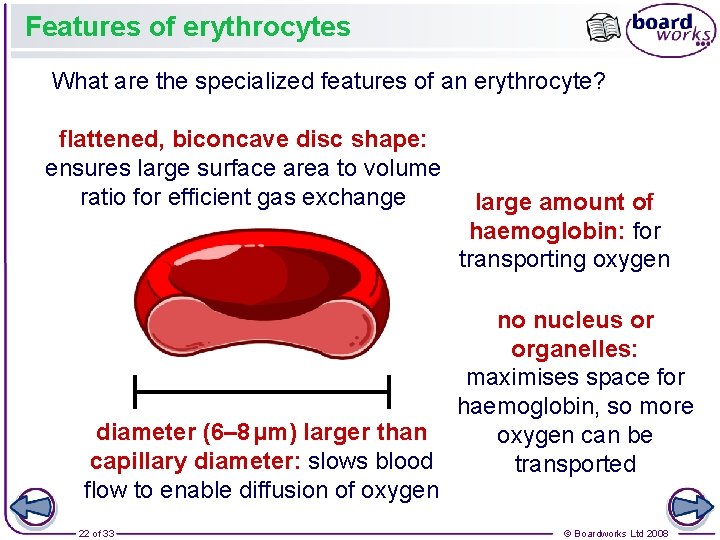
Features of erythrocytes What are the specialized features of an erythrocyte? flattened, biconcave disc shape: ensures large surface area to volume ratio for efficient gas exchange large amount of haemoglobin: for transporting oxygen no nucleus or organelles: maximises space for haemoglobin, so more diameter (6– 8 µm) larger than oxygen can be capillary diameter: slows blood transported flow to enable diffusion of oxygen 22 of 33 © Boardworks Ltd 2008
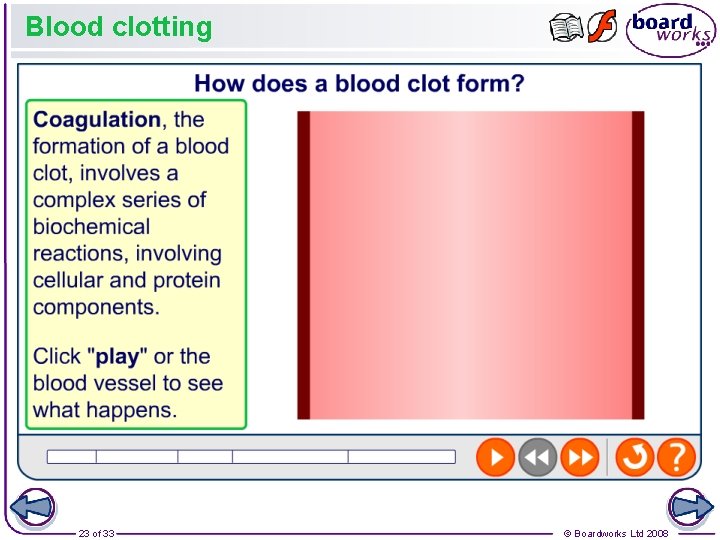
Blood clotting 23 of 33 © Boardworks Ltd 2008
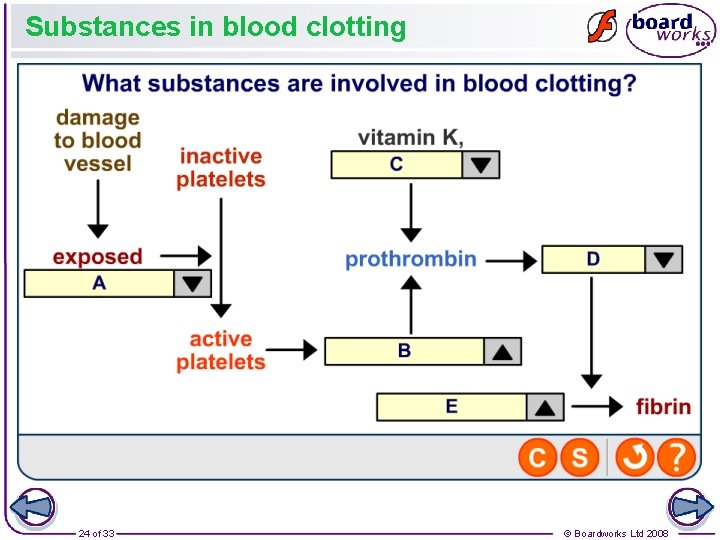
Substances in blood clotting 24 of 33 © Boardworks Ltd 2008
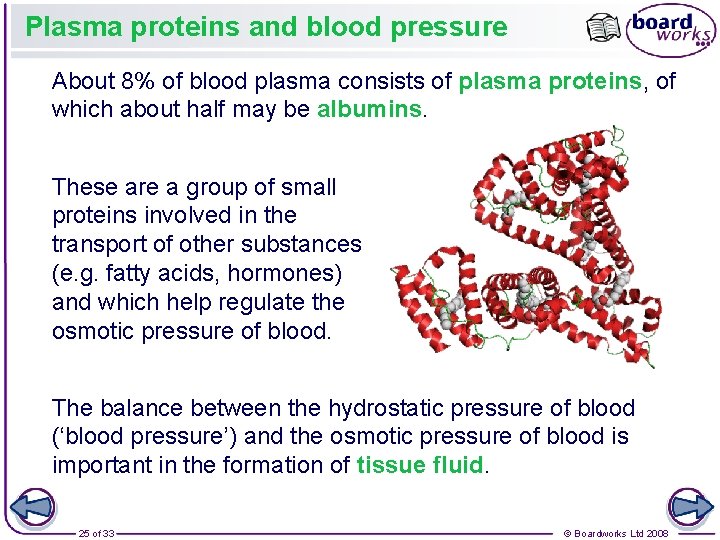
Plasma proteins and blood pressure About 8% of blood plasma consists of plasma proteins, of which about half may be albumins. These are a group of small proteins involved in the transport of other substances (e. g. fatty acids, hormones) and which help regulate the osmotic pressure of blood. The balance between the hydrostatic pressure of blood (‘blood pressure’) and the osmotic pressure of blood is important in the formation of tissue fluid. 25 of 33 © Boardworks Ltd 2008
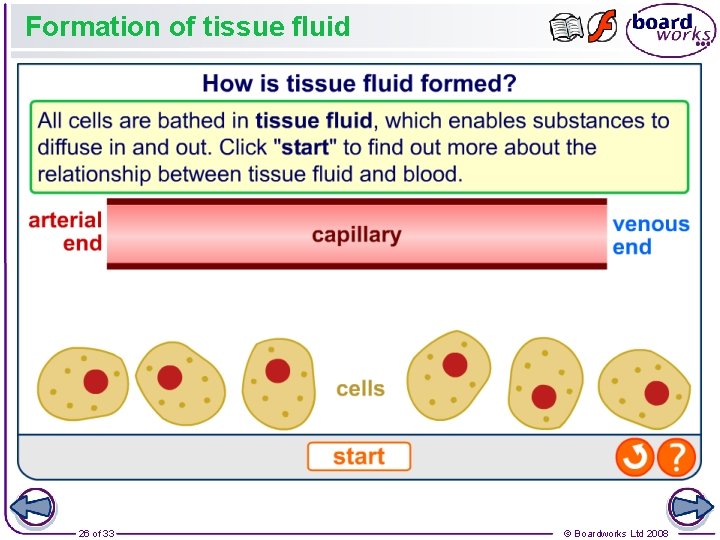
Formation of tissue fluid 26 of 33 © Boardworks Ltd 2008
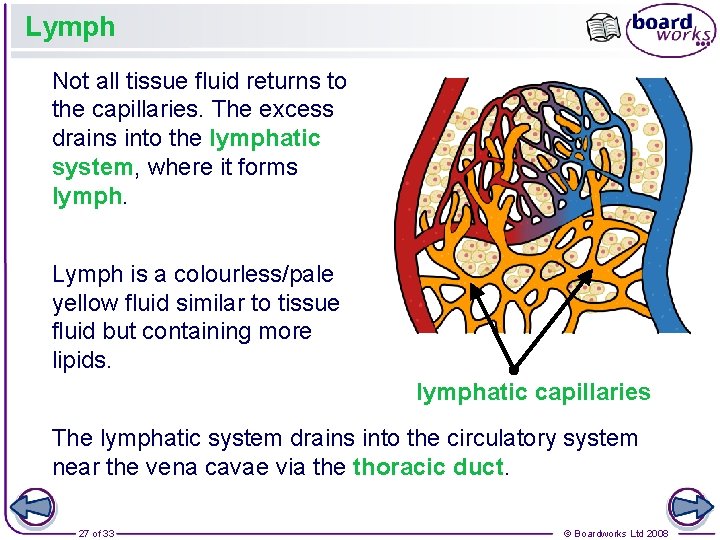
Lymph Not all tissue fluid returns to the capillaries. The excess drains into the lymphatic system, where it forms lymph. Lymph is a colourless/pale yellow fluid similar to tissue fluid but containing more lipids. lymphatic capillaries The lymphatic system drains into the circulatory system near the vena cavae via the thoracic duct. 27 of 33 © Boardworks Ltd 2008
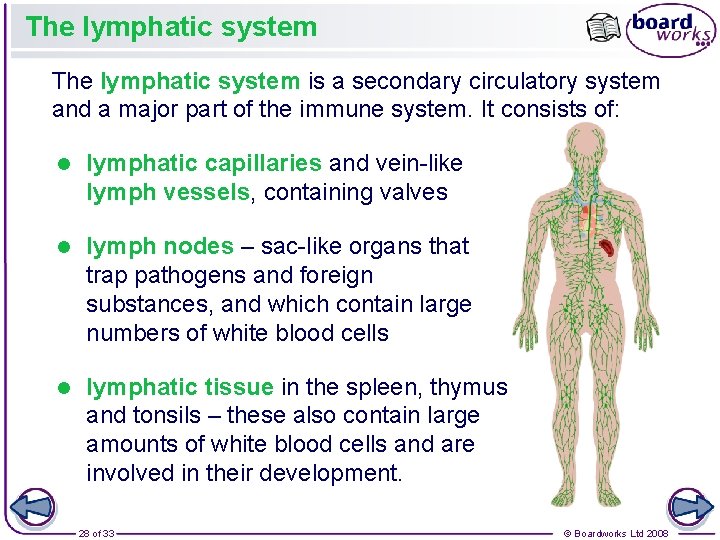
The lymphatic system is a secondary circulatory system and a major part of the immune system. It consists of: l lymphatic capillaries and vein-like lymph vessels, containing valves l lymph nodes – sac-like organs that trap pathogens and foreign substances, and which contain large numbers of white blood cells l lymphatic tissue in the spleen, thymus and tonsils – these also contain large amounts of white blood cells and are involved in their development. 28 of 33 © Boardworks Ltd 2008
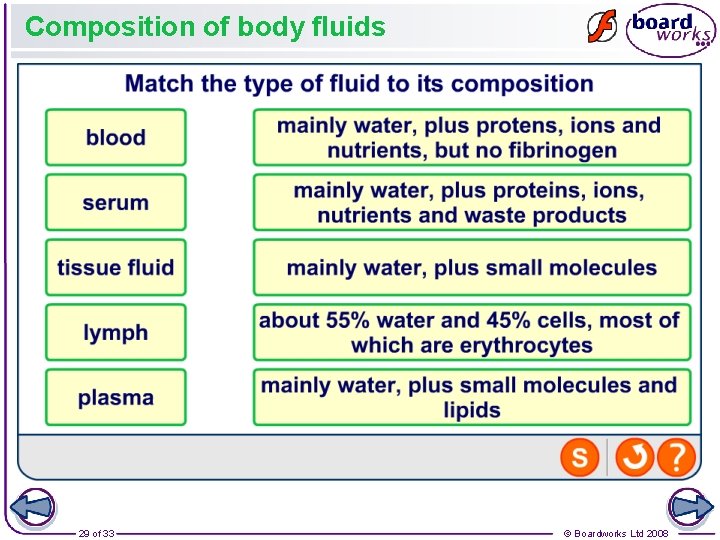
Composition of body fluids 29 of 33 © Boardworks Ltd 2008
30 of 33 © Boardworks Ltd 2008
Glossary 31 of 33 © Boardworks Ltd 2008

What’s the keyword? 32 of 33 © Boardworks Ltd 2008
Multiple-choice quiz 33 of 33 © Boardworks Ltd 2008
- Slides: 33