
1 of 11 Boardworks Ltd 2011 Elements different
1 of 11 © Boardworks Ltd 2011
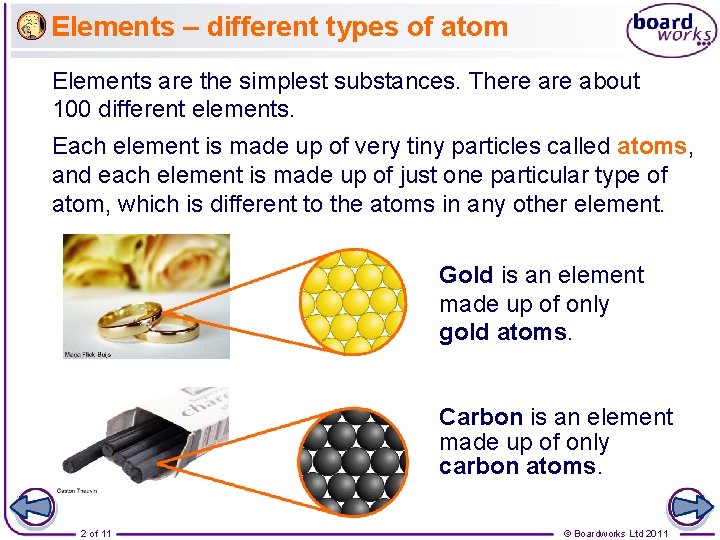
Elements – different types of atom Elements are the simplest substances. There about 100 different elements. Each element is made up of very tiny particles called atoms, and each element is made up of just one particular type of atom, which is different to the atoms in any other element. Gold is an element made up of only gold atoms. Carbon is an element made up of only carbon atoms. 2 of 11 © Boardworks Ltd 2011
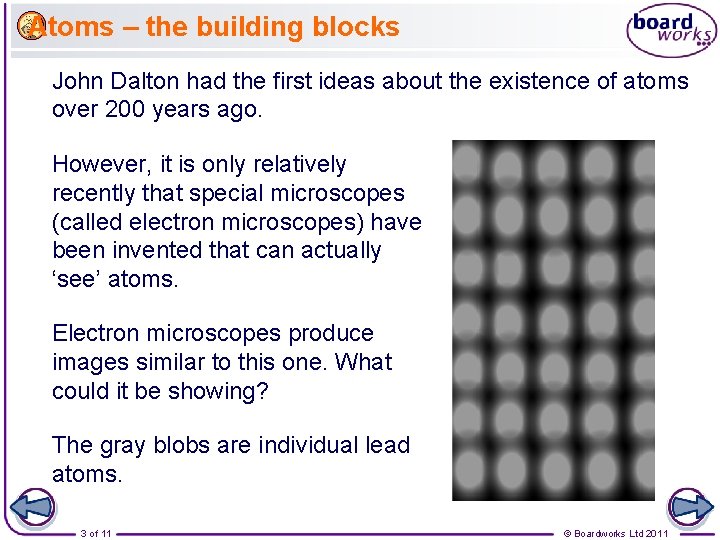
Atoms – the building blocks John Dalton had the first ideas about the existence of atoms over 200 years ago. However, it is only relatively recently that special microscopes (called electron microscopes) have been invented that can actually ‘see’ atoms. Electron microscopes produce images similar to this one. What could it be showing? The gray blobs are individual lead atoms. 3 of 11 © Boardworks Ltd 2011
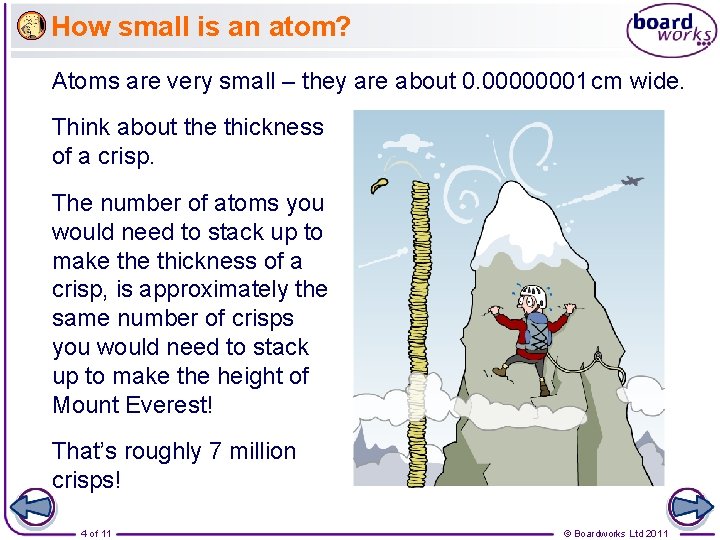
How small is an atom? Atoms are very small – they are about 0. 00000001 cm wide. Think about the thickness of a crisp. The number of atoms you would need to stack up to make thickness of a crisp, is approximately the same number of crisps you would need to stack up to make the height of Mount Everest! That’s roughly 7 million crisps! 4 of 11 © Boardworks Ltd 2011
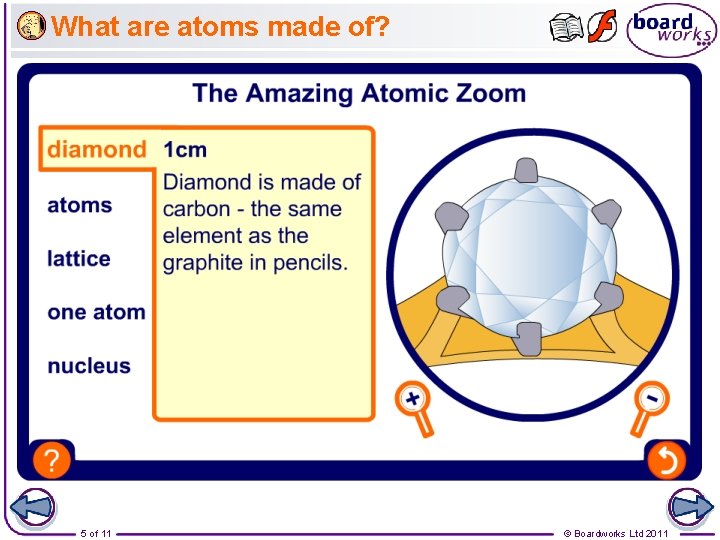
What are atoms made of? 5 of 11 © Boardworks Ltd 2011
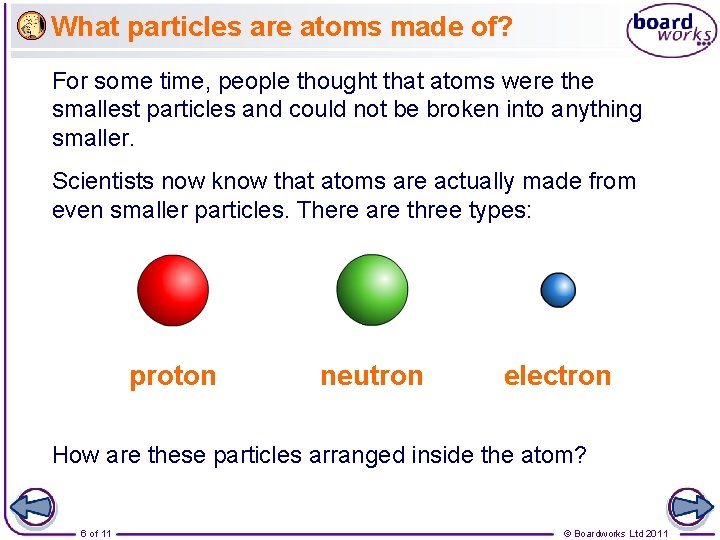
What particles are atoms made of? For some time, people thought that atoms were the smallest particles and could not be broken into anything smaller. Scientists now know that atoms are actually made from even smaller particles. There are three types: proton neutron electron How are these particles arranged inside the atom? 6 of 11 © Boardworks Ltd 2011
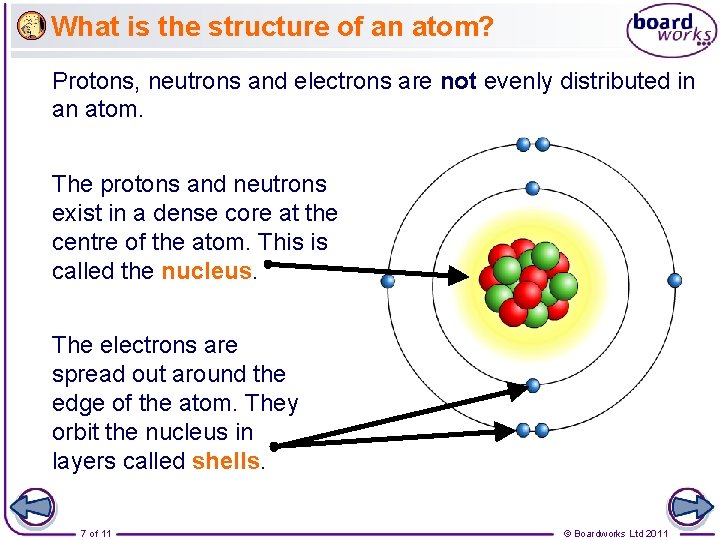
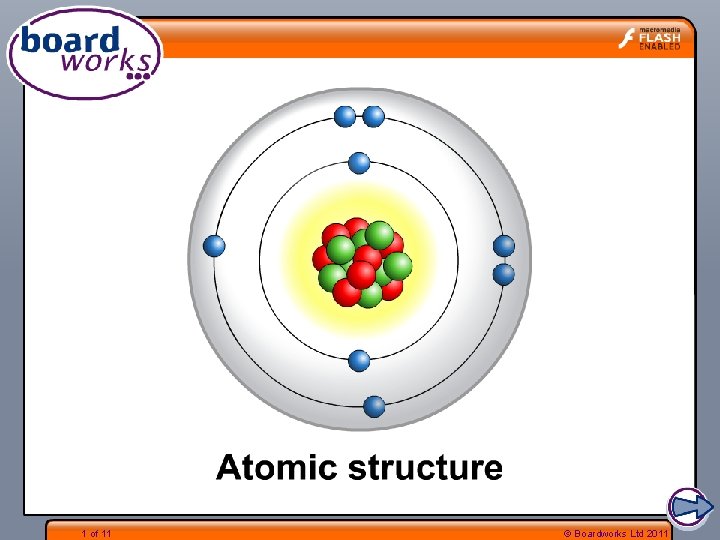
What is the structure of an atom? Protons, neutrons and electrons are not evenly distributed in an atom. The protons and neutrons exist in a dense core at the centre of the atom. This is called the nucleus. The electrons are spread out around the edge of the atom. They orbit the nucleus in layers called shells. 7 of 11 © Boardworks Ltd 2011
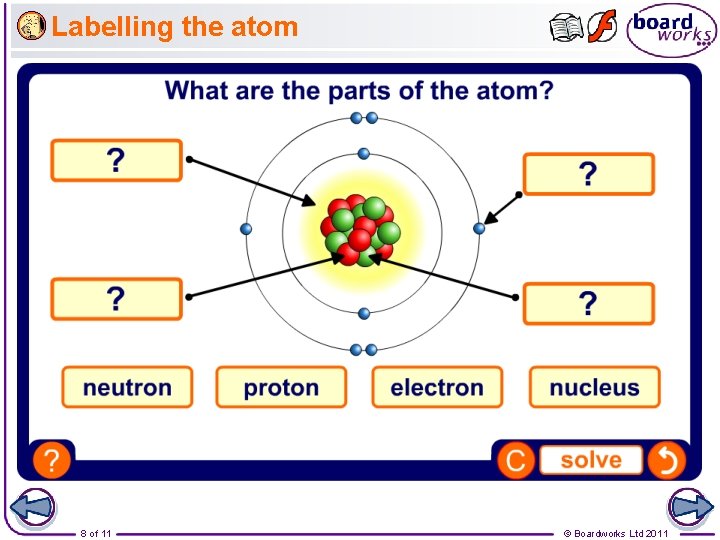
Labelling the atom 8 of 11 © Boardworks Ltd 2011
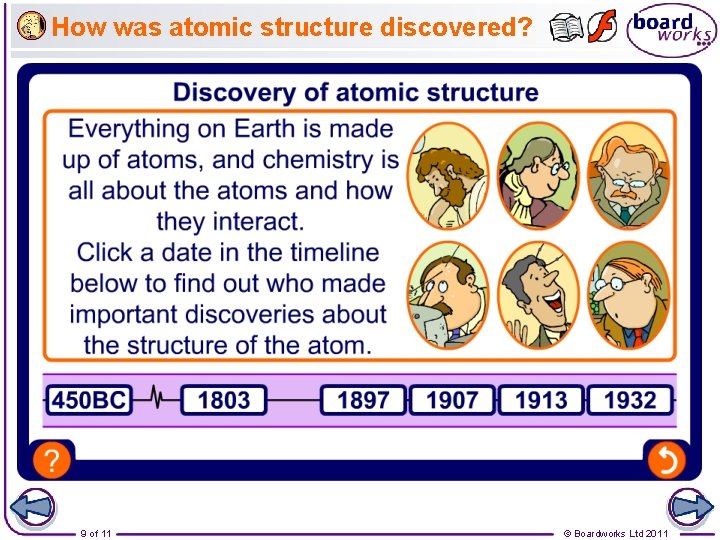
How was atomic structure discovered? 9 of 11 © Boardworks Ltd 2011
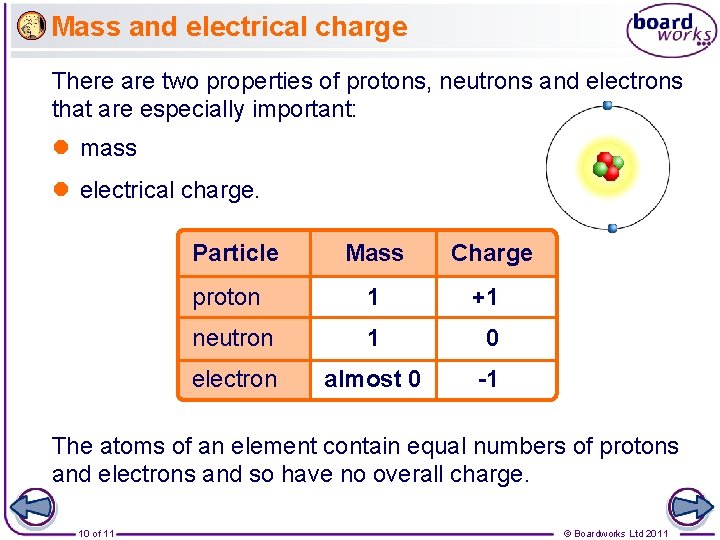
Mass and electrical charge There are two properties of protons, neutrons and electrons that are especially important: l mass l electrical charge. Particle Mass Charge proton 1 +1 neutron 1 0 electron almost 0 -1 The atoms of an element contain equal numbers of protons and electrons and so have no overall charge. 10 of 11 © Boardworks Ltd 2011
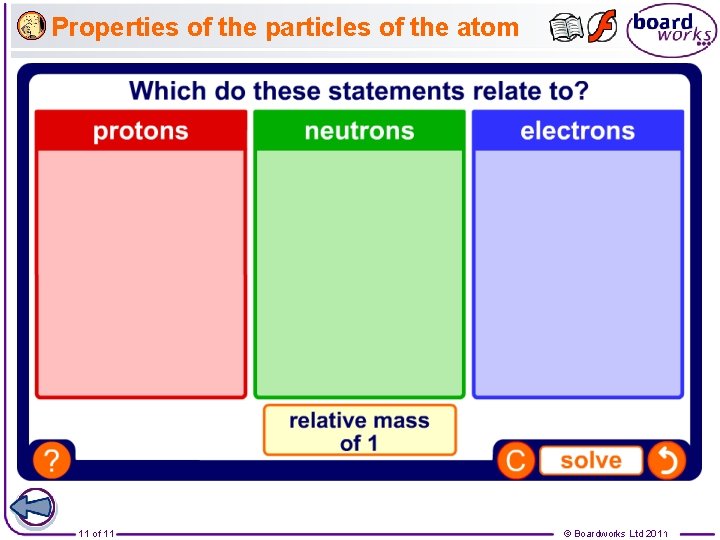
Properties of the particles of the atom 11 of 11 © Boardworks Ltd 2011
- Slides: 11