
1 Objectives To identify purposes and types of
1
Objectives • To identify purposes and types of professional communications. • To examine specific components of the listening process in communication. • To effectively communicate in interviews and presentations. • To effectively appropriate etiquette and social responsibilities in communication. 2

Main Menu Defining Professional Communication Listening Process Components of Professional Communication Etiquette and Responsibilities in Professional Communication 3
4

Professional Communication • Is the visual, written or oral communication in a workplace context • Is the process of sharing information, ideas or attitudes between a sender and a receiver • Can be either internal or external business communication Tip: Professional is a courteous, conscientious businesslike manner in the workplace. 5

Professional Communication Channels • Include: – – – face-to-face interaction telephone conversations presentations reports letters and memos electronic media, such as: Ø email Ø video broadcast 6

Internal Business Communication • Is the communication between a business and its employees • May include the corresponding that occurs between employees 7
External Business Communication • Is the way a business interacts with those outside of the organization • Includes the following fields: – – public relations media relations advertising marketing 8
Public Relations • Is the method of establishing and maintaining a relationship between an organization and the public • Includes completing work to ensure the company has a strong public image • Is typically conducted in the media through: – newspapers – television – magazines 9

Public Relation Practitioners • Plan overall public relations goals for the organization • Produce written materials, such as newsletters, press releases and annual reports • Form relationships with employees, consumers, media, community, financial markets, government agencies, etc. 10
Public Relation Practitioners • Contact media • Speak for the organization in public • Plan and execute events • Monitor and evaluate public feedback 11
Public Relations • Requires the following skills: – researching – planning – evaluation – knowledge of the latest communication technologies – experience in graphic design and audiovisual communication – excellent written and oral communication skills 12
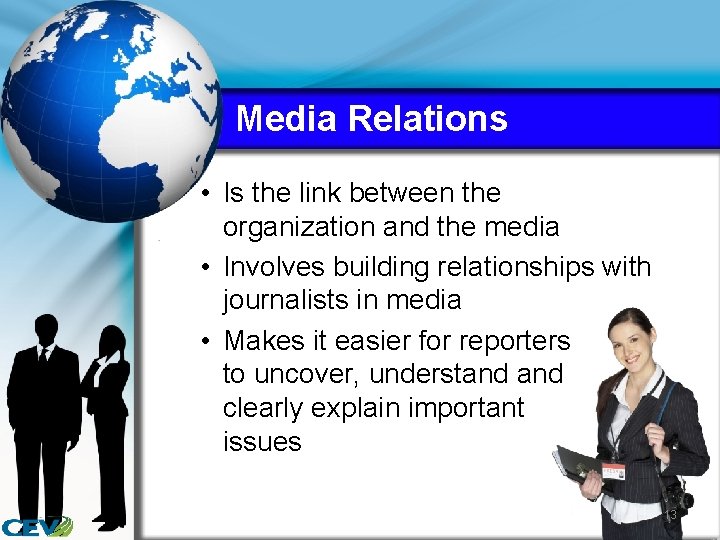
Media Relations • Is the link between the organization and the media • Involves building relationships with journalists in media • Makes it easier for reporters to uncover, understand clearly explain important issues 13
Advertising • Is an act to bring public notice to a product or service • Acts as a paid communication that attempts to influence opinion • Is usually done using the following: – – signs brochures commercials direct mailings 14
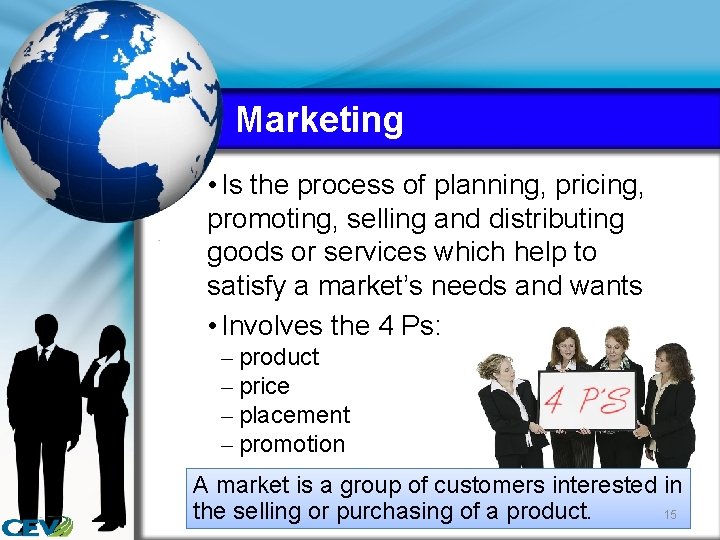
Marketing • Is the process of planning, pricing, promoting, selling and distributing goods or services which help to satisfy a market’s needs and wants • Involves the 4 Ps: – product – price – placement – promotion A market is a group of customers interested in the selling or purchasing of a product. 15
Professional Communication Skills • Include: ‒ writing ‒ reading ‒ editing ‒ speaking ‒ listening 16
Professional Communication • Is any written or oral message which communicates the aims and objectives of any specific business message • Includes: – – reports case studies proposals memos 17

Reports • Can include the following: – firm’s history – creditworthiness – payment policies – financial status 18
Reports • Can be divided into five different parts: – terms of reference – procedures – findings – conclusions – recommendations 19
Proposals • Refer to the communication between a seller and buyer • Are specific information about the needs of the customers and the way the seller is going to satisfy their needs • Can vary in size with specific information or price lists • Are key components in the sales process 20
Case Studies • Are in-depth examinations of a particular subject • Are a study of an entity or part of a company that attempts to determine what factors led to its success • Are used as training tools in business schools and firms 21
Memos • Are short for memorandums • Are short notes to aid the memory process • Are generally sent to co-workers or colleagues • Can be a short, basic form to communicate messages, such as meeting times and due dates Fun Fact: Memos do not always have to include a formal salutation or closing remark. 22
23
The Listening Process • Includes: – hearing Ø the ability to perceive sound – focusing Ø keeping attention on the message – understanding Ø comprehending the meaning of the message – remembering Ø retaining information in the memory 24
Deliberative Listening • Refers to when the receiver listens to only the content and not the feeling of the message • Is used when receiving and evaluating persuasive messages • Is used when making decisions • Should make the receiver think 25
Evaluative Listening • Can also be called critical listening • Refers to the process which involves paying close attention to the speaker’s tones and word choices • Is used when the listener needs to remember something important • Is used in situations such as: – listening to lectures in class – listening to announcements – getting directions 26
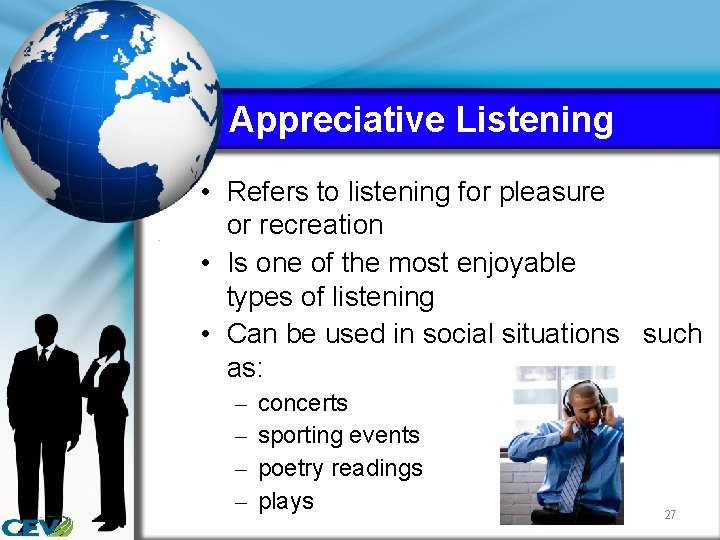
Appreciative Listening • Refers to listening for pleasure or recreation • Is one of the most enjoyable types of listening • Can be used in social situations such as: – – concerts sporting events poetry readings plays 27
Empathetic Listening • Can also be referred to as active listening • Is used to participate in, enhance and understand a relationship • Is meant to develop an understanding and appreciation of the sender’s meanings and feelings • Can most commonly be used in interactions between two people or in a small group 28
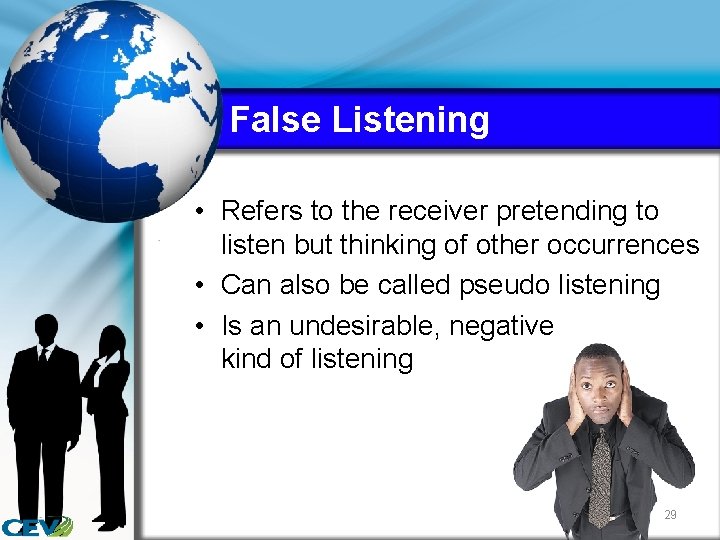
False Listening • Refers to the receiver pretending to listen but thinking of other occurrences • Can also be called pseudo listening • Is an undesirable, negative kind of listening 29
Selective Listening • Refers to when a receiver is physically hearing the message, but chooses not to acknowledge the message • Is also the act of listening to only the things the receiver wants to hear • Often occurs when a person’s mind is distracted by instances such as: – watching television – reading – playing computer or video games 30
Partial Listening • Is when a receiver is listening to the sender with the intention to understand but becomes distracted – distractions caused by a stray thought or something said • Is the most common type of listening 31
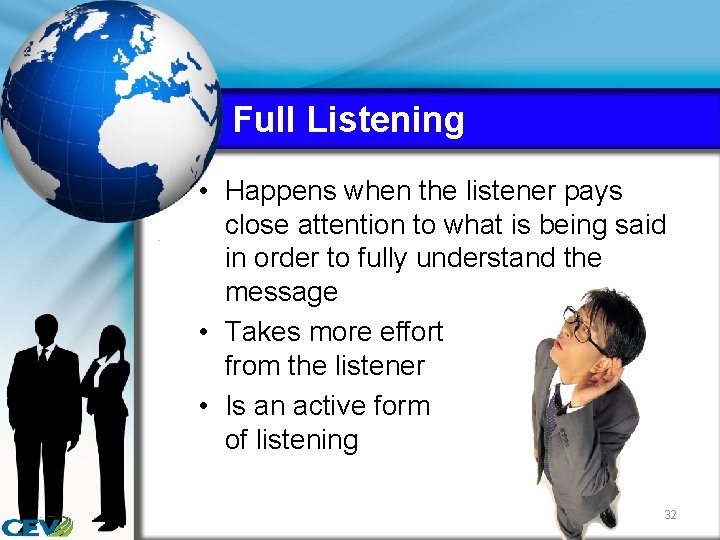
Full Listening • Happens when the listener pays close attention to what is being said in order to fully understand the message • Takes more effort from the listener • Is an active form of listening 32
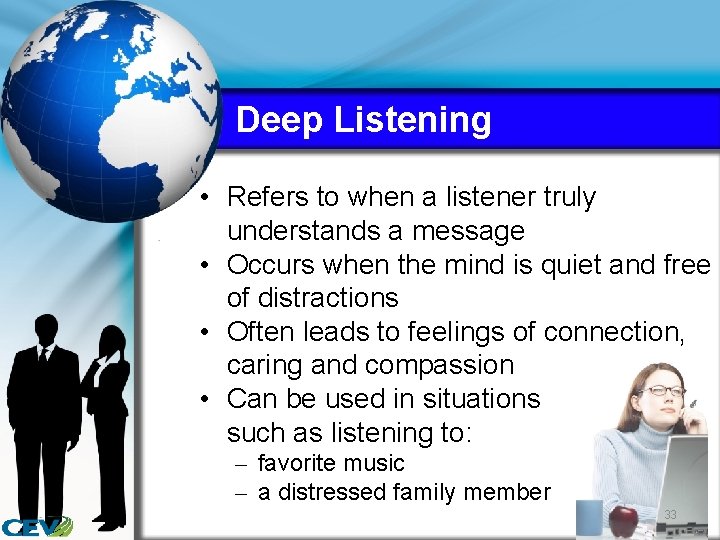
Deep Listening • Refers to when a listener truly understands a message • Occurs when the mind is quiet and free of distractions • Often leads to feelings of connection, caring and compassion • Can be used in situations such as listening to: ‒ favorite music ‒ a distressed family member 33
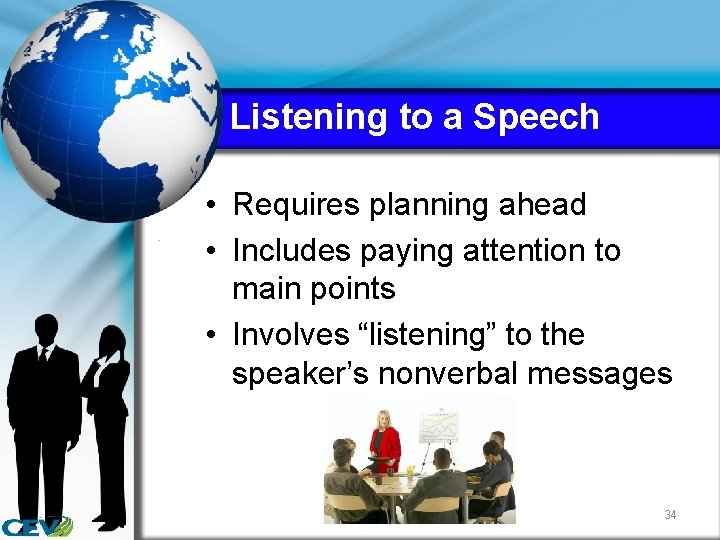
Listening to a Speech • Requires planning ahead • Includes paying attention to main points • Involves “listening” to the speaker’s nonverbal messages 34
Plan Ahead • By asking: – “What will I learn from listening to the speaker? ” – “What do I need to hear from him or her? ” • By stating listening goals to create motivation to get the most from the speech – for example: “In today’s lecture, I will learn how to use Microsoft® Power. Point® software. ” 35
Pay Attention to Main Points • In introductions – provide the audience with the main points • In transitions – inform the audience a main point is about to be discussed – are used to capture the audience’s attention • In conclusions – allow the audience to review the speech – help listeners refresh their memory of 36 the main points
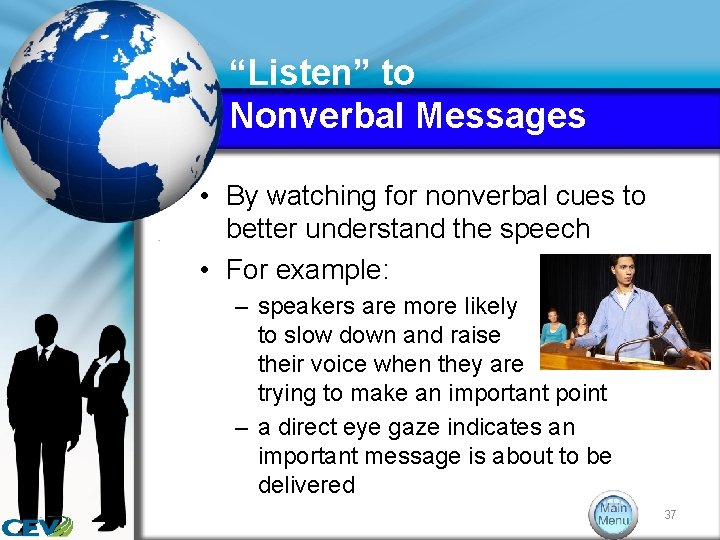
“Listen” to Nonverbal Messages • By watching for nonverbal cues to better understand the speech • For example: – speakers are more likely to slow down and raise their voice when they are trying to make an important point – a direct eye gaze indicates an important message is about to be delivered 37
38
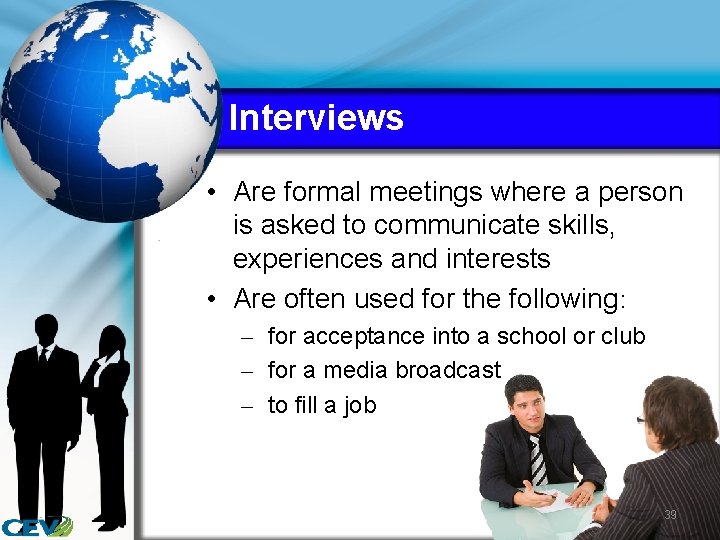
Interviews • Are formal meetings where a person is asked to communicate skills, experiences and interests • Are often used for the following: – for acceptance into a school or club – for a media broadcast – to fill a job 39
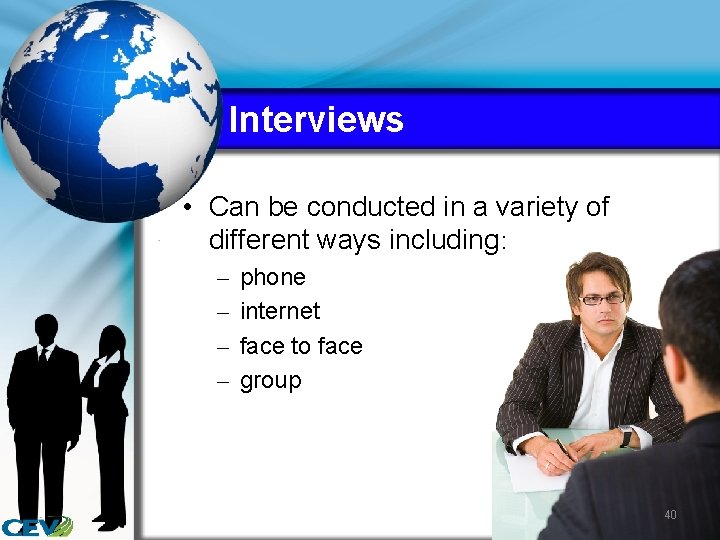
Interviews • Can be conducted in a variety of different ways including: ‒ ‒ phone internet face to face group 40
Verbal Communication • Is the act of expressing thoughts through spoken words • Includes the following key components: ‒ ‒ sound words speaking language 41
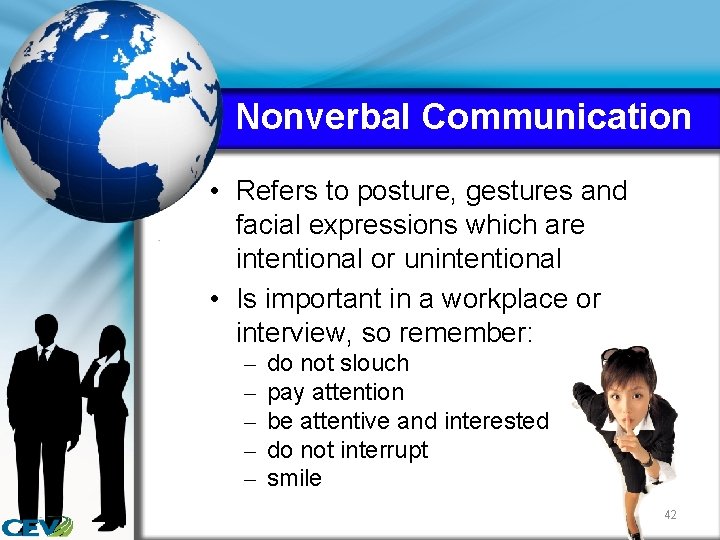
Nonverbal Communication • Refers to posture, gestures and facial expressions which are intentional or unintentional • Is important in a workplace or interview, so remember: ‒ ‒ ‒ do not slouch pay attention be attentive and interested do not interrupt smile 42
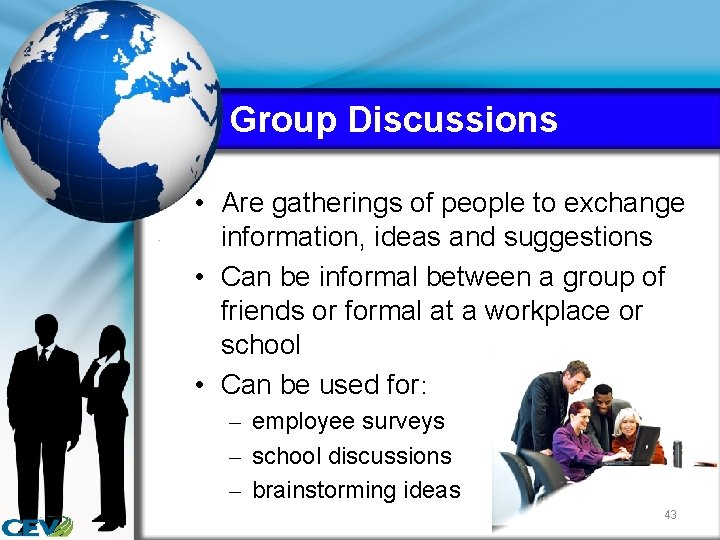
Group Discussions • Are gatherings of people to exchange information, ideas and suggestions • Can be informal between a group of friends or formal at a workplace or school • Can be used for: ‒ employee surveys ‒ school discussions ‒ brainstorming ideas 43
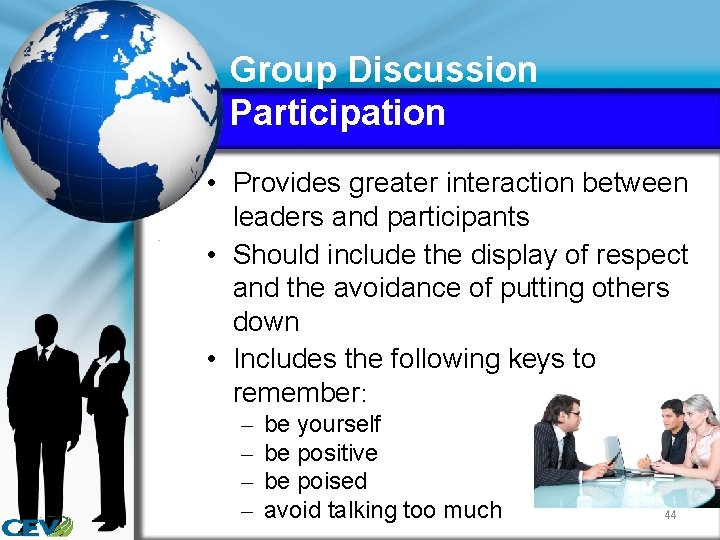
Group Discussion Participation • Provides greater interaction between leaders and participants • Should include the display of respect and the avoidance of putting others down • Includes the following keys to remember: – – be yourself be positive be poised avoid talking too much 44
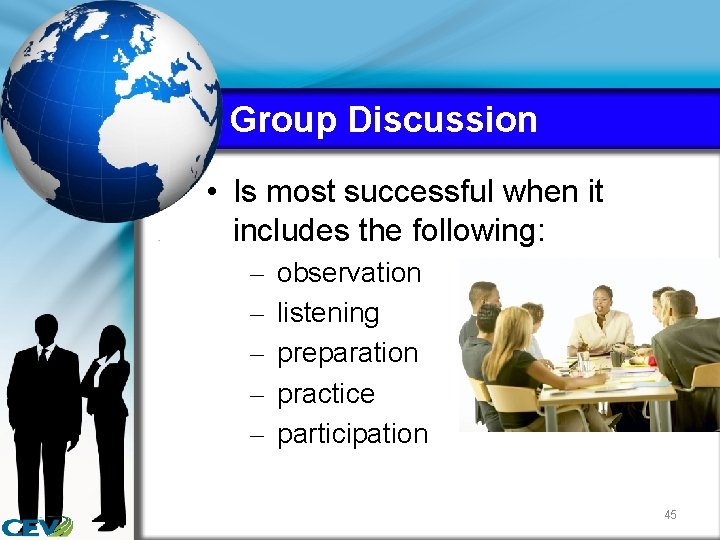
Group Discussion • Is most successful when it includes the following: – – – observation listening preparation practice participation 45
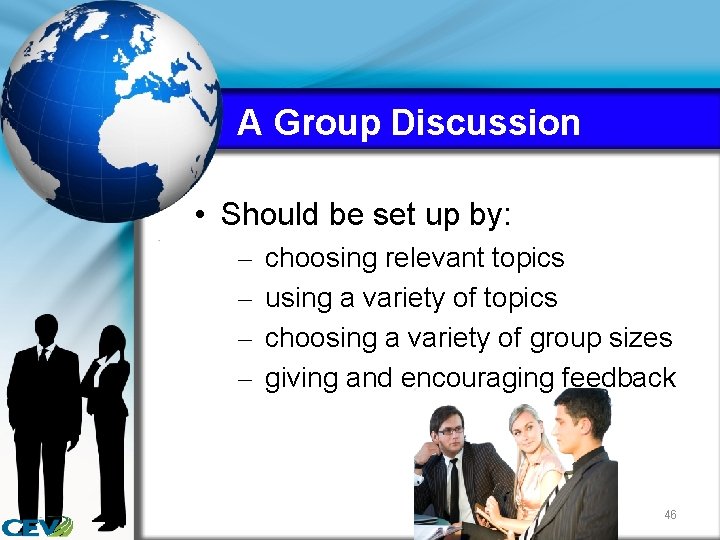
A Group Discussion • Should be set up by: – – choosing relevant topics using a variety of topics choosing a variety of group sizes giving and encouraging feedback 46
Individual Presentations • Are a way to communicate and present ideas and information to an audience • Can showcase a person’s personality better than a report • Allow for interaction among all participants • Can be motivational, persuasive or informative • Are often supported by other media, such as: – computer software – slides 47 – printed handouts
Persuasive Presentations • Are used to convince an audience to accept a proposal – for example, increase teamwork or make a purchase • Offer a solution to a controversy, dispute or problem • Are successful when there is sufficient evidence and emotion to sway the audience to the speaker’s viewpoint 48
Motivational Presentations • Are a way to get the audience to act or change a behavior or belief – for example, a self-help or team morale boosting presentation • Are a form of persuasive presentations with more of an emotional appeal • Include, in a business context, presentations to maintain a high level of commitment 49
Informative Presentations • Are used to give specific information about products, procedures, rules and regulations • Should include supporting facts and material in order to enhance content • Should contain useful information which is unique and draws the audience’s attention • Are used to describe new concepts and ideas in a business 50
51
Making Introductions • Includes the following considerations: – the more distinguished person should be introduced first unless introducing a client or customer – the person who is being introduced to should extend their hand first – repeating the name of the person introduced shows respect and can help with remembering the person’s name 52
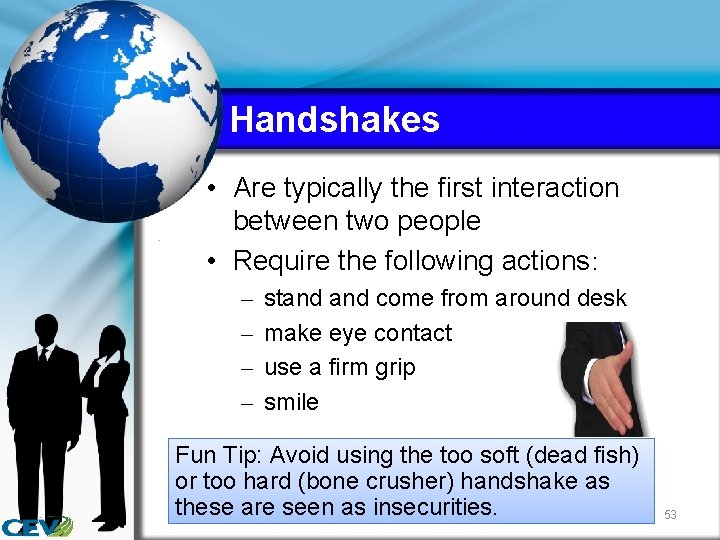
Handshakes • Are typically the first interaction between two people • Require the following actions: – – stand come from around desk make eye contact use a firm grip smile Fun Tip: Avoid using the too soft (dead fish) or too hard (bone crusher) handshake as these are seen as insecurities. 53
Telephone Etiquette • Refers to the appropriate manners used when: – – placing a call receiving a call leaving a message using cell phones Etiquette is generally accepted behavior required in social relations, in a profession or in life. 54
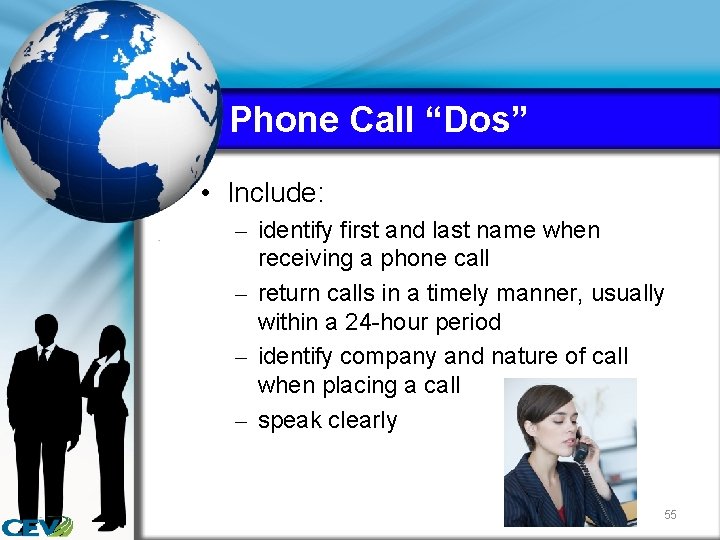
Phone Call “Dos” • Include: – identify first and last name when receiving a phone call – return calls in a timely manner, usually within a 24 -hour period – identify company and nature of call when placing a call – speak clearly 55
Phone Call “Don’ts” • Include: – wait outside a colleague’s office when on the phone – listen to co-workers’ conversations – give out personal information about yourself or co-workers – leave someone on hold for a long time 56
Phone Messages • Are usually utilized when a person is unavailable to answer the phone • Which are successful, include the following considerations: – always give a return phone number – identify who is calling and the organization represented – identify the reason for the call – avoid long messages – speak clearly 57
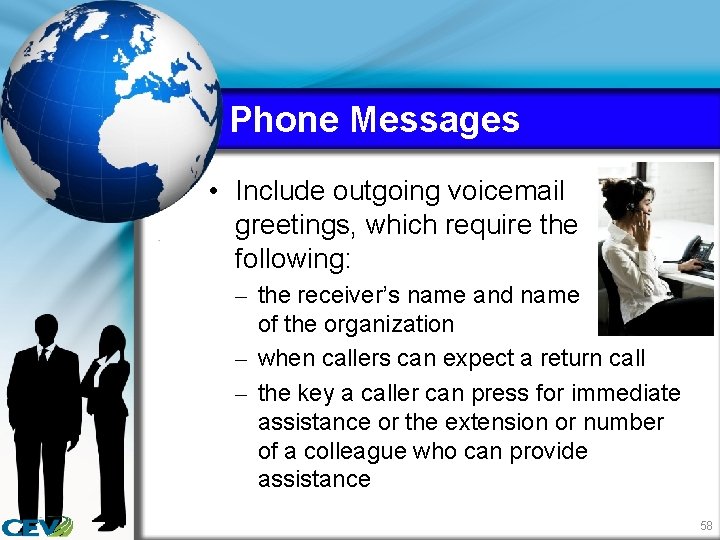
Phone Messages • Include outgoing voicemail greetings, which require the following: – the receiver’s name and name of the organization – when callers can expect a return call – the key a caller can press for immediate assistance or the extension or number of a colleague who can provide assistance 58
Criticism • Refers to analysis, evaluation or judgment • Can also be a critical comment, essay or article • Can be positive, negative or both 59
Offering Criticism • Is most effective when: – the reason for criticism is fully understood – a person's behavior is criticized rather than the person himself – criticism is focused on behaviors which can be changed – criticism is focused on the present and not past actions 60
Receiving Criticism • Involves: – listening to understand accurately – recognizing criticism can improve production and relationships – communicating clearly feelings and thoughts concerning the criticism received – seeking changes to the behavior which prompted the criticism 61
Discrimination in the Workplace • Refers to an employer’s unfair treatment of employees or job applicants on the basis of specific characteristics • Can include discrimination based on: – race – age – sex 62
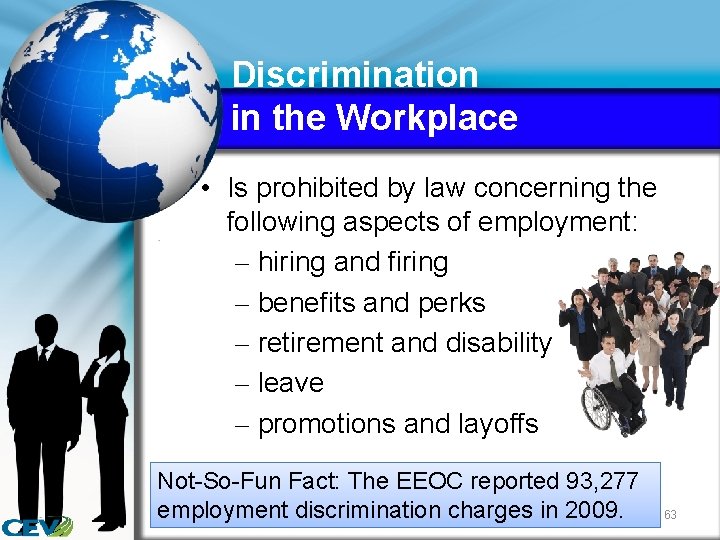
Discrimination in the Workplace • Is prohibited by law concerning the following aspects of employment: – hiring and firing – benefits and perks – retirement and disability – leave – promotions and layoffs Not-So-Fun Fact: The EEOC reported 93, 277 employment discrimination charges in 2009. 63
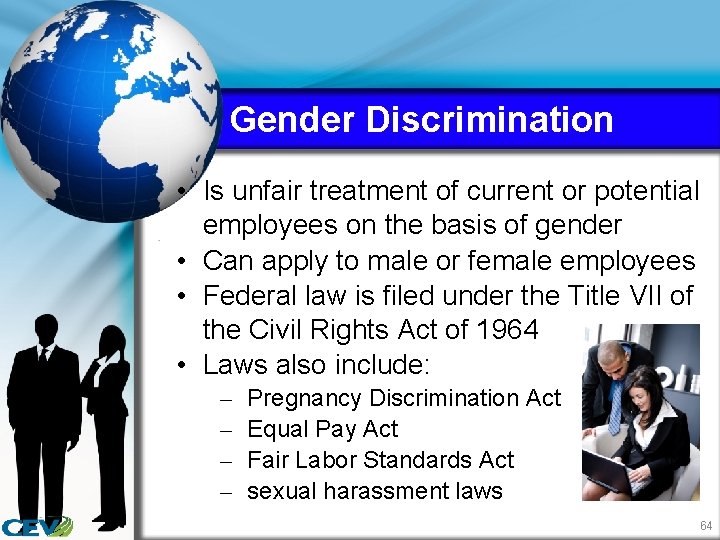
Gender Discrimination • Is unfair treatment of current or potential employees on the basis of gender • Can apply to male or female employees • Federal law is filed under the Title VII of the Civil Rights Act of 1964 • Laws also include: – – Pregnancy Discrimination Act Equal Pay Act Fair Labor Standards Act sexual harassment laws 64
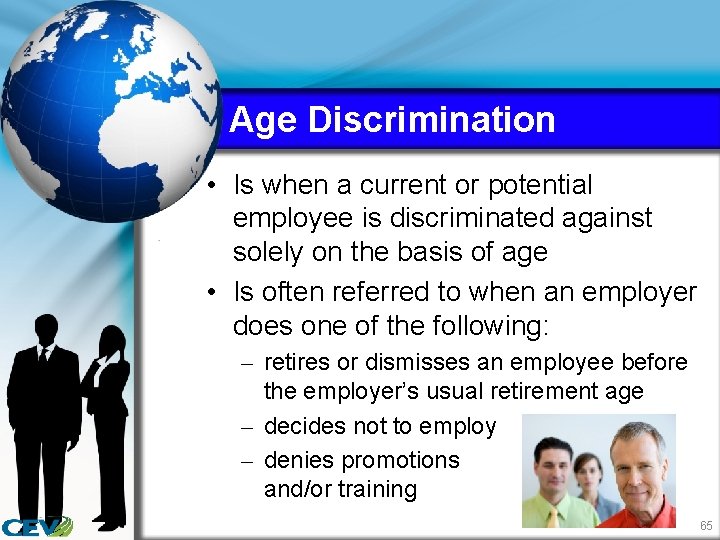
Age Discrimination • Is when a current or potential employee is discriminated against solely on the basis of age • Is often referred to when an employer does one of the following: – retires or dismisses an employee before the employer’s usual retirement age – decides not to employ – denies promotions and/or training 65
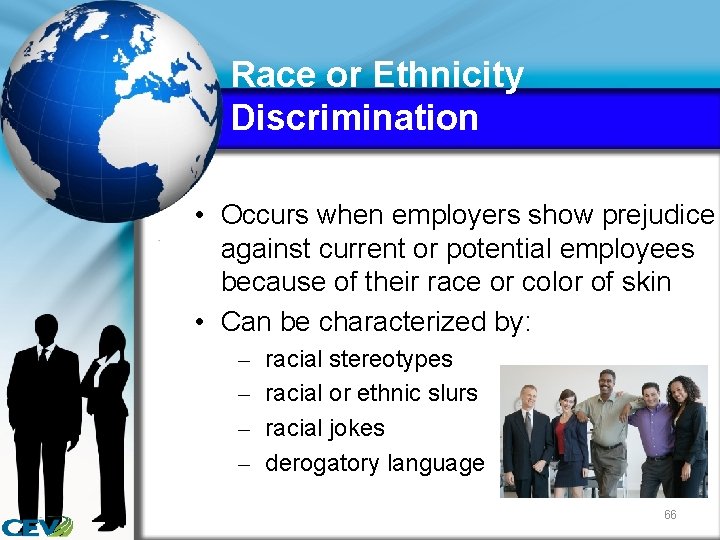
Race or Ethnicity Discrimination • Occurs when employers show prejudice against current or potential employees because of their race or color of skin • Can be characterized by: – – racial stereotypes racial or ethnic slurs racial jokes derogatory language 66
Communication Ethics • Include: – accepting responsibility for consequences of communication – striving to understand respect other communicators – advocating integrity, accuracy and honesty 67
Resources • • Belch, G. E. & Belch, M. A. (1998). Advertising and promotion: An integrated marketing communications perspective (4 th ed. ). Boston, MA: Irwin, Mc. Graw-Hill. Doyle, T. A. (2000 -2005). Perception and Listening. Retrieved March 06, 2010, from The Interpersonal Web at Northern Virginia Community College: http: //novaonline. nvcc. edu/eli/spd 110 td/interper/index. html Introduction to public relations: Public relation the profession. (2011). Retrieved on February 12, 2011, from http: //www. docstoc. com/docs/4025083/Introduction-to-Public -Relations-Part-One-Public-Relations-The-Profession. Kim, M. (2008, September 4). Race, Age & Gender in the Workplace. Retrieved March 5, 2010, from Level Playing Field Institute : http: //www. lpfi. org/docs/race-age-genderexecutive-summary. pdf 68
Resources • • • Kline, J. A. (1996). Listening effectively. Washington, DC : US Government Printing Office. O'Conner, J. (1988). Speech: Exploring Communication. Englewood, NJ: Prentice-Hall, Inc. O’Hair, D. , Stewart, R. , & Rubenstein, H. (2004). A speaker’s guidebook. Boston, MA: Bedford/St. Martin’s Satterfield, T. R. (2000, January). CONDUCTING EFFECTIVE FOCUS GROUPS. Retrieved March 5, 2010, from Loyloa University Chicago: http: //www. luc. edu/hr/pdfs/SHRMCONDUCTING_EFFECTIV E_FOCUS_GROUPS. pdf Straker, D. (2008). Changing Minds: in Detail. Syque Press. 69
Resources • • • Sussman, D. L. (n. d. ). Etiquette. Retrieved March 05, 2010, from Welcome to effective communication: http: //cobweb 2. louisville. edu/faculty/regbruce/mgmtwe bs/commun_f 98/Introduction. htm Treuer, P. (2006, January 17). Listening Skills. Retrieved March 06, 2010, from University of Minnesota Duluth: http: //www. d. umn. edu/kmc/student/loon/acad/strat/ss_listeni ng. html Walker, G. (n. d. ). Dealing with critism. Retrieved March 06, 2010, from Oregon State University: http: //oregonstate. edu/instruct/comm 440 -540/criticism. htm 70
Acknowledgements Production Coordinators Production Manager Maggie Bigham Daniel Johnson Amy Hogan Executive Producers Brand Manager Gordon Davis, Ph. D. , Megan O’Quinn Jeff Lansdell Graphic Designer Daniel Johnson © MMXIII CEV Multimedia, Ltd. 71
- Slides: 71