
1 Neurological Control Systems Studies in Bioengineering Stark
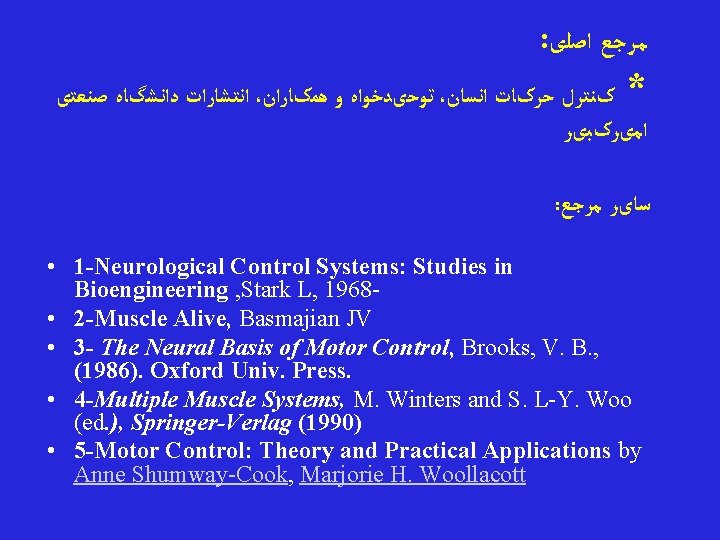
: ﻣﺮﺟﻊ ﺍﺻﻠی ﺍﻧﺘﺸﺎﺭﺍﺕ ﺩﺍﻧﺸگﺎﻩ ﺻﻨﻌﺘی ، ﺗﻮﺣیﺪﺧﻮﺍﻩ ﻭ ﻫﻤکﺎﺭﺍﻥ ، * کﻨﺘﺮﻝ ﺣﺮکﺎﺕ ﺍﻧﺴﺎﻥ ﺍﻣیﺮکﺒیﺮ : ﺳﺎیﺮ ﻣﺮﺟﻊ • 1 -Neurological Control Systems: Studies in Bioengineering , Stark L, 1968 • 2 -Muscle Alive, Basmajian JV • 3 - The Neural Basis of Motor Control, Brooks, V. B. , (1986). Oxford Univ. Press. • 4 -Multiple Muscle Systems, M. Winters and S. L-Y. Woo (ed. ), Springer-Verlag (1990) • 5 -Motor Control: Theory and Practical Applications by Anne Shumway-Cook, Marjorie H. Woollacott
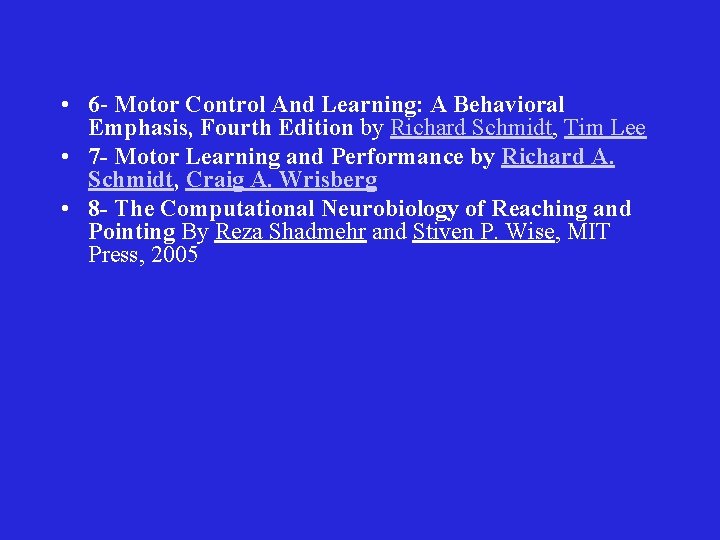
• 6 - Motor Control And Learning: A Behavioral Emphasis, Fourth Edition by Richard Schmidt, Tim Lee • 7 - Motor Learning and Performance by Richard A. Schmidt, Craig A. Wrisberg • 8 - The Computational Neurobiology of Reaching and Pointing By Reza Shadmehr and Stiven P. Wise, MIT Press, 2005
HUMAN MOTOR CONTROL SYSTEM Overview
MOTOR BEHAVIORS CLASSIFIED ON FUNCTIONAL PROPERTIES Movements: brief, discrete, unitary muscle activities, limited to single parts Acts: complex, sequential behaviors, goal-oriented, different body parts included (action patterns) N more restricted CNS regions that ctrl movements than acts
QUESTION OF BASIC UNITS OF MOVEMENTS Reflexes : “simple, highly stereotyped and unlearned responses to external stimuli”. Their magnitude related to stimulus intensity. Spinal cord roots: dorsal contain sensory fibers, ventral contain motor fibers
Some reflexes short pathways in spinal cord linking dorsal & ventral roots, others longer loops (spinal cord interconnections or to the brain) Reflexes as basic units of movement (Sherrington, early 20 th century) BUT: Speech as ordered stimulus-response units problematic So. . .
MOTOR PLANS/PROGRAMS complex movements & acts produced and controlled by set of commands to muscles, established before onset. Feedback on execution
THE CONTROL SYSTEMS VIEW m Machine design vocabulary: accuracy and speed criteria m Closed-loop and Open-loop ctrl mechanisms to optimize performance
CLOSED-LOOP CTRL MECHANISMS m continuous feedback from controlled system to controller (e. g. driving) m slow, sustained movements (ramp/smooth) m accuracy & flexibility at speed expense
OPEN-LOOP CTRL MECHANISMS m activity preprogrammed m sensor measured output(no external form of feedback m rapid responses -ballistic movements (e. g. throwing a fastball) m no feedback/ error reduction: anticipation (prior learning)
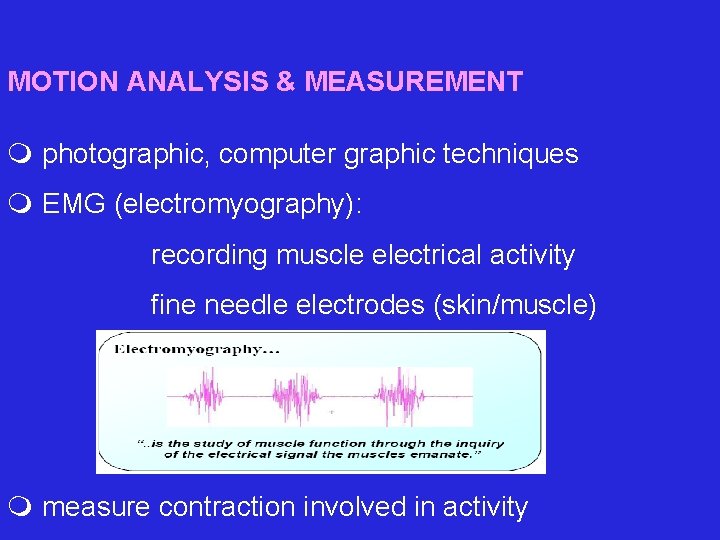
MOTION ANALYSIS & MEASUREMENT m photographic, computer graphic techniques m EMG (electromyography): recording muscle electrical activity fine needle electrodes (skin/muscle) m measure contraction involved in activity
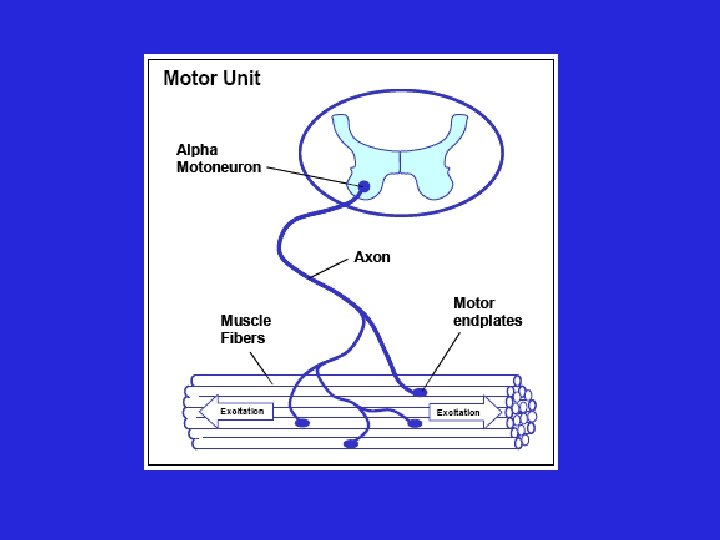
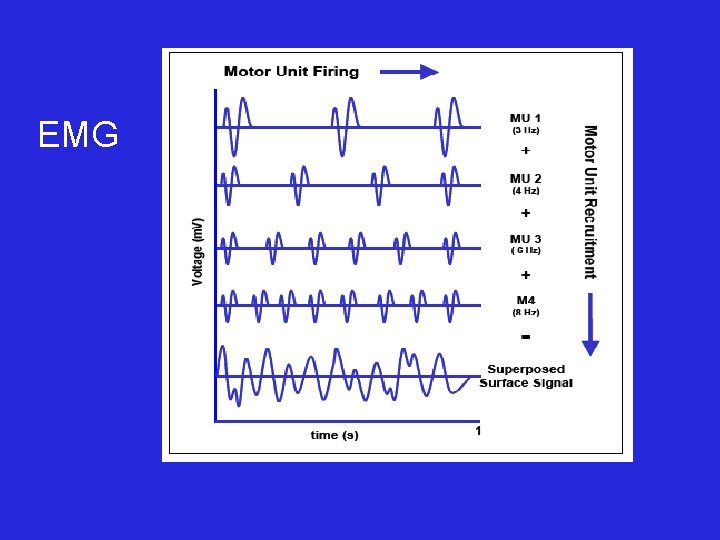
EMG
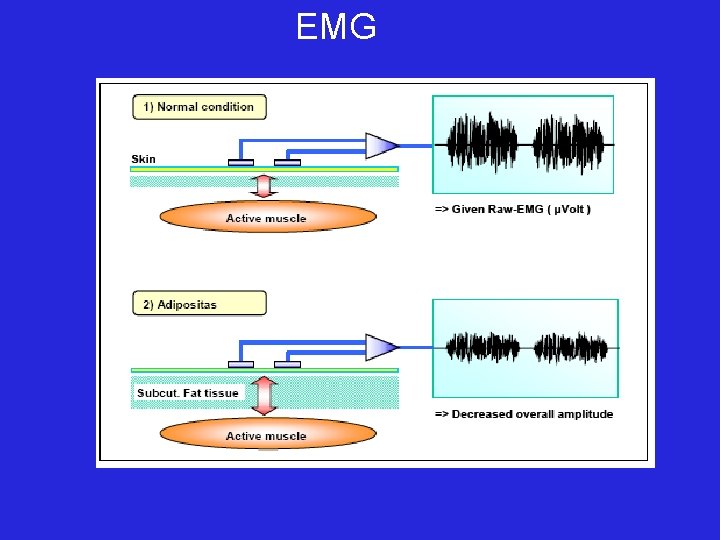
EMG
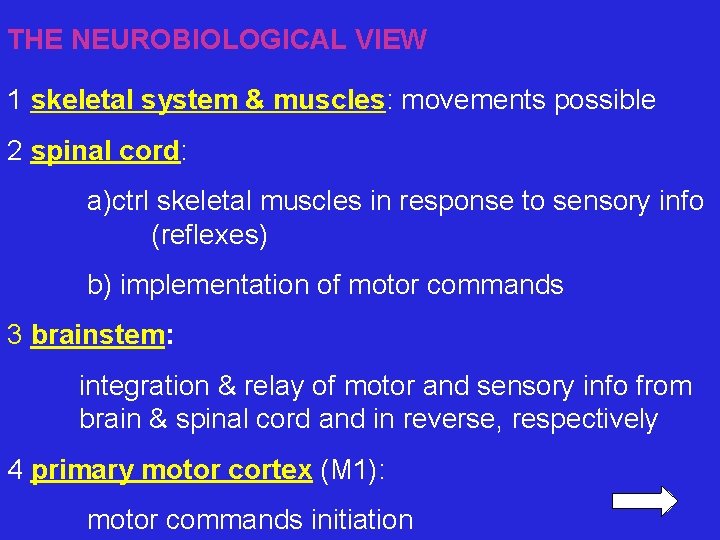
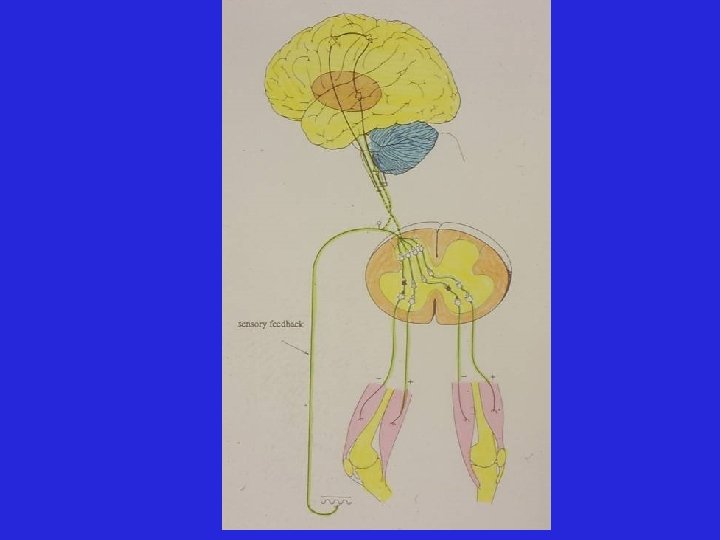
THE NEUROBIOLOGICAL VIEW 1 skeletal system & muscles: movements possible 2 spinal cord: a)ctrl skeletal muscles in response to sensory info (reflexes) b) implementation of motor commands 3 brainstem: integration & relay of motor and sensory info from brain & spinal cord and in reverse, respectively 4 primary motor cortex (M 1): motor commands initiation
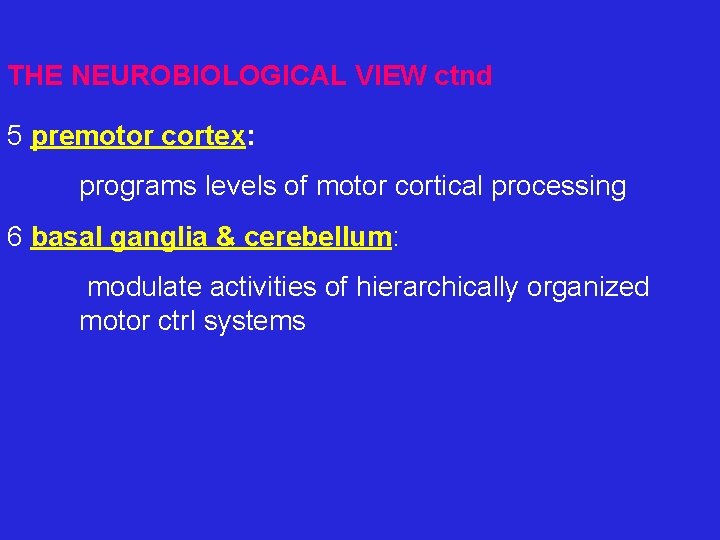
THE NEUROBIOLOGICAL VIEW ctnd 5 premotor cortex: programs levels of motor cortical processing 6 basal ganglia & cerebellum: modulate activities of hierarchically organized motor ctrl systems
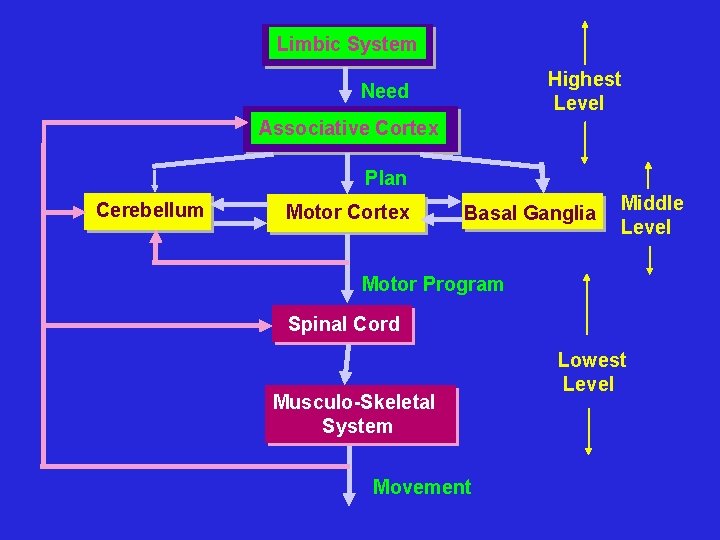
Limbic System Highest Level Need Associative Cortex Plan Cerebellum Motor Cortex Basal Ganglia Middle Level Motor Program Spinal Cord Musculo-Skeletal System Movement Lowest Level
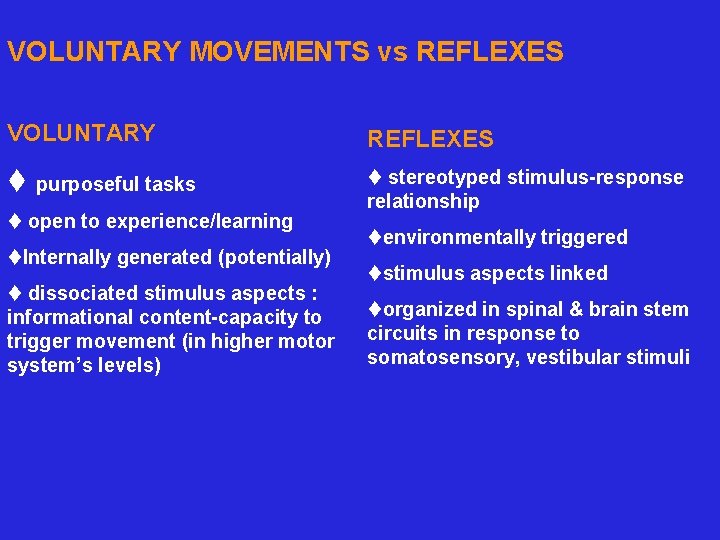
VOLUNTARY MOVEMENTS vs REFLEXES VOLUNTARY REFLEXES t purposeful tasks t stereotyped stimulus-response relationship t open to experience/learning t. Internally generated (potentially) t dissociated stimulus aspects : informational content-capacity to trigger movement (in higher motor system’s levels) tenvironmentally triggered tstimulus aspects linked torganized in spinal & brain stem circuits in response to somatosensory, vestibular stimuli
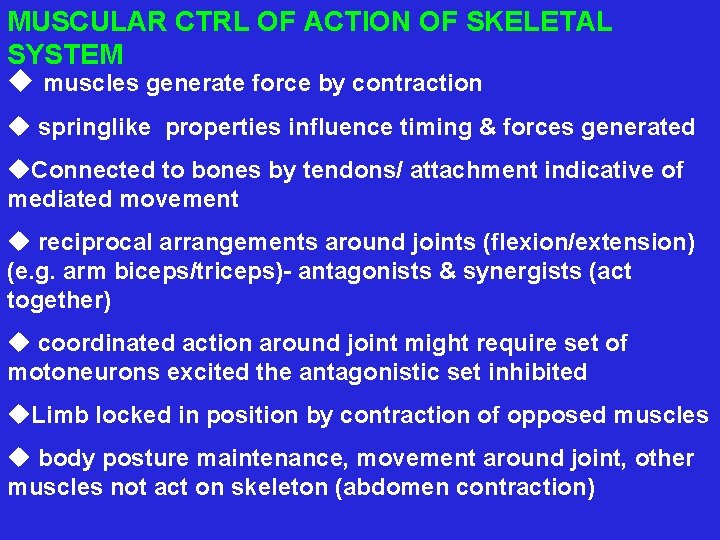
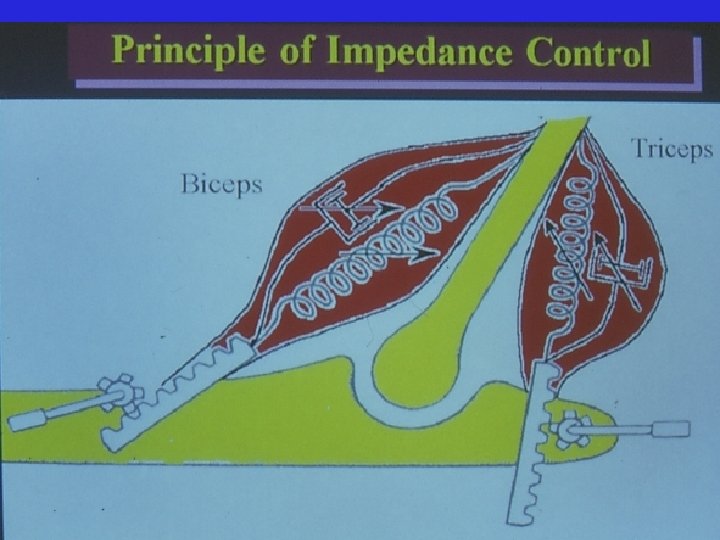
MUSCULAR CTRL OF ACTION OF SKELETAL SYSTEM u muscles generate force by contraction u springlike properties influence timing & forces generated u. Connected to bones by tendons/ attachment indicative of mediated movement u reciprocal arrangements around joints (flexion/extension) (e. g. arm biceps/triceps)- antagonists & synergists (act together) u coordinated action around joint might require set of motoneurons excited the antagonistic set inhibited u. Limb locked in position by contraction of opposed muscles u body posture maintenance, movement around joint, other muscles not act on skeleton (abdomen contraction)
![MUSCLE TYPES [ smooth (stomach): contractions regulated by autonomic system [ Skeletal: under voluntary](http://slidetodoc.com/presentation_image_h/fb35acfa84dfcd78db9e6f0df78a0be2/image-24.jpg "MUSCLE TYPES [ smooth (stomach): contractions regulated by autonomic system [ Skeletal: under voluntary")
MUSCLE TYPES [ smooth (stomach): contractions regulated by autonomic system [ Skeletal: under voluntary control [Muscle fibers overlapping filaments(made of actin & myosin) give the striped appearance M. fibers : single large cells with many nuclei (thousands compose a muscle) Contraction increases overlap(myosin binds to actin, filaments slide past one another)-length shortens]
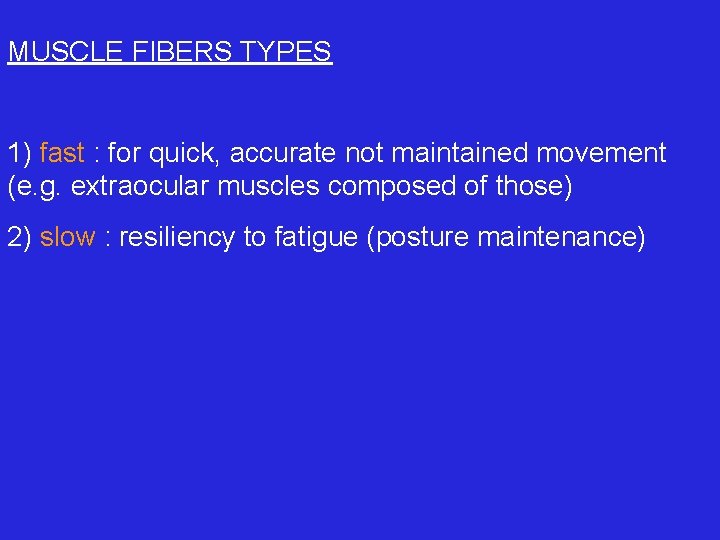
MUSCLE FIBERS TYPES 1) fast : for quick, accurate not maintained movement (e. g. extraocular muscles composed of those) 2) slow : resiliency to fatigue (posture maintenance)
- Slides: 25