
1 NEUROLEPTICS ANTIPSYCHOTICS ANTIPSYCHOTICS NEUROLEPTICS Neuroleptic synonym for




- Slides: 38
1 NEUROLEPTICS (ANTIPSYCHOTICS)
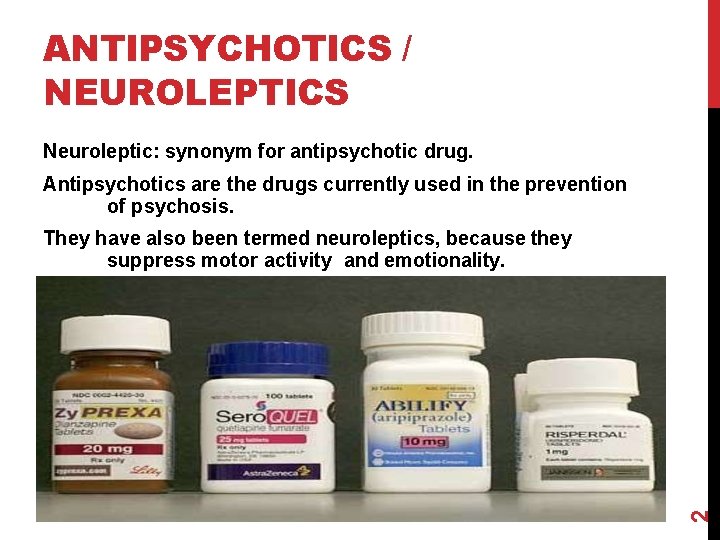
ANTIPSYCHOTICS / NEUROLEPTICS Neuroleptic: synonym for antipsychotic drug. Antipsychotics are the drugs currently used in the prevention of psychosis. 2 They have also been termed neuroleptics, because they suppress motor activity and emotionality.
3 WHAT IS PSYCHOSIS………. ? ?
PSYCHOSIS Psychosis (from the Greek , psyche, "mind/soul", and -osis, "abnormal condition or derangement") refers to an abnormal condition of the mind. A syndrome of chronic disordered thinking and disturbed behavior (schizophrenia, mania, depression) The most important types of psychosis are: 4 • Schizophrenia • Affective disorders (e. g. depression, mania) • Organic psychoses (mental disturbances caused by head injury, alcoholism, or other kinds of organic disease).
5
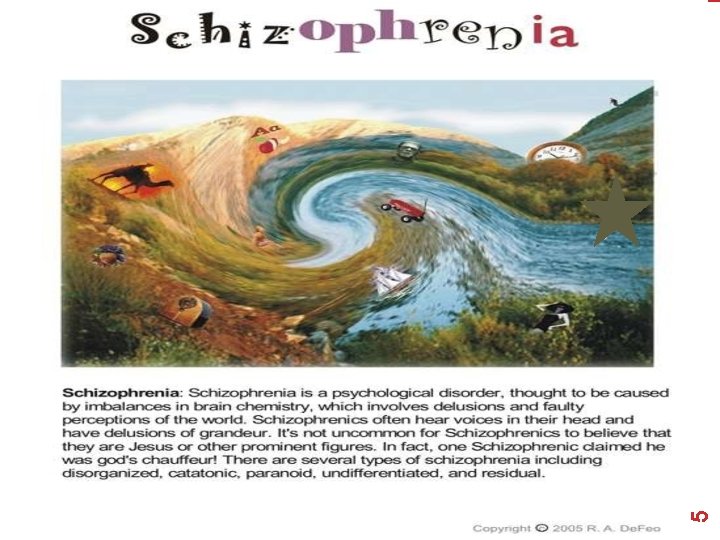
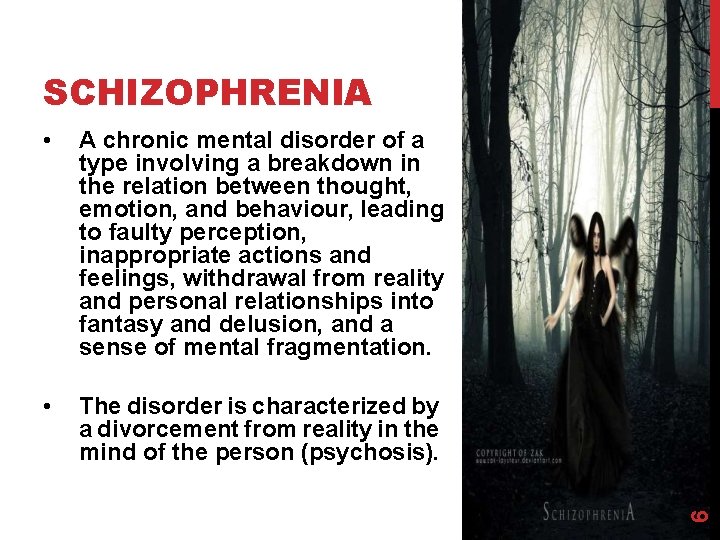
• A chronic mental disorder of a type involving a breakdown in the relation between thought, emotion, and behaviour, leading to faulty perception, inappropriate actions and feelings, withdrawal from reality and personal relationships into fantasy and delusion, and a sense of mental fragmentation. • The disorder is characterized by a divorcement from reality in the mind of the person (psychosis). 6 SCHIZOPHRENIA
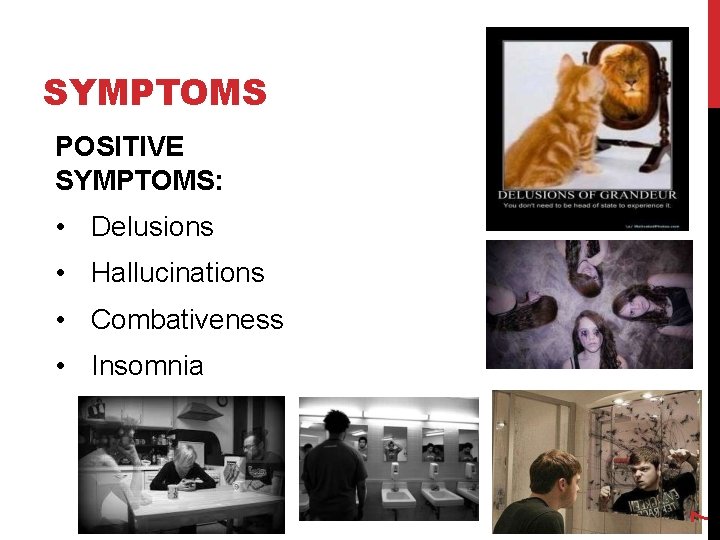
SYMPTOMS POSITIVE SYMPTOMS: • Delusions • Hallucinations • Combativeness 7 • Insomnia
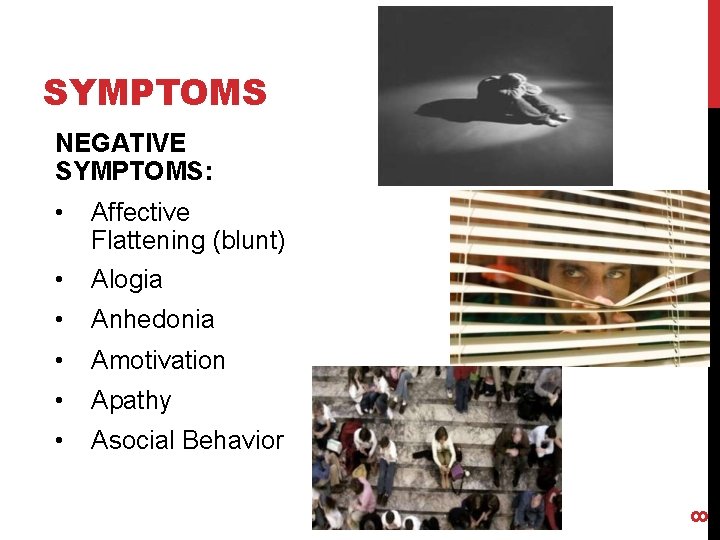
SYMPTOMS • Affective Flattening (blunt) • Alogia • Anhedonia • Amotivation • Apathy • Asocial Behavior 8 NEGATIVE SYMPTOMS:
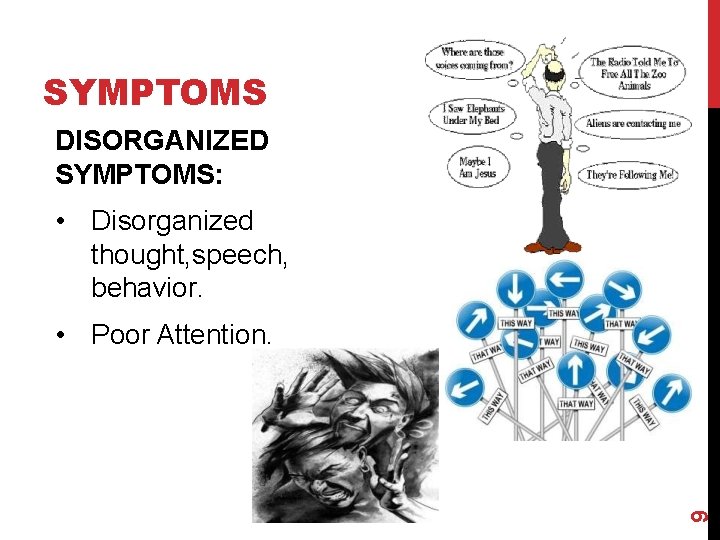
SYMPTOMS DISORGANIZED SYMPTOMS: • Disorganized thought, speech, behavior. 9 • Poor Attention.
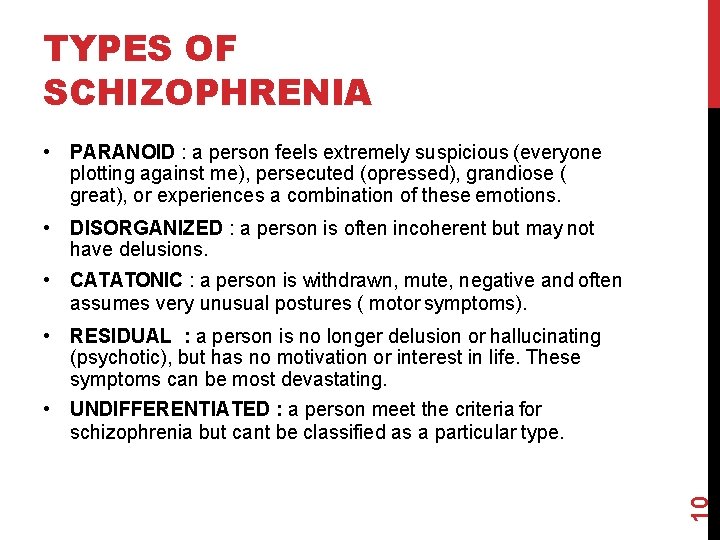
TYPES OF SCHIZOPHRENIA • PARANOID : a person feels extremely suspicious (everyone plotting against me), persecuted (opressed), grandiose ( great), or experiences a combination of these emotions. • DISORGANIZED : a person is often incoherent but may not have delusions. • CATATONIC : a person is withdrawn, mute, negative and often assumes very unusual postures ( motor symptoms). 10 • RESIDUAL : a person is no longer delusion or hallucinating (psychotic), but has no motivation or interest in life. These symptoms can be most devastating. • UNDIFFERENTIATED : a person meet the criteria for schizophrenia but cant be classified as a particular type.
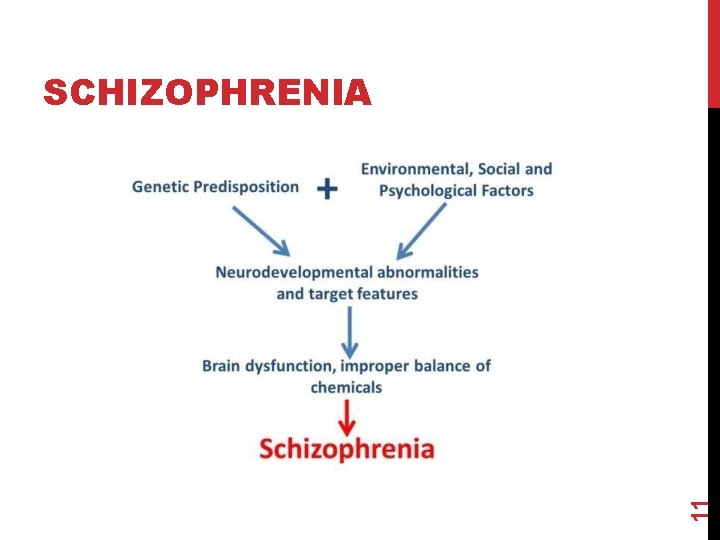
11 SCHIZOPHRENIA
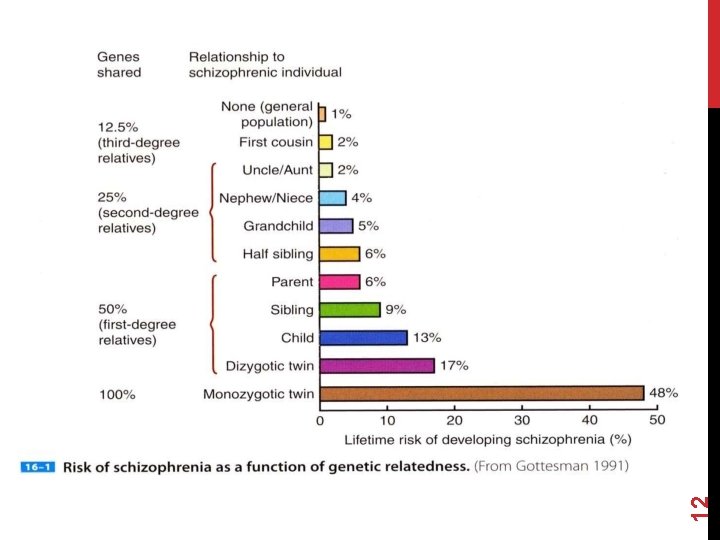
12
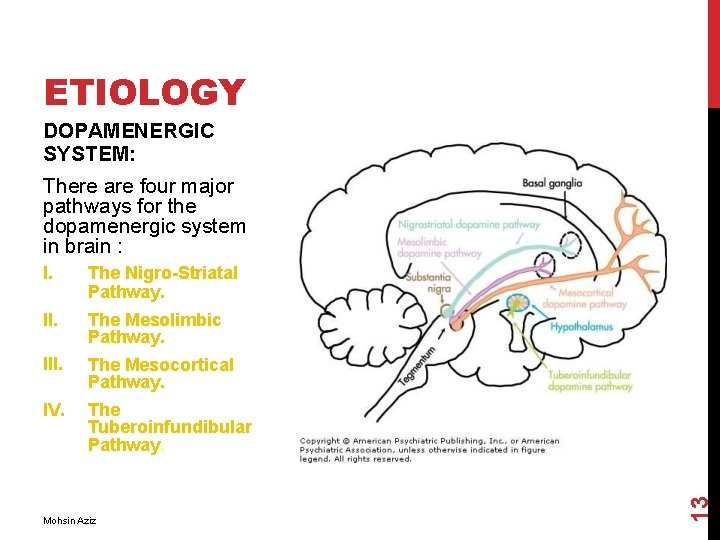
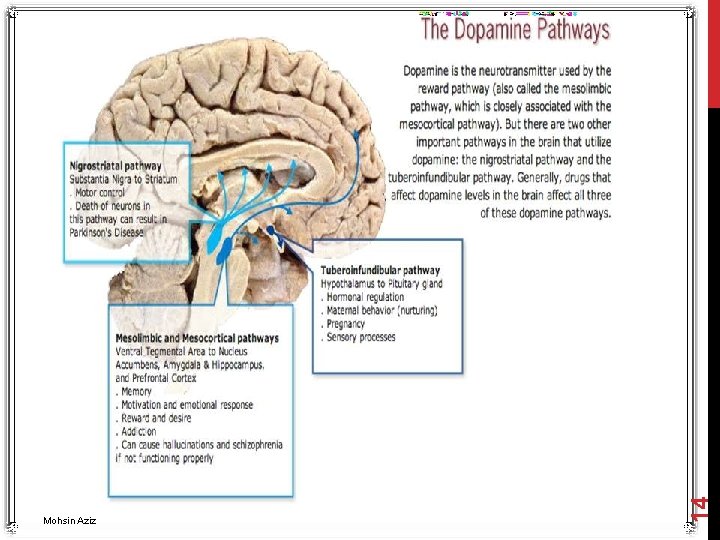
ETIOLOGY DOPAMENERGIC SYSTEM: I. The Nigro-Striatal Pathway. II. The Mesolimbic Pathway. III. The Mesocortical Pathway. IV. The Tuberoinfundibular Pathway. Mohsin Aziz 13 There are four major pathways for the dopamenergic system in brain :
14 Mohsin Aziz
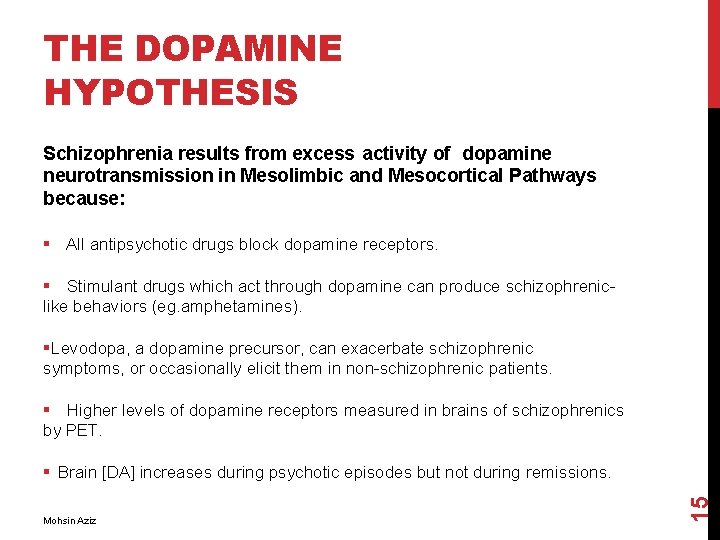
THE DOPAMINE HYPOTHESIS Schizophrenia results from excess activity of dopamine neurotransmission in Mesolimbic and Mesocortical Pathways because: All antipsychotic drugs block dopamine receptors. Stimulant drugs which act through dopamine can produce schizophreniclike behaviors (eg. amphetamines). Levodopa, a dopamine precursor, can exacerbate schizophrenic symptoms, or occasionally elicit them in non-schizophrenic patients. Higher levels of dopamine receptors measured in brains of schizophrenics by PET. Mohsin Aziz 15 Brain [DA] increases during psychotic episodes but not during remissions.
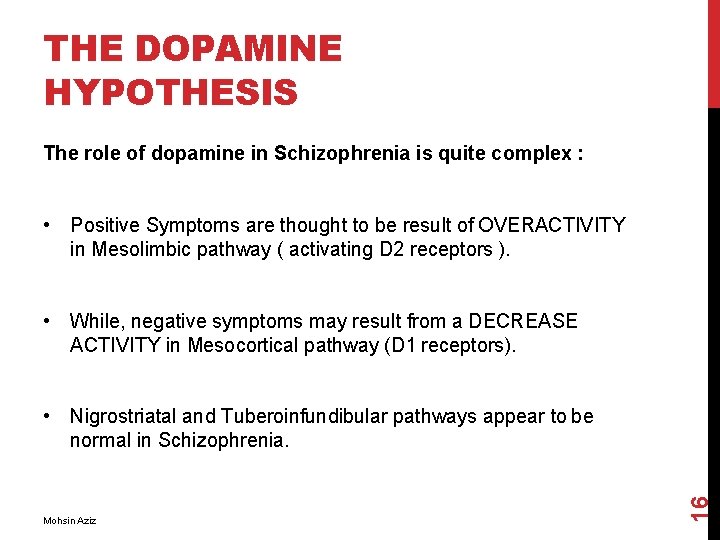
THE DOPAMINE HYPOTHESIS The role of dopamine in Schizophrenia is quite complex : • Positive Symptoms are thought to be result of OVERACTIVITY in Mesolimbic pathway ( activating D 2 receptors ). • While, negative symptoms may result from a DECREASE ACTIVITY in Mesocortical pathway (D 1 receptors). Mohsin Aziz 16 • Nigrostriatal and Tuberoinfundibular pathways appear to be normal in Schizophrenia.
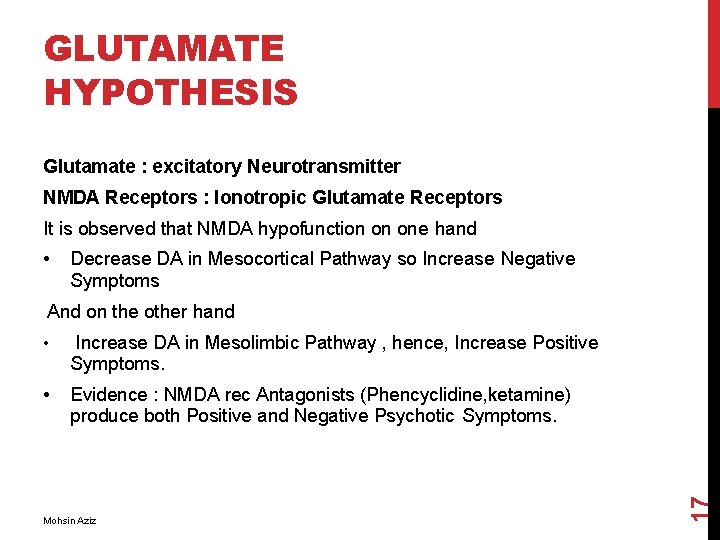
GLUTAMATE HYPOTHESIS Glutamate : excitatory Neurotransmitter NMDA Receptors : Ionotropic Glutamate Receptors It is observed that NMDA hypofunction on one hand • Decrease DA in Mesocortical Pathway so Increase Negative Symptoms • Increase DA in Mesolimbic Pathway , hence, Increase Positive Symptoms. • Evidence : NMDA rec Antagonists (Phencyclidine, ketamine) produce both Positive and Negative Psychotic Symptoms. Mohsin Aziz 17 And on the other hand
SEROTONINE HYPOTHESIS • Many effective antipsychotic drugs, in addition to blocking dopamine receptors, also act as 5 -HT-receptor antagonists. • Many 'atypical‘ antipsychotic drugs produce fewer extrapyramidal side effects than dopamine-selective compounds, as they also combine with 5 -HT 2 A-receptors. Mohsin Aziz 18 • Whether 5 -HT 2 A-receptor blockade accounts directly for their antipsychotic effects, or merely reduces undesirable side effects associated with D 2 -receptor antagonists, remains controversial.
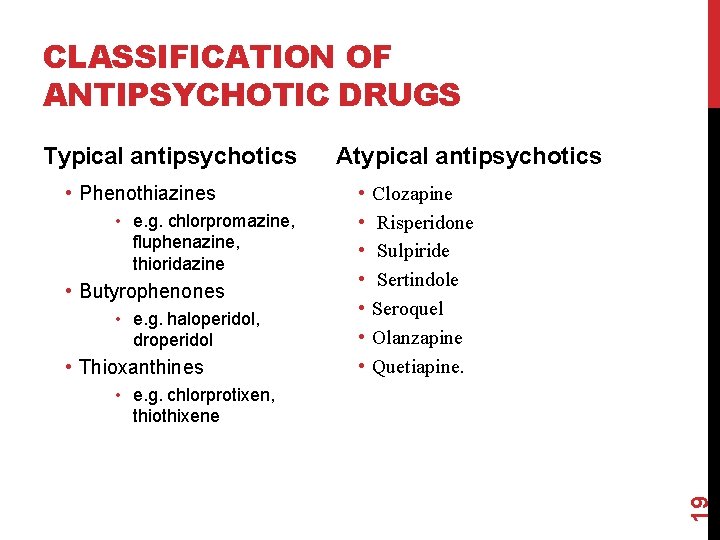
CLASSIFICATION OF ANTIPSYCHOTIC DRUGS Typical antipsychotics • Phenothiazines • e. g. chlorpromazine, fluphenazine, thioridazine • Butyrophenones • e. g. haloperidol, droperidol • Thioxanthines Atypical antipsychotics • • Clozapine Risperidone Sulpiride Sertindole Seroquel Olanzapine Quetiapine. 19 • e. g. chlorprotixen, thiothixene
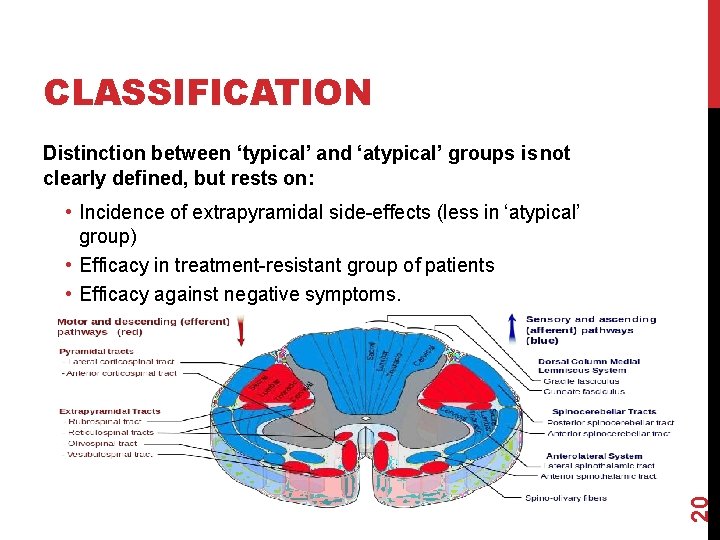
CLASSIFICATION Distinction between ‘typical’ and ‘atypical’ groups is not clearly defined, but rests on: 20 • Incidence of extrapyramidal side-effects (less in ‘atypical’ group) • Efficacy in treatment-resistant group of patients • Efficacy against negative symptoms.
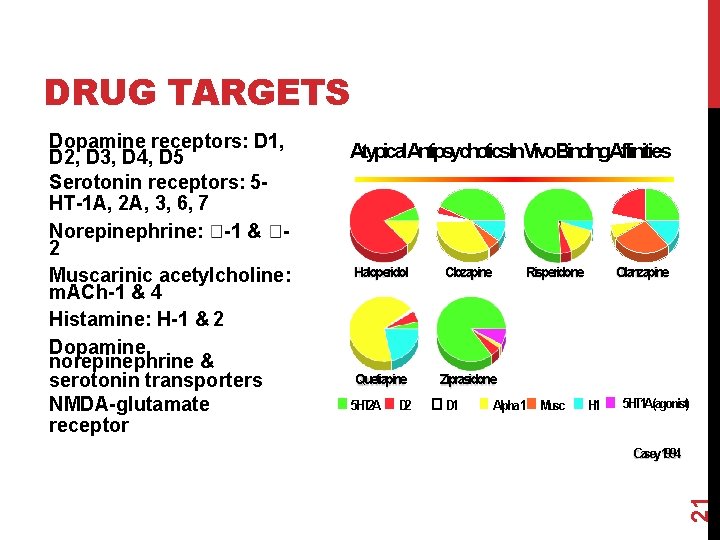
DRUG TARGETS Atypical. Antipsychotics. In. Vivo. Binding. Affinities Haloperidol Clozapine Quetiapine Ziprasidone 5 HT 2 A D 2 D 1 Risperidone Alpha 1 Musc Olanzapine H 1 5 HT 1 A(agonist) Casey 1994 21 Dopamine receptors: D 1, D 2, D 3, D 4, D 5 Serotonin receptors: 5 HT-1 A, 2 A, 3, 6, 7 Norepinephrine: -1 & 2 Muscarinic acetylcholine: m. ACh-1 & 4 Histamine: H-1 & 2 Dopamine, norepinephrine & serotonin transporters NMDA-glutamate receptor
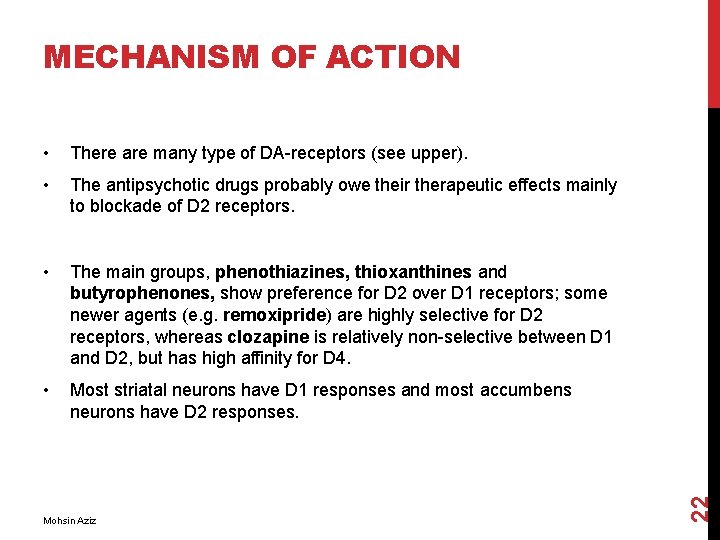
• There are many type of DA-receptors (see upper). • The antipsychotic drugs probably owe their therapeutic effects mainly to blockade of D 2 receptors. • The main groups, phenothiazines, thioxanthines and butyrophenones, show preference for D 2 over D 1 receptors; some newer agents (e. g. remoxipride) are highly selective for D 2 receptors, whereas clozapine is relatively non-selective between D 1 and D 2, but has high affinity for D 4. • Most striatal neurons have D 1 responses and most accumbens neurons have D 2 responses. Mohsin Aziz 22 MECHANISM OF ACTION
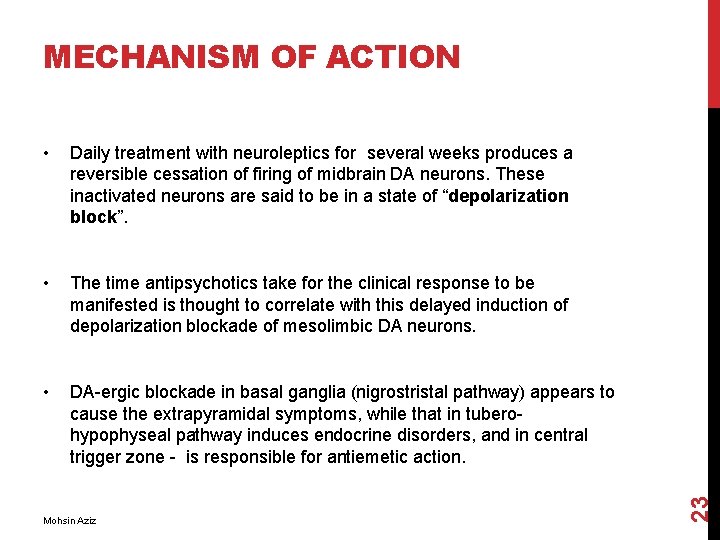
• Daily treatment with neuroleptics for several weeks produces a reversible cessation of firing of midbrain DA neurons. These inactivated neurons are said to be in a state of “depolarization block”. • The time antipsychotics take for the clinical response to be manifested is thought to correlate with this delayed induction of depolarization blockade of mesolimbic DA neurons. • DA-ergic blockade in basal ganglia (nigrostristal pathway) appears to cause the extrapyramidal symptoms, while that in tuberohypophyseal pathway induces endocrine disorders, and in central trigger zone - is responsible for antiemetic action. Mohsin Aziz 23 MECHANISM OF ACTION
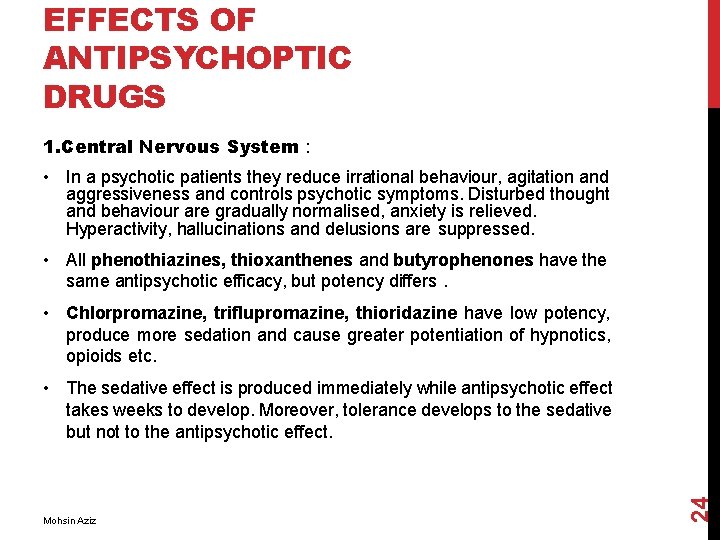
EFFECTS OF ANTIPSYCHOPTIC DRUGS 1. Central Nervous System : • In a psychotic patients they reduce irrational behaviour, agitation and aggressiveness and controls psychotic symptoms. Disturbed thought and behaviour are gradually normalised, anxiety is relieved. Hyperactivity, hallucinations and delusions are suppressed. • All phenothiazines, thioxanthenes and butyrophenones have the same antipsychotic efficacy, but potency differs. • Chlorpromazine, triflupromazine, thioridazine have low potency, produce more sedation and cause greater potentiation of hypnotics, opioids etc. Mohsin Aziz 24 • The sedative effect is produced immediately while antipsychotic effect takes weeks to develop. Moreover, tolerance develops to the sedative but not to the antipsychotic effect.
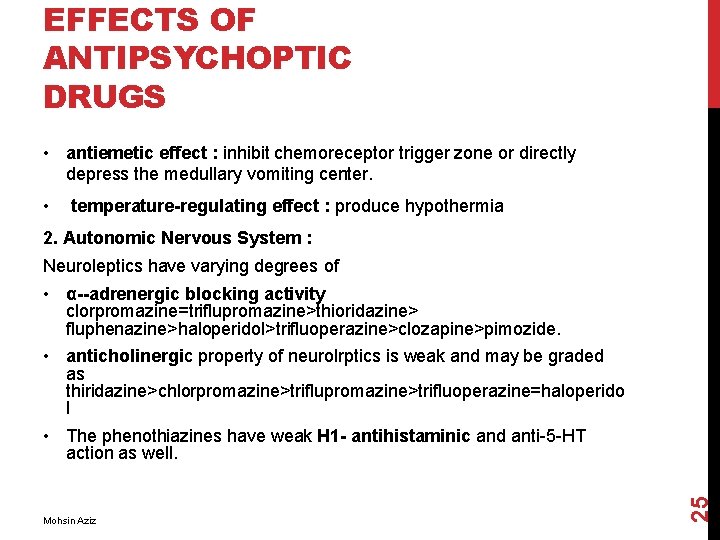
EFFECTS OF ANTIPSYCHOPTIC DRUGS • antiemetic effect : inhibit chemoreceptor trigger zone or directly depress the medullary vomiting center. • temperature-regulating effect : produce hypothermia 2. Autonomic Nervous System : Neuroleptics have varying degrees of Mohsin Aziz 25 • α--adrenergic blocking activity clorpromazine=triflupromazine>thioridazine> fluphenazine>haloperidol>trifluoperazine>clozapine>pimozide. • anticholinergic property of neurolrptics is weak and may be graded as thiridazine>chlorpromazine>trifluoperazine=haloperido l • The phenothiazines have weak H 1 - antihistaminic and anti-5 -HT action as well.
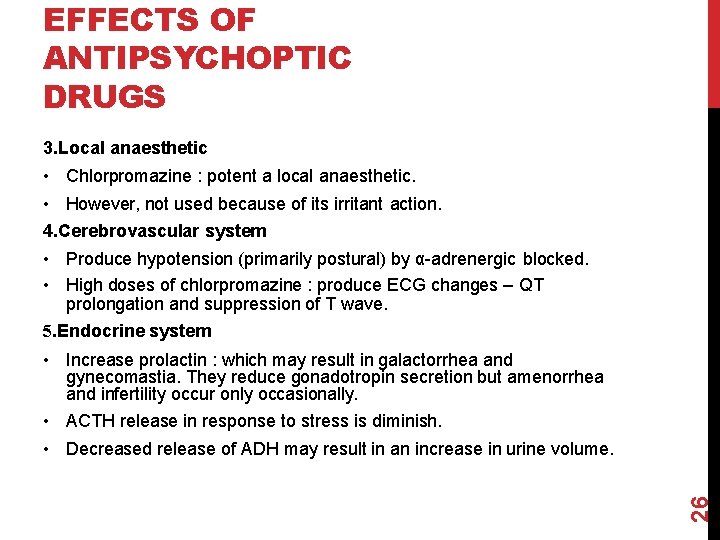
EFFECTS OF ANTIPSYCHOPTIC DRUGS 3. Local anaesthetic • Chlorpromazine : potent a local anaesthetic. • However, not used because of its irritant action. 4. Cerebrovascular system • Produce hypotension (primarily postural) by α-adrenergic blocked. • High doses of chlorpromazine : produce ECG changes – QT prolongation and suppression of T wave. 5. Endocrine system 26 • Increase prolactin : which may result in galactorrhea and gynecomastia. They reduce gonadotropin secretion but amenorrhea and infertility occur only occasionally. • ACTH release in response to stress is diminish. • Decreased release of ADH may result in an increase in urine volume.
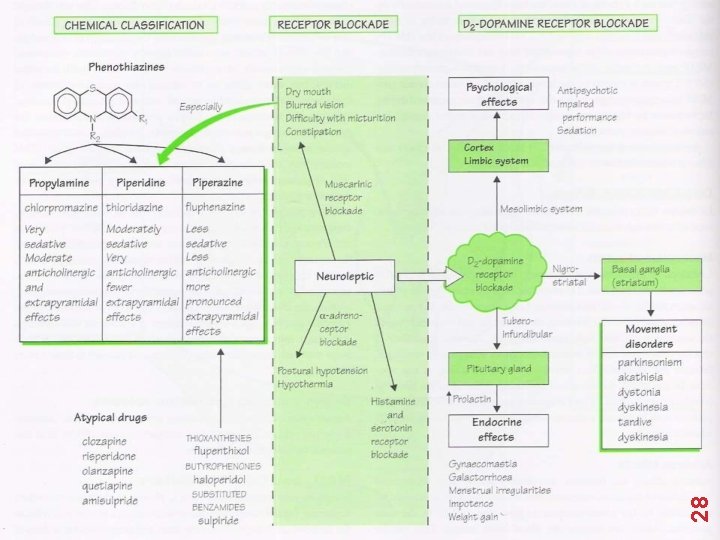
MANIFESTATIONS Autonomic nervous system Central nervous system Endocrine system MECHANISM Dry mouth, loss of accommodation; difficulty urinating, constipation Muscarinic blockade Orthostatic hypotension, impotence, failure to ejaculate Alpha adrenergic blockade Parkinson’s syndrome; akathisia, dystonia Dopamine receptor blockade Tardive dyskinesia Dopamine receptor supersensitivity Toxic confusional state Muscarinic blockade Galactorrhea; amenorrhea; infertility, impotence Hyperprolactinemia secondary to dopamine receptor blockade 27 TYPE
28
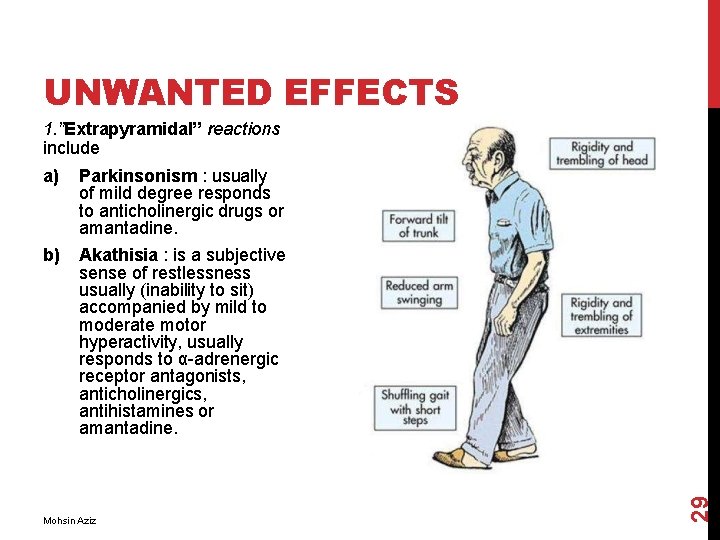
UNWANTED EFFECTS a) Parkinsonism : usually of mild degree responds to anticholinergic drugs or amantadine. b) Akathisia : is a subjective sense of restlessness usually (inability to sit) accompanied by mild to moderate motor hyperactivity, usually responds to α-adrenergic receptor antagonists, anticholinergics, antihistamines or amantadine. Mohsin Aziz 29 1. ”Extrapyramidal” reactions include
UNWANTED EFFECTS Acute dystonia : 30 • Due to the blocked of DAnergic nigrostriatal pathway. • Reactions are involuntary movements (restlessness, muscle spasms, protruding tongue, fixed upward gaze, torticollis, etc. ) • Occur commonly in the first few weeks, often declining with time, and are reversible on stopping treatment.
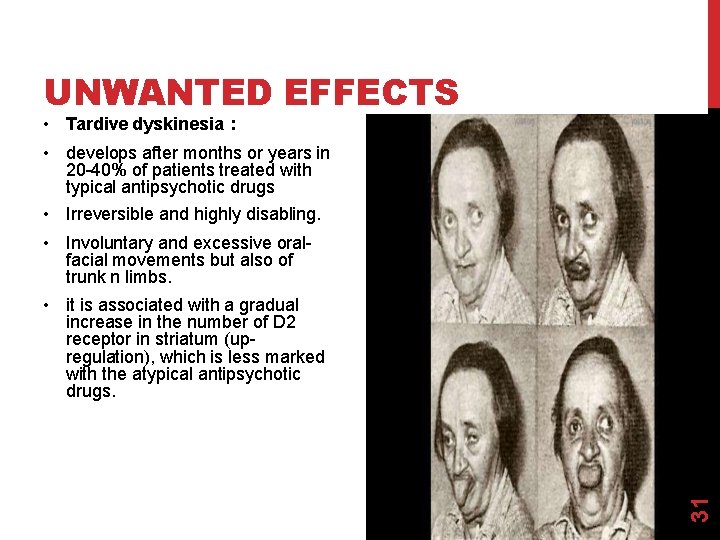
UNWANTED EFFECTS • Tardive dyskinesia : • develops after months or years in 20 -40% of patients treated with typical antipsychotic drugs • Irreversible and highly disabling. 31 • Involuntary and excessive oralfacial movements but also of trunk n limbs. • it is associated with a gradual increase in the number of D 2 receptor in striatum (upregulation), which is less marked with the atypical antipsychotic drugs.
UNWANTED EFFECTS 32 2. Endocrine effects • DA released by neurons of the tuberoinfundibular pathway acts via D 2 receptors as an inhibitor of prolactin. Thus blocking D 2 receptors therefore increases the plasma prolactin concentration, resulting breast swelling, pain and lactation, which can occur in men as well as women. 3. Neuroleptic malignant syndrom : • Rare but serious complication. • It occurs in 1% to 2% of patients and is fatal in almost 10% of those affected. • This is observed early in treatment and is characterized by a near complete collapse of the autonomic nervous system, causing, for example, fever, muscle rigidity, diaphoresis, mental confusion and cardiovascular instability. • Immediate medical intervention with bromcriptine (DA agonist) and dantrolene is nessesary.
UNWANTED EFFECTS 4. Sedation: • Tends to decrease with continued use. Antihistaminic (H 1) property of phenothiazines contributes to their sedative and antiemetic properties. 5. Peripheral effects. • Blocking muscarinic receptors : produce blurring of vision and increased intraocular pressure, dry mouth and eyes, constipation and urinary retention. • Blocking α-adrenoreceptors : orthostatic hypotension. 33 • Weight gain is a common and troublesome side-effect, probably related to 5 -HT antagonism.
UNWANTED EFFECTS 6. Idiosyncratic and hypersensitivity Reactions : • • • Jaundice: with older phenothizines, such as chlorpromazine. usually mild, obstructive and reversible Leukopenia and agranulocytosis : rare, but potentially fatal, and occur in the first few weeks. 34 • The incidence of leukopenia (usually reversible) is higher (1 -2%) with clozapine, provided the drug is stopped at the first sign of leukopenia or anemia, the effect is reversible. • Olanzapine appears to be free of this disadvantage. • Urticarial skin reactions are common but usually mild. Excessive sensitivity to ultraviolet light may also occur.
CLINICAL USES Behavioural emergencies (e. g. violent patients with a range of psychopathologies including mania, toxic delirium, schizophrenia and others): 35 • classic antipsychotic drugs (e. g. chlorpromazine, haloperidol) can rapidly control hyperactive psychotic states • note that the intramuscular dose is lower than the oral dose of the same drug because of presystemic metabolism.
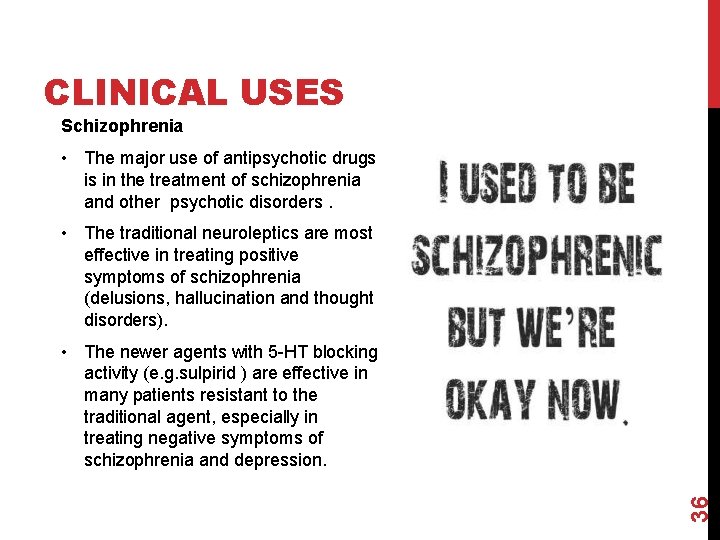
CLINICAL USES Schizophrenia • The major use of antipsychotic drugs is in the treatment of schizophrenia and other psychotic disorders. • The traditional neuroleptics are most effective in treating positive symptoms of schizophrenia (delusions, hallucination and thought disorders). 36 • The newer agents with 5 -HT blocking activity (e. g. sulpirid ) are effective in many patients resistant to the traditional agent, especially in treating negative symptoms of schizophrenia and depression.
CLINCAL USES • Nausea and Vomiting : • The neuroleptics (most commonly prochlor-perazine), are useful in treatment of drug induced nausea. • Other uses : • Neuroleptics are used in combination with narcotic analgetics for treatment of chronic pain with severe anxiety. • Chlorpromazine is used to treat intractable hiccups. • Droperidol is a component of neuroleptanesthesia. Prometathazine is not a good antipsychotic drug, but the agent is used in treating pruritus because of its antihistaminic properties. 37 •
38