
1 Modular Telephony Hardware Design How separating interfaces




- Slides: 19
1
Modular Telephony Hardware Design How separating interfaces improves reliability and reduces costs
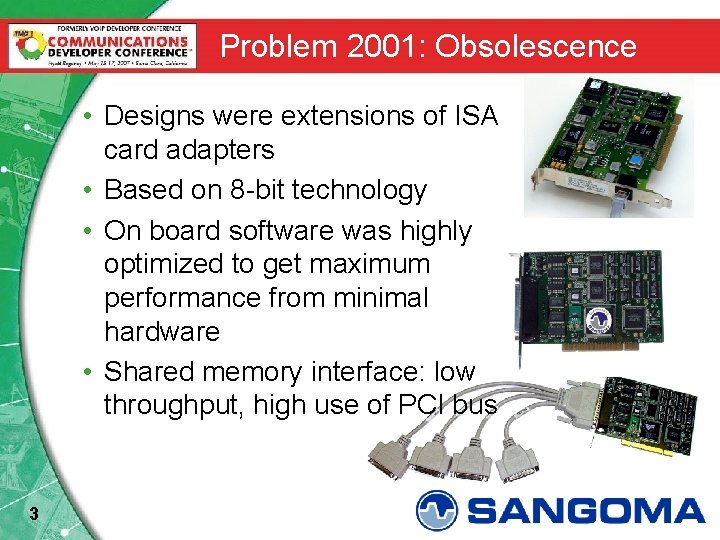
Problem 2001: Obsolescence • Designs were extensions of ISA card adapters • Based on 8 -bit technology • On board software was highly optimized to get maximum performance from minimal hardware • Shared memory interface: low throughput, high use of PCI bus 3
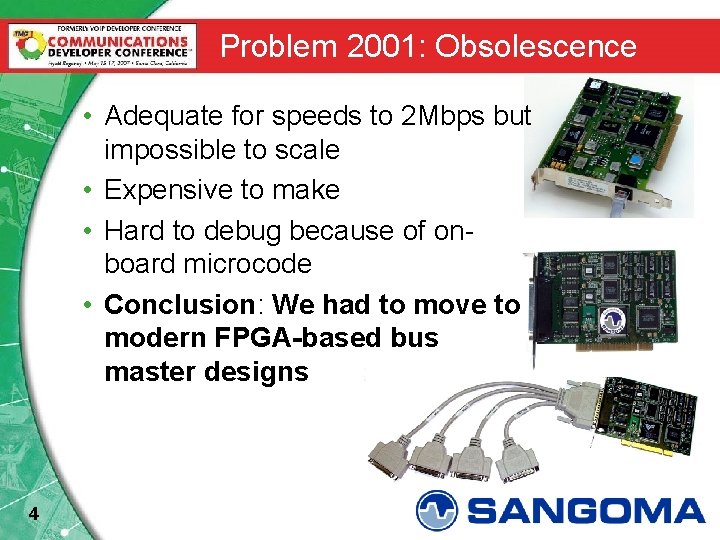
Problem 2001: Obsolescence • Adequate for speeds to 2 Mbps but impossible to scale • Expensive to make • Hard to debug because of onboard microcode • Conclusion: We had to move to modern FPGA-based bus master designs 4
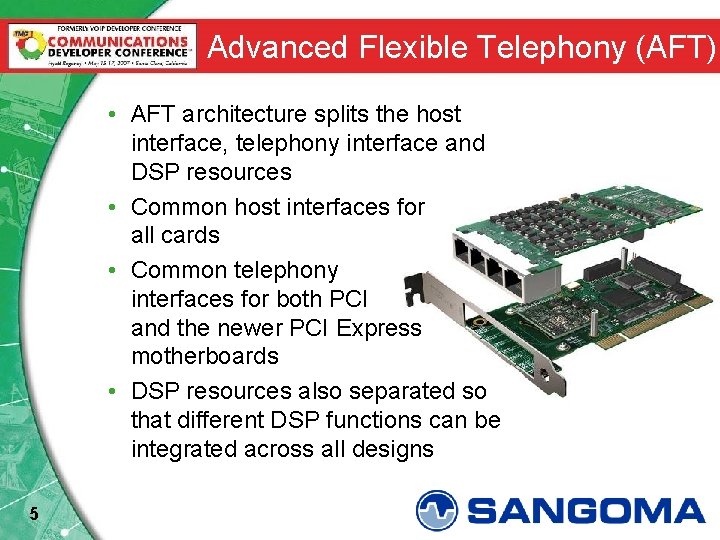
Advanced Flexible Telephony (AFT) • AFT architecture splits the host interface, telephony interface and DSP resources • Common host interfaces for all cards • Common telephony interfaces for both PCI and the newer PCI Express motherboards • DSP resources also separated so that different DSP functions can be integrated across all designs 5
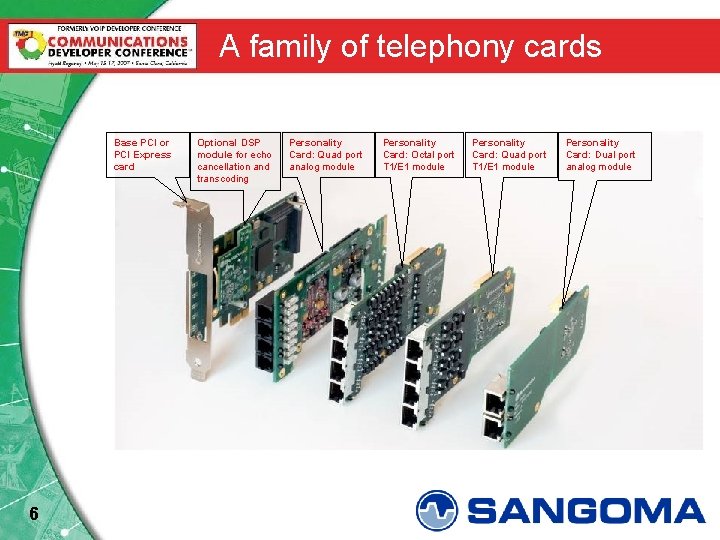
A family of telephony cards Base PCI or PCI Express card 6 Optional DSP module for echo cancellation and transcoding Personality Card: Quad port analog module Personality Card: Octal port T 1/E 1 module Personality Card: Quad port T 1/E 1 module Personality Card: Dual port analog module
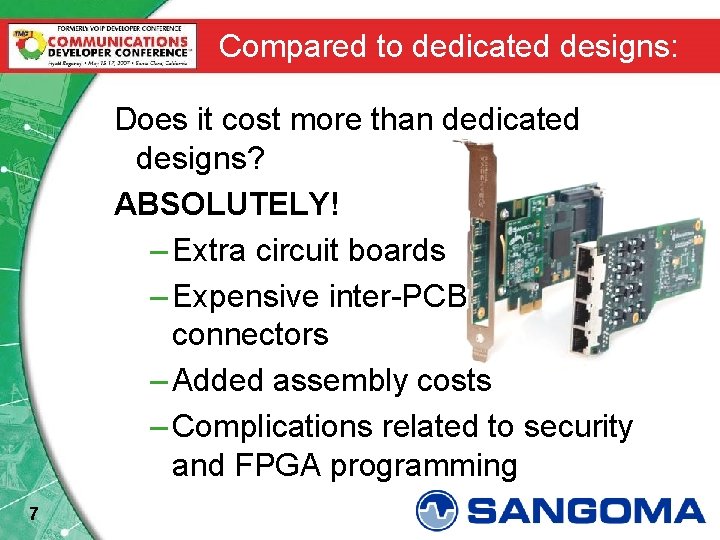
Compared to dedicated designs: Does it cost more than dedicated designs? ABSOLUTELY! – Extra circuit boards – Expensive inter-PCB connectors – Added assembly costs – Complications related to security and FPGA programming 7
WHAT DO WE GET FOR THE MONEY? ? ? 8
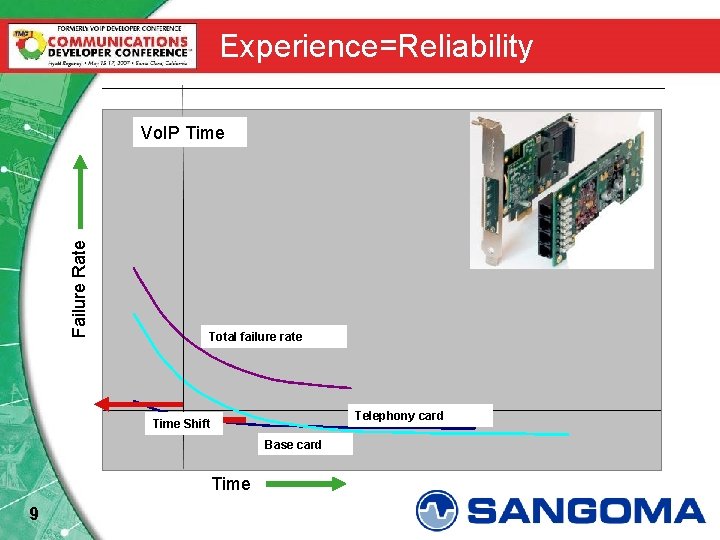
Experience=Reliability Failure Rate Vo. IP Time Total failure rate Telephony card Time Shift Base card Time 9 Base card
So for a start we get a lot better reliability for the money! 10
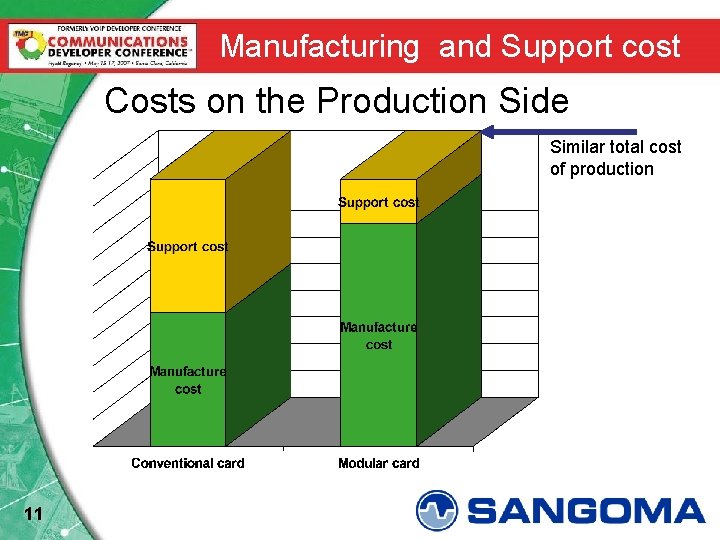
Manufacturing and Support cost Costs on the Production Side Similar total cost of production 11
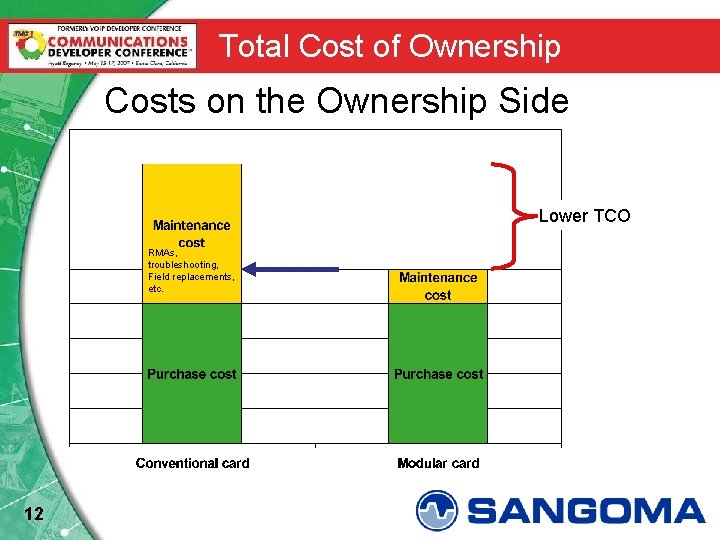
Total Cost of Ownership Costs on the Ownership Side Lower TCO RMAs, troubleshooting, Field replacements, etc. 12
Manufacturing management • Sangoma sells 30+ different card/Telco combinations, for example the A 101 single T 1/E 1 card has four variations: – – A 101 PCI with hardware EC A 101 PCI Express with hardware EC • Total volume of all cards is high, but volumes of individual products can be very small • Inventory control, manufacturing management and parts ordering would be a huge job for 35+ designs. 13
Manufacturing management (2) • Because of the modular design there are much fewer manufactured circuit boards than products, leading to large production volumes. • Statistically, it is much easier to predict the demand for large volumes than small volumes • Commonality of parts makes for easier ordering processes • The result is that we are much more likely to be able to supply from stock, especially for items that are less popular 14
We also get better stock and Manufacturing Control 15
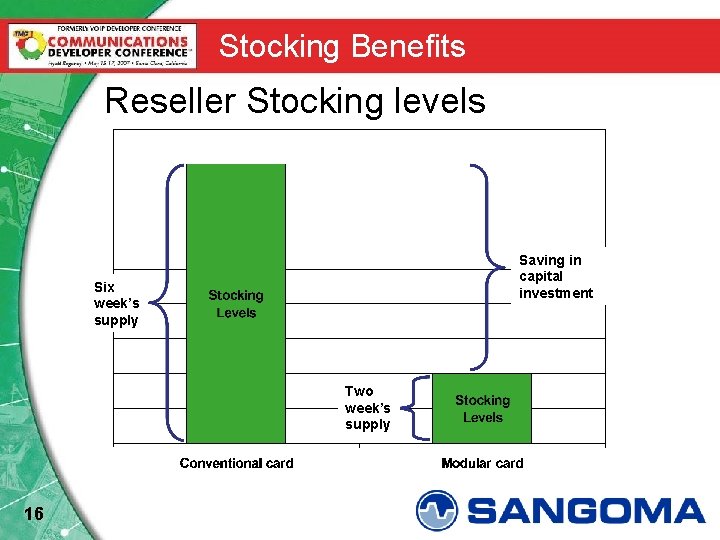
Stocking Benefits Reseller Stocking levels Saving in capital investment Six week’s supply Two week’s supply 16
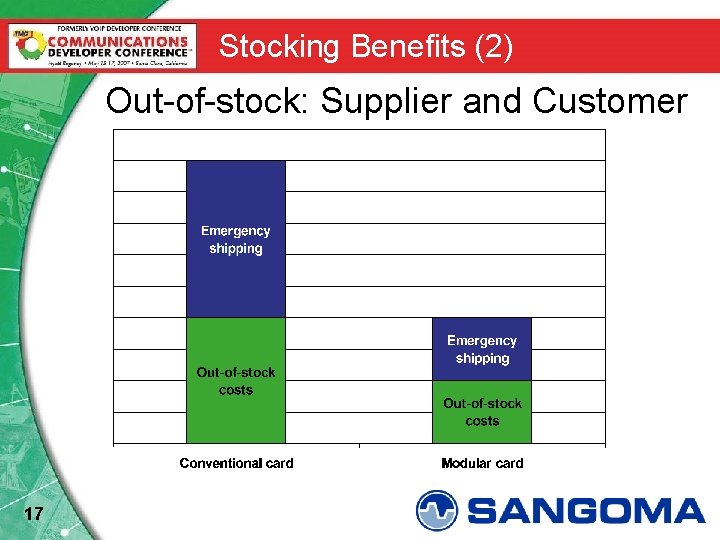
Stocking Benefits (2) Out-of-stock: Supplier and Customer 17
Conclusions: • Modular telephony card construction has higher manufacturing costs • Reduced support costs allow us to sell these expensive cards competitively • Additional hard cost benefits accrue to both the supplier and the customer in terms of: – Lower support costs for VARs, OEMs and customers – Reduced capital expenditure in standing inventory – Fewer out-of-stock occurrences, leading to lower irritation factor and lower shipping costs. 18
Questions? 19