
1 Modeling and validation of coal combustion in
1 Modeling and validation of coal combustion in a circulating fluidized bed using Eulerian-Lagrangian approach U. S. Department of Energy, National Energy Technology Laboratory (NETL) 2015 Workshop on Multiphase Flow Science August 12, 2014 Allan Runstedtler, Haining Gao, Patrick Boisvert
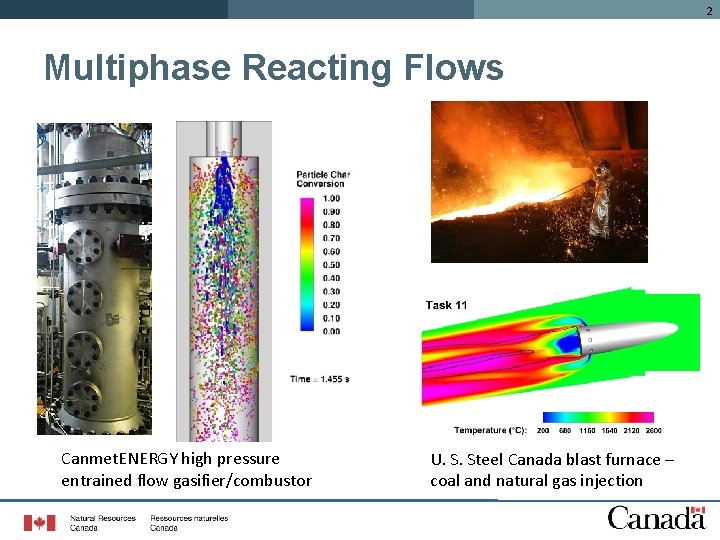
2 Multiphase Reacting Flows Canmet. ENERGY high pressure entrained flow gasifier/combustor U. S. Steel Canada blast furnace – coal and natural gas injection
3 Fluid Bed Combustion § Improve efficiency and cost of CCS by 20+% compared to conventional PC boilers with 98% capture § Oxy-Pressurized Fluid Bed Combustion (Oxy-PFBC) § § § < 30% electricity cost increase High efficiency Fuel flexibility Power and steam Low water consumption § Pressurized Chemical Looping Combustion (PCLC) § § Shale gas, fuel gas and asphaltene, coke High efficiency H 2, power and steam Flexible operating pressure
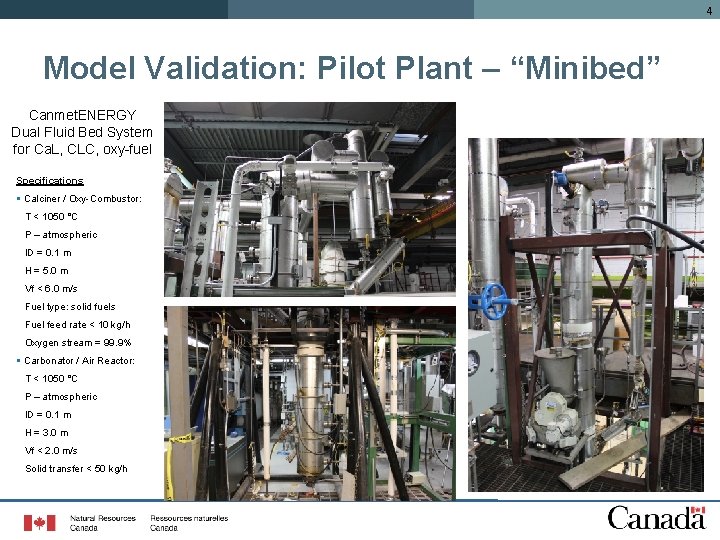
4 Model Validation: Pilot Plant – “Minibed” Canmet. ENERGY Dual Fluid Bed System for Ca. L, CLC, oxy-fuel Specifications § Calciner / Oxy-Combustor: T < 1050 °C P – atmospheric ID = 0. 1 m H = 5. 0 m Vf < 6. 0 m/s Fuel type: solid fuels Fuel feed rate < 10 kg/h Oxygen stream = 99. 9% § Carbonator / Air Reactor: T < 1050 °C P – atmospheric ID = 0. 1 m H = 3. 0 m Vf < 2. 0 m/s Solid transfer < 50 kg/h
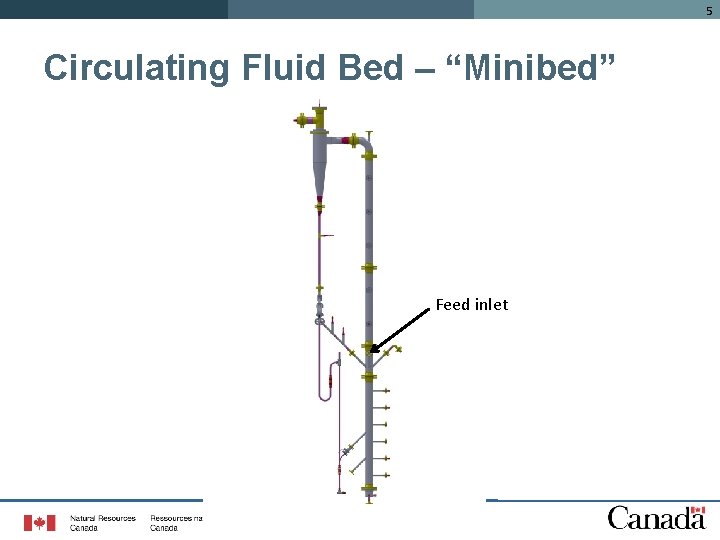
5 Circulating Fluid Bed – “Minibed” Feed inlet
6 Modeling approach: Eulerian-Lagrangian • Treat particles as particle parcels • Drag force model: Gidaspow • Particle interactions are modeled using granular model - Granular Viscosity: Gidaspow - Granular Bulk Viscosity: Lun et al. - Packing limit: 0. 6 With respect to Eulerian-Eulerian calculation: Pros: Cons: • Straightforward to include • Longer calculation time particle size distribution • Restrictions on computational • Straightforward to setup grid heterogeneous reactions • More challenging to achieve numerical stability
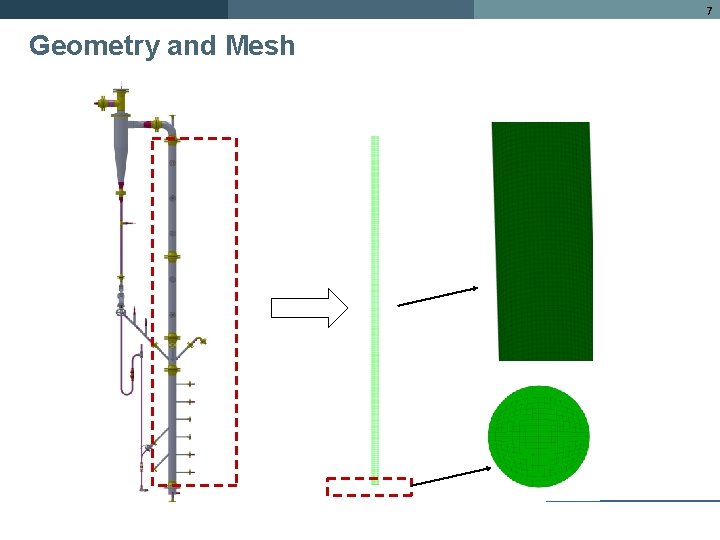
7 Geometry and Mesh
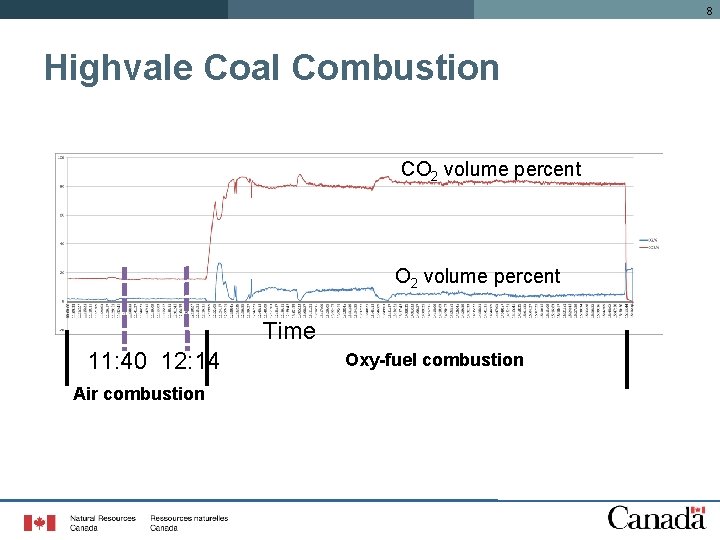
8 Highvale Coal Combustion CO 2 volume percent Time 11: 40 12: 14 Air combustion Oxy-fuel combustion
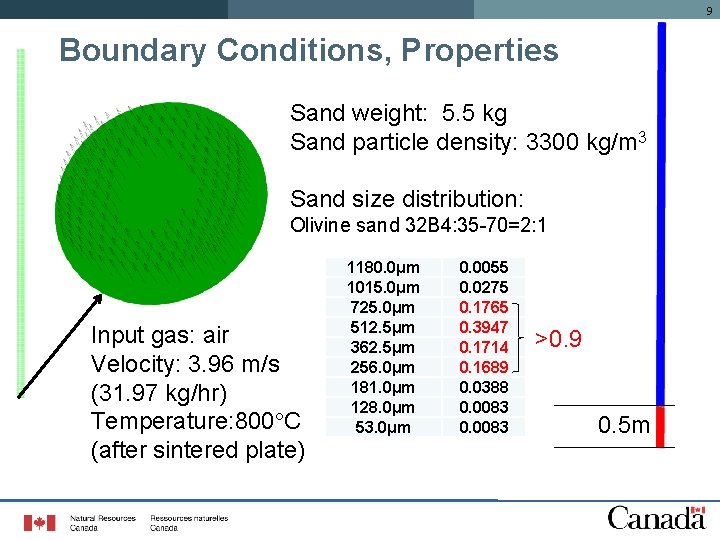
9 Boundary Conditions, Properties Sand weight: 5. 5 kg Sand particle density: 3300 kg/m 3 Sand size distribution: Olivine sand 32 B 4: 35 -70=2: 1 Input gas: air Velocity: 3. 96 m/s (31. 97 kg/hr) Temperature: 800°C (after sintered plate) 1180. 0μm 1015. 0μm 725. 0μm 512. 5μm 362. 5μm 256. 0μm 181. 0μm 128. 0μm 53. 0μm 0. 0055 0. 0275 0. 1765 0. 3947 0. 1714 0. 1689 0. 0388 0. 0083 >0. 9 0. 5 m
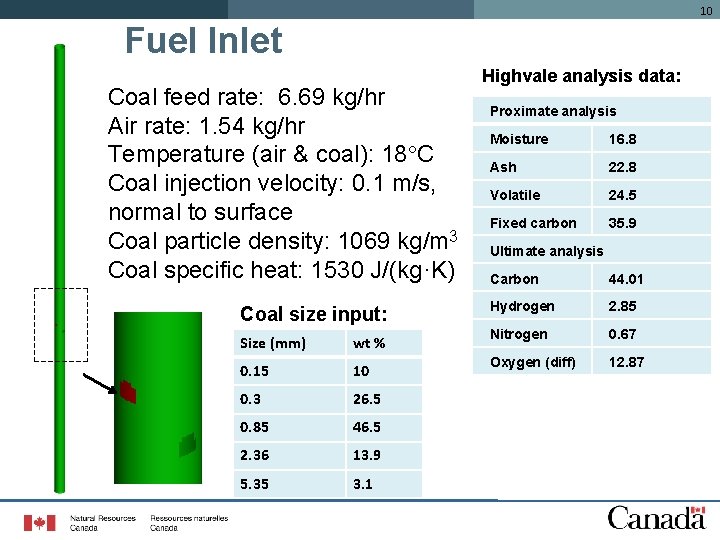
10 Fuel Inlet Coal feed rate: 6. 69 kg/hr Air rate: 1. 54 kg/hr Temperature (air & coal): 18°C Coal injection velocity: 0. 1 m/s, normal to surface Coal particle density: 1069 kg/m 3 Coal specific heat: 1530 J/(kg·K) Highvale analysis data: Proximate analysis Moisture 16. 8 Ash 22. 8 Volatile 24. 5 Fixed carbon 35. 9 Ultimate analysis Carbon 44. 01 Coal size input: Hydrogen 2. 85 Size (mm) wt % Nitrogen 0. 67 0. 15 10 Oxygen (diff) 12. 87 0. 3 26. 5 0. 85 46. 5 2. 36 13. 9 5. 35 3. 1
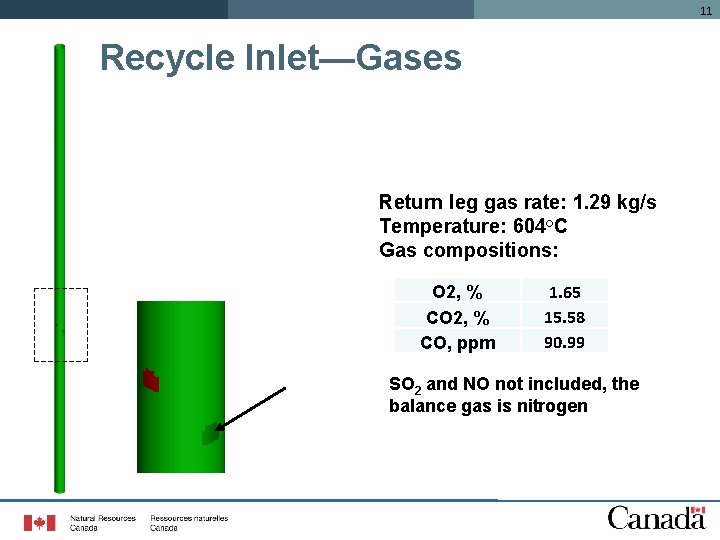
11 Recycle Inlet—Gases Return leg gas rate: 1. 29 kg/s Temperature: 604°C Gas compositions: O 2, % CO, ppm 1. 65 15. 58 90. 99 SO 2 and NO not included, the balance gas is nitrogen
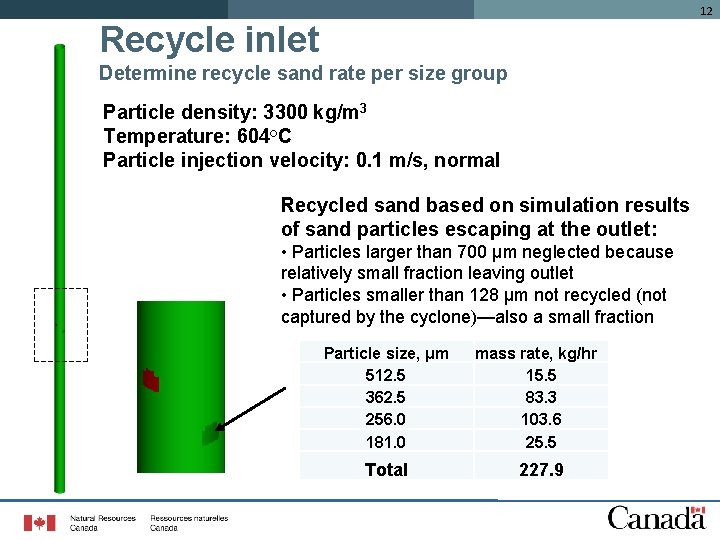
12 Recycle inlet Determine recycle sand rate per size group Particle density: 3300 kg/m 3 Temperature: 604°C Particle injection velocity: 0. 1 m/s, normal Recycled sand based on simulation results of sand particles escaping at the outlet: • Particles larger than 700 µm neglected because relatively small fraction leaving outlet • Particles smaller than 128 µm not recycled (not captured by the cyclone)—also a small fraction Particle size, μm 512. 5 362. 5 256. 0 181. 0 Total mass rate, kg/hr 15. 5 83. 3 103. 6 25. 5 227. 9
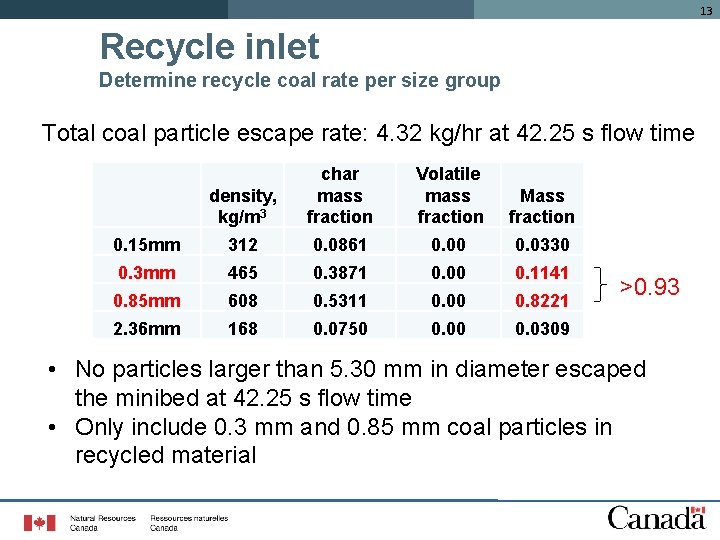
13 Recycle inlet Determine recycle coal rate per size group Total coal particle escape rate: 4. 32 kg/hr at 42. 25 s flow time density, kg/m 3 char mass fraction Volatile mass fraction Mass fraction 0. 15 mm 312 0. 0861 0. 00 0. 0330 0. 3 mm 465 0. 3871 0. 00 0. 1141 0. 85 mm 608 0. 5311 0. 00 0. 8221 2. 36 mm 168 0. 0750 0. 0309 >0. 93 • No particles larger than 5. 30 mm in diameter escaped the minibed at 42. 25 s flow time • Only include 0. 3 mm and 0. 85 mm coal particles in recycled material
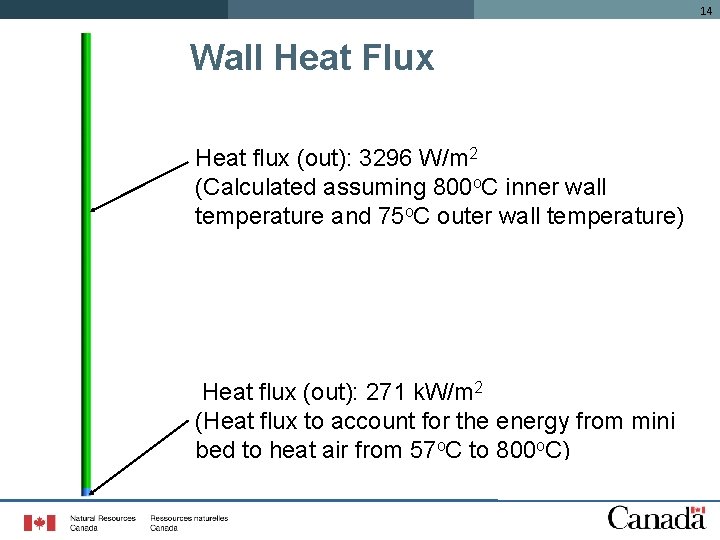
14 Wall Heat Flux Heat flux (out): 3296 W/m 2 (Calculated assuming 800 o. C inner wall temperature and 75 o. C outer wall temperature) Heat flux (out): 271 k. W/m 2 (Heat flux to account for the energy from mini bed to heat air from 57 o. C to 800 o. C)
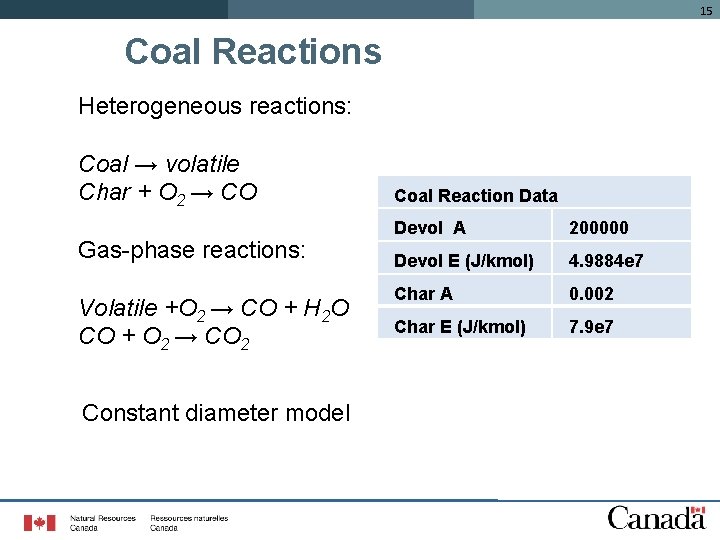
15 Coal Reactions Heterogeneous reactions: Coal → volatile Char + O 2 → CO Gas-phase reactions: Volatile +O 2 → CO + H 2 O CO + O 2 → CO 2 Constant diameter model Coal Reaction Data Devol A 200000 Devol E (J/kmol) 4. 9884 e 7 Char A 0. 002 Char E (J/kmol) 7. 9 e 7
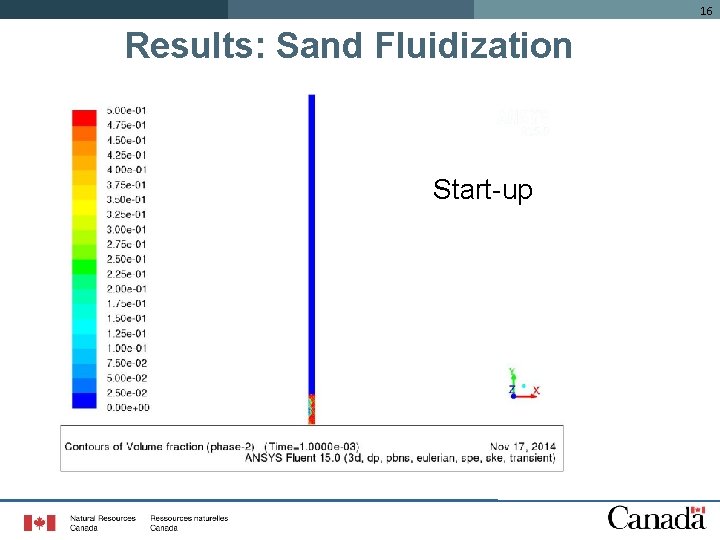
16 Results: Sand Fluidization Start-up
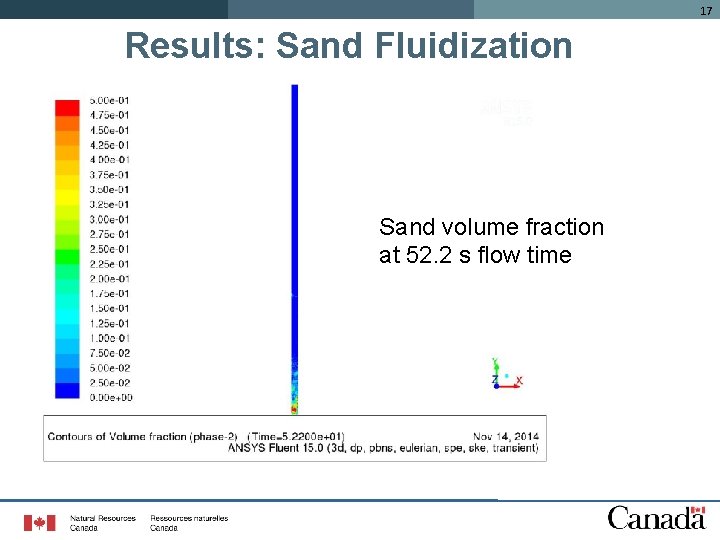
17 Results: Sand Fluidization Sand volume fraction at 52. 2 s flow time
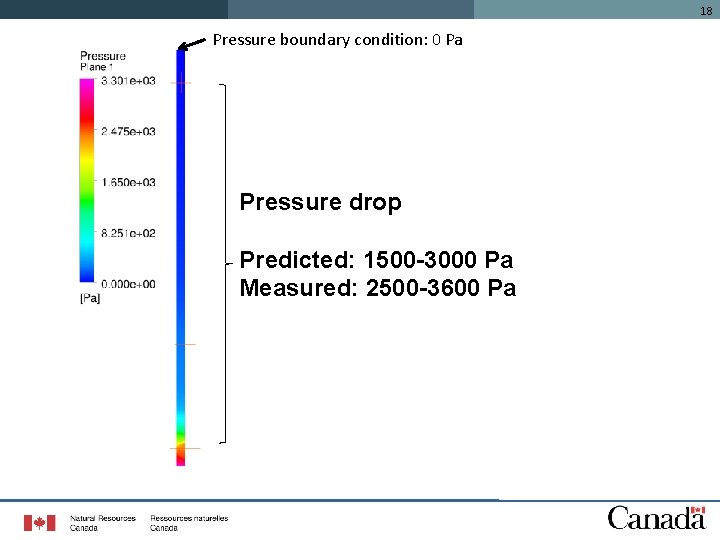
18 Pressure boundary condition: 0 Pa Pressure drop Predicted: 1500 -3000 Pa Measured: 2500 -3600 Pa
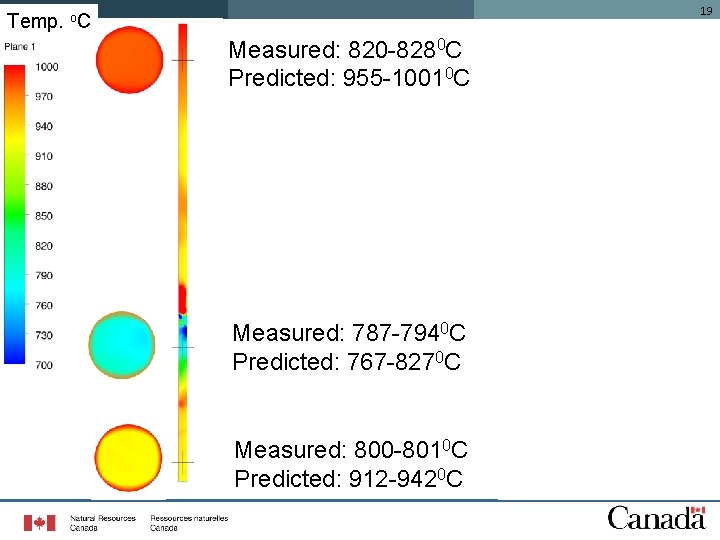
19 Temp. o. C Measured: 820 -8280 C Predicted: 955 -10010 C Measured: 787 -7940 C Predicted: 767 -8270 C Measured: 800 -8010 C Predicted: 912 -9420 C
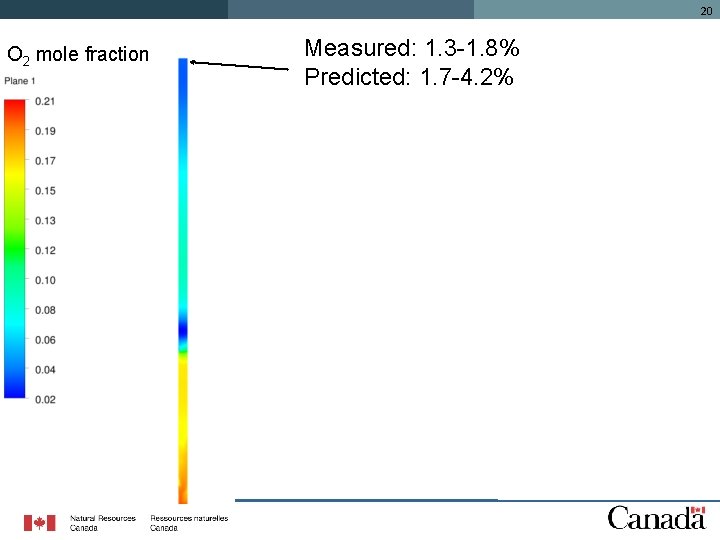
20 O 2 mole fraction Measured: 1. 3 -1. 8% Predicted: 1. 7 -4. 2%
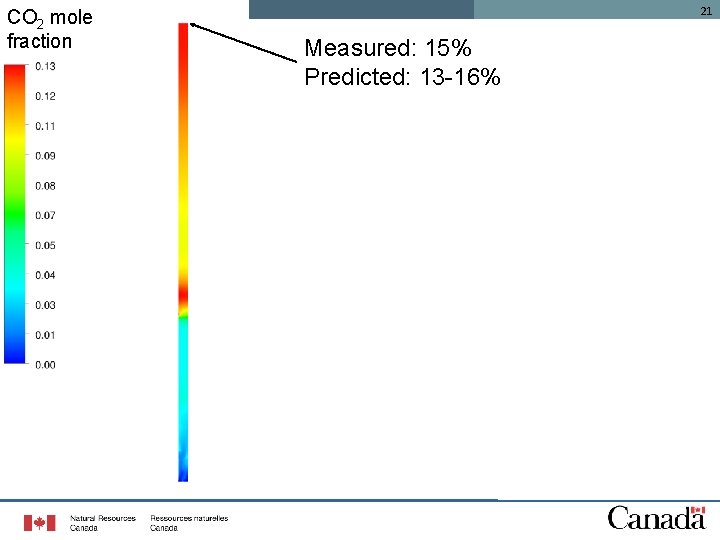
CO 2 mole fraction 21 Measured: 15% Predicted: 13 -16%
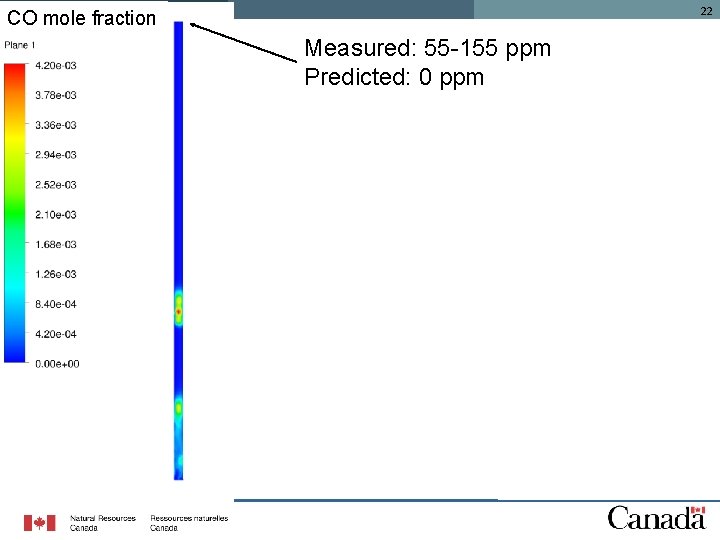
22 CO mole fraction Measured: 55 -155 ppm Predicted: 0 ppm
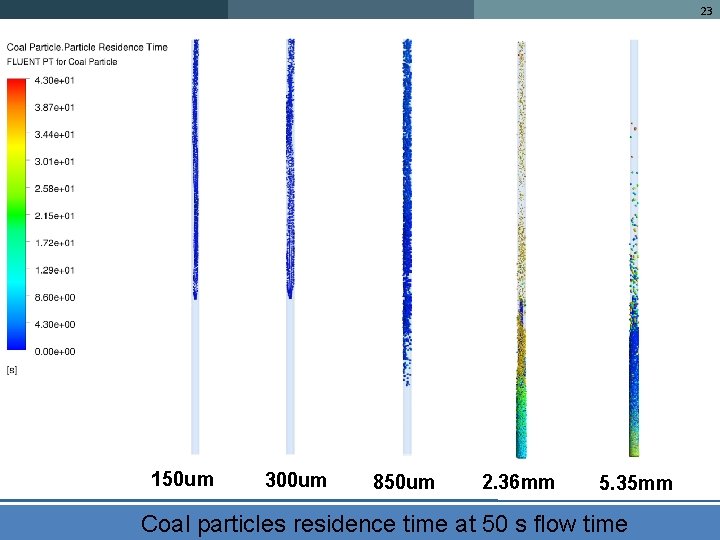
23 150 um 300 um 850 um 2. 36 mm 5. 35 mm Coal particles residence time at 50 s flow time
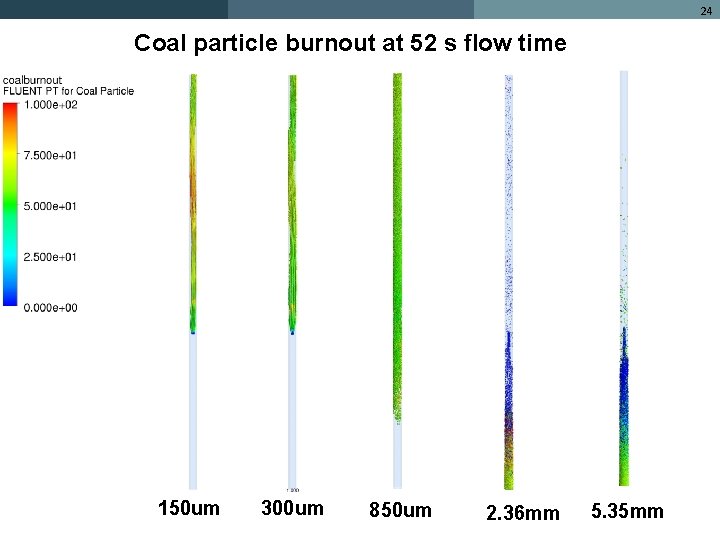
24 Coal particle burnout at 52 s flow time 1 2 3 150 um 300 um 850 um 2. 36 mm 5. 35 mm
25 Summary • The modeling approach has demonstrated its capacity to predict complicated fluidized bed coal combustion operation. • Various input conditions need further verification such as size distributions for coal and sand, and coal reaction data. • Different drag laws, particle interaction models need further investigation. • The simulation time is very long.
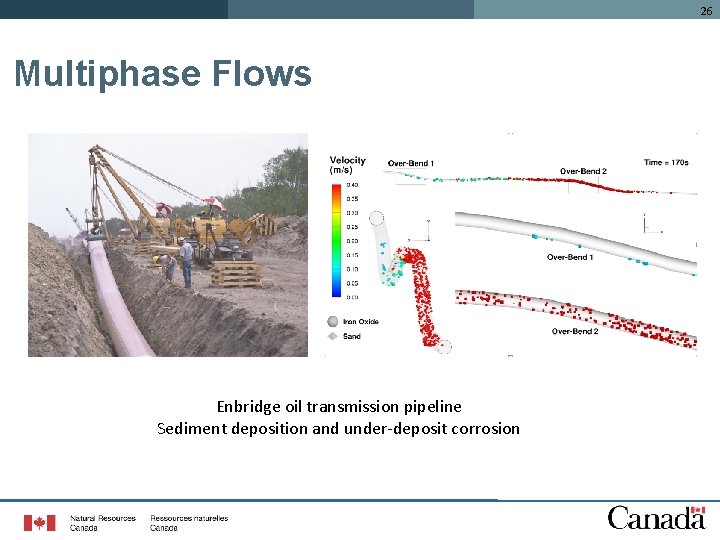
26 Multiphase Flows Enbridge oil transmission pipeline Sediment deposition and under-deposit corrosion
- Slides: 26