
1 Marketing Managing Profitable Customer Relationships What Is
1 Marketing: Managing Profitable Customer Relationships
What Is Marketing? • Simple Definition: Marketing is managing profitable customer relationships. Goals: 1. Attract new customers by promising superior value. 2. Keep and grow current customers by delivering satisfaction. 1 -1
Marketing Old vs. New Old view of marketing: Making a sale “Telling and Selling” New view of marketing: Satisfying customer needs 1 -2
Marketing Defined A social and managerial process by which individuals and groups obtain what they need and want through creating and exchanging products and value with others. 1 -3
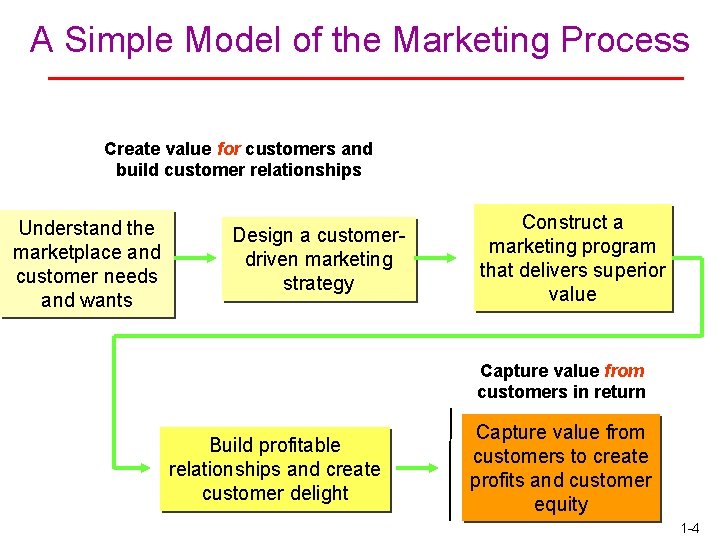
A Simple Model of the Marketing Process Create value for customers and build customer relationships Understand the marketplace and customer needs and wants Design a customerdriven marketing strategy Construct a marketing program that delivers superior value Capture value from customers in return Build profitable relationships and create customer delight Capture value from customers to create profits and customer equity 1 -4
What are Consumers’ Needs, Wants, and Demands?
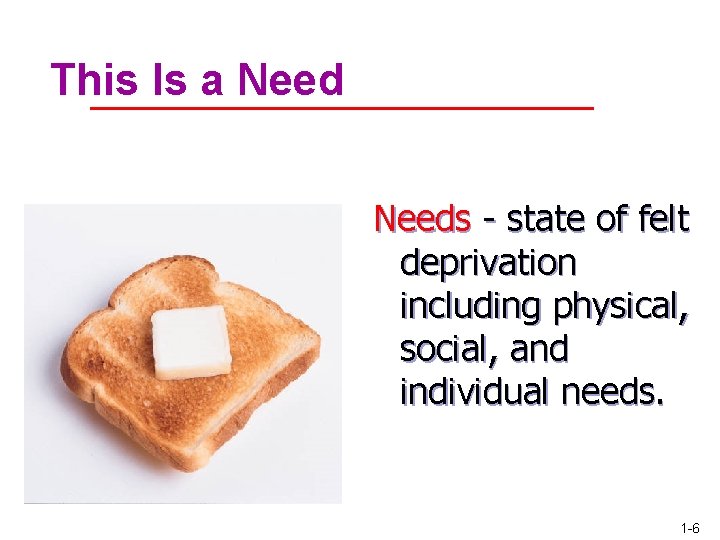
This Is a Needs - state of felt deprivation including physical, social, and individual needs. 1 -6
Types of Needs • Physical: – Food, clothing, shelter, safety • Social: – Belonging, affection • Individual: – Learning, knowledge, self-expression 1 -7
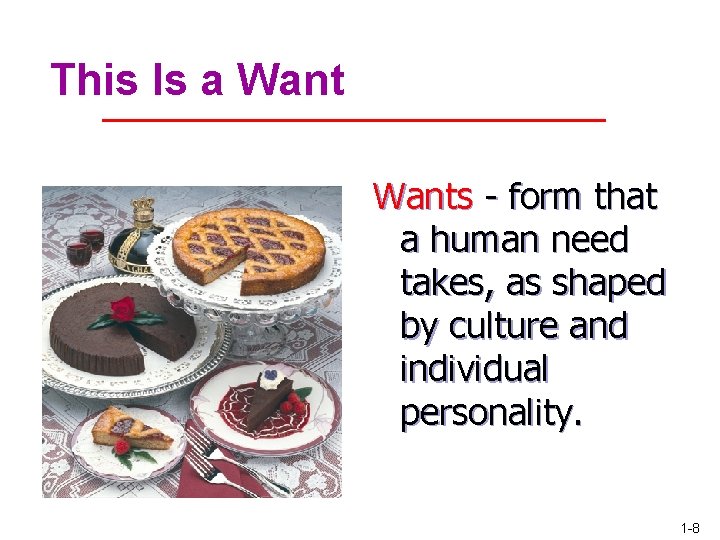
This Is a Wants - form that a human need takes, as shaped by culture and individual personality. 1 -8
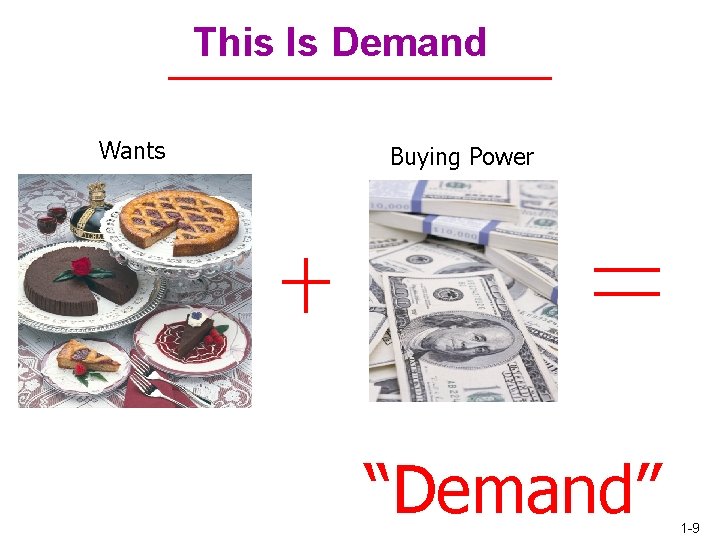
This Is Demand Wants Buying Power “Demand” 1 -9
Need / Want Fulfillment • Needs and Wants Fulfilled through a Marketing Offer : – Some combination of products, services, information, or experiences offered to a market to satisfy a need or want. 1 -10
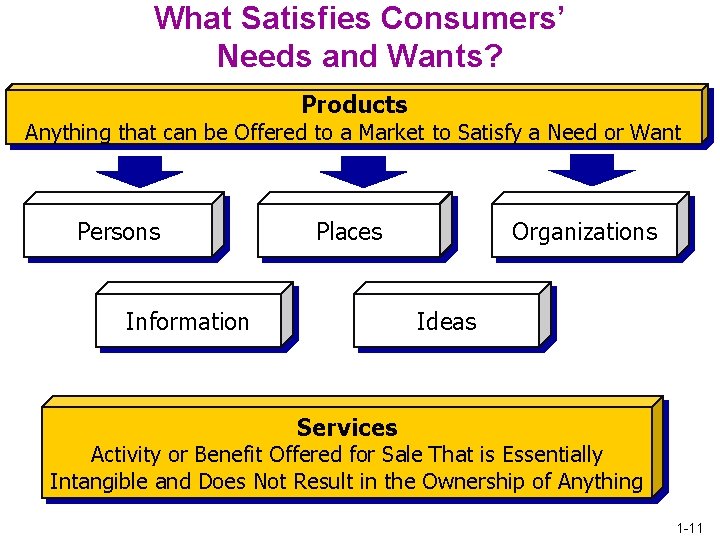
What Satisfies Consumers’ Needs and Wants? Products Anything that can be Offered to a Market to Satisfy a Need or Want Persons Places Information Organizations Ideas Services Activity or Benefit Offered for Sale That is Essentially Intangible and Does Not Result in the Ownership of Anything 1 -11
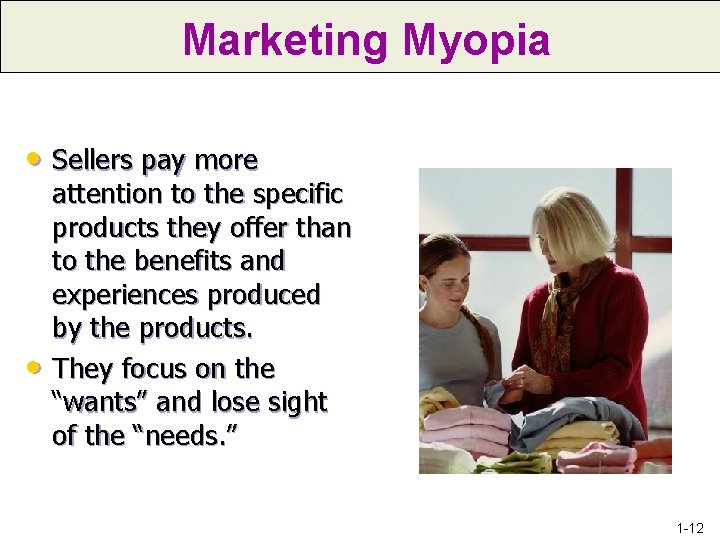
Marketing Myopia • Sellers pay more • attention to the specific products they offer than to the benefits and experiences produced by the products. They focus on the “wants” and lose sight of the “needs. ” 1 -12
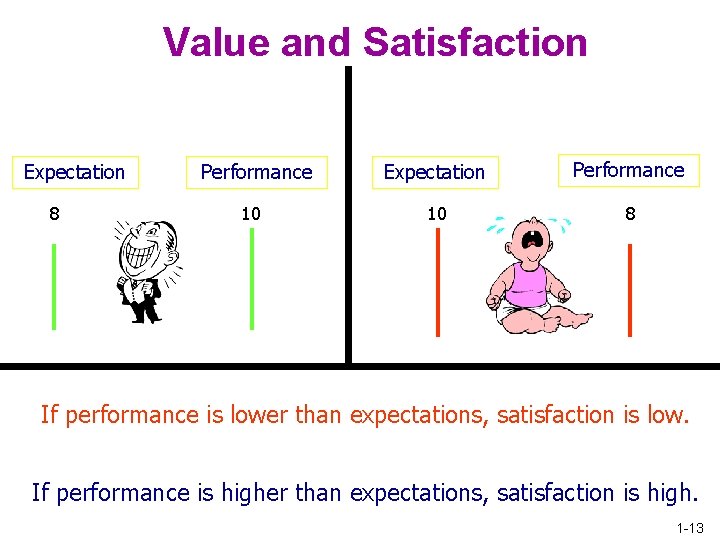
Value and Satisfaction Expectation 8 Performance 10 Expectation Performance 10 8 If performance is lower than expectations, satisfaction is low. If performance is higher than expectations, satisfaction is high. 1 -13
Exchange vs. Transaction • Exchange: – Act of obtaining a desired object from someone by offering something in return. • Transaction: – A trade of values between two parties. – One party gives X to another party and gets Y in return. Can include cash, credit, check, or barter. 1 -14
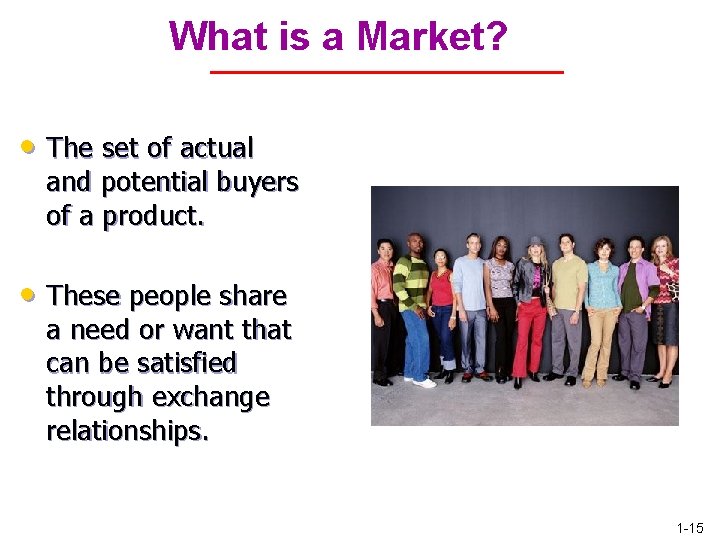
What is a Market? • The set of actual and potential buyers of a product. • These people share a need or want that can be satisfied through exchange relationships. 1 -15
Marketing Management • The art and science of choosing target markets and building profitable relationships with them. 1. Questions to ask: What customers will we serve? What is our target market? 2. How can we best serve these customers? What is our value proposition? 1 -16
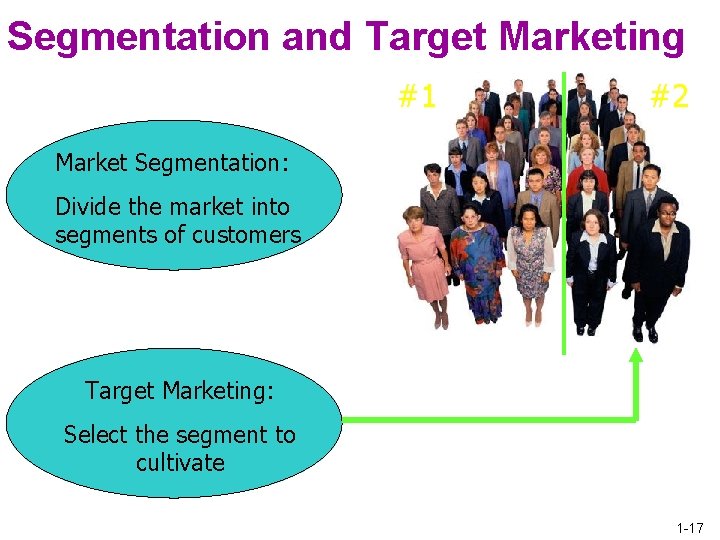
Segmentation and Target Marketing #1 #2 Market Segmentation: Divide the market into segments of customers Target Marketing: Select the segment to cultivate 1 -17
Marketing Management Demand Management Demarketing Finding and increasing demand, also changing or reducing demand such as in demarketing. Temporarily or permanently reducing the number of customers or shifting their demand. 1 -18
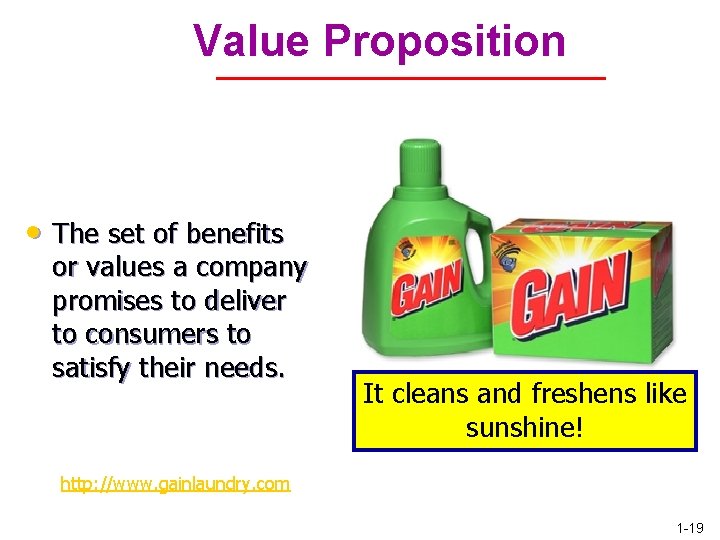
Value Proposition • The set of benefits or values a company promises to deliver to consumers to satisfy their needs. It cleans and freshens like sunshine! http: //www. gainlaundry. com 1 -19
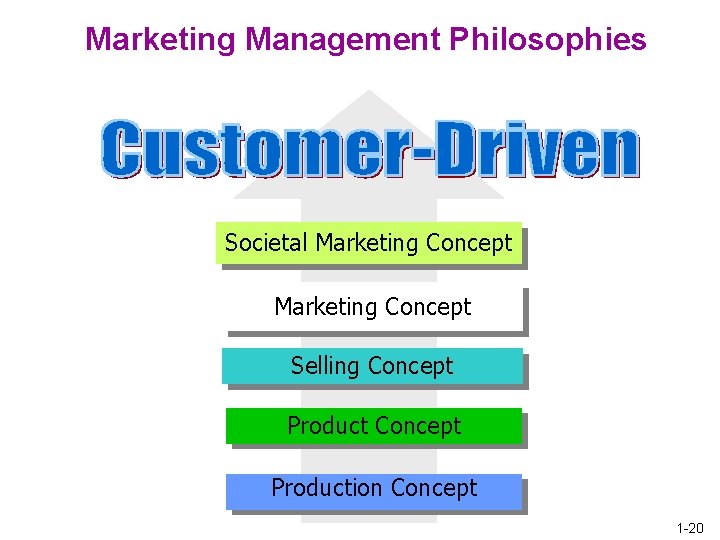
Marketing Management Philosophies Societal Marketing Concept Selling Concept Production Concept 1 -20
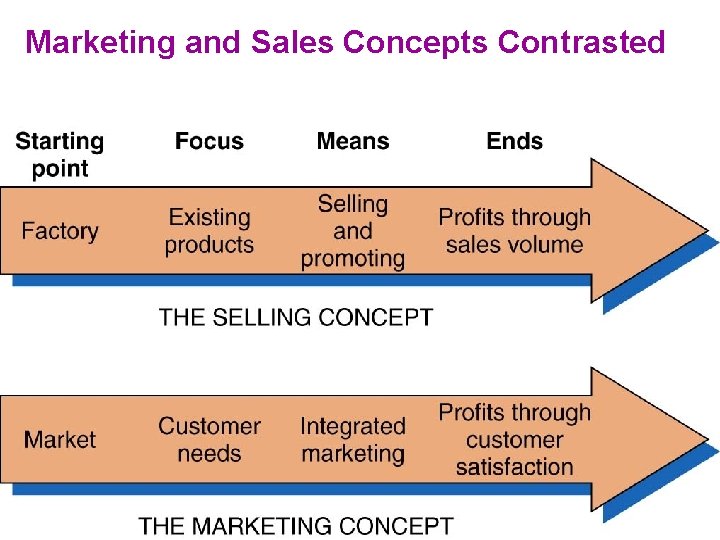
Marketing and Sales Concepts Contrasted 1 -21
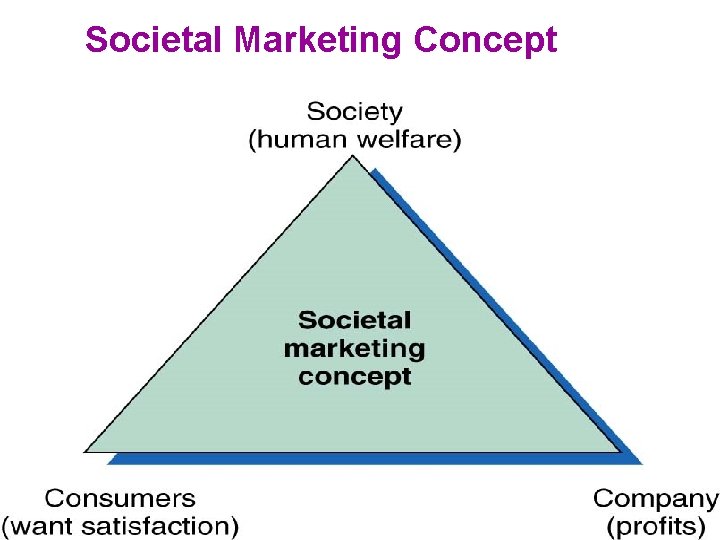
Societal Marketing Concept 1 -22
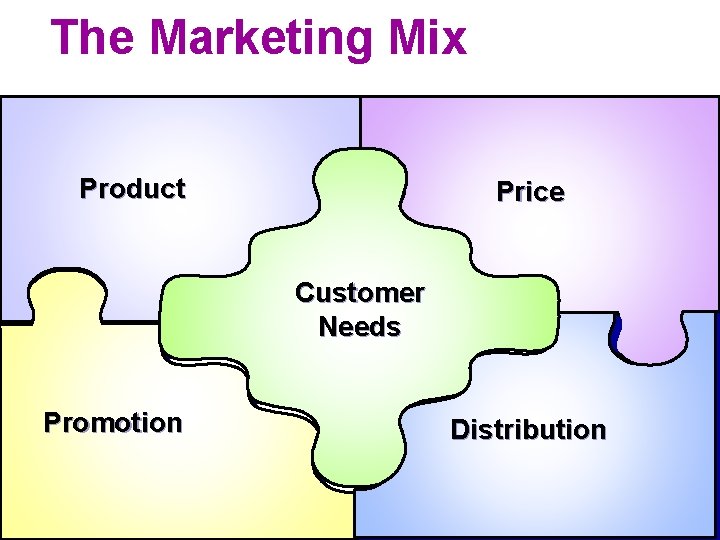
The Marketing Mix Product Price Customer Needs Promotion Distribution 1 -23
Customer Relationship Management • The process of building and maintaining profitable customer relationships by delivering superior customer value and satisfaction. 1 -24
Customer Perceived Value • Customer’s evaluation of the difference between all the benefits and all the costs of a marketing offer relative to those of competing offers. 1 -25
Customer Satisfaction • Dependent on the product’s perceived performance relative to a buyer’s expectations. 1 -26
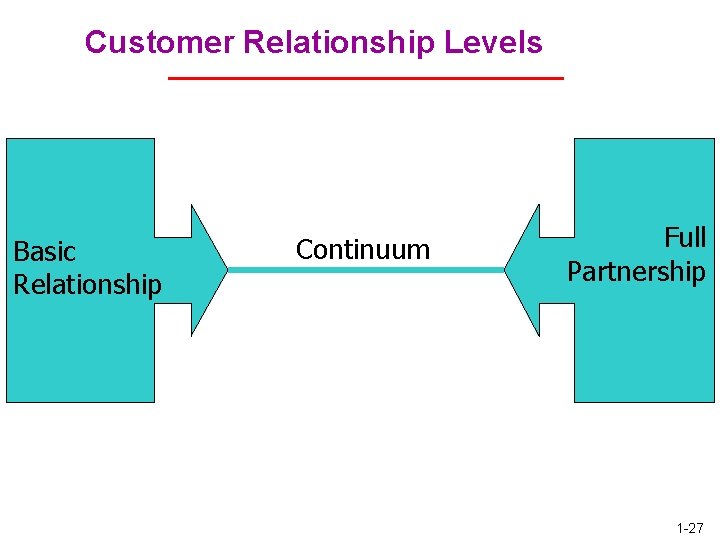
Customer Relationship Levels Basic Relationship Continuum Full Partnership 1 -27
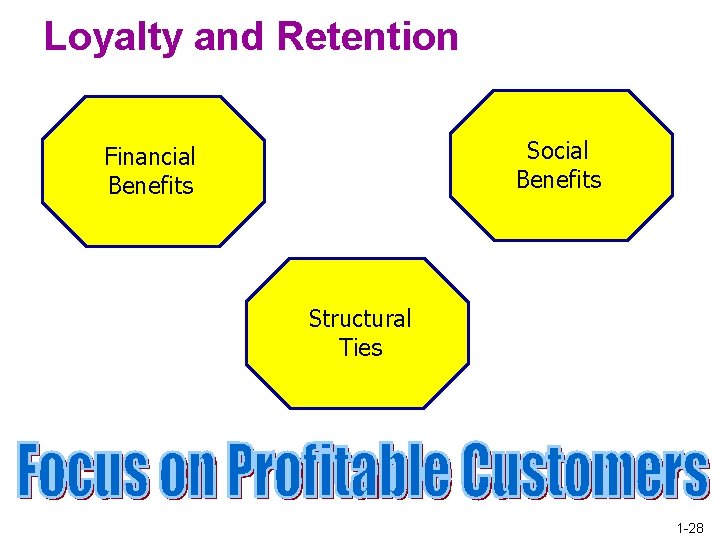
Loyalty and Retention Social Benefits Financial Benefits Structural Ties 1 -28
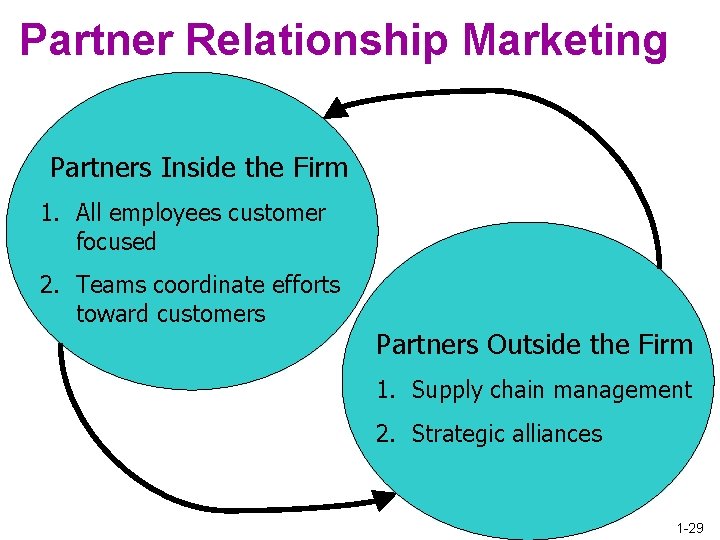
Partner Relationship Marketing Partners Inside the Firm 1. All employees customer focused 2. Teams coordinate efforts toward customers Partners Outside the Firm 1. Supply chain management 2. Strategic alliances 1 -29
Customer Loyalty & Retention • Customer Lifetime Value – The entire stream of purchases that the customer would make over a lifetime of patronage. • Share of Customer – The share a company gets of the customers purchasing in their product categories. 1 -30
Customer Equity • Customer equity is the total combined customer lifetime values of all of the company’s customers. 1 -31
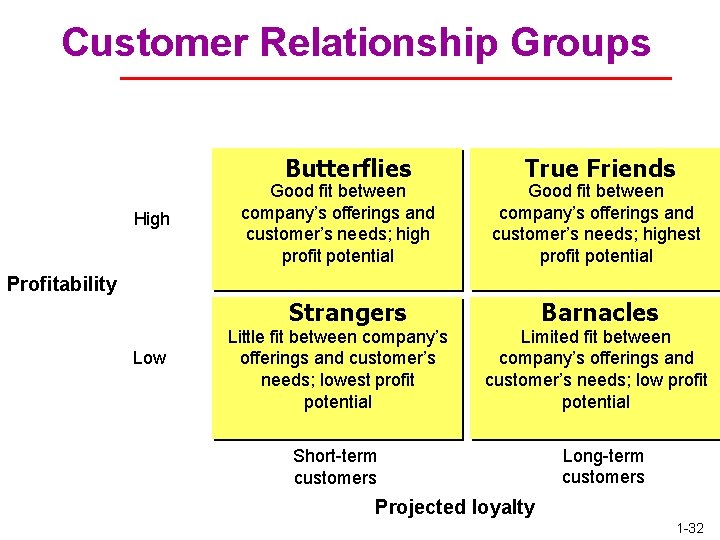
Customer Relationship Groups Butterflies High Good fit between company’s offerings and customer’s needs; high profit potential True Friends Good fit between company’s offerings and customer’s needs; highest profit potential Profitability Strangers Low Little fit between company’s offerings and customer’s needs; lowest profit potential Barnacles Limited fit between company’s offerings and customer’s needs; low profit potential Short-term customers Long-term customers Projected loyalty 1 -32
The Internet • The Internet has been hailed as the technology behind a New Economy. • Marketing applications include: – “click-and-mortar” companies – “click-only” companies – Business-to-business e-commerce • Business-to-business transactions online are expected to reach $4. 3 trillion in 2005. • By 2005, 500, 000 companies will use the Internet to do business. 1 -33
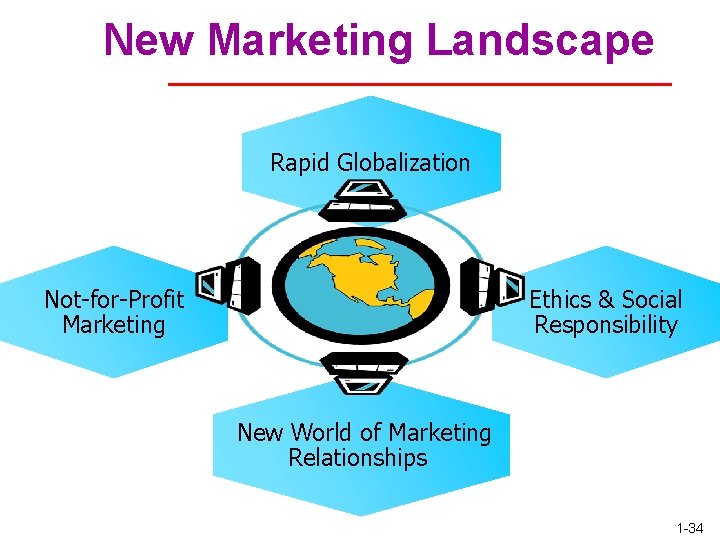
New Marketing Landscape Rapid Globalization Not-for-Profit Marketing Ethics & Social Responsibility New World of Marketing Relationships 1 -34
- Slides: 35