
1 Maps Charts and Graphs MAPS 2 WHY
- Slides: 35
1 Maps, Charts, and Graphs
MAPS 2
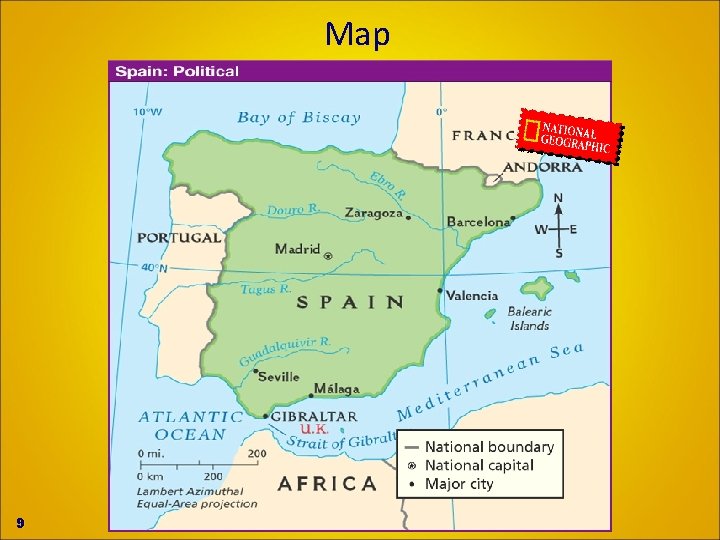
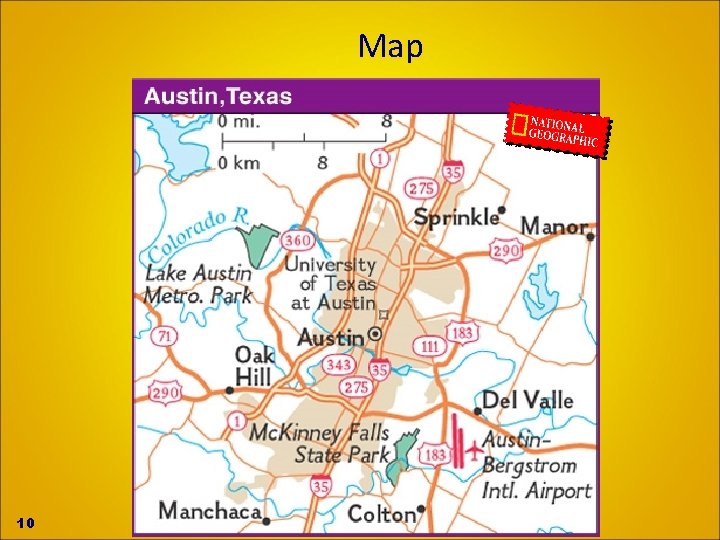
WHY MAPS ARE USEFUL l. To represent a place or area graphically l. To help locate places l. To show the physical and human features of a place 3
What can you learn from maps? l Use to study far away places l Used everyday on the news to show weather l Used even to find places in the mall l How else are maps used? 4
MAIN PARTS OF A MAP 1. Compass Rose – a map’s directional indicator 2. Scale – defines distances in a map 3. Legend – describes symbols and other items in a map 4. Lines of Latitude and Longitude – pinpoint the absolute location of map content 5
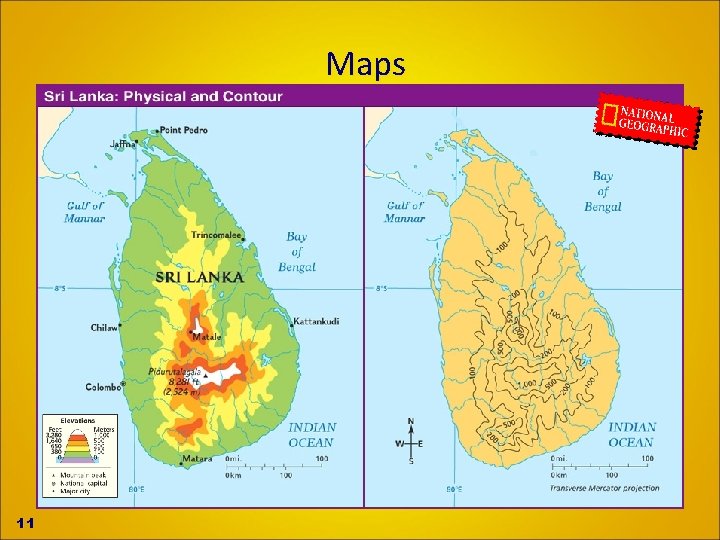
Types of Maps 1. General Purpose -Tells where places are and some information about the area Examples: *Physical maps (shows the natural features, or topography, of an area such as its mountains, valleys, rivers, and lakes) These are also called elevation maps. *Political maps (show units such as city, county, state, or country boundaries as well as some key features like mountain ranges, rivers, and bays) ( Think of general purpose maps – Think of most classroom maps) 6
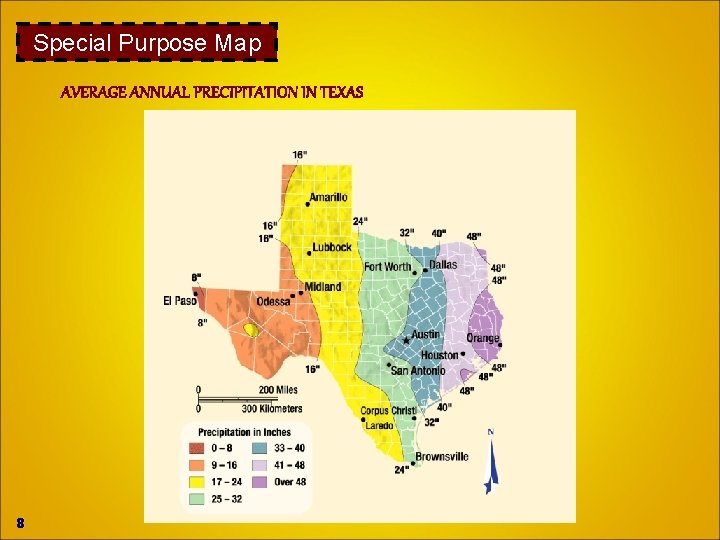
Types of Maps 2. Special Purpose Maps -Tells something specific about the area Also called Thematic Maps – show a specific topic, theme, or spatial distribution of an activity (Examples: city street maps, precipitation maps, historical maps) 7
Special Purpose Map AVERAGE ANNUAL PRECIPITATION IN TEXAS 8
Map 9
Map 10
Maps 11
Graphs and Charts 12
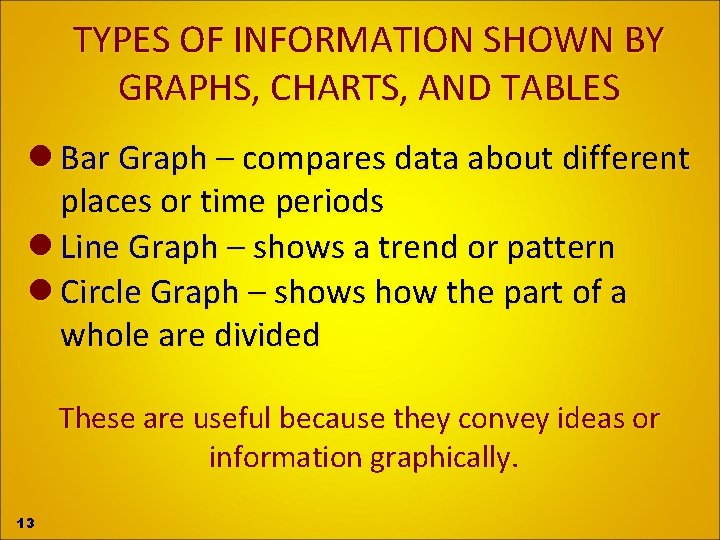
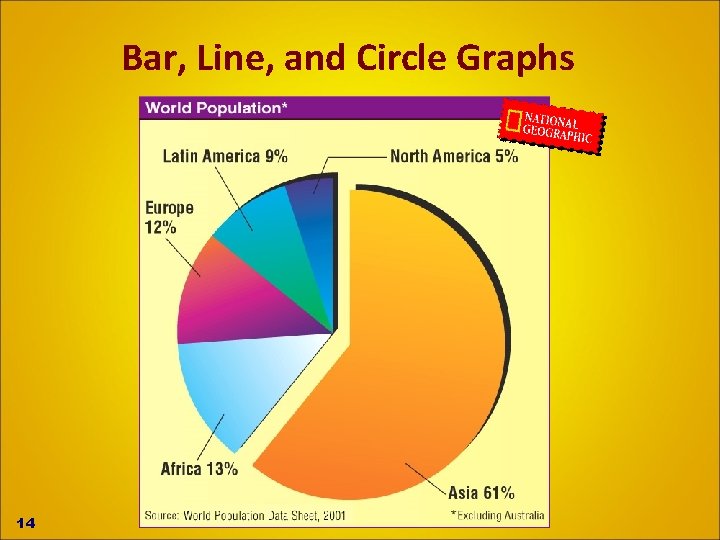
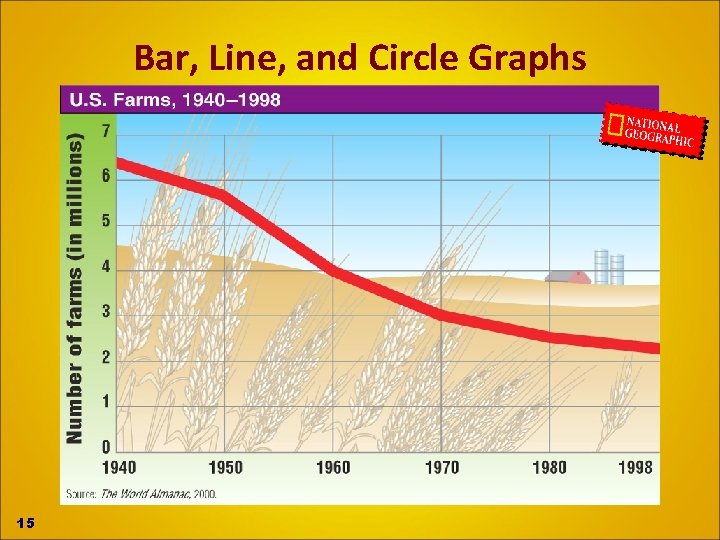
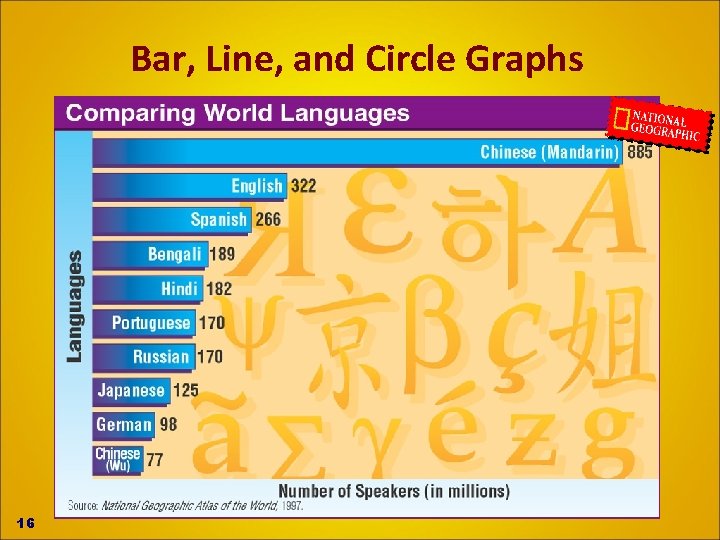
TYPES OF INFORMATION SHOWN BY GRAPHS, CHARTS, AND TABLES l Bar Graph – compares data about different places or time periods l Line Graph – shows a trend or pattern l Circle Graph – shows how the part of a whole are divided These are useful because they convey ideas or information graphically. 13
Bar, Line, and Circle Graphs 14
Bar, Line, and Circle Graphs 15
Bar, Line, and Circle Graphs 16
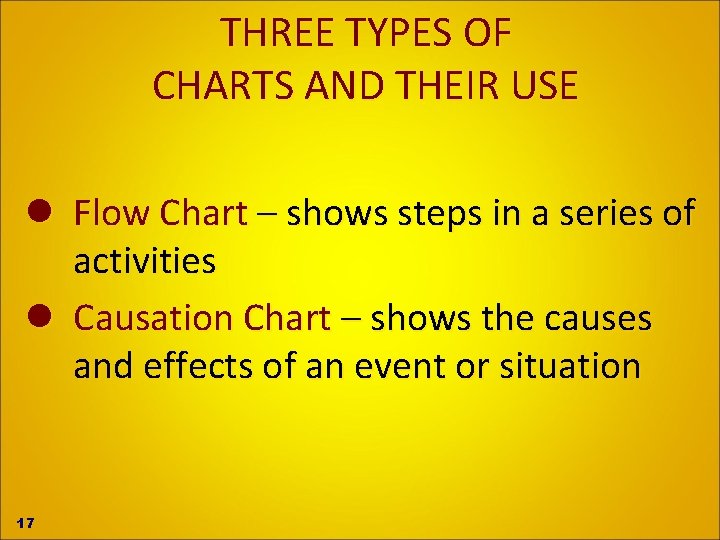
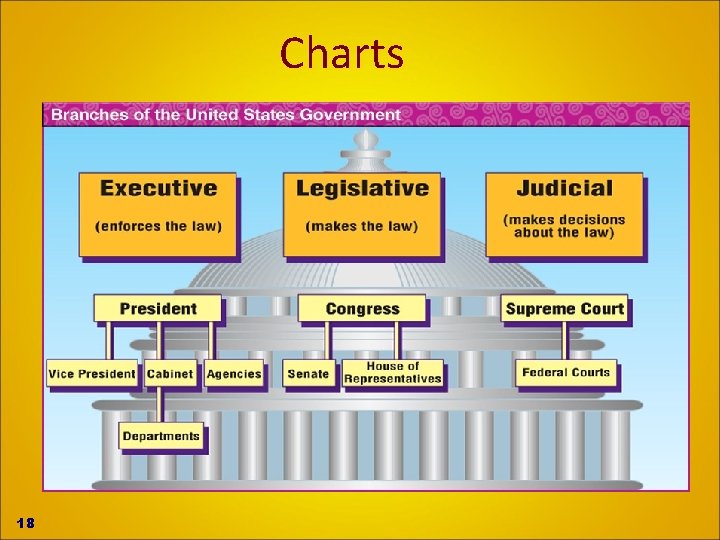
THREE TYPES OF CHARTS AND THEIR USE l Flow Chart – shows steps in a series of activities l Causation Chart – shows the causes and effects of an event or situation 17
Charts 18
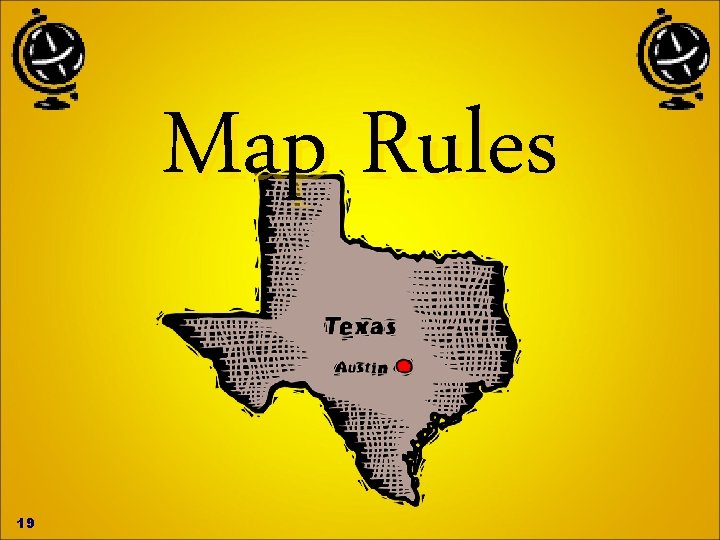
Map Rules 19
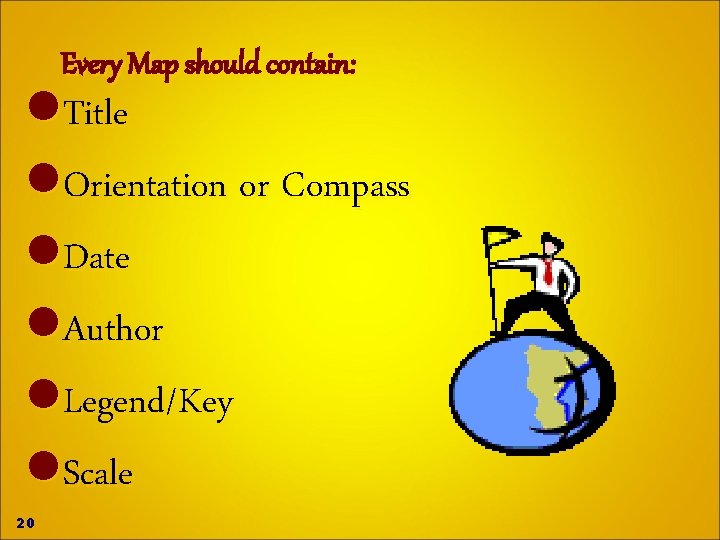
Every Map should contain: l. Title l. Orientation or Compass l. Date l. Author l. Legend/Key l. Scale 20
Use Neat Lettering! l. Always PRINT neatly l. Use pencil at first, then black ink l. Letter straight across (except rivers and mountains) l. Check Spelling!! 21
Follow Directions!! l Political Maps- color countries/states that touch different colors l Special Purpose Maps- follow the directions given l Mountains need to be colored and labeled in brown l ONLY WATER SHOULD BE COLORED BLUE!! - shade coastline in blue (1 in. border) - show rivers with a blue line 22
Use Map Symbols!! l Use a star for capitals l Use dots for other cities ALSO: l Color around the labels so they will show up. l Put paper under your map so table patterns will not show l Color in ONE direction and DO NOT SCRIBBLE!! 23
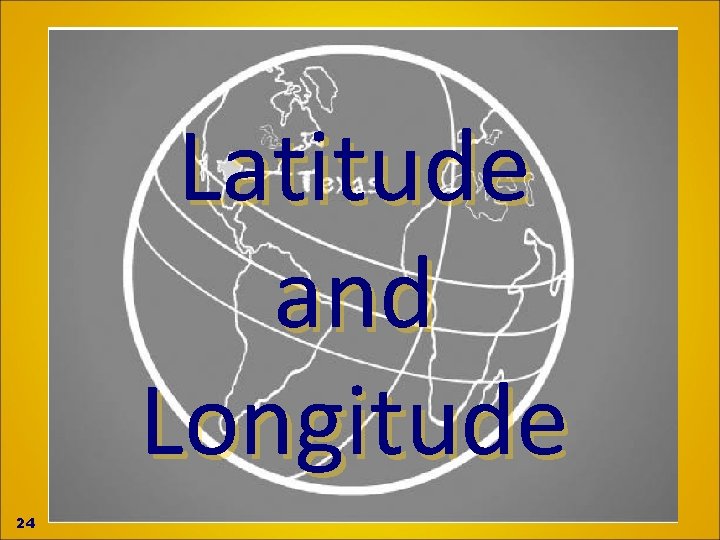
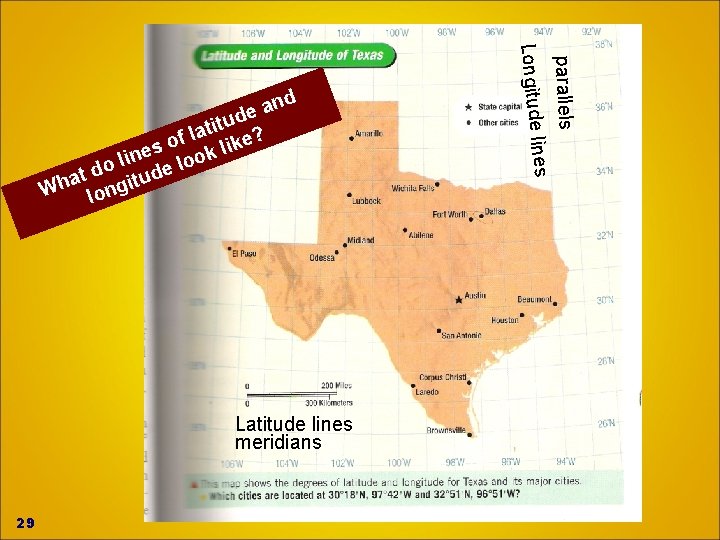
Latitude and Longitude 24
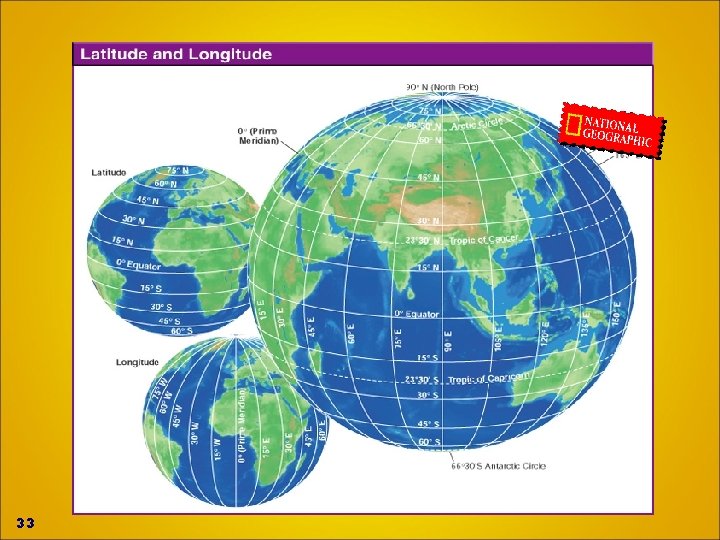
Latitude and Longitude • The Equator and the Prime Meridian are the starting points for two sets of lines used to find any location. • The letter N or S following the degree symbol tells you if the location is north or south of the Equator. 25
Latitude and Longitude • The North Pole, for example, is at 90°N (North) latitude, and the South Pole is at 90°S (South) latitude. • Two important parallels in between the poles are the Tropic of Cancer at 23½°N latitude and the Tropic of Capricorn at 23½°S latitude. • You can also find the Arctic Circle at 66½°N latitude and the Antarctic Circle at 66½°S latitude. 26
Latitude and Longitude • Longitude, or distance measured in degrees east (E) or west (W) of the Prime Meridian. • The Prime Meridian, or 0° longitude, runs through Greenwich, England. • On the opposite side of the earth is the 180° meridian, also called the International Date Line. 27
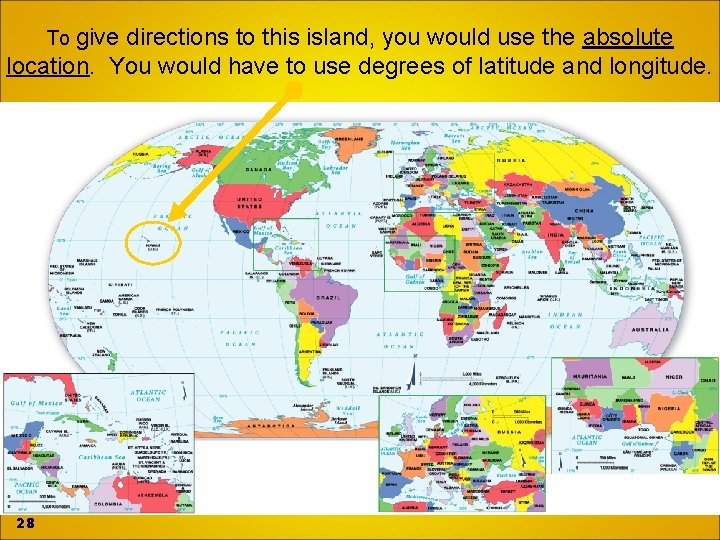
To give directions to this island, you would use the absolute location. You would have to use degrees of latitude and longitude. 28
parallels 29 nes Latitude lines meridians Longitude li d an e tud i t a f l like? o s ne look i l do ude t a Wh longit
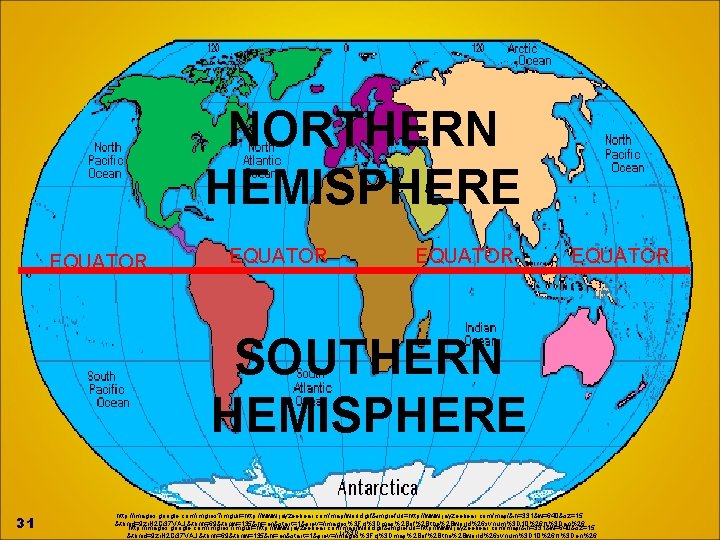
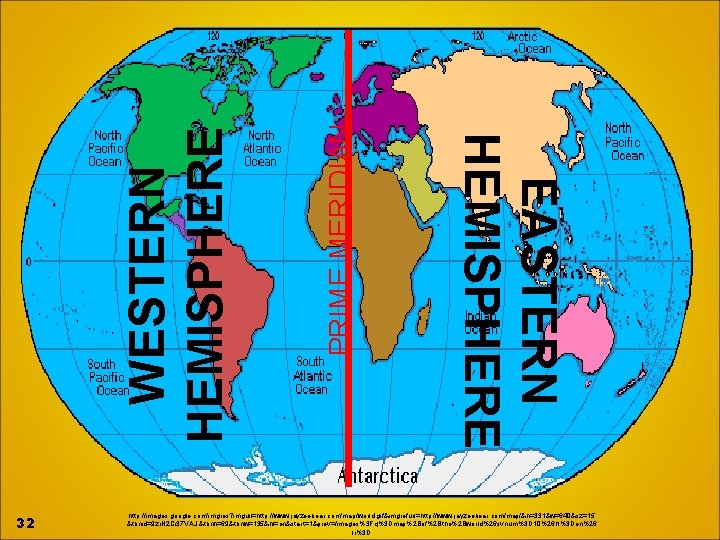
The Earth’s Hemispheres l The equator is an imaginary line at 0° latitude. It divides the earth into two halves: Northern Hemisphere and Southern Hemisphere. (We use the letters N and S to show locations north and south of the equator. ) l The prime meridian is at 0° longitude. It is also an imaginary line. It divides the earth into two halves: Western Hemisphere and Eastern Hemisphere. (We use the letters W and E to show locations west and east of the prime meridian. ) 30
NORTHERN HEMISPHERE EQUATOR SOUTHERN HEMISPHERE 31 http: //images. google. com/imgres? imgurl=http: //www. jayzeebear. com/map/world. gif&imgrefurl=http: //www. jayzeebear. com/map/&h=331&w=640&sz=15 &tbnid=9 zr. N 2 Ci 37 VAJ: &tbnh=69&tbnw=135&hl=en&start=1&prev=/images%3 Fq%3 Dmap%2 Bof%2 Bthe%2 Bworld%26 svnum%3 D 10%26 hl%3 Den%26 http: //images. google. com/imgres? imgurl=http: //www. jayzeebear. com/map/world. gif&imgrefurl=http: //www. jayzeebear. com/map/&h=331&w=640&sz=15 lr%3 D &tbnid=9 zr. N 2 Ci 37 VAJ: &tbnh=69&tbnw=135&hl=en&start=1&prev=/images%3 Fq%3 Dmap%2 Bof%2 Bthe%2 Bworld%26 svnum%3 D 10%26 hl%3 Den%26
PRIME MERIDIAN WESTERN HEMISPHERE EASTERN HEMISPHERE 32 http: //images. google. com/imgres? imgurl=http: //www. jayzeebear. com/map/world. gif&imgrefurl=http: //www. jayzeebear. com/map/&h=331&w=640&sz=15 &tbnid=9 zr. N 2 Ci 37 VAJ: &tbnh=69&tbnw=135&hl=en&start=1&prev=/images%3 Fq%3 Dmap%2 Bof%2 Bthe%2 Bworld%26 svnum%3 D 10%26 hl%3 Den%26 lr%3 D
33
Using Maps, Graphs, & Charts Activity Use the following information to complete the Map of Texas l. Map: l Label 4 locations in Texas on the map. l Label the surrounding states and bodies of waters. 34 l Label 1 river that is located in Texas.
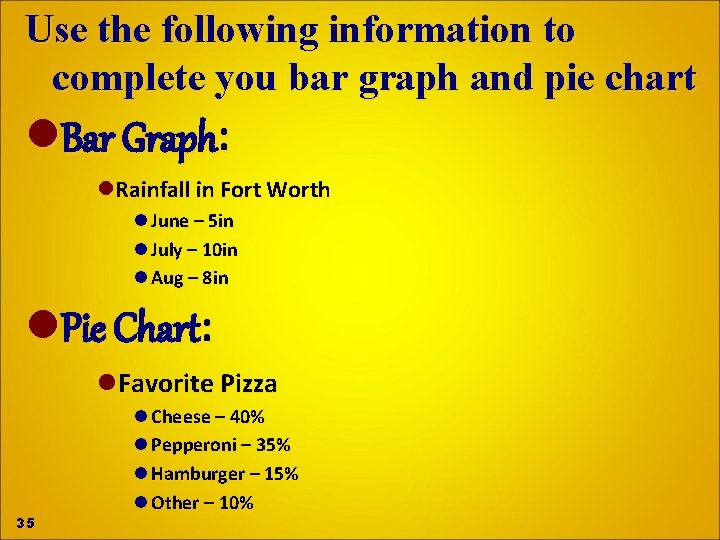
Use the following information to complete you bar graph and pie chart l. Bar Graph: l. Rainfall in Fort Worth l June – 5 in l July – 10 in l Aug – 8 in l. Pie Chart: l. Favorite Pizza 35 l Cheese – 40% l Pepperoni – 35% l Hamburger – 15% l Other – 10%