
1 Making sense of information as meaningful occurs
- Slides: 26
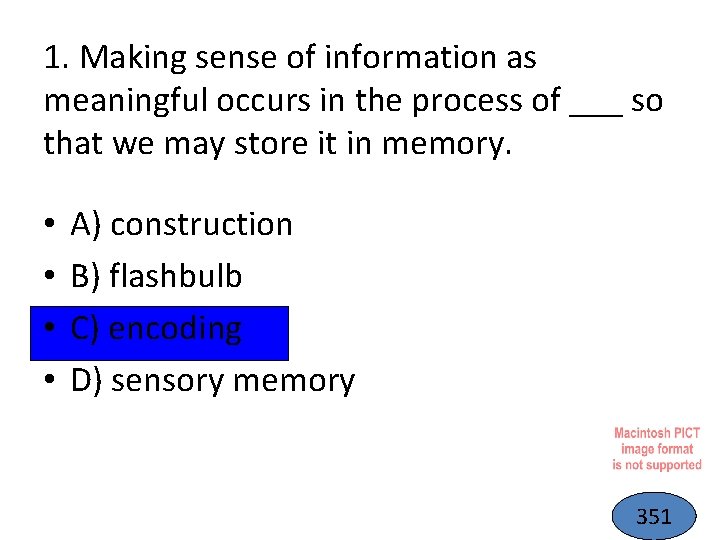
1. Making sense of information as meaningful occurs in the process of ___ so that we may store it in memory. • • A) construction B) flashbulb C) encoding D) sensory memory 351
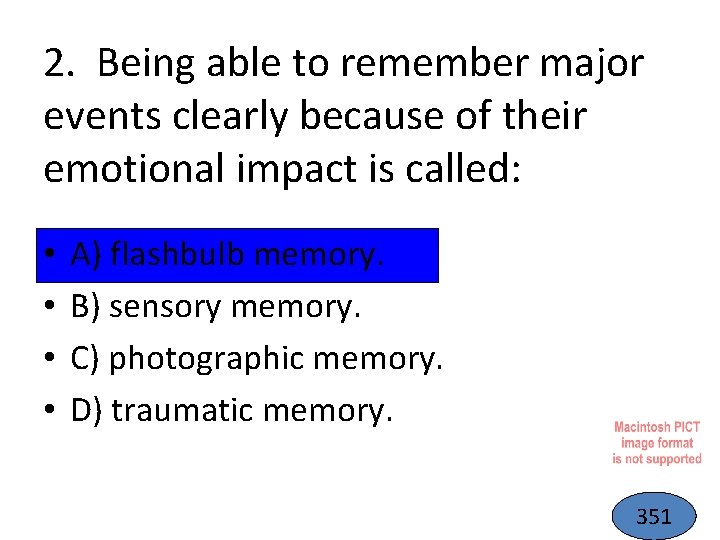
2. Being able to remember major events clearly because of their emotional impact is called: • • A) flashbulb memory. B) sensory memory. C) photographic memory. D) traumatic memory. 351
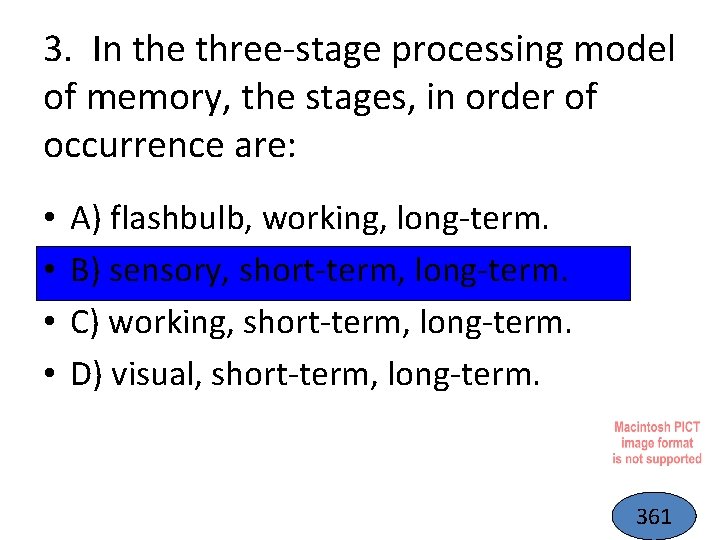
3. In the three-stage processing model of memory, the stages, in order of occurrence are: • • A) flashbulb, working, long-term. B) sensory, short-term, long-term. C) working, short-term, long-term. D) visual, short-term, long-term. 361
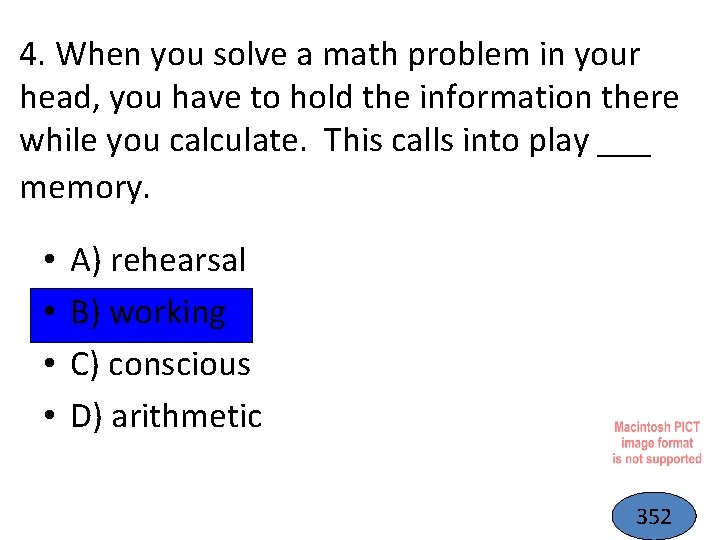
4. When you solve a math problem in your head, you have to hold the information there while you calculate. This calls into play ___ memory. • • A) rehearsal B) working C) conscious D) arithmetic 352
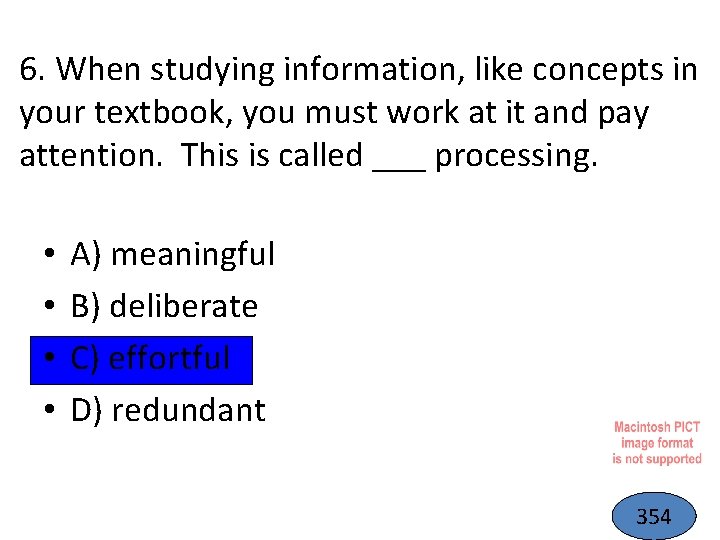
6. When studying information, like concepts in your textbook, you must work at it and pay attention. This is called ___ processing. • • A) meaningful B) deliberate C) effortful D) redundant 354
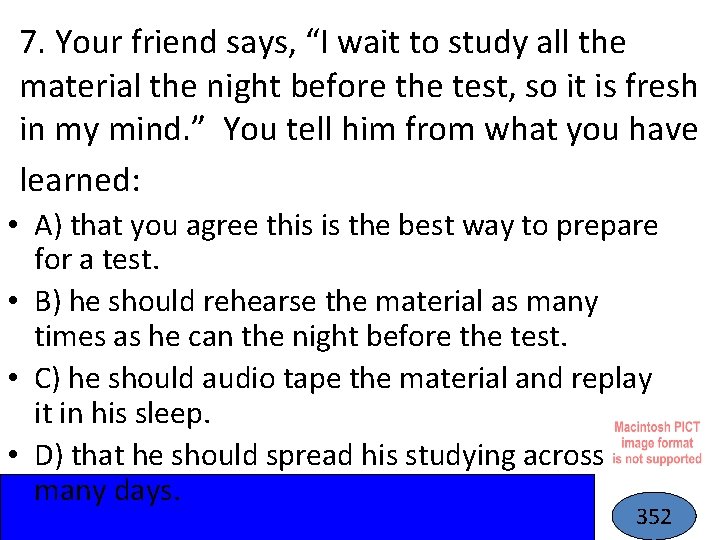
7. Your friend says, “I wait to study all the material the night before the test, so it is fresh in my mind. ” You tell him from what you have learned: • A) that you agree this is the best way to prepare for a test. • B) he should rehearse the material as many times as he can the night before the test. • C) he should audio tape the material and replay it in his sleep. • D) that he should spread his studying across many days. 352
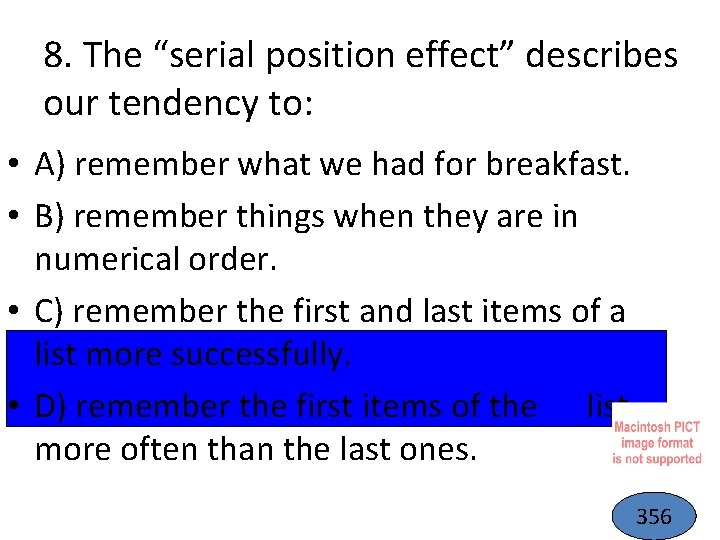
8. The “serial position effect” describes our tendency to: • A) remember what we had for breakfast. • B) remember things when they are in numerical order. • C) remember the first and last items of a list more successfully. • D) remember the first items of the list more often than the last ones. 356
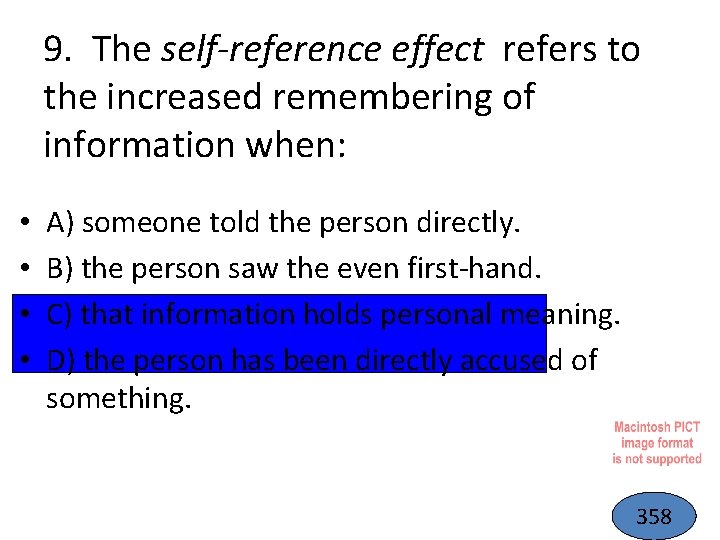
9. The self-reference effect refers to the increased remembering of information when: • • A) someone told the person directly. B) the person saw the even first-hand. C) that information holds personal meaning. D) the person has been directly accused of something. 358
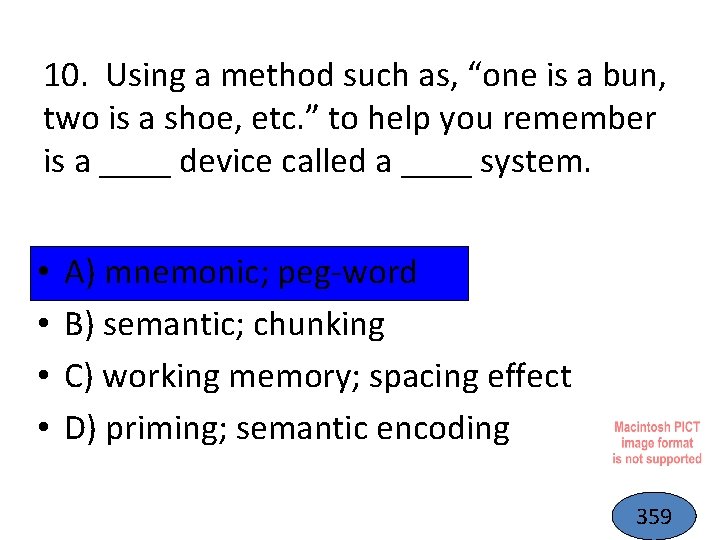
10. Using a method such as, “one is a bun, two is a shoe, etc. ” to help you remember is a ____ device called a ____ system. • • A) mnemonic; peg-word B) semantic; chunking C) working memory; spacing effect D) priming; semantic encoding 359
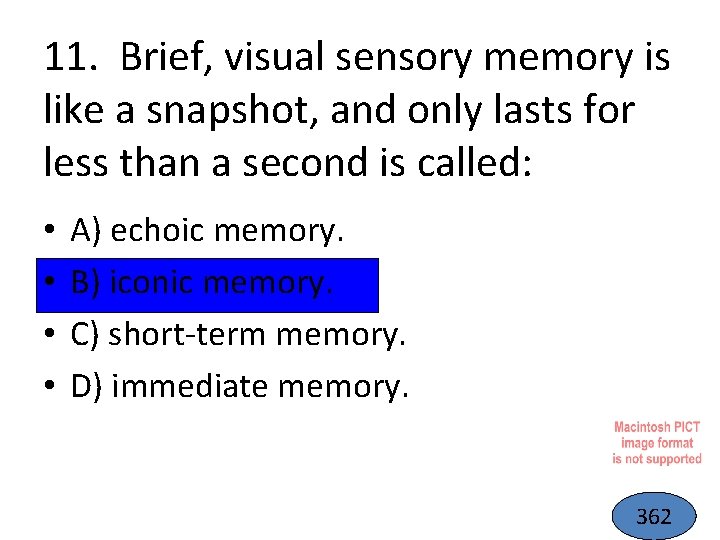
11. Brief, visual sensory memory is like a snapshot, and only lasts for less than a second is called: • • A) echoic memory. B) iconic memory. C) short-term memory. D) immediate memory. 362
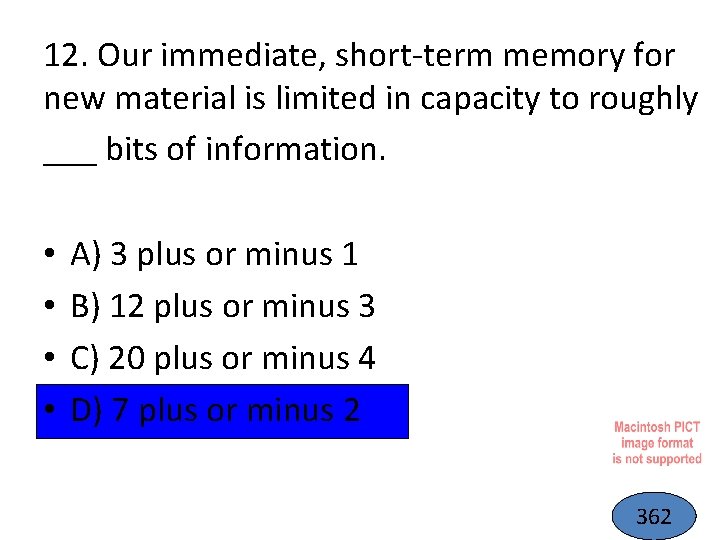
12. Our immediate, short-term memory for new material is limited in capacity to roughly ___ bits of information. • • A) 3 plus or minus 1 B) 12 plus or minus 3 C) 20 plus or minus 4 D) 7 plus or minus 2 362
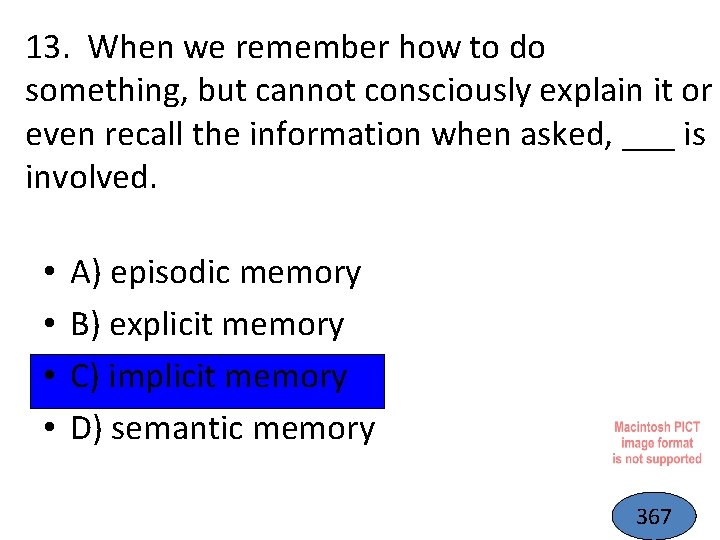
13. When we remember how to do something, but cannot consciously explain it or even recall the information when asked, ___ is involved. • • A) episodic memory B) explicit memory C) implicit memory D) semantic memory 367
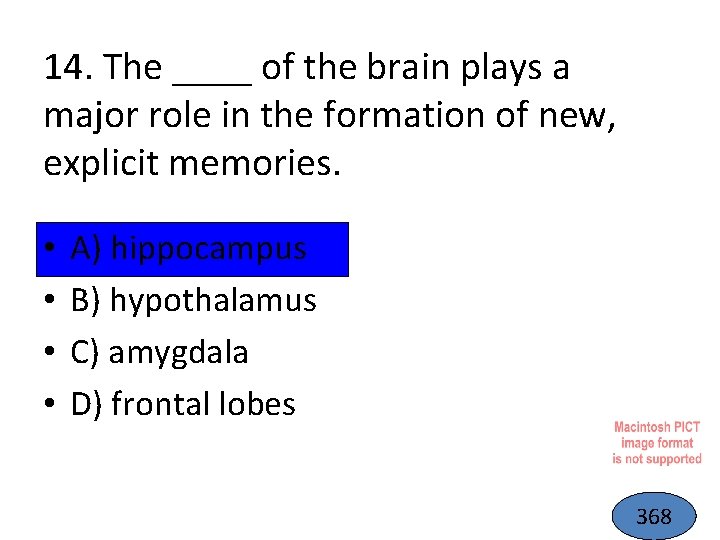
14. The ____ of the brain plays a major role in the formation of new, explicit memories. • • A) hippocampus B) hypothalamus C) amygdala D) frontal lobes 368
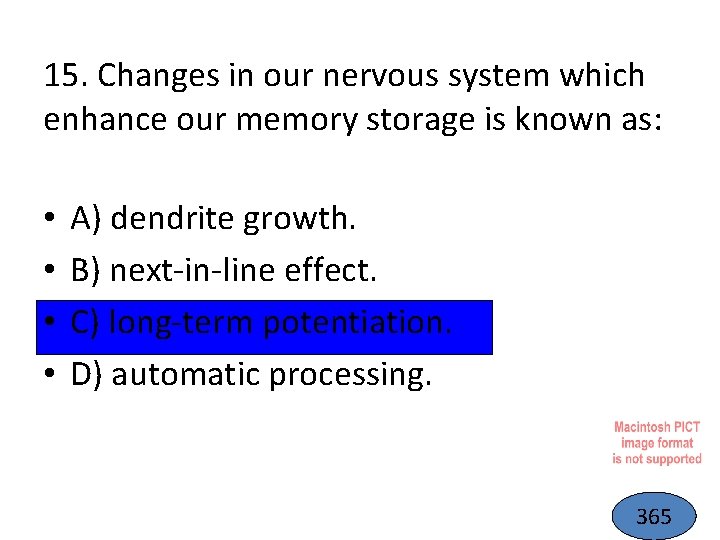
15. Changes in our nervous system which enhance our memory storage is known as: • • A) dendrite growth. B) next-in-line effect. C) long-term potentiation. D) automatic processing. 365
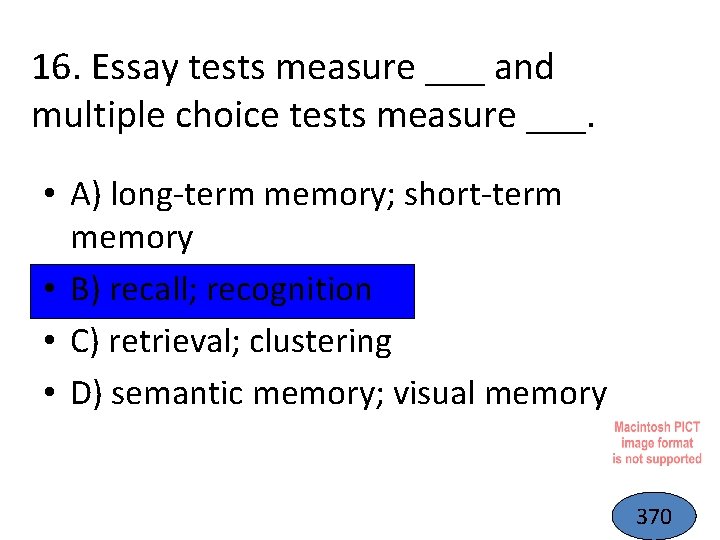
16. Essay tests measure ___ and multiple choice tests measure ___. • A) long-term memory; short-term memory • B) recall; recognition • C) retrieval; clustering • D) semantic memory; visual memory 370
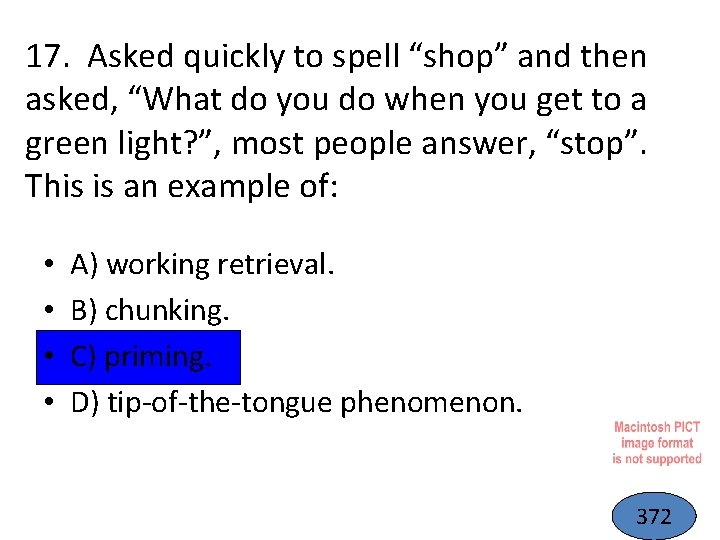
17. Asked quickly to spell “shop” and then asked, “What do you do when you get to a green light? ”, most people answer, “stop”. This is an example of: • • A) working retrieval. B) chunking. C) priming. D) tip-of-the-tongue phenomenon. 372
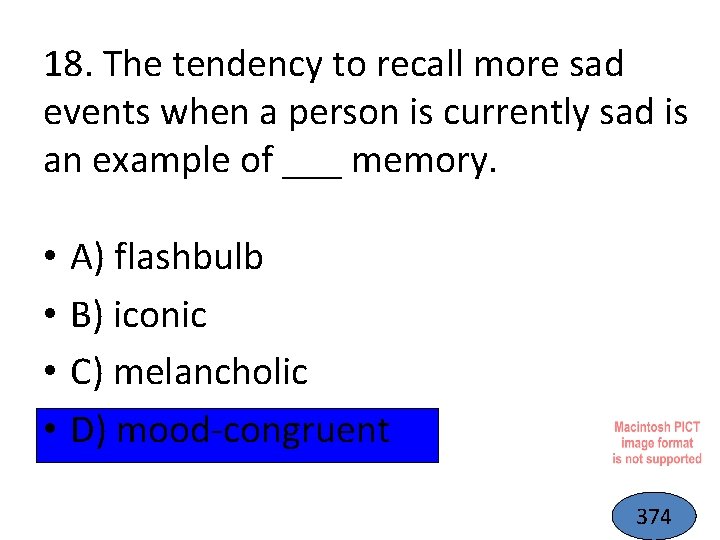
18. The tendency to recall more sad events when a person is currently sad is an example of ___ memory. • • A) flashbulb B) iconic C) melancholic D) mood-congruent 374
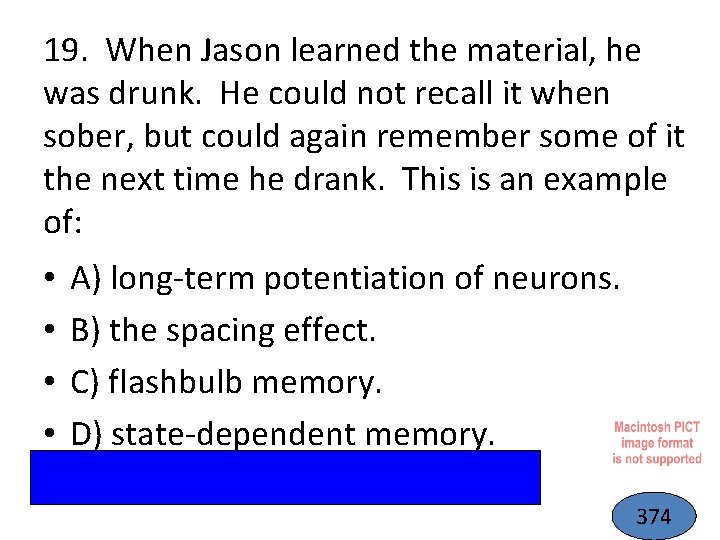
19. When Jason learned the material, he was drunk. He could not recall it when sober, but could again remember some of it the next time he drank. This is an example of: • • A) long-term potentiation of neurons. B) the spacing effect. C) flashbulb memory. D) state-dependent memory. 374
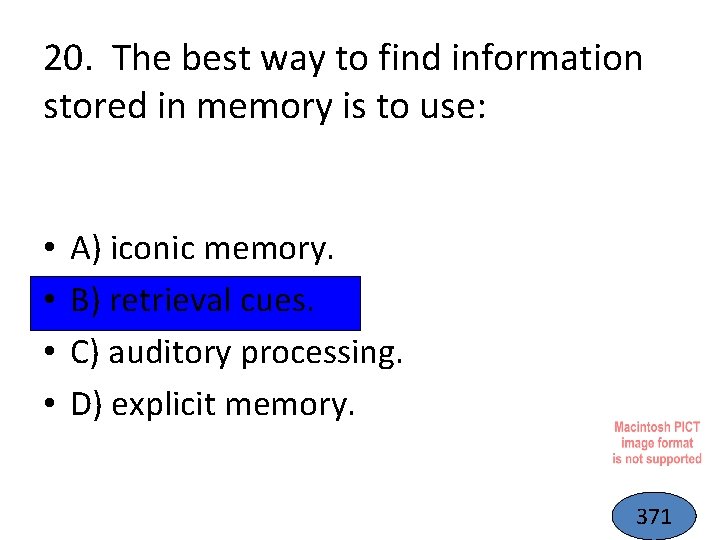
20. The best way to find information stored in memory is to use: • • A) iconic memory. B) retrieval cues. C) auditory processing. D) explicit memory. 371
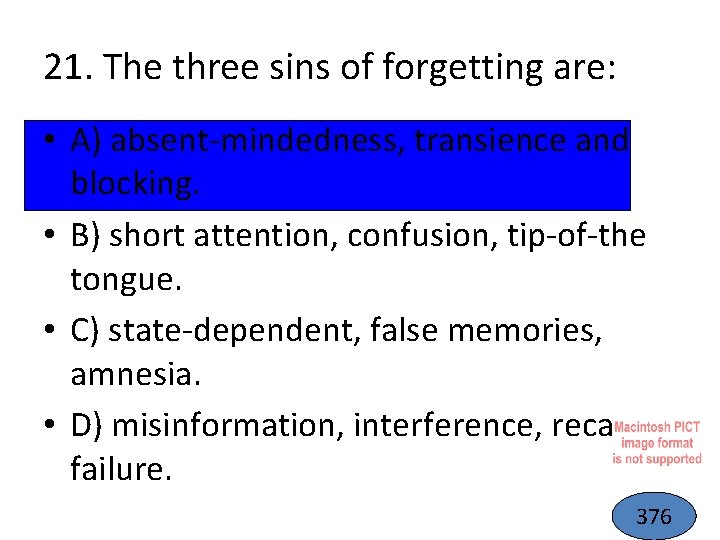
21. The three sins of forgetting are: • A) absent-mindedness, transience and blocking. • B) short attention, confusion, tip-of-the tongue. • C) state-dependent, false memories, amnesia. • D) misinformation, interference, recall failure. 376
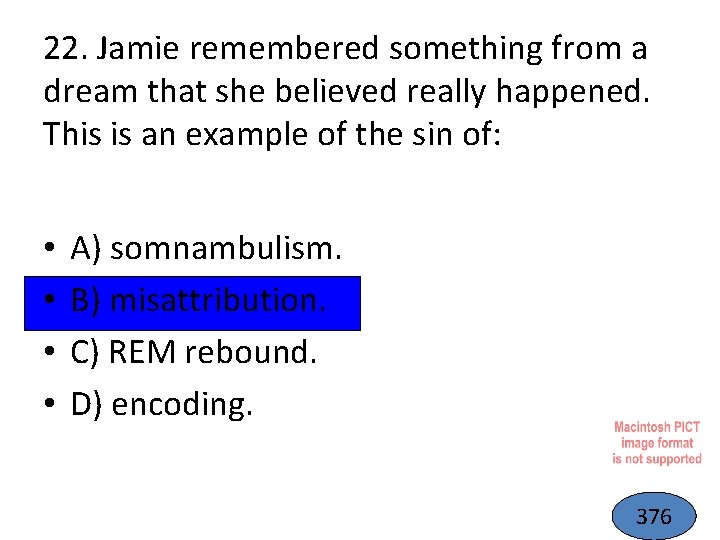
22. Jamie remembered something from a dream that she believed really happened. This is an example of the sin of: • • A) somnambulism. B) misattribution. C) REM rebound. D) encoding. 376
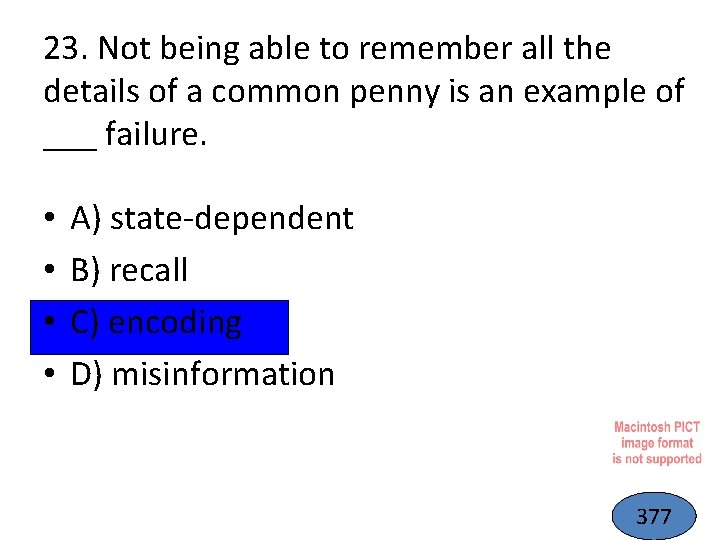
23. Not being able to remember all the details of a common penny is an example of ___ failure. • • A) state-dependent B) recall C) encoding D) misinformation 377
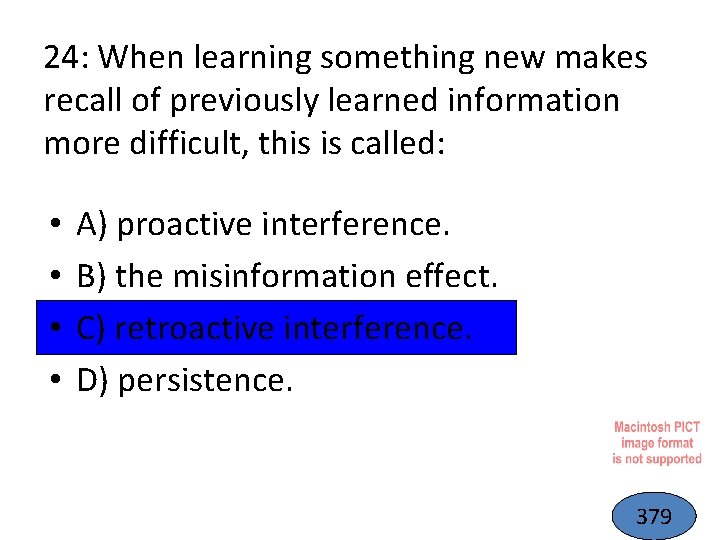
24: When learning something new makes recall of previously learned information more difficult, this is called: • • A) proactive interference. B) the misinformation effect. C) retroactive interference. D) persistence. 379
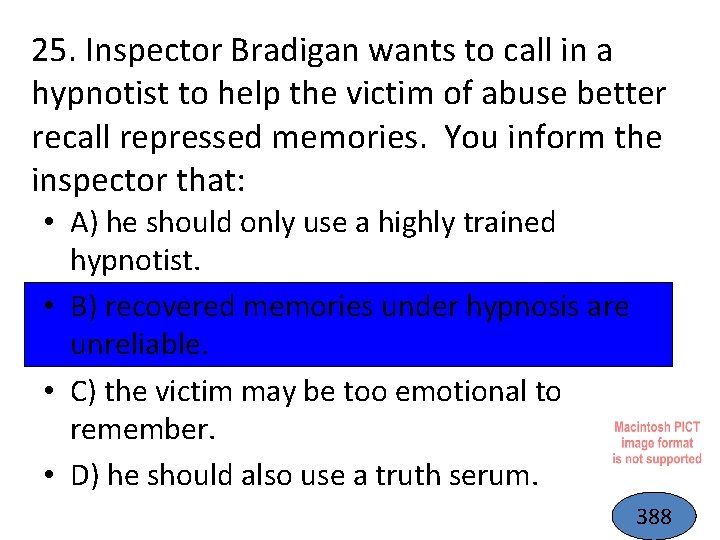
25. Inspector Bradigan wants to call in a hypnotist to help the victim of abuse better recall repressed memories. You inform the inspector that: • A) he should only use a highly trained hypnotist. • B) recovered memories under hypnosis are unreliable. • C) the victim may be too emotional to remember. • D) he should also use a truth serum. 388
Acknowledgements • Step Up Created by: – John J. Schulte, Psy. D. • Based on Psychology, Eighth Edition • By David G. Myers • Published by • Worth Publishers (2007)
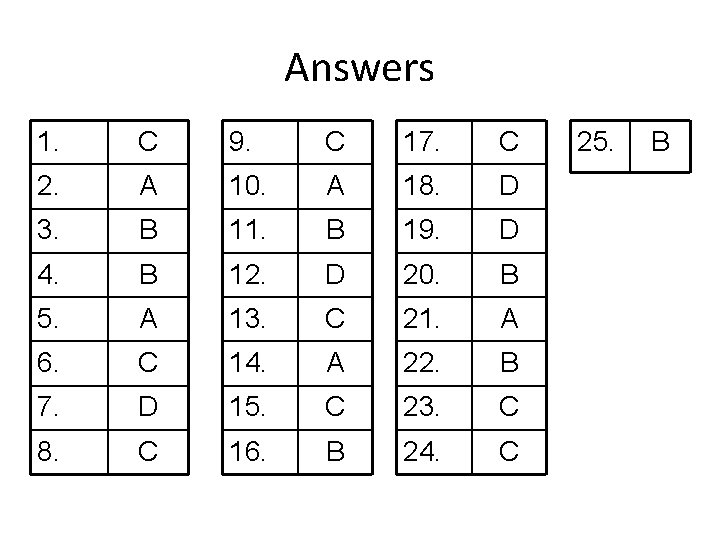
Answers 1. C 9. C 17. C 2. A 10. A 18. D 3. B 11. B 19. D 4. B 12. D 20. B 5. A 13. C 21. A 6. C 14. A 22. B 7. D 15. C 23. C 8. C 16. B 24. C 25. B