
1 Lecture10 CE312 Engineering Geology and Seismology Instructor


- Slides: 53
1
Lecture#10 CE-312 Engineering Geology and Seismology Instructor: Dr Amjad Naseer Department of Civil Engineering N-W. F. P University of Engineering and Technology, Peshawar 2
Outlines of the Presentation • Continental Drift Theory • Plate Tectonic • Elastic Rebound Theory 3
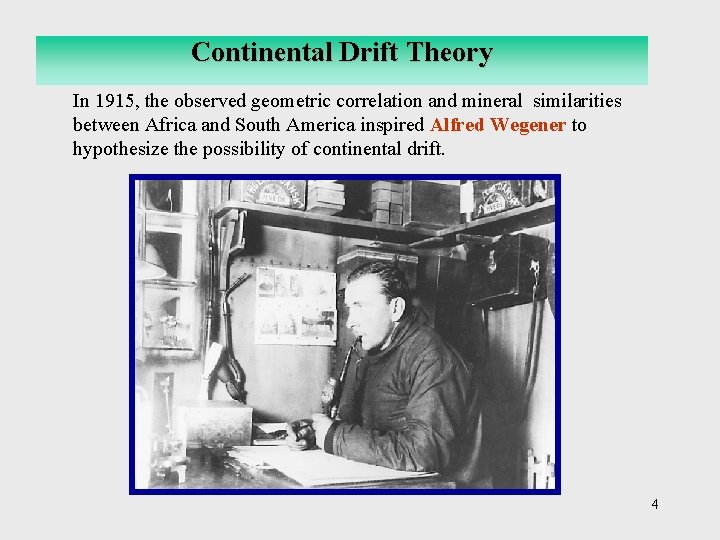
Continental Drift Theory In 1915, the observed geometric correlation and mineral similarities between Africa and South America inspired Alfred Wegener to hypothesize the possibility of continental drift. 4
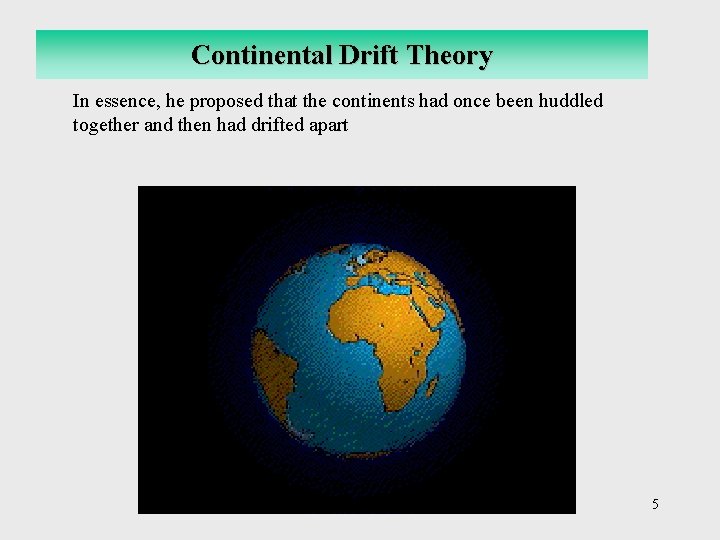
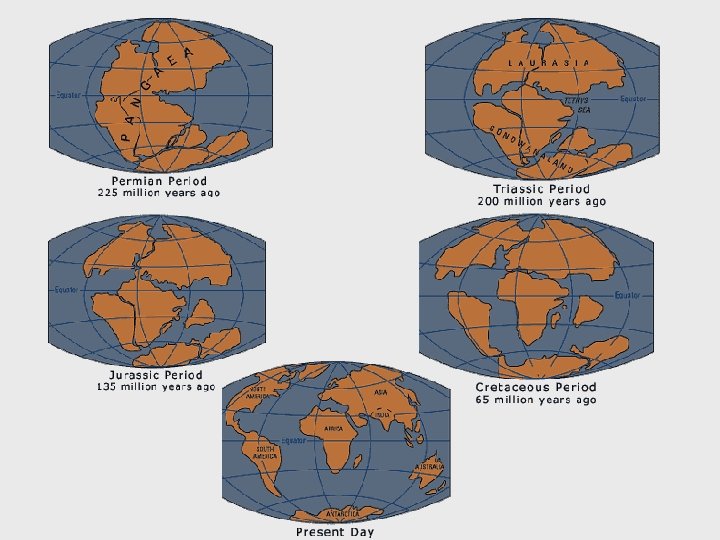
Continental Drift Theory In essence, he proposed that the continents had once been huddled together and then had drifted apart 5
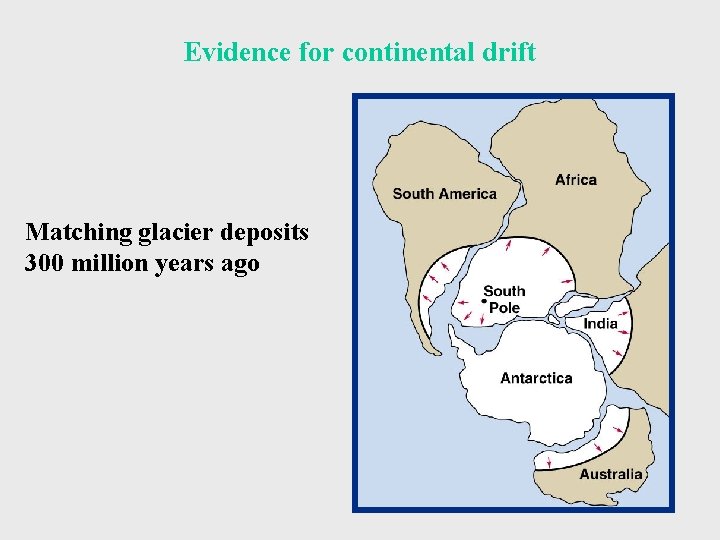
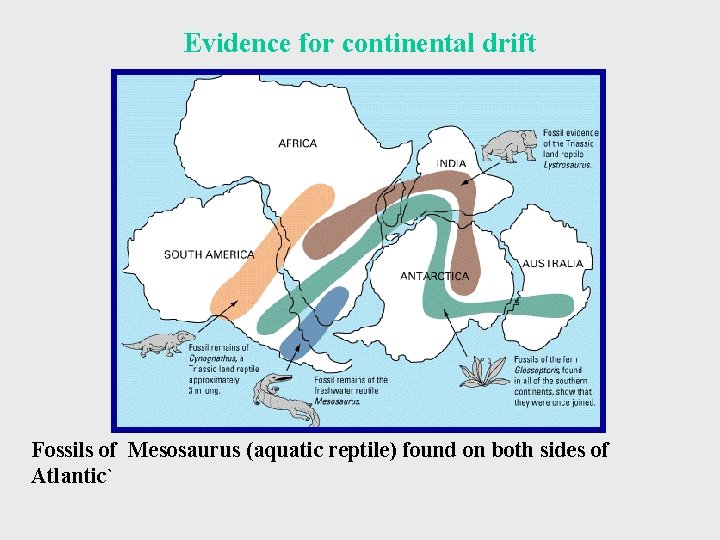
Continental Drift Theory Evidence for continental drift Ø Matching coastlines Ø Matching mountains Ø Matching rock types and rock ages Ø Matching glacier deposits Ø Matching fossils 7
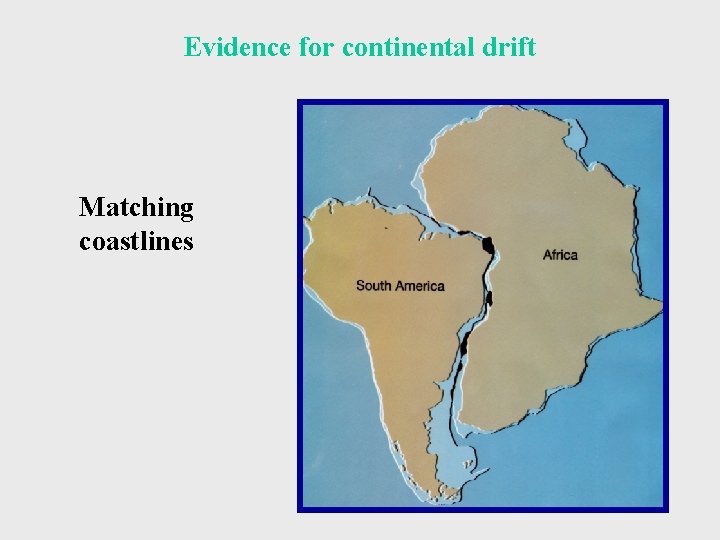
Evidence for continental drift Matching coastlines
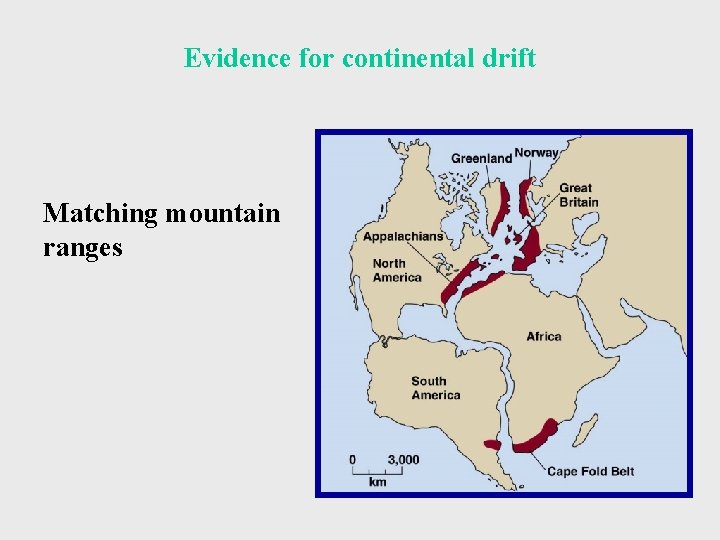
Evidence for continental drift Matching mountain ranges
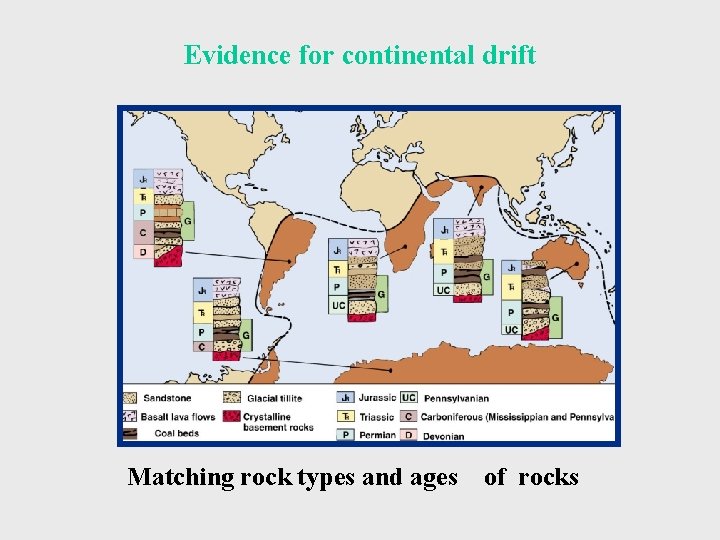
Evidence for continental drift Matching rock types and ages of rocks
Evidence for continental drift Matching glacier deposits 300 million years ago
Evidence for continental drift Fossils of Mesosaurus (aquatic reptile) found on both sides of Atlantic`
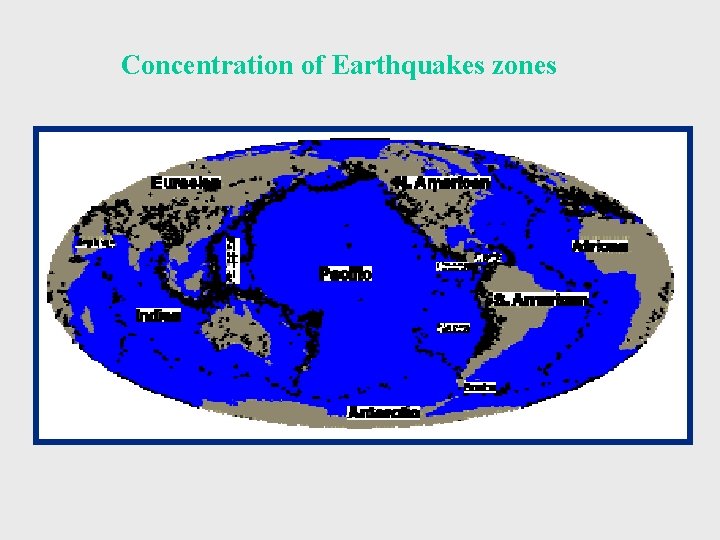
Continental Drift ØUntil 1960, the idea of continental drift was not considered to be credible. ØThe main objection to Wegener's insight was the difficulty in accepting the movement of the crust through the mantle without either the crust or the mantle breaking apart. ØThis objection became a stumbling (meaning: Hesitation) block for the continental-drift theory until the weight of the seismic observations (concentration of earthquakes along certain narrow zones) and the data from exploration of the sea floor (discovery of categorical evidence about spreading of the sea floor from a central ridge) convinced most of the professional community the continental drift was possible.
Concentration of Earthquakes zones
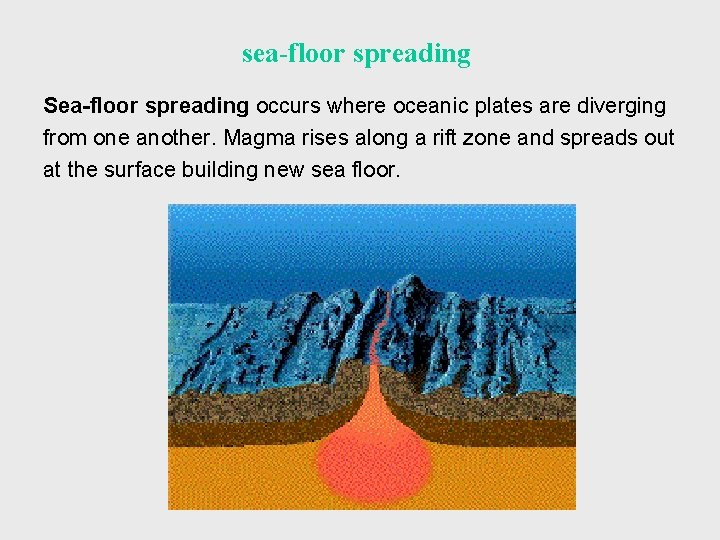
sea-floor spreading Sea-floor spreading occurs where oceanic plates are diverging from one another. Magma rises along a rift zone and spreads out at the surface building new sea floor.
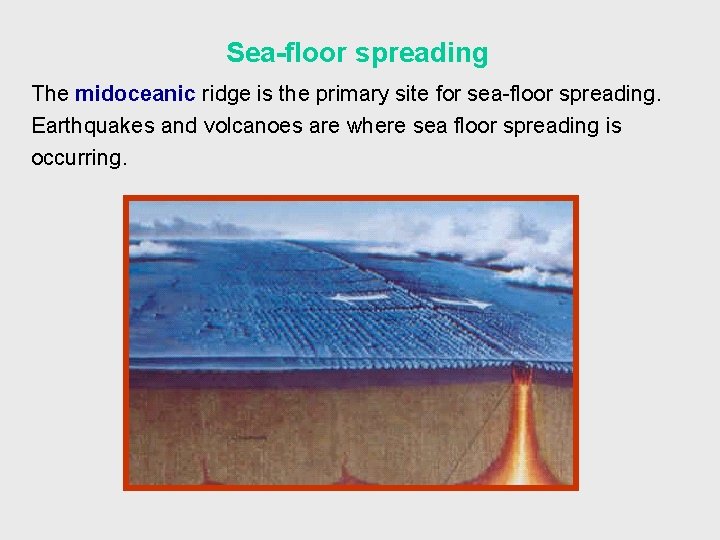
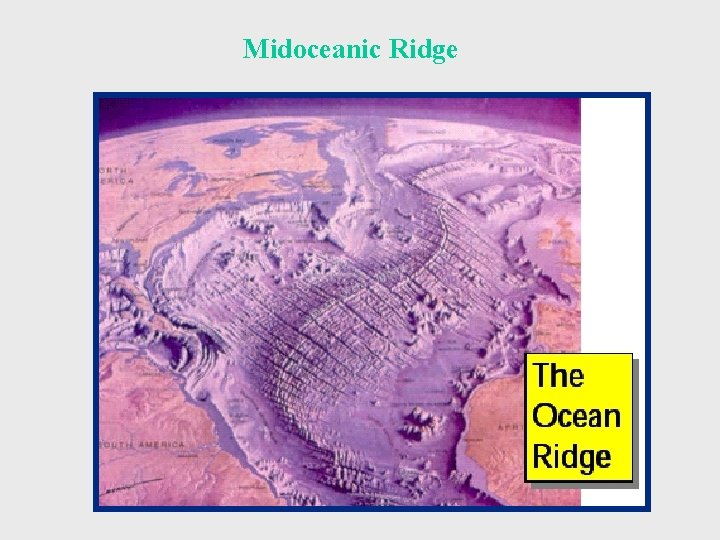
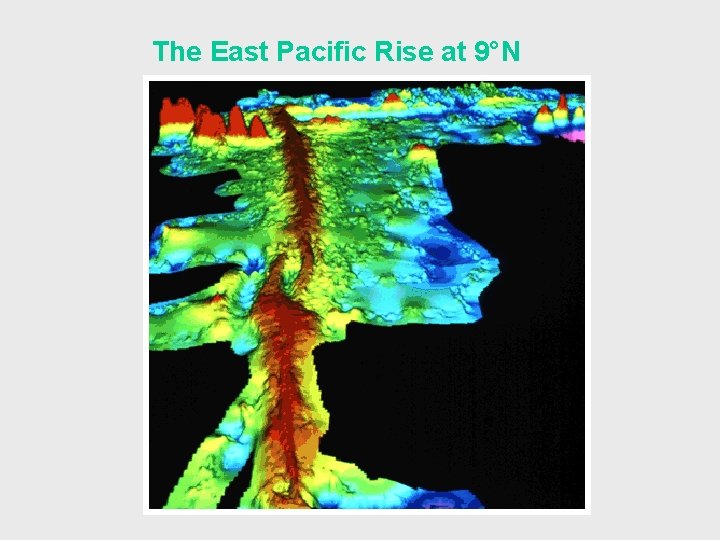
Sea-floor spreading The midoceanic ridge is the primary site for sea-floor spreading. Earthquakes and volcanoes are where sea floor spreading is occurring.
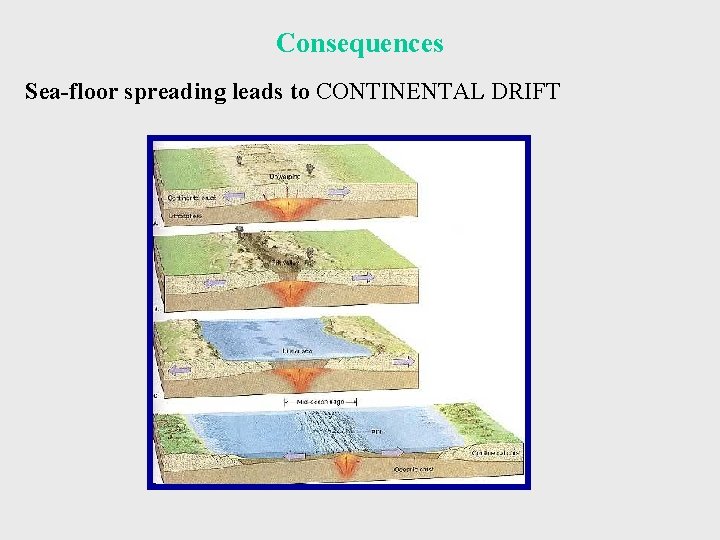
Consequences Sea-floor spreading leads to CONTINENTAL DRIFT
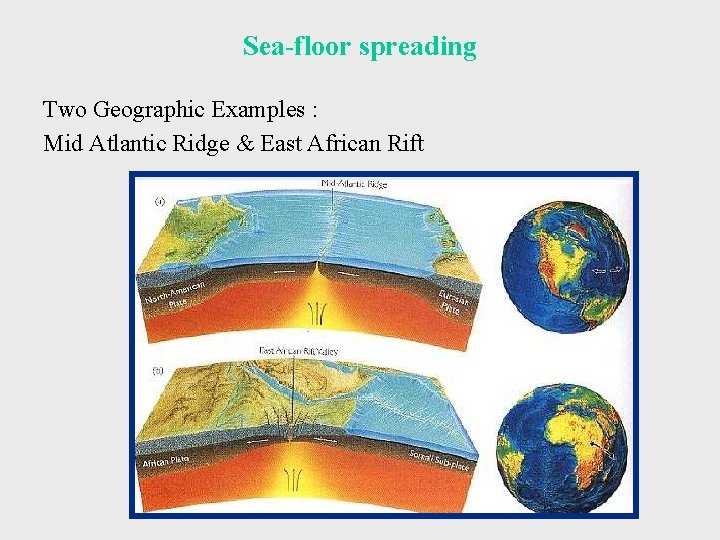
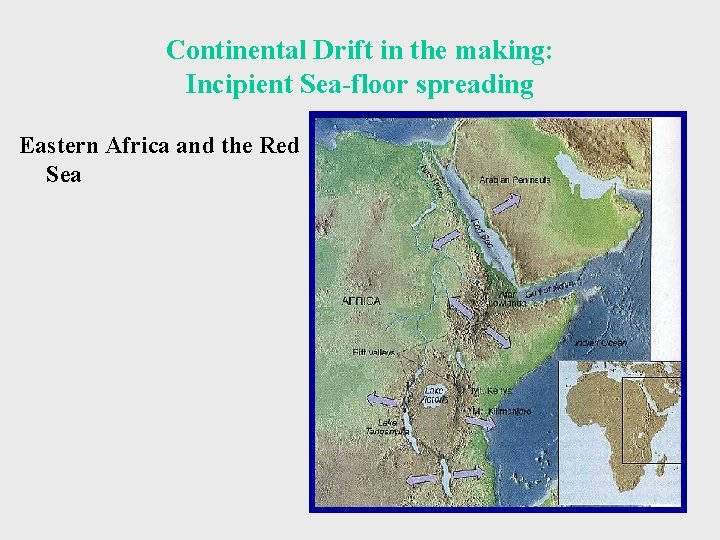
Sea-floor spreading Two Geographic Examples : Mid Atlantic Ridge & East African Rift
Continental Drift in the making: Incipient Sea-floor spreading Eastern Africa and the Red Sea
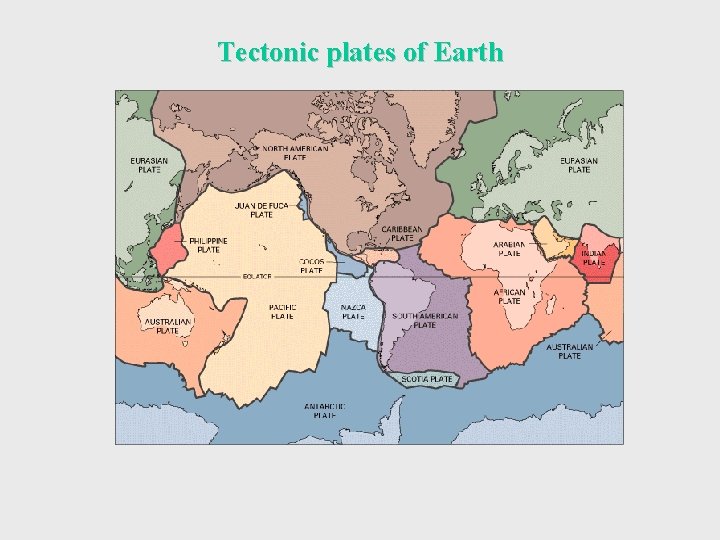
Theory of Plate tectonics Ø The theory of Plate tectonics was proposed in 1960 s based on theory of continental drift. Ø This is the Unifying theory that explains the formation and deformation of the Earth’s surface. Ø According to this theory, continents are carried along on huge slabs (plates) on the Earth’s outermost layer (Lithosphere). Ø Earth’s outermost layer is divided into 12 major Tectonic Plates (~80 km deep). These plates move relative to each other a few centimeters per year.
Tectonic plates of Earth
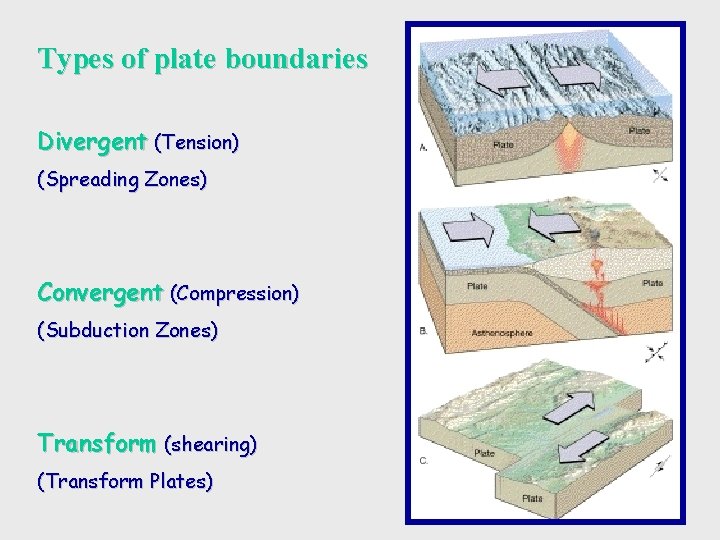
Types of plate boundaries n Divergent plate boundaries: where plates move apart n Convergent Plate boundaries: where plates come together n Transform plate boundaries: where plates slide past each other
Types of plate boundaries Divergent (Tension) (Spreading Zones) Convergent (Compression) (Subduction Zones) Transform (shearing) (Transform Plates)
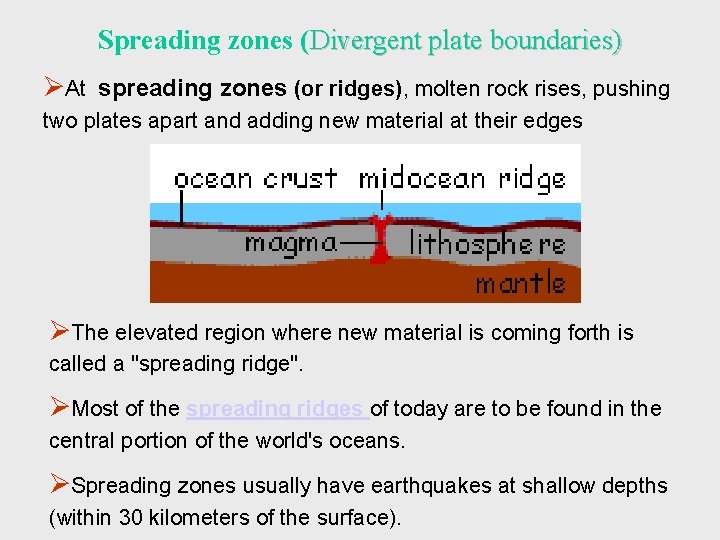
Spreading zones (Divergent plate boundaries) ØAt spreading zones (or ridges), molten rock rises, pushing two plates apart and adding new material at their edges ØThe elevated region where new material is coming forth is called a "spreading ridge". ØMost of the spreading ridges of today are to be found in the central portion of the world's oceans. ØSpreading zones usually have earthquakes at shallow depths (within 30 kilometers of the surface).
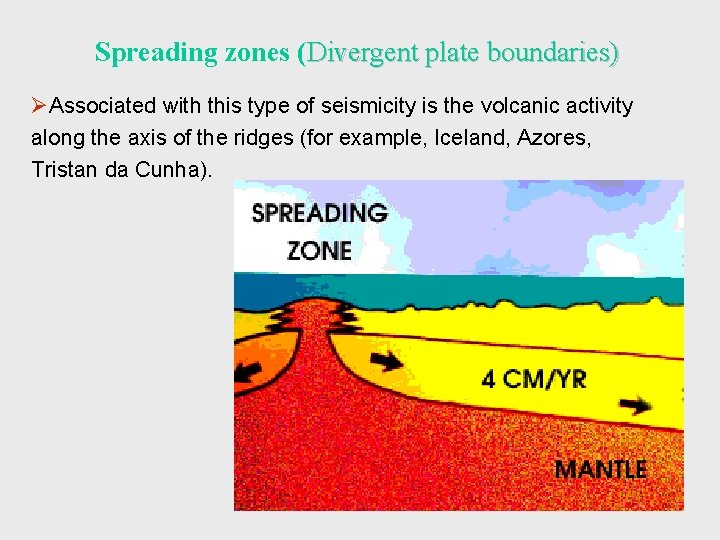
Spreading zones (Divergent plate boundaries) ØAssociated with this type of seismicity is the volcanic activity along the axis of the ridges (for example, Iceland, Azores, Tristan da Cunha).
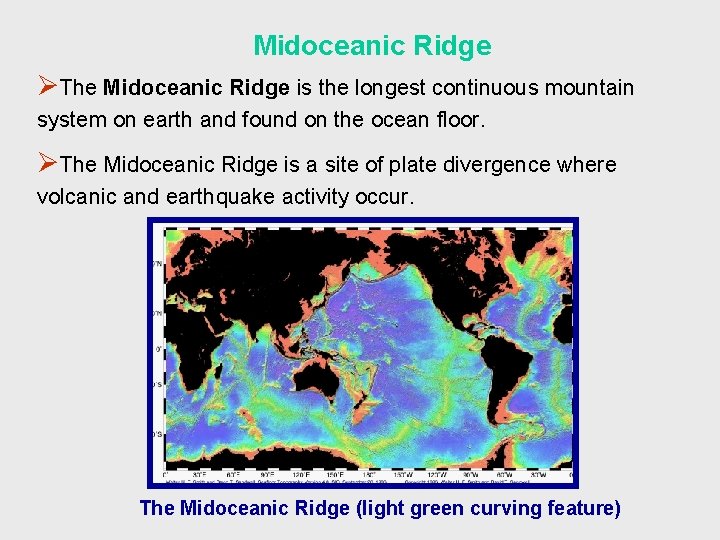
Midoceanic Ridge ØThe Midoceanic Ridge is the longest continuous mountain system on earth and found on the ocean floor. ØThe Midoceanic Ridge is a site of plate divergence where volcanic and earthquake activity occur. The Midoceanic Ridge (light green curving feature)
Midoceanic Ridge
The East Pacific Rise at 9°N
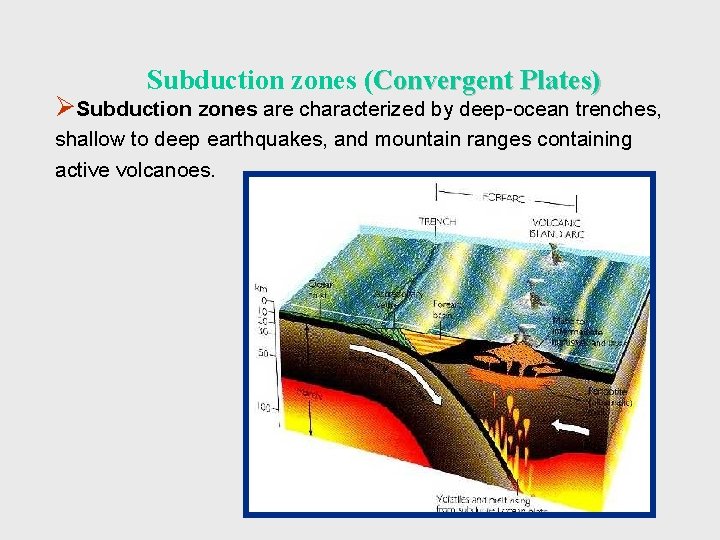
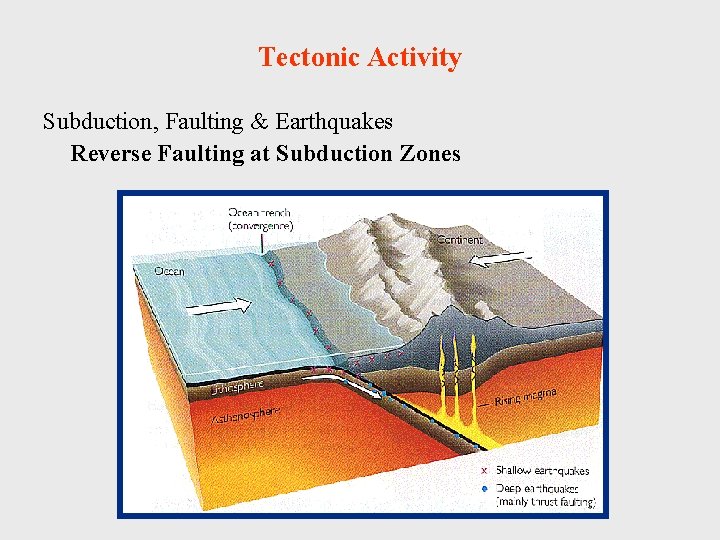
Subduction zones (Convergent Plates) ØSubduction zones are characterized by deep-ocean trenches, shallow to deep earthquakes, and mountain ranges containing active volcanoes.
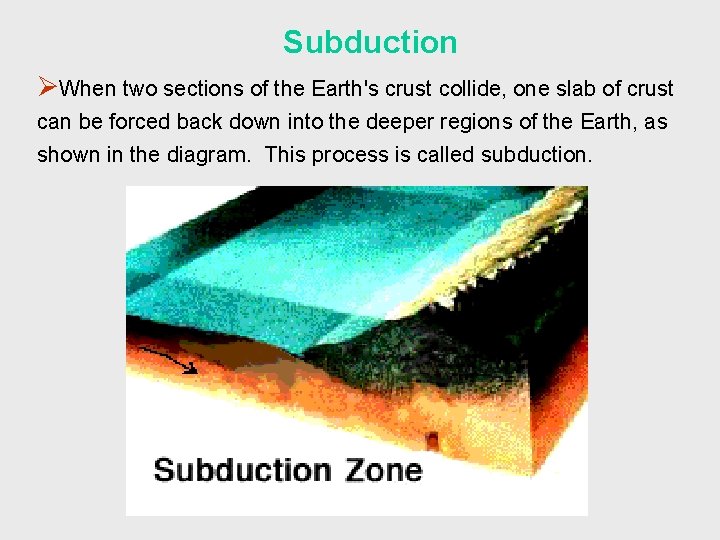
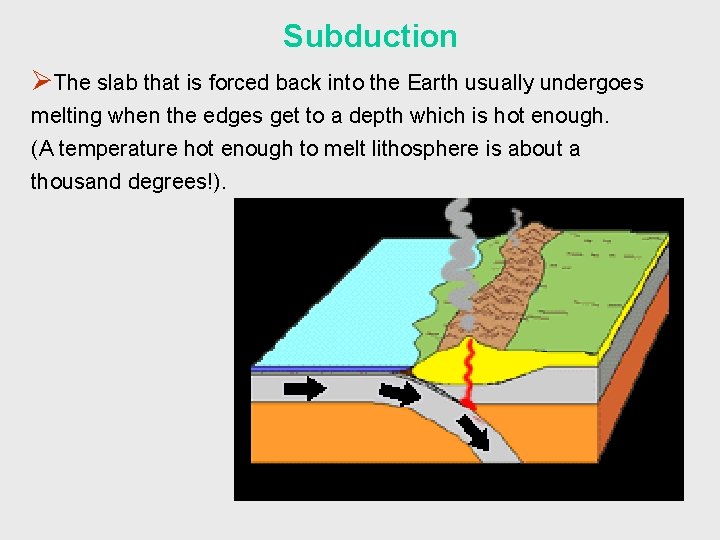
Subduction ØWhen two sections of the Earth's crust collide, one slab of crust can be forced back down into the deeper regions of the Earth, as shown in the diagram. This process is called subduction.
Subduction ØThe slab that is forced back into the Earth usually undergoes melting when the edges get to a depth which is hot enough. (A temperature hot enough to melt lithosphere is about a thousand degrees!).
Subduction zones (Convergent Plates) ØIn the Philippines, ocean trenches are associated with curved volcanic island arcs on the landward plate, for example the Java trench Ø Along the Peru - Chile trench, the Pacific plate is being subducted under the South American plate which responds by crumpling to form the Andes.
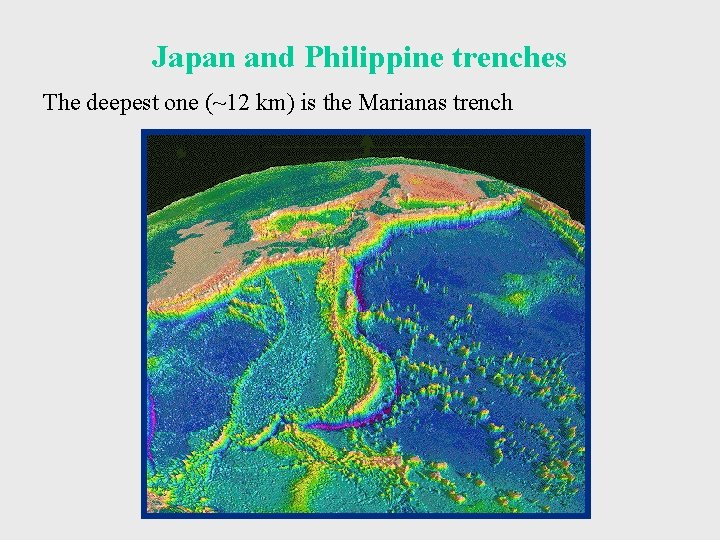
Japan and Philippine trenches The deepest one (~12 km) is the Marianas trench
Tectonic Activity Subduction, Faulting & Earthquakes Reverse Faulting at Subduction Zones
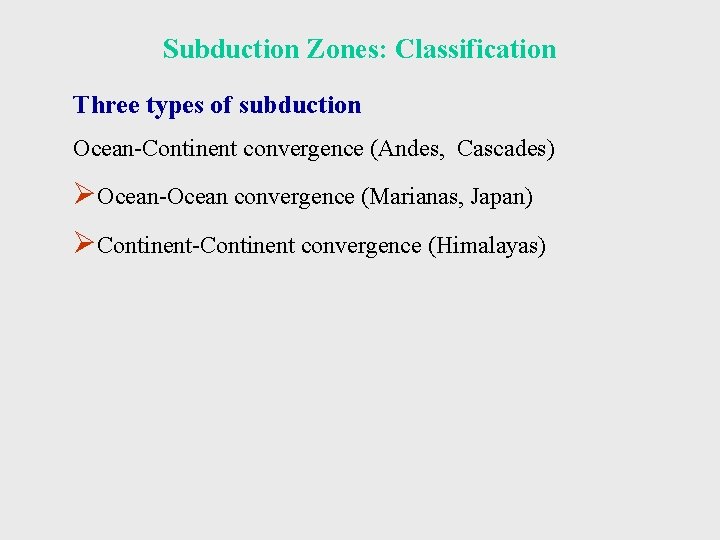
Subduction Zones: Classification Three types of subduction Ocean-Continent convergence (Andes, Cascades) ØOcean-Ocean convergence (Marianas, Japan) ØContinent-Continent convergence (Himalayas)
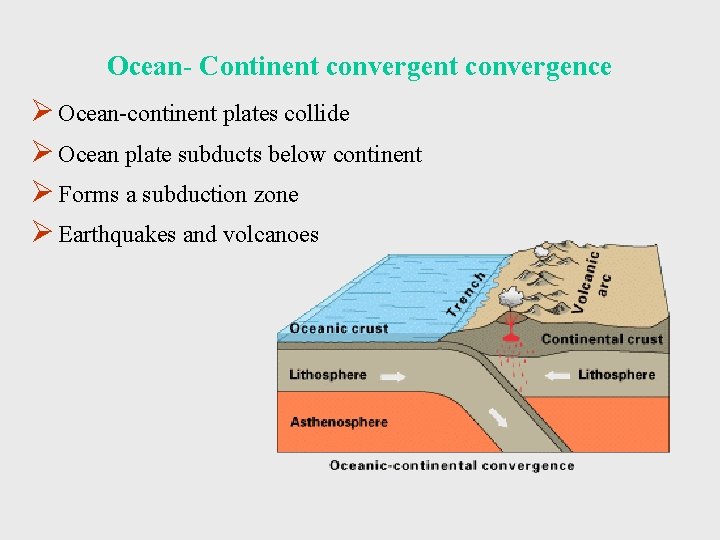
Ocean- Continent convergence Ø Ocean-continent plates collide Ø Ocean plate subducts below continent Ø Forms a subduction zone Ø Earthquakes and volcanoes
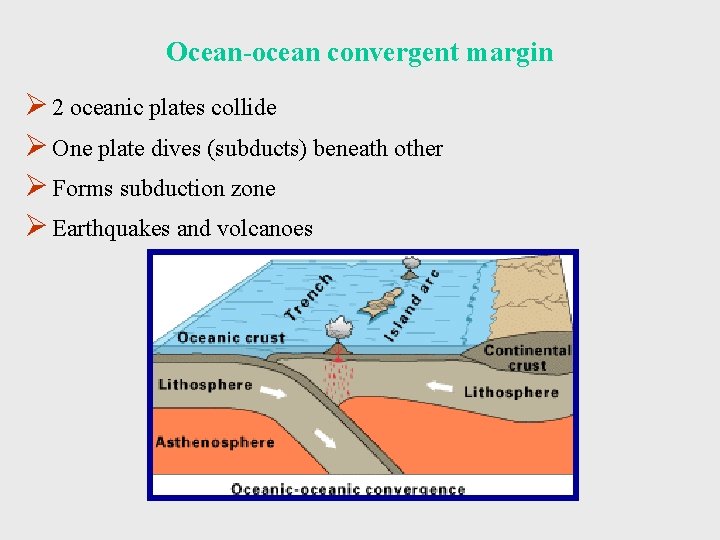
Ocean-ocean convergent margin Ø 2 oceanic plates collide Ø One plate dives (subducts) beneath other Ø Forms subduction zone Ø Earthquakes and volcanoes
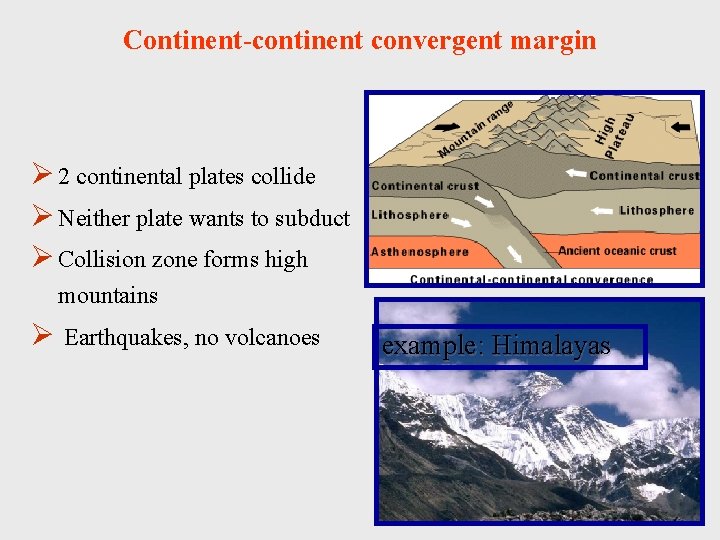
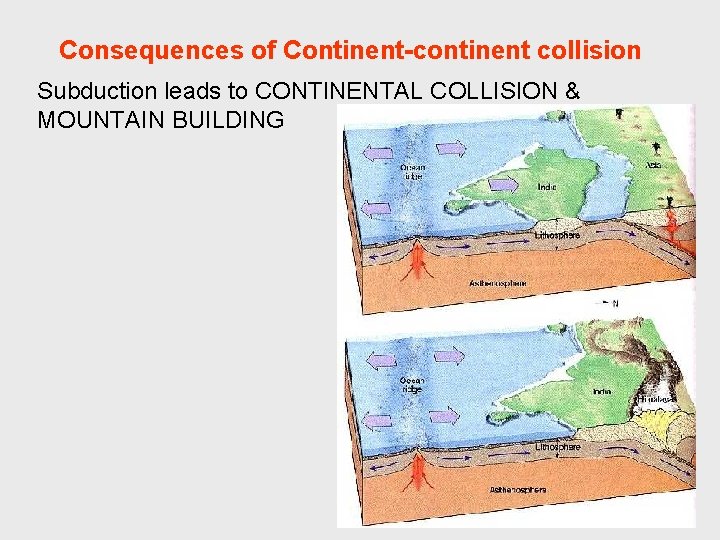
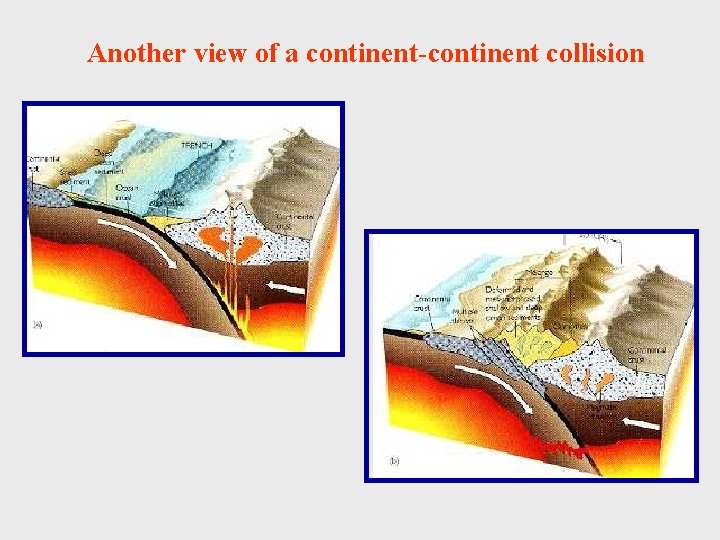
Continent-continent convergent margin Ø 2 continental plates collide Ø Neither plate wants to subduct Ø Collision zone forms high mountains Ø Earthquakes, no volcanoes example: Himalayas
Consequences of Continent-continent collision Subduction leads to CONTINENTAL COLLISION & MOUNTAIN BUILDING
Another view of a continent-continent collision
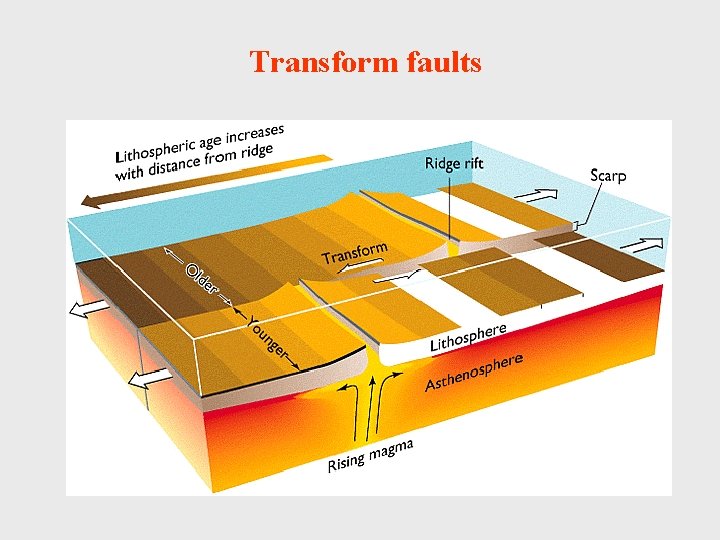
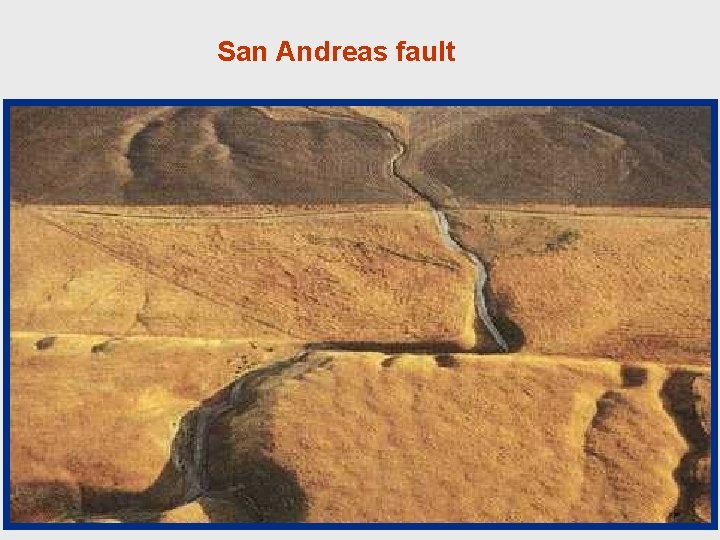
Transform faults ØTransform faults are found where plates slide past one another. The San Andreas fault is a good example of this, so is the Anatolian fault in Northern Turkey. Ø In these faults, two mature plates are scraping by one another. The friction between the plates can be so great that very large strains can build up before they are periodically relieved by large earthquakes Ø Earthquakes at transform faults tend to occur at shallow depths and form fairly straight linear patterns
Transform faults
San Andreas fault
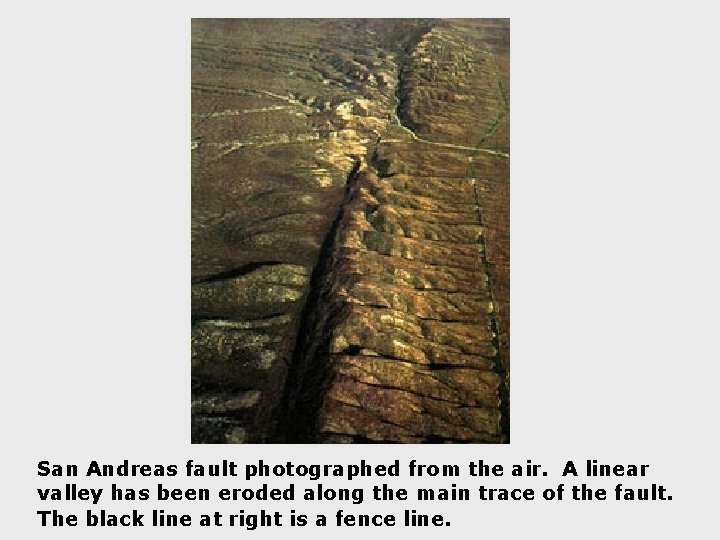
San Andreas fault photographed from the air. A linear valley has been eroded along the main trace of the fault. The black line at right is a fence line.
Transform faults ØNevertheless, activity does not always occur along the entire length of the fault during any one earthquake. For instance, the 1906 San Francisco event was caused by breakage only along the northern end of the San Andreas fault. Ø Strong earthquakes can occur at transforms with focal depths of approximately 20 km. Largest earthquakes occur at subduction zones.
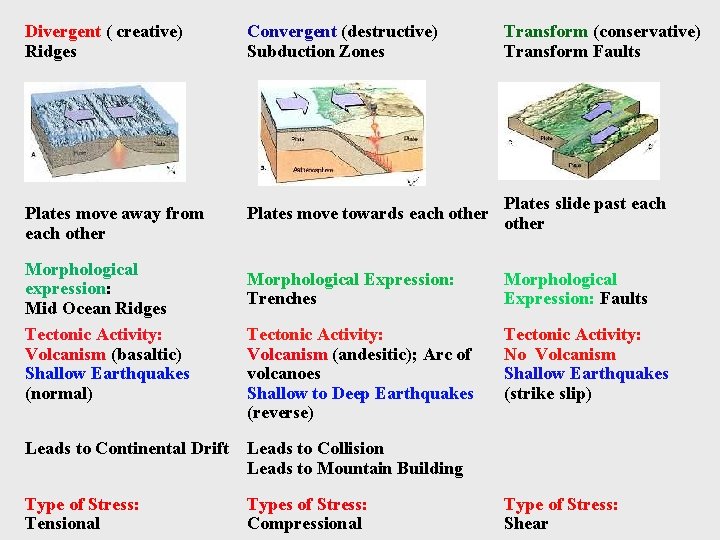
Divergent ( creative) Ridges Convergent (destructive) Subduction Zones Transform (conservative) Transform Faults Plates move away from each other Plates slide past each Plates move towards each other Morphological expression: Mid Ocean Ridges Tectonic Activity: Volcanism (basaltic) Shallow Earthquakes (normal) Morphological Expression: Trenches Morphological Expression: Faults Tectonic Activity: Volcanism (andesitic); Arc of volcanoes Shallow to Deep Earthquakes (reverse) Tectonic Activity: No Volcanism Shallow Earthquakes (strike slip) Leads to Continental Drift Leads to Collision Leads to Mountain Building Type of Stress: Tensional Types of Stress: Compressional Type of Stress: Shear
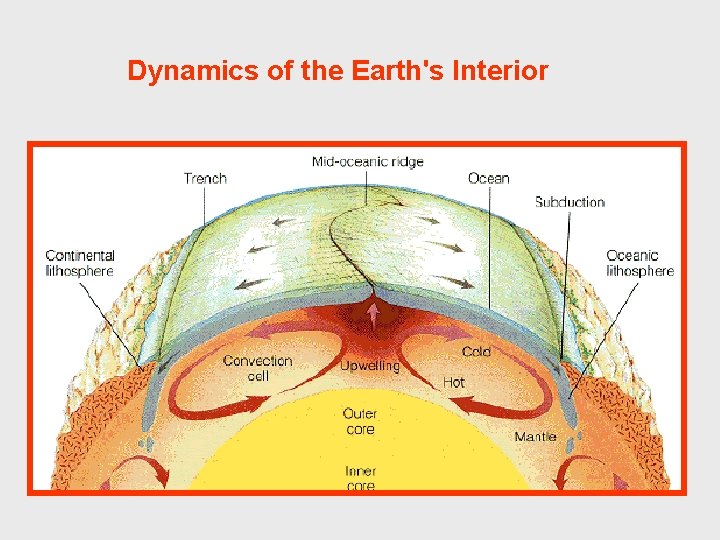
What drives plate movement? Ø Ultimately: heat transported from core and mantle to surface Ø Heat transported by convection Ø Core is ~5, 000°C and surface is ~0°C Ø Where mantle rises: rifting Ø Where mantle dives: subduction zones
Dynamics of the Earth's Interior
Earthquakes and Plate Boundaries ØHow are earthquakes connected with plate tectonics? In 1969, Muawia Barazangi and James Dorman published the locations of all earthquakes which occurred from 1961 to 1967. Most of the earthquakes are confined to narrow belts and these belts define the boundaries of the plates. ØThe interiors of the plates themselves are largely free of large earthquakes, that is, they are aseismic.
Earthquakes and Plate Boundaries ØThere are notable exceptions to this. ØAn obvious one is the 1811 -1812 earthquakes at New Madrid, Missouri, and another is the 1886 earthquake at Charleston, South Carolina. Ø As yet there is no satisfactory plate tectonic explanation for these isolated events--which are sometimes referred to as intraplate earthquakes. Consequently, we will have to find alternative mechanisms to explain intraplate earthquakes.
Plate Tectonics and Earthquake Prediction ØHow can plate tectonics help in earthquake prediction? We have seen that earthquakes occur at the following three kinds of plate boundary: ocean ridges where the plates are pulled apart, margins where the plates scrape past one another, and margins where one plate is thrust under the other. ØThus, we can predict the general regions on the Earth's surface where we can expect large earthquakes in the future. ØWe know that each year about 140 earthquakes of magnitude 6 or greater will occur within this area which is 10 percent of the Earth's surface. But on a worldwide basis we cannot say with much accuracy when these events will occur.
Plate Tectonics and Earthquake Prediction Ø The reason is that the processes in plate tectonics have been going on for millions of years. Averaged over this interval, plate motions amount to several millimeters per year. But at any instant in geologic time, for example, the year 1977, we do not know exactly where we are in the worldwide cycle of strain buildup and strain release. ØOnly by monitoring the stress and strain in small areas, for instance, the San Andreas fault, in great detail can we hope to predict when renewed activity in that part of the plate tectonics arena is likely to take place.
Plate Tectonics and Earthquake Prediction ØIn summary, plate tectonics is a blunt, but, nevertheless, strong tool in earthquake prediction. It tells us where 90 percent of the Earth's major earthquakes are likely to occur. ØIt cannot tell us much about exactly when they will occur. For that, we must study in detail the plate boundaries themselves. Perhaps the most important role of plate tectonics is that it is a guide to the use of finer techniques for earthquake prediction