
1 LECTURE 15 The Diffusion of Innovations What
- Slides: 25
1 LECTURE 15 The Diffusion of Innovations
What is Diffusion of Innovation? “Diffusion is as much a process by which new technologies are developed as it is a process by which usage spreads…. ” -Geroski, p. 623 2
Definition of Diffusion of Innovation “the process by which an innovation is communicated through certain channels over time among the members of a social system” (Rogers 1983) 3
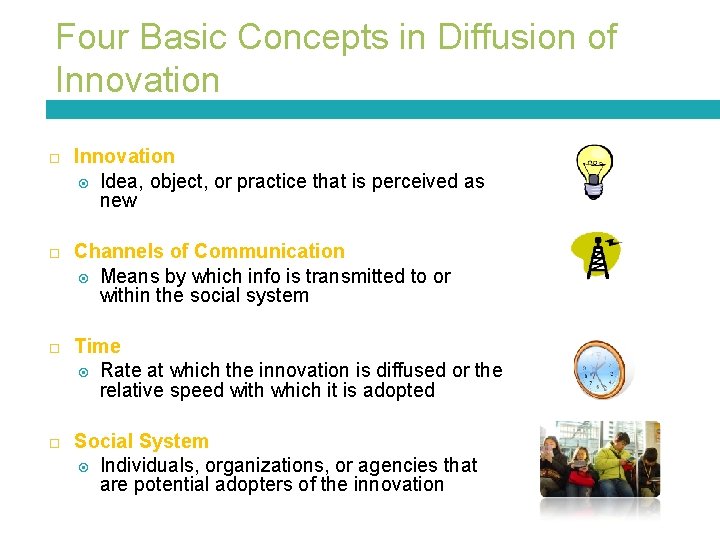
Four Basic Concepts in Diffusion of Innovation Idea, object, or practice that is perceived as new Channels of Communication Means by which info is transmitted to or within the social system Time Rate at which the innovation is diffused or the relative speed with which it is adopted Social System Individuals, organizations, or agencies that are potential adopters of the innovation 4
Common Scope of Diffusion Research (1) Characteristics of an innovation which may influence its adoption (2) Decision-making process that occurs when individuals consider adopting a new innovation (3) The characteristics of individuals that make them likely to adopt the innovation (4) The consequences for individuals and society of adopting the innovation (5) Communication channels used in the adoption process (efficiency, speed of distribution, etc) 5
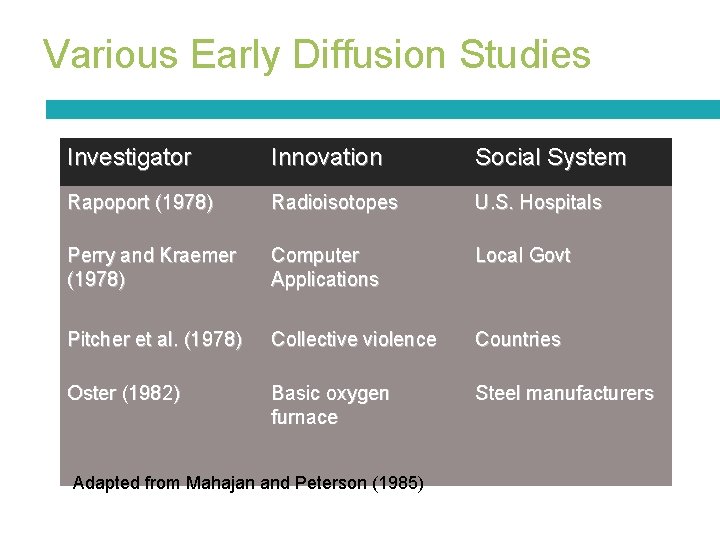
Various Early Diffusion Studies 6 Investigator Innovation Social System Rapoport (1978) Radioisotopes U. S. Hospitals Perry and Kraemer (1978) Computer Applications Local Govt Pitcher et al. (1978) Collective violence Countries Oster (1982) Basic oxygen furnace Steel manufacturers Adapted from Mahajan and Peterson (1985)
Purpose of Diffusion Models To depict the successive increase in the number of adopters over time. Permits prediction of the continued development of the diffusion process. Facilitates a theoretical explanation of the dynamics of the diffusion process. 7
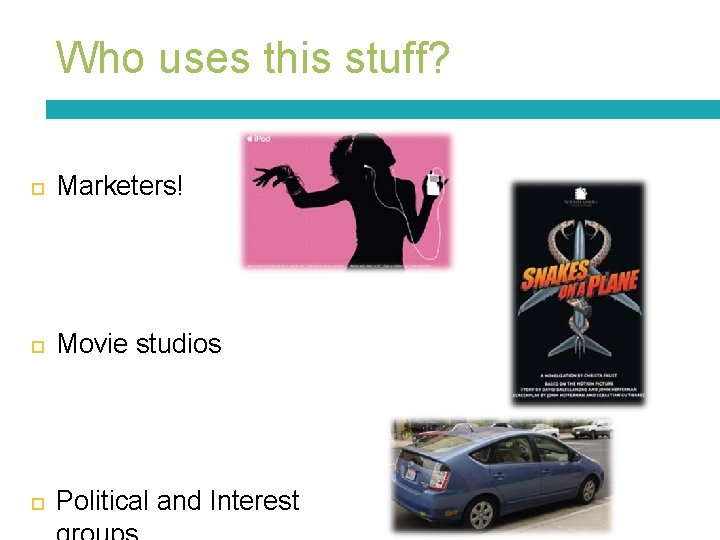
Who uses this stuff? Marketers! Movie studios Political and Interest 8
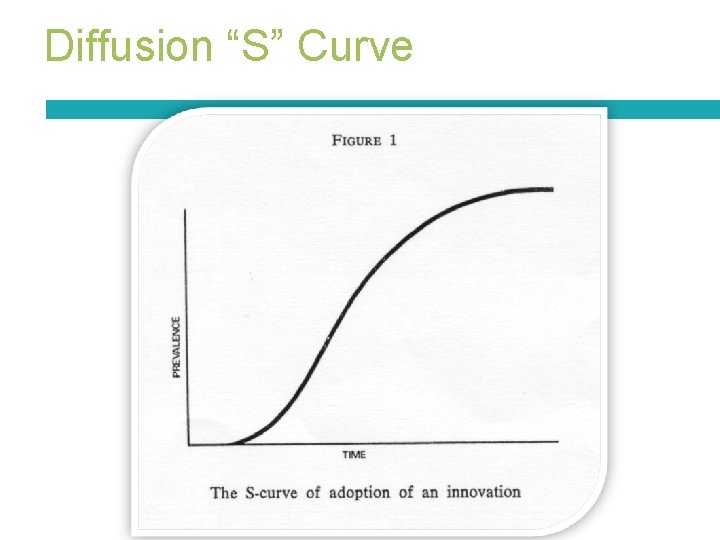
Foundations of Research on Diffusion of Innovations Gabriel Tarde (1903) Proposed the S-shaped curve As it turned out, study after study tended to show the exact same S-shaped curve when researchers plot the rate of adoption over time. 9
Diffusion “S” Curve 10
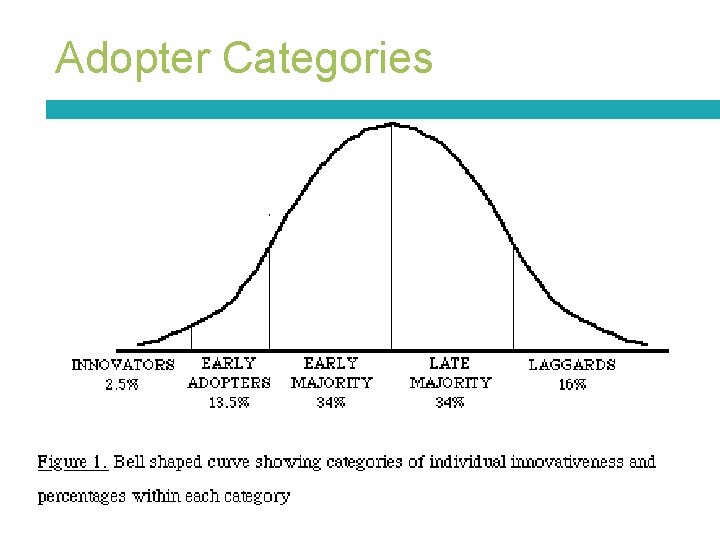
Foundations of Research on Diffusion of Innovations Ryan and Gross (1943) Categories of Adopters (relative time of adoption) Innovators Early adopters Early/Late Majorities Laggards 11
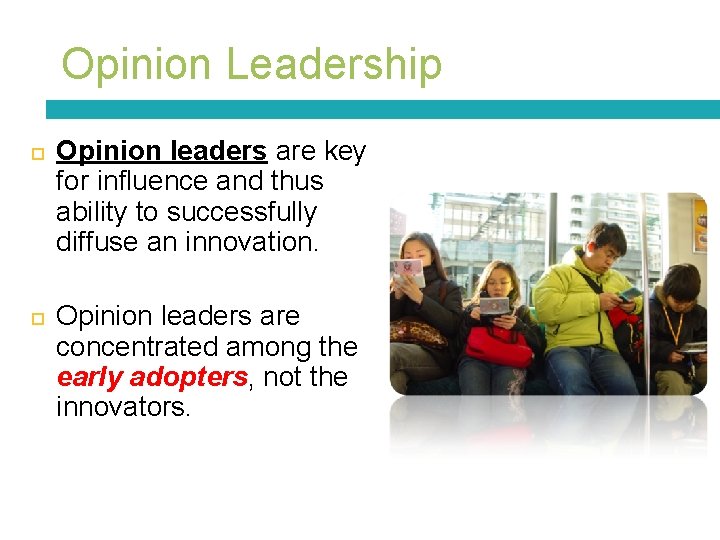
Opinion Leadership Opinion leaders are key for influence and thus ability to successfully diffuse an innovation. Opinion leaders are concentrated among the early adopters, not the innovators. 12
Adopter Categories 13
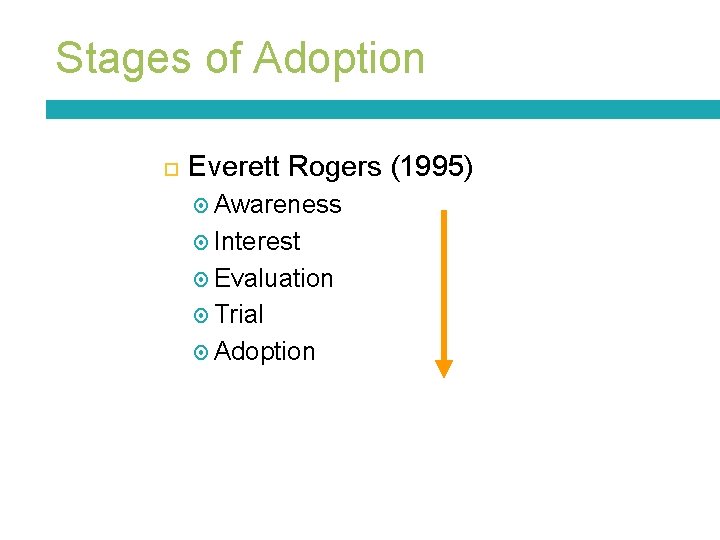
Stages of Adoption Everett Rogers (1995) Awareness Interest Evaluation Trial Adoption 14
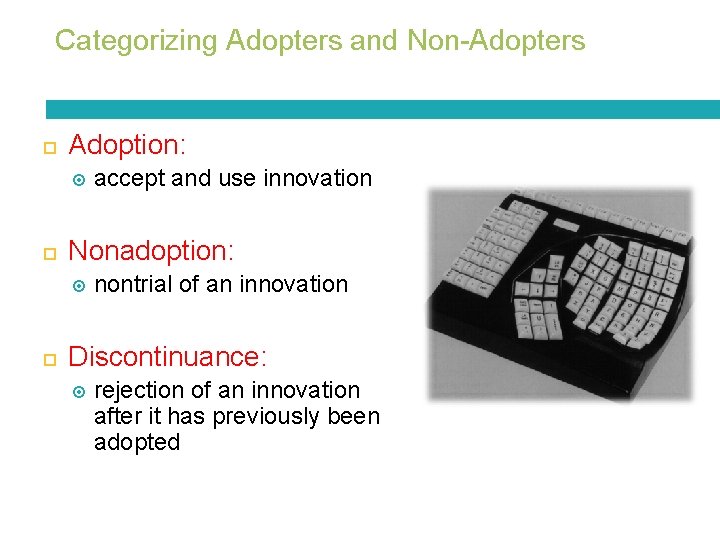
Categorizing Adopters and Non-Adopters Adoption: Nonadoption: accept and use innovation nontrial of an innovation Discontinuance: rejection of an innovation after it has previously been adopted 15
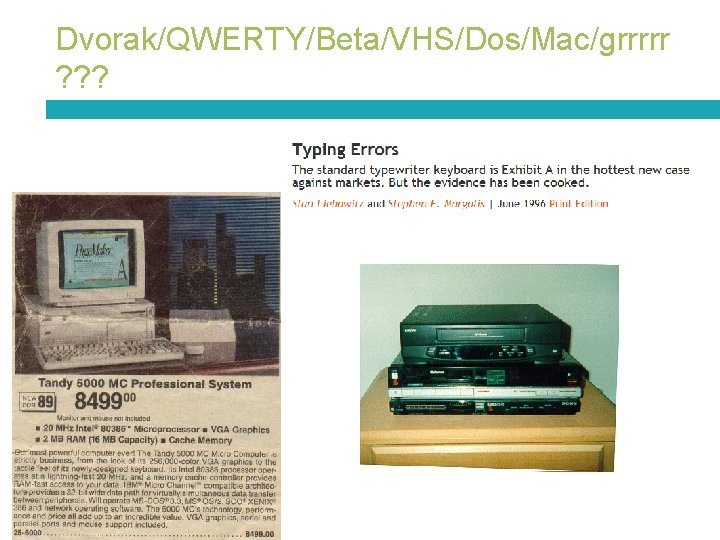
Dvorak/QWERTY/Beta/VHS/Dos/Mac/grrrrr ? ? ?
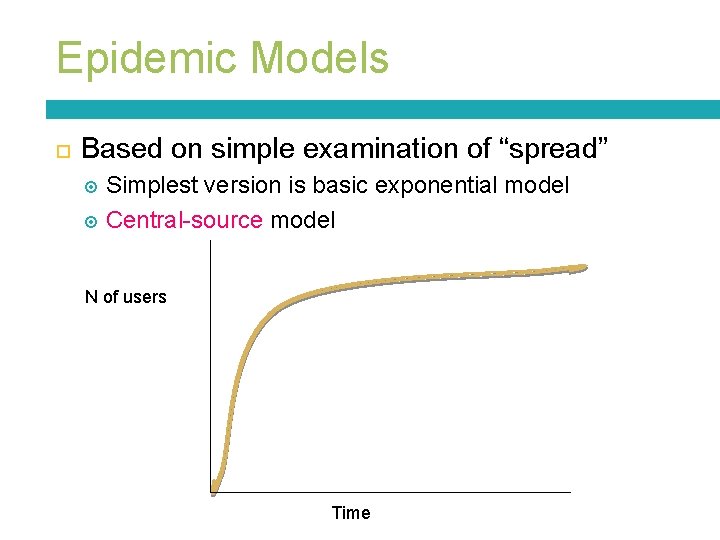
Epidemic Models Based on simple examination of “spread” Simplest version is basic exponential model Central-source model N of users Time 17
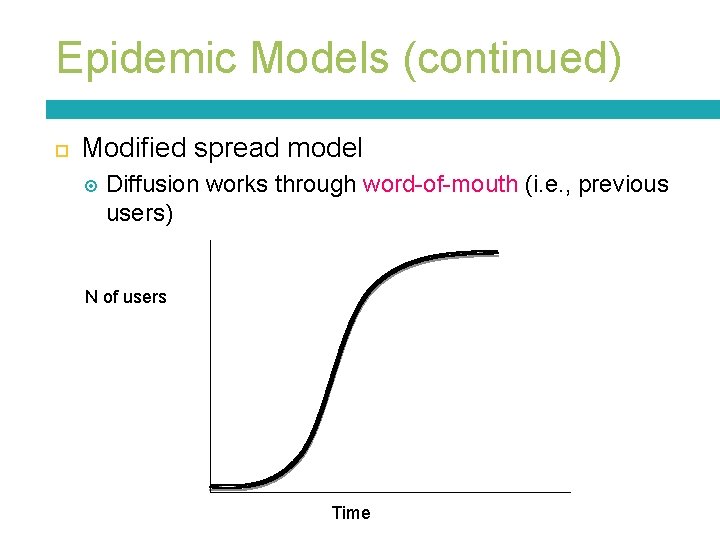
Epidemic Models (continued) Modified spread model Diffusion works through word-of-mouth (i. e. , previous users) N of users Time 18
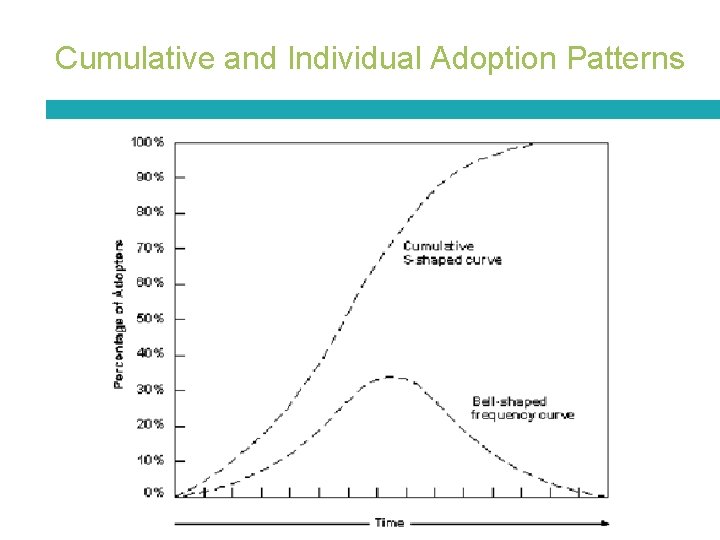
Cumulative and Individual Adoption Patterns 19
Assumptions of Simple Epidemic Models Homophily Individuals or groups tend to hang out with others who are similar to them (demographics, attitudes, etc) N is usually constant Speed of Diffusion usually constant 20
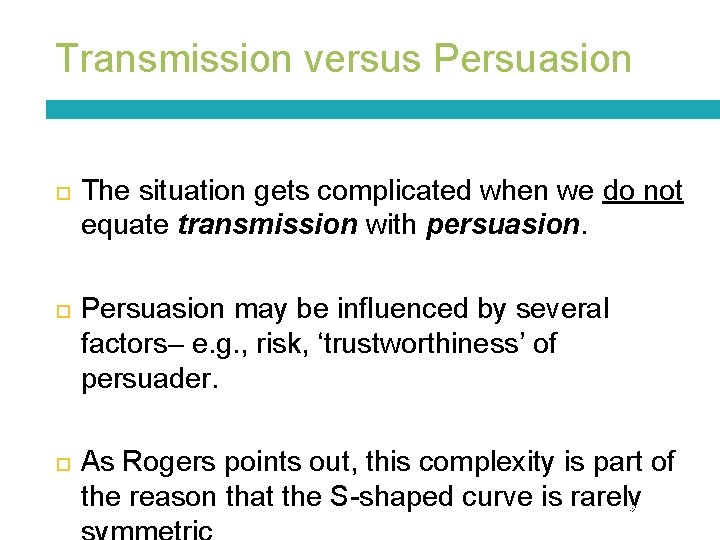
Transmission versus Persuasion The situation gets complicated when we do not equate transmission with persuasion. Persuasion may be influenced by several factors– e. g. , risk, ‘trustworthiness’ of persuader. As Rogers points out, this complexity is part of the reason that the S-shaped curve is rarely 21
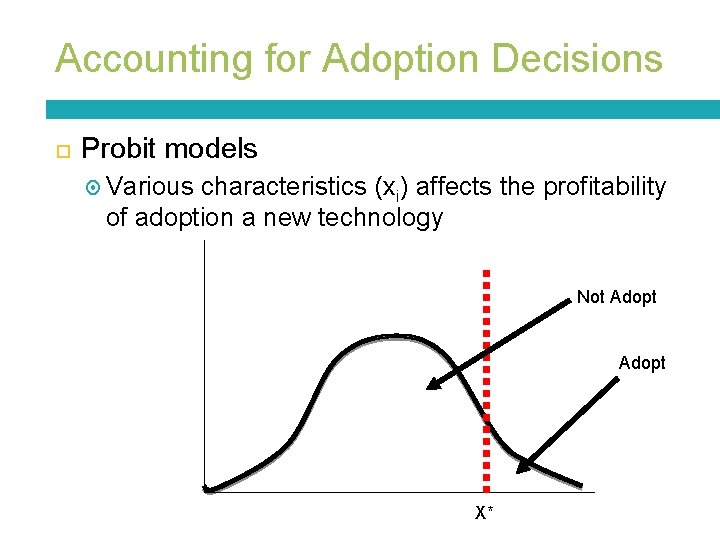
Accounting for Adoption Decisions Probit models Various characteristics (xi) affects the profitability of adoption a new technology Not Adopt X* 22
“Relevant Characteristics” Probit models depend on specifying relevant characteristics which might influence potential adoption. Potential Relevant Characteristics (Geroski 2000) Firm Size as one of the most common– why? Suppliers Technological Expectations Costs Learning costs Search Costs Switching Costs Opportunity Costs 23
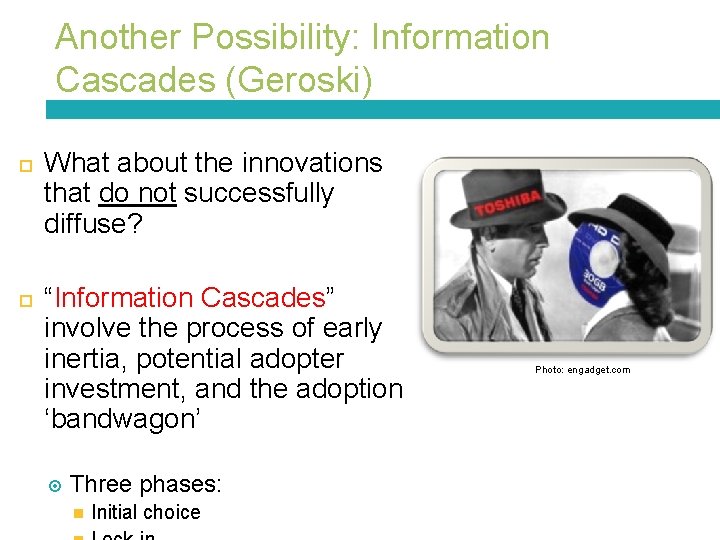
Another Possibility: Information Cascades (Geroski) What about the innovations that do not successfully diffuse? “Information Cascades” involve the process of early inertia, potential adopter investment, and the adoption ‘bandwagon’ Three phases: Initial choice Photo: engadget. com
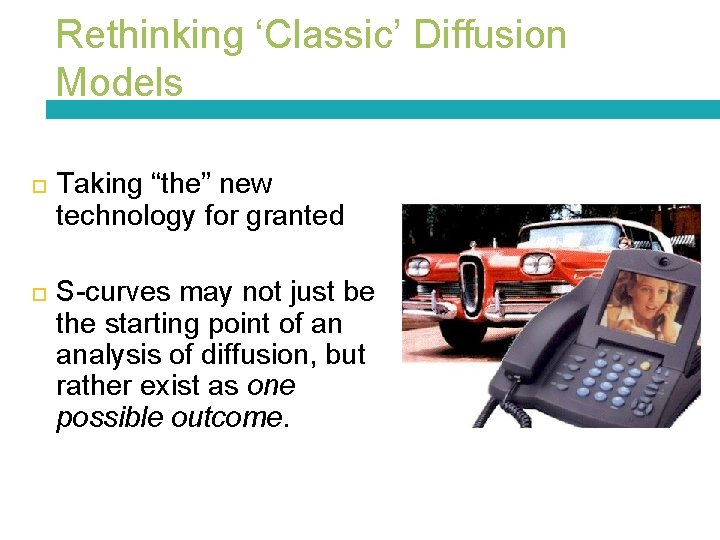
Rethinking ‘Classic’ Diffusion Models Taking “the” new technology for granted S-curves may not just be the starting point of an analysis of diffusion, but rather exist as one possible outcome.