
1 Learning Objectives Understanding of Internal growth strategies
1
Learning Objectives Understanding of: • Internal growth strategies and implications for organization scope and resource allocations • External growth strategies and implications for organization scope and resource allocations • The timing of growth moves • Generic competitive strategies and their risks • The implications of stages in the product life cycle for growth and competitive strategies. 2
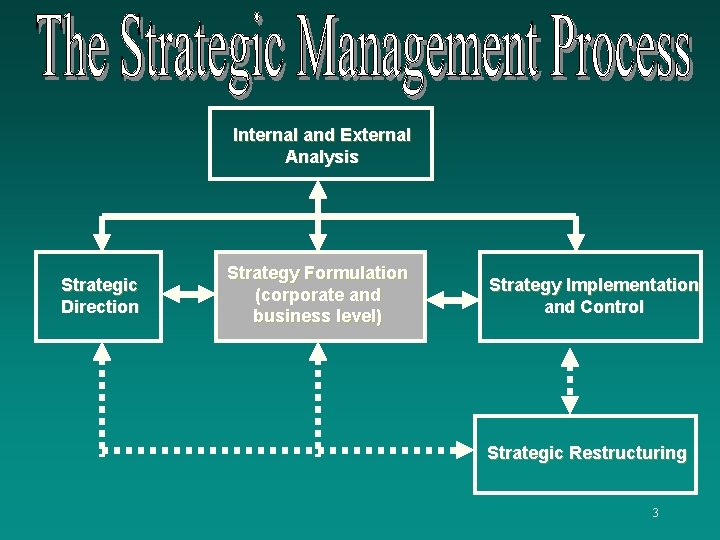
Internal and External Analysis Strategic Direction Strategy Formulation (corporate and business level) Strategy Implementation and Control Strategic Restructuring 3
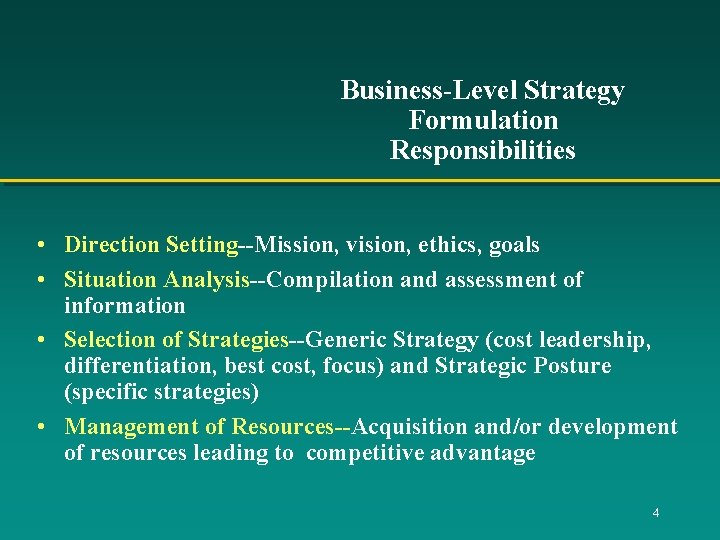
Business-Level Strategy Formulation Responsibilities • Direction Setting--Mission, vision, ethics, goals • Situation Analysis--Compilation and assessment of information • Selection of Strategies--Generic Strategy (cost leadership, differentiation, best cost, focus) and Strategic Posture (specific strategies) • Management of Resources--Acquisition and/or development of resources leading to competitive advantage 4
Business-Level Strategies • Growth Strategies • Competitive Strategies 5
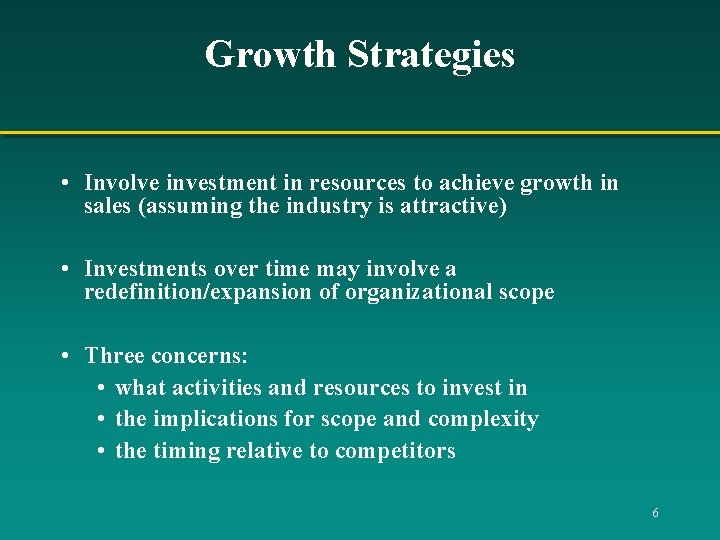
Growth Strategies • Involve investment in resources to achieve growth in sales (assuming the industry is attractive) • Investments over time may involve a redefinition/expansion of organizational scope • Three concerns: • what activities and resources to invest in • the implications for scope and complexity • the timing relative to competitors 6
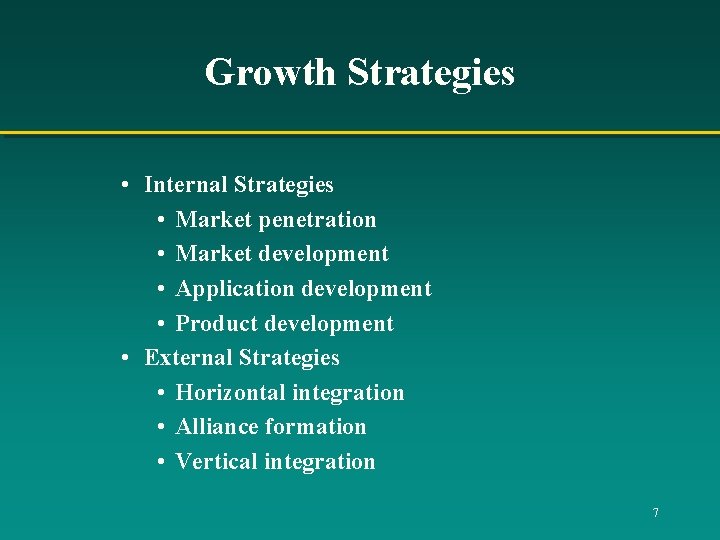
Growth Strategies • Internal Strategies • Market penetration • Market development • Application development • Product development • External Strategies • Horizontal integration • Alliance formation • Vertical integration 7
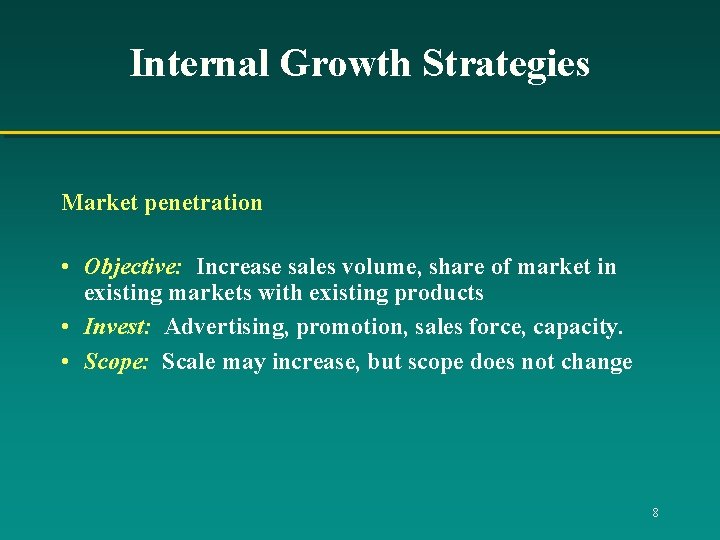
Internal Growth Strategies Market penetration • Objective: Increase sales volume, share of market in existing markets with existing products • Invest: Advertising, promotion, sales force, capacity. • Scope: Scale may increase, but scope does not change 8
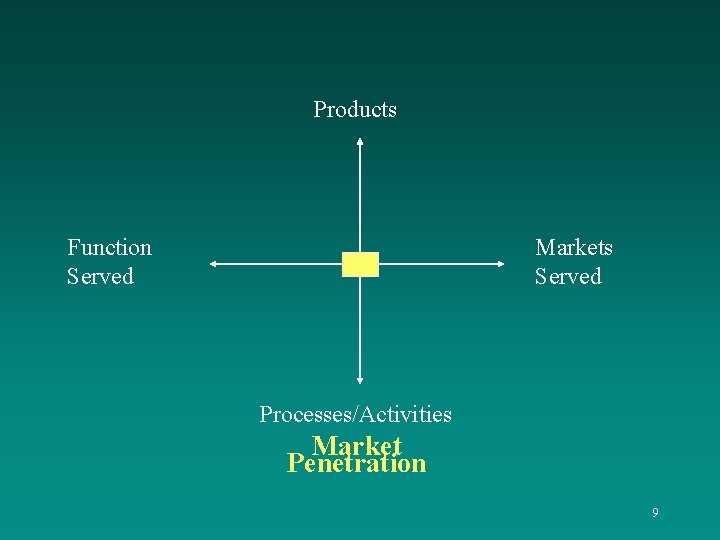
Products Function Served Markets Served Processes/Activities Market Penetration 9
Internal Growth Strategies Market development • Objective: Cultivate new market segments (demographic, geographic, psychographic) for existing products • Invest: Marketing programs, new distribution channels, new sales staff, capacity. . . • Scope: Increases the number and type of markets served 10
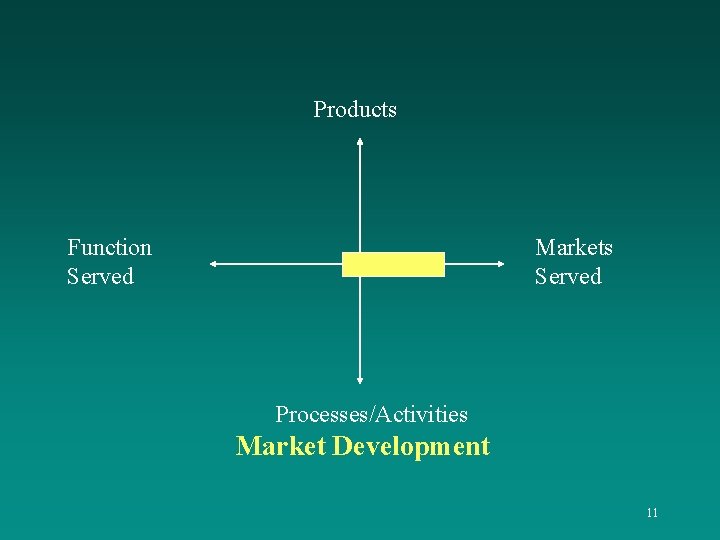
Products Function Served Markets Served Processes/Activities Market Development 11
Internal Growth Strategies Application development • Objective: Qualify the product for new applications, which will lead to more volume sold to new and existing market segments. • Invest: Applications development, testing, marketing programs, new distribution channels, new sales staff, capacity. . . • Scope: Increases the number and type of functions served, and possibly the number and type of markets served 12
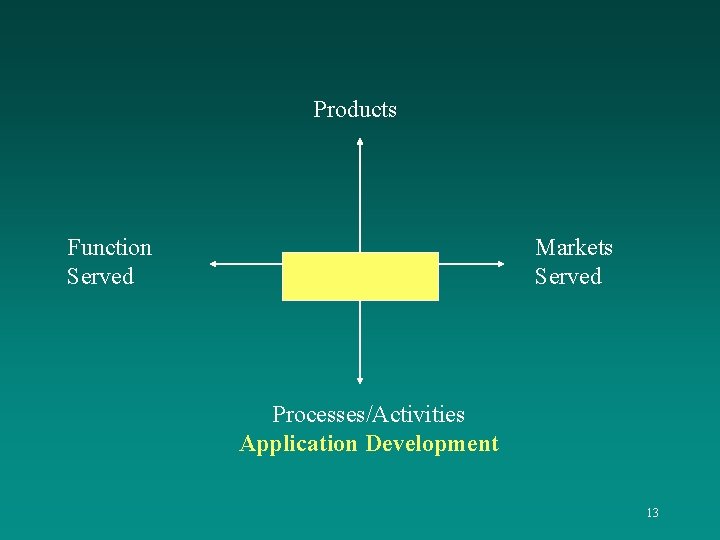
Products Function Served Markets Served Processes/Activities Application Development 13
Internal Growth Strategies Product Development • Objective: Develop new products and modifications that will lead to sales in new and existing market segments, possibly for new applications. • Invest: Product development, process development, applications development, testing, marketing programs, new distribution channels, new sales staff, capacity. . . • Scope: Increases the number/type of products, processes, functions served, and possibly the number and type of markets served 14
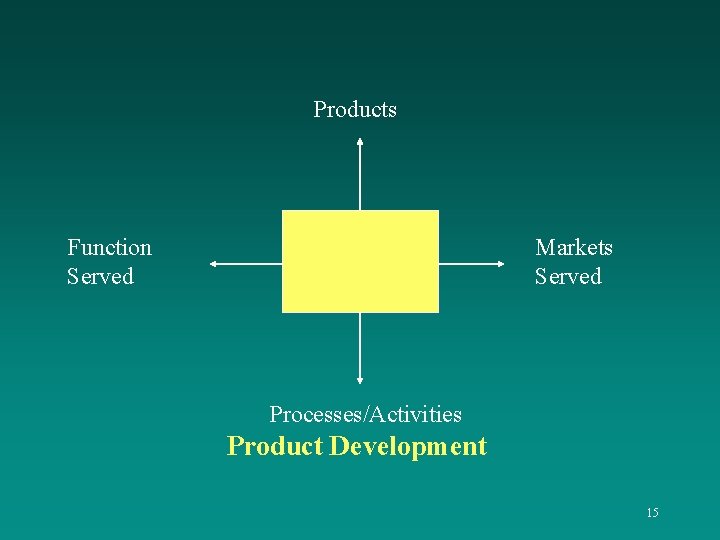
Products Function Served Markets Served Processes/Activities Product Development 15
External Growth Strategies Horizontal Integration • Objective: Intention is to accomplish the same end as the internal growth strategies. Acquire capacity, product lines, market channels, etc. • Invest: Acquire all or part of a competitor’s assets. • Scope: May increase scale and/or scope, similar to internal growth strategies. 16
External Growth Strategies Common in industries: • experiencing a leveling of growth and excess capacity: • $75. 7 billion merger of Smith, Kline, Beecham with Glaxo Wellcome • acquisition of Western Airlines by Delta. • where rapid scale-up and access to new technologies are critical: • Cisco’s acquisition of 51 companies over 6 years, reshaping product line and repositioning in key technologies. 17
External Growth Strategies Strategic Alliances/Joint Ventures • Objective: To gain access to the capacity and/or capability of another firm for purposes of extending products, markets, processes, of function served. • Invest: In cooperative initiatives. Management team, project resources. • Scope: Provides a mechanism for extending scope. 18
External Growth Strategies • Alliances between competitors for product and process development • E. g. , GM -- an on-line marketplace for auto suppliers’ goods and services. Toyota, Isuzu, Suzuki, and Fuji involved. • E. g. , GM -- an alliance with Honda for engine and transmission development and production. • And between a firm and its suppliers or channels for exclusive supply arrangements 19
Stability Strategies • Not typical in publicly-held organizations • May be acceptable if ØAll key stakeholders agree ØMature market with high exit barriers ØPrivate firms that want to preserve control ØRestructuring (temporary condition) 20
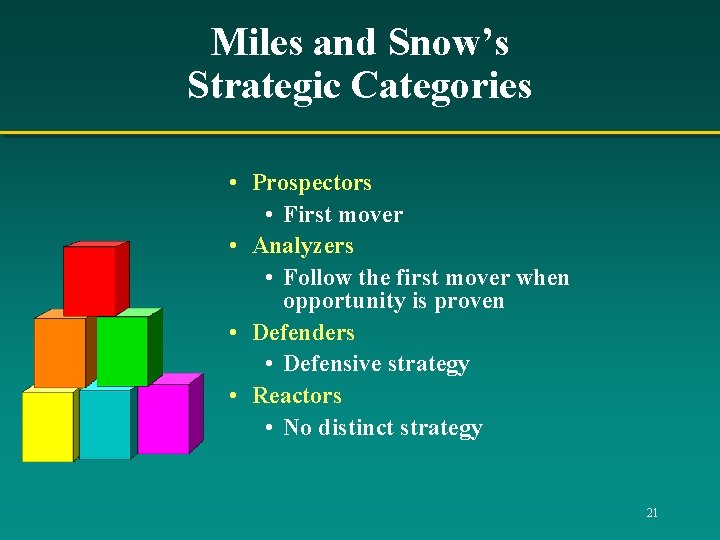
Miles and Snow’s Strategic Categories • Prospectors • First mover • Analyzers • Follow the first mover when opportunity is proven • Defenders • Defensive strategy • Reactors • No distinct strategy 21
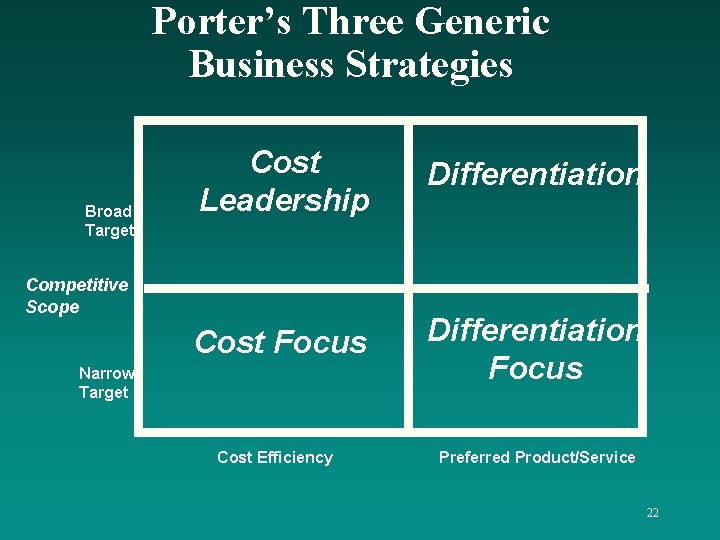
Porter’s Three Generic Business Strategies Broad Target Cost Leadership Differentiation Cost Focus Differentiation Focus Competitive Scope Narrow Target Cost Efficiency Preferred Product/Service 22
Cost Leadership • Accurate Demand Forecasting and High Capacity Utilization • Economies of Scale • Technological Advances • Learning/Experience Effects 23
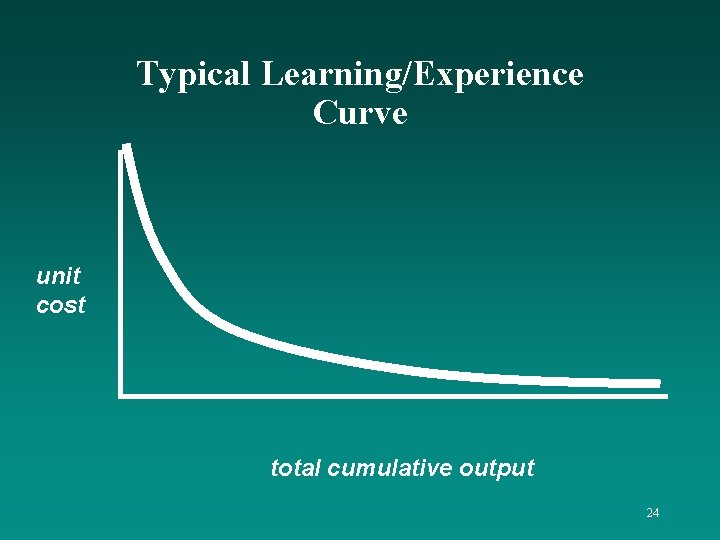
Typical Learning/Experience Curve unit cost total cumulative output 24
Differentiation Create Value Through Uniqueness • Superior Quality • Innovations and Research • Speed and Flexibility • Reputation and Brand Name • Creative advertising Customers Must Be Willing to Pay More for Uniqueness • Added costs vs. incremental price 25
Best Cost • Combination of Cost Leadership and Differentiation • May Actually Be the Dominant Strategy Among the Most Successful Companies Today • Either: ØThe same resources/activities that allow cost reductions also allow differentiation. E. g. , automation that lowers costs and improves speed and service. ØProfits from cost reductions are used to invest in differentiating features, and vice versa. 26
Focus • Based on Differentiation or Lowest Cost • Key Is to Provide a Product or Service That Caters to a Particular Segment 27
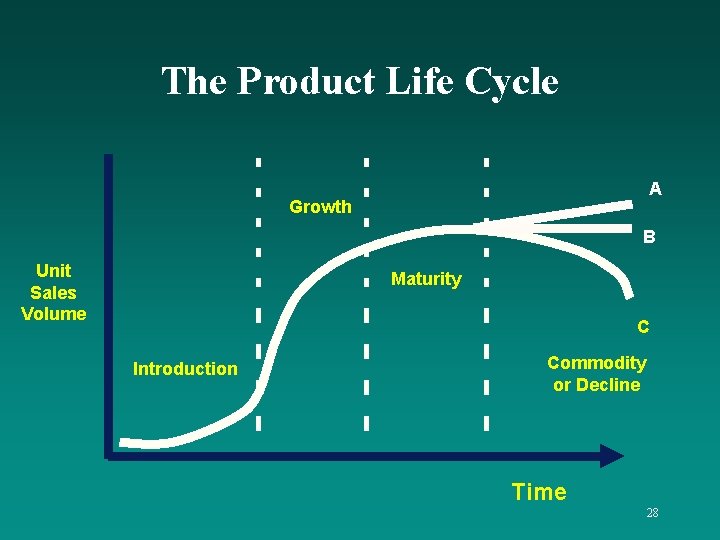
The Product Life Cycle A Growth B Unit Sales Volume Maturity C Introduction Commodity or Decline Time 28
- Slides: 28