
1 Knowledge Guided ShortText Classification For Healthcare Applications
- Slides: 21
1 Knowledge Guided Short-Text Classification For Healthcare Applications ADVISOR: JIA-LING, KOH SOURCE: 2017 IEEE INTERNATIONAL CONFERENCE ON DATA MINING SPEAKER: SHAO-WEI, HUANG DATE: 2018/11/26
OUTLINE l Introduction l Method l Experiment l Conclusion 2
OUTLINE l Introduction l Method l Experiment l Conclusion 3
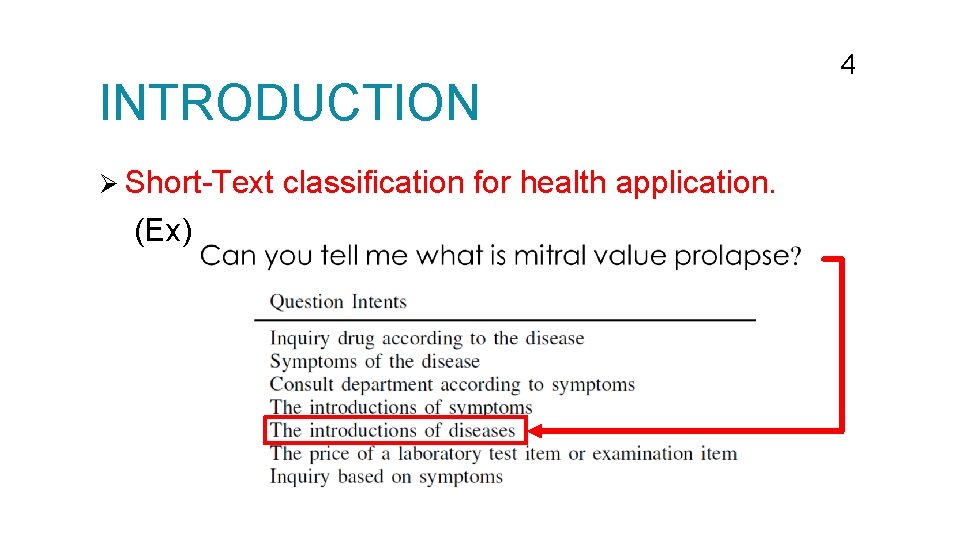
INTRODUCTION Ø Short-Text (Ex) classification for health application. 4
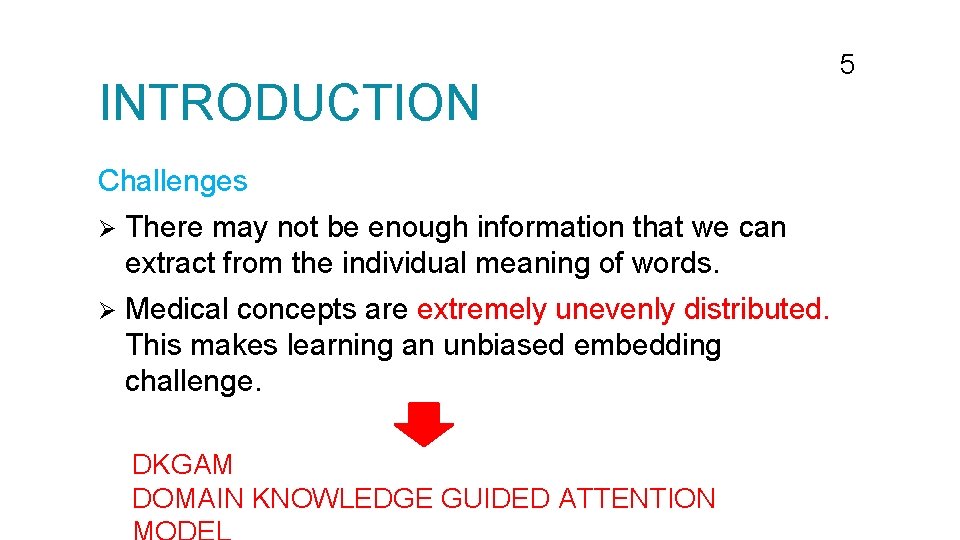
INTRODUCTION Challenges Ø There may not be enough information that we can extract from the individual meaning of words. Ø Medical concepts are extremely unevenly distributed. This makes learning an unbiased embedding challenge. DKGAM DOMAIN KNOWLEDGE GUIDED ATTENTION 5
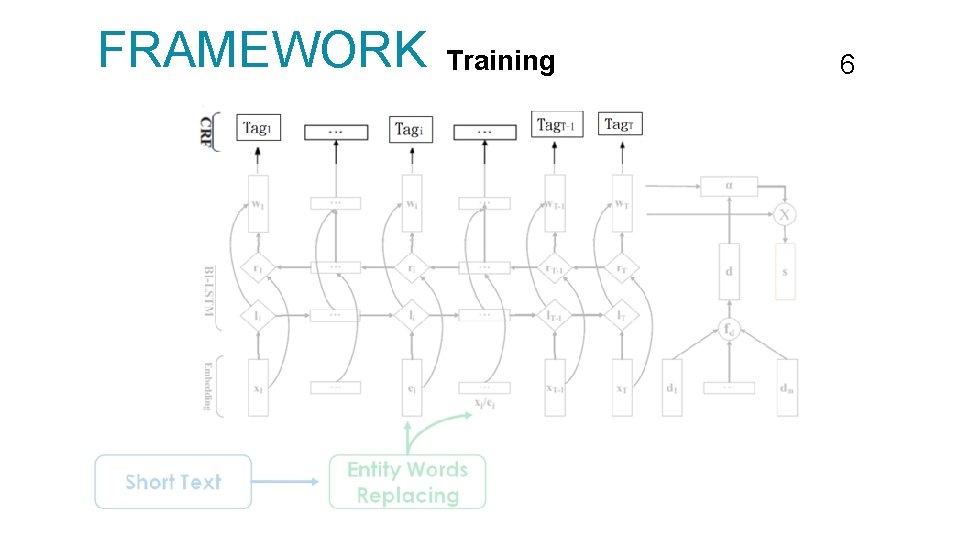
FRAMEWORK Training 6
OUTLINE Introduction Method Experiment Conclusion 7
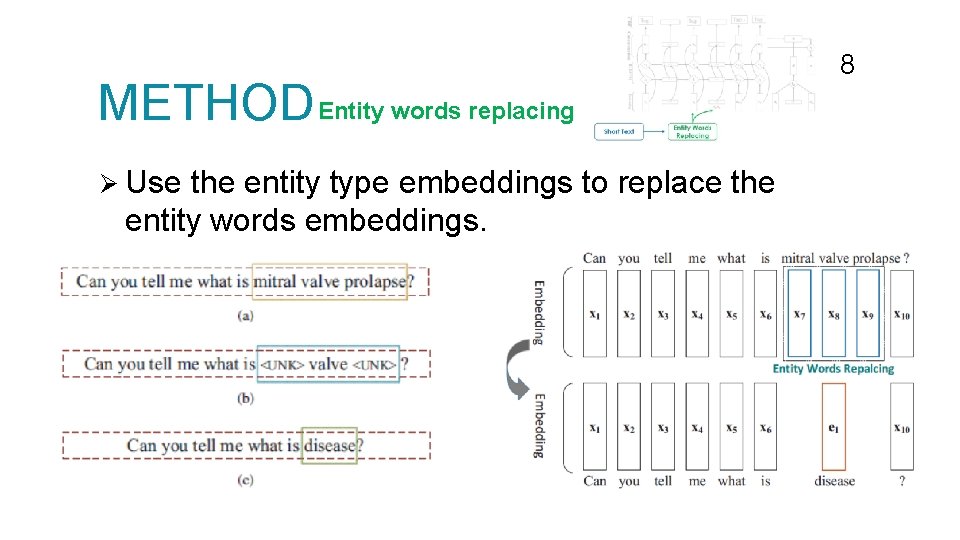
METHOD Entity words replacing Ø Use the entity type embeddings to replace the entity words embeddings. 8
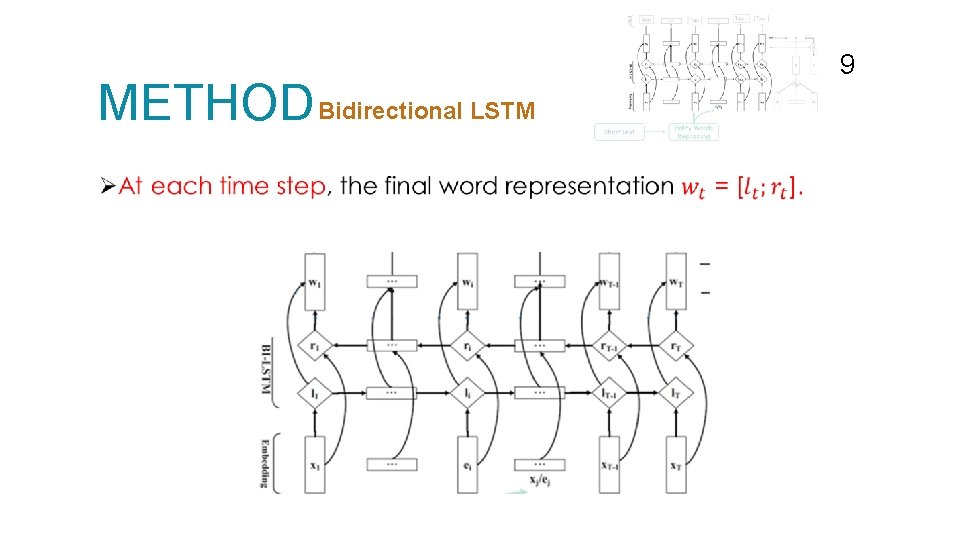
METHOD Bidirectional LSTM 9
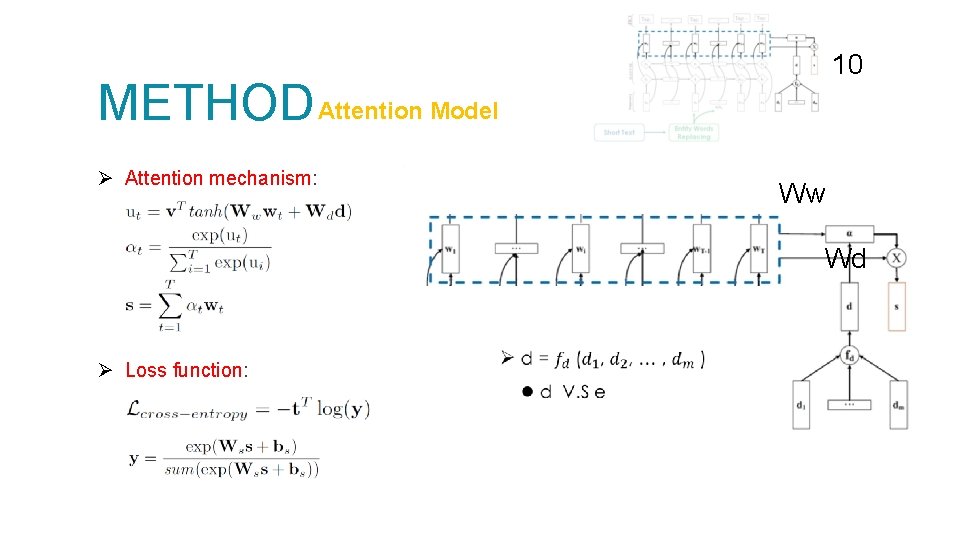
10 METHOD Attention Model Ø Attention mechanism: Ww Wd Ø Loss function:
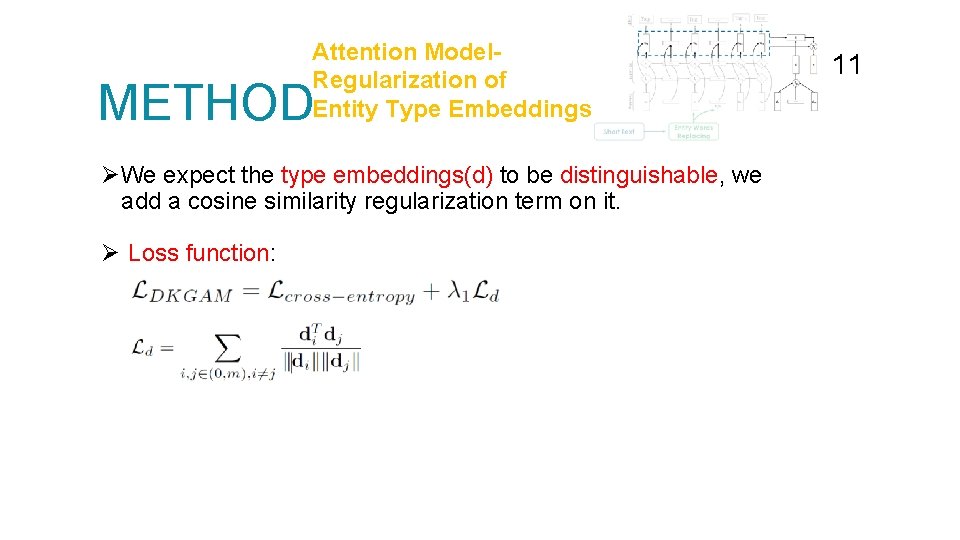
Attention Model. Regularization of Entity Type Embeddings METHOD ØWe expect the type embeddings(d) to be distinguishable, we add a cosine similarity regularization term on it. Ø Loss function: Ø DKGAM = Entity words replacing + Bidirectional LSTM + Attention Model 11
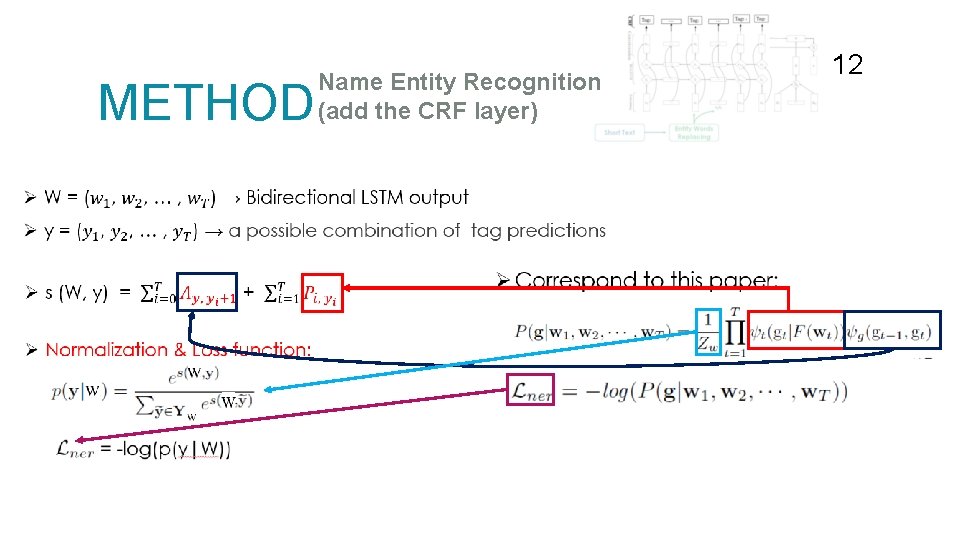
METHOD Name Entity Recognition (add the CRF layer) 12
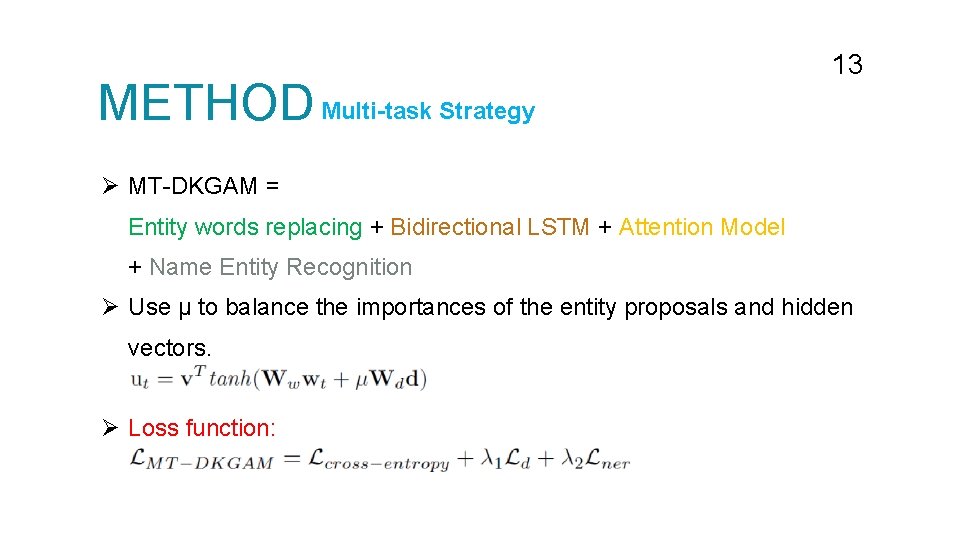
METHOD Multi-task Strategy 13 Ø MT-DKGAM = Entity words replacing + Bidirectional LSTM + Attention Model + Name Entity Recognition Ø Use μ to balance the importances of the entity proposals and hidden vectors. Ø Loss function:
OUTLINE Introduction Method Experiment Conclusion 14
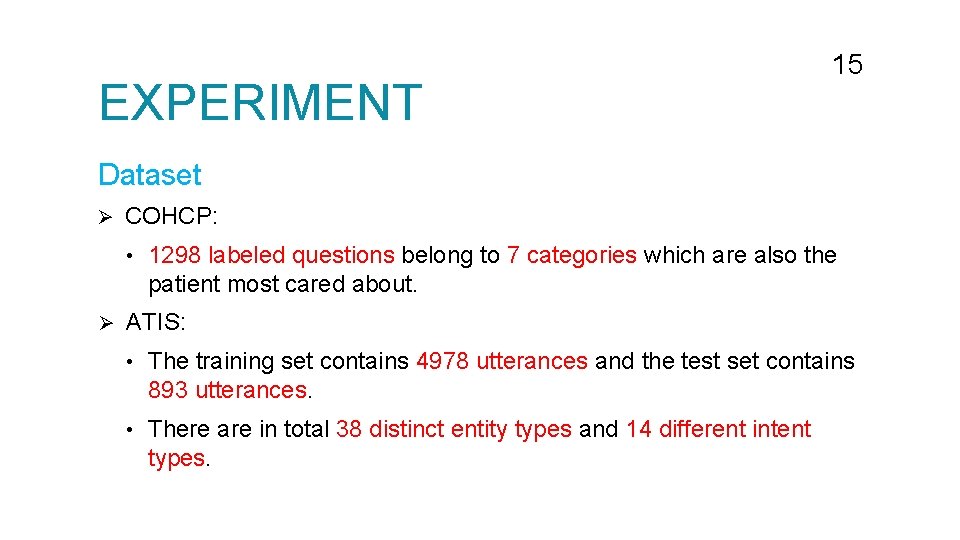
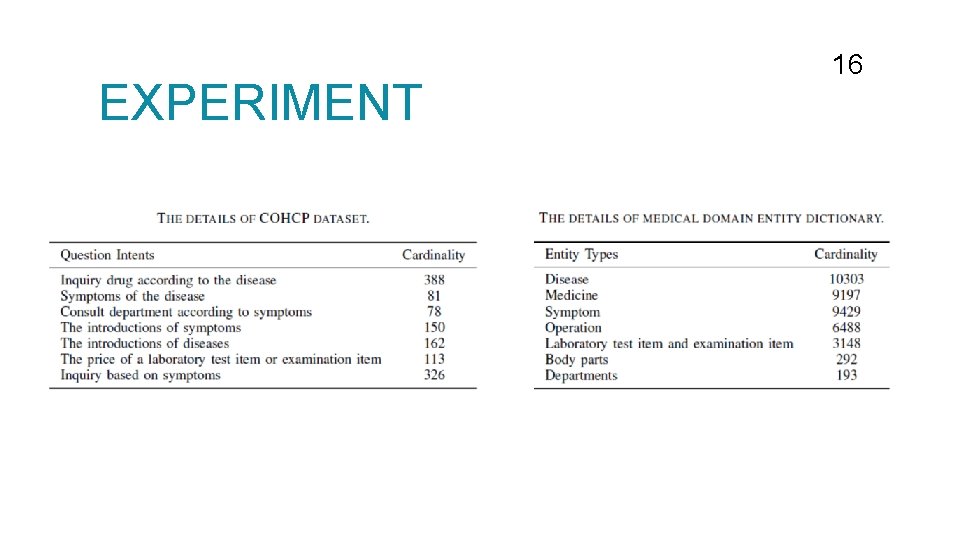
EXPERIMENT 15 Dataset Ø COHCP: • Ø 1298 labeled questions belong to 7 categories which are also the patient most cared about. ATIS: • The training set contains 4978 utterances and the test set contains 893 utterances. • There are in total 38 distinct entity types and 14 different intent types.
EXPERIMENT 16
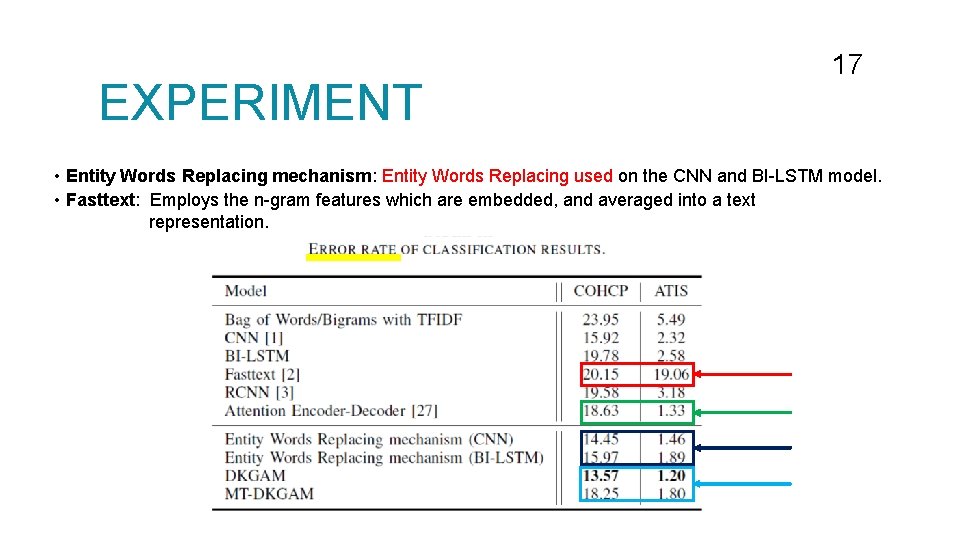
EXPERIMENT 17 • Entity Words Replacing mechanism: Entity Words Replacing used on the CNN and BI-LSTM model. • Fasttext: Employs the n-gram features which are embedded, and averaged into a text representation.
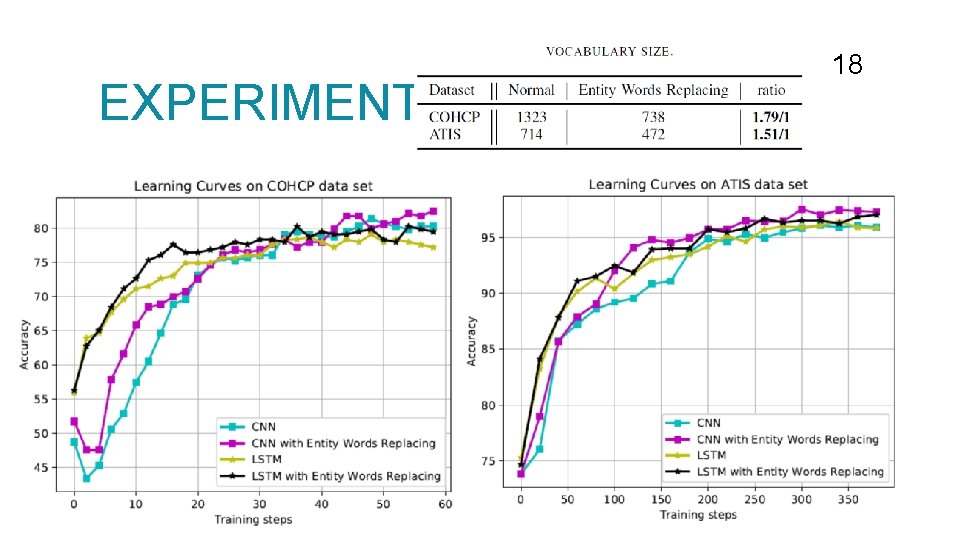
EXPERIMENT 18
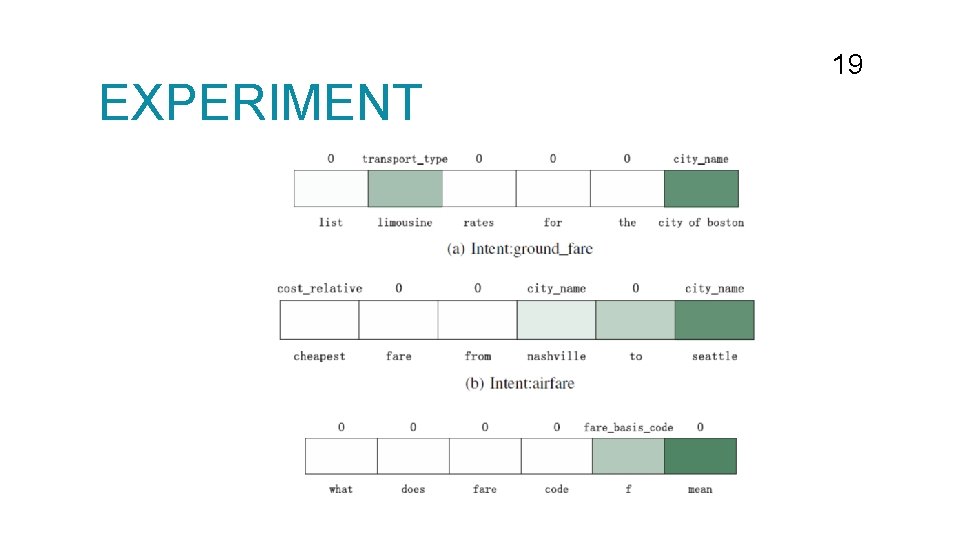
EXPERIMENT 19
OUTLINE Introduction Method Experiment Conclusion 20
CONCLUSION 21 Ø Proposed an Entity Words Replacing mechanism to remedy the impact of lacking embeddings of unrecognized entity words so as to utilize the available information more efficiently. Ø Proposed a domain knowledge guided attention model which aims to utilize the domain knowledge dictionary at hand to refine the classification performance. Ø Develop a multi-task model to jointly learn the domain knowledge dictionary and do the classification task.