
1 Introduction to the course of urban history
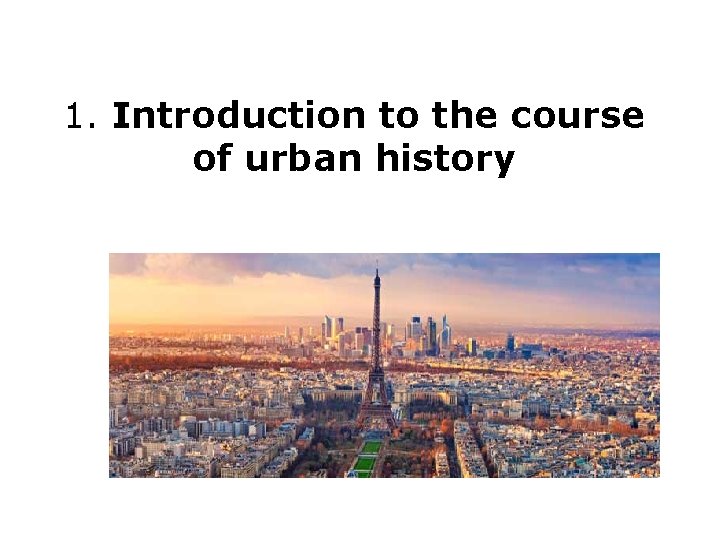
1. Introduction to the course of urban history
Cities as tourist destinations • The importance of urban centres to global tourism, both business and leisure. • City destinations ranking (source: Euromonitor International). Over a third of the top hundred destinations are located in the Asian Pacific region. The top three are Hong Kong, Singapore and Bangkok. London and Paris are Western Europe’s leading cities. • For cultural tourism, European cities remain probably world leaders.


The aims of the course • Build a patrimony of historic knowledge useful for the enhancement of urban tourism. • Experiencing the planning of tourist and cultural routes within the cities. • Discussing strategies and initiatives to promote the cities images. • Structure and contents of the course.
The city in European history • In 2008, for the first time, the majority of the world’s inhabitants lived in cities. Europe as one of the most urbanized continents since the Middle Ages. • The city as a pillar of European continuity and stability. Trade, culture, industrial specialization, service sector, political power, immigration. • The distinctiveness of the European urban system in the globalized world. A way of life?
The nature of urban history • An ambiguous definition. • The origins: city chronicles and early towns histories in the Middle Ages. • Urban history as an academic subject. Max Weber, Chicago School. • The impact of the social and cultural history. «Annales» , social anthropologists, British school. • The urban history in Italy.
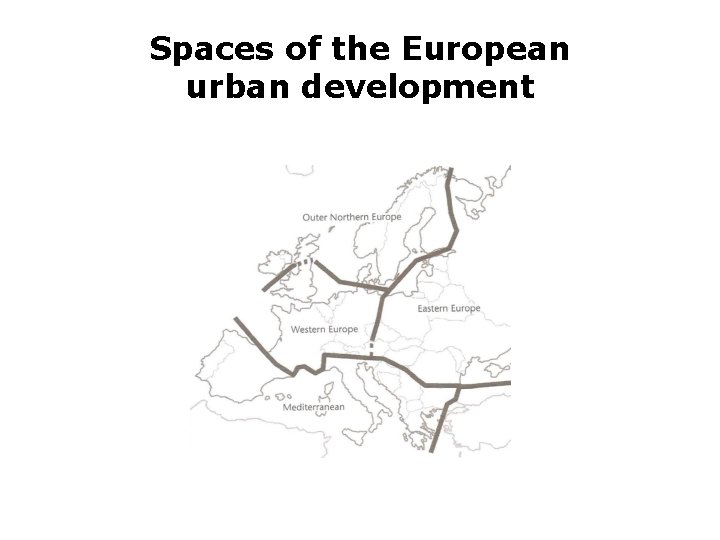
Spaces of the European urban development
Times of the European urban development • VIII-early XIV: slowly urban progress. • XIV-XV: widespread downturn. • XVI-early XVII: urban revival. • XVII-first half XVIII: stagnation and decline. • Second half XVIII-first half XIX: selective growth. • Second half XIX-1970 s-80 s: urban explosion.
- Slides: 9