
1 Introduction and Magnitude of Biodiversity 2 Levels
1. Introduction and Magnitude of Biodiversity. 2. Levels of Biodiversity. 3. Uses of Biodiversity. 4. Threats of Biodiversity. 5. Conservation of Biodiversity. 6. The IUCN red list categories. 7. International efforts for conserving Biodiversity.
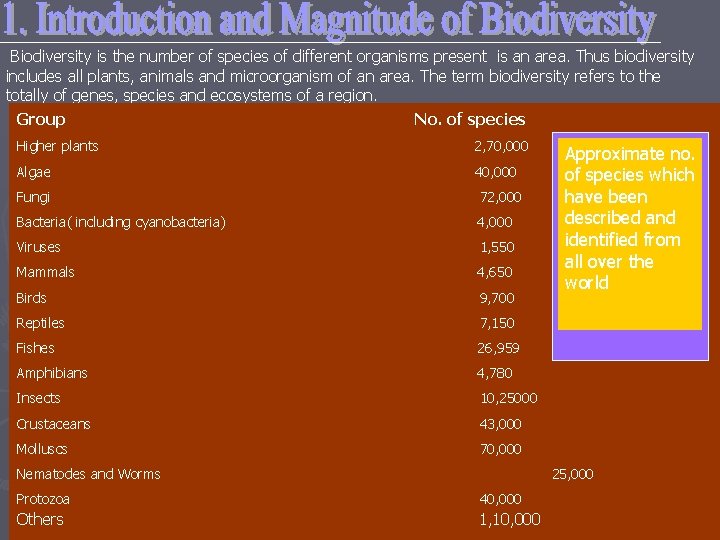
Biodiversity is the number of species of different organisms present is an area. Thus biodiversity includes all plants, animals and microorganism of an area. The term biodiversity refers to the totally of genes, species and ecosystems of a region. Group No. of species Higher plants 2, 70, 000 Algae 40, 000 Fungi 72, 000 Bacteria( including cyanobacteria) 4, 000 Viruses 1, 550 Mammals 4, 650 Birds 9, 700 Reptiles 7, 150 Fishes 26, 959 Amphibians 4, 780 Insects 10, 25000 Crustaceans 43, 000 Molluscs 70, 000 Nematodes and Worms Approximate no. of species which have been described and identified from all over the world 25, 000 Protozoa 40, 000 Others 1, 10, 000
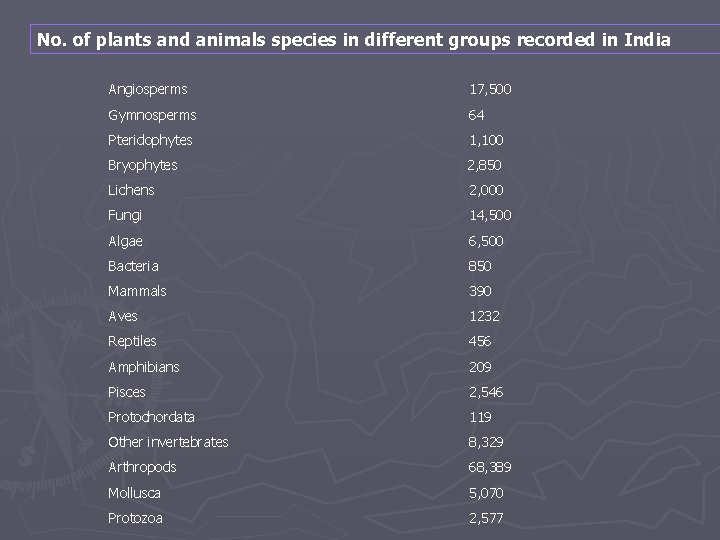
No. of plants and animals species in different groups recorded in India Angiosperms 17, 500 Gymnosperms 64 Pteridophytes 1, 100 Bryophytes 2, 850 Lichens 2, 000 Fungi 14, 500 Algae 6, 500 Bacteria 850 Mammals 390 Aves 1232 Reptiles 456 Amphibians 209 Pisces 2, 546 Protochordata 119 Other invertebrates 8, 329 Arthropods 68, 389 Mollusca 5, 070 Protozoa 2, 577
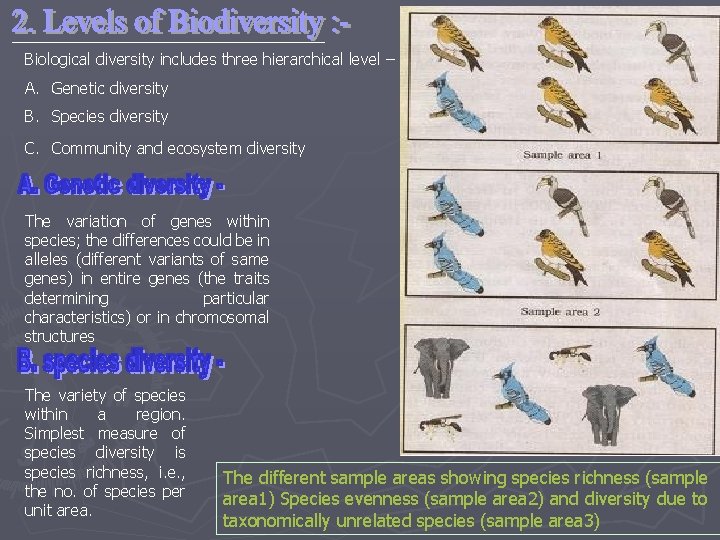
Biological diversity includes three hierarchical level – A. Genetic diversity B. Species diversity C. Community and ecosystem diversity The variation of genes within species; the differences could be in alleles (different variants of same genes) in entire genes (the traits determining particular characteristics) or in chromosomal structures The variety of species within a region. Simplest measure of species diversity is species richness, i. e. , the no. of species per unit area. The different sample areas showing species richness (sample area 1) Species evenness (sample area 2) and diversity due to taxonomically unrelated species (sample area 3)
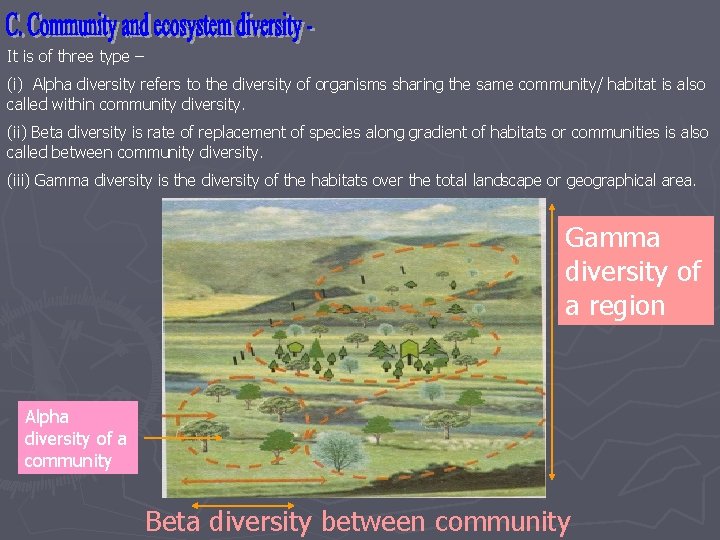
It is of three type – (i) Alpha diversity refers to the diversity of organisms sharing the same community/ habitat is also called within community diversity. (ii) Beta diversity is rate of replacement of species along gradient of habitats or communities is also called between community diversity. (iii) Gamma diversity is the diversity of the habitats over the total landscape or geographical area. Gamma diversity of a region Alpha diversity of a community Beta diversity between community
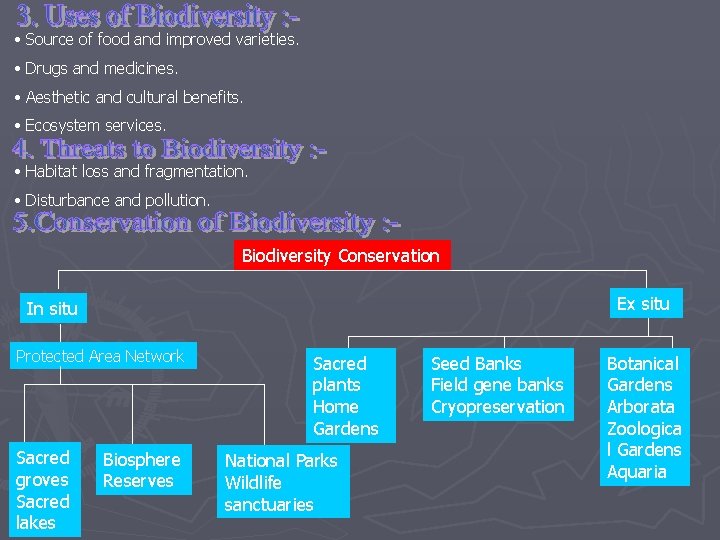
• Source of food and improved varieties. • Drugs and medicines. • Aesthetic and cultural benefits. • Ecosystem services. • Habitat loss and fragmentation. • Disturbance and pollution. Biodiversity Conservation Ex situ In situ Protected Area Network Sacred groves Sacred lakes Biosphere Reserves Sacred plants Home Gardens National Parks Wildlife sanctuaries Seed Banks Field gene banks Cryopreservation Botanical Gardens Arborata Zoologica l Gardens Aquaria
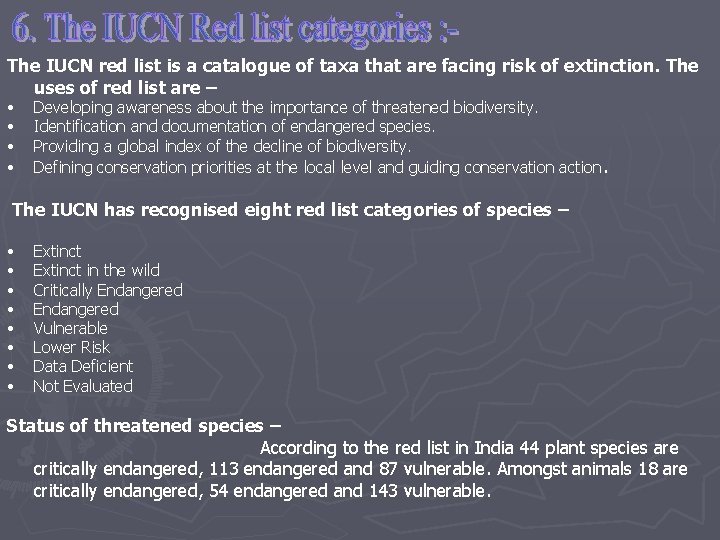
The IUCN red list is a catalogue of taxa that are facing risk of extinction. The uses of red list are – • • Developing awareness about the importance of threatened biodiversity. Identification and documentation of endangered species. Providing a global index of the decline of biodiversity. Defining conservation priorities at the local level and guiding conservation action. The IUCN has recognised eight red list categories of species – • • Extinct in the wild Critically Endangered Vulnerable Lower Risk Data Deficient Not Evaluated Status of threatened species – According to the red list in India 44 plant species are critically endangered, 113 endangered and 87 vulnerable. Amongst animals 18 are critically endangered, 54 endangered and 143 vulnerable.
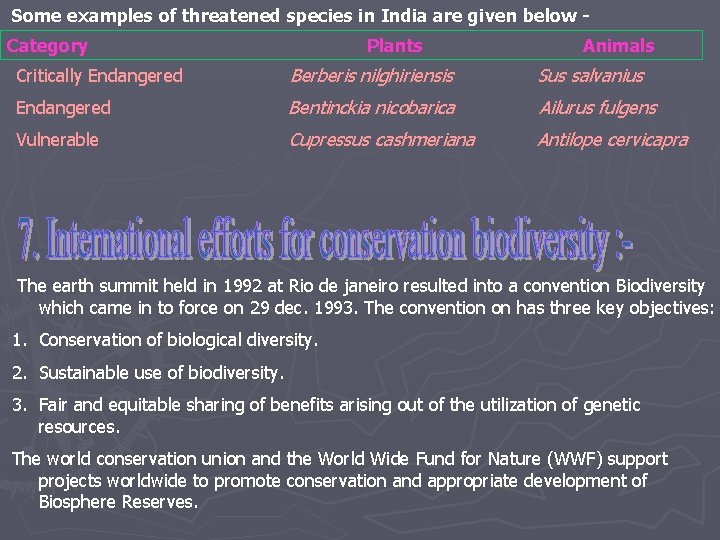
Some examples of threatened species in India are given below Category Plants Animals Critically Endangered Berberis nilghiriensis Sus salvanius Endangered Bentinckia nicobarica Ailurus fulgens Vulnerable Cupressus cashmeriana Antilope cervicapra The earth summit held in 1992 at Rio de janeiro resulted into a convention Biodiversity which came in to force on 29 dec. 1993. The convention on has three key objectives: 1. Conservation of biological diversity. 2. Sustainable use of biodiversity. 3. Fair and equitable sharing of benefits arising out of the utilization of genetic resources. The world conservation union and the World Wide Fund for Nature (WWF) support projects worldwide to promote conservation and appropriate development of Biosphere Reserves.
• Haywood: Global Diversity • Odum: Fundamental of Ecology • INTERNET
- Slides: 10