
1 INTRODUCTION 1 1 Background 1 2 Performance

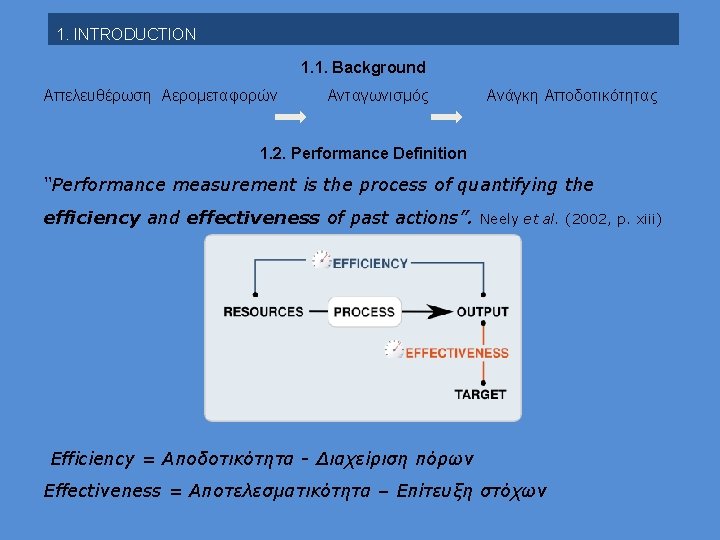
1. INTRODUCTION 1. 1. Background Απελευθέρωση Αερομεταφορών Ανταγωνισμός Ανάγκη Αποδοτικότητας 1. 2. Performance Definition “Performance measurement is the process of quantifying the efficiency and effectiveness of past actions”. Neely et al. (2002, p. xiii) Efficiency = Αποδοτικότητα - Διαχείριση πόρων Effectiveness = Αποτελεσματικότητα – Επίτευξη στόχων 2

Efficiency Dimensions Financial efficiency costs/revenues Allocative efficiency κατανομή πόρων Productive efficiency outputs/ inputs (at a given level of quality) Inefficiency sources -technical inefficiency beyond management control (e. g. increased inputs/costs due to expansion projects, decreased outputs/traffic due to geopolitical events) - x-inefficiency wasteful management 3
The need for performance measurement v. Airport operators v Shareholders v. Airlines v. Organizations (ICAO, ACI, IATA) v Policy maker & Regulators v. Researchers v. Stakeholders v. Communities 4
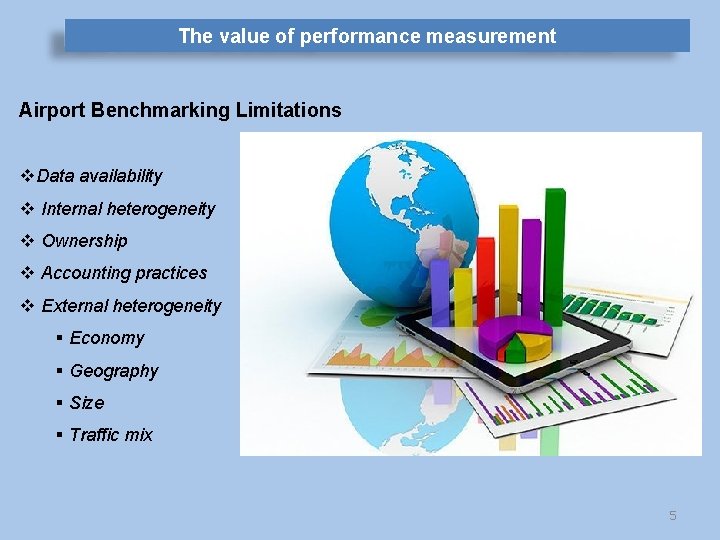
The value of performance measurement Airport Benchmarking Limitations v. Data availability v Internal heterogeneity v Ownership v Accounting practices v External heterogeneity § Economy § Geography § Size § Traffic mix 5
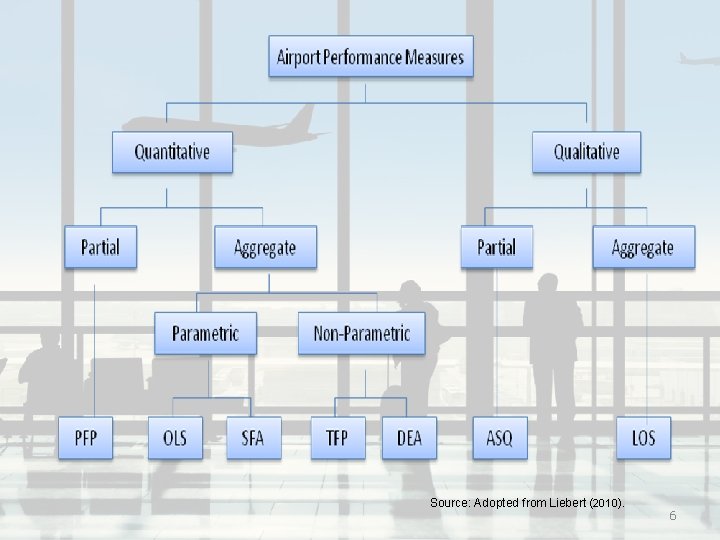
Source: Adopted from Liebert (2010). 6
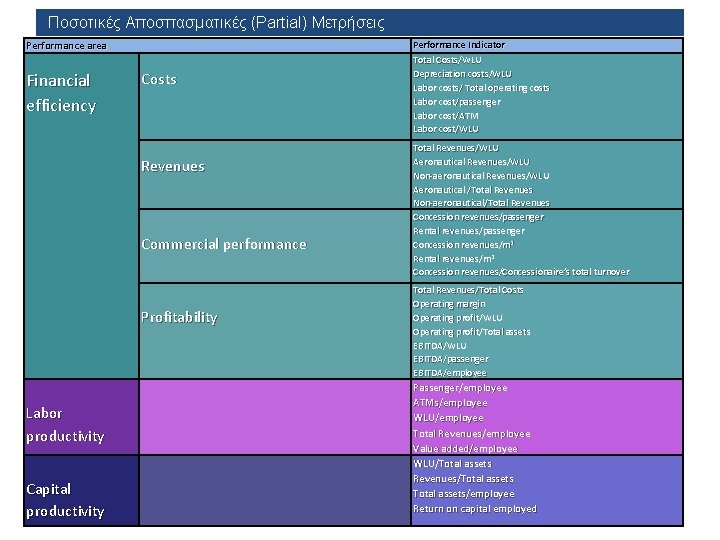
Ποσοτικές Αποσπασματικές (Partial) Μετρήσεις Performance area Financial efficiency Costs Revenues Commercial performance Profitability Labor productivity Capital productivity Performance Indicator Total Costs/WLU Depreciation costs/WLU Labor costs/ Total operating costs Labor cost/passenger Labor cost/ATM Labor cost/WLU Total Revenues/WLU Aeronautical Revenues/WLU Non-aeronautical Revenues/WLU Aeronautical /Total Revenues Non-aeronautical/Total Revenues Concession revenues/passenger Rental revenues/passenger Concession revenues/m 2 Rental revenues/m 2 Concession revenues/Concessionaire’s total turnover Total Revenues/Total Costs Operating margin Operating profit/WLU Operating profit/Total assets EBITDA/WLU EBITDA/passenger EBITDA/employee Passenger/employee ATMs/employee WLU/employee Total Revenues/employee Value added/employee WLU/Total assets Revenues/Total assets/employee Return on capital employed 7 7
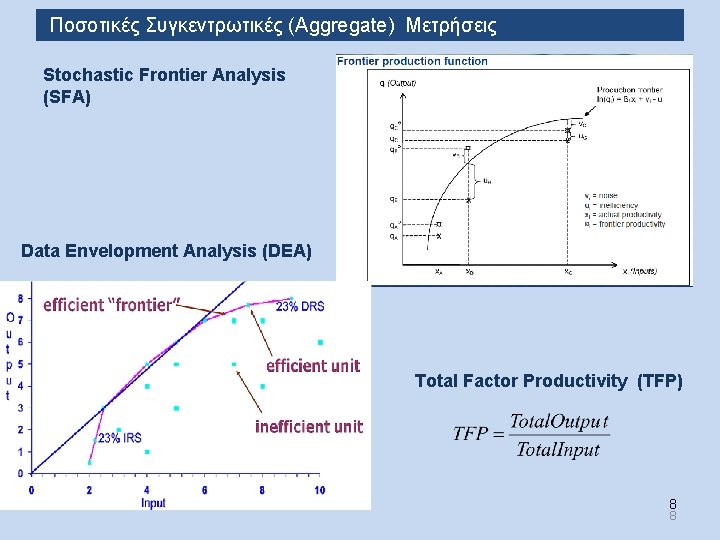
Ποσοτικές Συγκεντρωτικές (Aggregate) Μετρήσεις Stochastic Frontier Analysis (SFA) Data Envelopment Analysis (DEA) Total Factor Productivity (TFP) 8 8
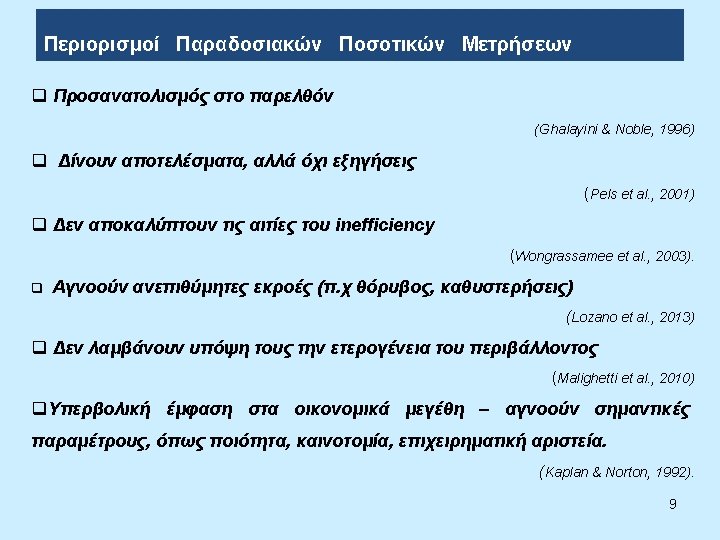
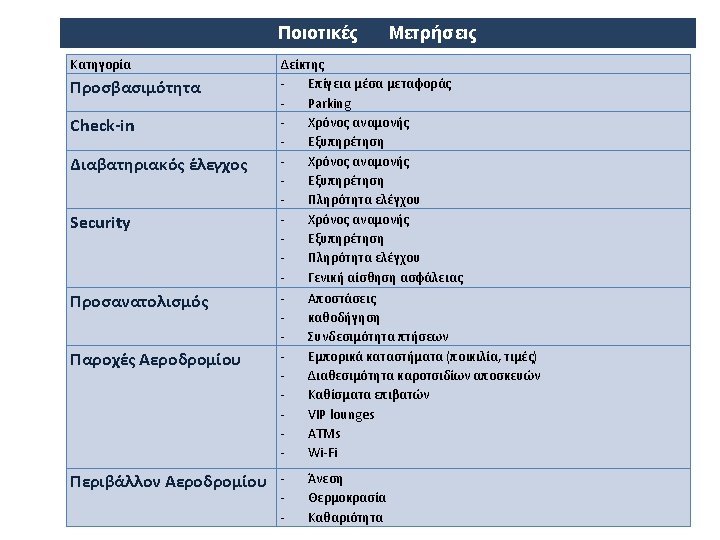
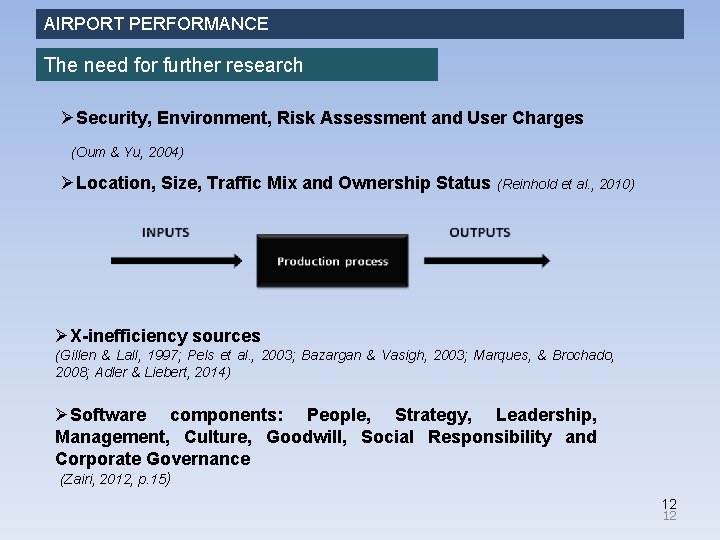
AIRPORT PERFORMANCE The need for further research ØSecurity, Environment, Risk Assessment and User Charges (Oum & Yu, 2004) ØLocation, Size, Traffic Mix and Ownership Status (Reinhold et al. , 2010) ØX-inefficiency sources (Gillen & Lall, 1997; Pels et al. , 2003; Bazargan & Vasigh, 2003; Marques, & Brochado, 2008; Adler & Liebert, 2014) ØSoftware components: People, Strategy, Leadership, Management, Culture, Goodwill, Social Responsibility and Corporate Governance (Zairi, 2012, p. 15) 12 12
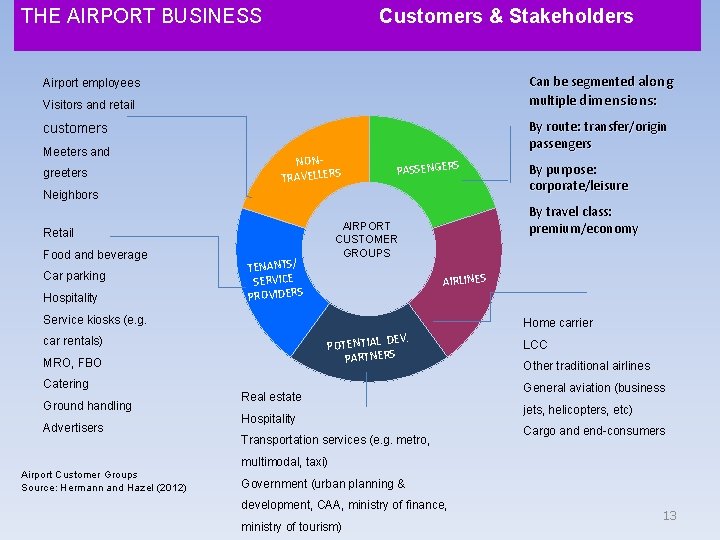
THE AIRPORT BUSINESS Customers & Stakeholders Can be segmented along multiple dimensions: Airport employees Visitors and retail By route: transfer/origin passengers customers Meeters and greeters NONTRAVELLERS S PASSENGER Neighbors Food and beverage Car parking Hospitality By travel class: premium/economy AIRPORT CUSTOMER GROUPS Retail TENANTS/ SERVICE PROVIDERS AIRLINES Service kiosks (e. g. Home carrier DEV. POTENTIAL PARTNERS car rentals) MRO, FBO Catering Ground handling Advertisers By purpose: corporate/leisure Real estate Hospitality Transportation services (e. g. metro, LCC Other traditional airlines General aviation (business jets, helicopters, etc) Cargo and end-consumers multimodal, taxi) Airport Customer Groups Source: Hermann and Hazel (2012) Government (urban planning & development, CAA, ministry of finance, ministry of tourism) 13
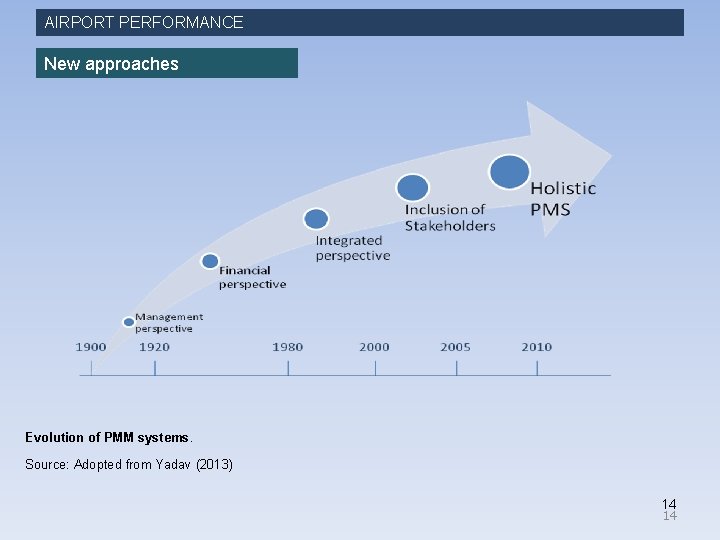
AIRPORT PERFORMANCE New approaches Evolution of PMM systems. Source: Adopted from Yadav (2013) 14 14
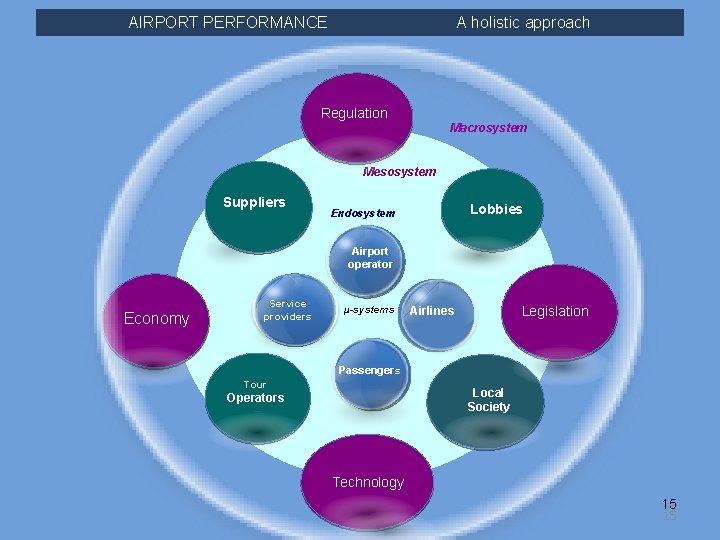
AIRPORT PERFORMANCE A holistic approach Regulation Macrosystem Mesosystem Suppliers Lobbies Endosystem Airport operator Economy Service providers μ-systems Legislation Airlines Passengers Tour Local Society Operators Technology 15 15

- Slides: 16