
1 Innovative Ways to Support Researchers and Research



- Slides: 65
1 Innovative Ways to Support Researchers and Research Management Sci. Val Spotlight Coen van der Krogt Product Sales Manager December 9, 2010 c. krogt@elsevier. com
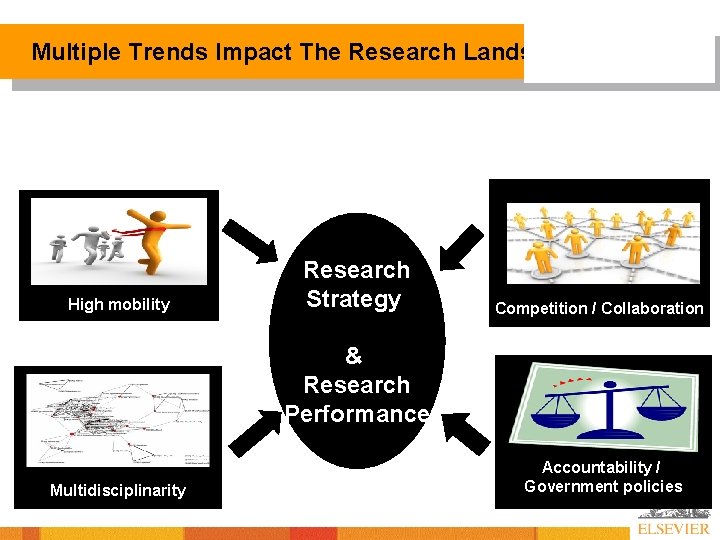
Multiple Trends Impact The Research Landscape 2 High mobility Multidisciplinarity Research Strategy Improve research & outcomes Research Performance Competition / Collaboration Accountability / Government policies
Agenda 3 Ø Scopus Ø Supporting Researchers Ø Supporting Performance Evaluation Ø Basis for analytical and workflow tools from the Sci. Val suite Ø Sci. Val Spotlight Supporting Research Management
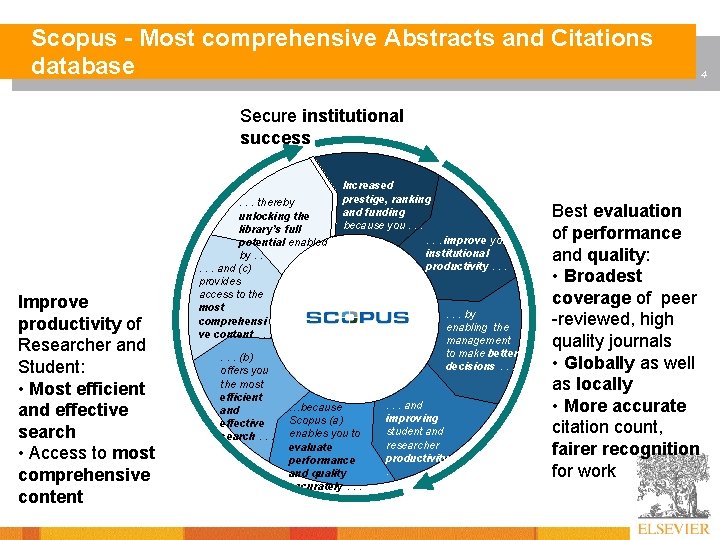
Scopus - Most comprehensive Abstracts and Citations database Secure institutional success. . . Improve productivity of Researcher and Student: • Most efficient and effective search • Access to most comprehensive content . . . thereby unlocking the library’s full potential enabled by. . . and (c) provides access to the most comprehensi ve content. . . (b) offers you the most efficient and effective search. . . Increased prestige, ranking and funding because you. . . improve your institutional productivity. . . …because Scopus (a) enables you to evaluate performance and quality accurately. . . by enabling the management to make better decisions. . . and improving student and researcher productivity. . . Best evaluation of performance and quality: • Broadest coverage of peer -reviewed, high quality journals • Globally as well as locally • More accurate citation count, fairer recognition for work 4
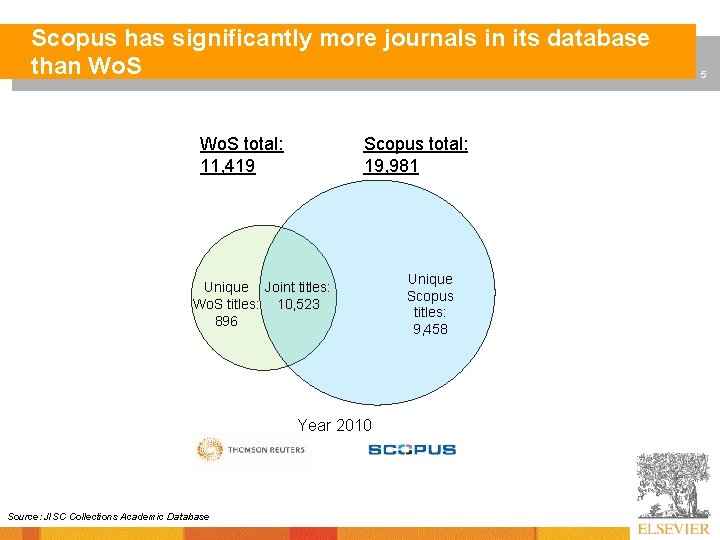
Scopus has significantly more journals in its database than Wo. S total: 11, 419 Scopus total: 19, 981 Unique Joint titles: Wo. S titles: 10, 523 896 Year 2010 Source: JISC Collections Academic Database Unique Scopus titles: 9, 458 5
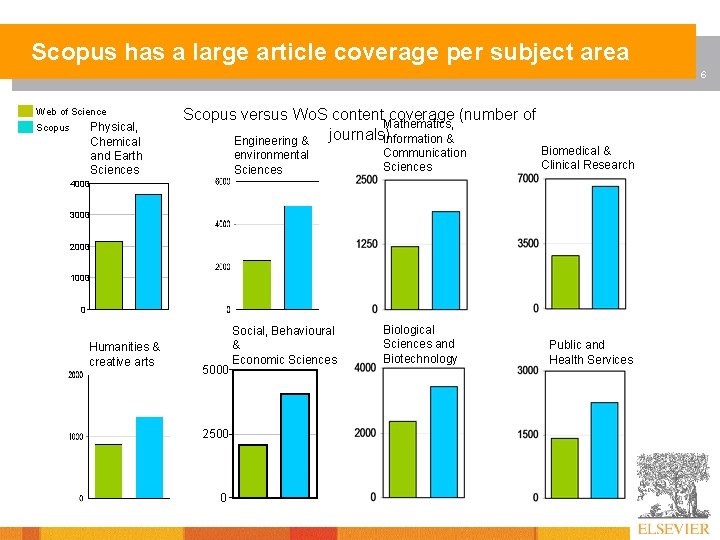
Scopus has a large article coverage per subject area 6 Web of Science Physical, Chemical and Earth Sciences Scopus versus Wo. S content coverage (number of Mathematics, journals) Information & Engineering & environmental Sciences Communication Sciences Social, Behavioural & Economic Sciences Biological Sciences and Biotechnology Biomedical & Clinical Research 4000 3000 2000 1000 0 Humanities & creative arts 5000 2500 0 Public and Health Services
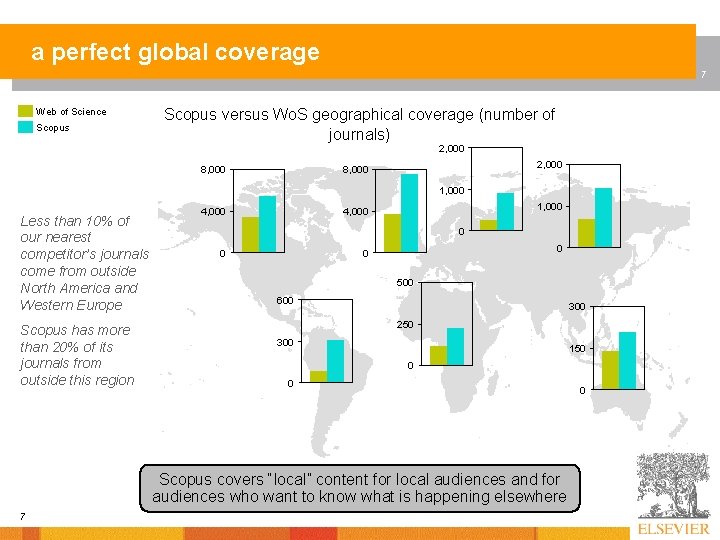
a perfect global coverage 7 Web of Science Scopus versus Wo. S geographical coverage (number of journals) 2, 000 8, 000 1, 000 Less than 10% of our nearest competitor’s journals come from outside North America and Western Europe Scopus has more than 20% of its journals from outside this region 4, 000 1, 000 4, 000 0 0 500 600 300 250 300 150 0 0 Scopus covers “local” content for local audiences and for audiences who want to know what is happening elsewhere 7 0
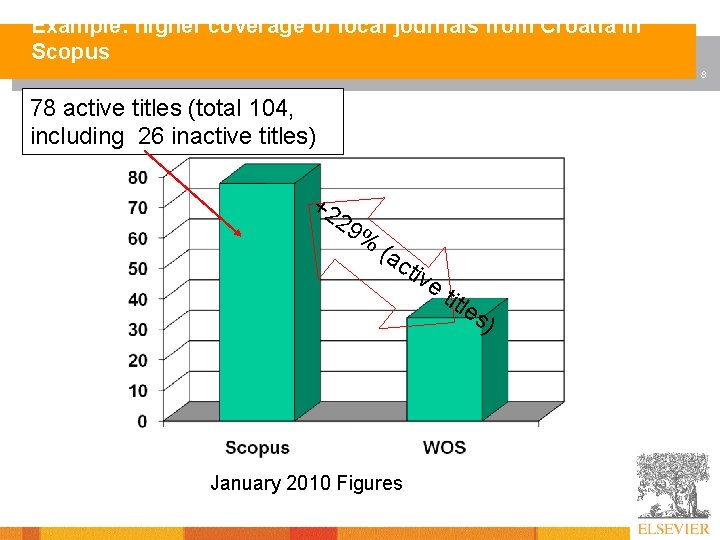
Example: higher coverage of local journals from Croatia in Scopus 8 78 active titles (total 104, including 26 inactive titles) +2 29 % (a cti January 2010 Figures ve tit les )
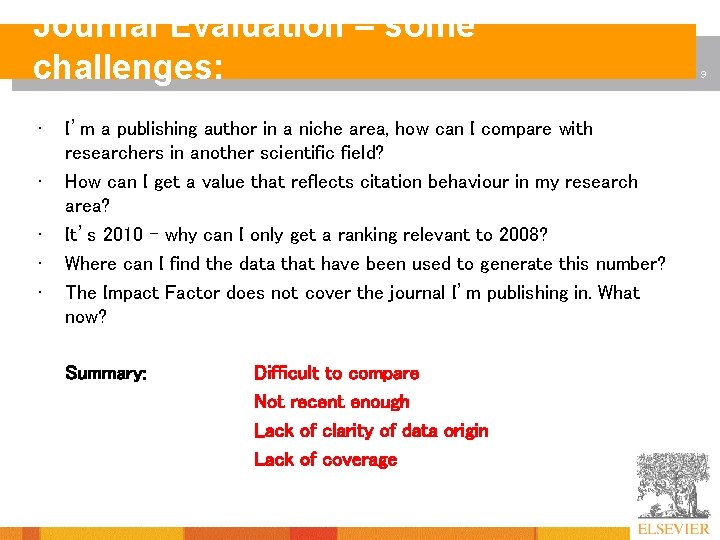
Journal Evaluation – some challenges: • • • I’m a publishing author in a niche area, how can I compare with researchers in another scientific field? How can I get a value that reflects citation behaviour in my research area? It’s 2010 – why can I only get a ranking relevant to 2008? Where can I find the data that have been used to generate this number? The Impact Factor does not cover the journal I’m publishing in. What now? Summary: Difficult to compare Not recent enough Lack of clarity of data origin Lack of coverage 9
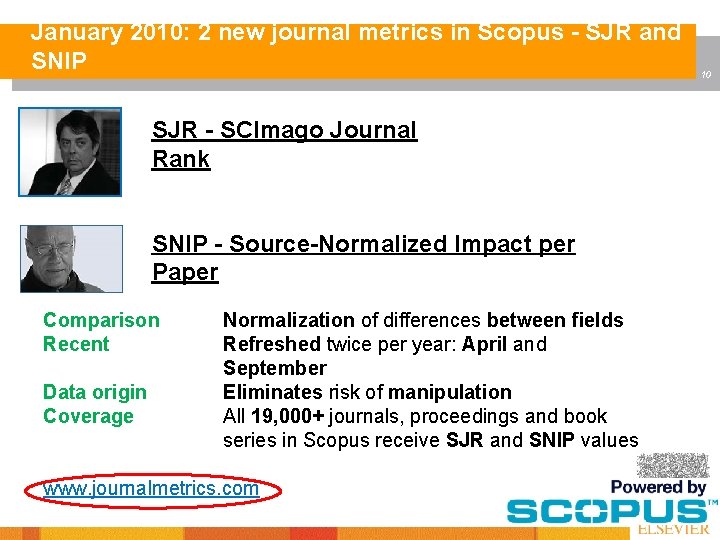
January 2010: 2 new journal metrics in Scopus - SJR and SNIP SJR - SCImago Journal Rank SNIP - Source-Normalized Impact per Paper Comparison Recent Data origin Coverage Normalization of differences between fields Refreshed twice per year: April and September Eliminates risk of manipulation All 19, 000+ journals, proceedings and book series in Scopus receive SJR and SNIP values www. journalmetrics. com 10
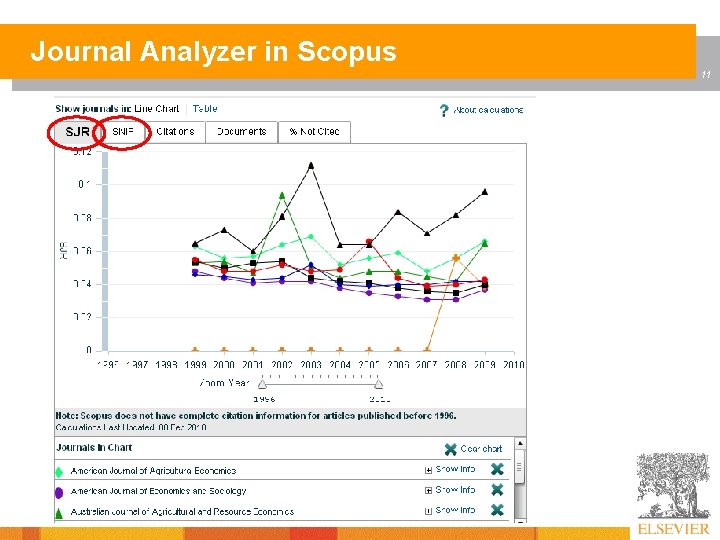
Journal Analyzer in Scopus 11
The Research Landscape is changing 12 . . . Elsevier Is Changing With You Ø Solutions based on Scopus Ø Supporting Research Management
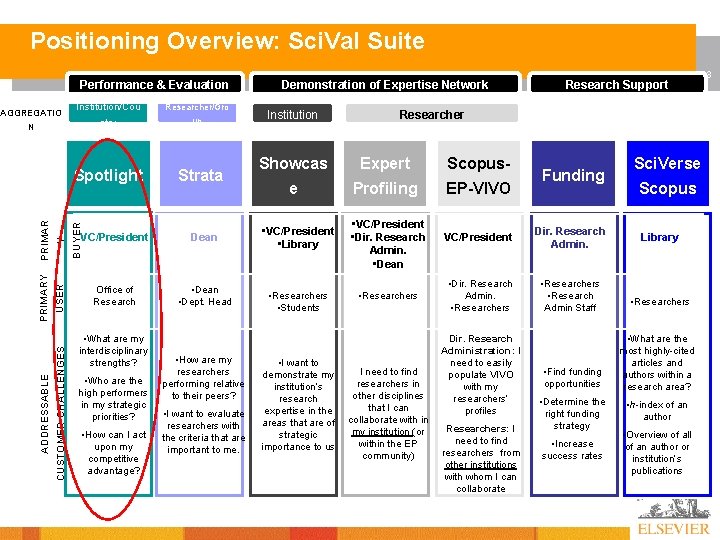
Positioning Overview: Sci. Val Suite Performance & Evaluation AGGREGATIO Institution/Cou Researcher/Gro ntry up N BUYER Y USER CUSTOMER CHALLENGES PRIMAR ADDRESSABLE PRIMARY Spotlight Strata VC/President Dean Office of Research • Dean • Dept. Head • What are my interdisciplinary strengths? • Who are the high performers in my strategic priorities? • How can I act upon my competitive advantage? • How are my researchers performing relative to their peers? • I want to evaluate researchers with the criteria that are important to me. Demonstration of Expertise Network Institution Expert Scopus- e Profiling EP-VIVO • Researchers • Students • I want to demonstrate my institution’s research expertise in the areas that are of strategic importance to us 13 Researcher Showcas • VC/President • Library Research Support • VC/President • Dir. Research Admin. • Dean • Researchers I need to find researchers in other disciplines that I can collaborate with in my institution (or within the EP community) VC/President • Dir. Research Admin. • Researchers Dir. Research Administration: I need to easily populate VIVO with my researchers’ profiles Researchers: I need to find researchers from other institutions with whom I can collaborate Funding Dir. Research Admin. • Researchers • Research Admin Staff • Find funding opportunities • Determine the right funding strategy • Increase success rates Sci. Verse Scopus Library • Researchers • What are the most highly-cited articles and authors within a research area? • h-index of an author • Overview of all of an author or institution’s publications
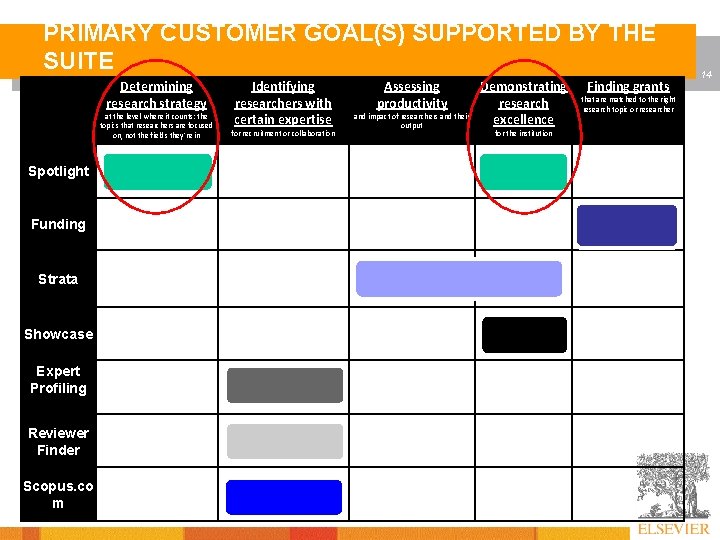
PRIMARY CUSTOMER GOAL(S) SUPPORTED BY THE SUITE Determining research strategy at the level where it counts: the topics that researchers are focused on, not the fields they're in Spotlight Funding Strata Showcase Expert Profiling Reviewer Finder Scopus. co m Identifying researchers with certain expertise for recruitment or collaboration Assessing productivity and impact of researchers and their output Demonstrating research excellence for the institution Finding grants that are matched to the right research topic or researcher 14
15 Sci. Val Spotlight
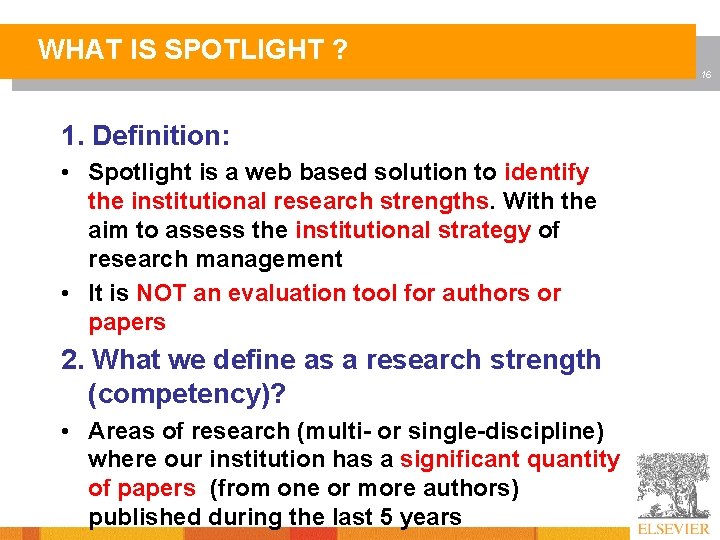
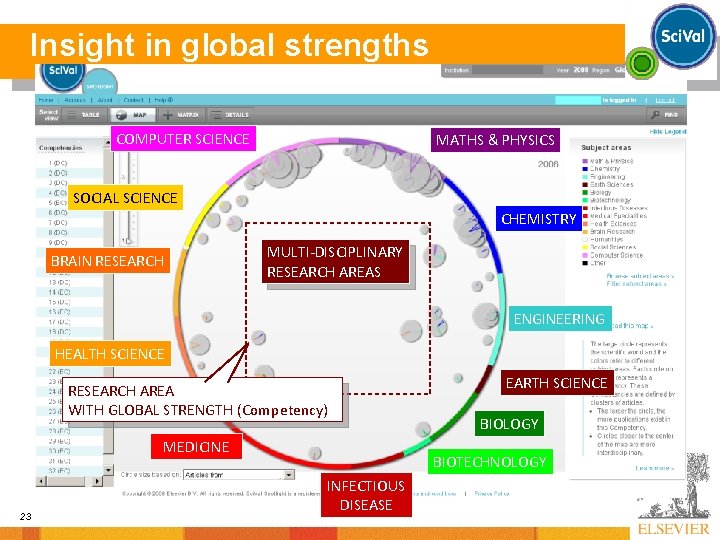
WHAT IS SPOTLIGHT ? 16 1. Definition: • Spotlight is a web based solution to identify the institutional research strengths. With the aim to assess the institutional strategy of research management • It is NOT an evaluation tool for authors or papers 2. What we define as a research strength (competency)? • Areas of research (multi- or single-discipline) where our institution has a significant quantity of papers (from one or more authors) published during the last 5 years
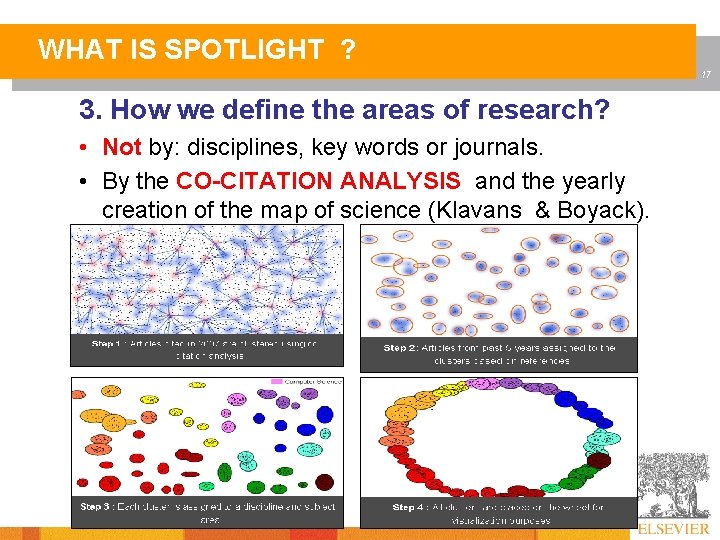
WHAT IS SPOTLIGHT ? 17 3. How we define the areas of research? • Not by: disciplines, key words or journals. • By the CO-CITATION ANALYSIS and the yearly creation of the map of science (Klavans & Boyack).
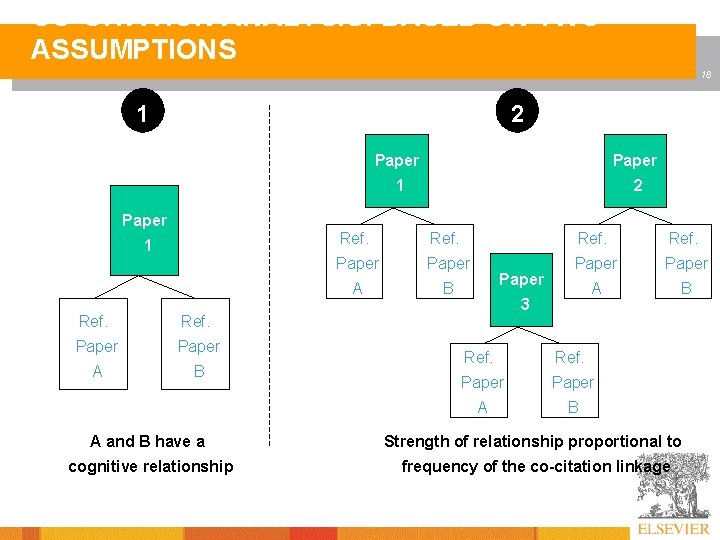
CO-CITATION ANALYSIS: BASED ON TWO ASSUMPTIONS 18 1 2 Paper 1 Ref. Paper A B Ref. Paper A B Paper 3 Ref. Paper A B A and B have a Strength of relationship proportional to cognitive relationship frequency of the co-citation linkage
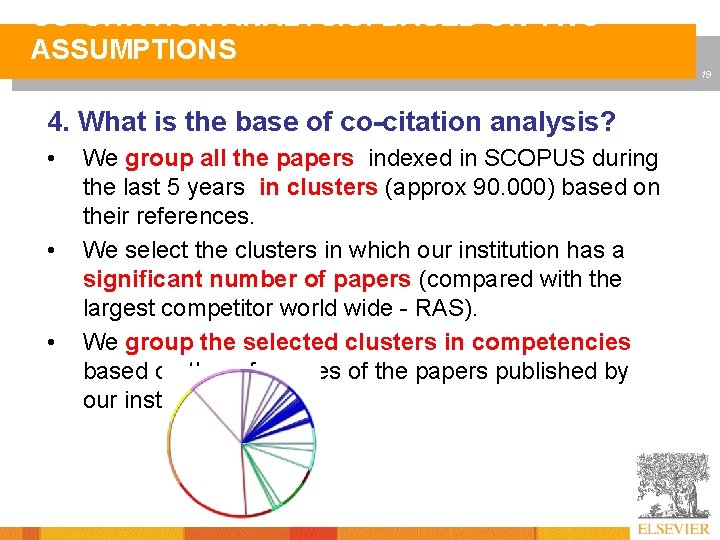
CO-CITATION ANALYSIS: BASED ON TWO ASSUMPTIONS 19 4. What is the base of co-citation analysis? • • • We group all the papers indexed in SCOPUS during the last 5 years in clusters (approx 90. 000) based on their references. We select the clusters in which our institution has a significant number of papers (compared with the largest competitor world wide - RAS). We group the selected clusters in competencies based on the references of the papers published by our institution
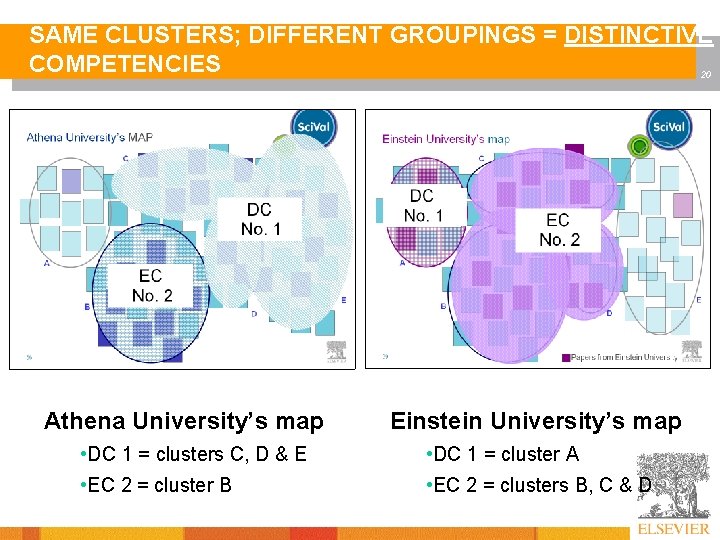
SAME CLUSTERS; DIFFERENT GROUPINGS = DISTINCTIVE COMPETENCIES 20 Athena University’s map Einstein University’s map • DC 1 = clusters C, D & E • DC 1 = cluster A • EC 2 = cluster B • EC 2 = clusters B, C & D
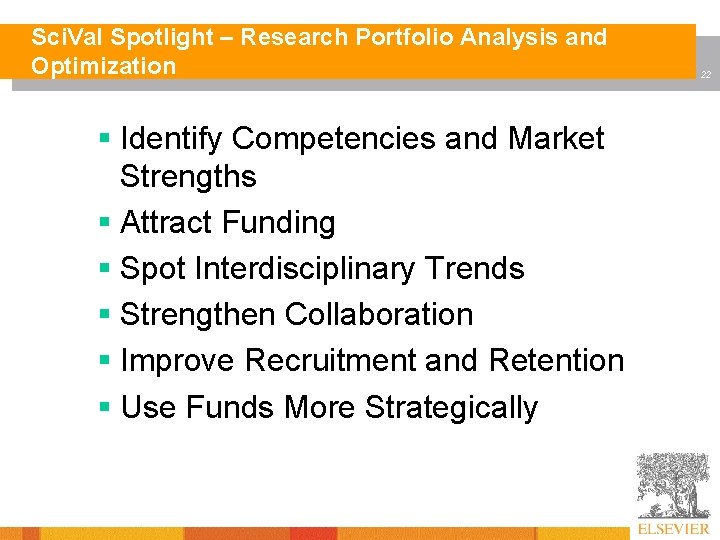
Sci. Val Spotlight – Research Portfolio Analysis and Optimization § Identify Competencies and Market Strengths § Attract Funding § Spot Interdisciplinary Trends § Strengthen Collaboration § Improve Recruitment and Retention § Use Funds More Strategically 22
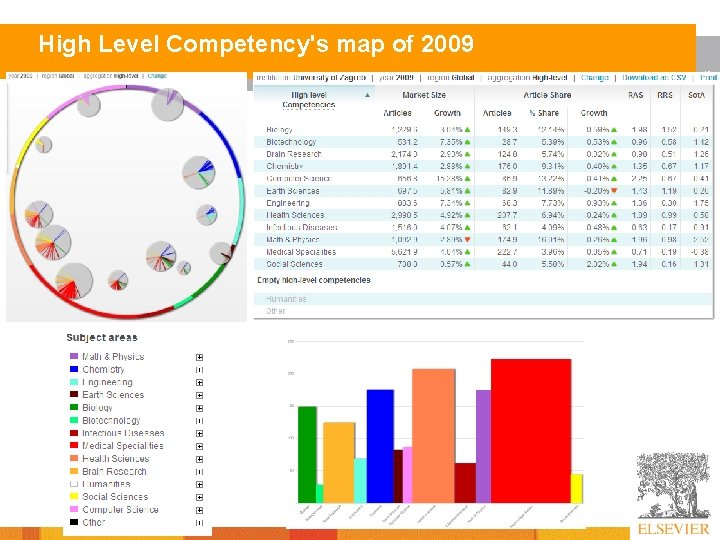
Insight in global strengths 23 COMPUTER SCIENCE MATHS & PHYSICS SOCIAL SCIENCE CHEMISTRY BRAIN RESEARCH MULTI-DISCIPLINARY RESEARCH AREAS ENGINEERING HEALTH SCIENCE RESEARCH AREA WITH GLOBAL STRENGTH (Competency) MEDICINE 23 EARTH SCIENCE BIOLOGY BIOTECHNOLOGY INFECTIOUS DISEASE
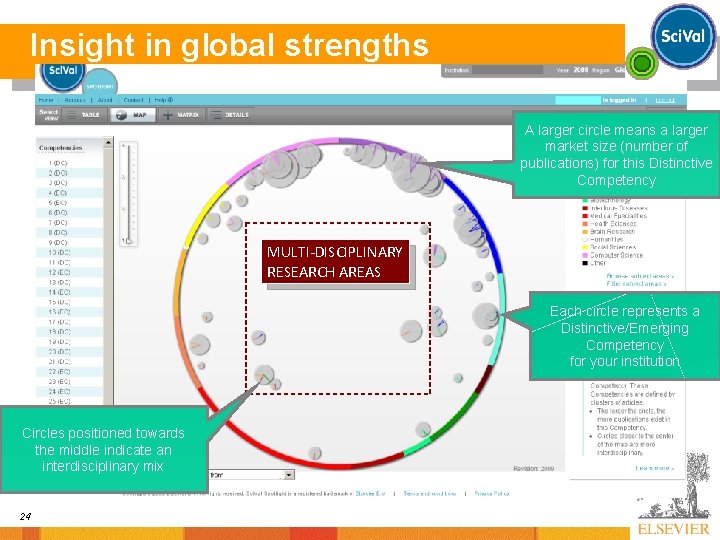
Insight in global strengths 24 A larger circle means a larger market size (number of publications) for this Distinctive Competency MULTI-DISCIPLINARY RESEARCH AREAS Each circle represents a Distinctive/Emerging Competency for your institution Circles positioned towards the middle indicate an interdisciplinary mix 24
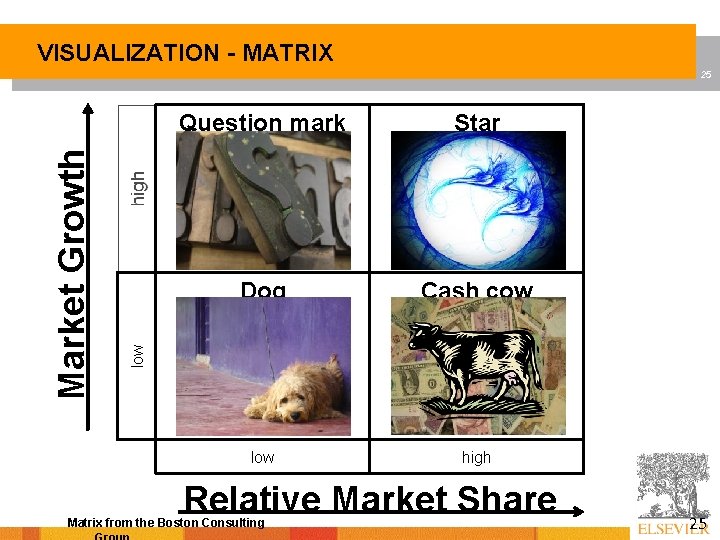
VISUALIZATION - MATRIX Question mark Star Dog Cash cow low high low Market Growth 25 Relative Market Share Matrix from the Boston Consulting 25
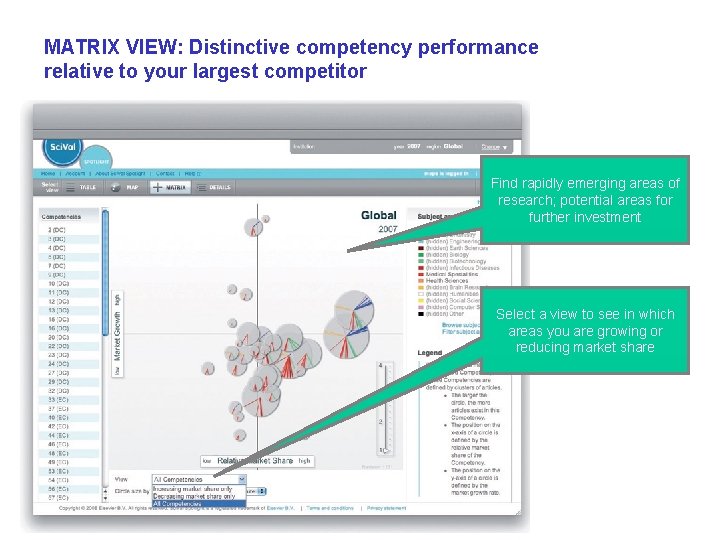
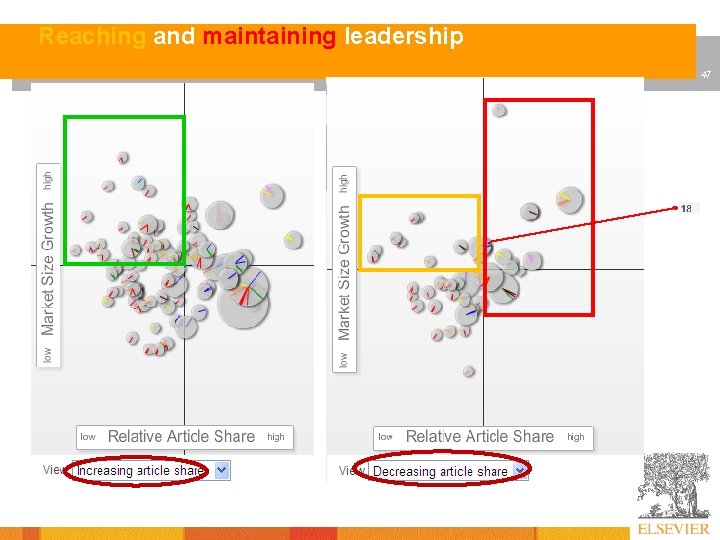
MATRIX VIEW: Distinctive competency performance relative to your largest competitor Find rapidly emerging areas of research; potential areas for further investment Select a view to see in which areas you are growing or reducing market share
The 2009 Spotlight map of 27 University of Zagreb
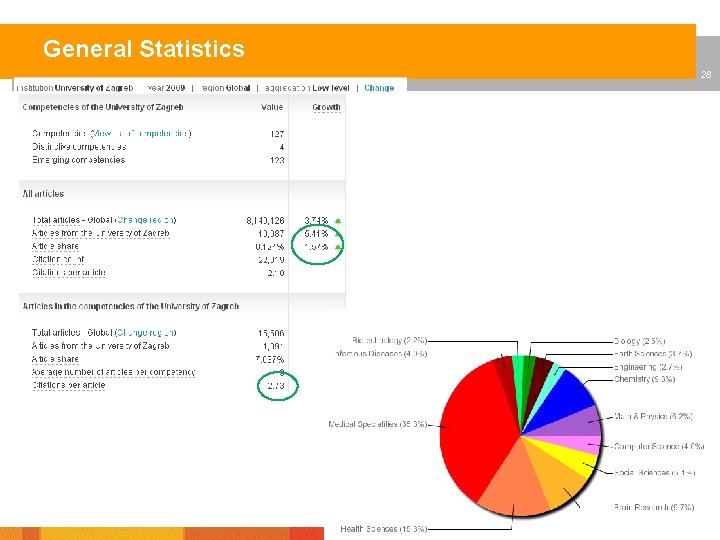
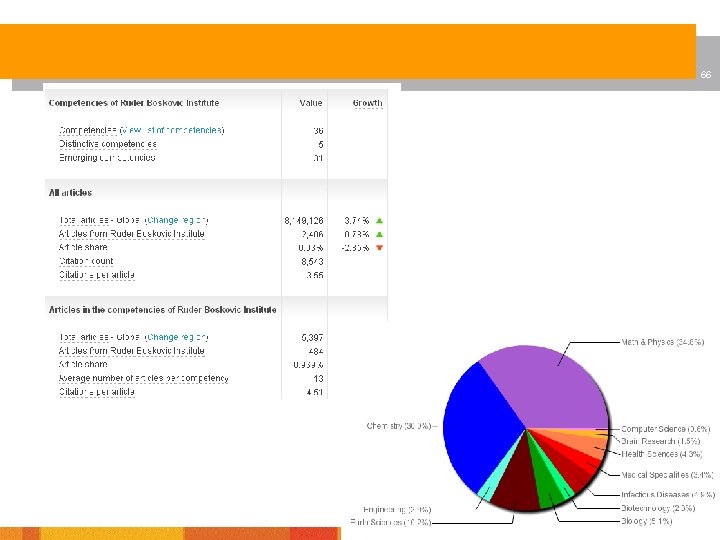
General Statistics 28
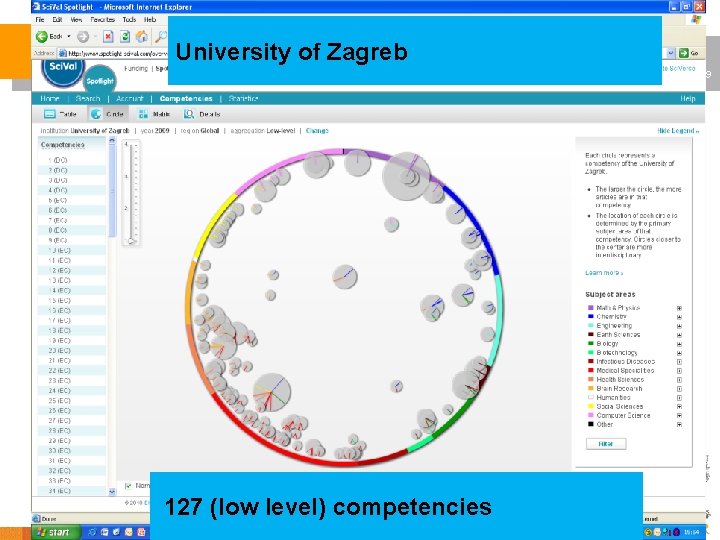
University of Zagreb 29 127 (low level) competencies
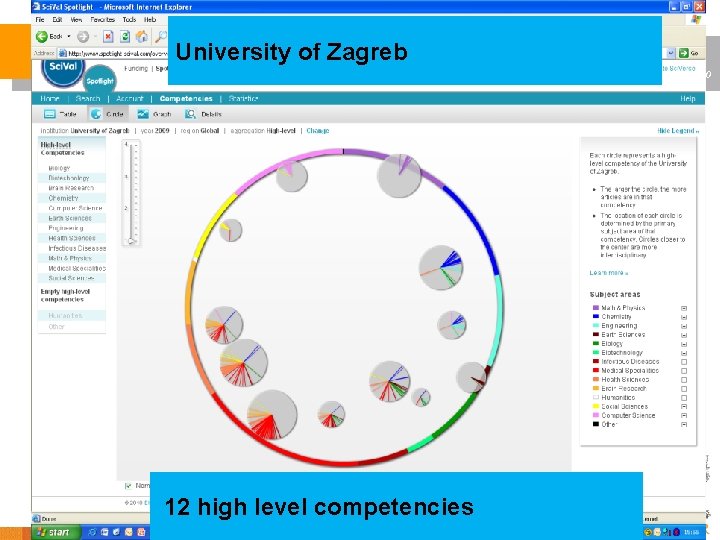
University of Zagreb 30 12 high level competencies
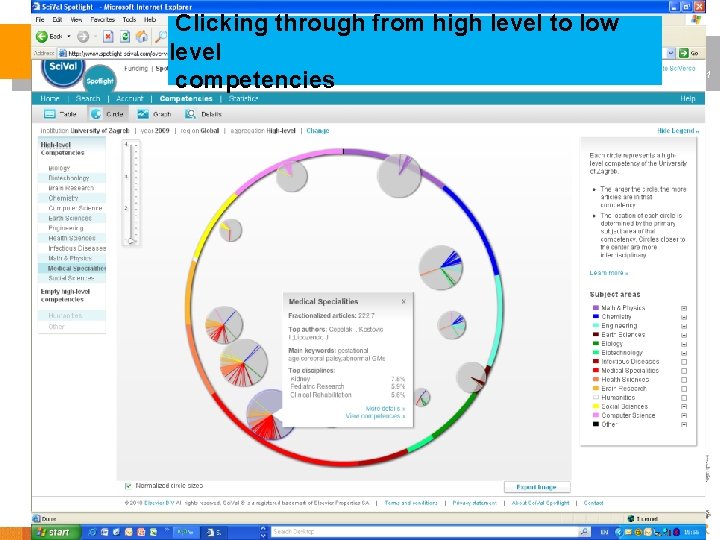
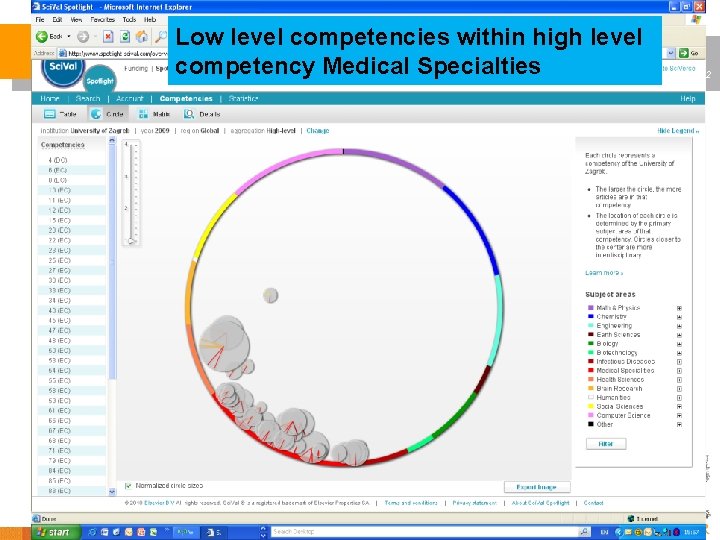
Clicking through from high level to low level competencies 31
Low level competencies within high level competency Medical Specialties 32
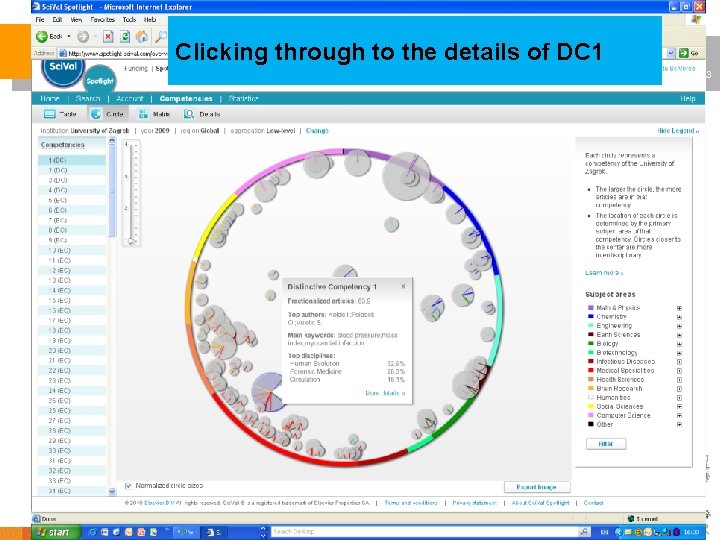
Clicking through to the details of DC 1 33
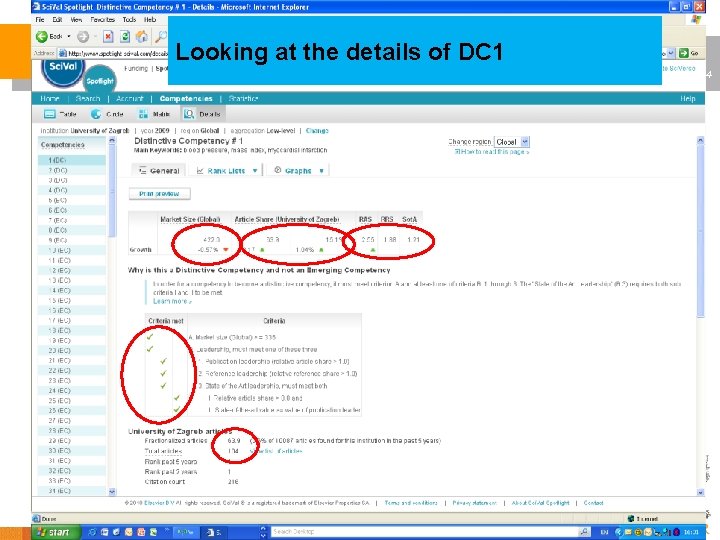
Looking at the details of DC 1 34
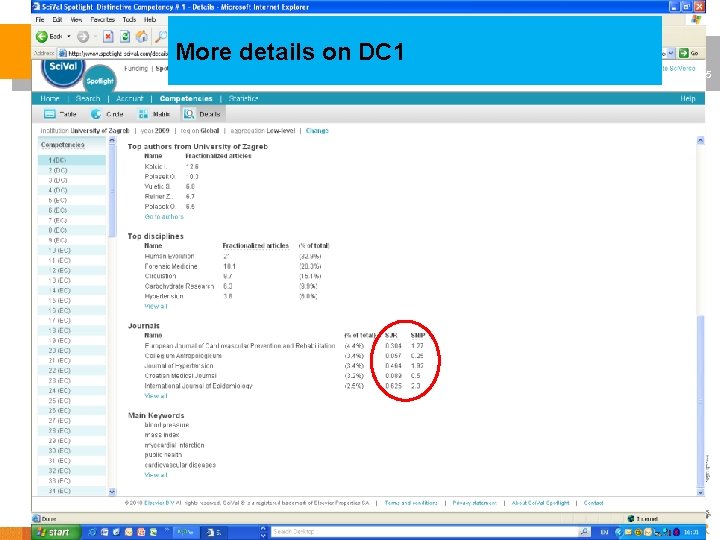
More details on DC 1 35
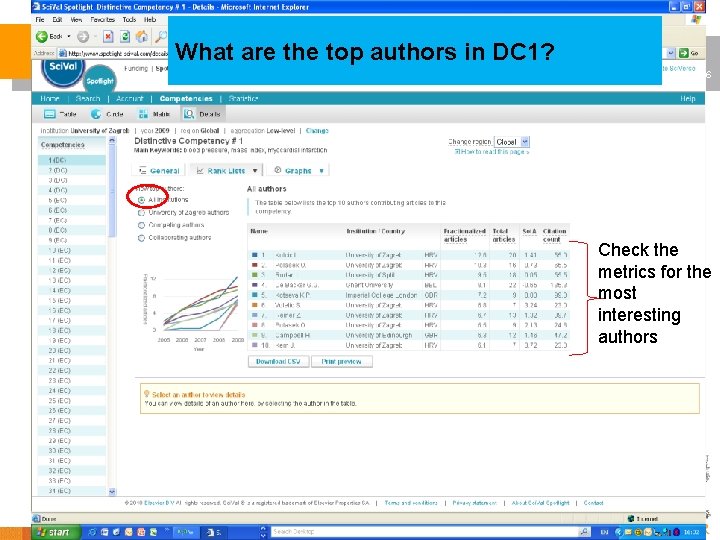
What are the top authors in DC 1? 36 Check the metrics for the most interesting authors
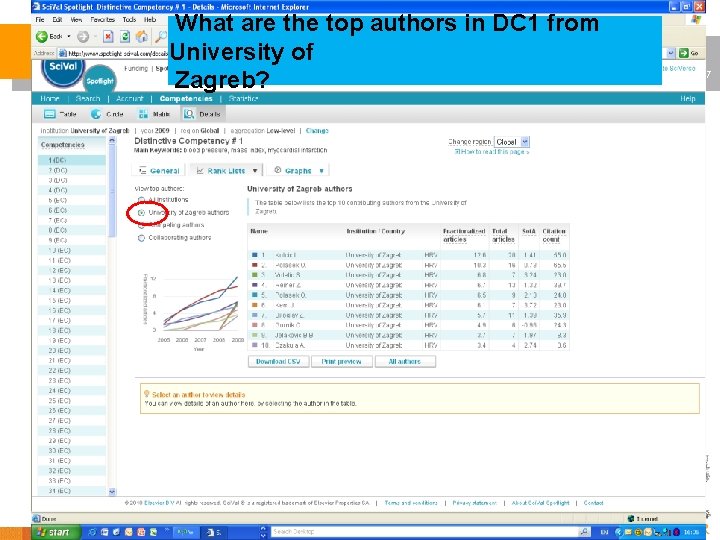
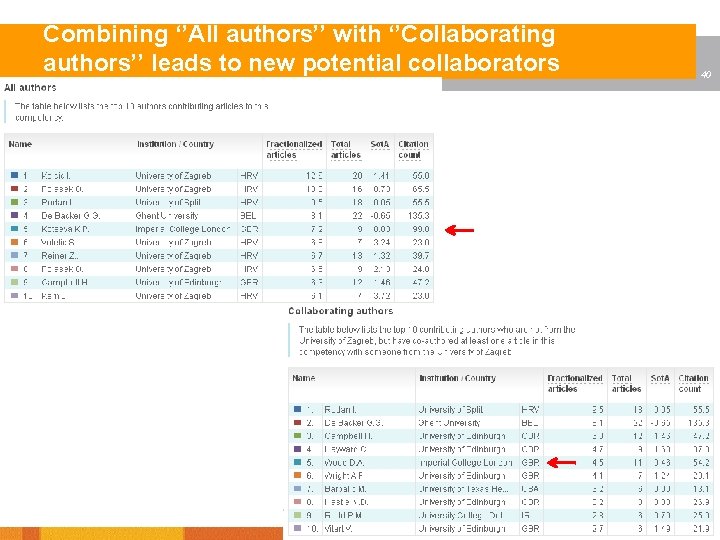
What are the top authors in DC 1 from University of Zagreb? 37
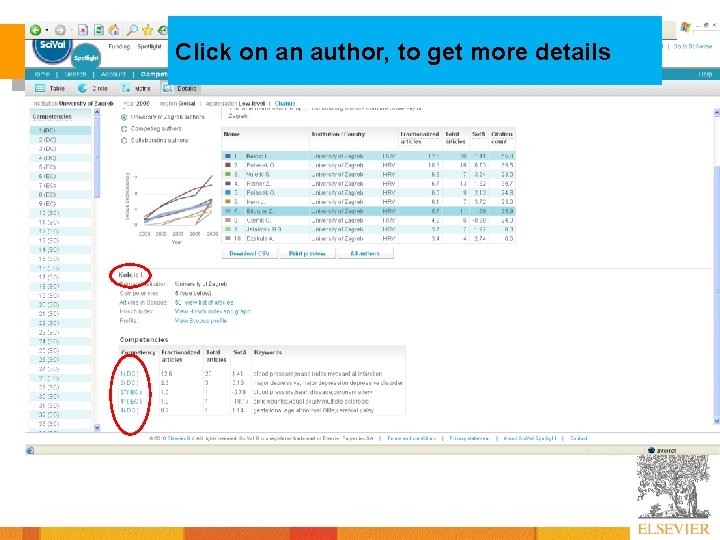
Click on an author, to get more details 38
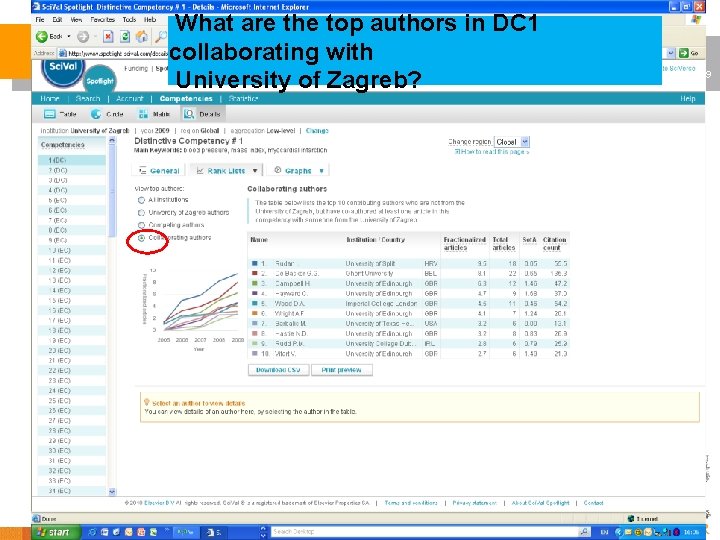
What are the top authors in DC 1 collaborating with University of Zagreb? 39
Combining ‘’All authors’’ with ‘’Collaborating authors’’ leads to new potential collaborators 40
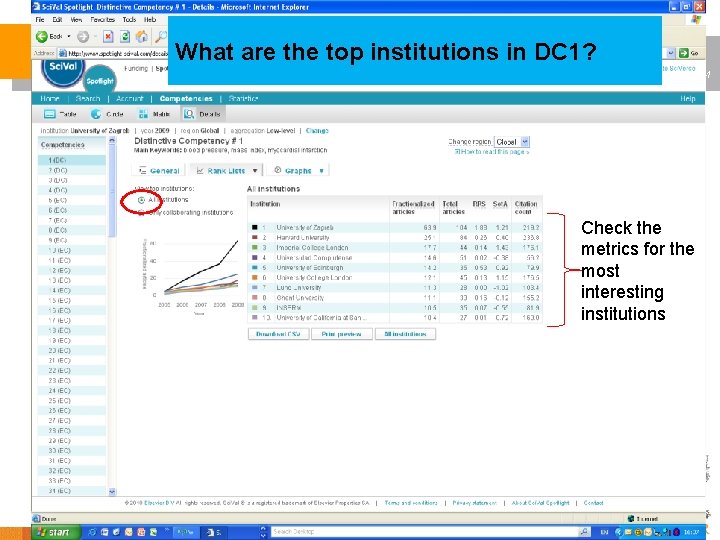
What are the top institutions in DC 1? 41 Check the metrics for the most interesting institutions
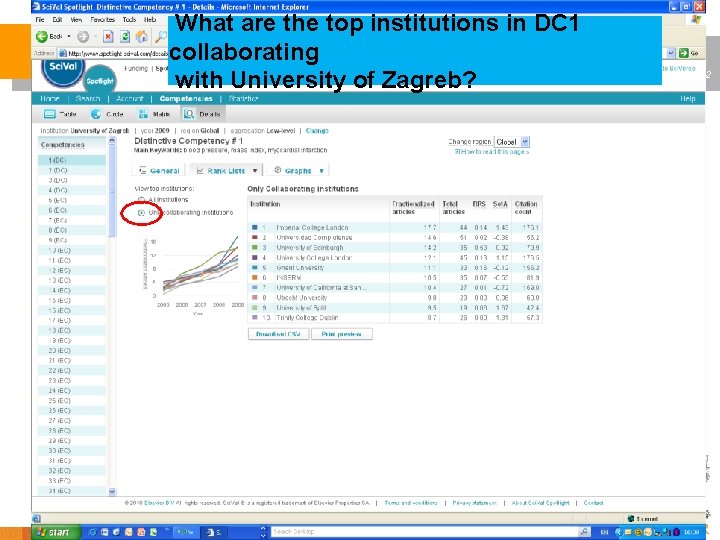
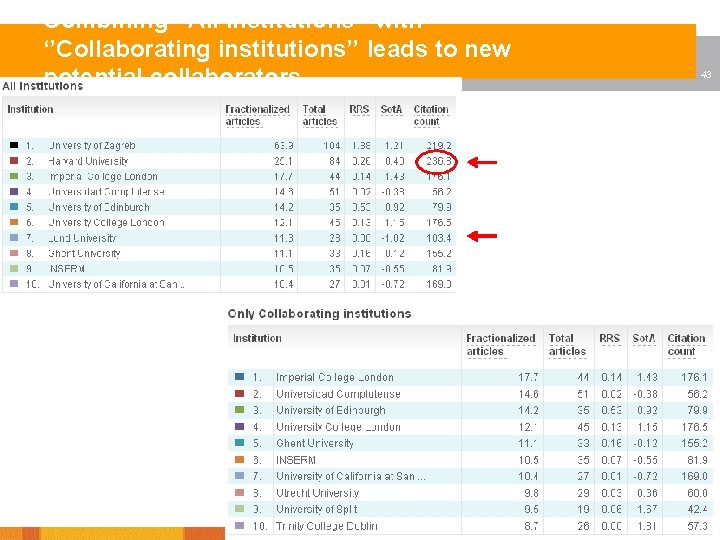
What are the top institutions in DC 1 collaborating with University of Zagreb? 42
Combining ‘’All institutions’’ with ‘’Collaborating institutions’’ leads to new potential collaborators 43
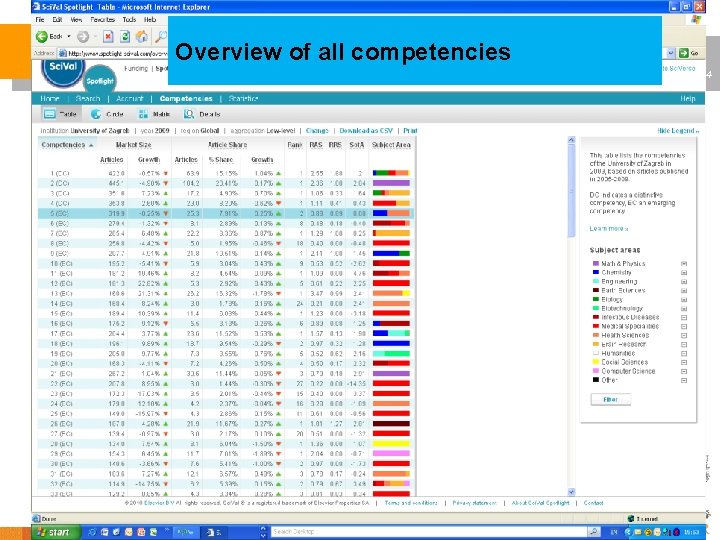
Overview of all competencies 44
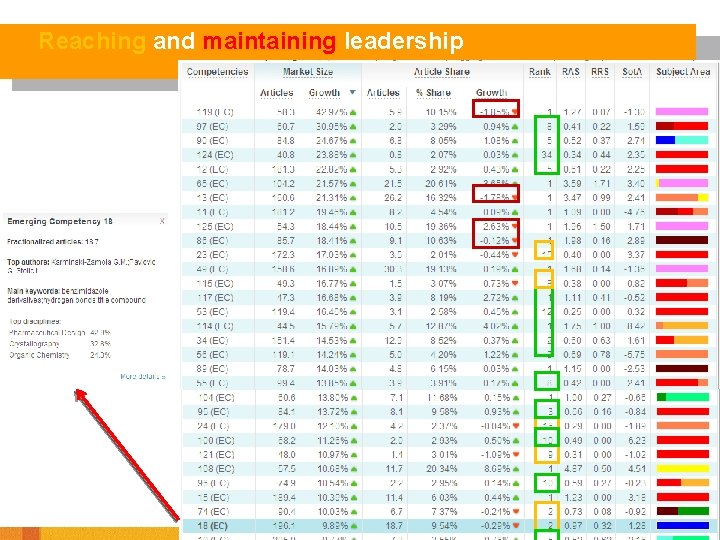
Use Case Reaching and Maintaining Leadership 45
High Level Competency's map of 2009 46
Reaching and maintaining leadership 47
Reaching and maintaining leadership 48
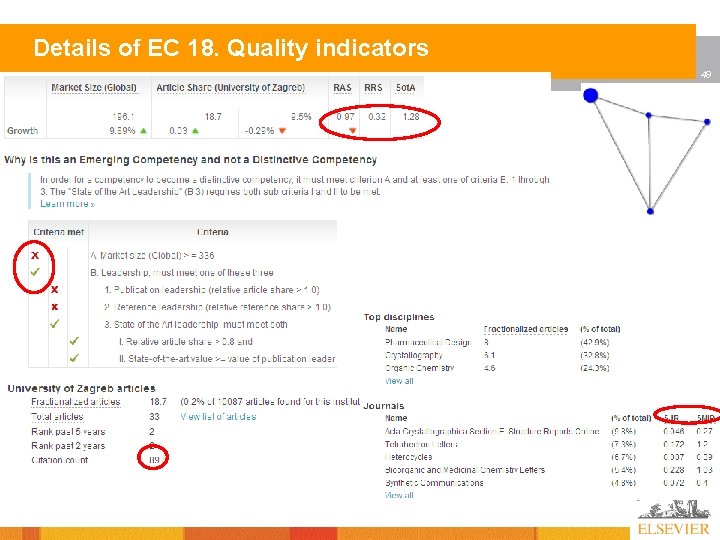
Details of EC 18. Quality indicators 49
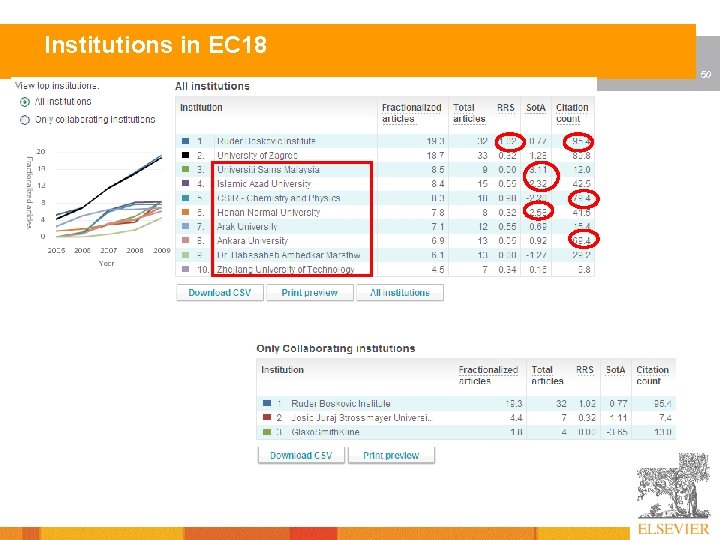
Institutions in EC 18 50
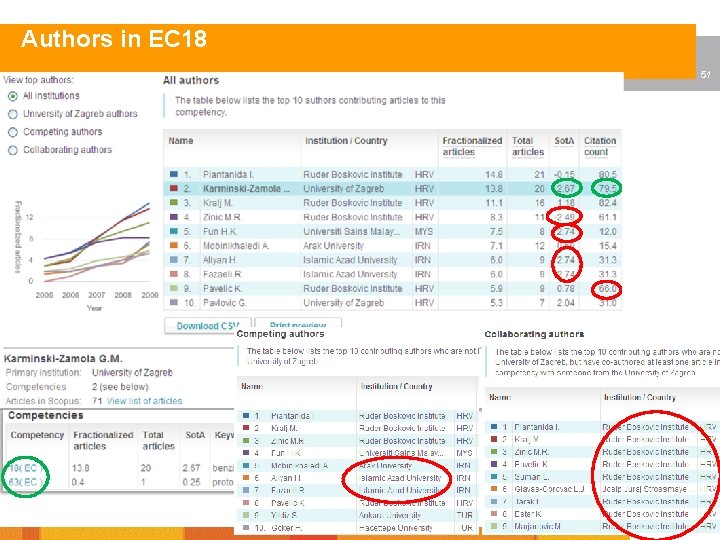
Authors in EC 18 51
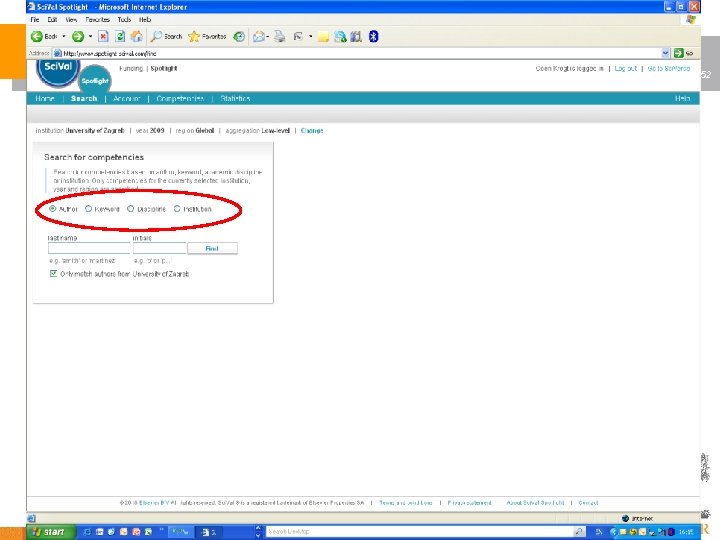
52
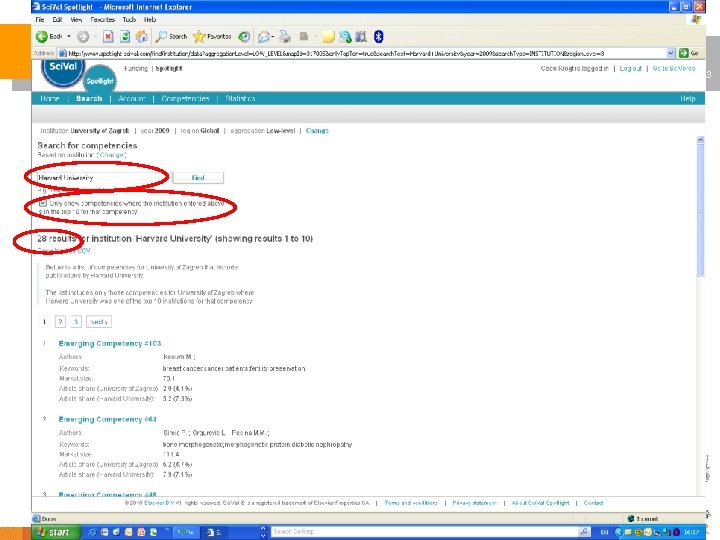
53
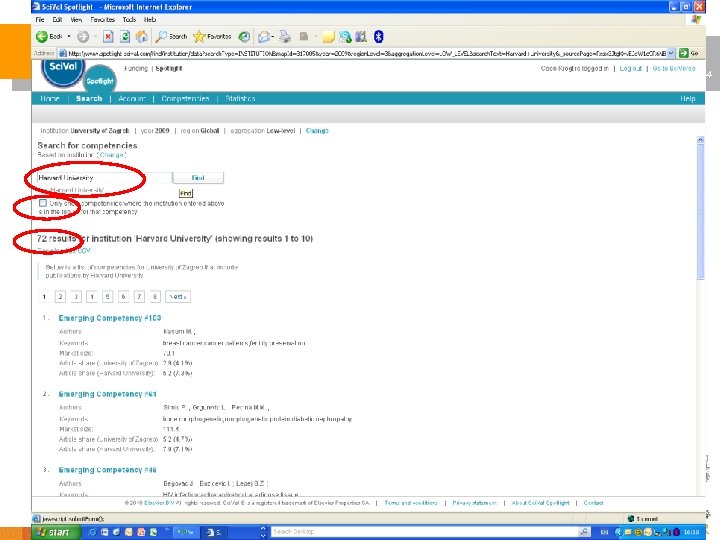
54
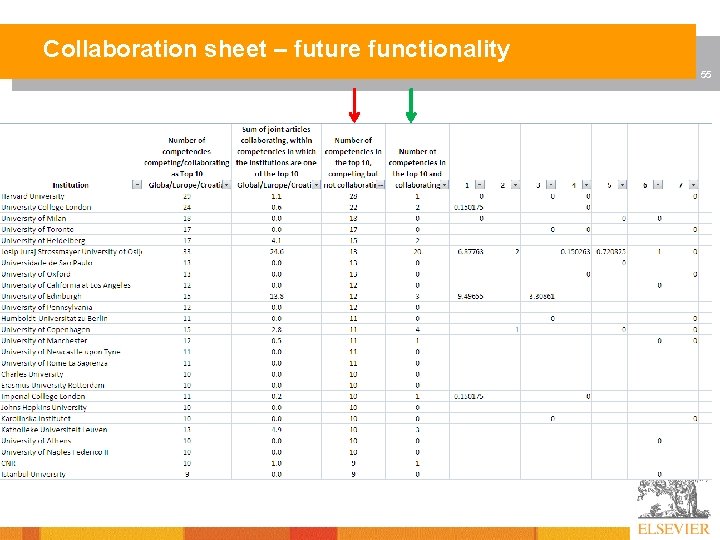
Collaboration sheet – future functionality 55
Sci. Val Spotlight – Summary 56 § Identify Competencies and Market Strengths § Attract Funding § Spot Interdisciplinary Trends § Strengthen Collaboration § Improve Recruitment and Retention § Use Funds More Strategically
57 Thank you for your attention. Questions? Coen van der Krogt c. krogt@elsevier. com Tel: +31 6 3011 6125
58 Backup slides
59 1. Comparing different years?
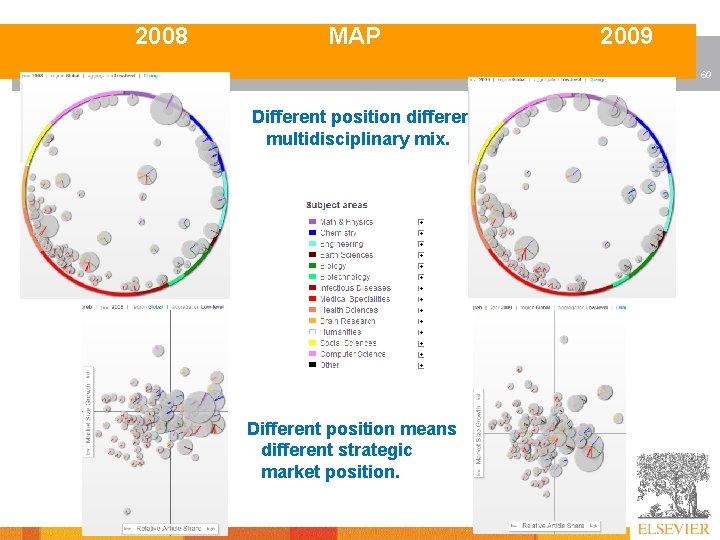
2008 MAP 2009 60 Different position different multidisciplinary mix. Different position means different strategic market position.
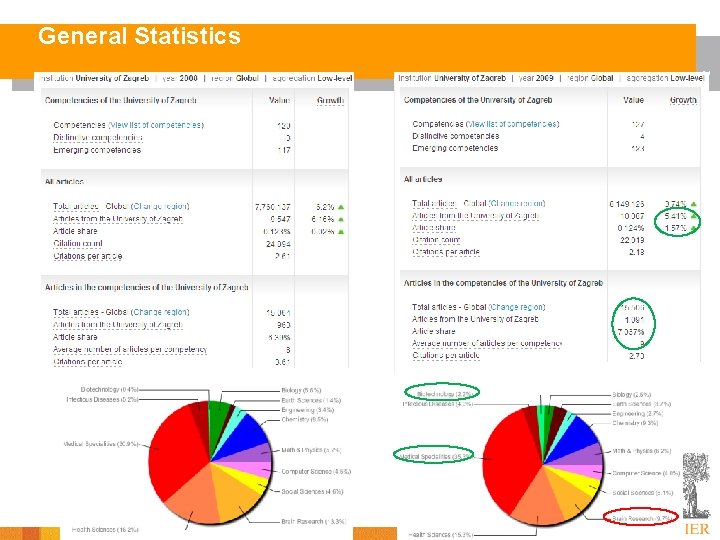
General Statistics 61
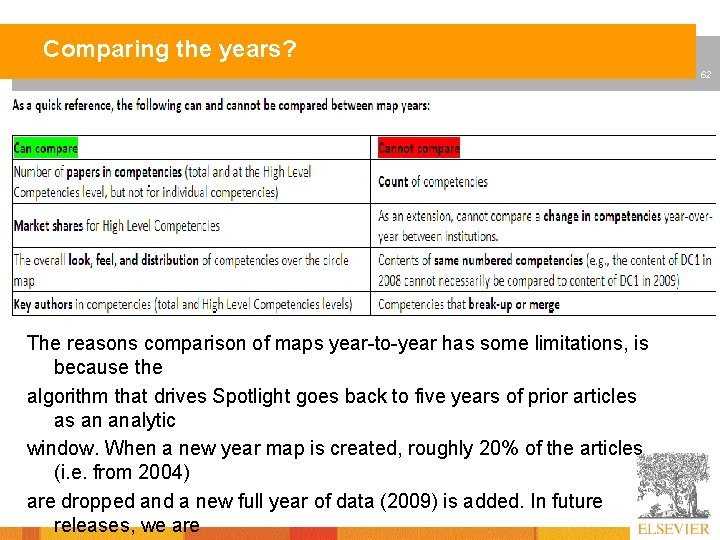
Comparing the years? 62 The reasons comparison of maps year-to-year has some limitations, is because the algorithm that drives Spotlight goes back to five years of prior articles as an analytic window. When a new year map is created, roughly 20% of the articles (i. e. from 2004) are dropped and a new full year of data (2009) is added. In future releases, we are
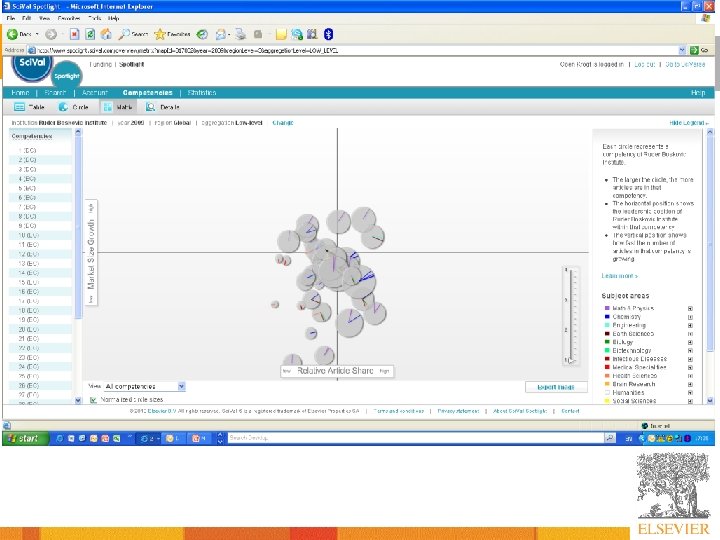
2. The 2009 Spotlight map of 63 Ruder Boskovic Institute
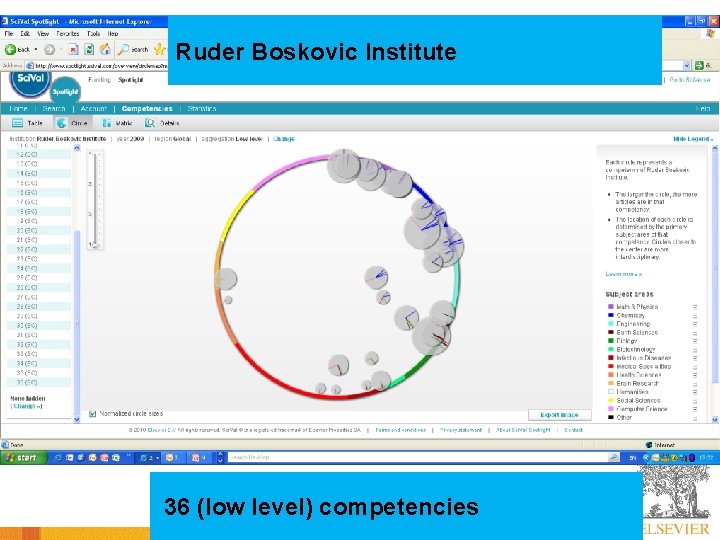
Ruder Boskovic Institute 64 36 (low level) competencies
65
66