
1 Infection Prevention Control Prevention Strategies Virginia Department
- Slides: 44
1 Infection Prevention & Control Prevention Strategies Virginia Department of Health (VDH) Healthcare-Associated Infections Program
2 Objectives § Review standard and transmission-based precautions § Discuss hand hygiene strategies and how to measure compliance § Review respiratory etiquette and safe injection practices § Review the OSHA Bloodborne Pathogens Standard and best practices for blood glucose monitoring § Discuss the role of environmental cleaning in infection prevention and how to measure compliance § Describe the importance of vaccination
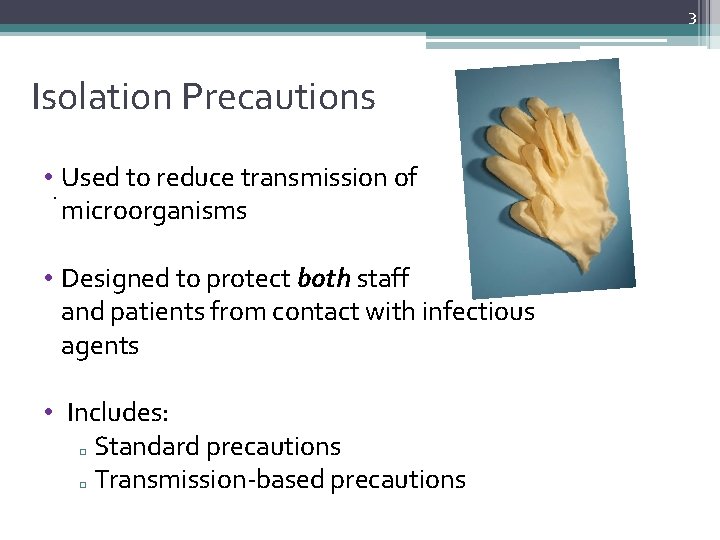
3 Isolation Precautions • . Used to reduce transmission of microorganisms • Designed to protect both staff and patients from contact with infectious agents • Includes: □ Standard precautions □ Transmission-based precautions
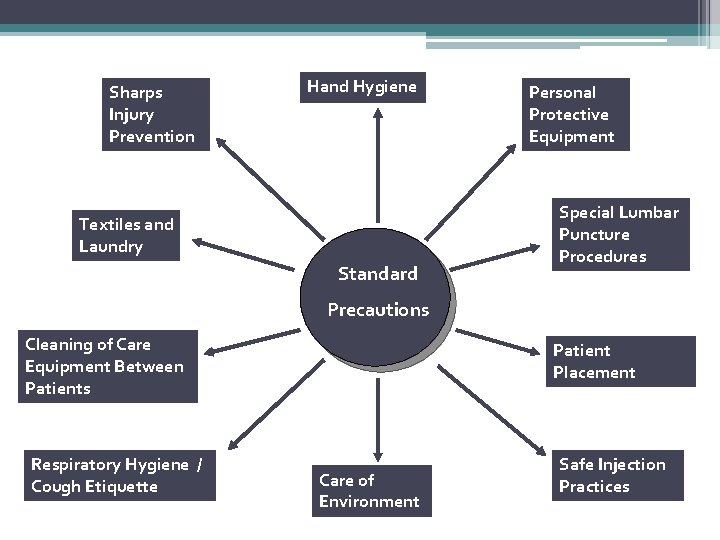
4 Standard Precautions Because it is not always possible to tell who is infected, these practices should be the approach for the care of all patients all the time Formerly known as “universal precautions”
Sharps Injury Prevention Hand Hygiene Textiles and Laundry Standard Personal Protective Equipment Special Lumbar Puncture Procedures Precautions Cleaning of Care Equipment Between Patients Respiratory Hygiene / Cough Etiquette Patient Placement Care of Environment Safe Injection Practices
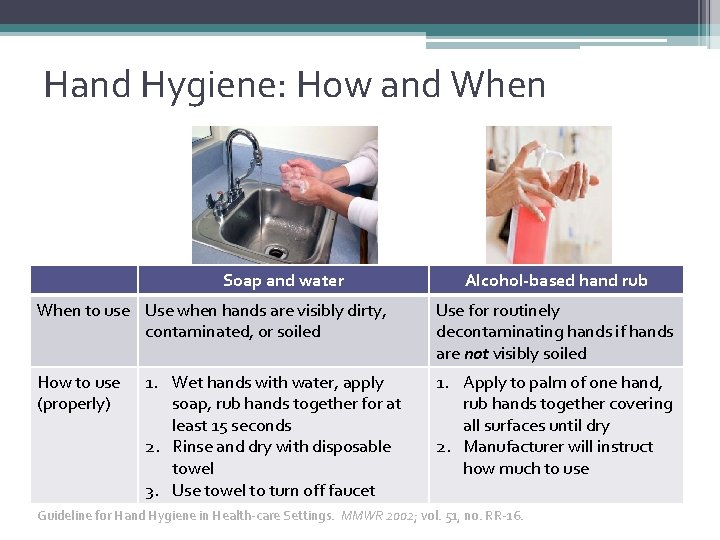
Hand Hygiene: How and When Soap and water When to use Use when hands are visibly dirty, contaminated, or soiled How to use (properly) 1. Wet hands with water, apply soap, rub hands together for at least 15 seconds 2. Rinse and dry with disposable towel 3. Use towel to turn off faucet Alcohol-based hand rub Use for routinely decontaminating hands if hands are not visibly soiled 1. Apply to palm of one hand, rub hands together covering all surfaces until dry 2. Manufacturer will instruct how much to use Guideline for Hand Hygiene in Health-care Settings. MMWR 2002; vol. 51, no. RR-16.
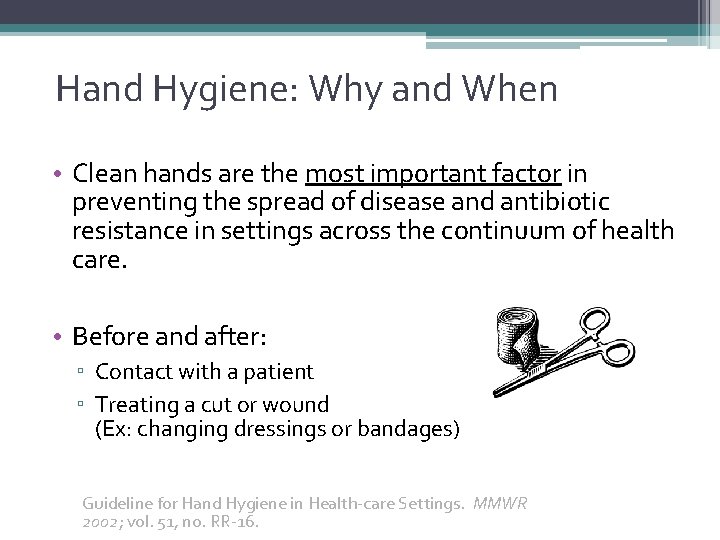
Hand Hygiene: Why and When • Clean hands are the most important factor in preventing the spread of disease and antibiotic resistance in settings across the continuum of health care. • Before and after: ▫ Contact with a patient ▫ Treating a cut or wound (Ex: changing dressings or bandages) Guideline for Hand Hygiene in Health-care Settings. MMWR 2002; vol. 51, no. RR-16.
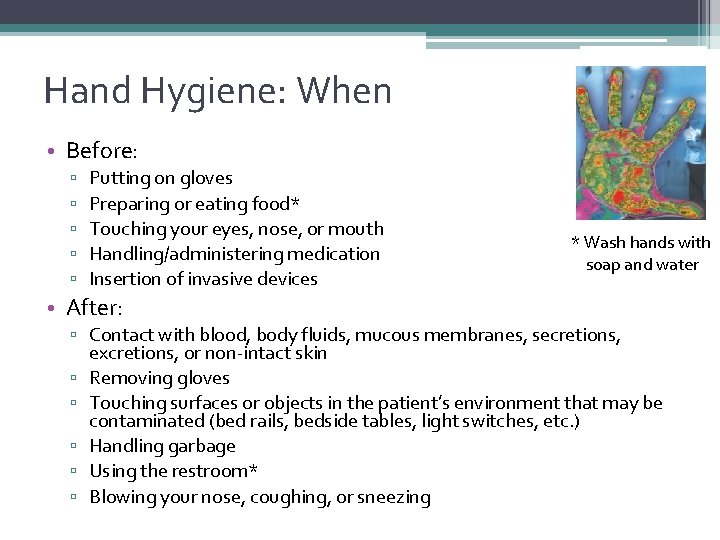
Hand Hygiene: When • Before: ▫ ▫ ▫ Putting on gloves Preparing or eating food* Touching your eyes, nose, or mouth Handling/administering medication Insertion of invasive devices * Wash hands with soap and water • After: ▫ Contact with blood, body fluids, mucous membranes, secretions, excretions, or non-intact skin ▫ Removing gloves ▫ Touching surfaces or objects in the patient’s environment that may be contaminated (bed rails, bedside tables, light switches, etc. ) ▫ Handling garbage ▫ Using the restroom* ▫ Blowing your nose, coughing, or sneezing
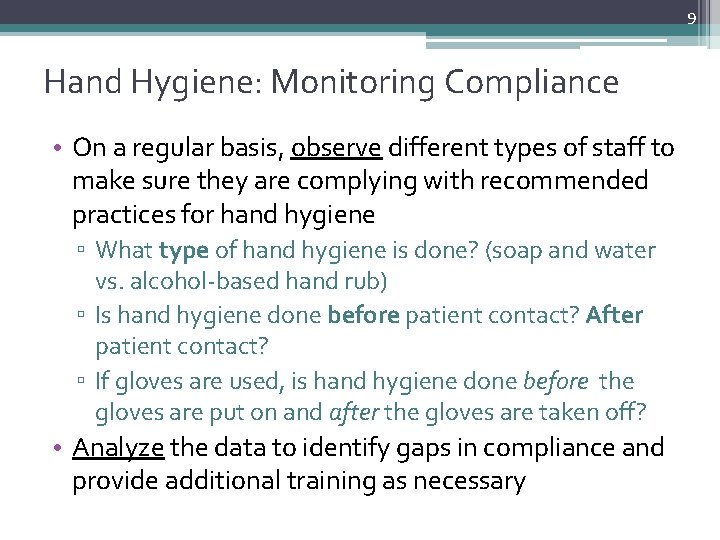
9 Hand Hygiene: Monitoring Compliance • On a regular basis, observe different types of staff to make sure they are complying with recommended practices for hand hygiene ▫ What type of hand hygiene is done? (soap and water vs. alcohol-based hand rub) ▫ Is hand hygiene done before patient contact? After patient contact? ▫ If gloves are used, is hand hygiene done before the gloves are put on and after the gloves are taken off? • Analyze the data to identify gaps in compliance and provide additional training as necessary
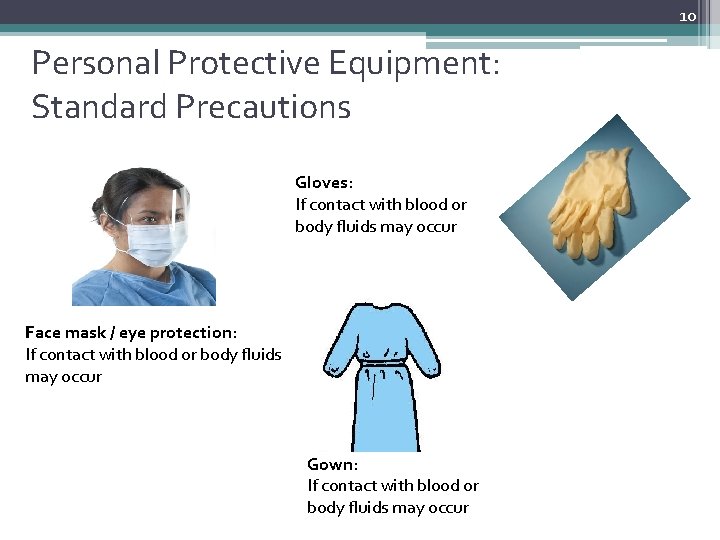
10 Personal Protective Equipment: Standard Precautions Gloves: If contact with blood or body fluids may occur Face mask / eye protection: If contact with blood or body fluids may occur Gown: If contact with blood or body fluids may occur
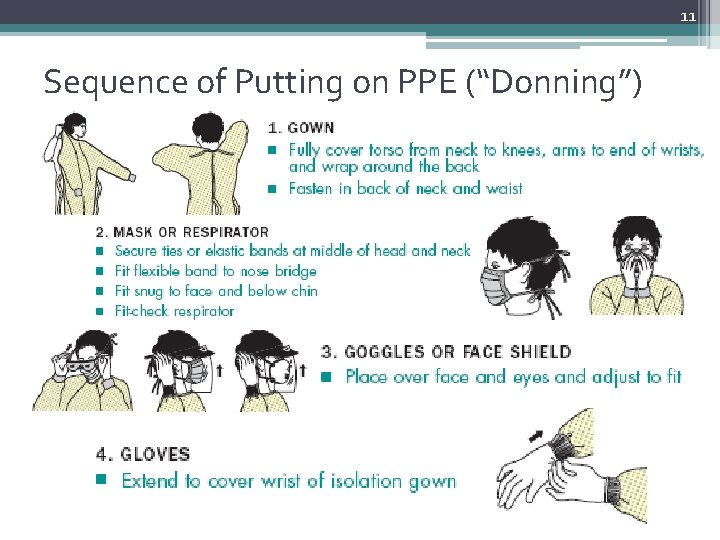
11 Sequence of Putting on PPE (“Donning”)
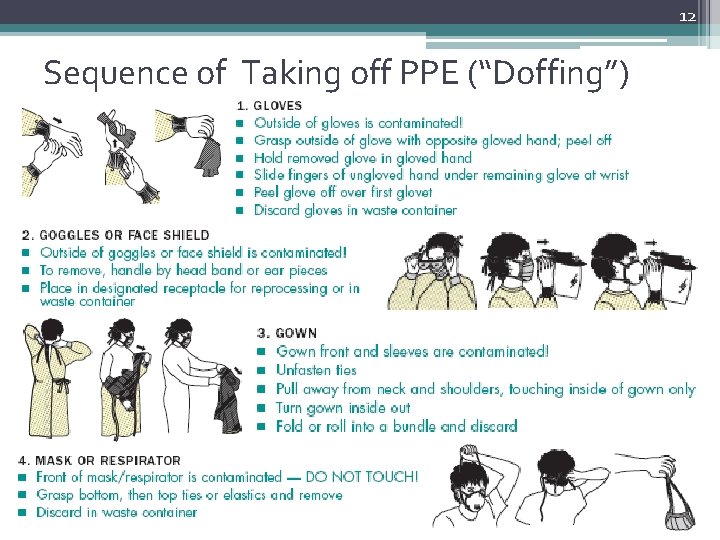
12 Sequence of Taking off PPE (“Doffing”)
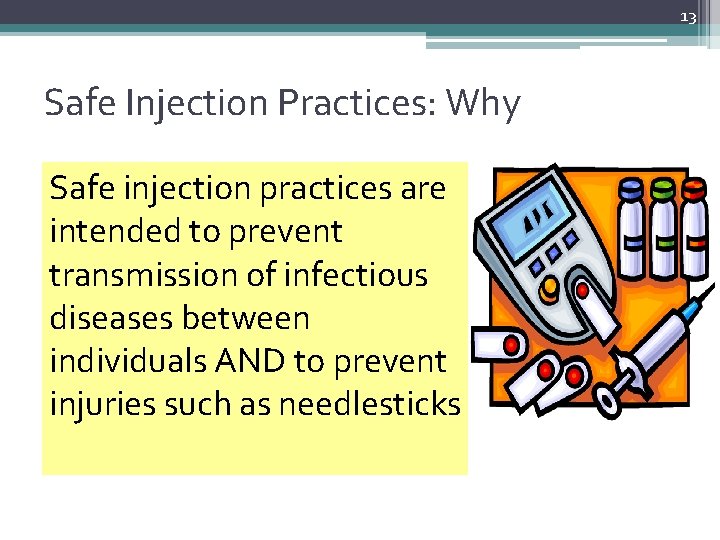
13 Safe Injection Practices: Why Safe injection practices are intended to prevent transmission of infectious diseases between individuals AND to prevent injuries such as needlesticks
14 Safe Injection Practices Include: • Aseptic technique • Using a single syringe and fluid infusion sets ONLY once (changing the needle is not sufficient) • Usingle-dose vials when possible • If multi-dose vials must be used, then use & store them according to manufacturer's recommendation
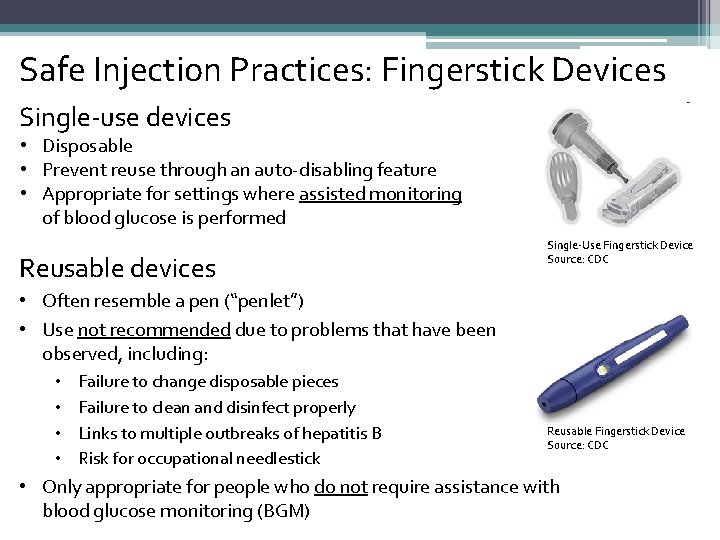
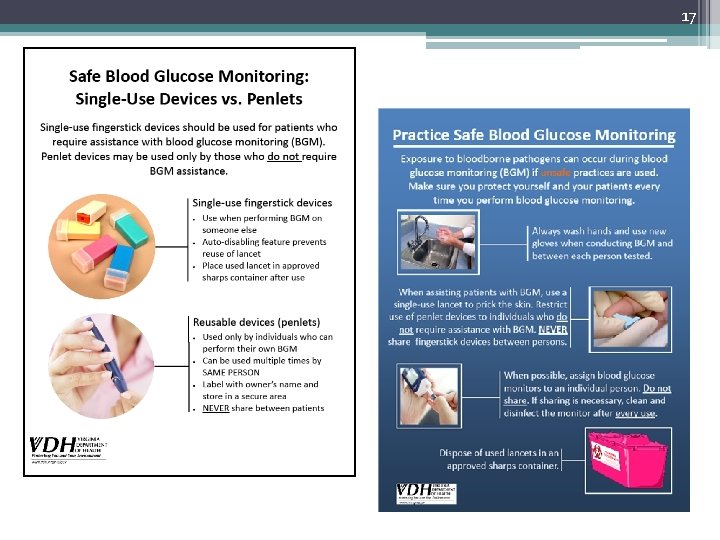
Safe Injection Practices: Fingerstick Devices Single-use devices • Disposable • Prevent reuse through an auto-disabling feature • Appropriate for settings where assisted monitoring of blood glucose is performed Reusable devices Single-Use Fingerstick Device Source: CDC • Often resemble a pen (“penlet”) • Use not recommended due to problems that have been observed, including: • • Failure to change disposable pieces Failure to clean and disinfect properly Links to multiple outbreaks of hepatitis B Risk for occupational needlestick Reusable Fingerstick Device Source: CDC • Only appropriate for people who do not require assistance with blood glucose monitoring (BGM)
16 Blood Glucose Monitoring Best Practices • Fingerstick devices should never be used for more than one person ▫ Select single-use devices that permanently retract upon puncture • Dedicate blood glucose meters to a single patient, one person, if possible ▫ If shared, the device should be cleaned and disinfected after every use, per manufacturer’s instructions • Insulin pens and other medication cartridges and syringes are for single-use only and should never be used for more than one person
17
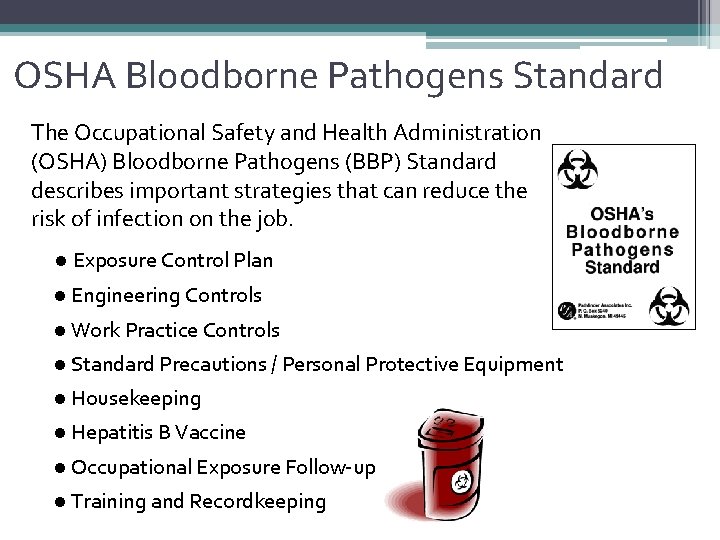
OSHA Bloodborne Pathogens Standard The Occupational Safety and Health Administration (OSHA) Bloodborne Pathogens (BBP) Standard describes important strategies that can reduce the risk of infection on the job. l Exposure Control Plan l Engineering Controls l Work Practice Controls l Standard Precautions / Personal Protective Equipment l Housekeeping l Hepatitis B Vaccine l Occupational Exposure Follow-up l Training and Recordkeeping
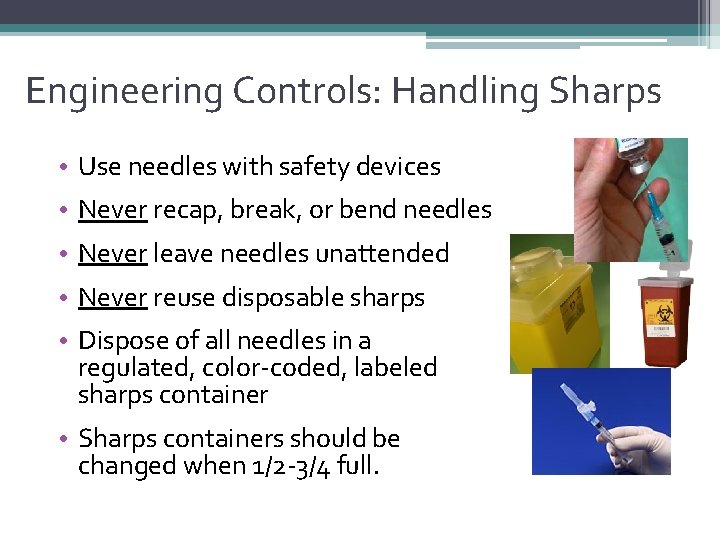
Engineering Controls: Handling Sharps • Use needles with safety devices • Never recap, break, or bend needles • Never leave needles unattended • Never reuse disposable sharps • Dispose of all needles in a regulated, color-coded, labeled sharps container • Sharps containers should be changed when 1/2 -3/4 full.
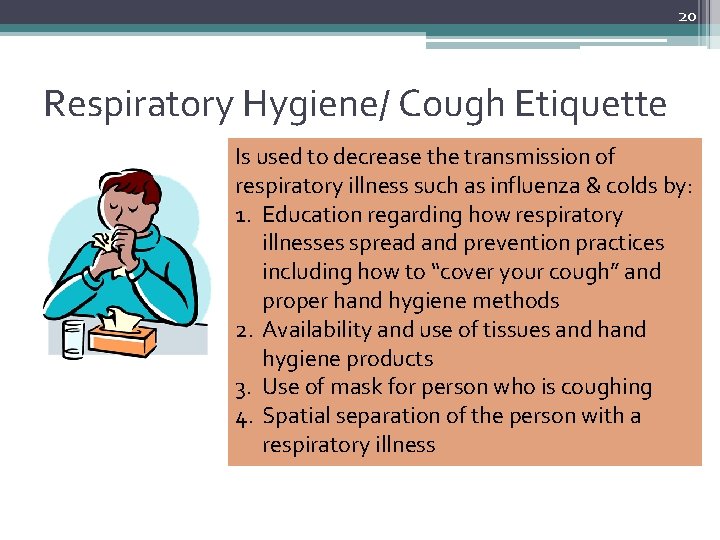
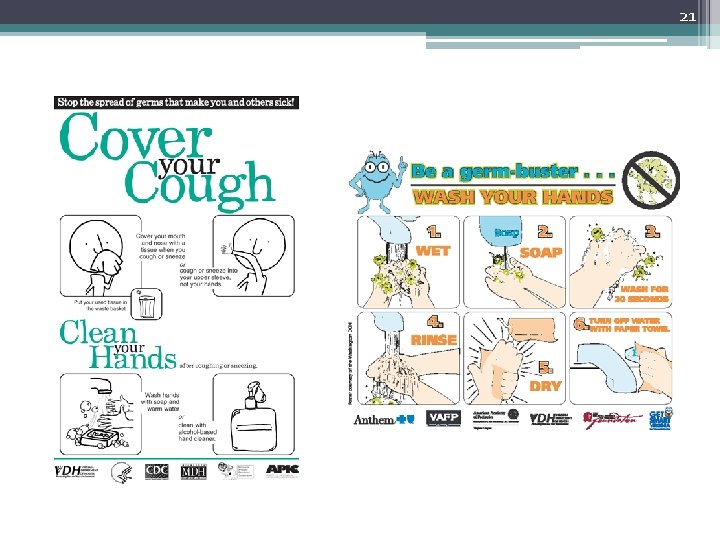
20 Respiratory Hygiene/ Cough Etiquette Is used to decrease the transmission of respiratory illness such as influenza & colds by: 1. Education regarding how respiratory illnesses spread and prevention practices including how to “cover your cough” and proper hand hygiene methods 2. Availability and use of tissues and hygiene products 3. Use of mask for person who is coughing 4. Spatial separation of the person with a respiratory illness
21
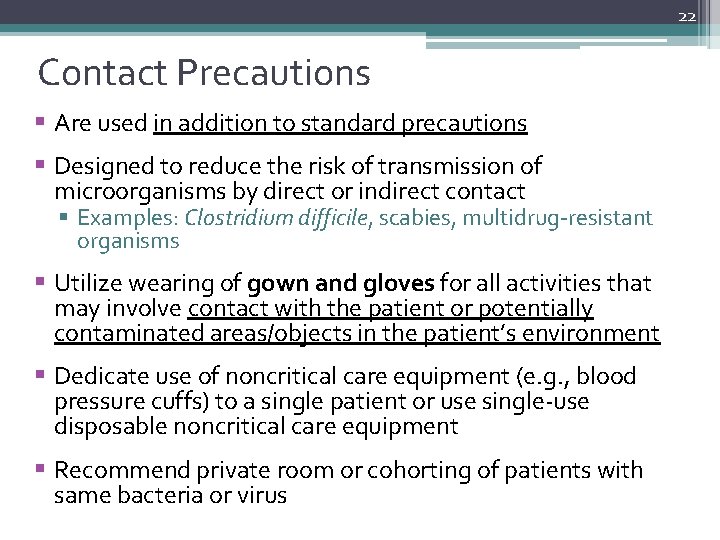
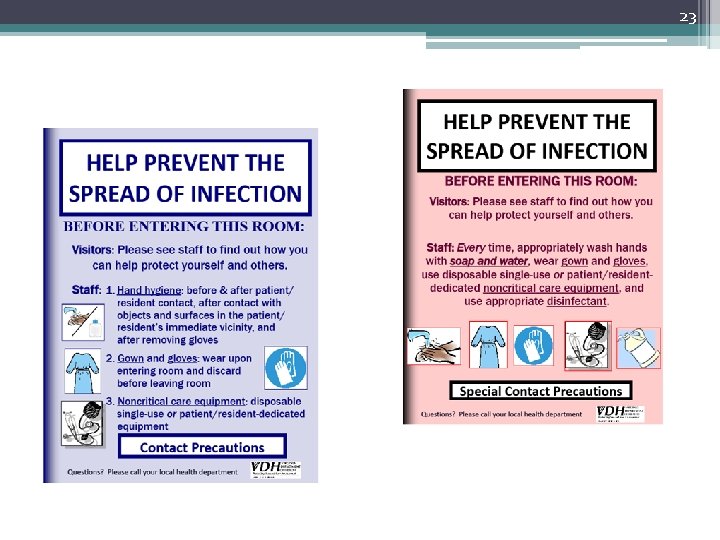
22 Contact Precautions § Are used in addition to standard precautions § Designed to reduce the risk of transmission of microorganisms by direct or indirect contact § Examples: Clostridium difficile, scabies, multidrug-resistant organisms § Utilize wearing of gown and gloves for all activities that may involve contact with the patient or potentially contaminated areas/objects in the patient’s environment § Dedicate use of noncritical care equipment (e. g. , blood pressure cuffs) to a single patient or use single-use disposable noncritical care equipment § Recommend private room or cohorting of patients with same bacteria or virus
23
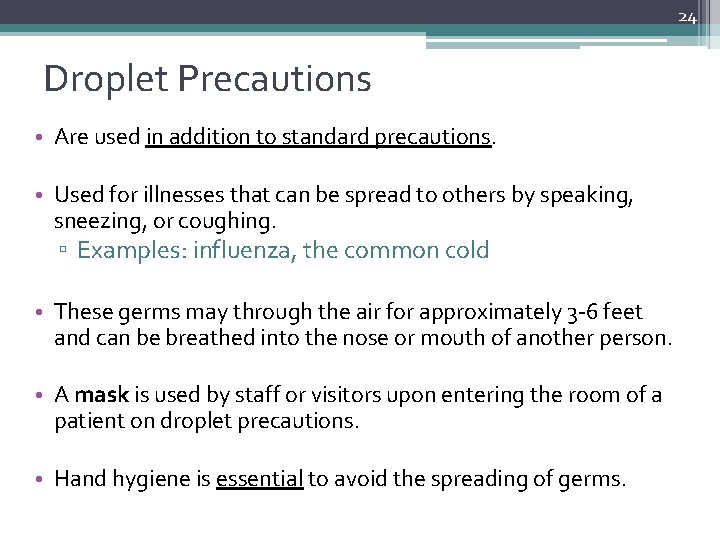
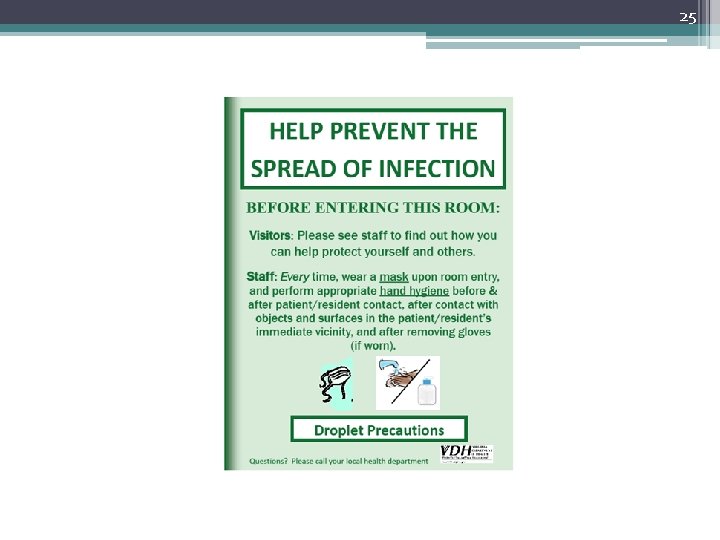
24 Droplet Precautions • Are used in addition to standard precautions. • Used for illnesses that can be spread to others by speaking, sneezing, or coughing. ▫ Examples: influenza, the common cold • These germs may through the air for approximately 3 -6 feet and can be breathed into the nose or mouth of another person. • A mask is used by staff or visitors upon entering the room of a patient on droplet precautions. • Hand hygiene is essential to avoid the spreading of germs.
25
26 Airborne Precautions • Are used in addition to standard precautions. • Used for illnesses that can be transmitted by small particles in the air. ▫ Example: tuberculosis • An airborne infection isolation (AII) room with negative pressure is preferred. ▫ If AII room not available, place in private room with door closed. • Use N 95 respirator (or higher) when entering room.
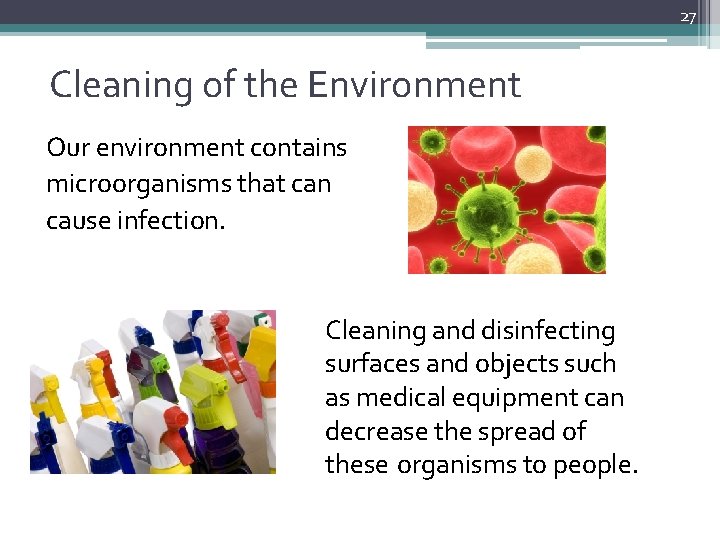
27 Cleaning of the Environment Our environment contains microorganisms that can cause infection. Cleaning and disinfecting surfaces and objects such as medical equipment can decrease the spread of these organisms to people.
28 Common Terms • Clean = remove all visible dust, soil, and any other foreign material • Decontaminate = remove disease-producing microbes to make safe for handling • Disinfect= kill or destroy nearly all diseaseproducing organisms, except spores using a chemical or physical agent • Sterilize = destroy microorganisms and spores Adapted from the APIC, 2009 Infection Prevention Manual for Long-Term Care Facilities
29 Breakdown of Cleaning • Cleaning is the physical removal of all visible soil and other foreign material (such as dirt, dust bunnies, and body fluids) so you can get to the microbes underneath. You can’t kill microbes if you don’t clean first. • One can clean without disinfecting, but one can not disinfect without cleaning, therefore, one must clean first to remove the materials. • Transmission of infection may not be a failure of the cleaning and disinfecting agents but rather a failure to completely follow the cleaning and disinfecting process.
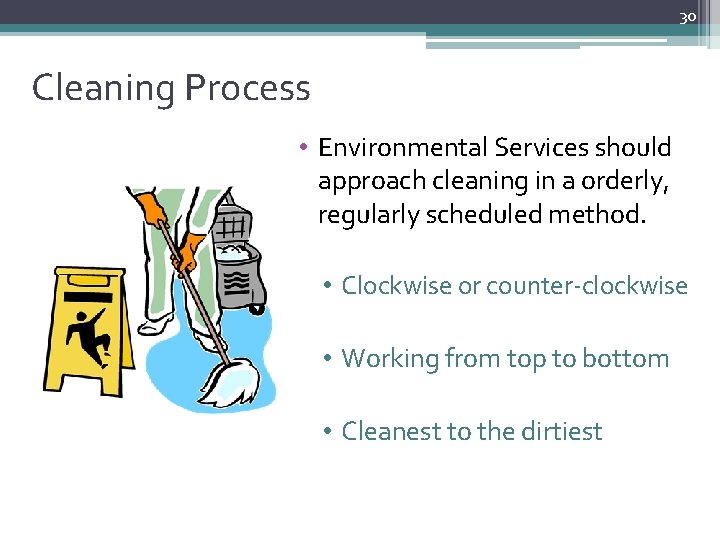
30 Cleaning Process • Environmental Services should approach cleaning in a orderly, regularly scheduled method. • Clockwise or counter-clockwise • Working from top to bottom • Cleanest to the dirtiest
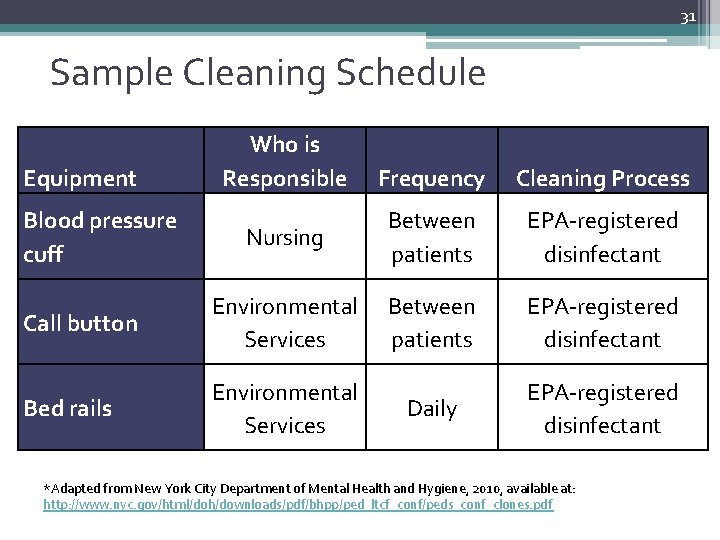
31 Sample Cleaning Schedule Equipment Who is Responsible Frequency Cleaning Process Nursing Between patients EPA-registered disinfectant Call button Environmental Services Between patients EPA-registered disinfectant Bed rails Environmental Services Daily EPA-registered disinfectant Blood pressure cuff *Adapted from New York City Department of Mental Health and Hygiene, 2010, available at: http: //www. nyc. gov/html/doh/downloads/pdf/bhpp/ped_ltcf_conf/peds_conf_clones. pdf
32 Disinfecting Agents • Only use disinfectants registered with the U. S. Environmental Protection Agency (EPA) • Cleaners and disinfectants should be reviewed for use, dilution, contact time, and shelf life ▫ Contact time: amount of time needed for the chemical to come in contact with the microorganism so that a significant number of organisms are killed. • Use appropriate disinfectant for situation ▫ For example: areas contaminated with C. difficile or norovirus may need different cleaners and disinfectants
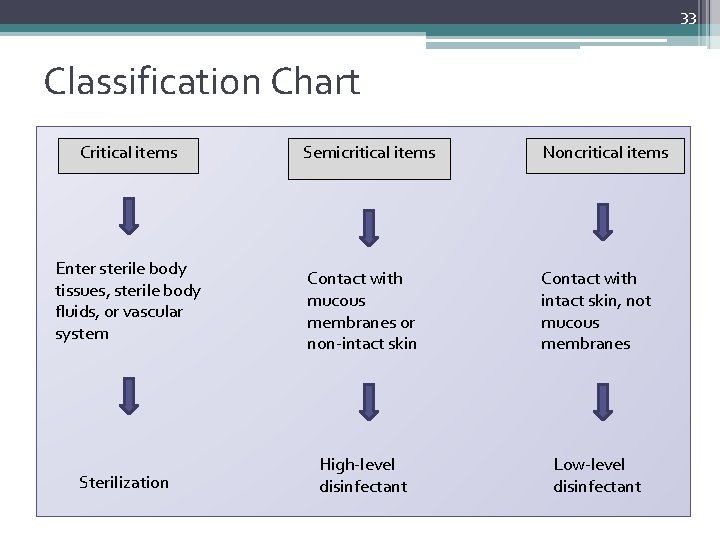
33 Classification Chart Critical items Enter sterile body tissues, sterile body fluids, or vascular system Sterilization Semicritical items Noncritical items Contact with mucous membranes or non-intact skin Contact with intact skin, not mucous membranes High-level disinfectant Low-level disinfectant
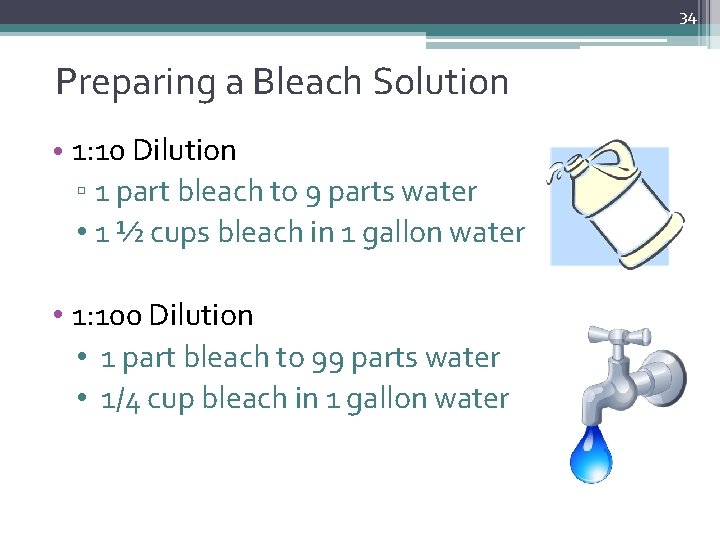
34 Preparing a Bleach Solution • 1: 10 Dilution ▫ 1 part bleach to 9 parts water • 1 ½ cups bleach in 1 gallon water • 1: 100 Dilution • 1 part bleach to 99 parts water • 1/4 cup bleach in 1 gallon water
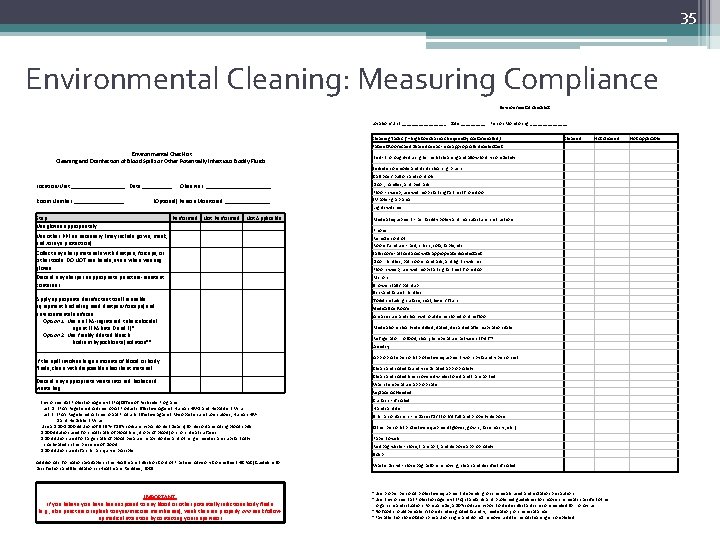
35 Environmental Cleaning: Measuring Compliance Environmental Checklist Location/Unit: _________ Date: _____ Person Monitoring: ________ Cleaning Tasks (*= high touch areas frequently contaminated) Cleaned Not cleaned Not Applicable Patient Rooms and Shared Areas - use appropriate disinfectant Bed - thoroughly during terminal cleaning and allow to dry completely Bedside commode and its cleaning brush* Call box / button and controls* Location/Unit: _________ Date: _____ Observer: ___________ Door, handles, and bed rails* Floor - sweep, use wet mop starting farthest from door Room Number: _________ (Optional) Person Monitored: ________ IV pole - grab area* Light switches* Medical equipment - per facility policy and manufacturer instructions Phone* Remote control* Room furniture - bed, chairs, sofa, table, etc. * Bathroom - all surfaces with appropriate disinfectant Door handles, bathroom handrails, and light switches* Floor: sweep, use wet mop starting farthest from door Mirrors Shower stall / bathtub Sink and faucet handles* Toilet including surface, seat, lever / flush* Medication Room Area secure and clean without items stored on the floor Medications clearly identified, dated, discarded after expiration date Refrigerator: no food, clean, temperature between 36 -46°F Laundry Appropriate personal protective equipment worn by laundry personnel Clean and soiled laundry separated appropriately Clean and soiled linen covered while stored and transported Wash temperature appropriate Replace As Needed Curtains - if soiled Hand sanitizer Sharps containers - replace if 1/2 to 3/4 full and properly dispose Other personal protective equipment (gloves, gowns, face masks, etc. ) Paper towels Red bag waste - close, transport, and dispose appropriately Soap Waste basket - close bag before removing; clean and disinfect if soiled Environmental Checklist Cleaning and Disinfection of Blood Spills or Other Potentially Infectious Bodily Fluids Step Use gloves appropriately Performed Not Applicable Use other PPE as necessary (may include gown, mask, and/or eye protection) Collect any sharp materials with dustpan, forceps, or other tools. DO NOT use hands, even when wearing gloves Discard any sharps in appropriate puncture-resistant container Apply appropriate disinfectant to all reusable equipment (including used dustpan/forceps) and environmental surfaces Option 1: Use an EPA-registered tuberculocidal agent (EPA lists D and E)* Option 2: Use freshly diluted bleach (sodium hypochlorite) solution** If the spill involves large amounts of blood or body fluids, clean with disposable absorbent material Discard any appropriate waste into red biohazard waste bag * Environmental Protection Agency (EPA) Office of Pesticide Programs List D: EPA's Registered Antimicrobial Products Effective Against Human HIV-1 and Hepatitis B Virus List E: EPA's Registered Antimicrobial Products Effective against Mycobacterium tuberculosis, Human HIV 1 and Hepatitis B Virus **Use a 1: 10 -1: 100 dilution of 5. 25%-6. 15% sodium hypochlorite (bleach) for decontaminating blood spills. 1: 100 dilution used for small spills of blood (i. e. , drops of blood) on noncritical surfaces. 1: 10 dilution used for large spills of blood because hypochlorites and other germicides are substantially inactivated in the presence of blood. 1: 10 dilution used if a sharps injury is possible. Additional information available in the Healthcare Infection Control Practices Advisory Committee (HICPAC) Guideline for Disinfection and Sterilization in Healthcare Facilities, 2008. IMPORTANT: If you believe you have been exposed to any blood or other potentially infectious body fluids (e. g. , skin puncture or splash to eyes/mucous membranes), wash the area properly and seek followup medical attention by contacting your supervisor. ° Use proper personal protective equipment depending on chemicals used and isolation precautions. ° Use Environmental Protection Agency (EPA) standards and published guidelines to choose chemicals specific to the organism and situation. For example, a 10% sodium hypochlorite disinfectant is recommended for norovirus. ° No food should be eaten/stored in designated laundry, medication, or chemical areas. ° Pay attention to isolation precaution signs and do not remove until terminal cleaning is completed.
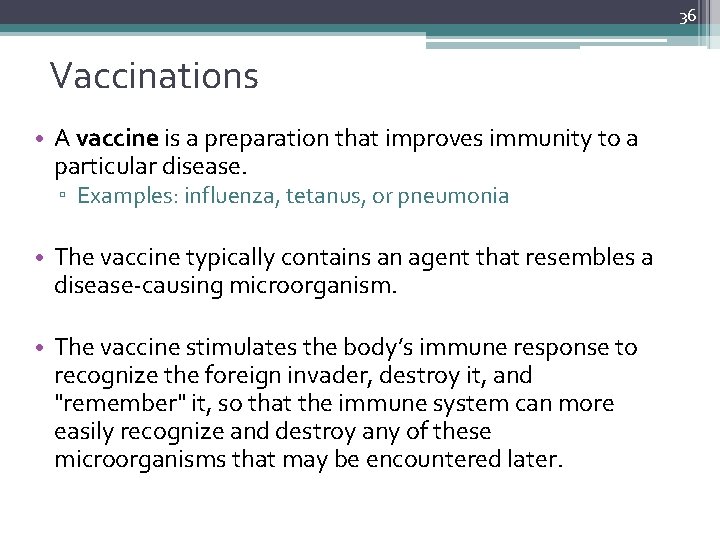
36 Vaccinations • A vaccine is a preparation that improves immunity to a particular disease. ▫ Examples: influenza, tetanus, or pneumonia • The vaccine typically contains an agent that resembles a disease-causing microorganism. • The vaccine stimulates the body’s immune response to recognize the foreign invader, destroy it, and "remember" it, so that the immune system can more easily recognize and destroy any of these microorganisms that may be encountered later.
37 Why Vaccinate? • Vaccines can help prevent some diseases ▫ Save costs (resource reallocation) � Lost time from work � Treatment expenses ▫ Save lives • Long-term protection in the individual • Help prevent outbreaks from occurring
38 Vaccination Recommendations • May vary based on underlying medical conditions, occupation, and age ▫ Special vaccination recommendations apply to healthcare personnel to protect themselves and their patients against disease • Even if you were vaccinated as a child, you may need to get vaccinated as an adult for certain diseases ▫ For example, it is recommended that you get a vaccination for influenza every year • Recommendations are updated and published every year • CDC website for immunization schedules: http: //www. cdc. gov/vaccines/schedules/index. html
39 Successful Vaccination Strategies • Stress benefits of vaccination. • Allay fears and misconceptions. ▫ ▫ Vaccines are safe! Can’t “catch” the disease from the vaccine Minimal side effects Benefits outweigh the risks • Find creative ways to increase staff influenza vaccination rates.
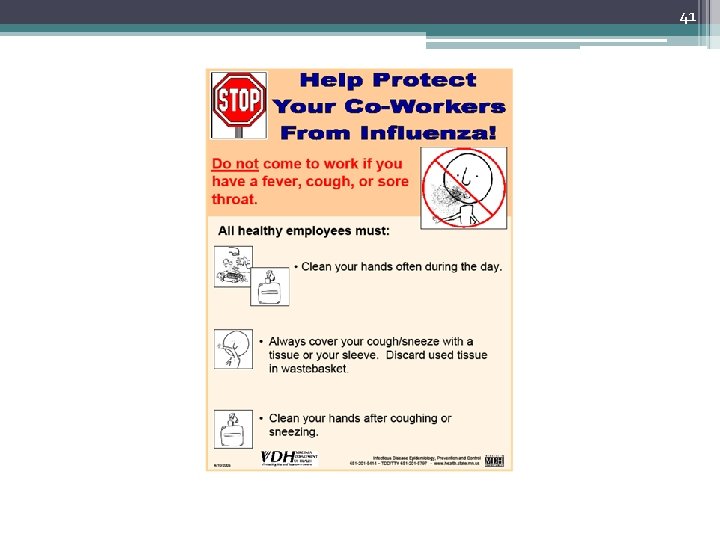
40 Staff Members and Illness • Staff sick leave policies should allow and encourage those who are ill to stay home ▫ Consistent with public health guidance ▫ Non-punitive and as flexible as possible • Keep track of illness in staff via surveillance logs • After returning to work, remind staff to practice good hand hygiene and respiratory etiquette
41
42 Staff Members and Illness • If sick with a communicable disease or skin lesion, do not report to work. ▫ Remain home for at least 24 hours after symptoms resolve, without the use of medicines that treat the symptoms. ▫ If you have a skin lesion or weeping dermatitis above the elbow or below the collarbone, you are able to continue to work provided the affected area is bandaged and the drainage is contained. ▫ Other communicable diseases may have different work restrictions or recommended lengths of exclusion from work. Your facility should consult with the local health department as necessary to prevent the spread of infection. • If at work, stop patient care and/or food service activities, promptly notify your supervisor, and leave work as soon as possible.
43 Education is Prevention! • Share information and strategies with staff ▫ Upon hire ▫ Annually ▫ As needed • Use effective teaching tools ▫ Address the adult learning principles ▫ Engage, involve, interact �Case studies �Group exercises �Role playing Group discussion Applied practice Interviews ▫ Use assessments before and after training to see if training was successful
44 Thank you! VDH Healthcare-Associated Infection Program Main line: 804 -864 -8141