
1 In the urea cycle A carbamoyl phosphate
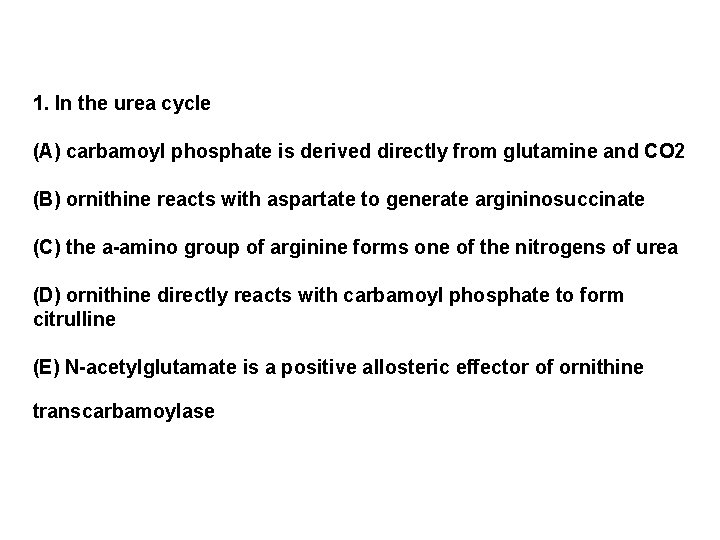
1. In the urea cycle (A) carbamoyl phosphate is derived directly from glutamine and CO 2 (B) ornithine reacts with aspartate to generate argininosuccinate (C) the a-amino group of arginine forms one of the nitrogens of urea (D) ornithine directly reacts with carbamoyl phosphate to form citrulline (E) N-acetylglutamate is a positive allosteric effector of ornithine transcarbamoylase
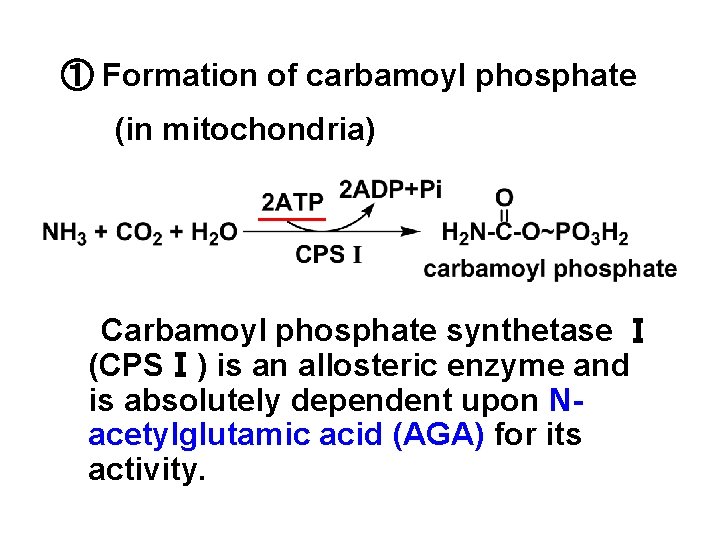
① Formation of carbamoyl phosphate (in mitochondria) Carbamoyl phosphate synthetase Ⅰ (CPSⅠ) is an allosteric enzyme and is absolutely dependent upon Nacetylglutamic acid (AGA) for its activity.
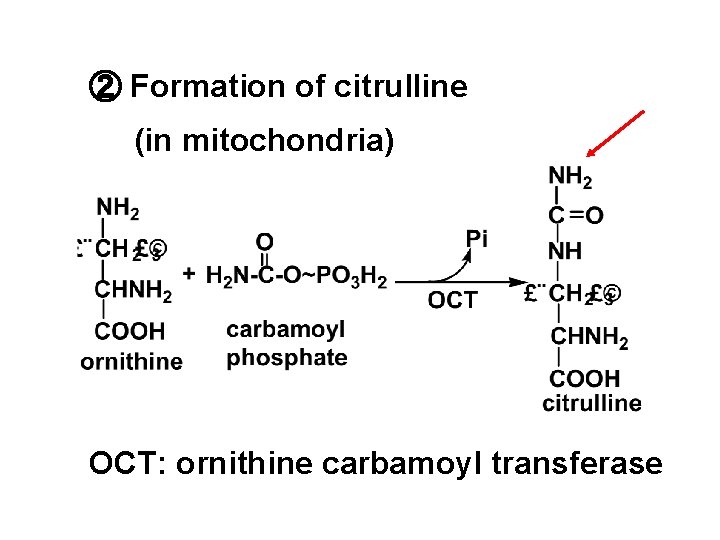
② Formation of citrulline (in mitochondria) OCT: ornithine carbamoyl transferase
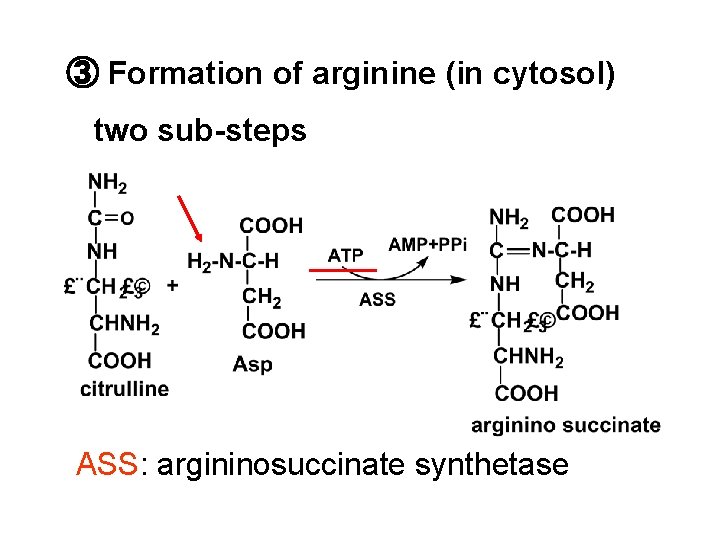
③ Formation of arginine (in cytosol) two sub-steps ASS: argininosuccinate synthetase
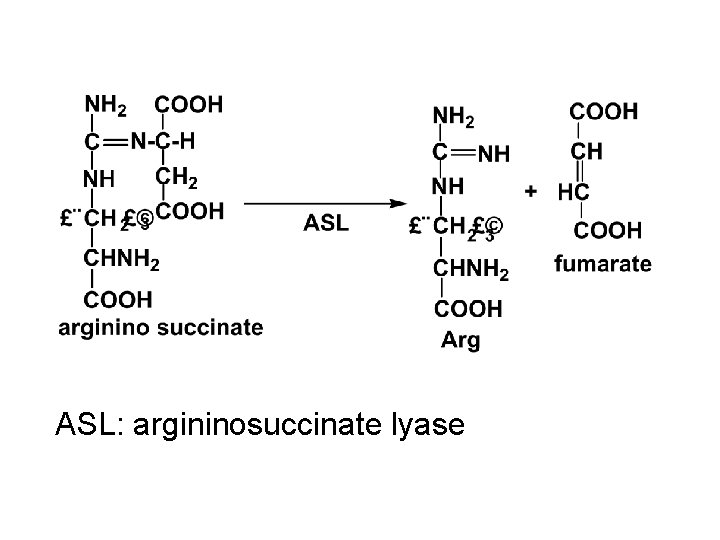
ASL: argininosuccinate lyase
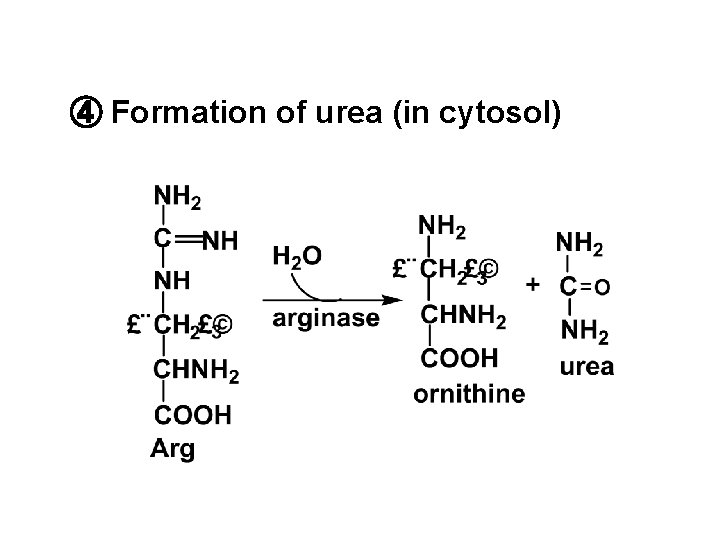
④ Formation of urea (in cytosol)
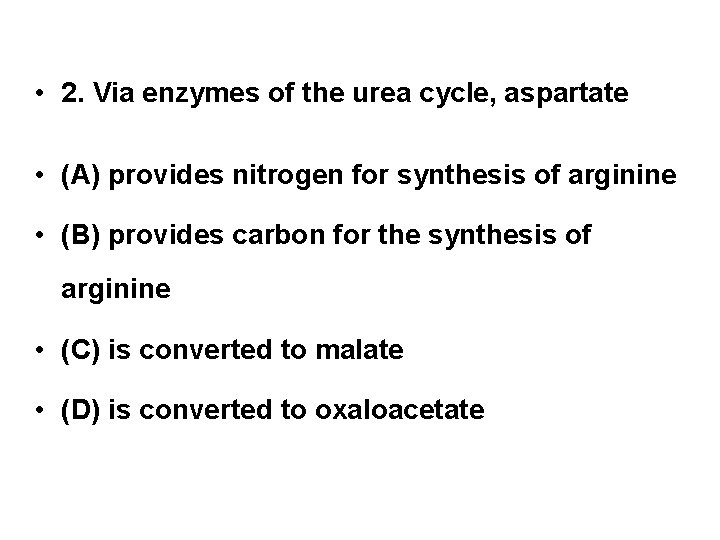
• 2. Via enzymes of the urea cycle, aspartate • (A) provides nitrogen for synthesis of arginine • (B) provides carbon for the synthesis of arginine • (C) is converted to malate • (D) is converted to oxaloacetate
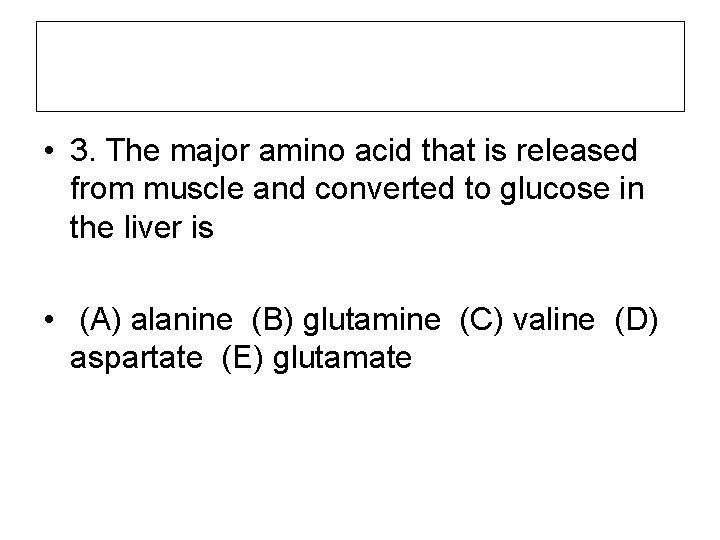
• 3. The major amino acid that is released from muscle and converted to glucose in the liver is • (A) alanine (B) glutamine (C) valine (D) aspartate (E) glutamate
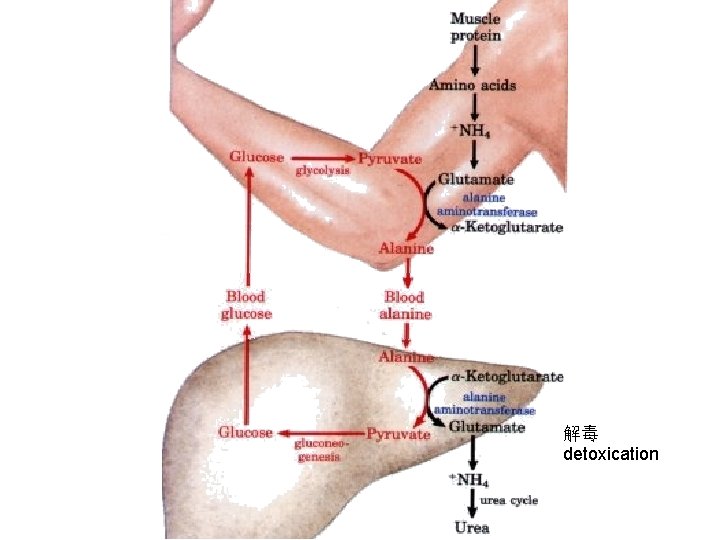
解毒 detoxication
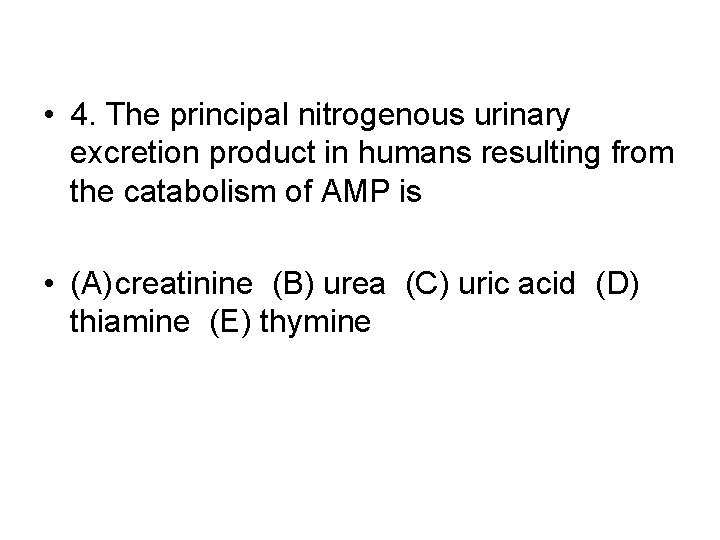
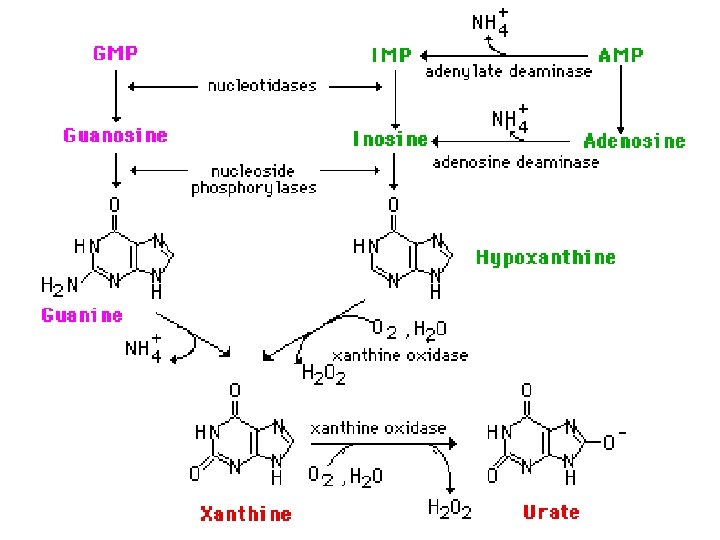
• 4. The principal nitrogenous urinary excretion product in humans resulting from the catabolism of AMP is • (A)creatinine (B) urea (C) uric acid (D) thiamine (E) thymine
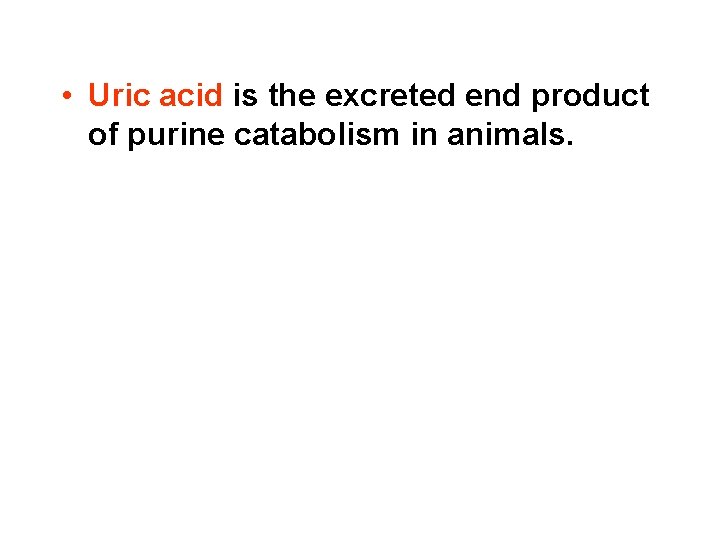
• Uric acid is the excreted end product of purine catabolism in animals.
• 5. Pregnant women frequently suffer from folate deficiencies. A deficiency of folate would decrease the production of • (A) creatine phosphate from creatine • (B) all of the pyrimidines required for RNA synthesis • (C) the thymine nucleotide required for DNA synthesis • (D) phosphatidyl choline from diacylglycerol and CDPcholine • (E) none of them
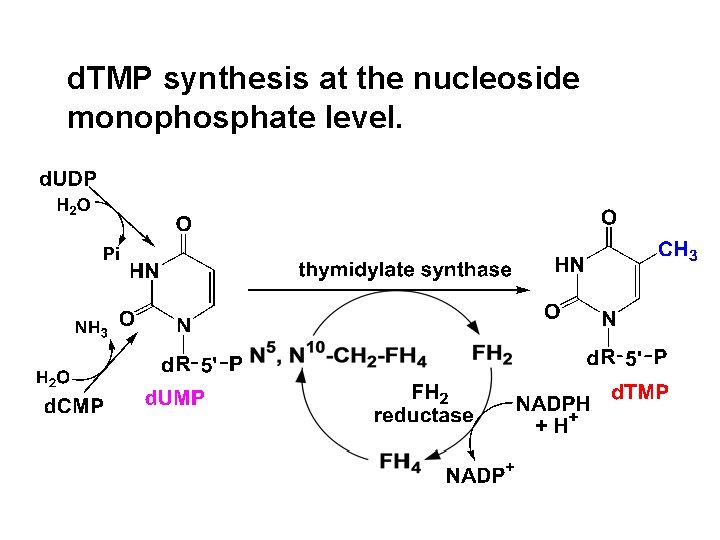
d. TMP synthesis at the nucleoside monophosphate level.
• 6. A 24 -hour urine collection showed that an individual's excretion of creatinine was much lower than normal. Decreased excretion of creatinine could be caused by • (A) kidney failure • (B) decreased dietary intake of creatine • (C) a higher than normal muscle mass resulting from weight lifting • (D) a genetic defect in the enzyme that converts creatine phosphate to creatinine
• 7. The action of DNA polymerases requires • (A) a 5'-hydroxyl group • (B) d. UTP • (C) NAD + as a cofactor • (D) a 3'-hydroxyl group • (E) CTP
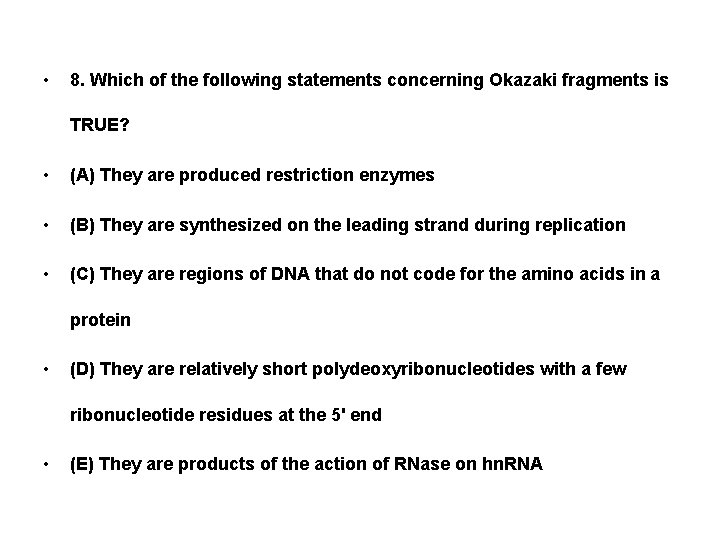
• 8. Which of the following statements concerning Okazaki fragments is TRUE? • (A) They are produced restriction enzymes • (B) They are synthesized on the leading strand during replication • (C) They are regions of DNA that do not code for the amino acids in a protein • (D) They are relatively short polydeoxyribonucleotides with a few ribonucleotide residues at the 5' end • (E) They are products of the action of RNase on hn. RNA
• 9. Which of the following statements about bilirubin is TRUE? • (A) It is made more soluble in the liver by attachment of residues of glucose • (B) It is excreted mainly in the urine • (C) It is produced by oxidation of heme, with loss of carbon monoxide (CO) • (D) It contains iron in the Fe 2+ state
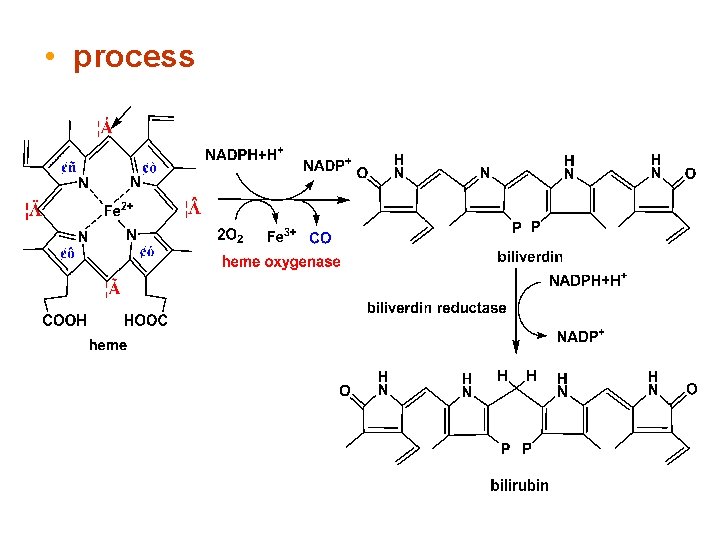
• process
10. In the blood of hepatitis patient, which of the following component that would most likely be elevated. • (A) Bilirubin • (B) Uric acid • (C) Creatine phosphokinase • (D) Blood urea nitrogen (BUN)
Union deamination
mechanism of replication fidelity


- Slides: 24