
1 If the particles of the medium are
- Slides: 60
1. If the particles of the medium are vibrating to and fro in the same direction of energy transport, then the wave is a ____ wave.
1. If the particles of the medium are vibrating to and fro in the same direction of energy transport, then the wave is a longitudinal wave.
2. When the particles of a medium are vibrating at right angles to the direction of energy transport, then the wave is a ____ wave.
2. When the particles of a medium are vibrating at right angles to the direction of energy transport, then the wave is a transverse wave.
3. If the energy in a longitudinal wave travels from south to north, the particles of the medium would be vibrating _____.
3. If the energy in a longitudinal wave travels from south to north, the particles of the medium would be vibrating south and north.
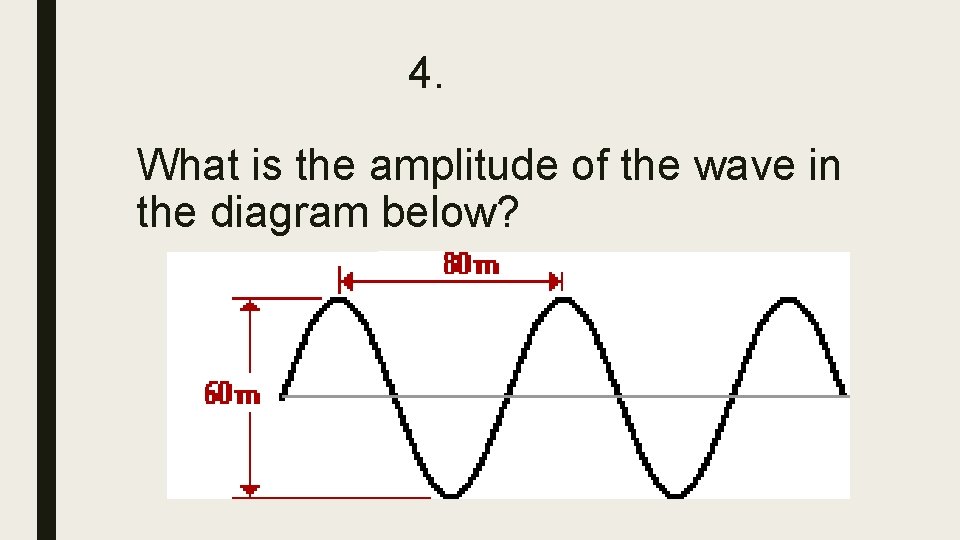
4. What is the amplitude of the wave in the diagram below?
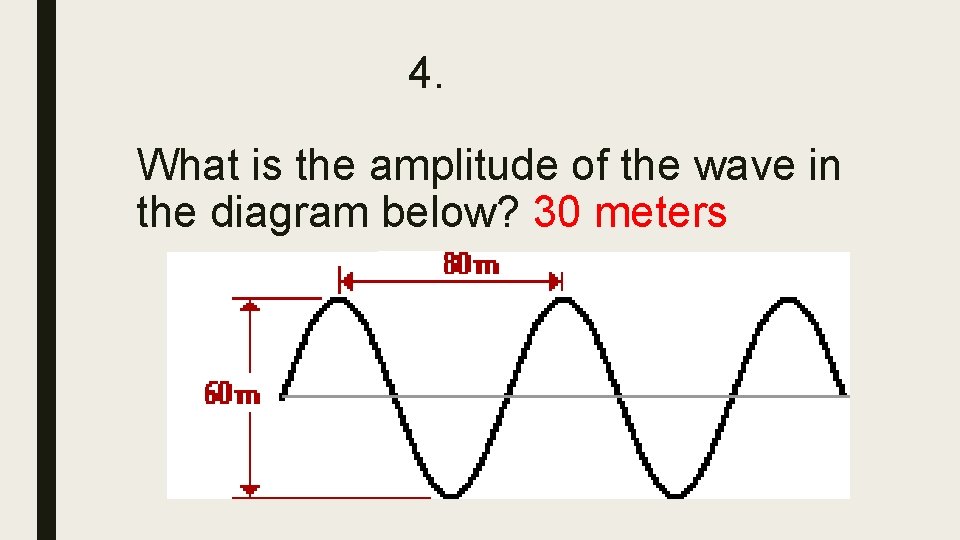
4. What is the amplitude of the wave in the diagram below? 30 meters
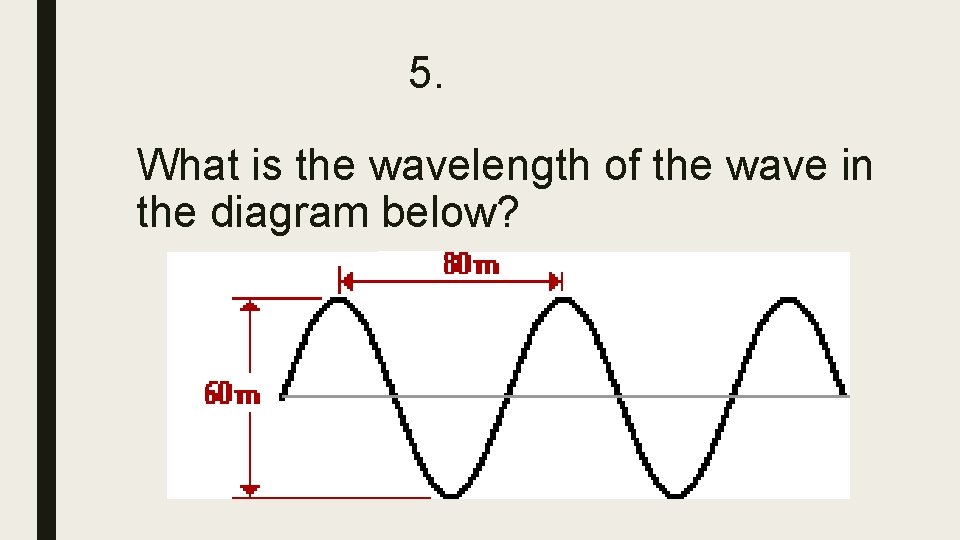
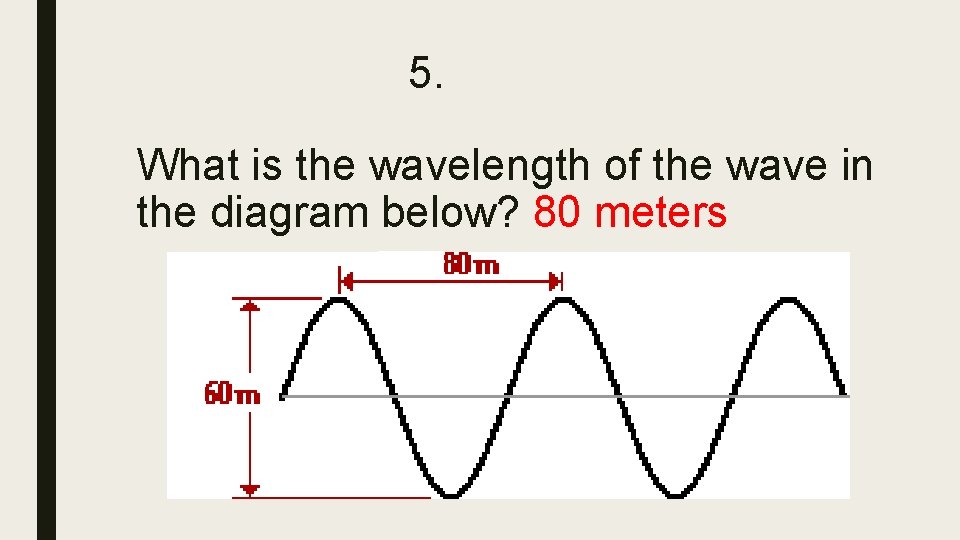
5. What is the wavelength of the wave in the diagram below?
5. What is the wavelength of the wave in the diagram below? 80 meters
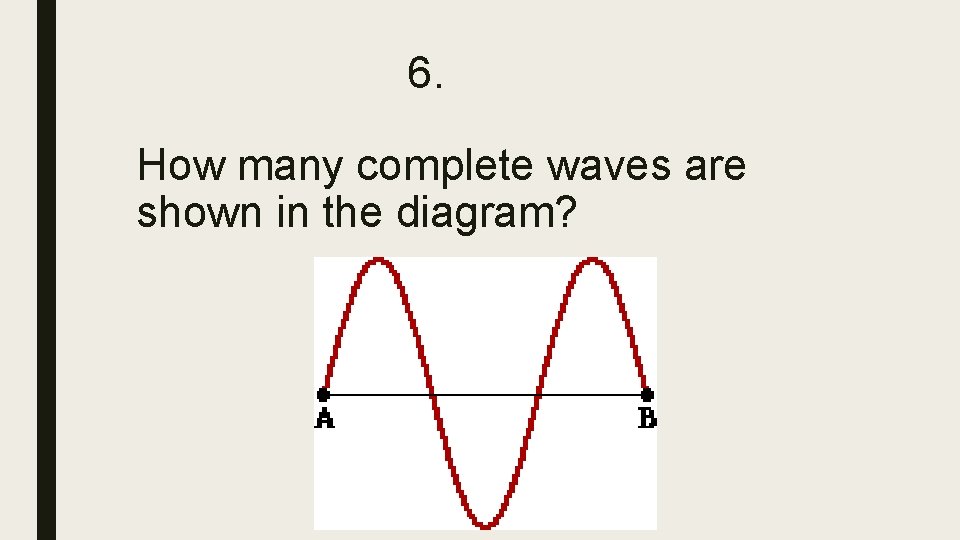
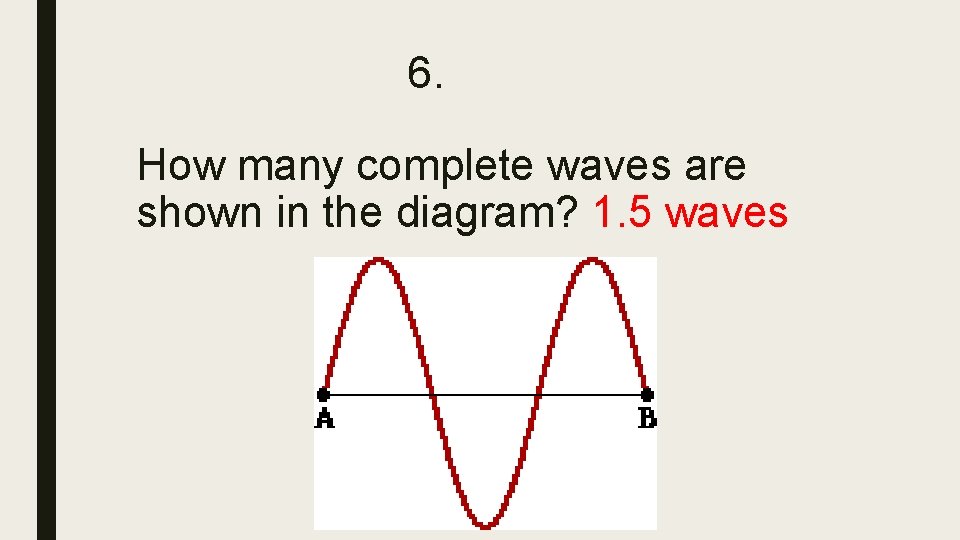
6. How many complete waves are shown in the diagram?
6. How many complete waves are shown in the diagram? 1. 5 waves
7. The number of waves per second is defined as a wave's ____.
7. The number of waves per second is defined as a wave's frequency.
8. A sound wave hits your ear at 10, 000 Hz. How many waves per second are hitting your ear?
8. A sound wave hits your ear at 10, 000 Hz. How many waves per second are hitting your ear? 10, 000 waves
9. The SI unit for frequency is hertz. a. True b. False
9. The SI unit for frequency is hertz. a. True b. False
10. If a speaker is playing a song and the amplitude is increased, the sound will: a. Get louder b. Get higher pitched c. Get lower pitched d. Get quieter e. Nothing will change
10. If a speaker is playing a song and the amplitude is increased, the sound will: a. Get louder b. Get higher pitched c. Get lower pitched d. Get quieter e. Nothing will change
11. If a speaker is playing a song and the frequency is decreased, the sound will: a. Get louder b. Get higher pitched c. Get lower pitched d. Get quieter e. Nothing will change
11. If a speaker is playing a song and the frequency is decreased, the sound will: a. Get louder b. Get higher pitched c. Get lower pitched d. Get quieter e. Nothing will change
12. A wave in the water is: a. A transverse wave b. A longitudinal wave c. A surface wave d. None of the above
12. A wave in the water is: a. A transverse wave b. A longitudinal wave c. A surface wave d. None of the above
13. A wave made by whipping a rope up and down is: a. A transverse wave b. A longitudinal wave c. A surface wave d. None of the above
13. A wave made by whipping a rope up and down is: a. A transverse wave b. A longitudinal wave c. A surface wave d. None of the above
14. A 60 watt lightbulb is less bright than a 120 watt lightbulb. The 120 watt lightbulb has: a. greater frequency b. longer wavelength c. higher amplitude d. less frequency e. shorter wavelength
14. A 60 watt lightbulb is less bright than a 120 watt lightbulb. The 120 watt lightbulb has: a. greater frequency b. longer wavelength c. higher amplitude d. less frequency e. shorter wavelength
15. Big wave surfers try to find the ocean waves with the greatest possible… a. amplitude b. frequency c. wavelength d. awesomeness
15. Big wave surfers try to find the ocean waves with the greatest possible… a. amplitude b. frequency c. wavelength d. awesomeness
16. The reason the sound wave coming out of a test tube would have a higher pitch is because the wave has… a. greater frequency b. higher amplitude c. less frequency d. lower amplitude
16. The reason the sound wave coming out of a test tube would have a higher pitch is because the wave has… a. greater frequency b. higher amplitude c. less frequency d. lower amplitude
17. A stage light begins to change color from red to yellow in a theater. What is changing about the wave? a. wavelength b. amplitude c. size d. pitch
17. A stage light begins to change color from red to yellow in a theater. What is changing about the wave? a. wavelength b. amplitude c. size d. pitch
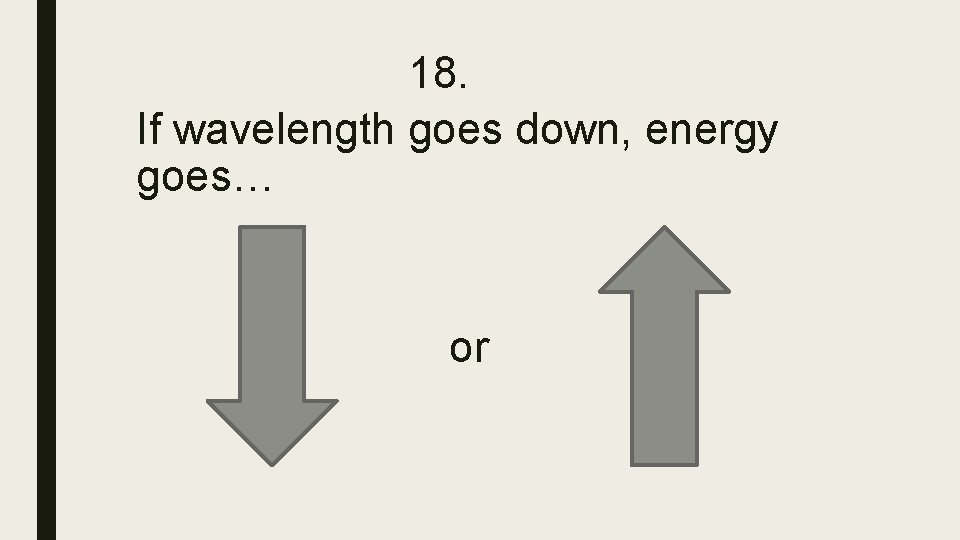
18. If wavelength goes down, energy goes… or
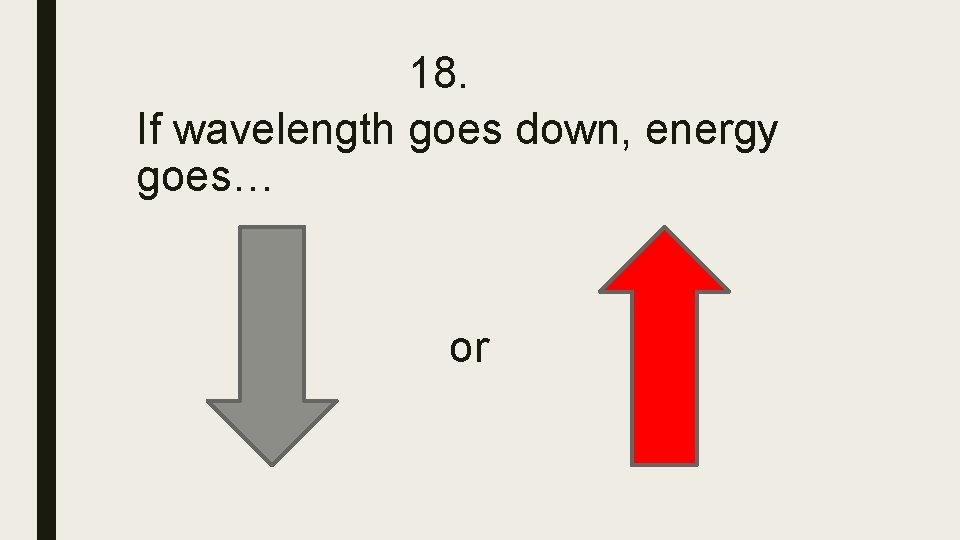
18. If wavelength goes down, energy goes… or
19. If frequency goes up, energy goes… or
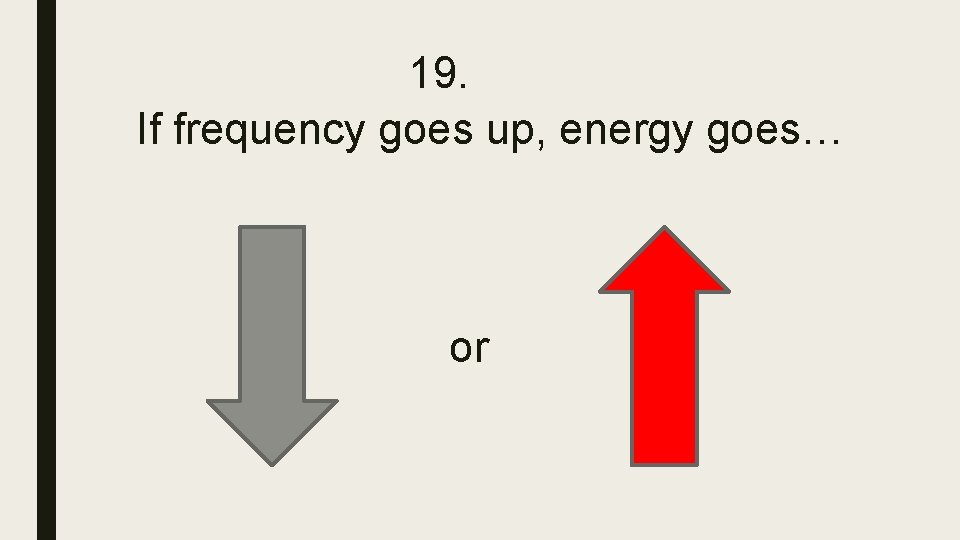
19. If frequency goes up, energy goes… or
20. If amplitude goes up, energy goes… or
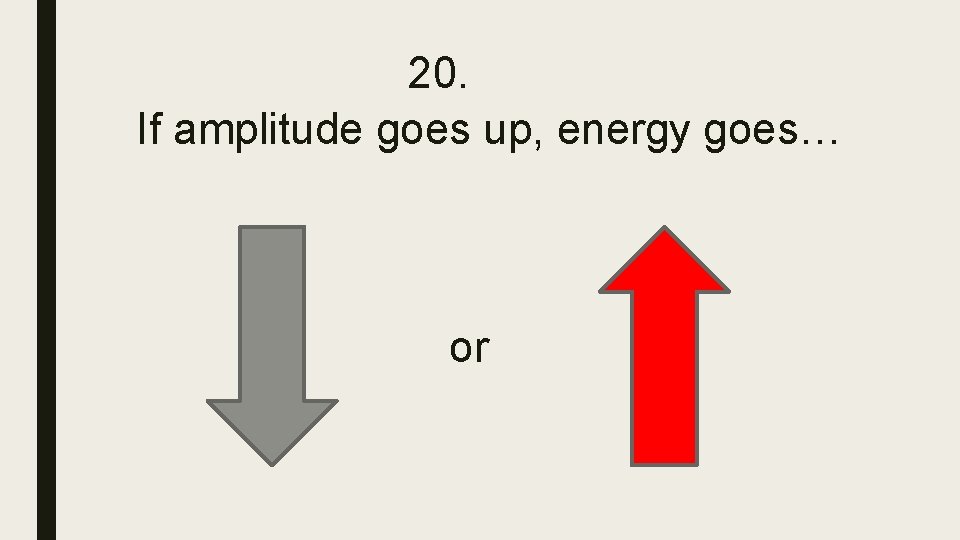
20. If amplitude goes up, energy goes… or
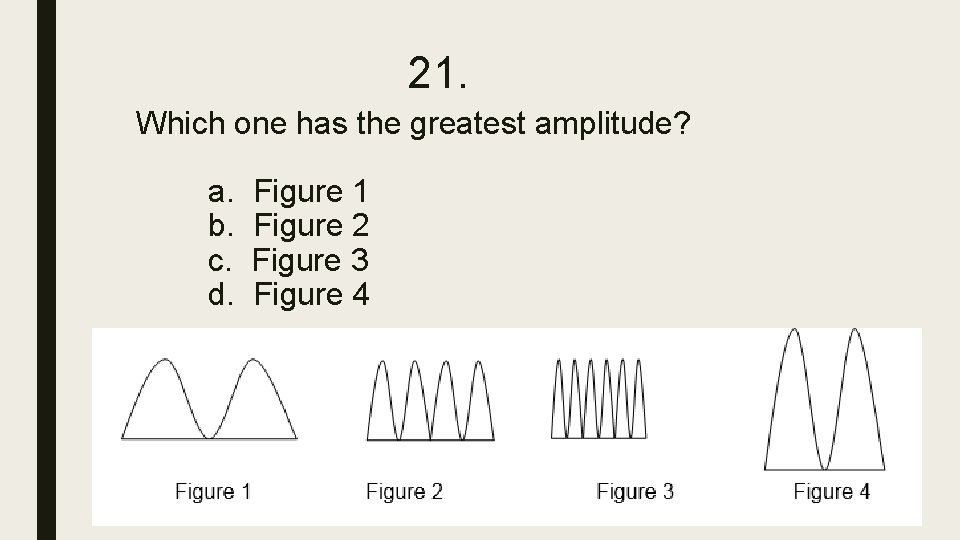
21. Which one has the greatest amplitude? a. b. c. d. Figure 1 Figure 2 Figure 3 Figure 4
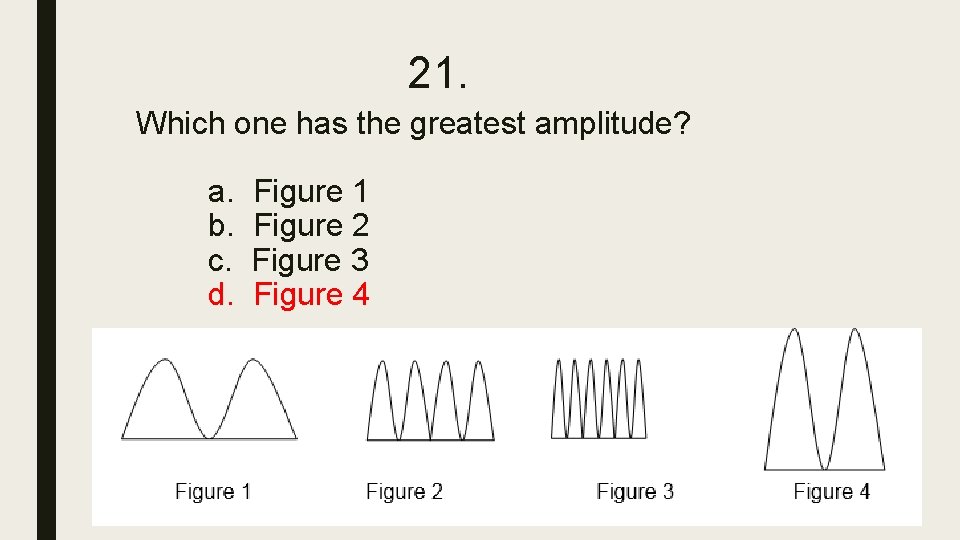
21. Which one has the greatest amplitude? a. b. c. d. Figure 1 Figure 2 Figure 3 Figure 4
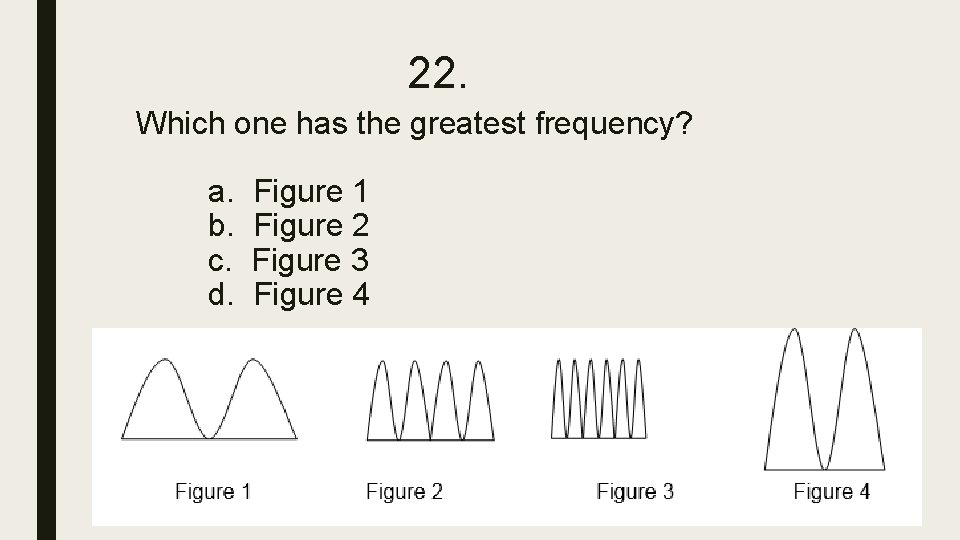
22. Which one has the greatest frequency? a. b. c. d. Figure 1 Figure 2 Figure 3 Figure 4
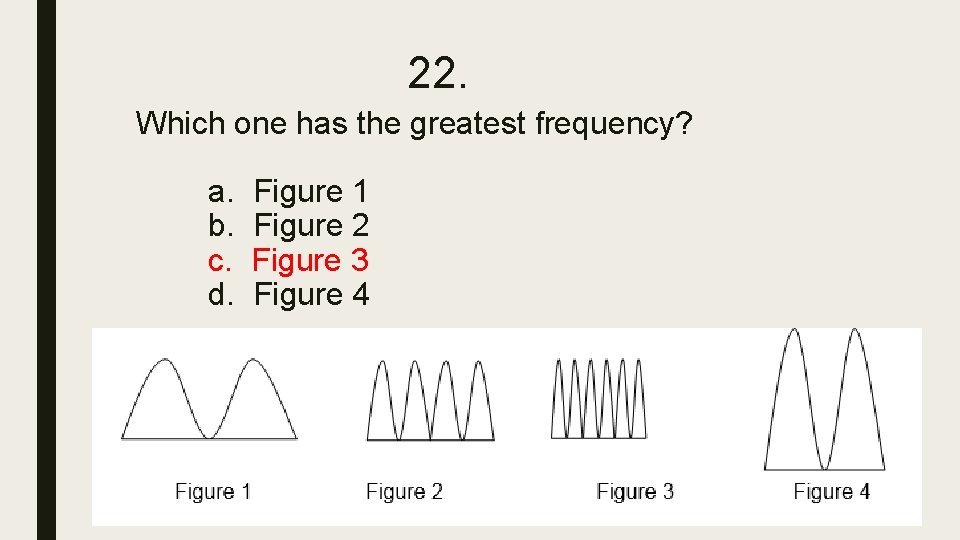
22. Which one has the greatest frequency? a. b. c. d. Figure 1 Figure 2 Figure 3 Figure 4
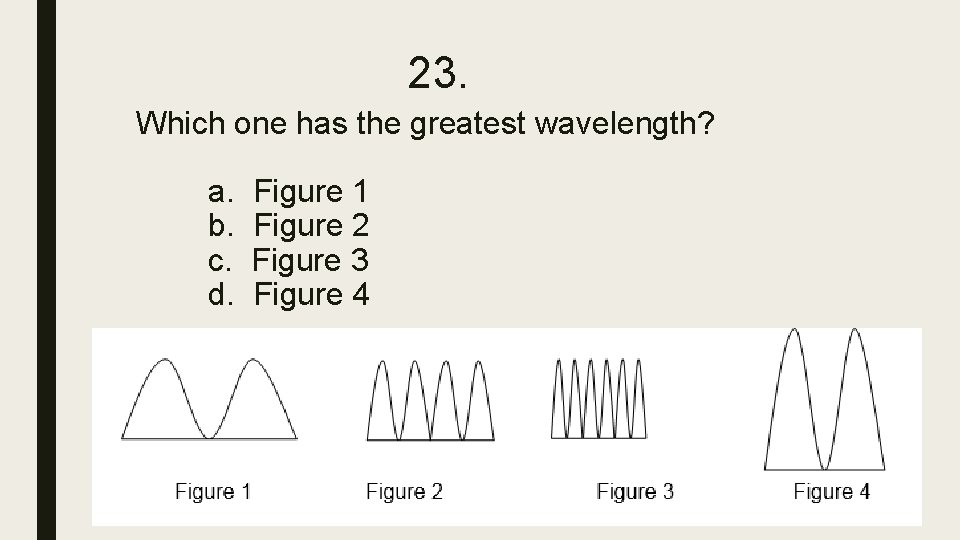
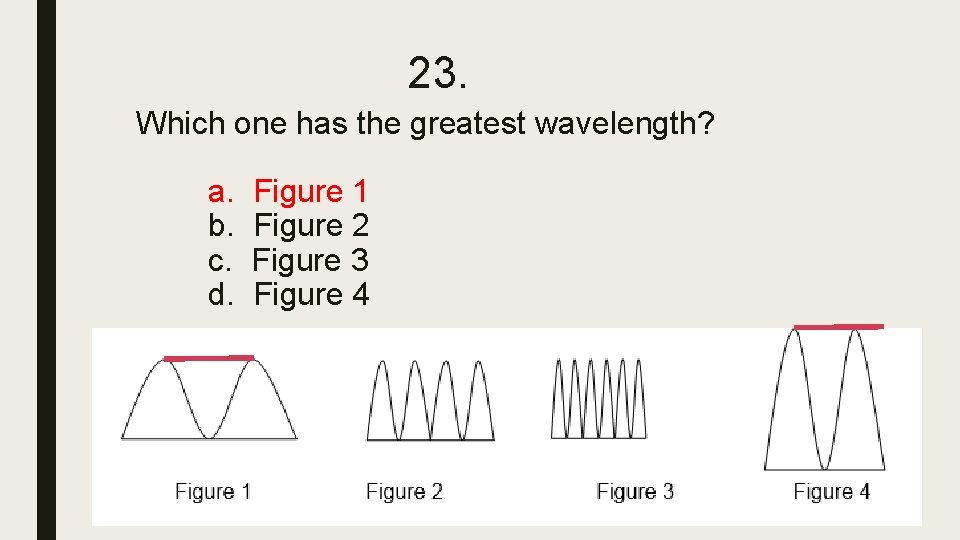
23. Which one has the greatest wavelength? a. b. c. d. Figure 1 Figure 2 Figure 3 Figure 4
23. Which one has the greatest wavelength? a. b. c. d. Figure 1 Figure 2 Figure 3 Figure 4
24. Sound can travel through solids a. True b. False
24. Sound can travel through solids a. True b. False
25. Sound can travel through liquids a. True b. False
25. Sound can travel through liquids a. True b. False
26. Sound can travel through empty space a. True b. False
26. Sound can travel through empty space a. True b. False
27. A spectroscope separates light into different colors. In other words, it separates light by… a. b. c. d. Wavelength Size Amplitude Pitch
27. A spectroscope separates light into different colors. In other words, it separates light by… a. b. c. d. Wavelength Size Amplitude Pitch
28. Light can travel through empty space, solids, liquids, and gases. a. True b. False
28. Light can travel through empty space, solids, liquids, and gases. a. True b. False
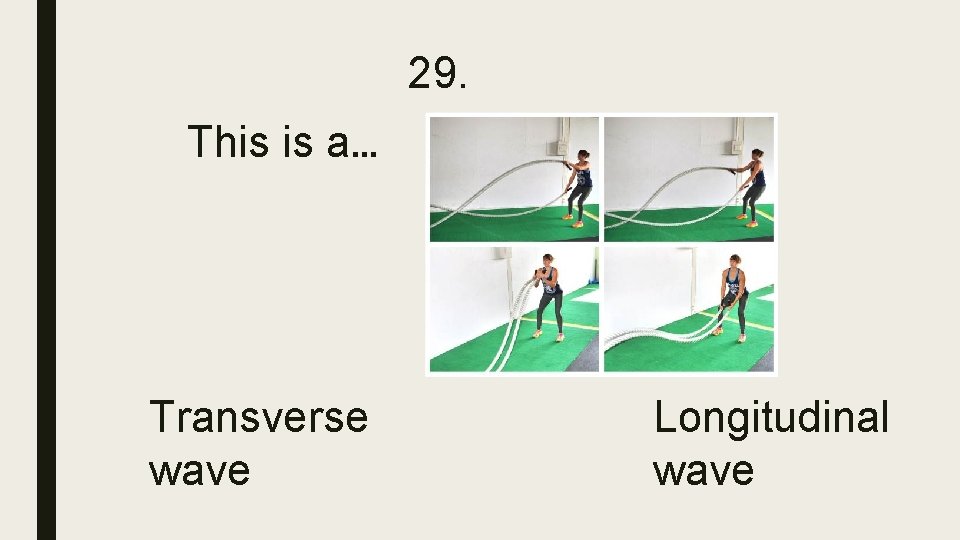
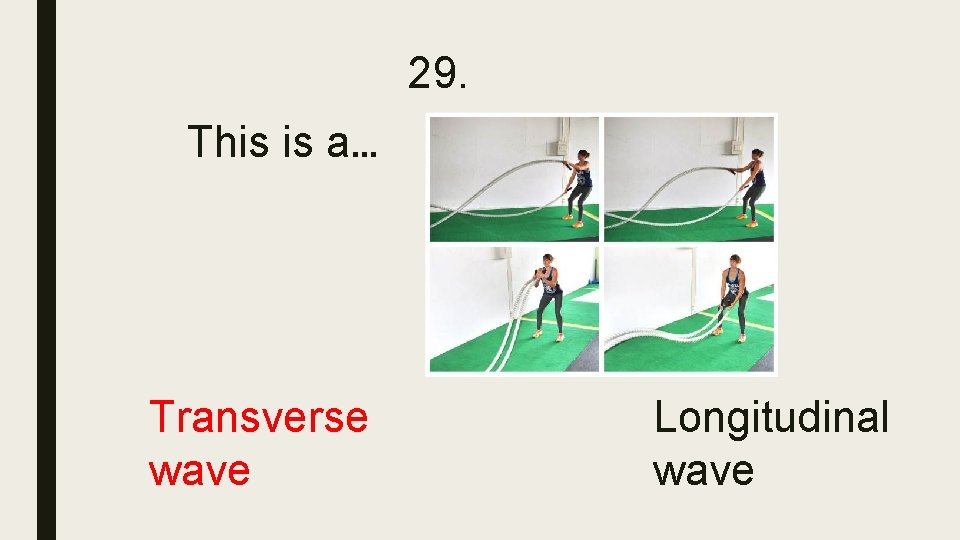
29. This is a… Transverse wave Longitudinal wave
29. This is a… Transverse wave Longitudinal wave
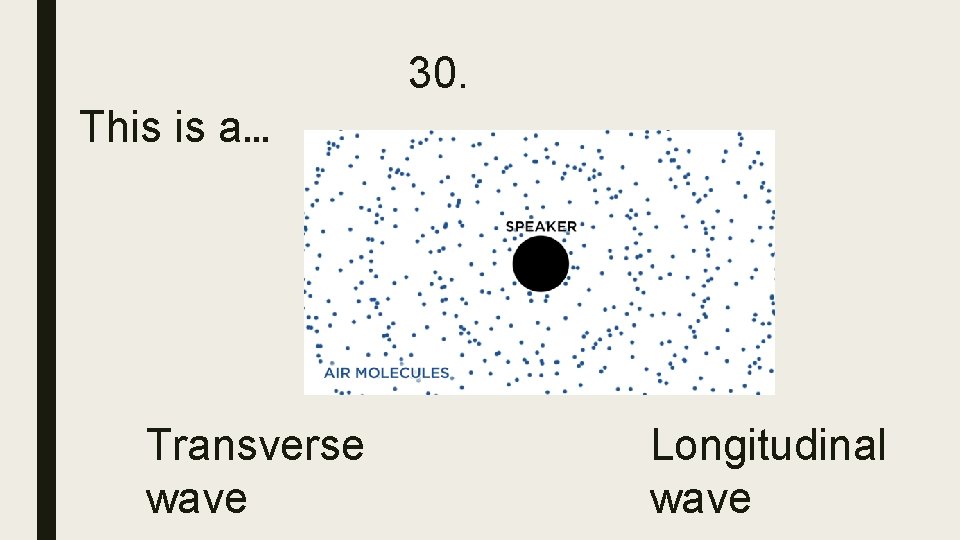
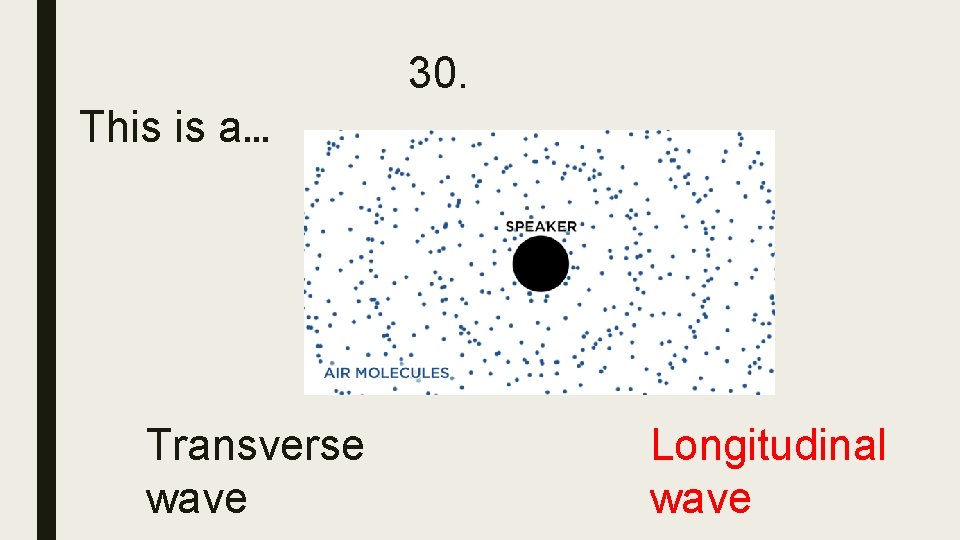
30. This is a… Transverse wave Longitudinal wave
30. This is a… Transverse wave Longitudinal wave