
1 Hub It is a Physical layer device

1
Hub • It is a Physical layer device (Layer 1) • It is Dummy Device • It works with 0’s and 1’s (Bits) • It works with broadcasting • It works with shared bandwidth • It is has 1 Broadcast Domain and 1 Collision Domain • Collisions are identified using Access Methods called CSMA/CD and CSMA/CA 2
Broadcast Domain & Collision Domain • Broadcast Domain Set of all devices that receive broadcast frames originating from any device within the set. • Collision domain In Ethernet, the network area within which frames that have collided are propagated is called a collision domain. • A collision domain is a network segment with two or more devices sharing the same bandwidth. • Repeaters and hubs propagate collisions, LAN switches, bridges, and routers do not. 3
Types of Hubs • Active Hubs uses power supply and the data (i. e. ) strengthens the regenerates signals in case of disturbances. • Passive Hubs doesn’t use power supply and it will not regenerate the data (i. e. ) doesn’t strengthen the signals in case of disturbances. It is used only to share the physical media • Intelligent Hubs are sometimes called as smart hubs. These devices basically function as active hubs, but also include a microprocessor chip and diagnostic capabilities and are useful in troubleshooting situations. 4
Switch • It is Datalink layer device (Layer 2) • Its is An Intelligent device • It works with Physical addresses (i. e. MAC addresses) • It works with fixed bandwidth • It works with Flooding and Unicast • It has 1 Broadcast domain and Number of Collision domains depends upon the number of ports. • It maintains a MAC address table 5
Types of Switches • Manageable switches On a Manageable switch, an IP address can be assigned and configurations can be made. It has a console port. • Unmanageable switches On an Unmanageable switch, configurations cannot be made, an IP address cannot be assigned as there is no console port. 6
Bridge Vs Switch Bridge • Bridges are software based • Bridges have low port density • Generally used for Switch • Switches are hardware based • Switches have high port density • Generally used for connecting two connecting single different topologies topology (Segment) (Segments) 7
Router • It is a Network layer device (Layer 3) • Its is an Intelligent device • It works with Logical Addressing (i. e. IP, IPX, Apple. Talk) • It works with Fixed bandwidth • Number of Broadcast domains and Number of Collision domains depends upon the number of interfaces. 8
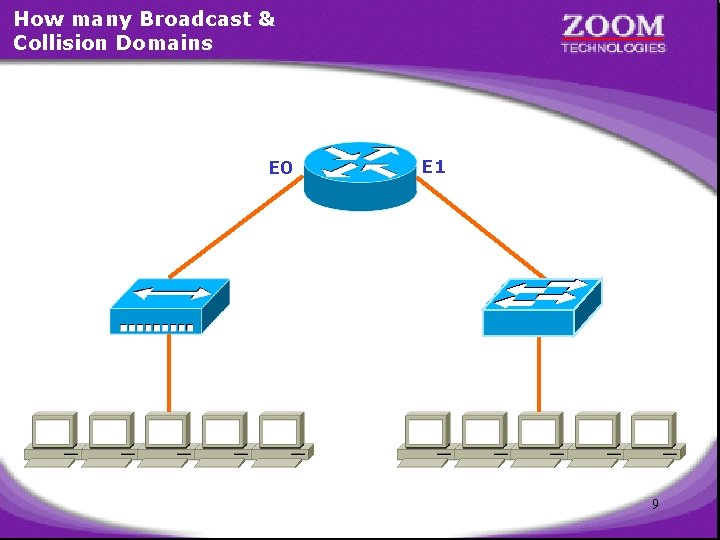
How many Broadcast & Collision Domains E 0 E 1 9
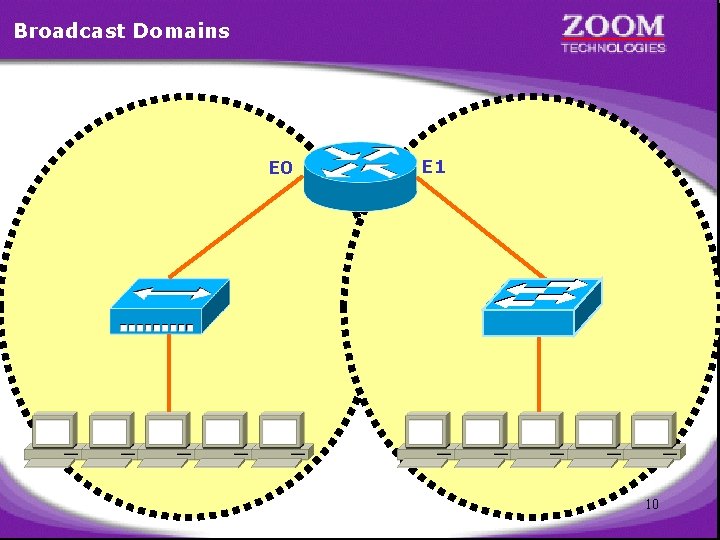
Broadcast Domains E 0 E 1 10
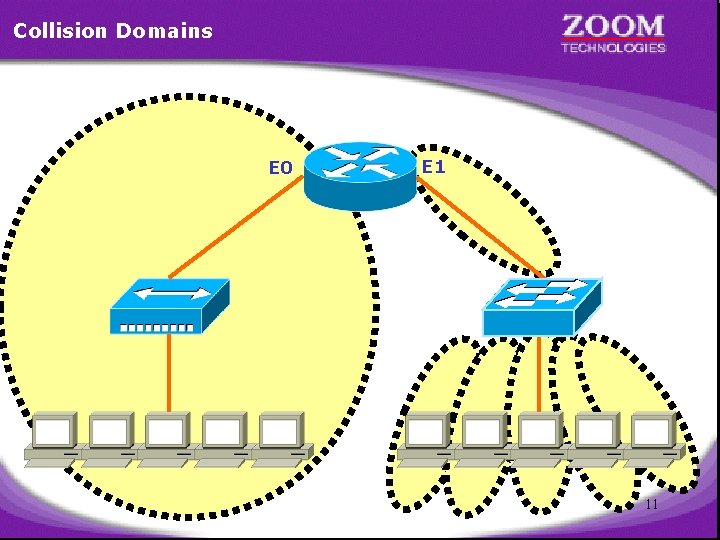
Collision Domains E 0 E 1 11
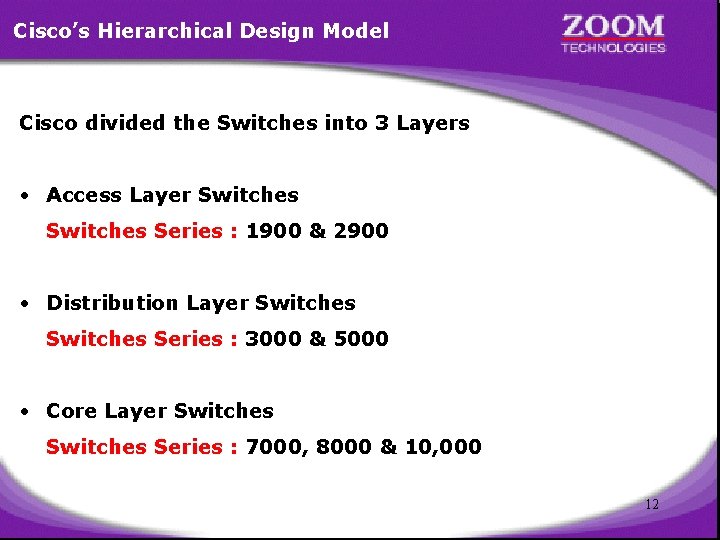
Cisco’s Hierarchical Design Model Cisco divided the Switches into 3 Layers • Access Layer Switches Series : 1900 & 2900 • Distribution Layer Switches Series : 3000 & 5000 • Core Layer Switches Series : 7000, 8000 & 10, 000 12
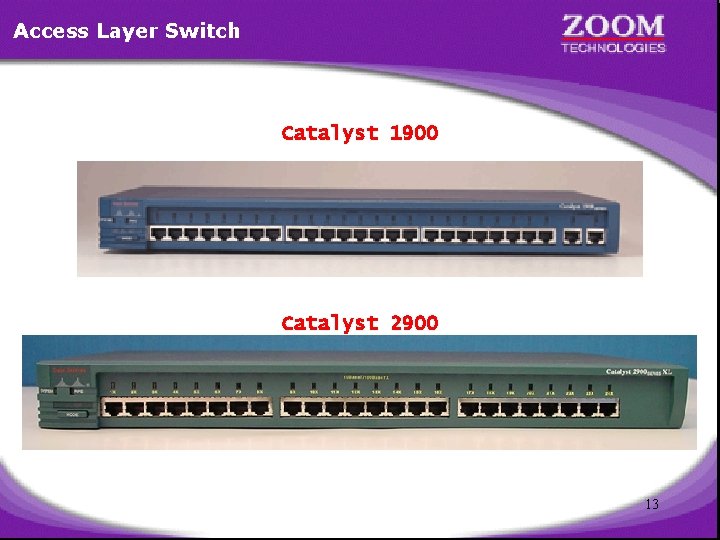
Access Layer Switch Catalyst 1900 Catalyst 2900 13
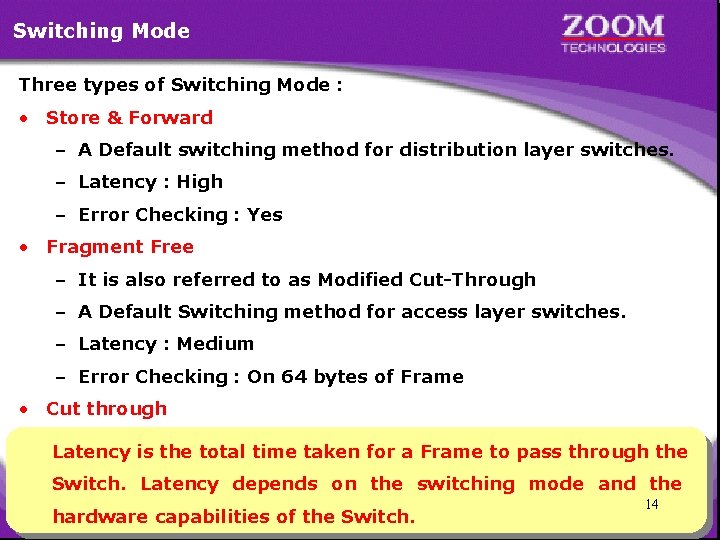
Switching Mode Three types of Switching Mode : • Store & Forward – A Default switching method for distribution layer switches. – Latency : High – Error Checking : Yes • Fragment Free – It is also referred to as Modified Cut-Through – A Default Switching method for access layer switches. – Latency : Medium – Error Checking : On 64 bytes of Frame • Cut through – A Default switching method for the core layer switches Latency is the total time taken for a Frame to pass through the – Latency : Low Switch. Latency depends on the switching mode and the 14 – Error Checking : No hardware capabilities of the Switch.
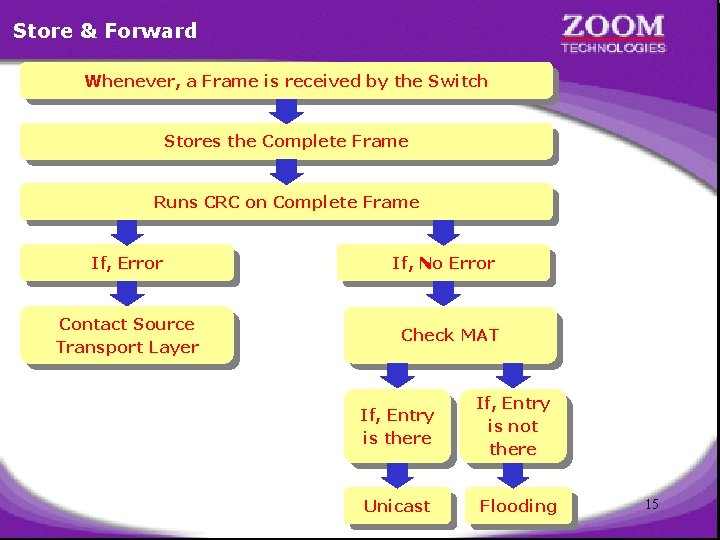
Store & Forward Whenever, a Frame is received by the Switch Stores the Complete Frame Runs CRC on Complete Frame If, Error Contact Source Transport Layer If, No Error Check MAT If, Entry is there If, Entry is not there Unicast Flooding 15
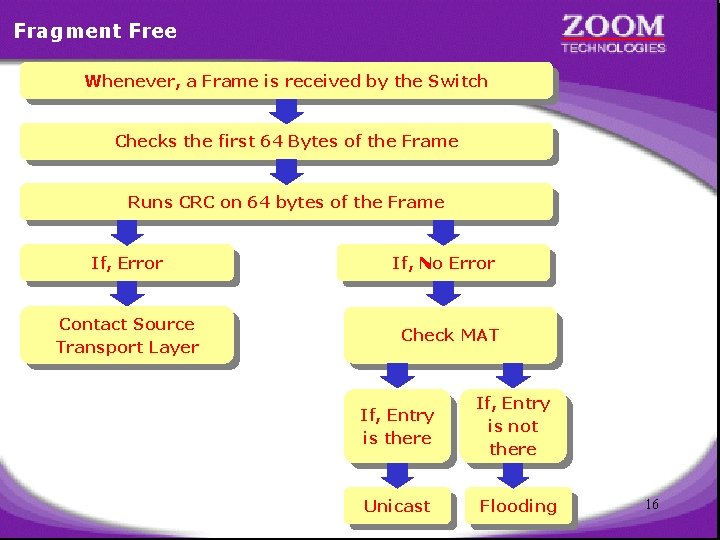
Fragment Free Whenever, a Frame is received by the Switch Checks the first 64 Bytes of the Frame Runs CRC on 64 bytes of the Frame If, Error Contact Source Transport Layer If, No Error Check MAT If, Entry is there If, Entry is not there Unicast Flooding 16
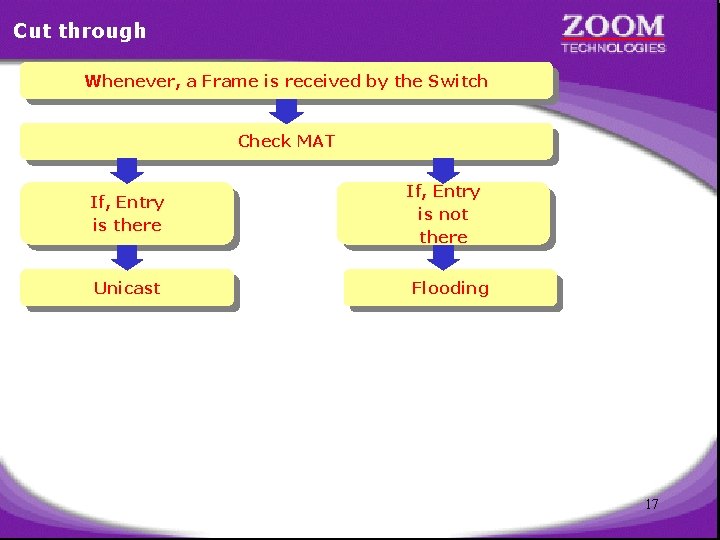
Cut through Whenever, a Frame is received by the Switch Check MAT If, Entry is there Unicast If, Entry is not there Flooding 17
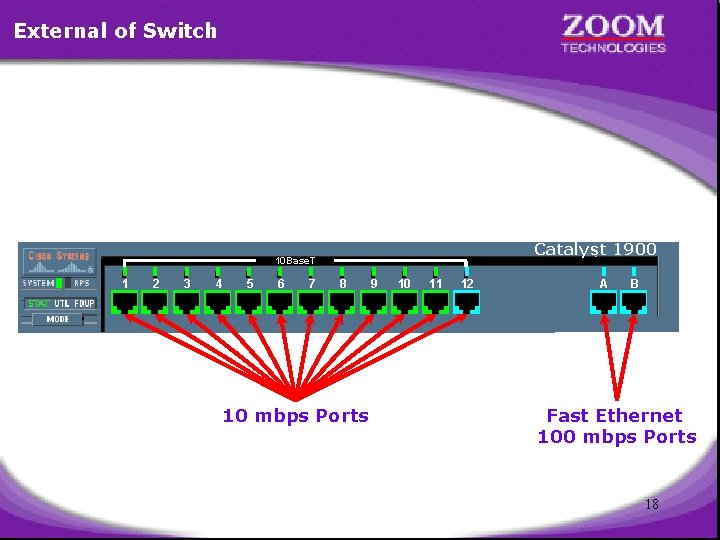
External of Switch Catalyst 1900 10 Base. T 1 2 3 4 5 6 7 8 10 mbps Ports 9 10 11 12 A B Fast Ethernet 100 mbps Ports 18
- Slides: 18