
1 Helps in maintaining proper stock level i
- Slides: 5
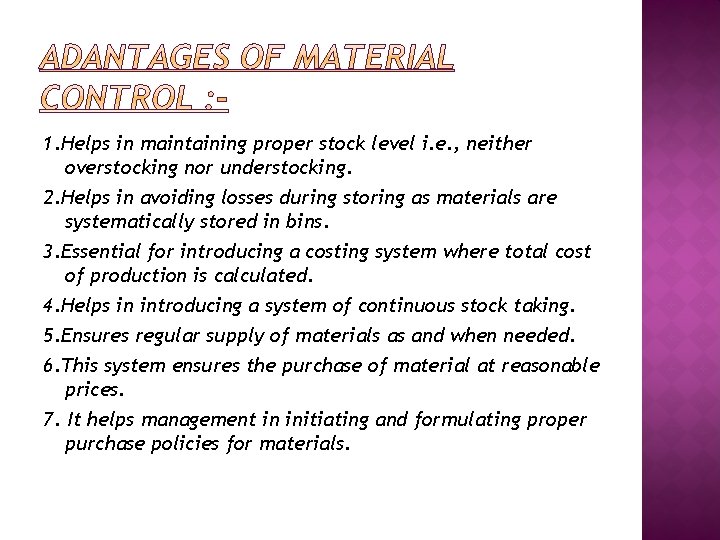
1. Helps in maintaining proper stock level i. e. , neither overstocking nor understocking. 2. Helps in avoiding losses during storing as materials are systematically stored in bins. 3. Essential for introducing a costing system where total cost of production is calculated. 4. Helps in introducing a system of continuous stock taking. 5. Ensures regular supply of materials as and when needed. 6. This system ensures the purchase of material at reasonable prices. 7. It helps management in initiating and formulating proper purchase policies for materials.
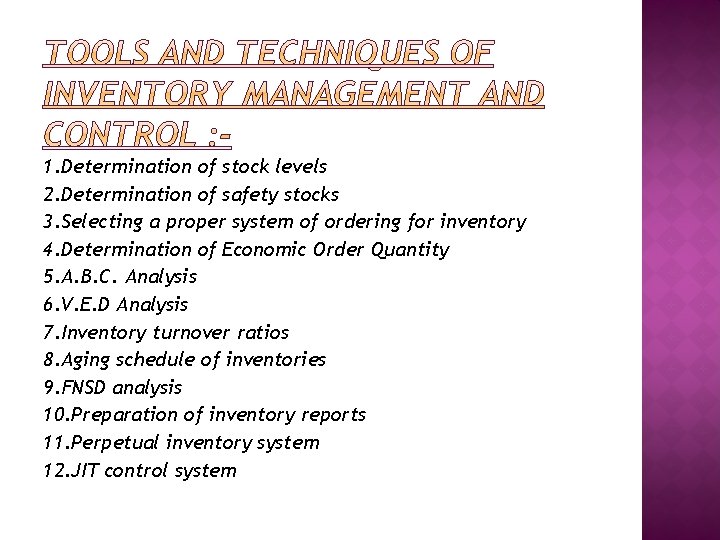
1. Determination of stock levels 2. Determination of safety stocks 3. Selecting a proper system of ordering for inventory 4. Determination of Economic Order Quantity 5. A. B. C. Analysis 6. V. E. D Analysis 7. Inventory turnover ratios 8. Aging schedule of inventories 9. FNSD analysis 10. Preparation of inventory reports 11. Perpetual inventory system 12. JIT control system
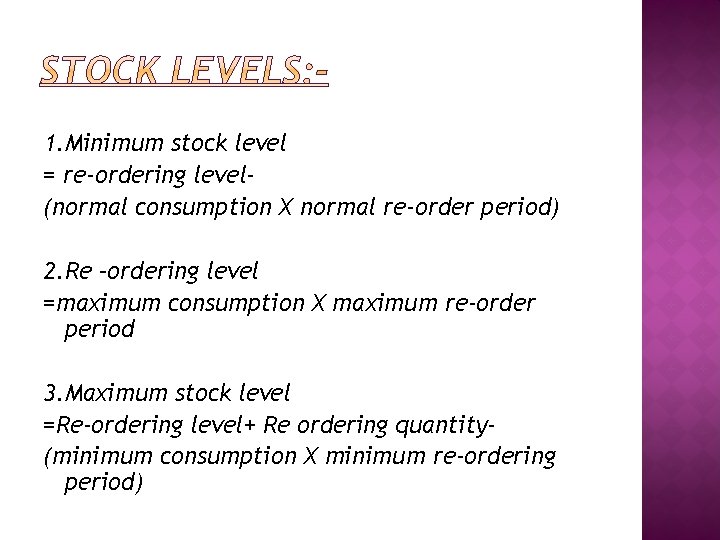
1. Minimum stock level = re-ordering level(normal consumption X normal re-order period) 2. Re –ordering level =maximum consumption X maximum re-order period 3. Maximum stock level =Re-ordering level+ Re ordering quantity(minimum consumption X minimum re-ordering period)
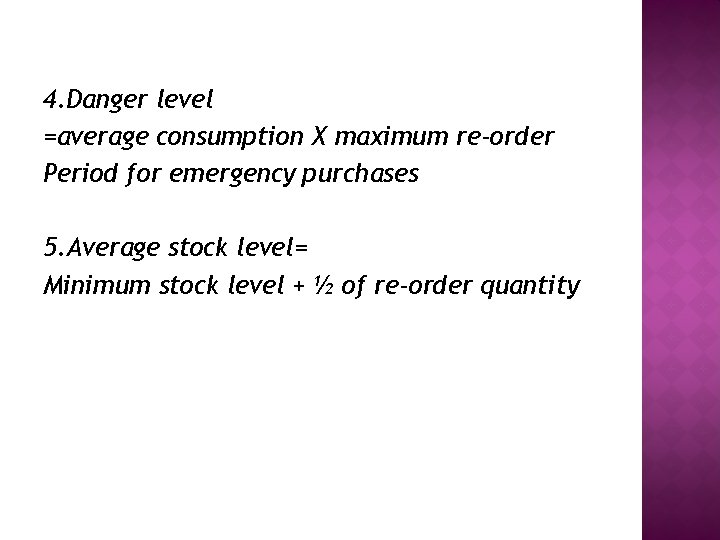
4. Danger level =average consumption X maximum re-order Period for emergency purchases 5. Average stock level= Minimum stock level + ½ of re-order quantity
There are three prevalent systems of ordering and a concern can choose any one: 1. Fixed order quantity system generally known as E. O. Q 2. Fixed period order system or periodic reordering system or periodic review system 3. Single order and scheduled part delivery system.