
1 HAFIZA RAHMA SAMAN ROLL 21 MUQADDAS WAHID

- Slides: 52
1
HAFIZA RAHMA SAMAN ROLL# 21 MUQADDAS WAHID ROLL#32 INSTITUTE OF FOOD SCIENCE AND TECHNOLOGY UNIVERSITY OF SARGODHA, SARGODHA 2
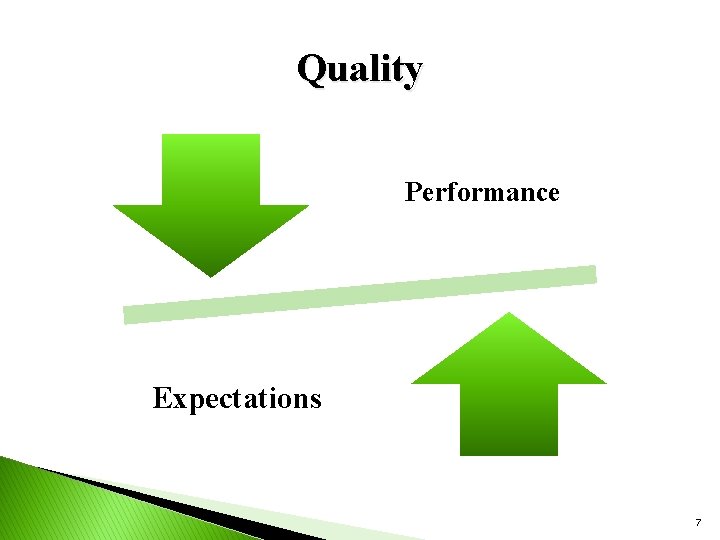
Quality= Performance/Expectations 3
Contents � Quality Process � Dimensions of Quality � How to attain the quality Quality � Plan-Do-Check-act cycle � Gap Model � Expectations � What is Performance � Performance Management system 4
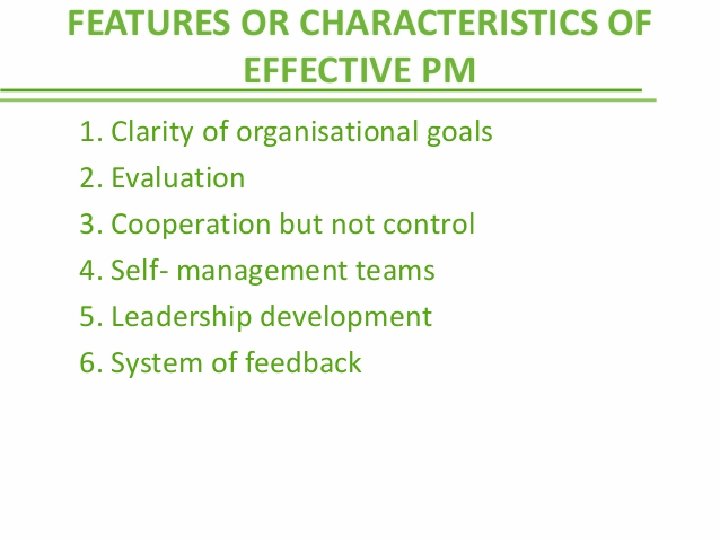
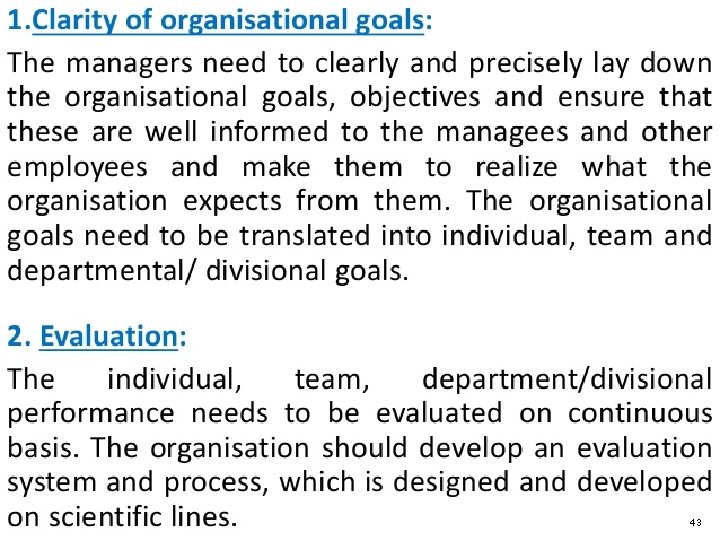
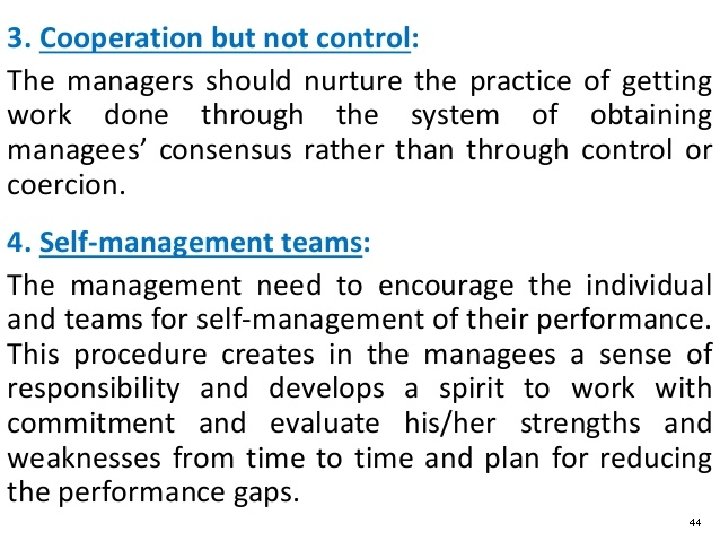
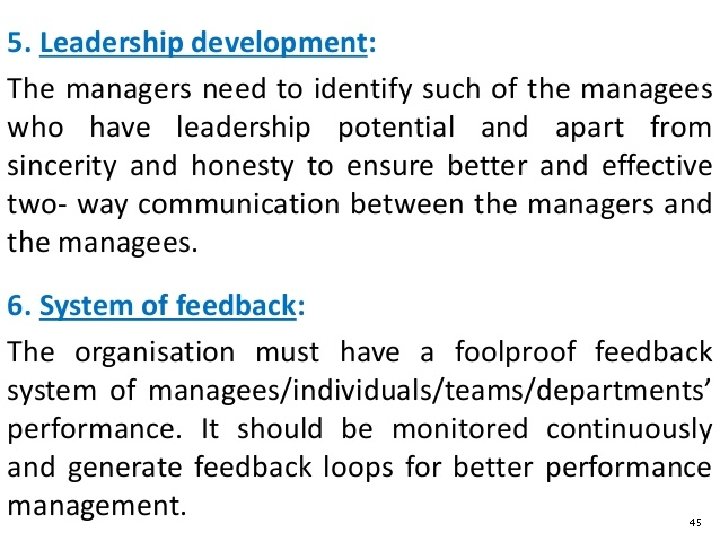
Contents � Components of performance Management system � Integration of performance Management system � HRM Functions � What is Goal? � Benefits of setting Goals � SMART goal � Characteristics of Effective PM 5
Contents � Terms for Expressing the Performance � Obstacles to the success of Quality � Summery � References 6
Quality Performance Expectations 7
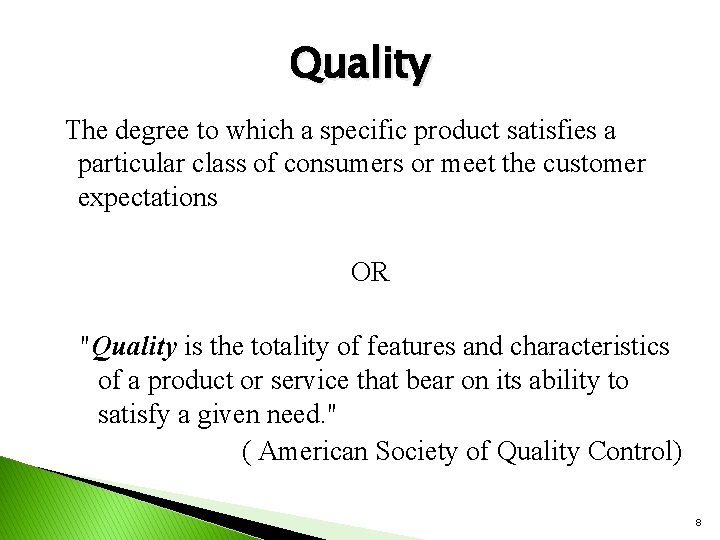
Quality The degree to which a specific product satisfies a particular class of consumers or meet the customer expectations OR "Quality is the totality of features and characteristics of a product or service that bear on its ability to satisfy a given need. " ( American Society of Quality Control) 8
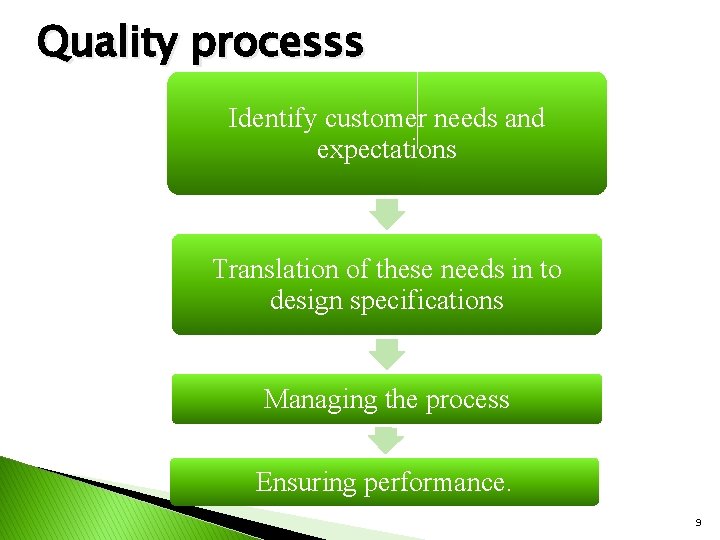
Quality processs Identify customer needs and expectations Translation of these needs in to design specifications Managing the process Ensuring performance. 9
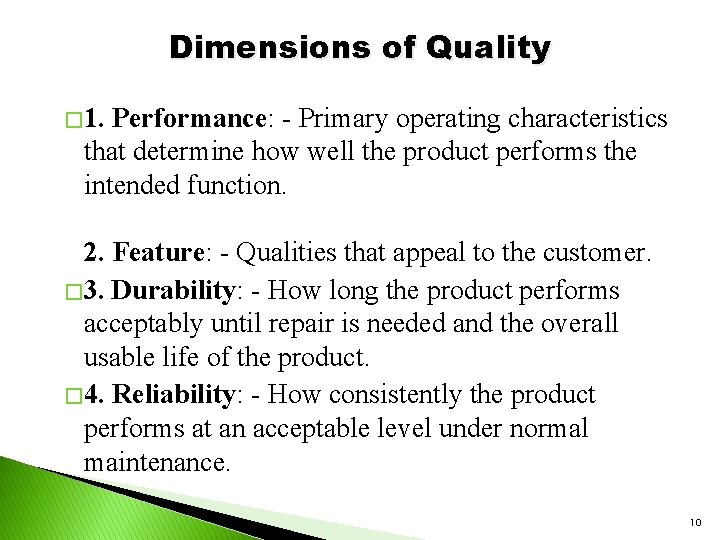
Dimensions of Quality � 1. Performance: - Primary operating characteristics that determine how well the product performs the intended function. 2. Feature: - Qualities that appeal to the customer. � 3. Durability: - How long the product performs acceptably until repair is needed and the overall usable life of the product. � 4. Reliability: - How consistently the product performs at an acceptable level under normal maintenance. 10
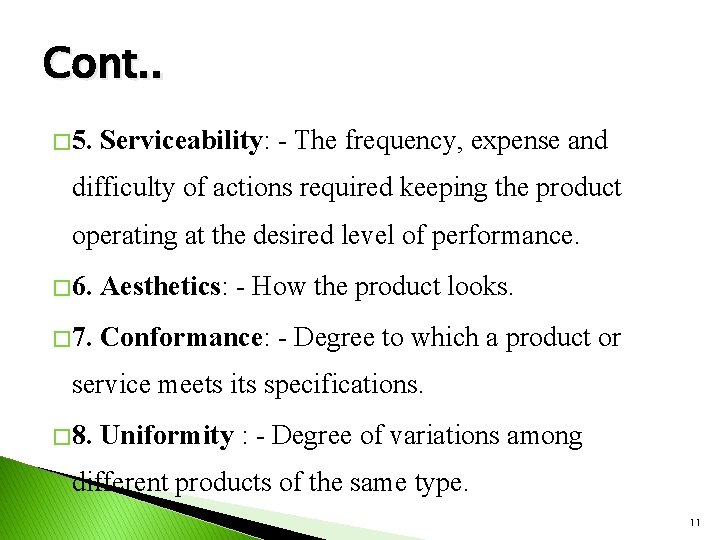
Cont. . � 5. Serviceability: - The frequency, expense and difficulty of actions required keeping the product operating at the desired level of performance. � 6. Aesthetics: - How the product looks. � 7. Conformance: - Degree to which a product or service meets its specifications. � 8. Uniformity : - Degree of variations among different products of the same type. 11
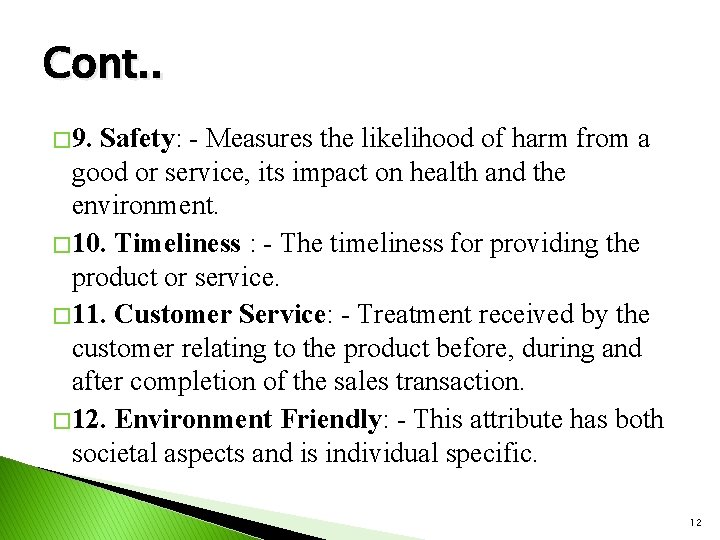
Cont. . � 9. Safety: - Measures the likelihood of harm from a good or service, its impact on health and the environment. � 10. Timeliness : - The timeliness for providing the product or service. � 11. Customer Service: - Treatment received by the customer relating to the product before, during and after completion of the sales transaction. � 12. Environment Friendly: - This attribute has both societal aspects and is individual specific. 12
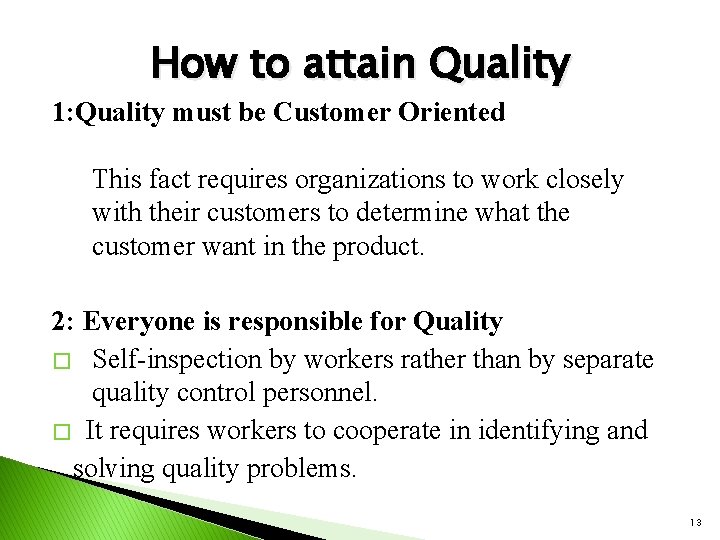
How to attain Quality 1: Quality must be Customer Oriented This fact requires organizations to work closely with their customers to determine what the customer want in the product. 2: Everyone is responsible for Quality � Self-inspection by workers rather than by separate quality control personnel. � It requires workers to cooperate in identifying and solving quality problems. 13
Cont. . 3: Top Management responsibility. � senior managers is critical for the achievement and maintenance of quality standards. � Therefore, management must create a supporting organizational environment in which managers can perform their tasks effectively. 14
Cont. . � 4. Right from the first Making it right or doing it right the first time should be the goal of every worker. � 5. Consciously design Production process and work methods Using the philosophy of "Prevention is better than Cure" management must prevent defects rather than catching or detecting them. 15
Cont. . 6. Identify and check Quality related problems promptly v Quality control methods. v Quick communication among workers v Quick identification and solution of quality Problems when they do occur. v Inspection and assessment of work v Customer assessment of quality. 16
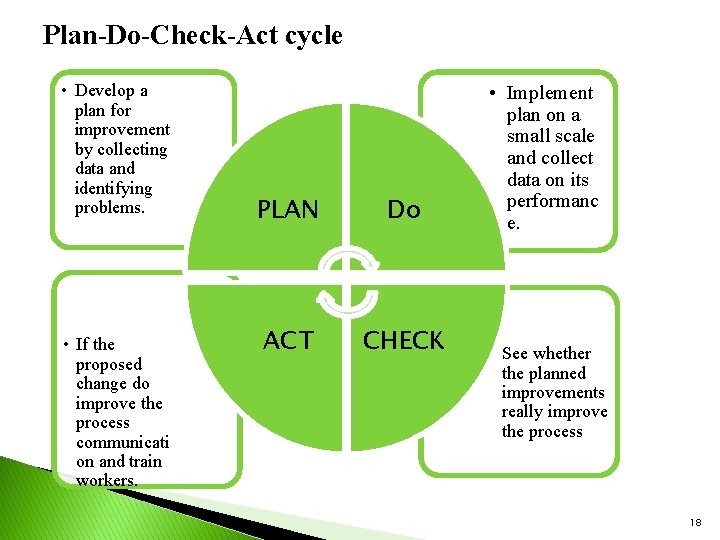
Cont. . 7. Continuous improvement Excellent product quality is the result of workers striving to improve product quality Continuous improvement mechanisms are qwork teams, q. Quality Circles, q. Suggestions systems, q. Plan-Do-Check-Act cycle 17
Plan-Do-Check-Act cycle • Develop a plan for improvement by collecting data and identifying problems. • If the proposed change do improve the process communicati on and train workers. PLAN Do ACT CHECK • Implement plan on a small scale and collect data on its performanc e. • See whether the planned improvements really improve the process 18
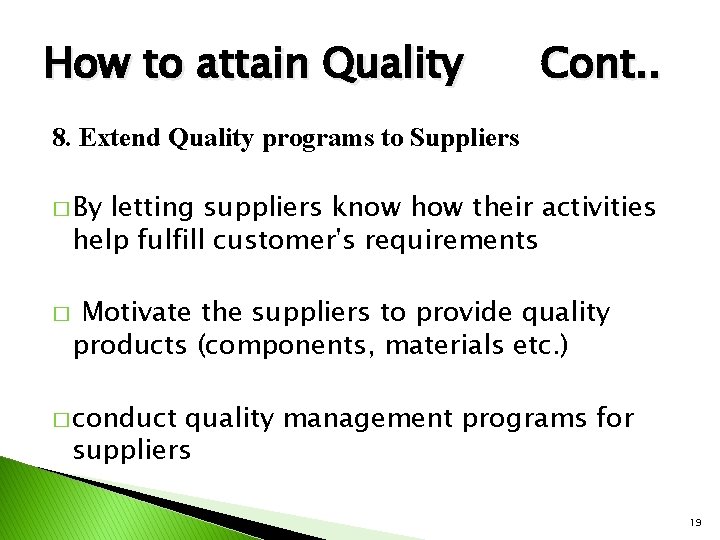
How to attain Quality Cont. . 8. Extend Quality programs to Suppliers � By letting suppliers know how their activities help fulfill customer's requirements � Motivate the suppliers to provide quality products (components, materials etc. ) � conduct quality management programs for suppliers 19
Gap Model 20
21
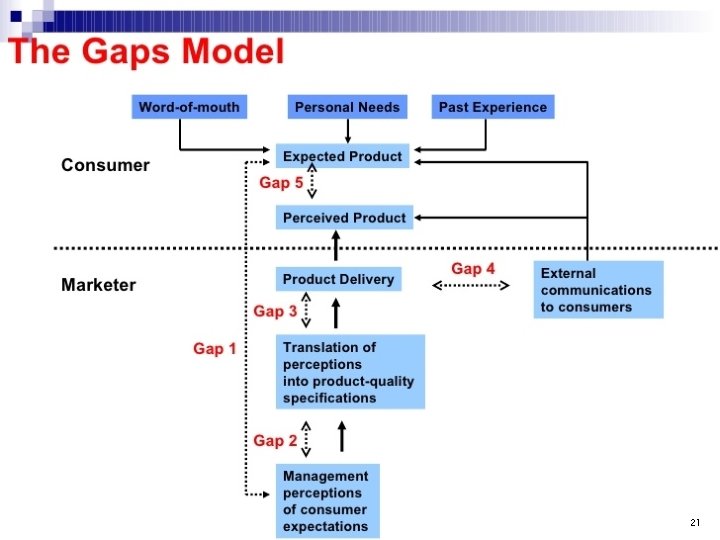
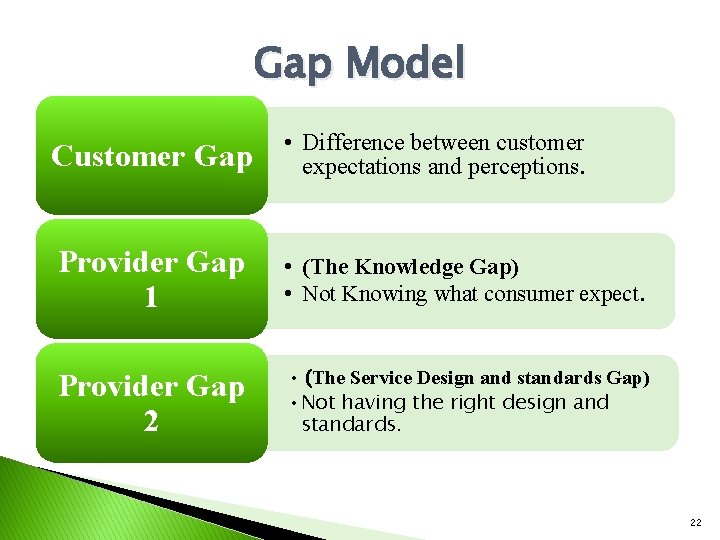
Gap Model Customer Gap • Difference between customer expectations and perceptions. Provider Gap 1 • (The Knowledge Gap) • Not Knowing what consumer expect. Provider Gap 2 • (The Service Design and standards Gap) • Not having the right design and standards. 22
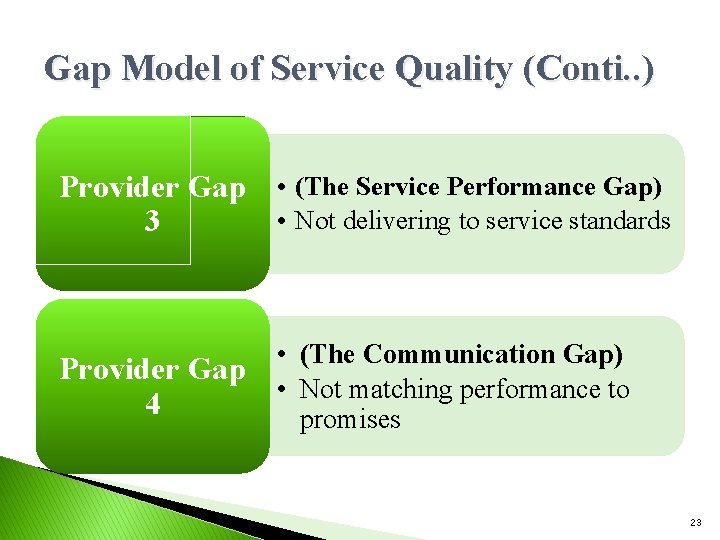
Gap Model of Service Quality (Conti. . ) Provider Gap • (The Service Performance Gap) • Not delivering to service standards 3 Provider Gap 4 • (The Communication Gap) • Not matching performance to promises 23
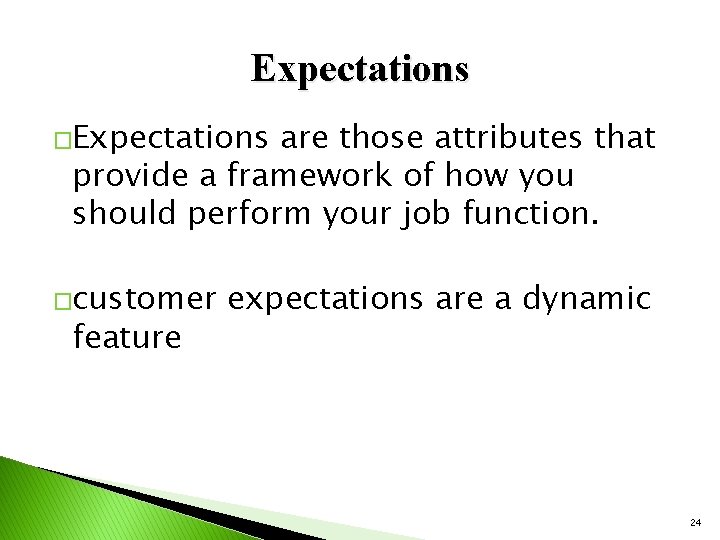
Expectations �Expectations are those attributes that provide a framework of how you should perform your job function. �customer feature expectations are a dynamic 24
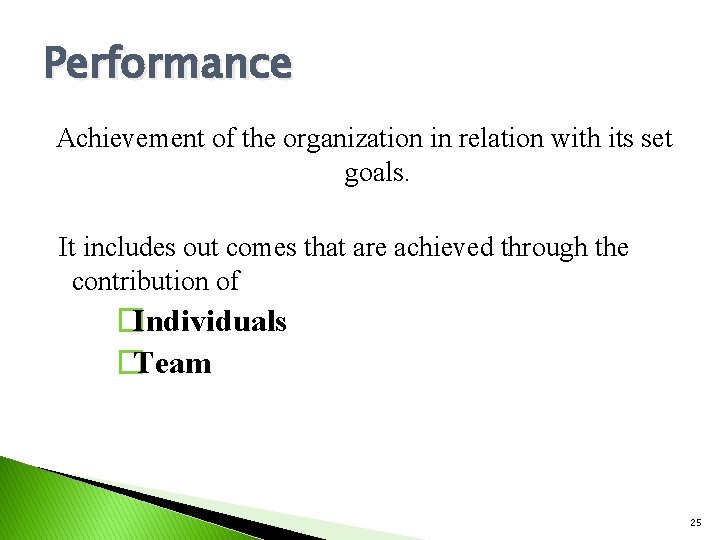
Performance Achievement of the organization in relation with its set goals. It includes out comes that are achieved through the contribution of �Individuals �Team 25
“Aim for the sky and you’ll reach the ceiling; aim for the ceiling and you’ll reach the floor. ” Bill Shankly, former manager of Liverpool Football Club 1913– 81 26
Performance management system “It is the continuous process of identifying, measure and evaluation the performance of the individuals and teams and Aligning their performance with the organizational goals” 27
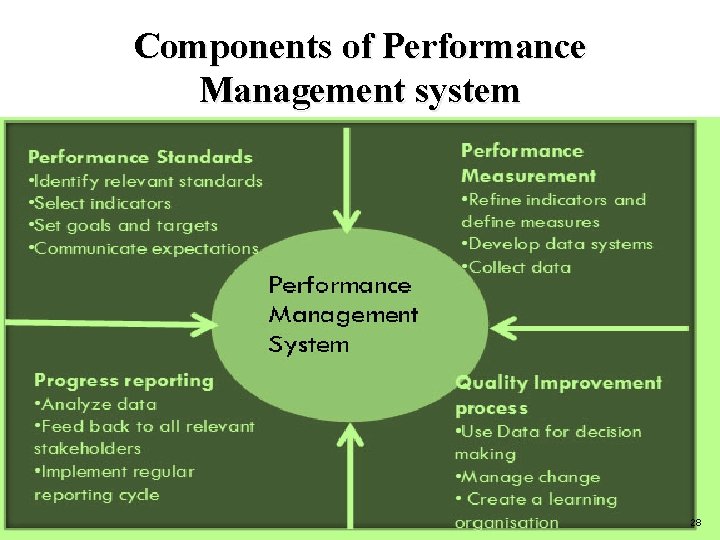
Components of Performance Management system 28
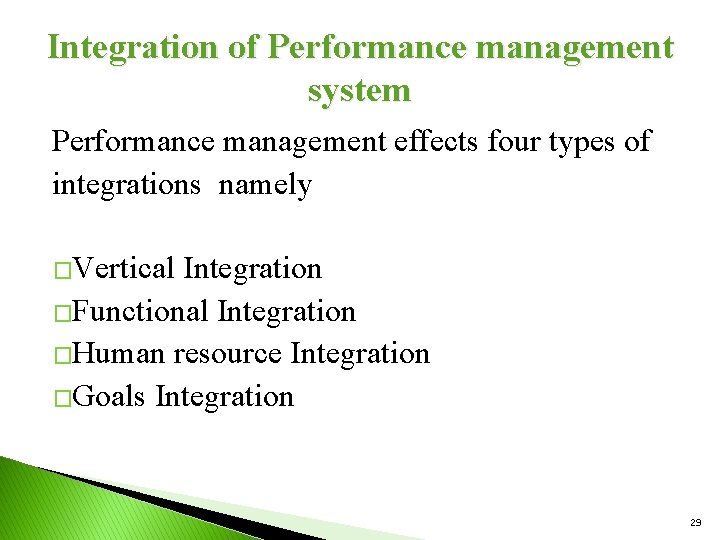
Integration of Performance management system Performance management effects four types of integrations namely �Vertical Integration �Functional Integration �Human resource Integration �Goals Integration 29
Vertical Integration � Aligning objectives at organizational individual and team level and integrating them for effective performance. � The individuals and the team agree to work within the broad framework of organizational goals 30
Functional Integration It deals with focusing several functions, �Energies plans �Policies �Strategies on to tasks in different levels. �Different Working parts of Organization. 31
Human resource Integration It ensure the effective integration of different systems of the HRM to achieve organizational goals with optimum performance. 32
Functions of HRM � Task monitoring. � Motivation and reward system. � Education and Training on equipment and tools. � inspections in the workplace and correct any potential hazards. � managing relationships between employees, or between employees and management. 33
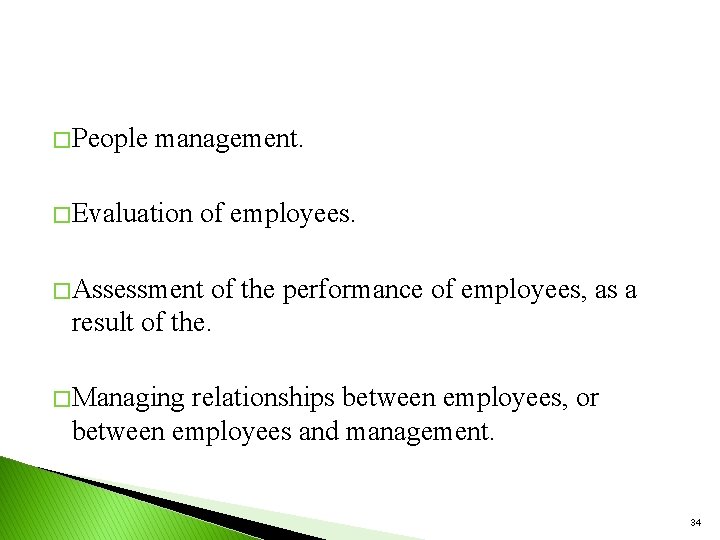
� People management. � Evaluation of employees. � Assessment of the performance of employees, as a result of the. � Managing relationships between employees, or between employees and management. 34
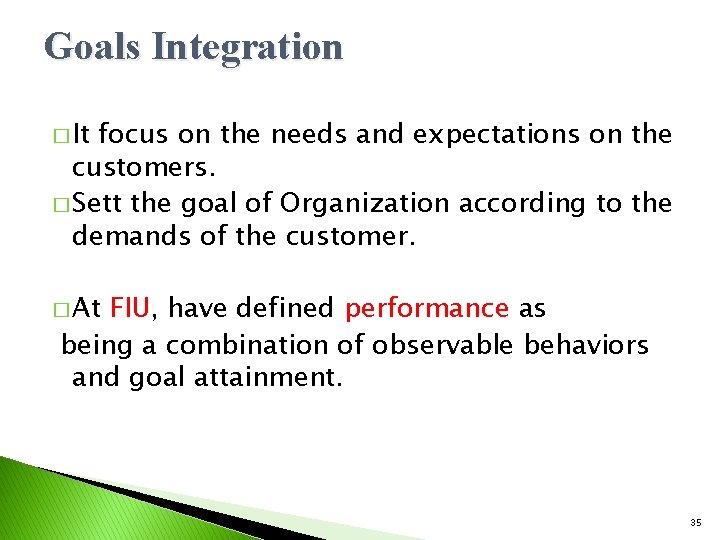
Goals Integration � It focus on the needs and expectations on the customers. � Sett the goal of Organization according to the demands of the customer. � At FIU, have defined performance as being a combination of observable behaviors and goal attainment. 35
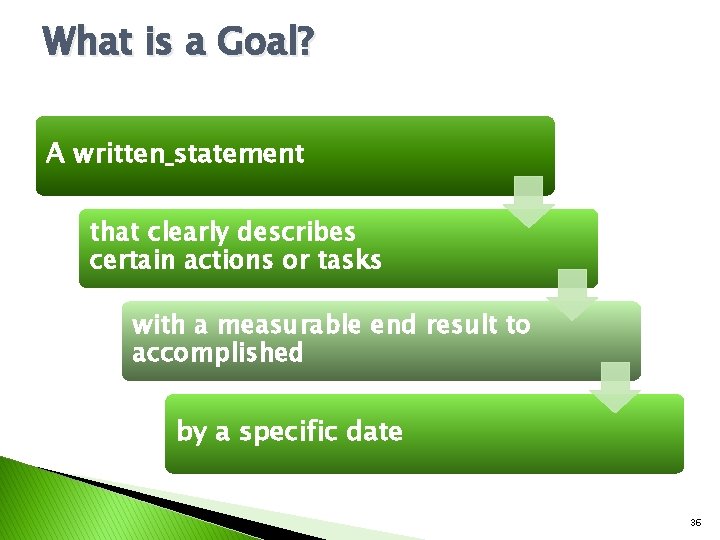
What is a Goal? A written statement that clearly describes certain actions or tasks with a measurable end result to accomplished by a specific date 36
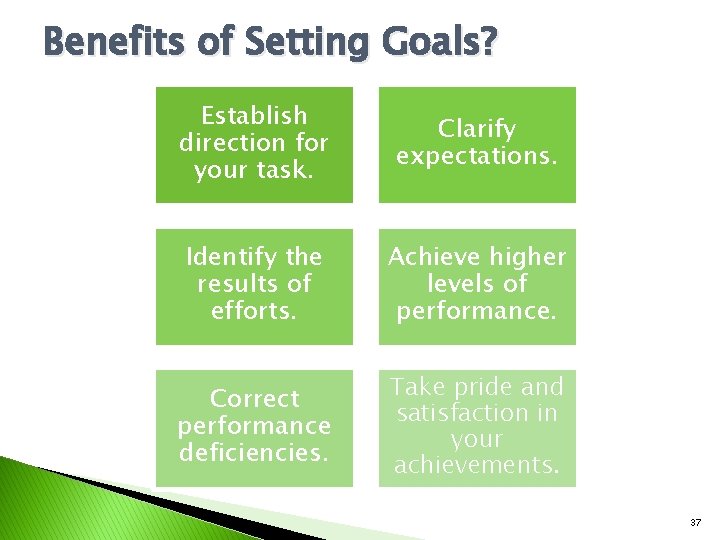
Benefits of Setting Goals? Establish direction for your task. Clarify expectations. Identify the results of efforts. Achieve higher levels of performance. Correct performance deficiencies. Take pride and satisfaction in your achievements. 37
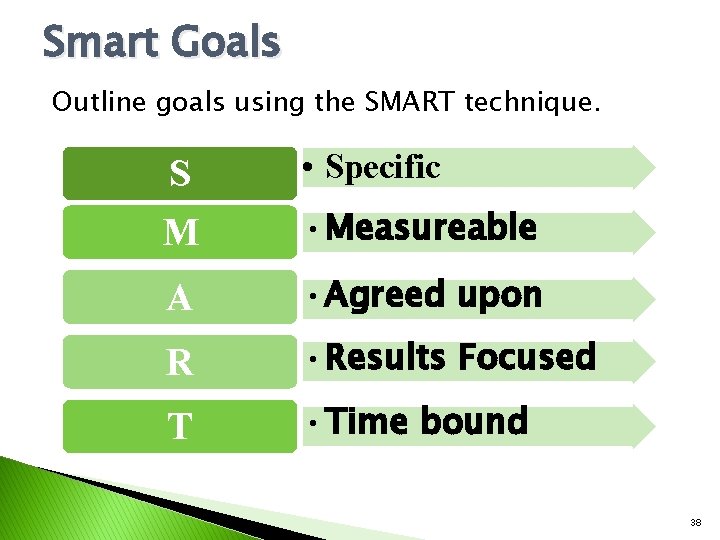
Smart Goals Outline goals using the SMART technique. S • Specific M • Measureable A • Agreed upon R • Results Focused T • Time bound 38
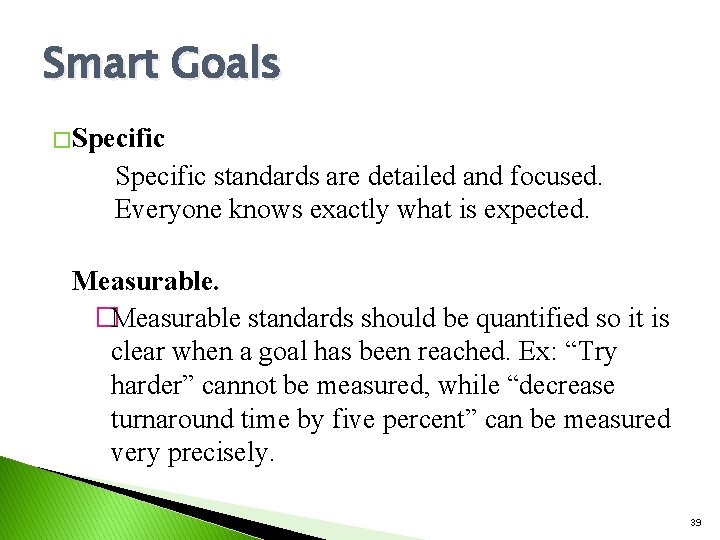
Smart Goals � Specific standards are detailed and focused. Everyone knows exactly what is expected. Measurable. �Measurable standards should be quantified so it is clear when a goal has been reached. Ex: “Try harder” cannot be measured, while “decrease turnaround time by five percent” can be measured very precisely. 39
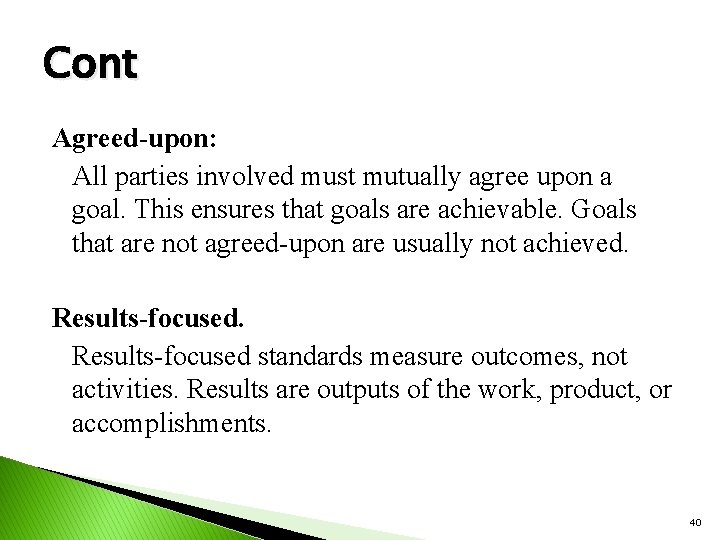
Cont Agreed-upon: All parties involved must mutually agree upon a goal. This ensures that goals are achievable. Goals that are not agreed-upon are usually not achieved. Results-focused standards measure outcomes, not activities. Results are outputs of the work, product, or accomplishments. 40
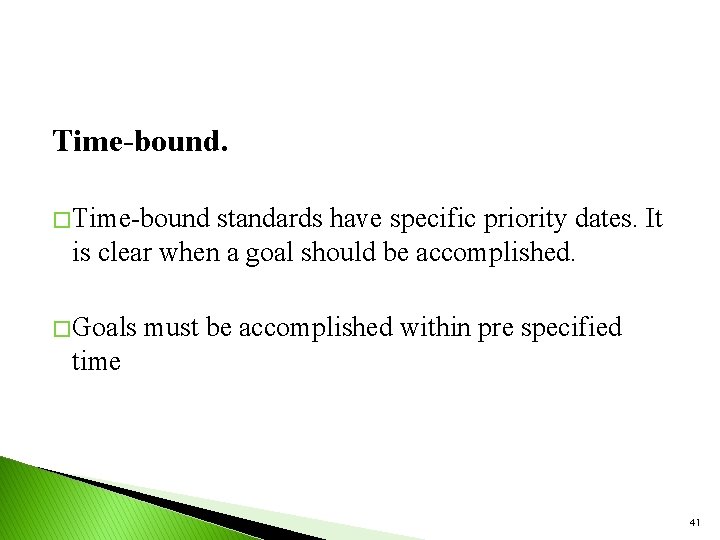
Time-bound. � Time-bound standards have specific priority dates. It is clear when a goal should be accomplished. � Goals must be accomplished within pre specified time 41
42
43
44
45
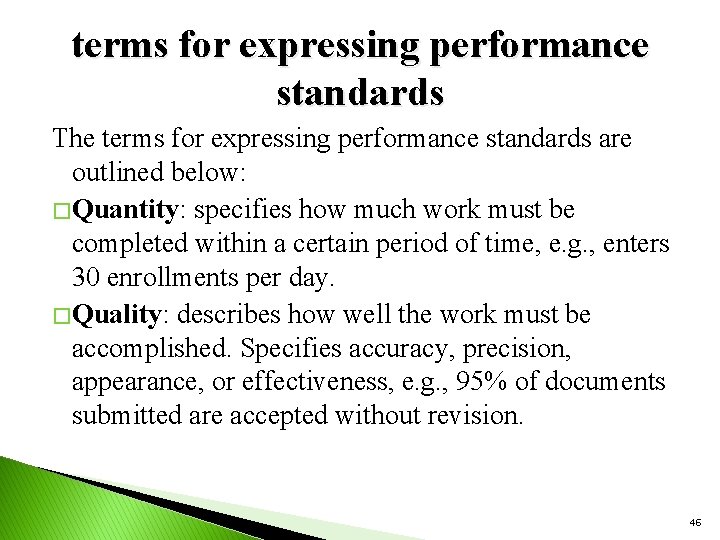
terms for expressing performance standards The terms for expressing performance standards are outlined below: � Quantity: specifies how much work must be completed within a certain period of time, e. g. , enters 30 enrollments per day. � Quality: describes how well the work must be accomplished. Specifies accuracy, precision, appearance, or effectiveness, e. g. , 95% of documents submitted are accepted without revision. 46
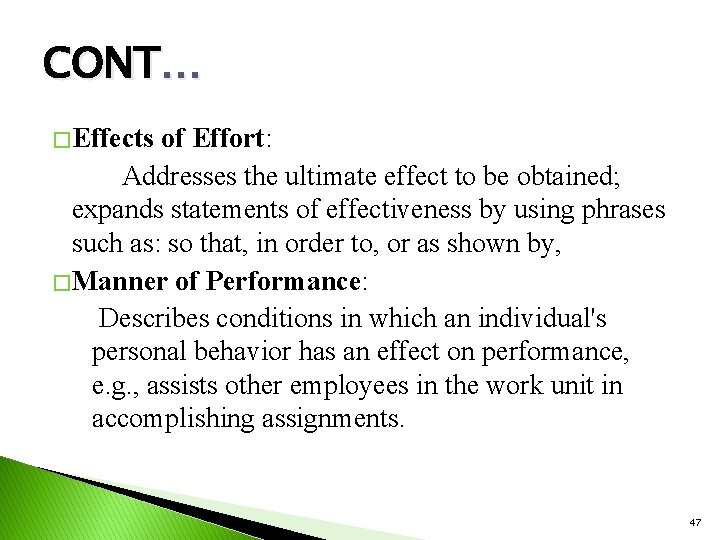
CONT… � Effects of Effort: Addresses the ultimate effect to be obtained; expands statements of effectiveness by using phrases such as: so that, in order to, or as shown by, � Manner of Performance: Describes conditions in which an individual's personal behavior has an effect on performance, e. g. , assists other employees in the work unit in accomplishing assignments. 47
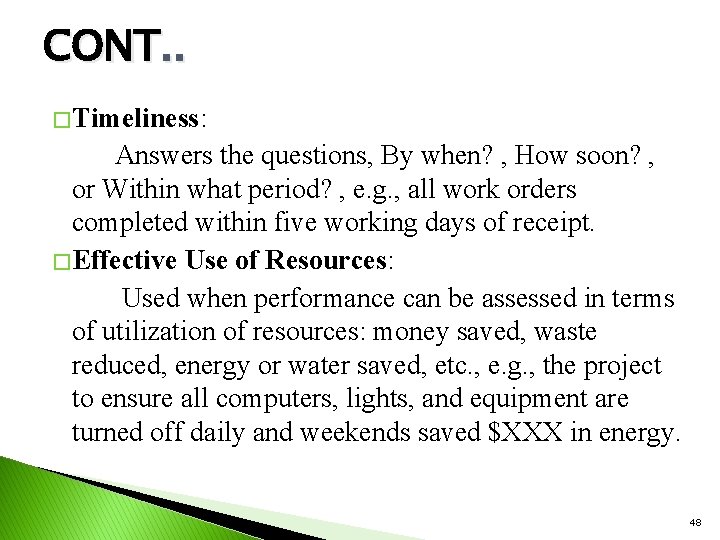
CONT. . � Timeliness: Answers the questions, By when? , How soon? , or Within what period? , e. g. , all work orders completed within five working days of receipt. � Effective Use of Resources: Used when performance can be assessed in terms of utilization of resources: money saved, waste reduced, energy or water saved, etc. , e. g. , the project to ensure all computers, lights, and equipment are turned off daily and weekends saved $XXX in energy. 48
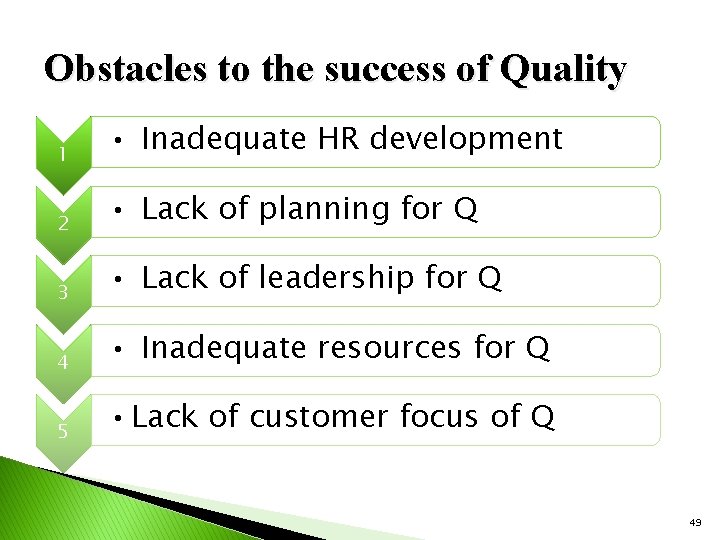
Obstacles to the success of Quality 1 • Inadequate HR development 2 • Lack of planning for Q 3 • Lack of leadership for Q 4 • Inadequate resources for Q 5 • Lack of customer focus of Q 49
Summery � Quality is all about to meet the customer’s expectations. � Customer expectations are a dynamic feature, difficult to meet. � Quality can achieved when performance of organization is above the expectations or customer Performance> expectations � Performance can be maintain at higher level by performance management system. 50
References � http: //abufara. com/abufara. net/images/abo ok_file/back/Ch 1. pdf � http: //dera. ioe. ac. uk/10022/1/download%3 Fi d=151888&filename=performance-beyondexpectations-full-report. pdf � http: //www. indianmba. com/Faculty_Column/ FC 811/fc 811. html � http: //www. tdci. co. za/index. php? page=Perfo rmance+Management+Systems 51
References � http: //www. slideshare. net/searchanandu/qua lity-performance-management-34796312 � http: //www. slideshare. net/Rayhan 786/chap 2 -gap-model 52