
1 Graph y 2 x 3 2 Graph
- Slides: 12
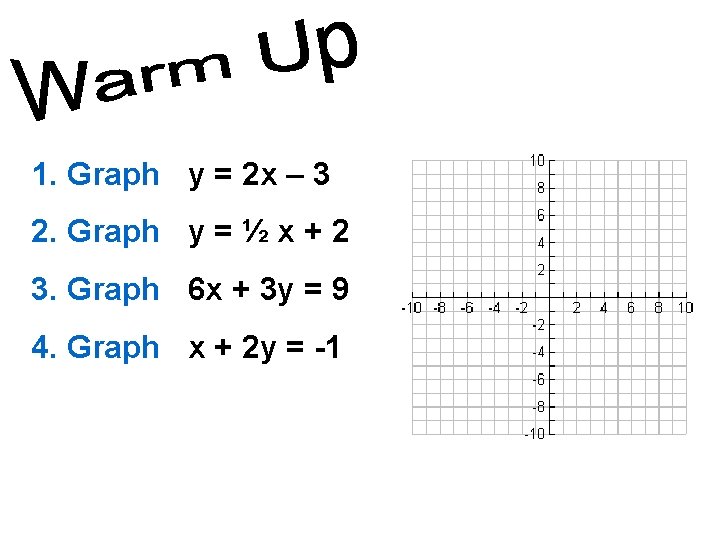
1. Graph y = 2 x – 3 2. Graph y = ½ x + 2 3. Graph 6 x + 3 y = 9 4. Graph x + 2 y = -1
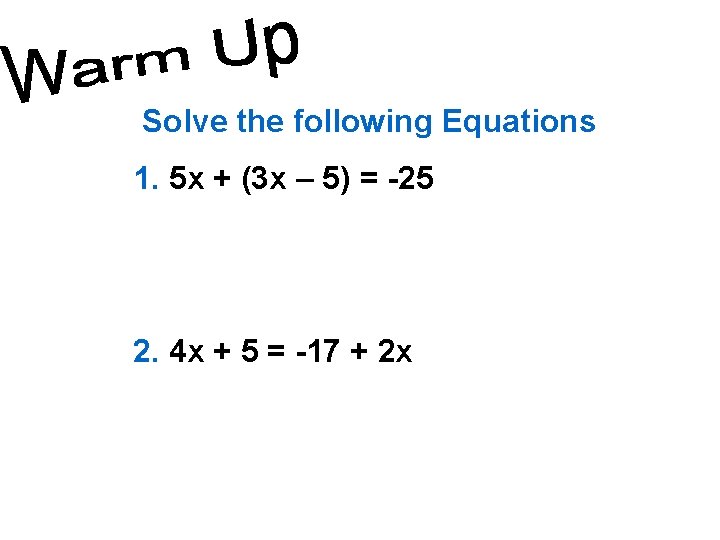
Solve the following Equations 1. 5 x + (3 x – 5) = -25 2. 4 x + 5 = -17 + 2 x
Solve Systems of Equations by Elimination
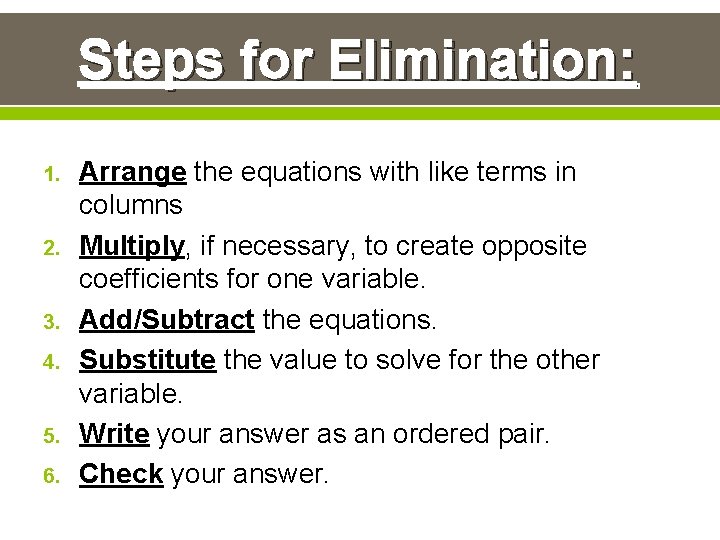
Steps for Elimination: 1. 2. 3. 4. 5. 6. Arrange the equations with like terms in columns Multiply, if necessary, to create opposite coefficients for one variable. Add/Subtract the equations. Substitute the value to solve for the other variable. Write your answer as an ordered pair. Check your answer.
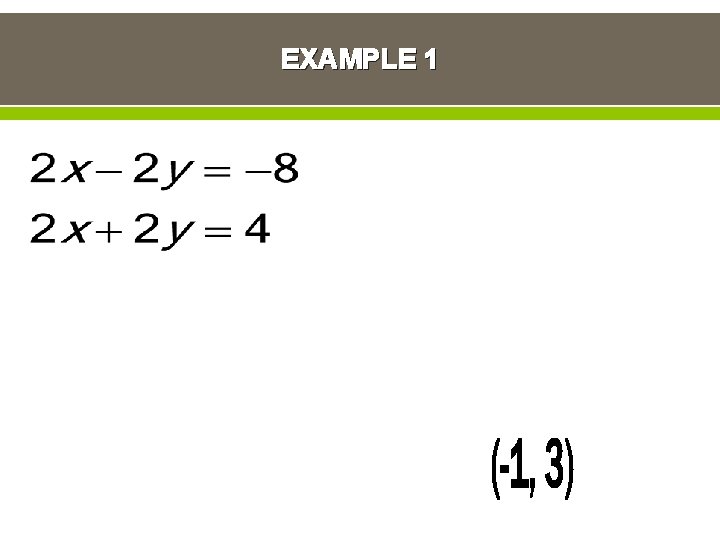
EXAMPLE 1
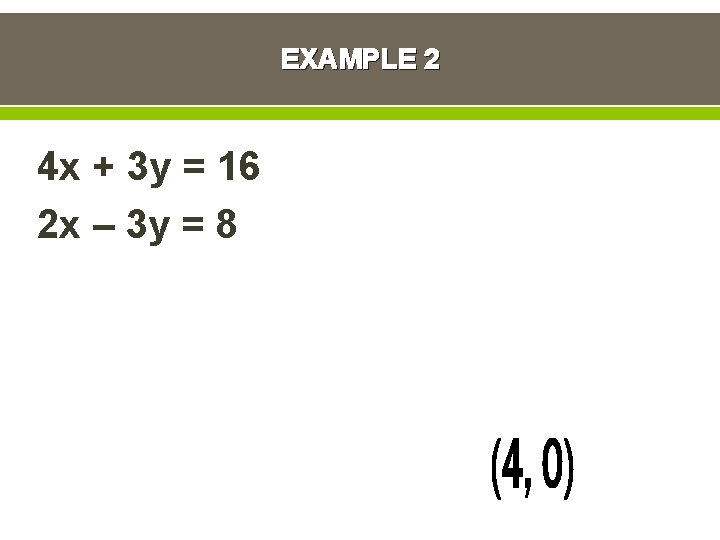
EXAMPLE 2 4 x + 3 y = 16 2 x – 3 y = 8
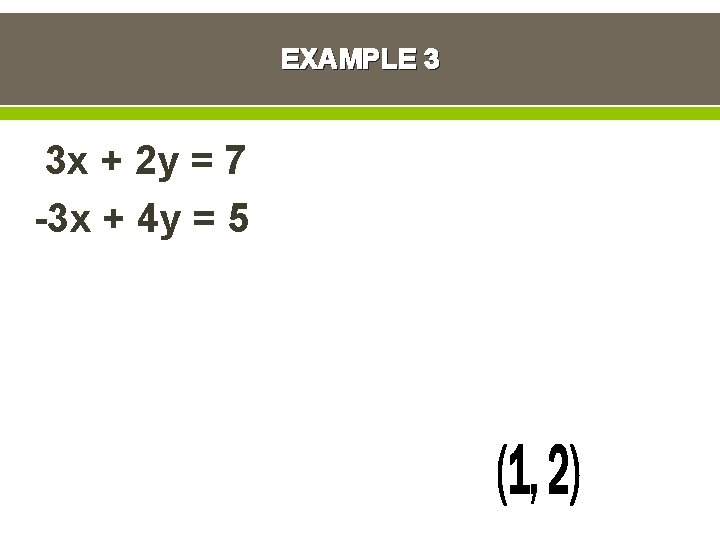
EXAMPLE 3 3 x + 2 y = 7 -3 x + 4 y = 5
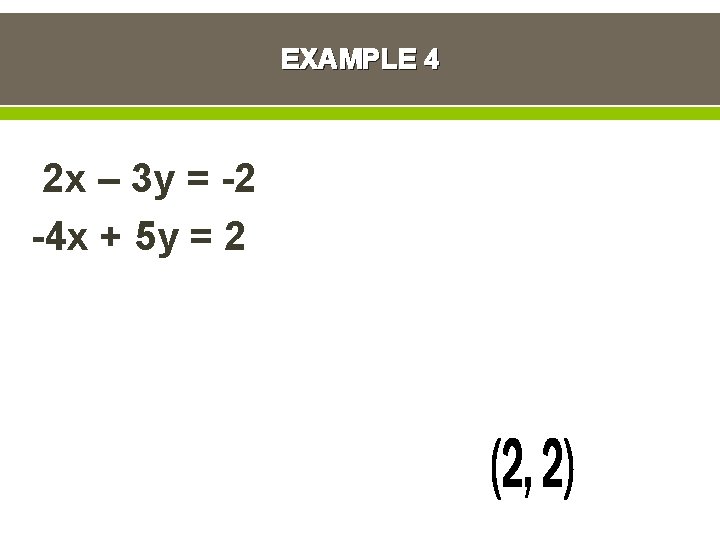
EXAMPLE 4 2 x – 3 y = -2 -4 x + 5 y = 2
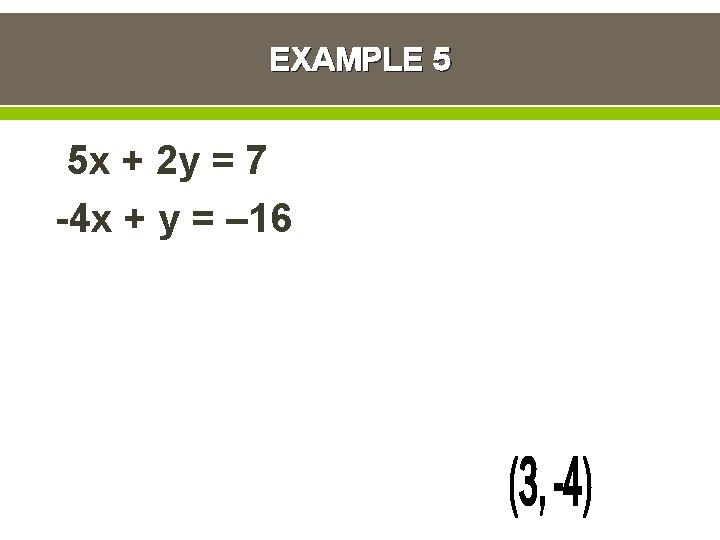
EXAMPLE 5 5 x + 2 y = 7 -4 x + y = – 16
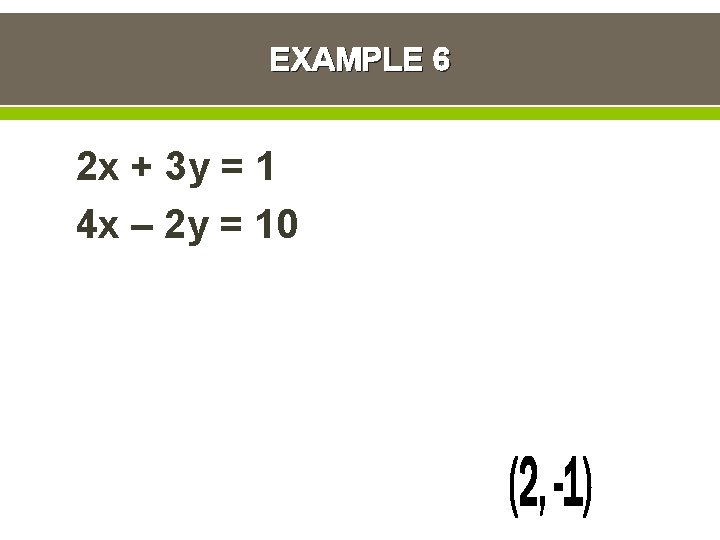
EXAMPLE 6 2 x + 3 y = 1 4 x – 2 y = 10
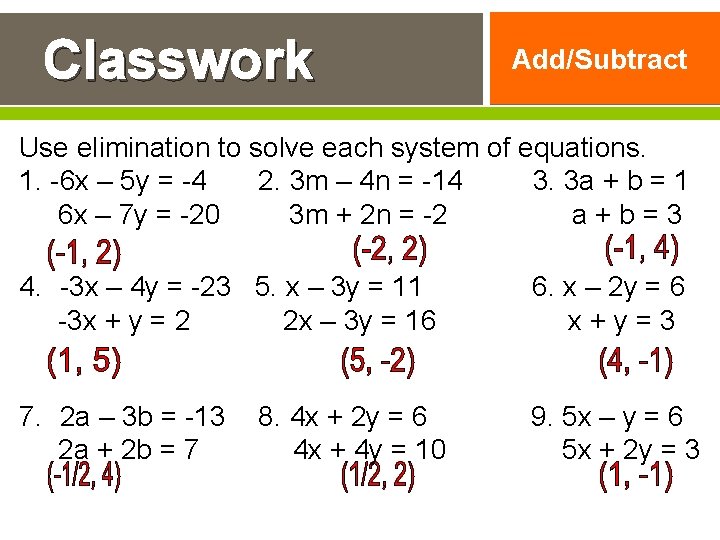
Classwork Add/Subtract Use elimination to solve each system of equations. 1. -6 x – 5 y = -4 2. 3 m – 4 n = -14 3. 3 a + b = 1 6 x – 7 y = -20 3 m + 2 n = -2 a+b=3 4. -3 x – 4 y = -23 5. x – 3 y = 11 -3 x + y = 2 2 x – 3 y = 16 6. x – 2 y = 6 x+y=3 7. 2 a – 3 b = -13 2 a + 2 b = 7 9. 5 x – y = 6 5 x + 2 y = 3 8. 4 x + 2 y = 6 4 x + 4 y = 10
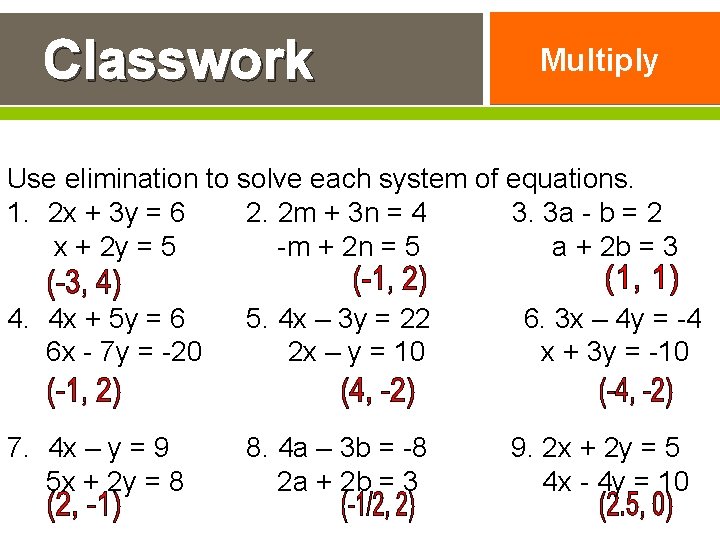
Classwork Multiply Use elimination to solve each system of equations. 1. 2 x + 3 y = 6 2. 2 m + 3 n = 4 3. 3 a - b = 2 x + 2 y = 5 -m + 2 n = 5 a + 2 b = 3 4. 4 x + 5 y = 6 6 x - 7 y = -20 5. 4 x – 3 y = 22 2 x – y = 10 7. 4 x – y = 9 5 x + 2 y = 8 8. 4 a – 3 b = -8 2 a + 2 b = 3 6. 3 x – 4 y = -4 x + 3 y = -10 9. 2 x + 2 y = 5 4 x - 4 y = 10