
1 GrammarTranslation Method 1890 s1930 s 2 Cognitive
- Slides: 9
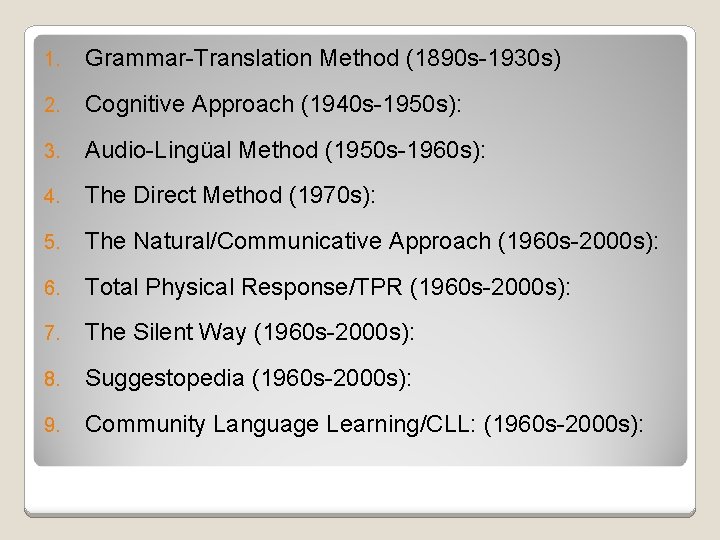
1. Grammar-Translation Method (1890 s-1930 s) 2. Cognitive Approach (1940 s-1950 s): 3. Audio-Lingüal Method (1950 s-1960 s): 4. The Direct Method (1970 s): 5. The Natural/Communicative Approach (1960 s-2000 s): 6. Total Physical Response/TPR (1960 s-2000 s): 7. The Silent Way (1960 s-2000 s): 8. Suggestopedia (1960 s-2000 s): 9. Community Language Learning/CLL: (1960 s-2000 s):
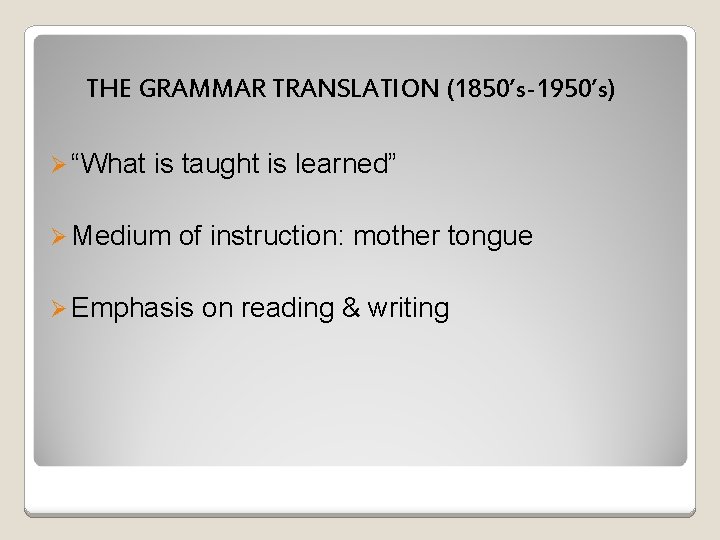
THE GRAMMAR TRANSLATION (1850’s-1950’s) Ø “What is taught is learned” Ø Medium of instruction: mother tongue Ø Emphasis on reading & writing
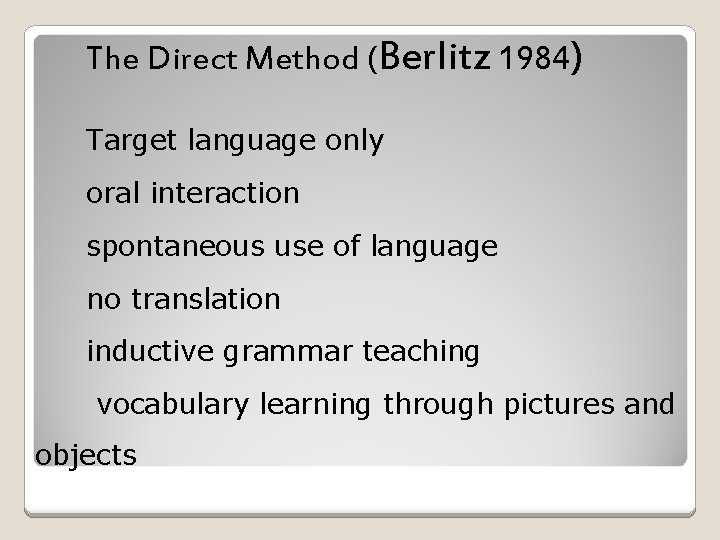
The Direct Method (Berlitz 1984) Target language only oral interaction spontaneous use of language no translation inductive grammar teaching vocabulary learning through pictures and objects
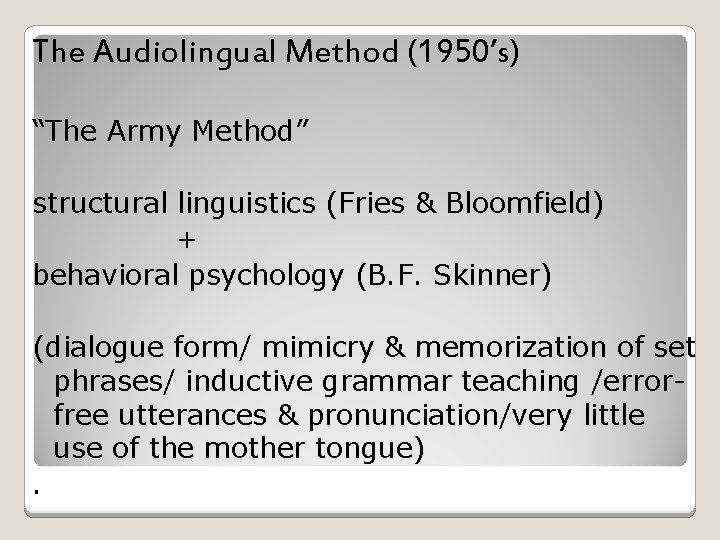
The Audiolingual Method (1950’s) “The Army Method” structural linguistics (Fries & Bloomfield) + behavioral psychology (B. F. Skinner) (dialogue form/ mimicry & memorization of set phrases/ inductive grammar teaching /errorfree utterances & pronunciation/very little use of the mother tongue).
Structural-situational language teaching Pragmatic version of Audiolingualism (UK) Language presentation and practice was situationalized All techniques of ALM + situation (use of concrete objects, pictures, and relia together with gestures and actions)
Suggestopedia Brain power and inner capacities (Lozanov 1979) Relaxation as a means of retaining new knowledge and material To present vocabulary, readings, role-plays and drama with classical music in the background and students sitting in comfortable seats
The Silent Way It is in learners' best interests to develop independence and autonomy and cooperate with each other in solving language problems. The teacher is supposed to be silent (Gattegno 1972)
Humanistic Approaches Community Language Teaching (Charles A. Curran) psychological counseling techniques to learning Open interpersonal communication and the role of supportive community was emphasized Total Physical Response (James Asher) Adult second language learning as a parallel process to child first language acquisition
Communicative Language Teaching (1980’s) Learners learn a language through using it to communicate Authentic and meaningful communication should be the goal of classroom activities Fluency is an important dimension of communication Communication involves the integration of different language skills Learning is a process of creative construction and involves trial and error