
1 First Stage of Prenatal Development Germinal Stage
- Slides: 29
1) First Stage of Prenatal Development: Germinal Stage – Conception to implantation – Approximately 2 weeks • Timeline – Cell division or mitosis begins 24 hours post fertilization – 2 -3 days to reach uterus • 12 -16 cells = blastocycst – Implantation fully complete after 2 weeks • Thousands of cells • Cell differentiation begins Copyright © Houghton Mifflin Harcourt Publishing Company. All rights reserved.
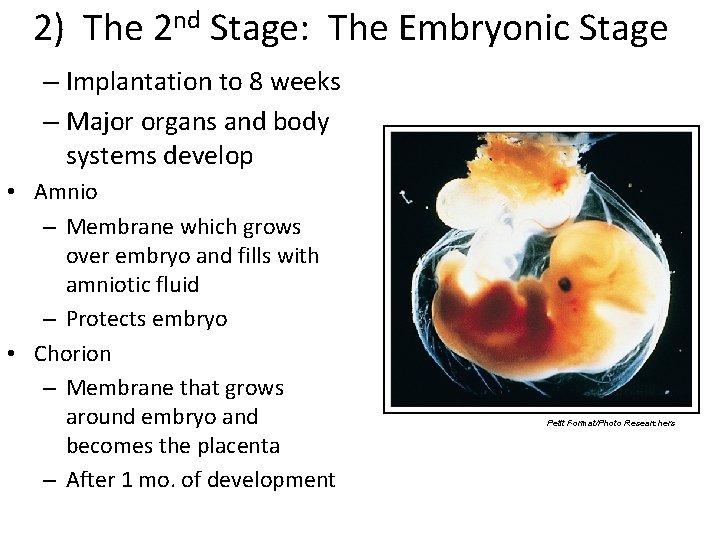
2) The 2 nd Stage: The Embryonic Stage – Implantation to 8 weeks – Major organs and body systems develop • Amnio – Membrane which grows over embryo and fills with amniotic fluid – Protects embryo • Chorion – Membrane that grows around embryo and becomes the placenta – After 1 mo. of development Copyright © Houghton Mifflin Harcourt Publishing Company. All rights reserved. Petit Format/Photo Researchers
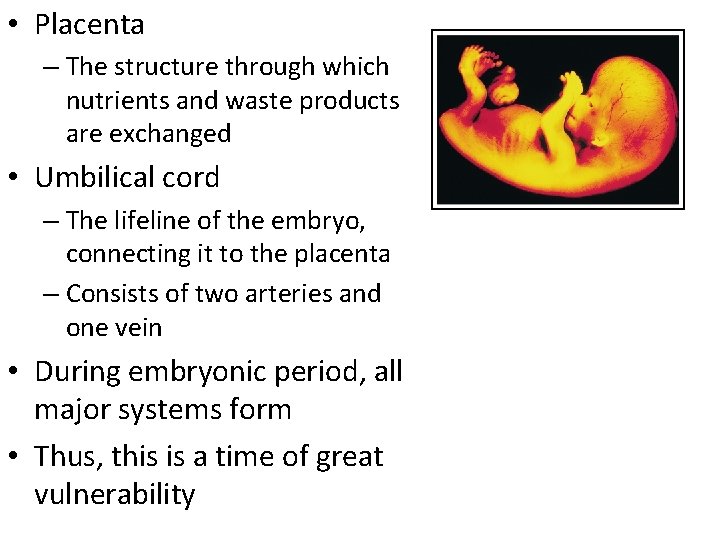
• Placenta – The structure through which nutrients and waste products are exchanged • Umbilical cord – The lifeline of the embryo, connecting it to the placenta – Consists of two arteries and one vein • During embryonic period, all major systems form • Thus, this is a time of great vulnerability Copyright © Houghton Mifflin Harcourt Publishing Company. All rights reserved.
Developmental Principles • Cephalocaudal development – The principle that growth occurs from the head downward • Proximodistal development – The principle that body parts closer to the central axis of the body develop first Copyright © Houghton Mifflin Harcourt Publishing Company. All rights reserved.
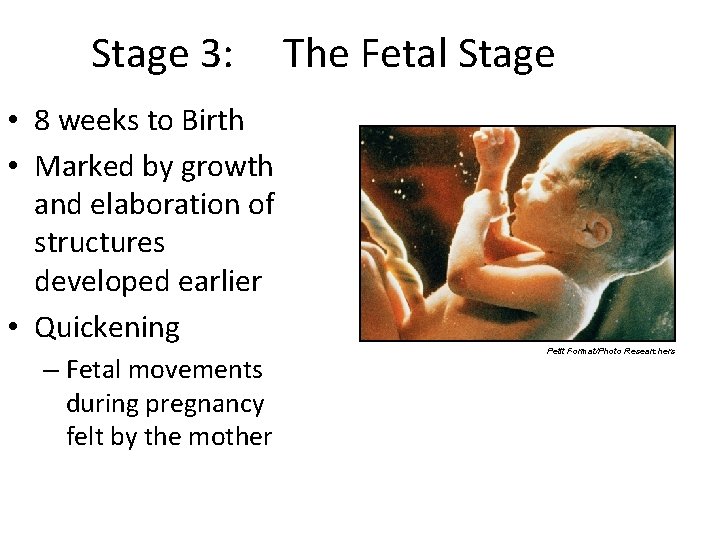
Stage 3: The Fetal Stage • 8 weeks to Birth • Marked by growth and elaboration of structures developed earlier • Quickening – Fetal movements during pregnancy felt by the mother Copyright © Houghton Mifflin Harcourt Publishing Company. All rights reserved. Petit Format/Photo Researchers
The Fetal Stage • Rapid rate of growth • 3 rd month of gestation – Sexual differentiation occurs – Male genital development triggered by testosterone release • 5 th month – Cells of the brain have migrated and formed connections with other brain cells – Now can communicate with each other and control some body functions – Simple reflex actions appear Copyright © Houghton Mifflin Harcourt Publishing Company. All rights reserved.
The Fetal Stage • Age of viability – Age at which postnatal survival is likely – 7 months gestation (22 weeks) • Newborn – average is 7 -7. 5 pounds – and 20 inches long Copyright © Houghton Mifflin Harcourt Publishing Company. All rights reserved.
Environmental Influences • Developing fetuses are protected by – Amniotic fluid – Placental barrier • Teratogens – Agents that cross the placental barrier and adversely affect development – Diseases, Drugs, Environmental Hazards Copyright © Houghton Mifflin Harcourt Publishing Company. All rights reserved.
Factors Affecting Teratogenic Influence • Time of exposure – Teratogens exert their effects on currently developing systems • Amount of exposure – The longer or greater the exposure, the worse the effect • Fetal characteristics – Individual differences influence the strength of effects Copyright © Houghton Mifflin Harcourt Publishing Company. All rights reserved.
Maternal Age • Advanced maternal age is increasingly common • Risks of increased age – Down syndrome – High blood pressure – Gestational diabetes – Cardiovascular disease – Miscarriage Copyright © Houghton Mifflin Harcourt Publishing Company. All rights reserved.
Maternal Stress • Stress causes changes in mom’s blood chemistry. • Pregnant women who are highly stressed are at increased risk of: – Miscarriage – Complicated deliveries – Birthing prematurely Copyright © Houghton Mifflin Harcourt Publishing Company. All rights reserved.
Parity • Parity – The number and spacing of children a woman bears • Body takes 4 years to return to prepregnancy condition – Infants born before recovery may be disadvantaged • Later-born children have – A richer blood supply – Fewer birth defects and complications – Quicker deliveries Copyright © Houghton Mifflin Harcourt Publishing Company. All rights reserved.
Protective Factors 1) Nutrition • Pregnant women – Need about 300 extra calories/day – Need increased levels of iron, protein, folic acid, calcium and phosphorus • Ideal weight gain is about 30 pounds • Birth defects – Women who do not have adequate folate are at risk of neural tube defects • Anencephaly • Spina bifida – Half of neural tube defects in the U. S. are caused by inadequate folate intake Copyright © Houghton Mifflin Harcourt Publishing Company. All rights reserved.
2) Exercise – Provides pregnant women with more energy – Builds bones and muscles – Generally improves health – May improve women’s ability to cope with childbirth pain 3) Prenatal Care – Regular prenatal care is associated with lower rates of birth complications – Many women do not receive adequate prenatal care – Pre-natal testing Copyright © Houghton Mifflin Harcourt Publishing Company. All rights reserved.
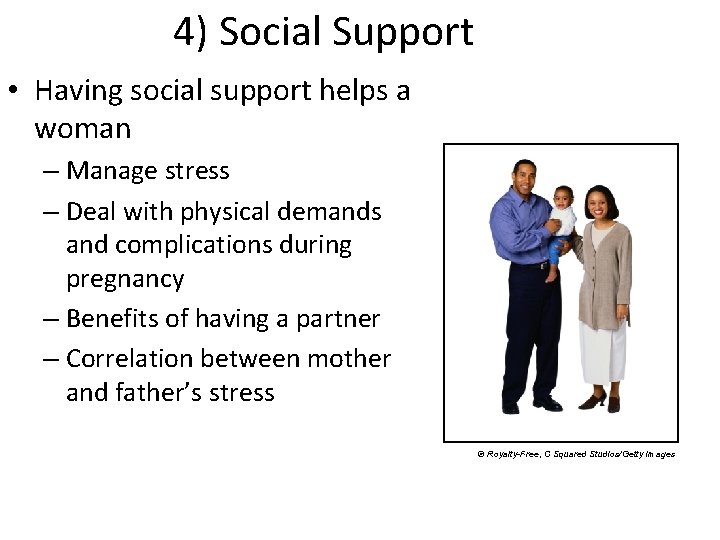
4) Social Support • Having social support helps a woman – Manage stress – Deal with physical demands and complications during pregnancy – Benefits of having a partner – Correlation between mother and father’s stress © Royalty-Free, C Squared Studios/Getty Images Copyright © Houghton Mifflin Harcourt Publishing Company. All rights reserved.
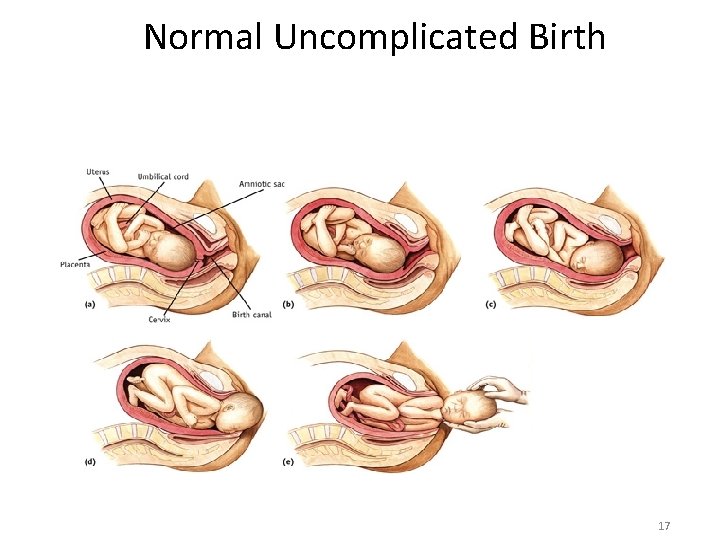
The Birth Process • gestation is from 37 -41 weeks • Lightening (2 -3 weeks before delivery) – sensation that occurs when fetus drops into the pelvic cavity in preparation for birth • what triggers labor? – fetal release of steroids from adrenal glands – maternal release of prostoglandins or oxytocin Stages of the Birth Process: 1. Dilation of Cervix 2. Expulsion of Fetus 3. Expulsion of Placenta Copyright © Houghton Mifflin Harcourt Publishing Company. All rights reserved.
Normal Uncomplicated Birth Copyright © Houghton Mifflin Harcourt Publishing Company. All rights reserved. 17
What women are at risk for complications? • Adolescent girls • Older women, especially primiparous mothers over 35 • Women with certain diseases or conditions (e. g. , diabetes, obesity, malnutrition) • Women carrying multiple babies Copyright © Houghton Mifflin Harcourt Publishing Company. All rights reserved.
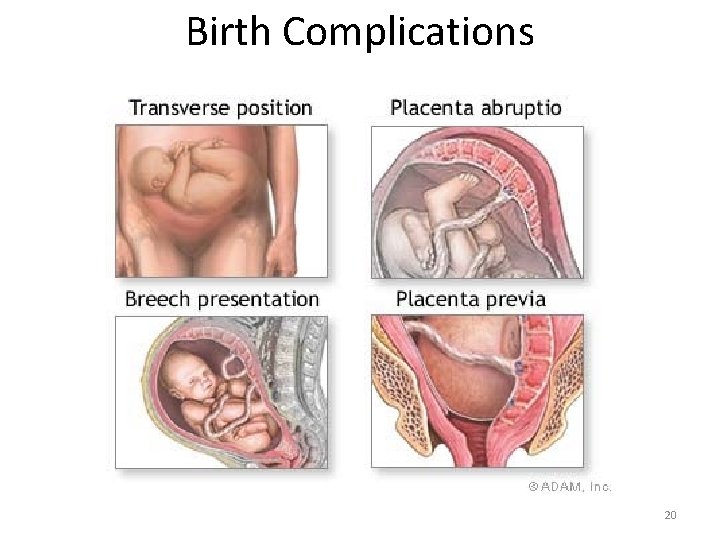
Birth Complications: Cesarean Sections • Procedure by which the fetus is delivered through an incision in the mother’s abdomen • Used – When delays in labor endanger the baby – When the baby is in a breech or transverse position – Unfavorable shape of pelvis – Placenta previa or placenta abrupto – Eclampsa – Prolonged labor – diabetes Copyright © Houghton Mifflin Harcourt Publishing Company. All rights reserved.
Birth Complications Copyright © Houghton Mifflin Harcourt Publishing Company. All rights reserved. 20
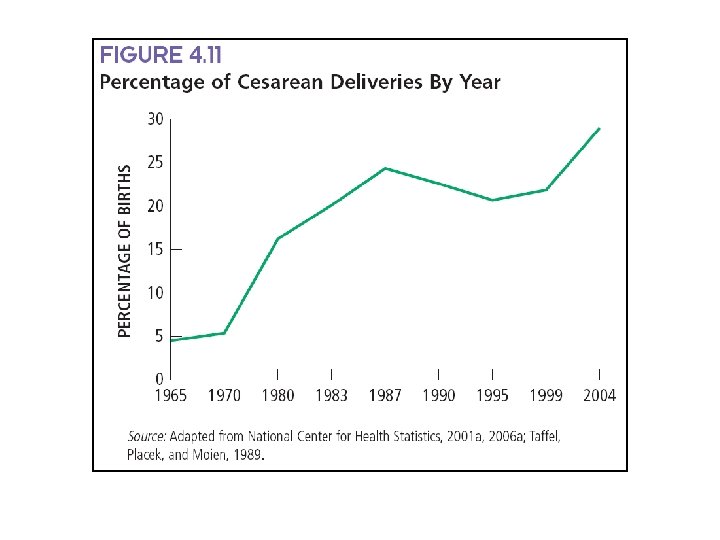
Cesarean Sections • There has been a sharp rise in c-sections in the past three decades • Many factors account for the rise • While c-sections can be effective, they carry increased risks Copyright © Houghton Mifflin Harcourt Publishing Company. All rights reserved.
Copyright © Houghton Mifflin Harcourt Publishing Company. All rights reserved.
Induced Labor • Sometimes allowing a pregnancy to continue is dangerous for mother or child • Labor can be induced – Pitocin used to stimulate contractions • Induction rates have increased Copyright © Houghton Mifflin Harcourt Publishing Company. All rights reserved.
APGAR scale • A quick method of diagnosing potential problems in newborns • 5 vital signs are assessed – Respiration – Reflex responsiveness – Muscle tone – Respiration – Color – Heart rate Copyright © Houghton Mifflin Harcourt Publishing Company. All rights reserved.
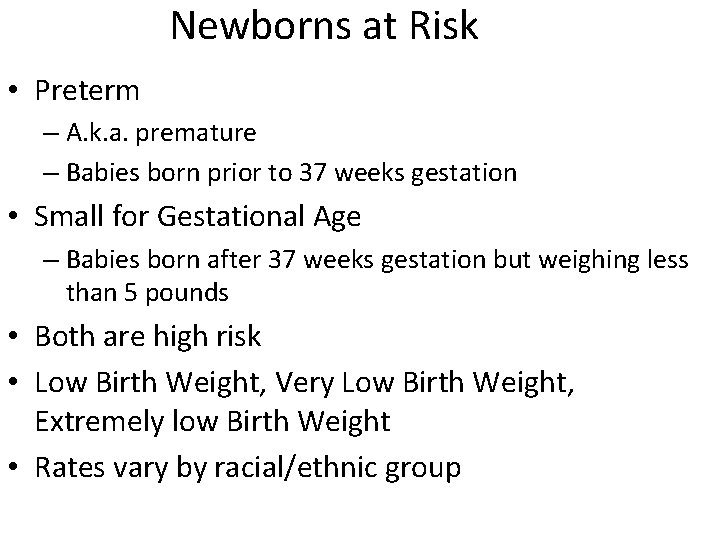
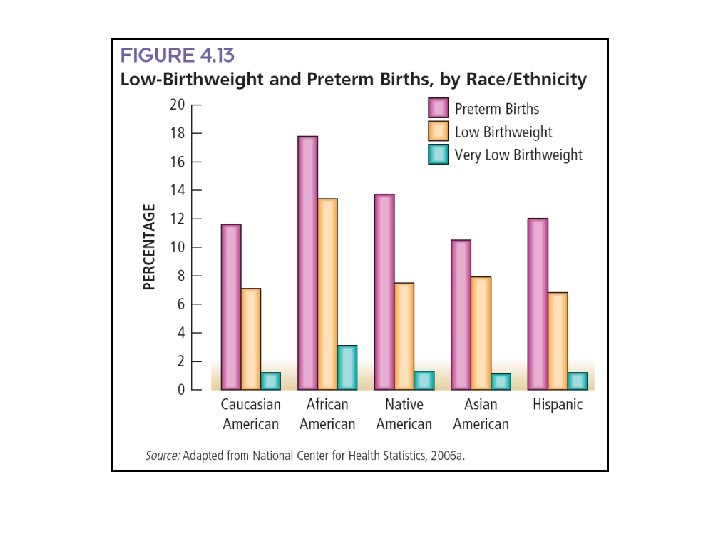
Newborns at Risk • Preterm – A. k. a. premature – Babies born prior to 37 weeks gestation • Small for Gestational Age – Babies born after 37 weeks gestation but weighing less than 5 pounds • Both are high risk • Low Birth Weight, Very Low Birth Weight, Extremely low Birth Weight • Rates vary by racial/ethnic group Copyright © Houghton Mifflin Harcourt Publishing Company. All rights reserved.
Copyright © Houghton Mifflin Harcourt Publishing Company. All rights reserved.
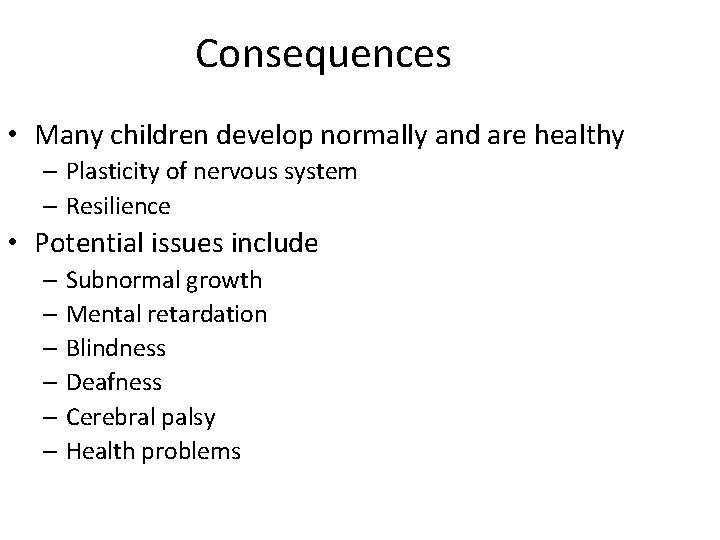
Consequences • Many children develop normally and are healthy – Plasticity of nervous system – Resilience • Potential issues include – Subnormal growth – Mental retardation – Blindness – Deafness – Cerebral palsy – Health problems Copyright © Houghton Mifflin Harcourt Publishing Company. All rights reserved.
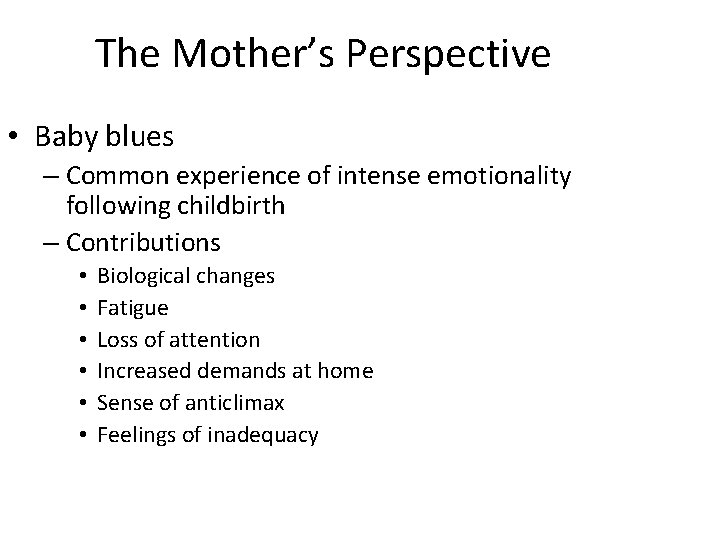
The Mother’s Perspective • Baby blues – Common experience of intense emotionality following childbirth – Contributions • • • Biological changes Fatigue Loss of attention Increased demands at home Sense of anticlimax Feelings of inadequacy Copyright © Houghton Mifflin Harcourt Publishing Company. All rights reserved.
The Mother’s Perspective • Postpartum Depression – An episode of clinical depression triggered by childbirth – Causes? • • Biological changes Stressful life events Delivery complications Sleep deprivation – Often requires medical treatment • Postpartum Psychosis Copyright © Houghton Mifflin Harcourt Publishing Company. All rights reserved.