
1 Eyelid TRAUMA Haematoma Margin laceration Canalicular laceration
- Slides: 16
1. Eyelid TRAUMA • Haematoma • Margin laceration • Canalicular laceration 2. Orbital blow-out fractures • Floor • Medial wall 3. Complications of blunt trauma • Anterior segment • Posterior segment 4. Complications of penetrating trauma 5. Management of intraocular foreign bodies 6. Chemical injuries
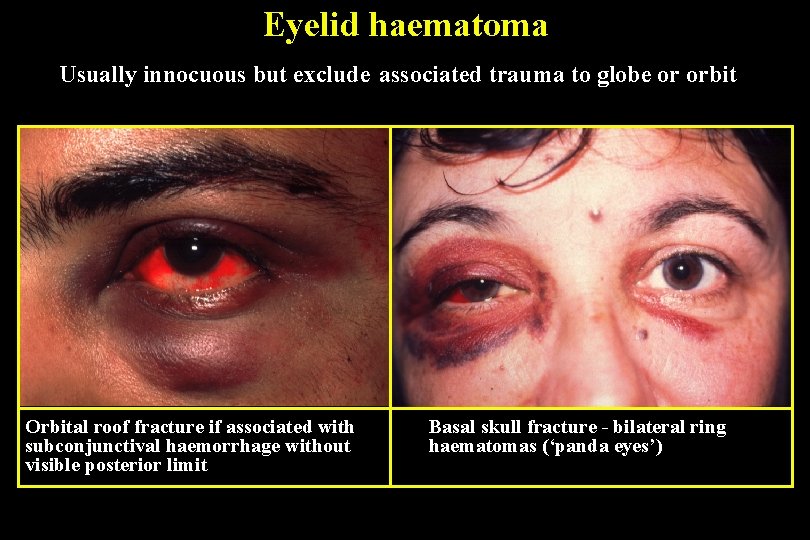
Eyelid haematoma Usually innocuous but exclude associated trauma to globe or orbit Orbital roof fracture if associated with subconjunctival haemorrhage without visible posterior limit Basal skull fracture - bilateral ring haematomas (‘panda eyes’)
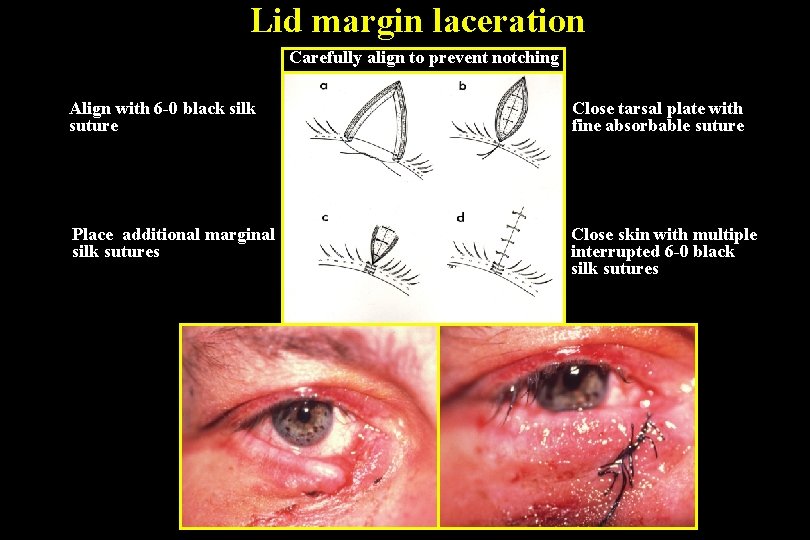
Lid margin laceration Carefully align to prevent notching Align with 6 -0 black silk suture Close tarsal plate with fine absorbable suture Place additional marginal silk sutures Close skin with multiple interrupted 6 -0 black silk sutures
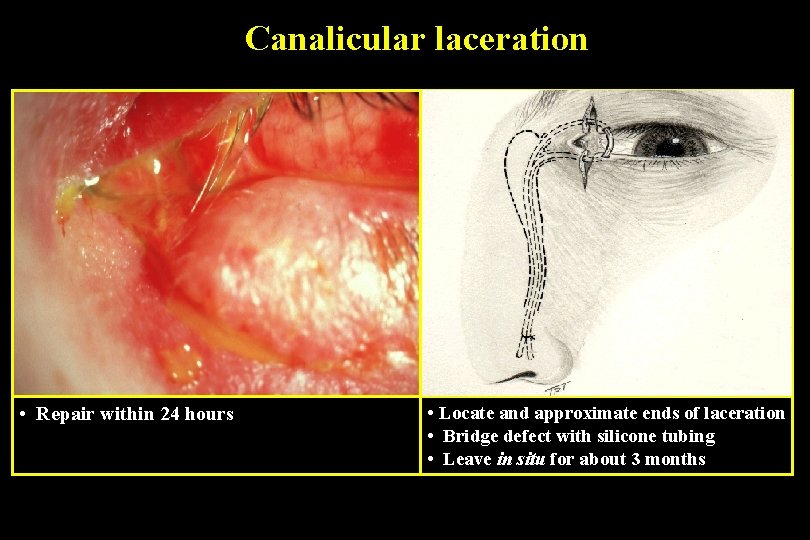
Canalicular laceration • Repair within 24 hours • Locate and approximate ends of laceration • Bridge defect with silicone tubing • Leave in situ for about 3 months
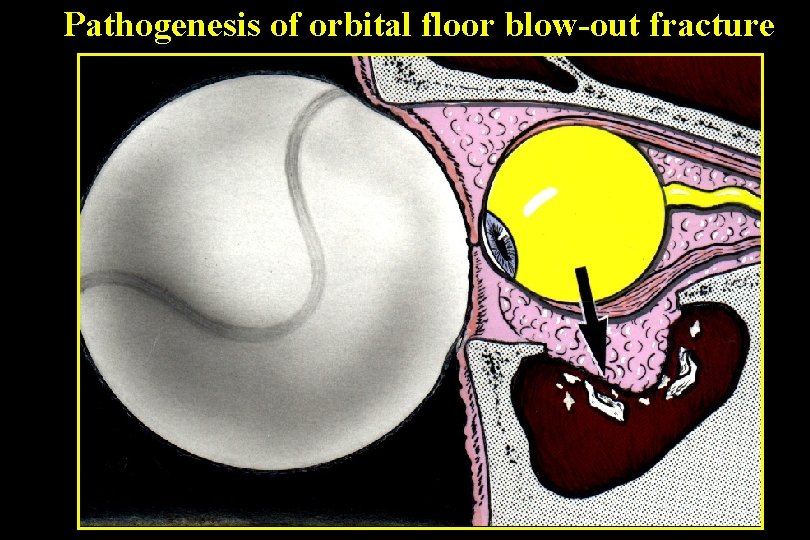
Pathogenesis of orbital floor blow-out fracture
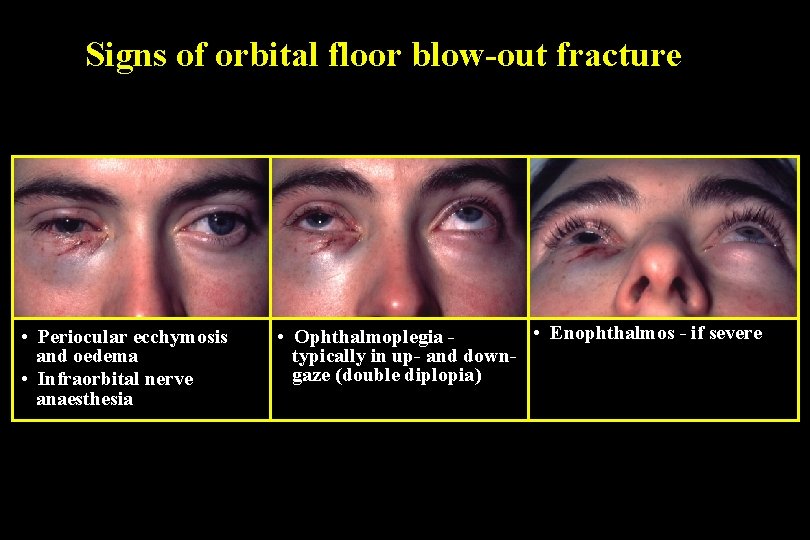
Signs of orbital floor blow-out fracture • Periocular ecchymosis and oedema • Infraorbital nerve anaesthesia • Enophthalmos - if severe • Ophthalmoplegia typically in up- and downgaze (double diplopia)
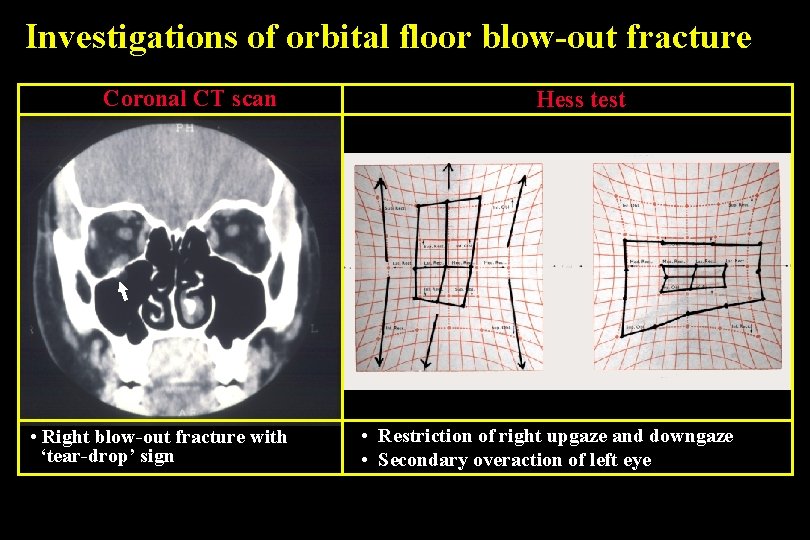
Investigations of orbital floor blow-out fracture Coronal CT scan • Right blow-out fracture with ‘tear-drop’ sign Hess test • Restriction of right upgaze and downgaze • Secondary overaction of left eye
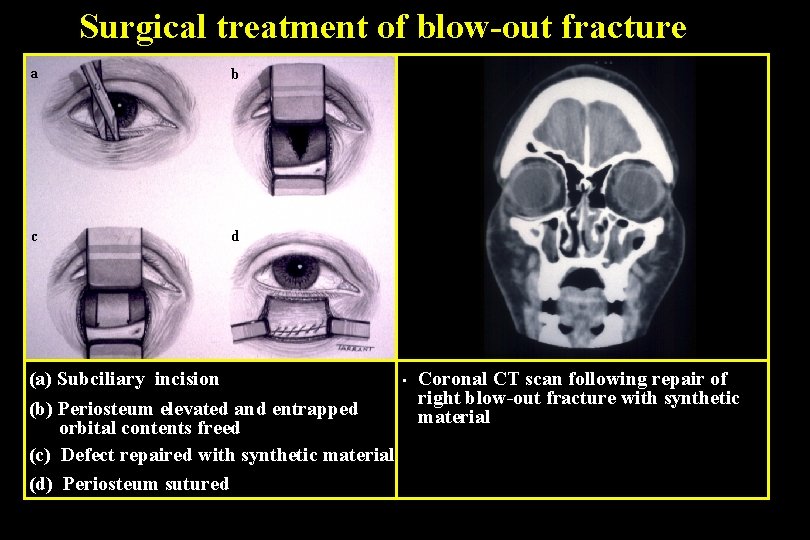
Surgical treatment of blow-out fracture a b c d (a) Subciliary incision (b) Periosteum elevated and entrapped orbital contents freed (c) Defect repaired with synthetic material (d) Periosteum sutured • Coronal CT scan following repair of right blow-out fracture with synthetic material
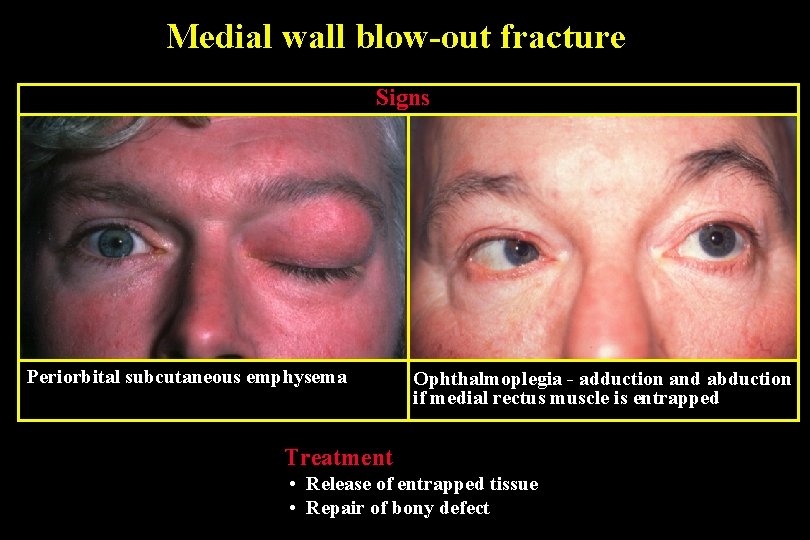
Medial wall blow-out fracture Signs Periorbital subcutaneous emphysema Ophthalmoplegia - adduction and abduction if medial rectus muscle is entrapped Treatment • Release of entrapped tissue • Repair of bony defect
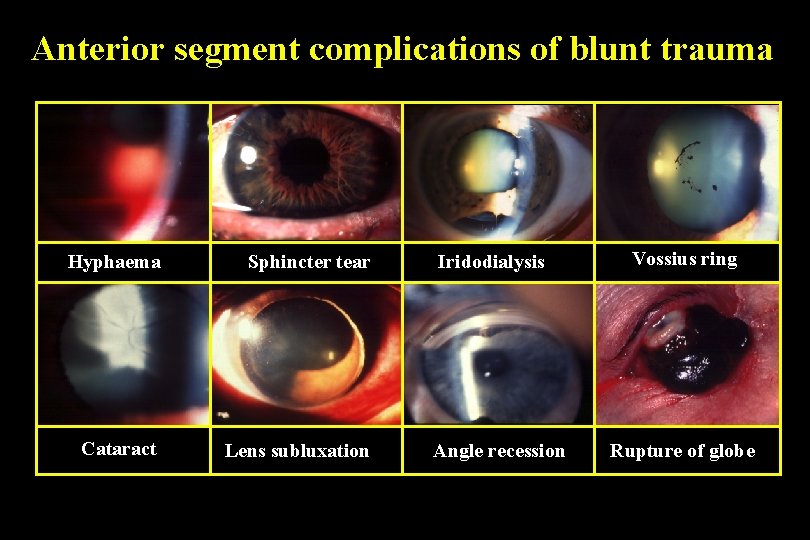
Anterior segment complications of blunt trauma Hyphaema Sphincter tear Cataract Lens subluxation Iridodialysis Angle recession Vossius ring Rupture of globe
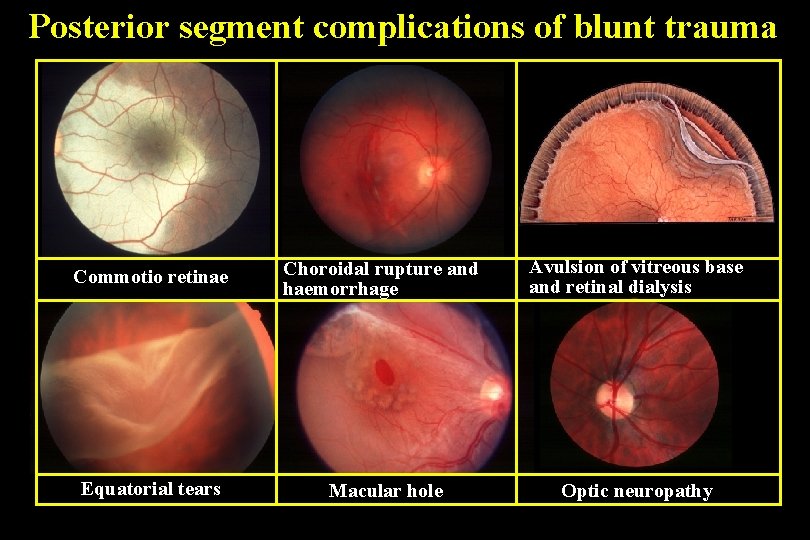
Posterior segment complications of blunt trauma Commotio retinae Choroidal rupture and haemorrhage Avulsion of vitreous base and retinal dialysis Equatorial tears Macular hole Optic neuropathy
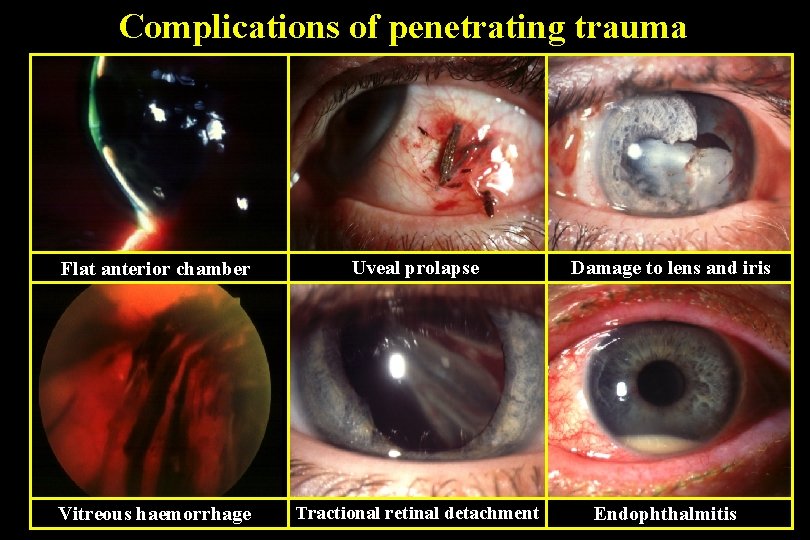
Complications of penetrating trauma Flat anterior chamber Uveal prolapse Vitreous haemorrhage Tractional retinal detachment Damage to lens and iris Endophthalmitis
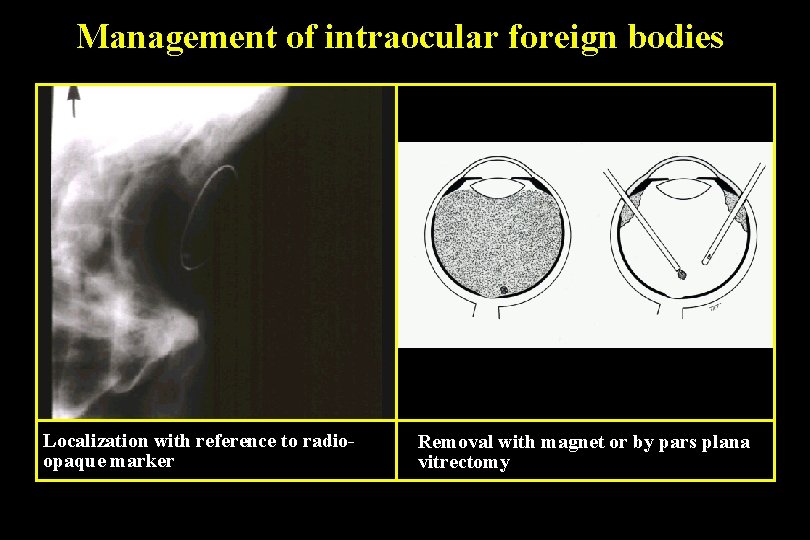
Management of intraocular foreign bodies Localization with reference to radioopaque marker Removal with magnet or by pars plana vitrectomy
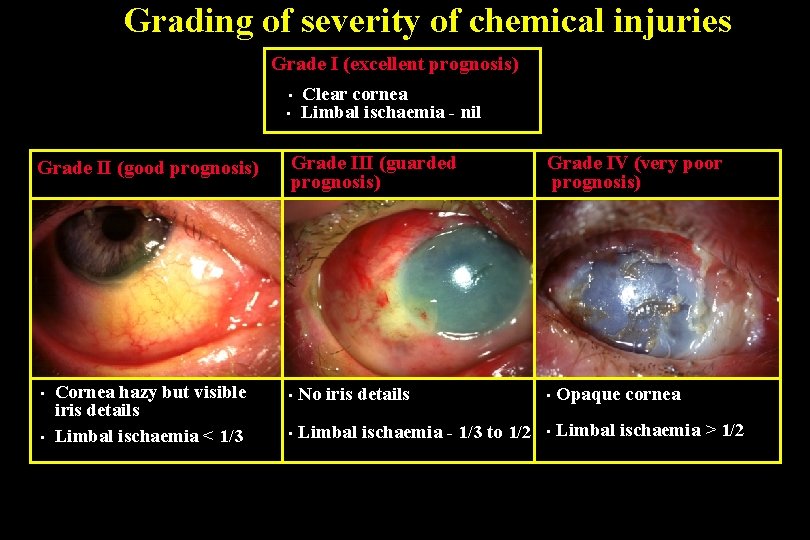
Grading of severity of chemical injuries Grade I (excellent prognosis) • • Grade II (good prognosis) • • Cornea hazy but visible iris details Limbal ischaemia < 1/3 Clear cornea Limbal ischaemia - nil Grade III (guarded prognosis) Grade IV (very poor prognosis) • No iris details • Opaque cornea • Limbal ischaemia - 1/3 to 1/2 • Limbal ischaemia > 1/2
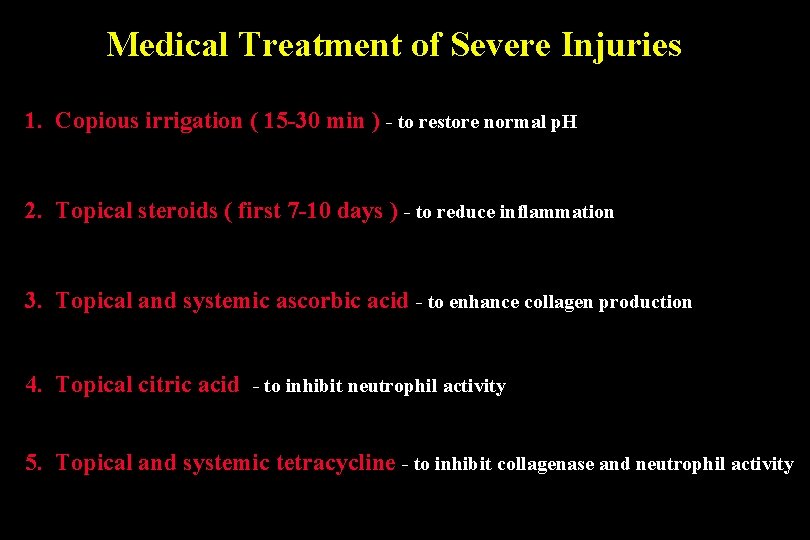
Medical Treatment of Severe Injuries 1. Copious irrigation ( 15 -30 min ) - to restore normal p. H 2. Topical steroids ( first 7 -10 days ) - to reduce inflammation 3. Topical and systemic ascorbic acid - to enhance collagen production 4. Topical citric acid - to inhibit neutrophil activity 5. Topical and systemic tetracycline - to inhibit collagenase and neutrophil activity
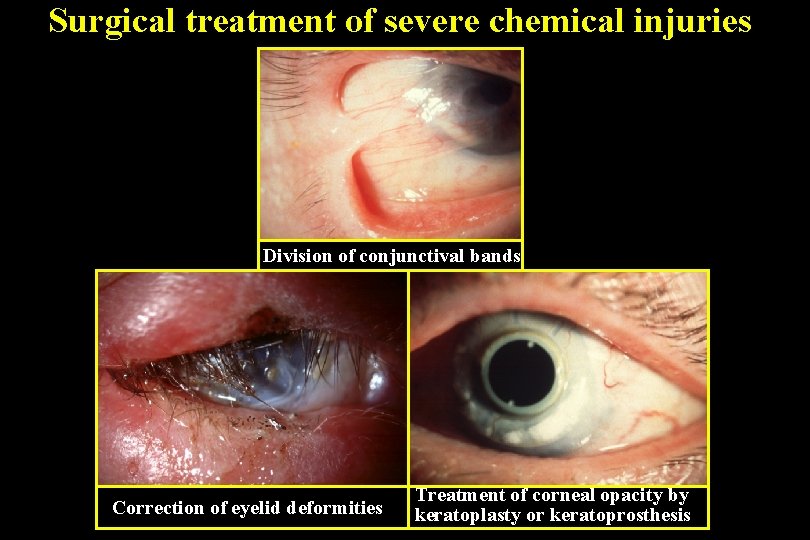
Surgical treatment of severe chemical injuries Division of conjunctival bands Correction of eyelid deformities Treatment of corneal opacity by keratoplasty or keratoprosthesis