
1 Explosive cladding around obstacles Erik Carton Ph
1 Explosive cladding around obstacles Erik Carton Ph. D EPNM 2012, Strasbourg
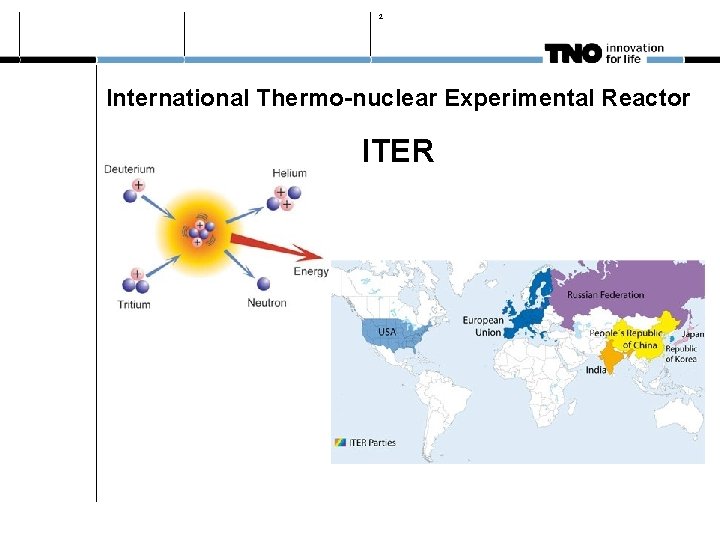
2 International Thermo-nuclear Experimental Reactor ITER
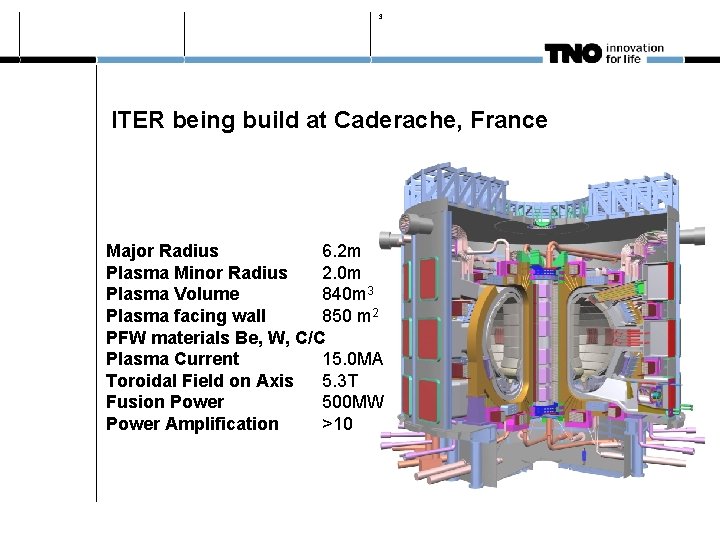
3 ITER being build at Caderache, France Major Radius 6. 2 m Plasma Minor Radius 2. 0 m Plasma Volume 840 m 3 Plasma facing wall 850 m 2 PFW materials Be, W, C/C Plasma Current 15. 0 MA Toroidal Field on Axis 5. 3 T Fusion Power 500 MW Power Amplification >10
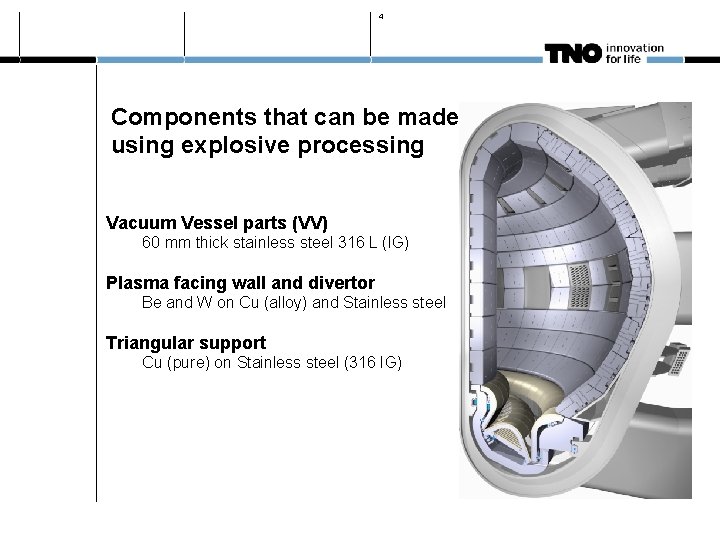
4 Components that can be made using explosive processing Vacuum Vessel parts (VV) 60 mm thick stainless steel 316 L (IG) Plasma facing wall and divertor Be and W on Cu (alloy) and Stainless steel Triangular support Cu (pure) on Stainless steel (316 IG)
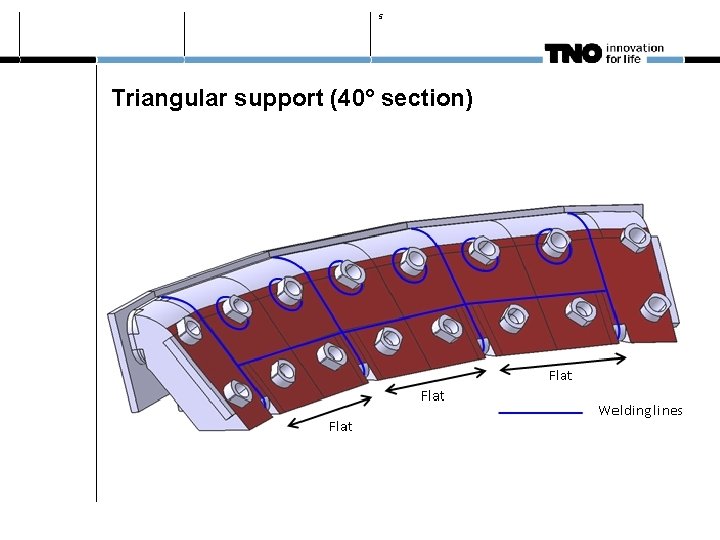
5 Triangular support (40° section)
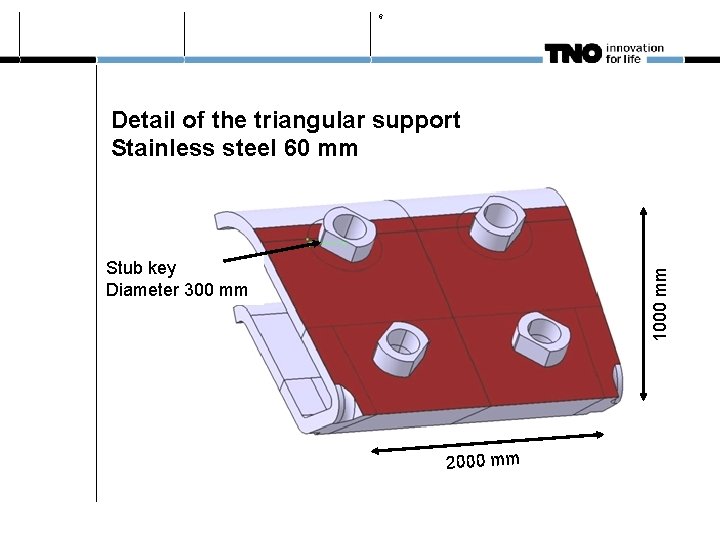
6 Detail of the triangular support Stainless steel 60 mm 1000 mm Stub key Diameter 300 mm 2000 mm
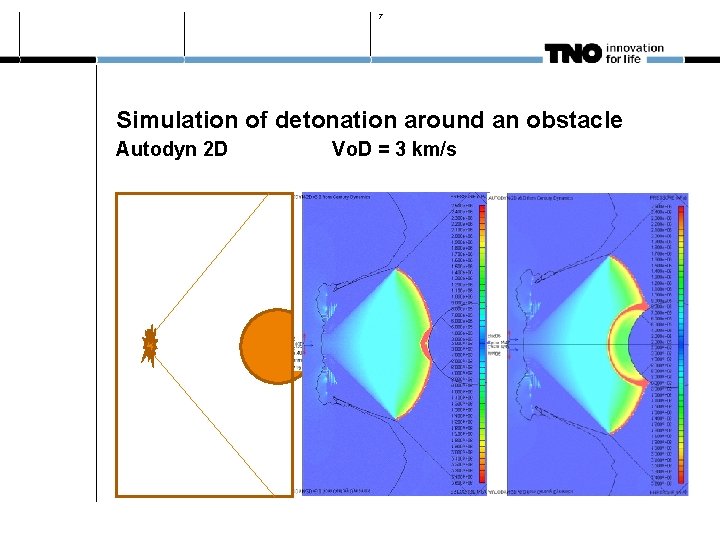
7 Simulation of detonation around an obstacle Autodyn 2 D Vo. D = 3 km/s
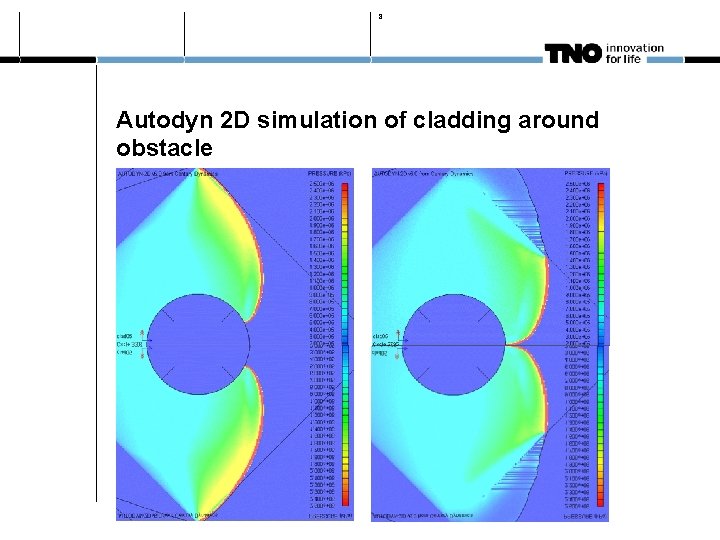
8 Autodyn 2 D simulation of cladding around obstacle
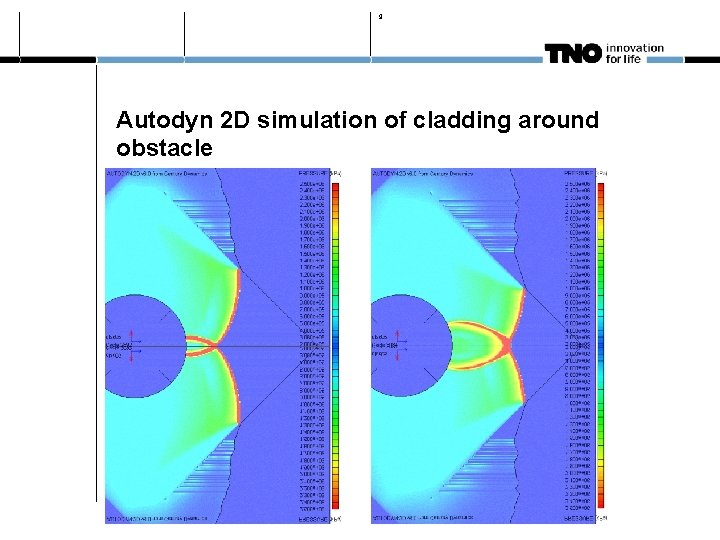
9 Autodyn 2 D simulation of cladding around obstacle
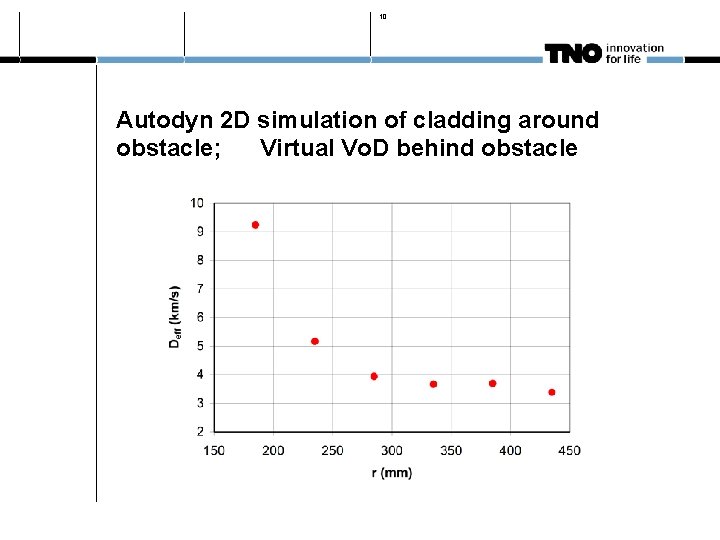
10 Autodyn 2 D simulation of cladding around obstacle; Virtual Vo. D behind obstacle
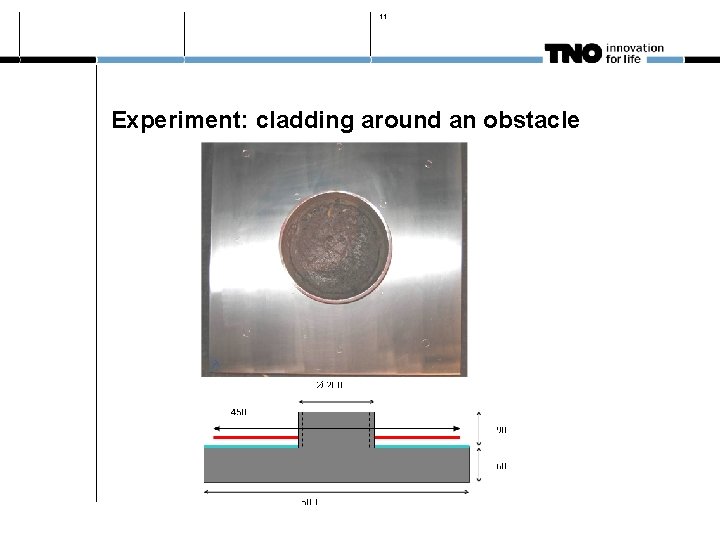
11 Experiment: cladding around an obstacle
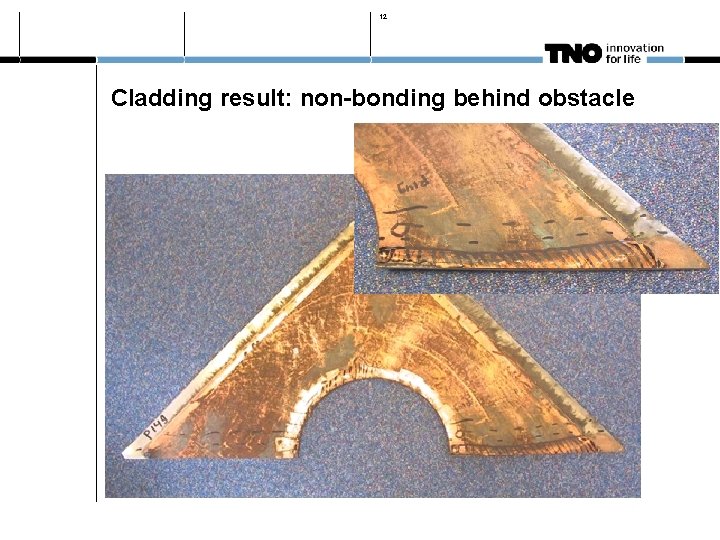
12 Cladding result: non-bonding behind obstacle
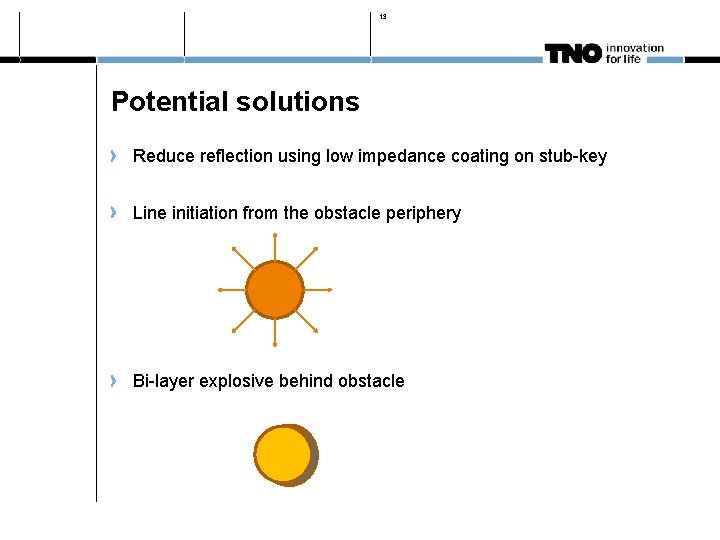
13 Potential solutions Reduce reflection using low impedance coating on stub-key Line initiation from the obstacle periphery Bi-layer explosive behind obstacle
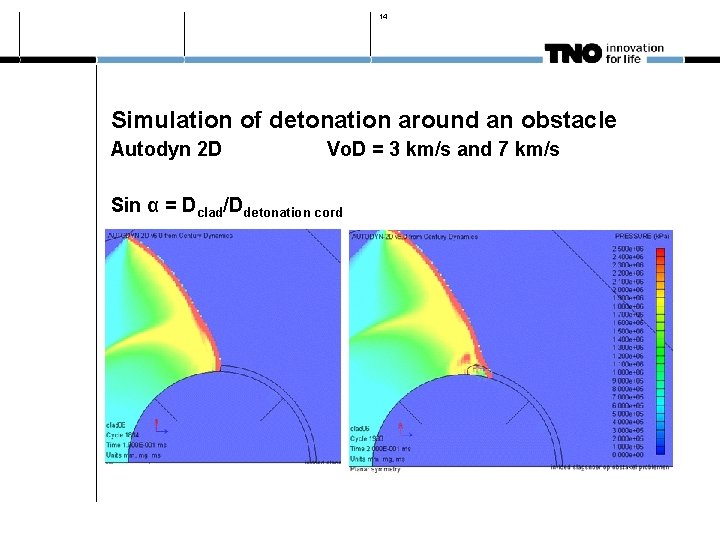
14 Simulation of detonation around an obstacle Autodyn 2 D Vo. D = 3 km/s and 7 km/s Sin α = Dclad/Ddetonation cord
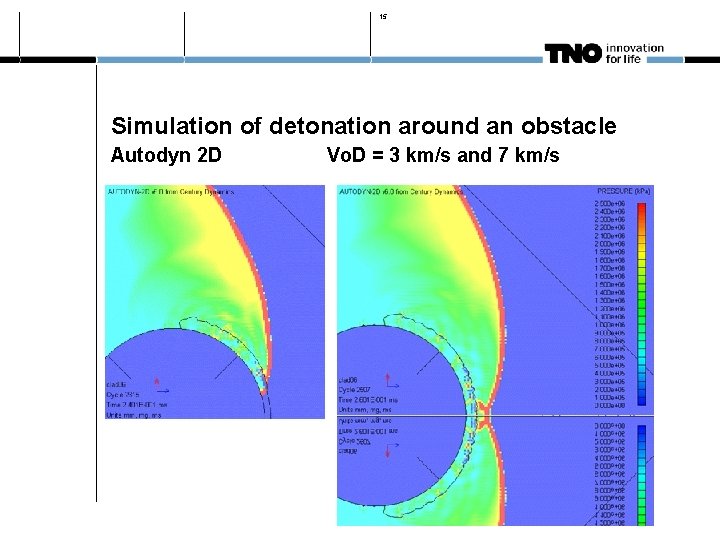
15 Simulation of detonation around an obstacle Autodyn 2 D Vo. D = 3 km/s and 7 km/s
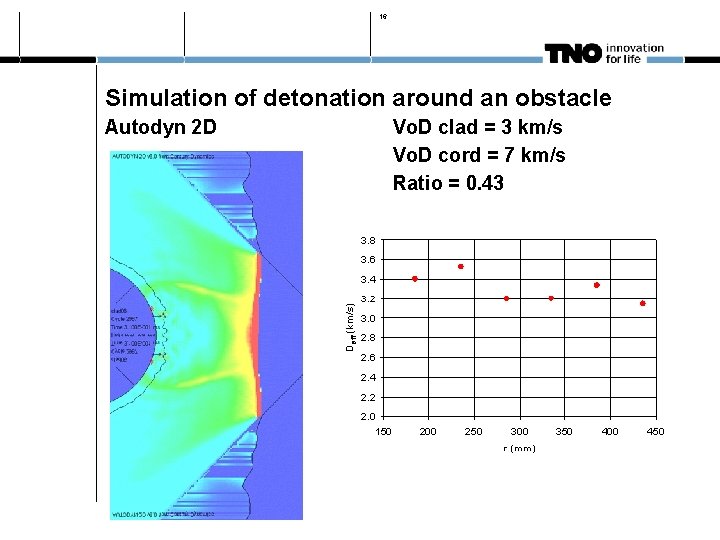
16 Simulation of detonation around an obstacle Autodyn 2 D Vo. D clad = 3 km/s Vo. D cord = 7 km/s Ratio = 0. 43
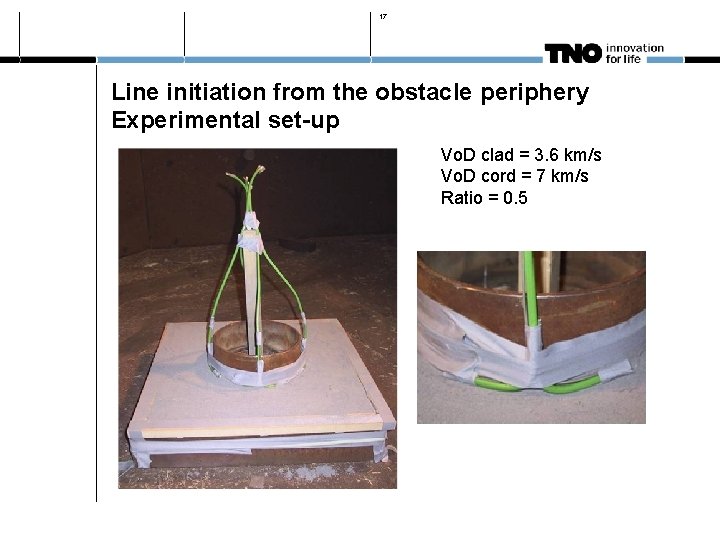
17 Line initiation from the obstacle periphery Experimental set-up Vo. D clad = 3. 6 km/s Vo. D cord = 7 km/s Ratio = 0. 5
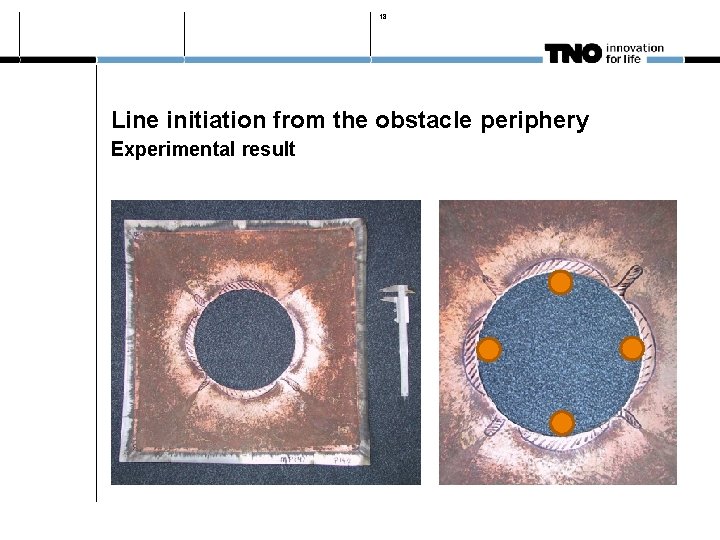
18 Line initiation from the obstacle periphery Experimental result
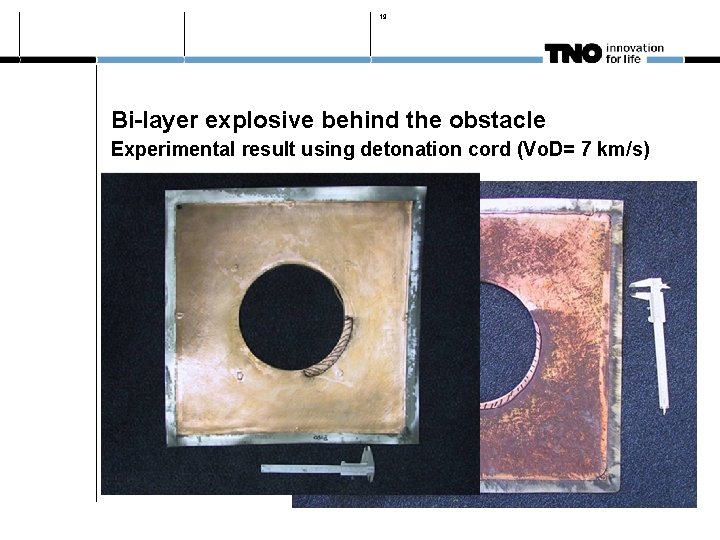
19 Bi-layer explosive behind the obstacle Experimental result using detonation cord (Vo. D= 7 km/s)
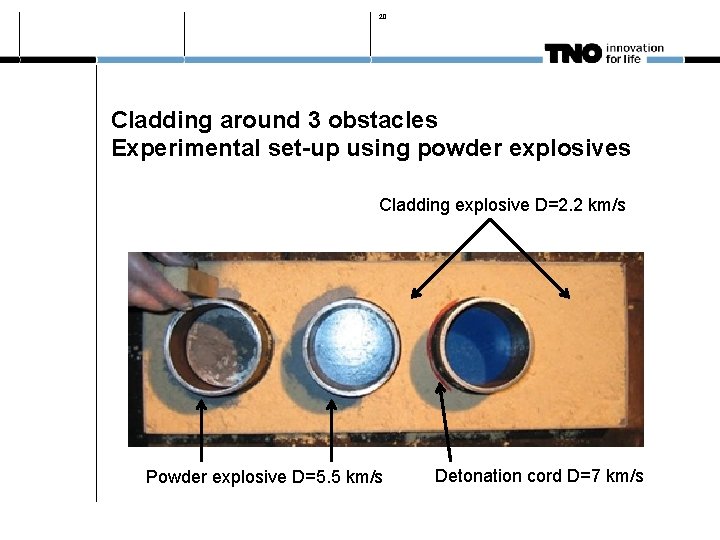
20 Cladding around 3 obstacles Experimental set-up using powder explosives Cladding explosive D=2. 2 km/s Powder explosive D=5. 5 km/s Detonation cord D=7 km/s
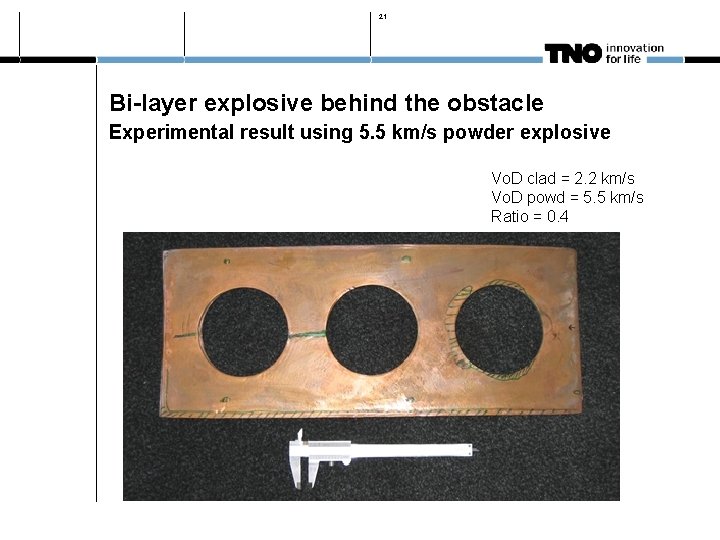
21 Bi-layer explosive behind the obstacle Experimental result using 5. 5 km/s powder explosive Vo. D clad = 2. 2 km/s Vo. D powd = 5. 5 km/s Ratio = 0. 4
22 Conclusions Cladding around one (or more) obstacle is possible Solution 1: Line initiation (radial detonation from the obstacle) Real line initiations are not easily obtained Solution 2: Bi-layer explosive Best for round obstacles Minimizes detached zone area Enables multiple obstacle passage!
- Slides: 22