
1 Evaluation and Management of the Patient with


- Slides: 52
1
Evaluation and Management of the Patient with a Neck Mass Dr. mirvakili Shahid sadoghi university 2
definition The general definition of a neck mass is any abnormal enlargement, swelling, or growth from the level of the base of skull to the clavicles. 3
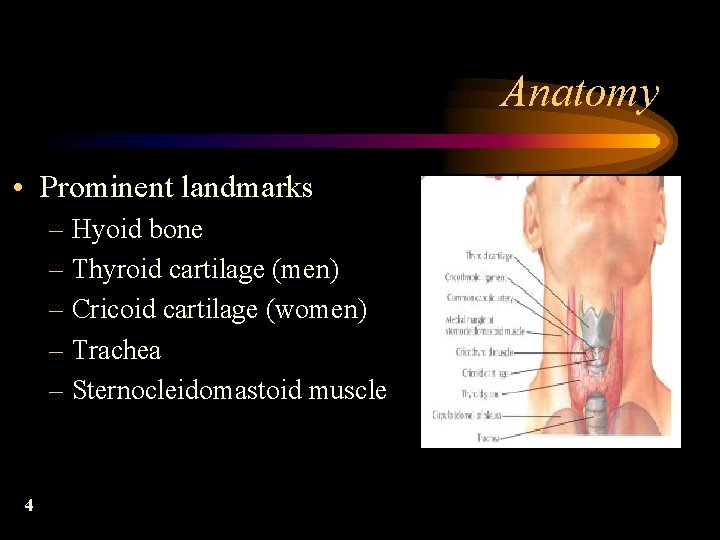
Anatomy • Prominent landmarks – Hyoid bone – Thyroid cartilage (men) – Cricoid cartilage (women) – Trachea – Sternocleidomastoid muscle 4
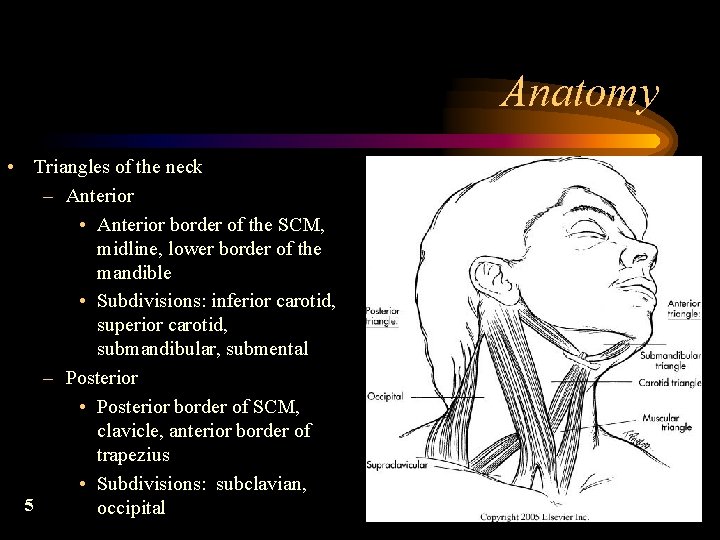
Anatomy • Triangles of the neck – Anterior • Anterior border of the SCM, midline, lower border of the mandible • Subdivisions: inferior carotid, superior carotid, submandibular, submental – Posterior • Posterior border of SCM, clavicle, anterior border of trapezius • Subdivisions: subclavian, 5 occipital
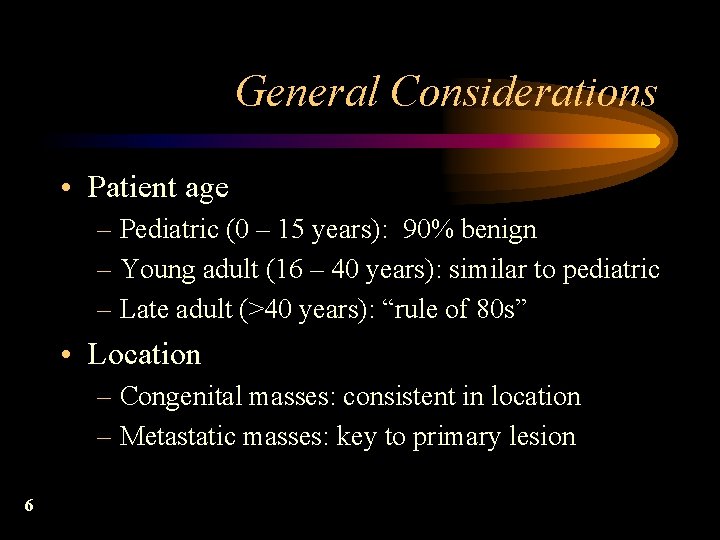
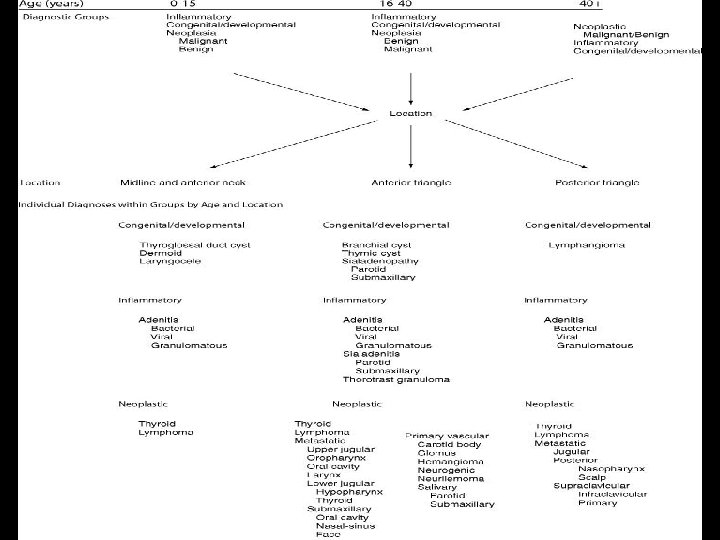
General Considerations • Patient age – Pediatric (0 – 15 years): 90% benign – Young adult (16 – 40 years): similar to pediatric – Late adult (>40 years): “rule of 80 s” • Location – Congenital masses: consistent in location – Metastatic masses: key to primary lesion 6
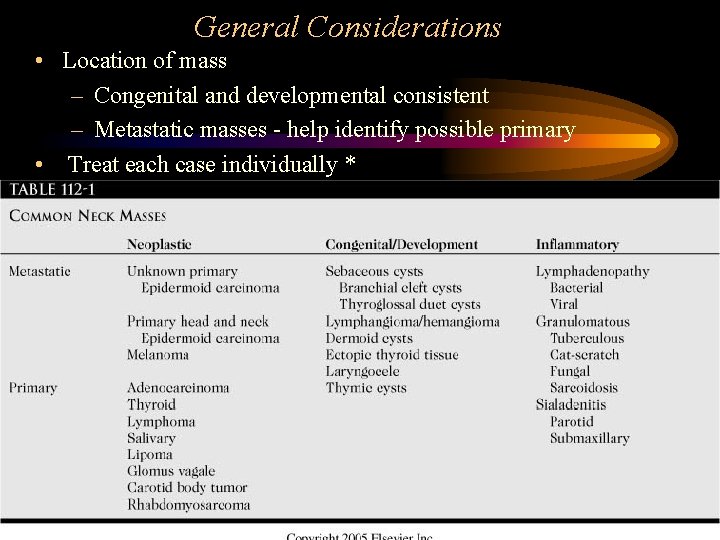
General Considerations • Location of mass – Congenital and developmental consistent – Metastatic masses - help identify possible primary • Treat each case individually * 7
8
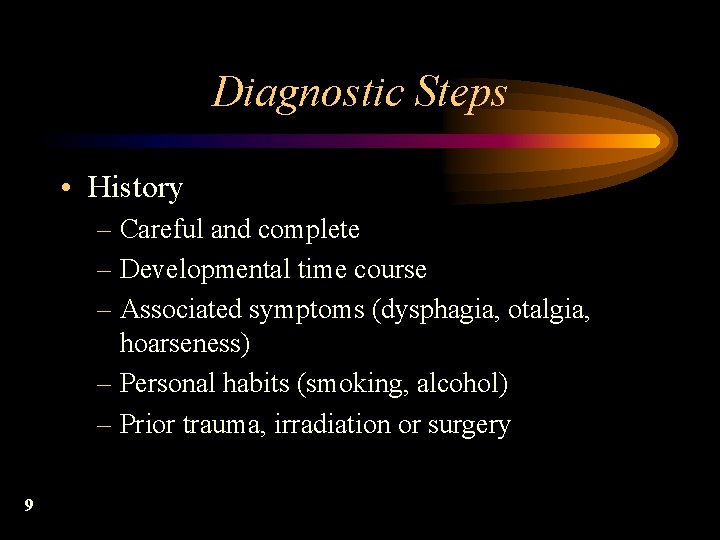
Diagnostic Steps • History – Careful and complete – Developmental time course – Associated symptoms (dysphagia, otalgia, hoarseness) – Personal habits (smoking, alcohol) – Prior trauma, irradiation or surgery 9
Diagnostic Steps • Physical Examination – Complete head and neck exam – Visualize all mucosal surfaces (direct, indirect) – Palpate oral and pharyngeal surfaces – Emphasize location, mobility and consistency of neck mass (vascular, salivary, nodal, inflammatory, congenital, neoplastic) 10
Empirical Antibiotics • Inflammatory mass suspected • Two week trial of antibiotics • Follow-up for further investigation 11
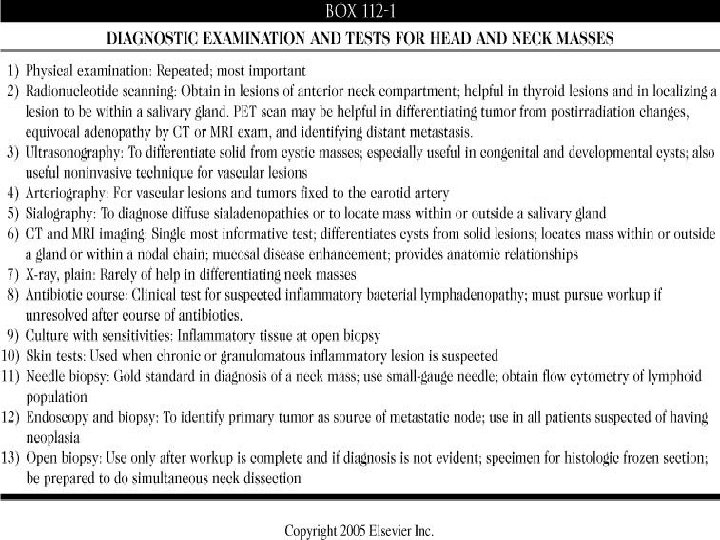
Diagnostic Tests • • • 12 Fine needle aspiration biopsy (FNAB) Computed tomography (CT) Magnetic resonance imaging (MRI) Ultrasonography Radionucleotide scanning PET scan
Diagnostic Studies • Fine needle aspiration biopsy (FNAB) – Standard of care – Indications • Not obvious abscess • Persists following antibiotics – No contraindications (vascular? ) – Fine gauge needle (23 - 27) – Skilled pathologist critical 13
Diagnostic Studies • FNAB continued – Needle track seeding not a concern – Bleeding complications reduced – Can be performed in children – Separates neoplasm from inflammatory & carcinoma from lymphoma – Minimum of four separate needle passes 14
Diagnostic Studies • Computed Tomography (CT) – Very helpful tool – Solid versus cystic – With contrast delineates vascularity – Metastatic masses • Unknown primary and staging purposes • Lucent changes, >1. 5 cm, loss of sharpness – Avoid contrast in thyroid masses 15
Diagnostic Studies • Magnetic Resonance Imaging (MRI) – Similar information as CT – Better for upper neck and skull base – Infusion may substitute for arteriography 16
Diagnostic Studies • Ultrasonography – Less important with advent of FNAB – Useful for solid versus cystic (congenital cyst vs. lymph node/glandular tumor) – Noninvasive (pediatric) 17
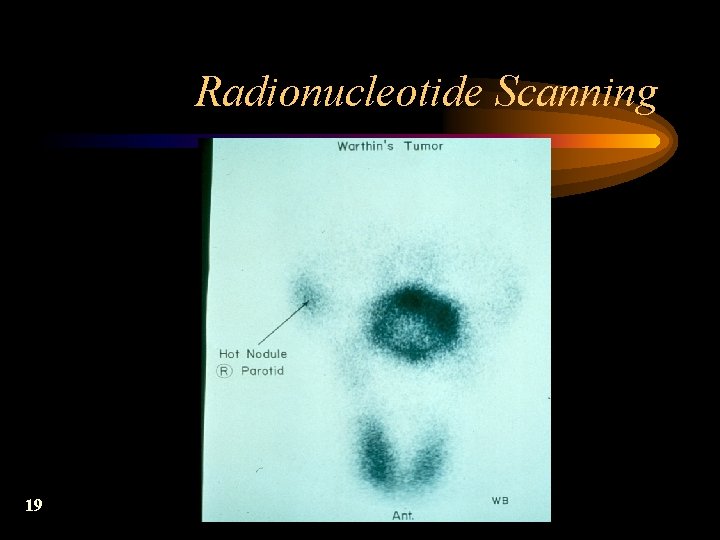
Diagnostic Studies • Radionucleotide Scanning – Intra-glandular versus extra-glandular – Functionality – Salivary and thyroid masses – FNAB preferred for thyroid nodules • Solitary thyroid nodule • Multinodular goiter with new increasing nodule • Hashimoto’s with new nodule 18
Radionucleotide Scanning 19
PET scan • Pet scan indicates the functional activity of a mass • A more radio-intense mass has greater metabolic activity and is usually neoplastic • High false positive rate(warthin, s tumor) 20
21
Nodal Mass Workup in the Adult • Any solid asymmetric mass must be considered metastatic until proven otherwise – Presenting symptom in 12% of cancers – 80% are SCCa – History of smoking and alcohol worrisome – Suspicious symptoms and signs • Ipsilateral otalgia with normal otoscopy • Unilateral serous otitis media (nasopharynx) 22
Nodal Mass Workup in the Adult • Indications for panendoscopy – Positive FNAB (staging, search for primary, synchronous primaries - 10 to 20%) – Equivocal or negative FNAB in high risk • Unknown primary 23 – Biopsy suspicious observed areas or suspicious abnormalities on CT/MRI – None - biopsy nasopharynx, tonsil (ipsilateral tonsillectomy for jugulodigastric nodes), base of tongue, and pyriform sinuses
Nodal Mass & Unknown Primary • Open excisional biopsy – Repeated exam and workup fail to reveal 10 with an equivocal or negative FNAB – 5% of the time – Prepare for complete neck dissection – Frozen section results • Inflammatory or granulomatous: culture tissue • Adenocarcinoma or lymphoma: close wound 24
Common Primary Tumors • • 25 Thyroid Masses Lymphoma Salivary Tumors Lipoma • Carotid Body and Glomus Tumors • Neurogenic Tumors
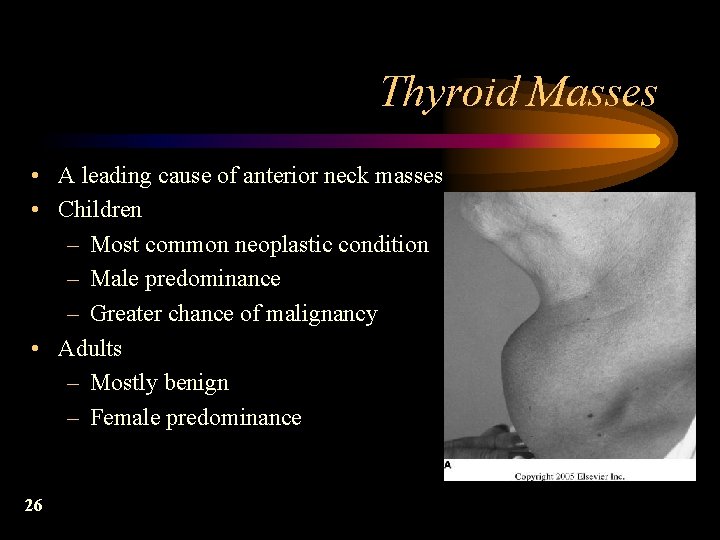
Thyroid Masses • A leading cause of anterior neck masses • Children – Most common neoplastic condition – Male predominance – Greater chance of malignancy • Adults – Mostly benign – Female predominance 26
Thyroid Masses • Lymph node metastatic – 15% of papillary carcinomas – 40% with malignant nodules – Histologically in >90% (microscopic) • FNAB is standard of care – Decreases # of patients with surgery – Increases # of malignant tumors found at surgery – Doubles # of cases followed up – Repeat negative aspiration in 1 month 27
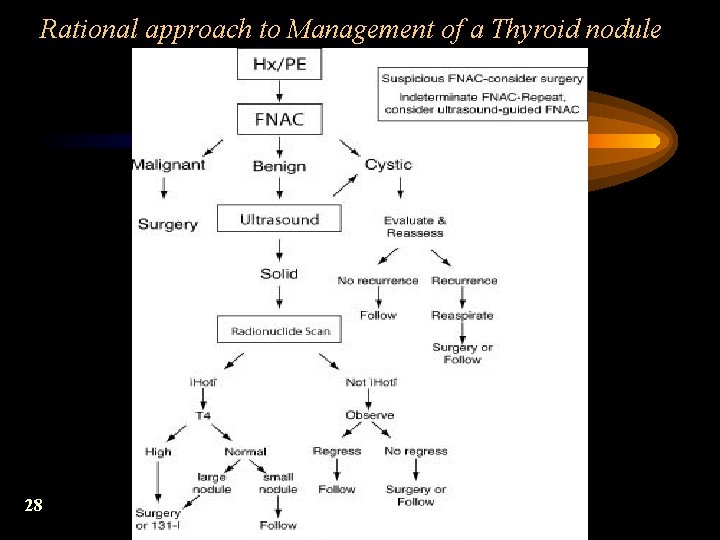
Rational approach to Management of a Thyroid nodule 28
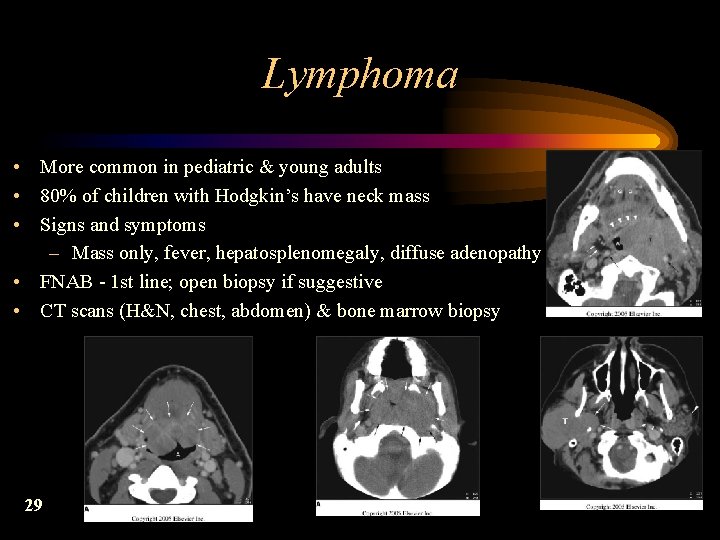
Lymphoma • More common in pediatric & young adults • 80% of children with Hodgkin’s have neck mass • Signs and symptoms – Mass only, fever, hepatosplenomegaly, diffuse adenopathy • FNAB - 1 st line; open biopsy if suggestive • CT scans (H&N, chest, abdomen) & bone marrow biopsy 29
Salivary Tumors • Any preauricular enlarging mass or at the angle of the mandible is suspicious • Benign - asymptomatic • Metastatic - rapid growth, skin fixation or cranial nerve palsies • Open excisional biopsy preferred 30
Salivary Tumors • FNAB – Reduces # of patients with surgery by 1/3 – Distinguishes intra-glandular lymph nodes, localized sialadenitis, benign cysts – Accuracy >90% (better for benign) – Sensitivity - 90%; Specificity - 80% – May facilitate surgical planning or patient counseling 31 • Prepare for total parotidectomy & nerve sacrifice in unknown primaries
Carotid Body and Glomus Tumor • Rare in the pediatric population • Classical presentation – Adult – Pulsatile, compressible mass at carotid bifurcation – Mobile side to side • Diagnosis confirmed by angiography or CT 32
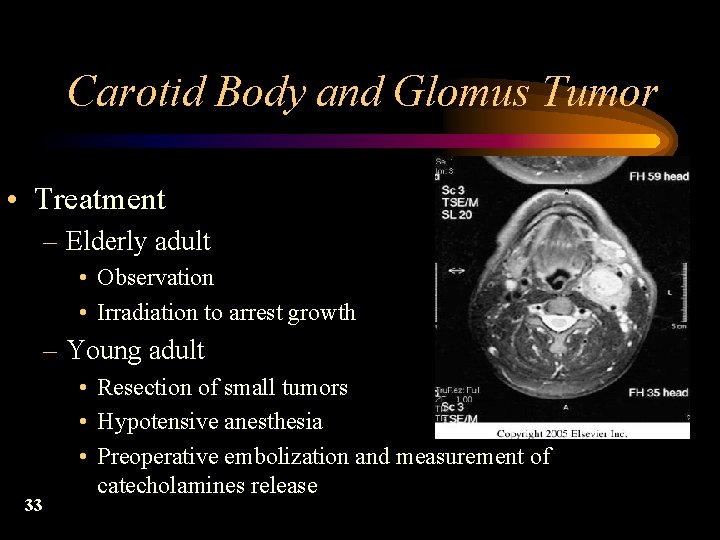
Carotid Body and Glomus Tumor • Treatment – Elderly adult • Observation • Irradiation to arrest growth – Young adult 33 • Resection of small tumors • Hypotensive anesthesia • Preoperative embolization and measurement of catecholamines release
Lipoma • Over age 35 usually • Ill-defined, soft masses • Diagnosis confirmed by excisional biopsy 34
Neurogenic Tumors • Peripheral nervous system tumors • Arise from neural crest derivatives • Include schwannomas, neurofibromas and malignant peripheral nerve sheath tumors • Increased incidence in NF syndromes • Schwannomas occur most commonly • MPNST uncommon in head and neck 35
Neurogenic Tumors • Schwannoma – Benign – Any age, but most common 20 to 50 years – Solitary, slowly enlarging, painless mass – Medial tonsillar displacement – Hoarseness (vagus nerve) – Horner’s (sympathetic chain) – Surgical excision is treatment of choice 36
Congenital and Developmental Masses • • 37 Epidermal and Sebaceous cysts Branchial Cleft Cysts Thyroglossal Duct Cysts Vascular Tumors
Epidermal and Sebaceous Cysts • Most common congenital mass • Older age group most often • Clinical diagnosis - movement and elevation of overlying skin • Excisional biopsy confirms 38
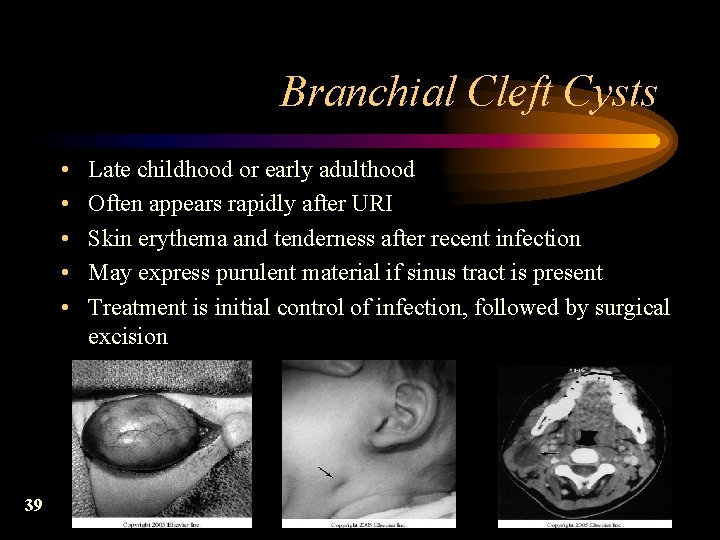
Branchial Cleft Cysts • • • 39 Late childhood or early adulthood Often appears rapidly after URI Skin erythema and tenderness after recent infection May express purulent material if sinus tract is present Treatment is initial control of infection, followed by surgical excision
Branchial Cleft Cysts • 1 st branchial cleft cyst – 2 nd most common – Inferior or angle of the mandible or below the ear lobe – Close association with facial nerve possible – Excision may require total parotidectomy and facial nerve dissection 40
Branchial Cleft Cysts • 2 nd branchial cleft cyst – Most common – Underlying SCM – Tract courses medial over 12 th nerve and between internal and external carotids • 3 rd and 4 th branchial cleft cysts – Rarely reported 41
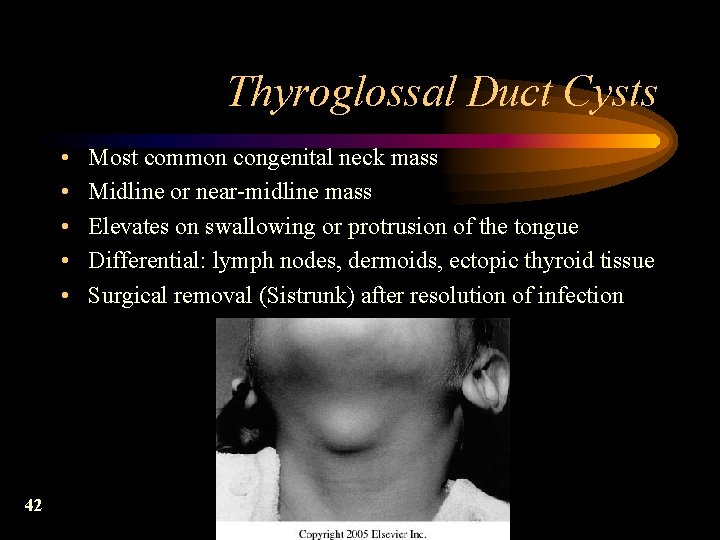
Thyroglossal Duct Cysts • • • 42 Most common congenital neck mass Midline or near-midline mass Elevates on swallowing or protrusion of the tongue Differential: lymph nodes, dermoids, ectopic thyroid tissue Surgical removal (Sistrunk) after resolution of infection
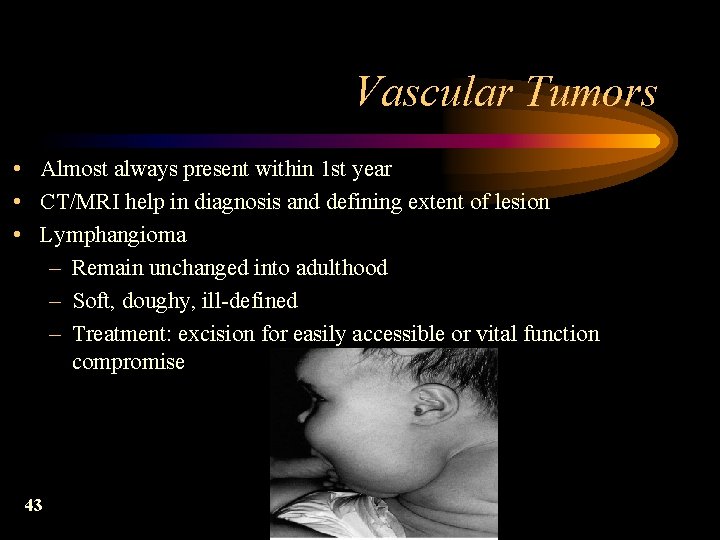
Vascular Tumors • Almost always present within 1 st year • CT/MRI help in diagnosis and defining extent of lesion • Lymphangioma – Remain unchanged into adulthood – Soft, doughy, ill-defined – Treatment: excision for easily accessible or vital function compromise 43
Vascular Tumors • Hemangiomas – Most often resolve spontaneously – Bluish, compressible – Surgical treatment • • 44 Rapid growth Associated thrombocytopenia Involvement of vital structures After failure of medical therapy
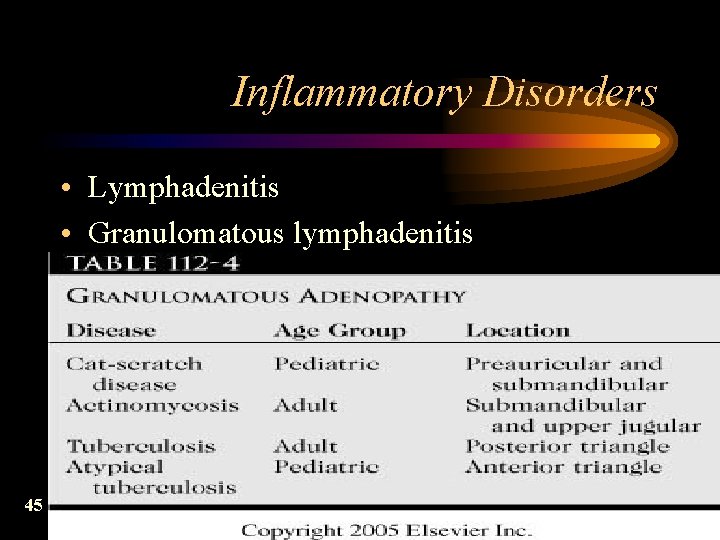
Inflammatory Disorders • Lymphadenitis • Granulomatous lymphadenitis 45
Lymphadenitis • Very common, especially during 1 st decade • Marked tenderness, torticollis, trismus, and dysphagia • Systemic signs of infection • Initial treatment - directed antibiotics • Close follow up 46
Lymphadenopathy • Failure of antibiotics necessitates biopsy after complete head and neck work-up • FNAB indications – Progressively enlarging nodes – Solitary, asymmetric nodal mass – Supraclavicular mass – Persistent nodes without infectious signs 47
Lymphadenopathy • Equivocal or suspicious FNAB in the pediatric nodal mass requires open excisional biopsy to rule out lymphoma or granulomatous disease 48
Granulomatous Lymphadenitis • • 49 Develop over weeks and months Minimal systemic complaints or findings Firm glands, fixation and injection of skin Common etiologies – Typical Mycobacterium tuberculosis (adults) – Atypical Mycobacterium tuberculosis (children) – Cat-scratch fever (Bartonella henselae) (children) – Actinomycosis, Sarcoidosis
Granulomatous Lymphadenitis • Atypical TB – Anterior triangle lymph nodes – Brawny skin, induration and pain – Usually responds to complete surgical excision • Cat-scratch fever – Preauricular or submandibular lymph nodes – Spontaneous resolution 1 -2 months 50 • Typical TB (rarely seen, posterior nodes)
Summary • • • 51 Extensive differential diagnosis Thorough work-up needed FNAB invaluable Malignancy should never be overlooked Close follow-up and aggressive pursuit of a diagnosis essential
52