
1 ELEVATIONS CHAPTER 9 2 Elevations illustrate the
- Slides: 31
1 ELEVATIONS CHAPTER 9
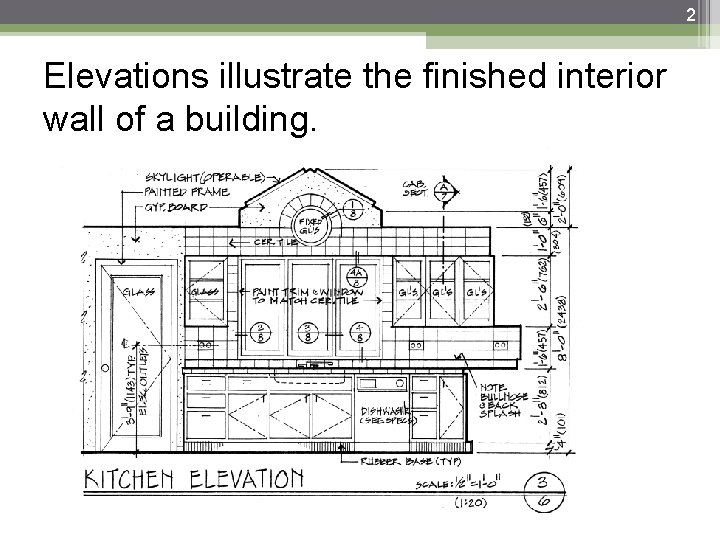
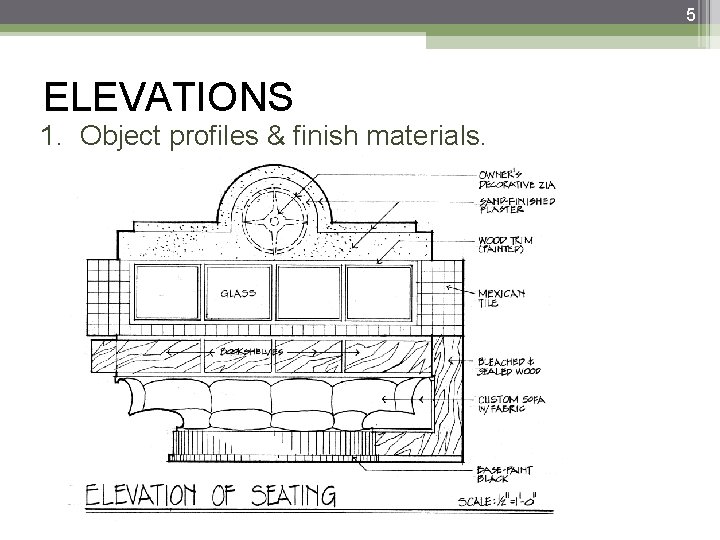
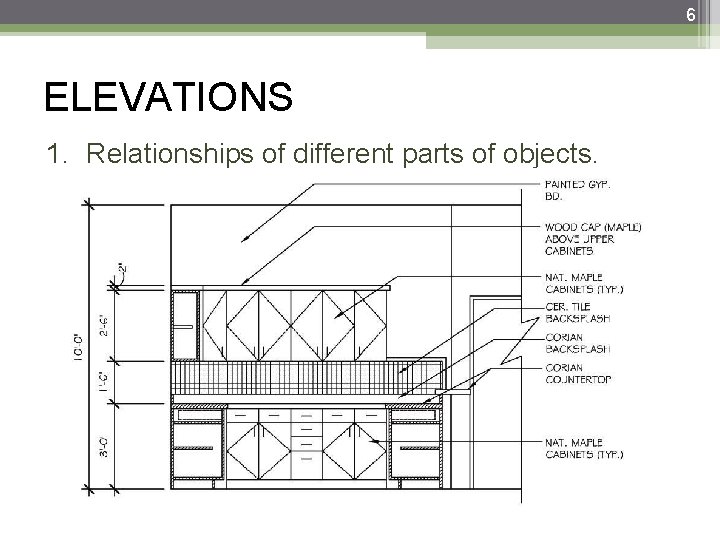
2 Elevations illustrate the finished interior wall of a building.
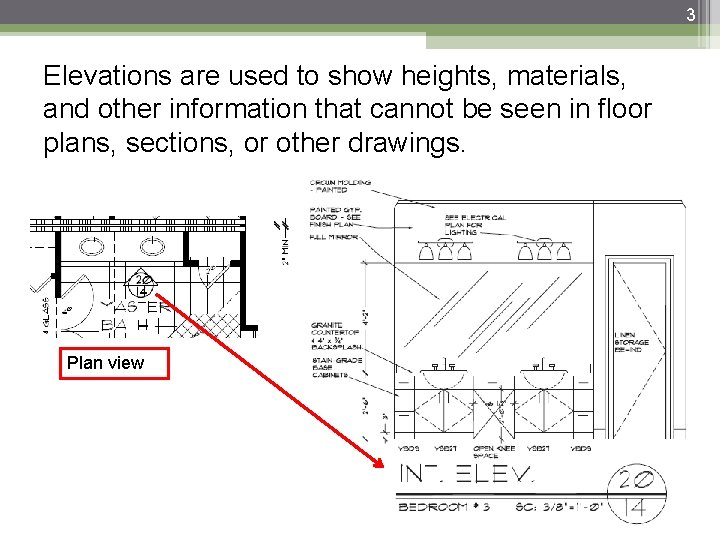
3 Elevations are used to show heights, materials, and other information that cannot be seen in floor plans, sections, or other drawings. Plan view
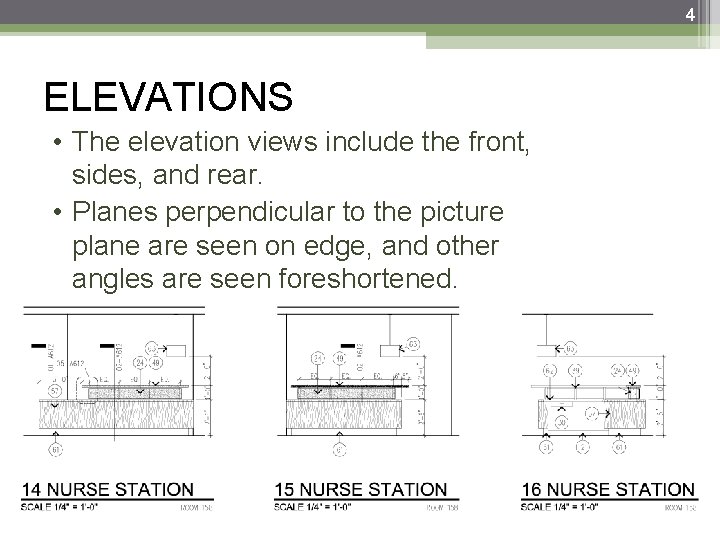
4 ELEVATIONS • The elevation views include the front, sides, and rear. • Planes perpendicular to the picture plane are seen on edge, and other angles are seen foreshortened.
5 ELEVATIONS 1. Object profiles & finish materials.
6 ELEVATIONS 1. Relationships of different parts of objects.
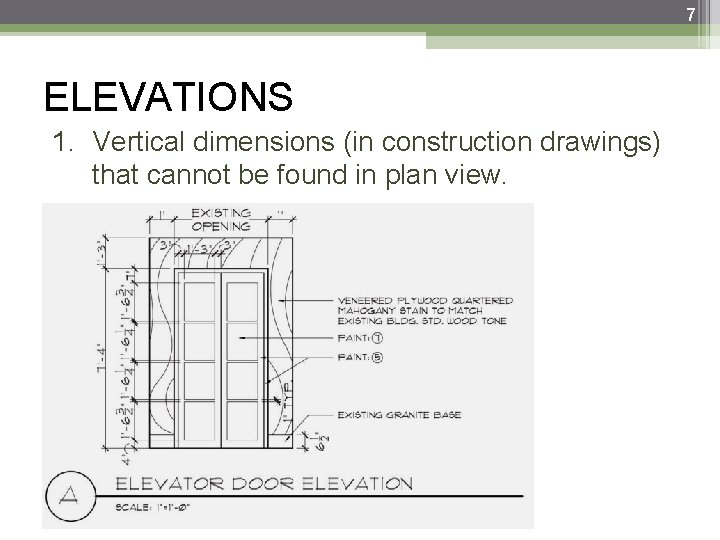
7 ELEVATIONS 1. Vertical dimensions (in construction drawings) that cannot be found in plan view.
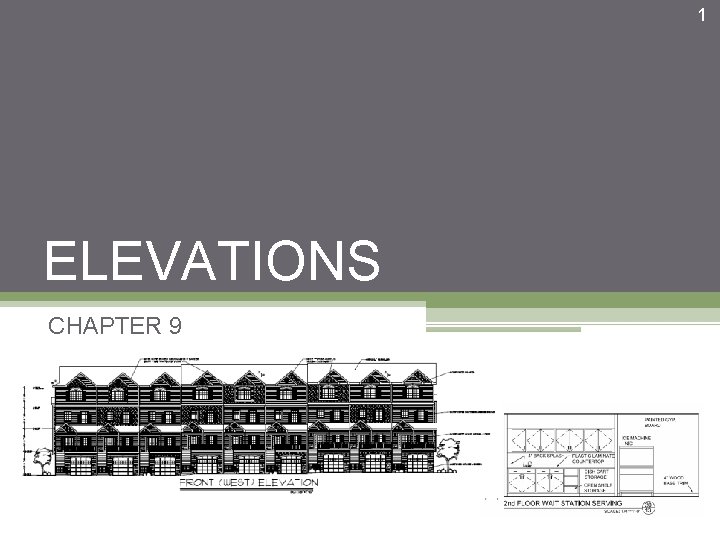
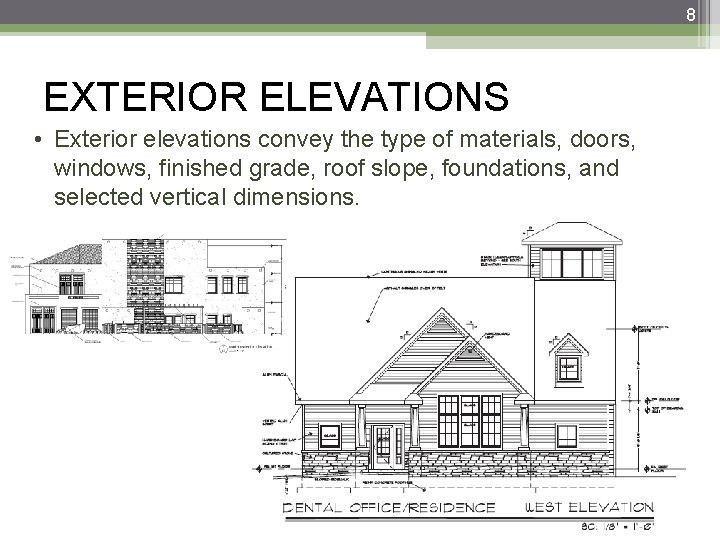
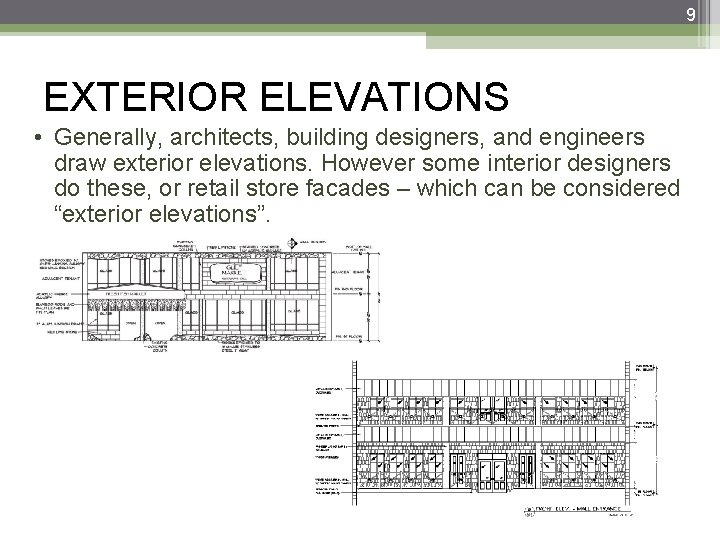
8 EXTERIOR ELEVATIONS • Exterior elevations convey the type of materials, doors, windows, finished grade, roof slope, foundations, and selected vertical dimensions.
9 EXTERIOR ELEVATIONS • Generally, architects, building designers, and engineers draw exterior elevations. However some interior designers do these, or retail store facades – which can be considered “exterior elevations”.
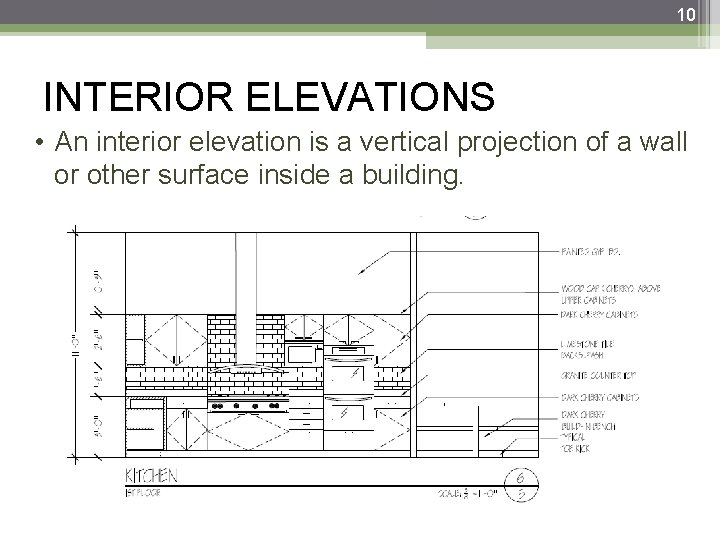
10 INTERIOR ELEVATIONS • An interior elevation is a vertical projection of a wall or other surface inside a building.
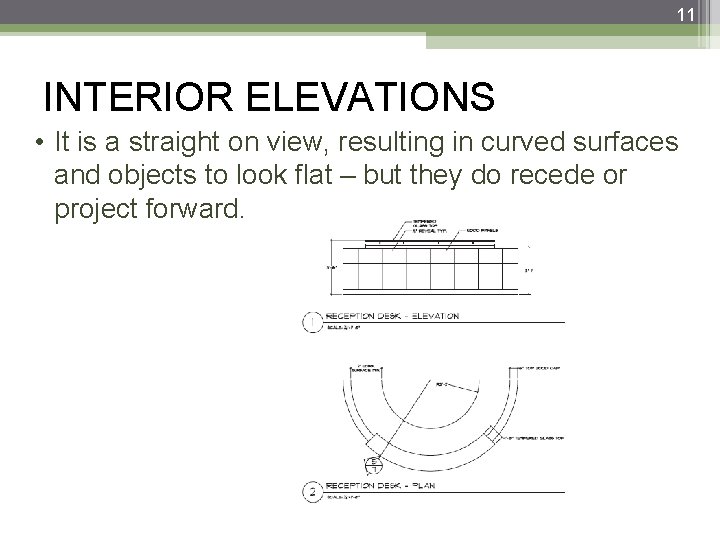
11 INTERIOR ELEVATIONS • It is a straight on view, resulting in curved surfaces and objects to look flat – but they do recede or project forward.
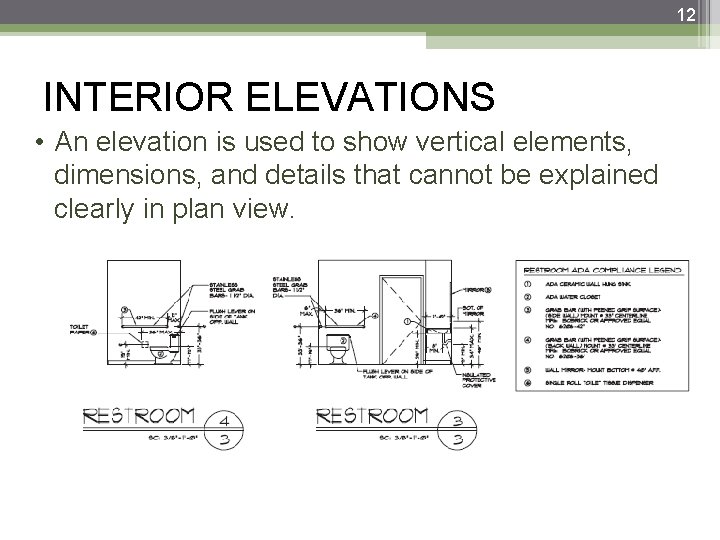
12 INTERIOR ELEVATIONS • An elevation is used to show vertical elements, dimensions, and details that cannot be explained clearly in plan view.
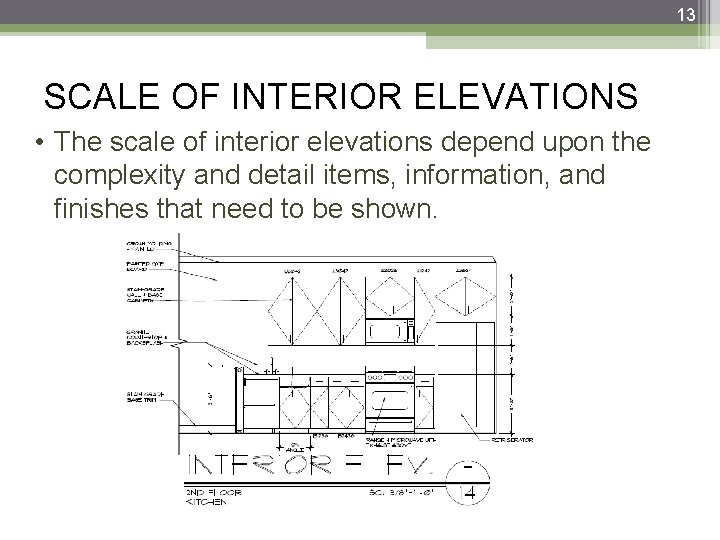
13 SCALE OF INTERIOR ELEVATIONS • The scale of interior elevations depend upon the complexity and detail items, information, and finishes that need to be shown.
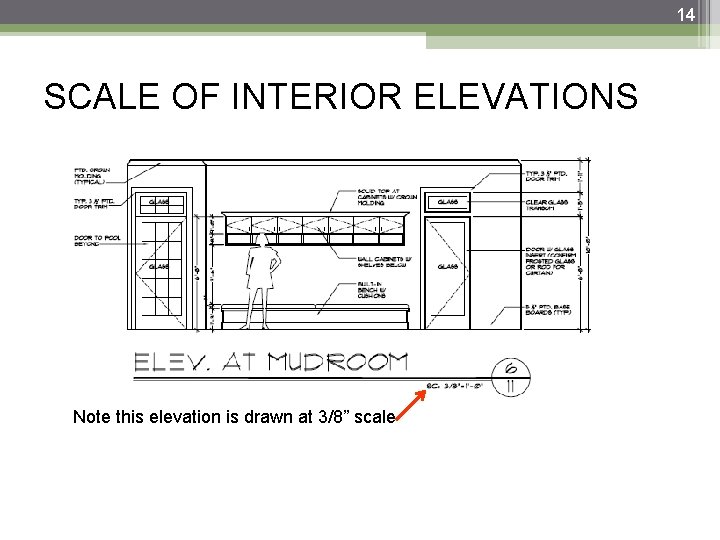
14 SCALE OF INTERIOR ELEVATIONS Note this elevation is drawn at 3/8” scale
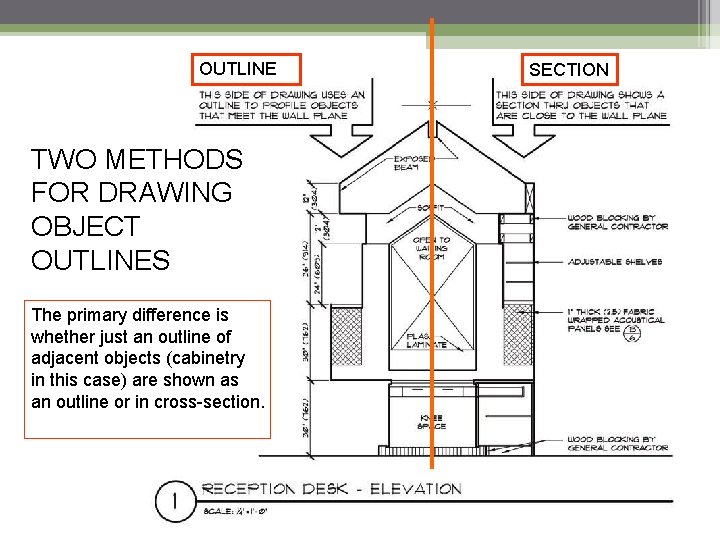
OUTLINE TWO METHODS FOR DRAWING OBJECT OUTLINES The primary difference is whether just an outline of adjacent objects (cabinetry in this case) are shown as an outline or in cross-section. SECTION
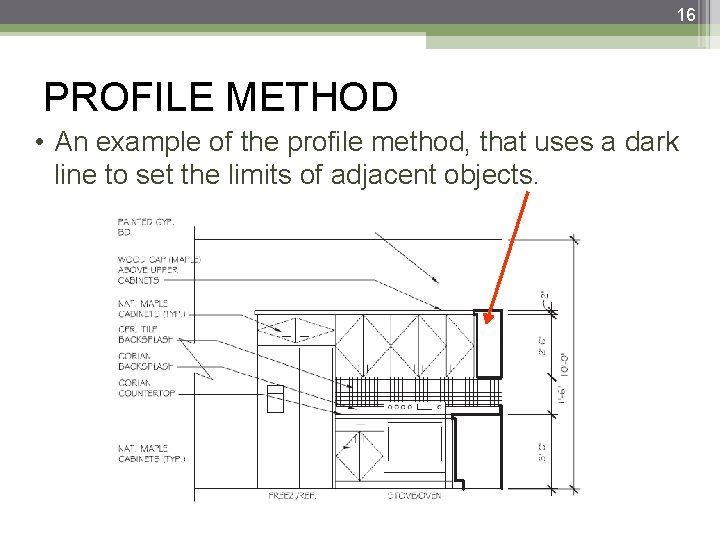
16 PROFILE METHOD • An example of the profile method, that uses a dark line to set the limits of adjacent objects.
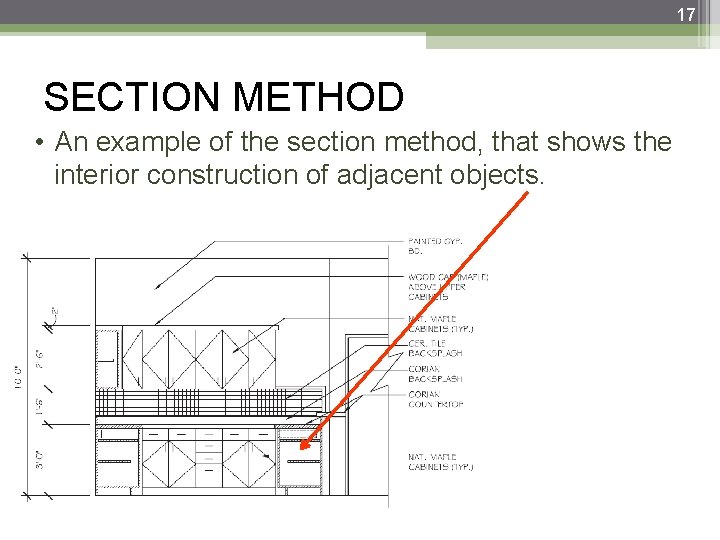
17 SECTION METHOD • An example of the section method, that shows the interior construction of adjacent objects.
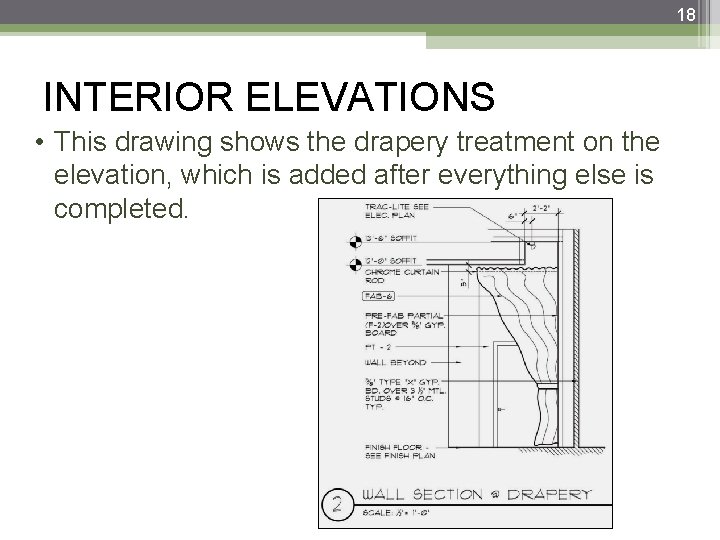
18 INTERIOR ELEVATIONS • This drawing shows the drapery treatment on the elevation, which is added after everything else is completed.
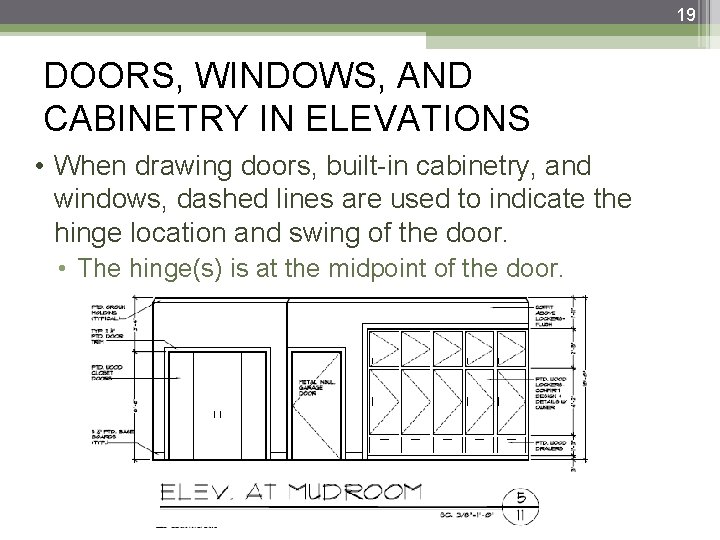
19 DOORS, WINDOWS, AND CABINETRY IN ELEVATIONS • When drawing doors, built-in cabinetry, and windows, dashed lines are used to indicate the hinge location and swing of the door. • The hinge(s) is at the midpoint of the door.
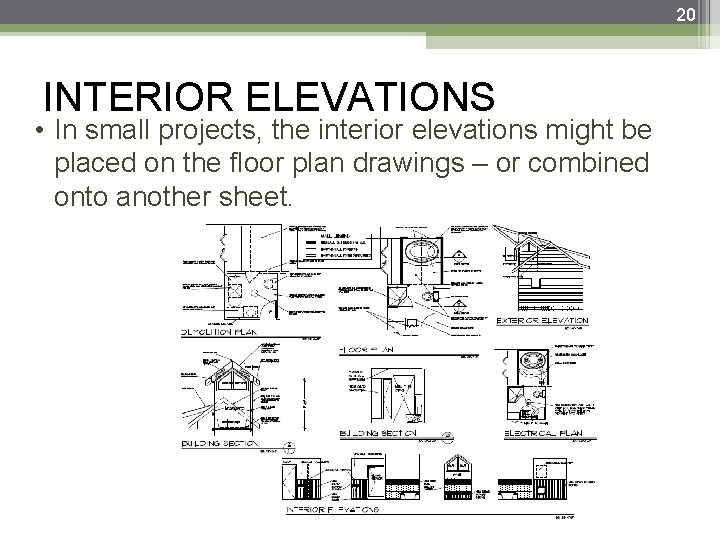
20 INTERIOR ELEVATIONS • In small projects, the interior elevations might be placed on the floor plan drawings – or combined onto another sheet.
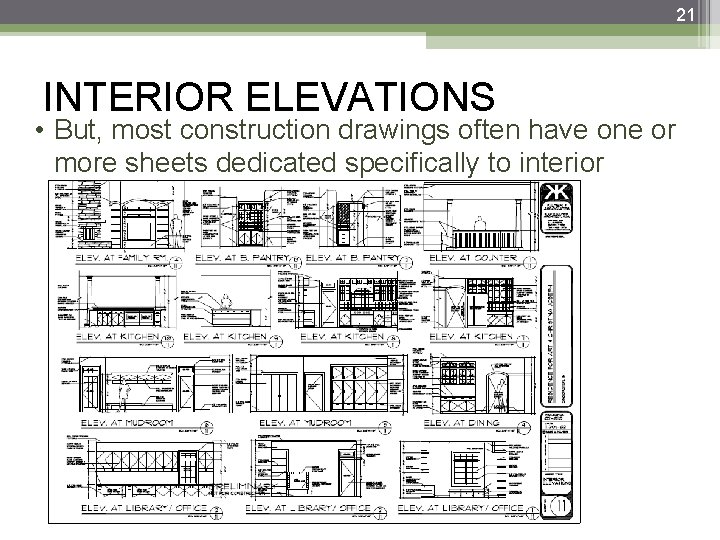
21 INTERIOR ELEVATIONS • But, most construction drawings often have one or more sheets dedicated specifically to interior elevations.
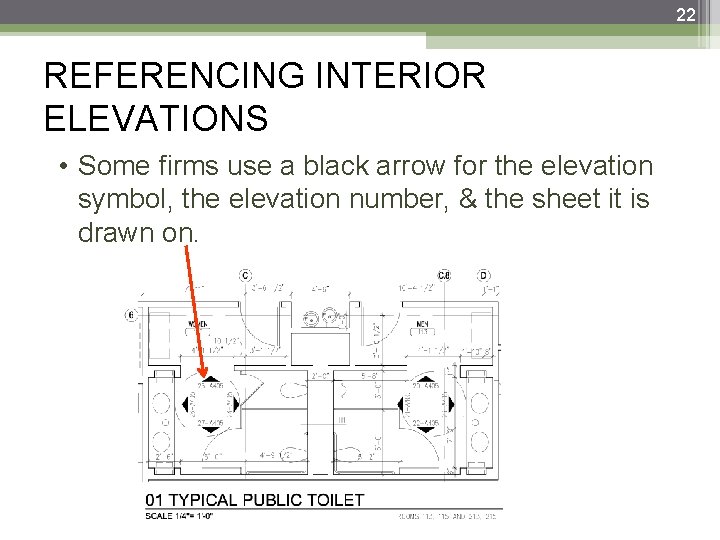
22 REFERENCING INTERIOR ELEVATIONS • Some firms use a black arrow for the elevation symbol, the elevation number, & the sheet it is drawn on.
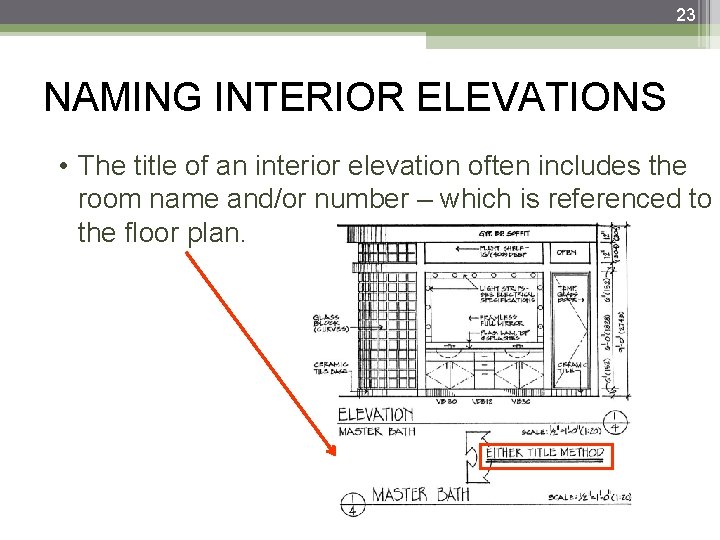
23 NAMING INTERIOR ELEVATIONS • The title of an interior elevation often includes the room name and/or number – which is referenced to the floor plan.
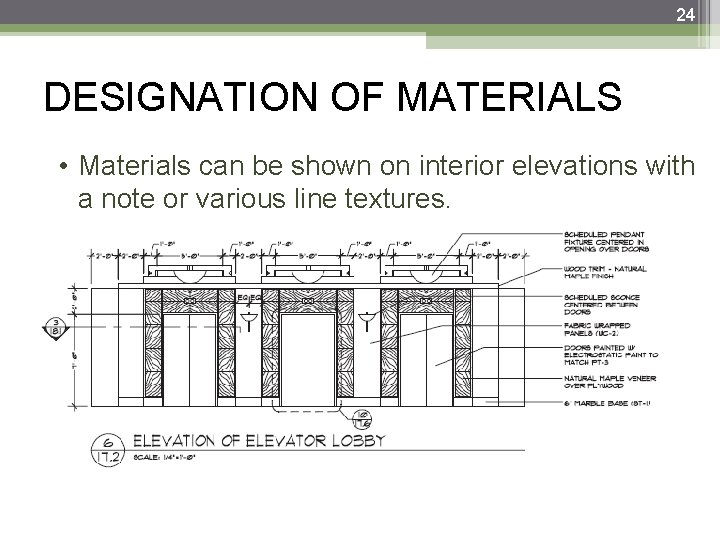
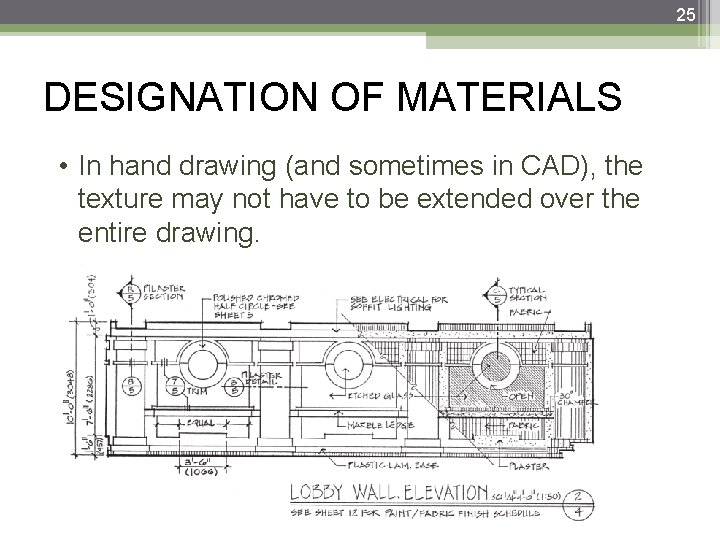
24 DESIGNATION OF MATERIALS • Materials can be shown on interior elevations with a note or various line textures.
25 DESIGNATION OF MATERIALS • In hand drawing (and sometimes in CAD), the texture may not have to be extended over the entire drawing.
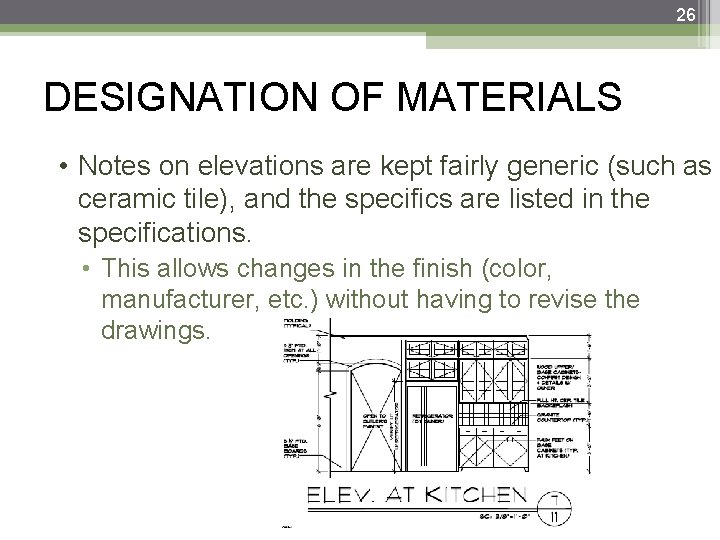
26 DESIGNATION OF MATERIALS • Notes on elevations are kept fairly generic (such as ceramic tile), and the specifics are listed in the specifications. • This allows changes in the finish (color, manufacturer, etc. ) without having to revise the drawings.
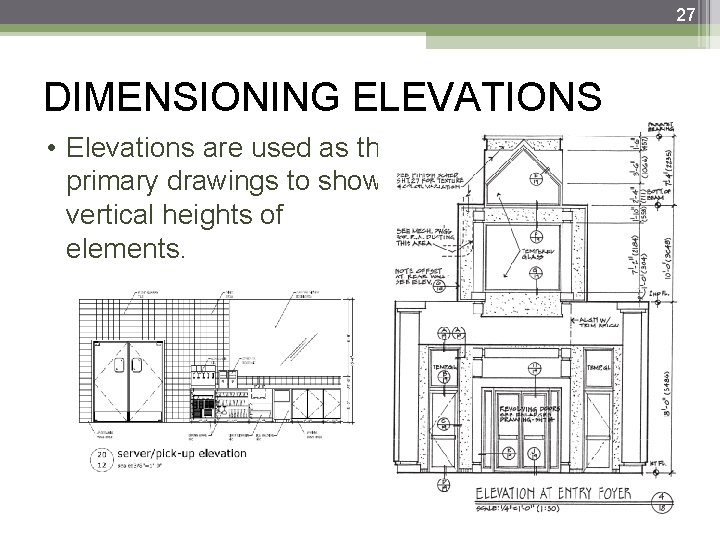
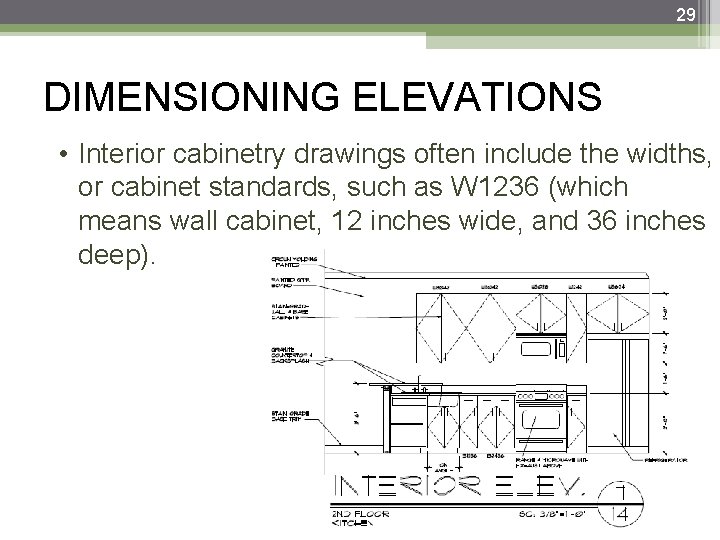
27 DIMENSIONING ELEVATIONS • Elevations are used as the primary drawings to show vertical heights of elements.
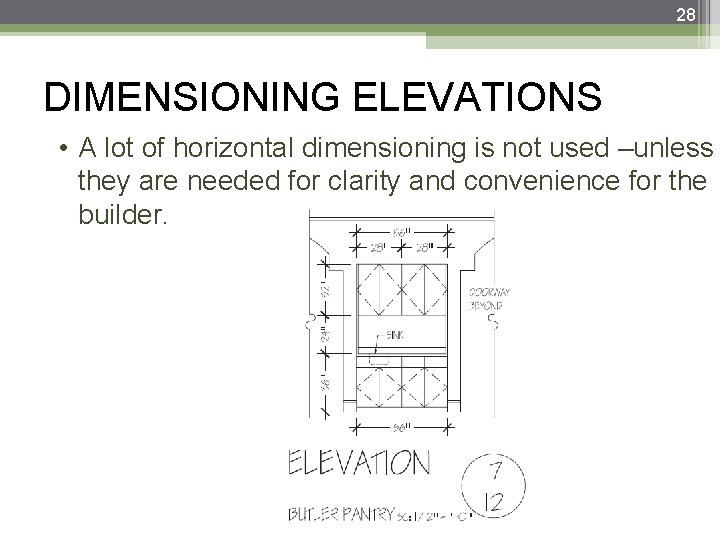
28 DIMENSIONING ELEVATIONS • A lot of horizontal dimensioning is not used –unless they are needed for clarity and convenience for the builder.
29 DIMENSIONING ELEVATIONS • Interior cabinetry drawings often include the widths, or cabinet standards, such as W 1236 (which means wall cabinet, 12 inches wide, and 36 inches deep).
31 In our projects: • Fully elevate one of each gallery type, the lobby/stairs, and the restaurant/cafe • Indicate base, trim, and note finishes on at least one wall of a typical room • Show “hidden” and partial elevations • Do not show section markers or level bullets • Fix interior linework as needed • Irregular perimeters • Perimeter lineweights: tricks