
1 Electroencephalography Definition EEG is a surface recording
- Slides: 15
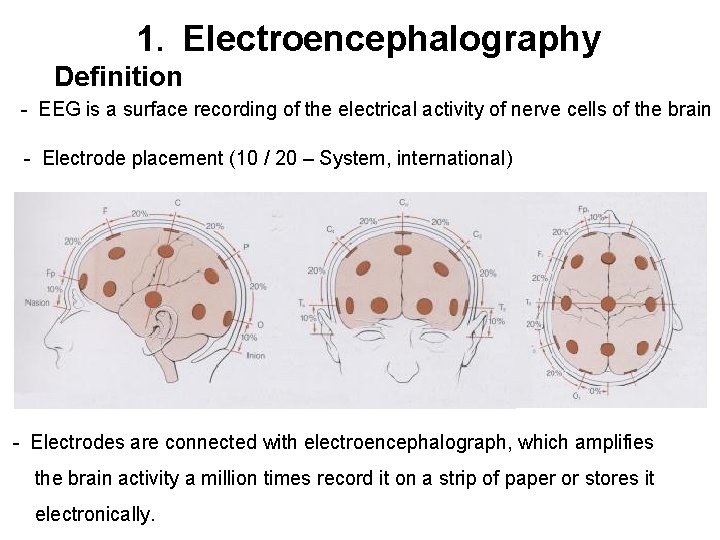
1. Electroencephalography Definition - EEG is a surface recording of the electrical activity of nerve cells of the brain - Electrode placement (10 / 20 – System, international) - Electrodes are connected with electroencephalograph, which amplifies the brain activity a million times record it on a strip of paper or stores it electronically.
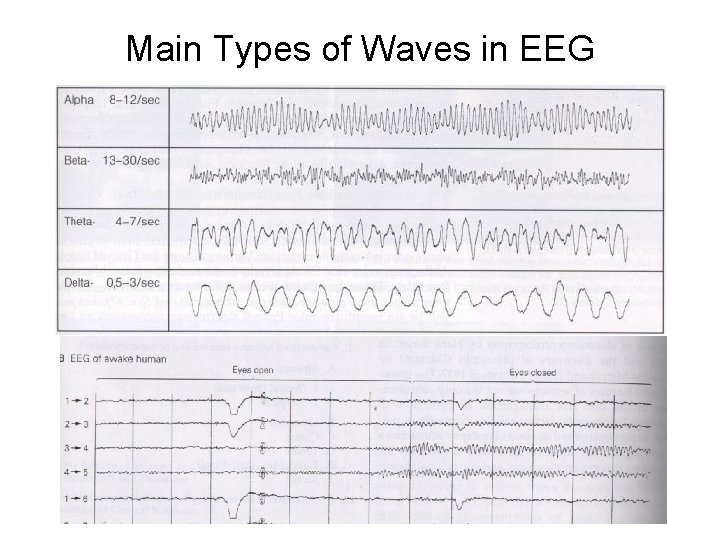
Main Types of Waves in EEG
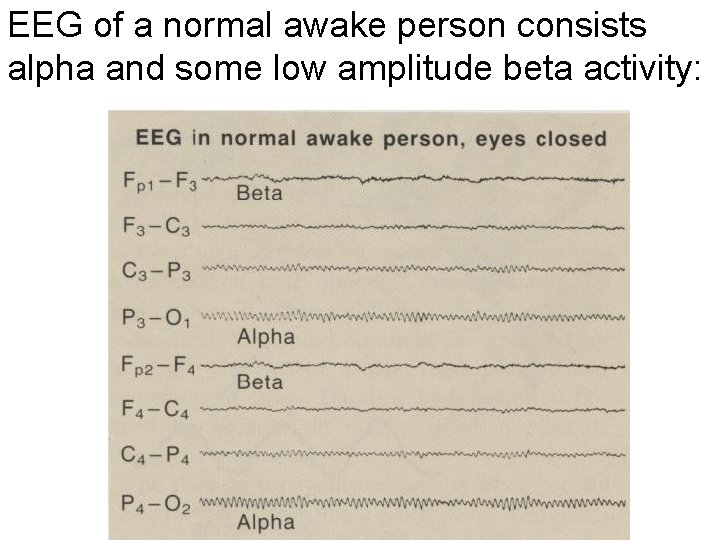
EEG of a normal awake person consists alpha and some low amplitude beta activity:
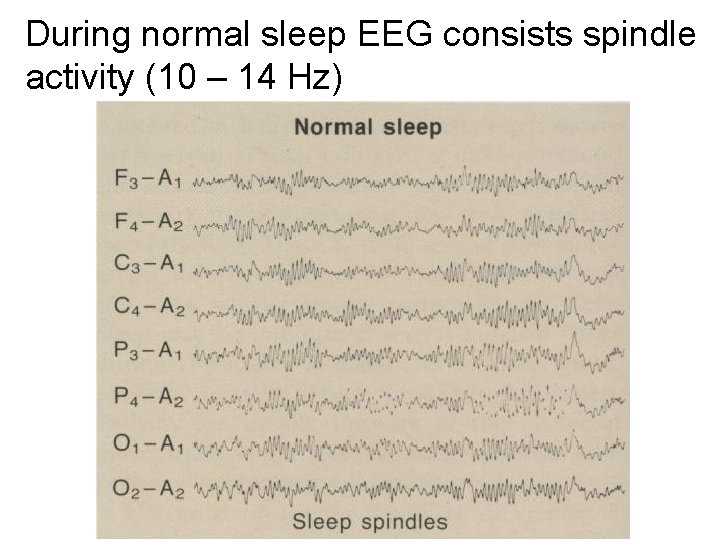
During normal sleep EEG consists spindle activity (10 – 14 Hz)
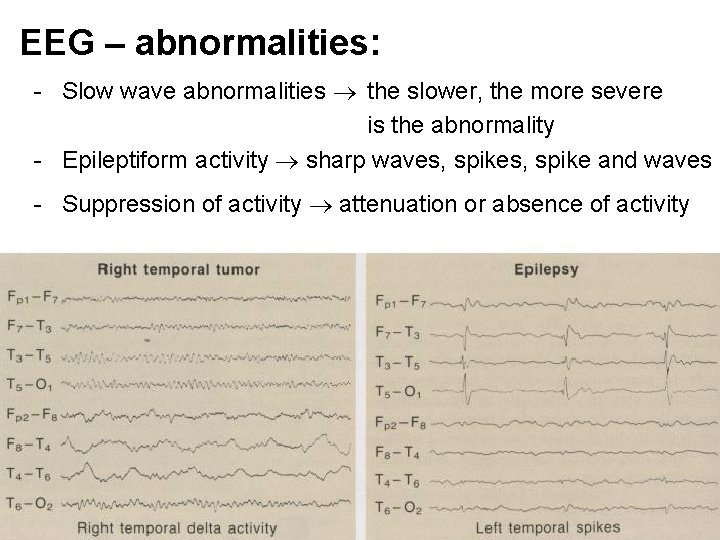
EEG – abnormalities: - Slow wave abnormalities the slower, the more severe is the abnormality - Epileptiform activity sharp waves, spike and waves - Suppression of activity attenuation or absence of activity
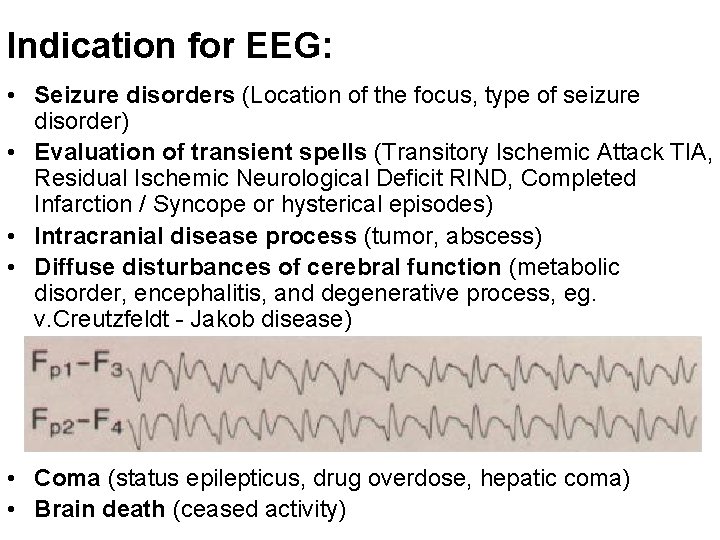
Indication for EEG: • Seizure disorders (Location of the focus, type of seizure disorder) • Evaluation of transient spells (Transitory Ischemic Attack TIA, Residual Ischemic Neurological Deficit RIND, Completed Infarction / Syncope or hysterical episodes) • Intracranial disease process (tumor, abscess) • Diffuse disturbances of cerebral function (metabolic disorder, encephalitis, and degenerative process, eg. v. Creutzfeldt - Jakob disease) • Coma (status epilepticus, drug overdose, hepatic coma) • Brain death (ceased activity)
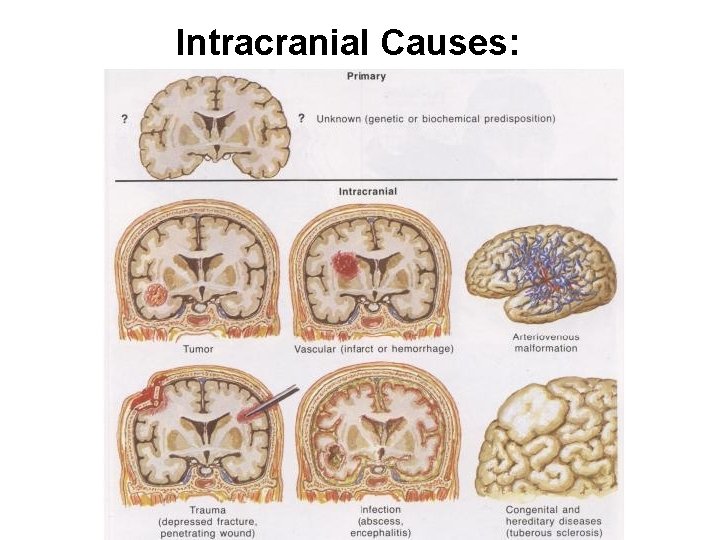
Intracranial Causes:
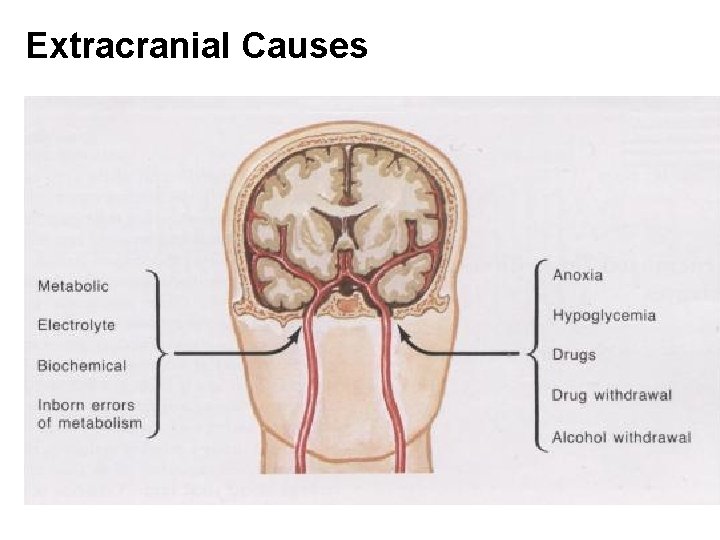
Extracranial Causes
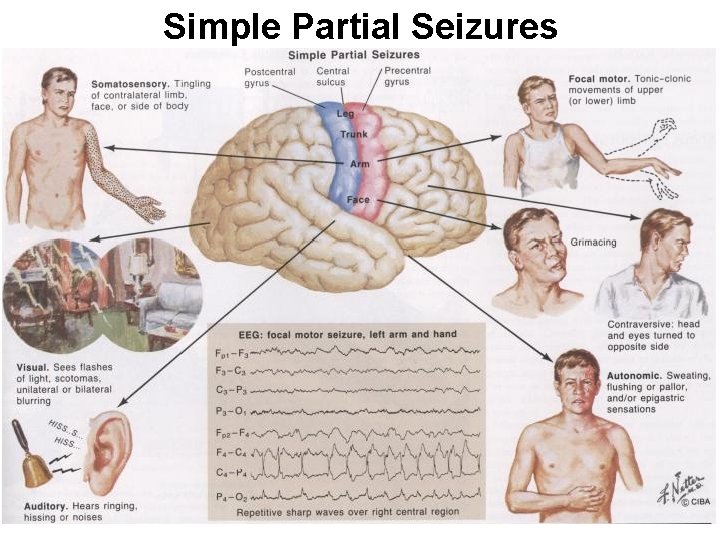
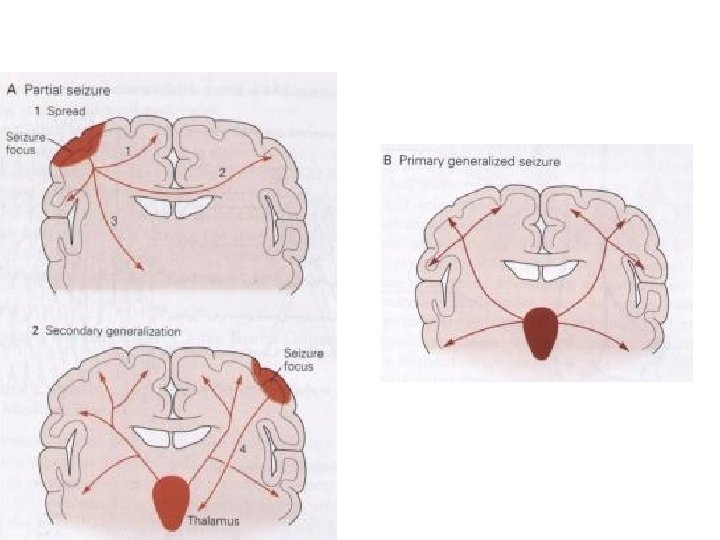
Simple Partial Seizures
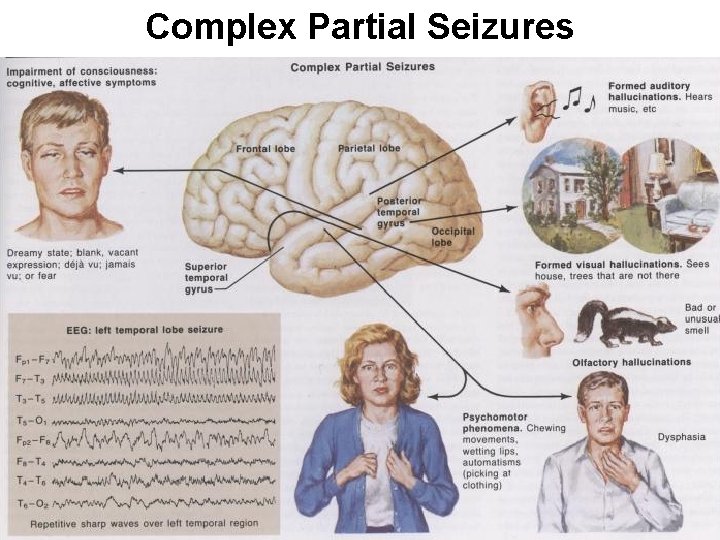
Complex Partial Seizures
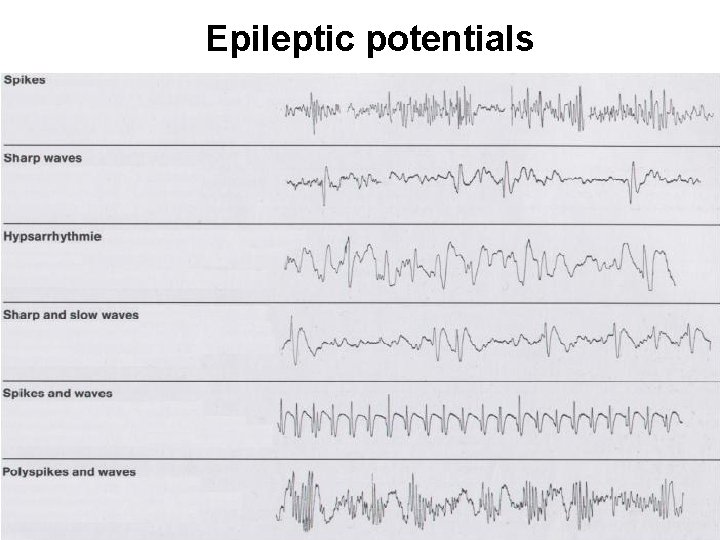
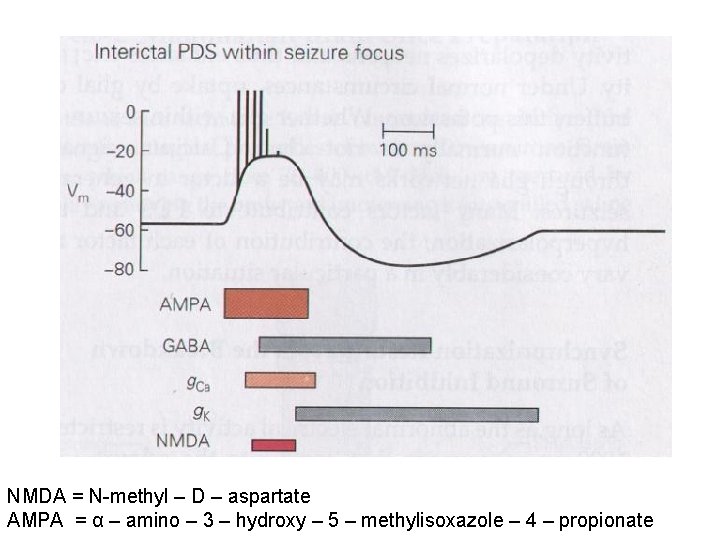
Epileptic potentials
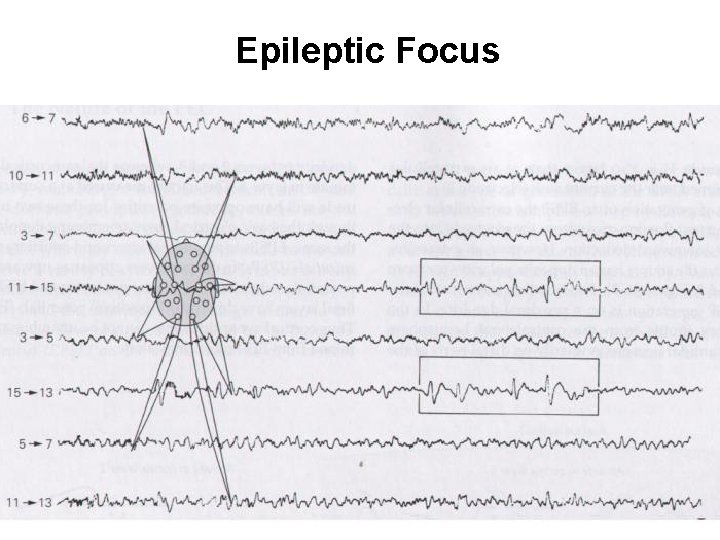
Epileptic Focus
NMDA = N-methyl – D – aspartate AMPA = α – amino – 3 – hydroxy – 5 – methylisoxazole – 4 – propionate