
1 Eating Disorders The obesity epidemic tends to
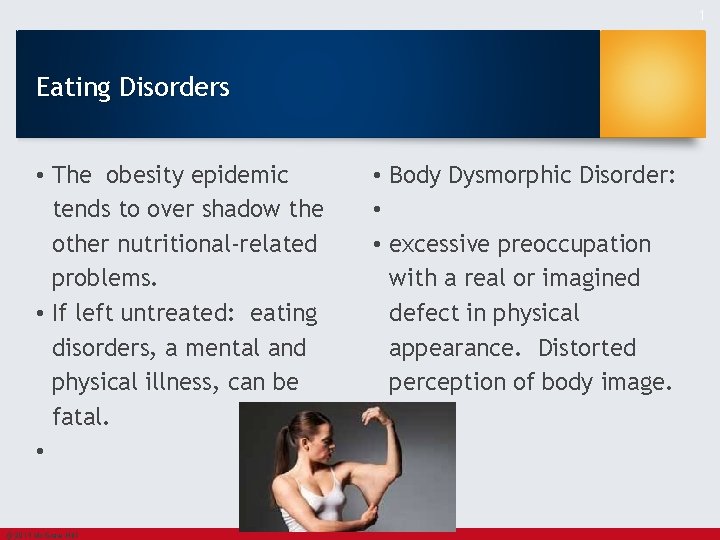
1 Eating Disorders • The obesity epidemic tends to over shadow the other nutritional-related problems. • If left untreated: eating disorders, a mental and physical illness, can be fatal. • © 2019 Mc. Graw-Hill • Body Dysmorphic Disorder: • • excessive preoccupation with a real or imagined defect in physical appearance. Distorted perception of body image.
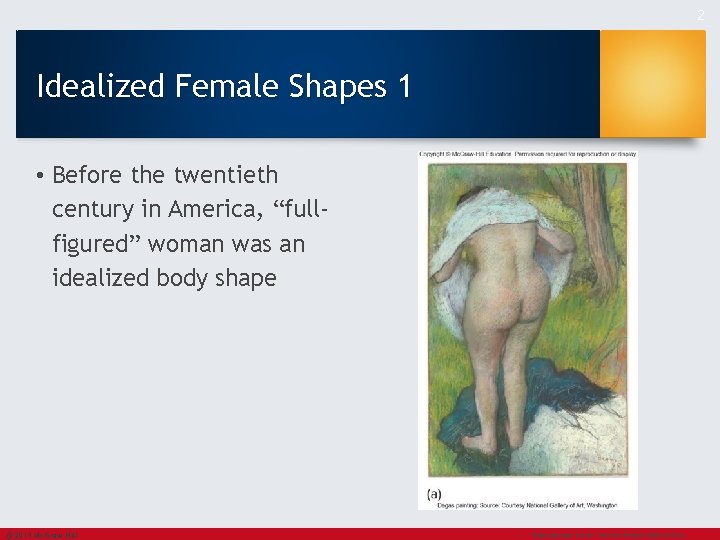
2 Idealized Female Shapes 1 • Before the twentieth century in America, “fullfigured” woman was an idealized body shape © 2019 Mc. Graw-Hill • Degas painting: Source: Courtesy National Gallery of Art,
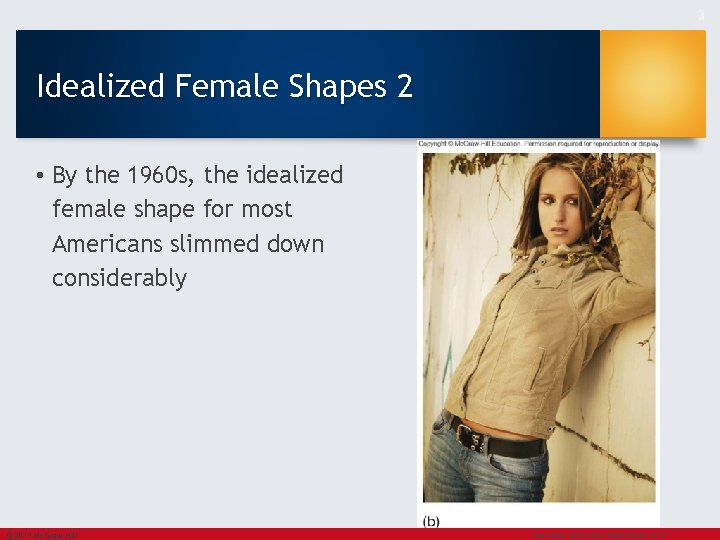
3 Idealized Female Shapes 2 • By the 1960 s, the idealized female shape for most Americans slimmed down considerably © 2019 Mc. Graw-Hill • Slim woman: ©Kristy-Anne Glubish/Design Pics RF
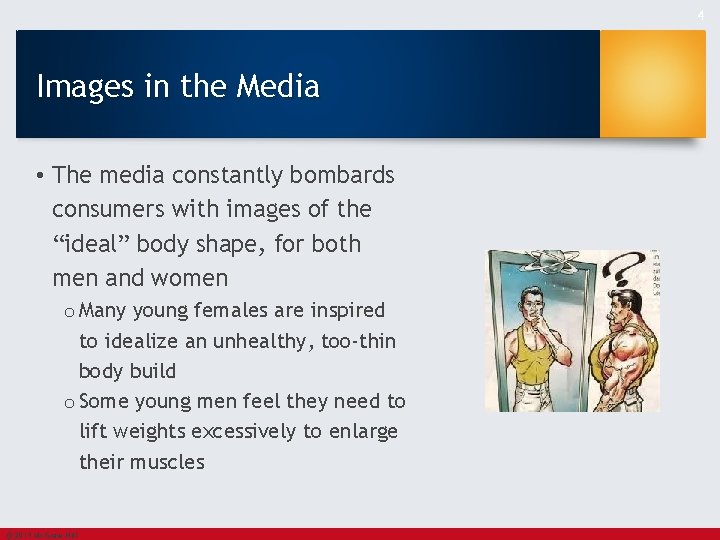
4 Images in the Media • The media constantly bombards consumers with images of the “ideal” body shape, for both men and women o Many young females are inspired to idealize an unhealthy, too-thin body build o Some young men feel they need to lift weights excessively to enlarge their muscles © 2019 Mc. Graw-Hill
5 Eating Disorders versus Disordered Eating • Eating disorders are psychological disturbances that lead to certain physiological changes and serious health complications • Disordered eating refers to chaotic and abnormal foodrelated practices such as skipping meals, limiting food choices, following fad diets, and binge eating © 2019 Mc. Graw-Hill
6 Major Types of Eating Disorders • The Diagnostic and Statistical Manual of Mental Disorders (DSM-5) lists three main types of eating disorders: o Anorexia nervosa (AN) o Bulimia nervosa (BN) o Binge-eating disorder (BED) © 2019 Mc. Graw-Hill
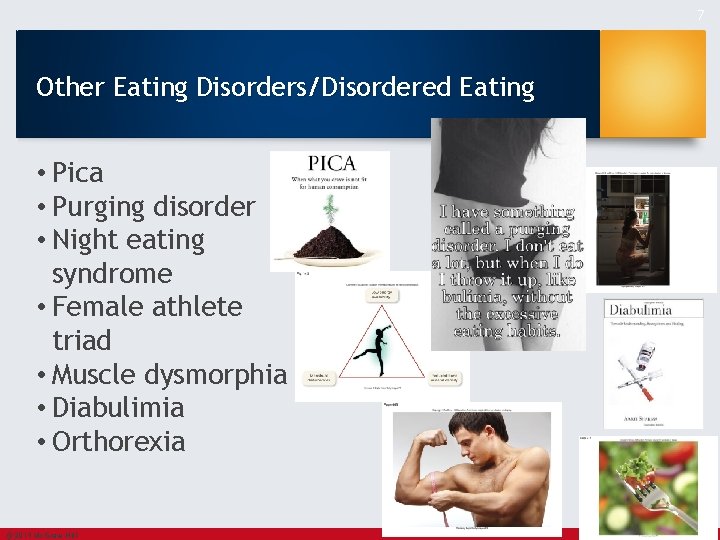
7 Other Eating Disorders/Disordered Eating • Pica • Purging disorder • Night eating syndrome • Female athlete triad • Muscle dysmorphia • Diabulimia • Orthorexia © 2019 Mc. Graw-Hill
8 Risk Factors for Eating Disorders • • • Being female Being an adolescent (AN and BN) Having a history of frequent dieting Having a first-degree relative with an eating disorder Placing a high degree of importance on having an “ideal” body shape Being dissatisfied with one’s body shape Having a poor self-image and low self-esteem Having a perfectionist personality Being from a dysfunctional family Being in an occupation or sport that emphasizes a lean body build © 2019 Mc. Graw-Hill
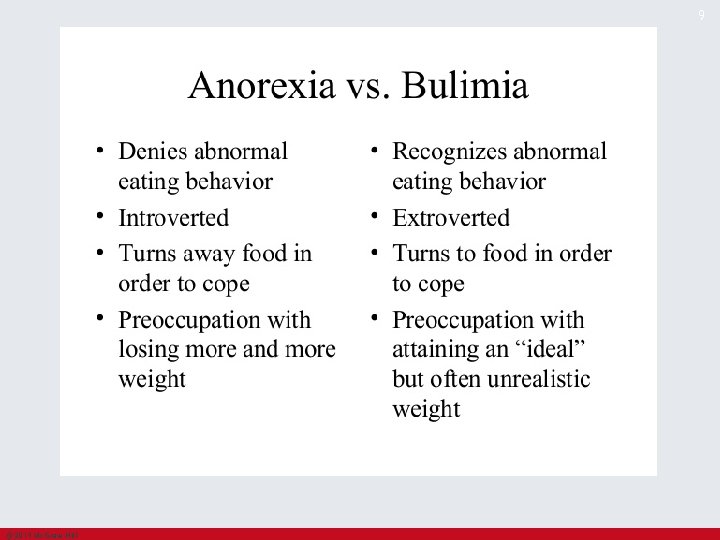
9 © 2019 Mc. Graw-Hill
10 Anorexia Nervosa • Anorexia nervosa (AN) is a severe psychological disturbance characterized by self-imposed starvation • Emaciation refers to very low body weight • Males may develop AN, but females comprise considerably more cases © 2019 Mc. Graw-Hill
11 Signs and Symptoms of Anorexia Nervosa 1 • People with AN have distorted body images and severely restrict their food intake o Rapid weight loss o Maintenance of unhealthy low body weight • Some forms of AN involve bingeing and purging behaviors • Purging includes activities that remove calories from the body (e. g. , self-induced vomiting) or increase calorie output by performing more physical activity than is necessary for optimal health © 2019 Mc. Graw-Hill
12 Signs and Symptoms of Anorexia Nervosa 2 • Because people with AN are so thin, they lack adequate amounts of subcutaneous fat o Decreased insulation o Trouble maintaining body temperature • People who have AN often display signs and symptoms of other psychological illnesses o Depression o Bipolar disorder o Anxiety disorder o Obsessive compulsive disorders © 2019 Mc. Graw-Hill
13 Common Physiological Consequences of Anorexia Nervosa • Weakened immune system • Dehydration • Slow heart rate • Hypotension (low blood pressure) • Low bone mineral density • Muscle wasting and weakness • Lanugo - widespread, white, delicate, and dense hair • Cold intolerance • Low thyroid hormone • Decreased metabolic rate • menarche or amenorrhea © 2019 Mc. Graw-Hill
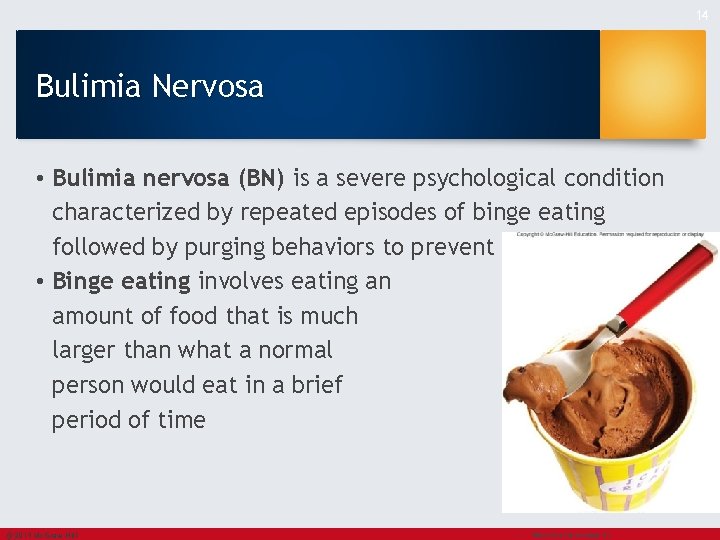
14 Bulimia Nervosa • Bulimia nervosa (BN) is a severe psychological condition characterized by repeated episodes of binge eating followed by purging behaviors to prevent weight gain • Binge eating involves eating an amount of food that is much larger than what a normal person would eat in a brief period of time © 2019 Mc. Graw-Hill • ©Alex Caro/Getty Images RF
15 Signs and Symptoms of Bulimia Nervosa • Individuals with BN often: o Have BMIs in normal or overweight range o Are ashamed of their food-related behaviors o Attempt to conceal their binge-purge practices o Induce vomiting by thrusting fingers deep into their mouths o Have erosion of enamel on the surfaces of their teeth © 2019 Mc. Graw-Hill
16 Bulimia Nervosa Health Risks • Several psychological disorders are associated with BN: o Low self-esteem o Bipolar disorder o Depressive disorders o Personality disorders • Some people with BN also abuse alcohol or other mind-altering drugs • The rapid loss of electrolytes and fluid due to self-induced vomiting and diuretic abuse can cause hypokalemia o Low blood levels of potassium that can cause serious cardiac arrhythmias and skeletal muscle damage © 2019 Mc. Graw-Hill
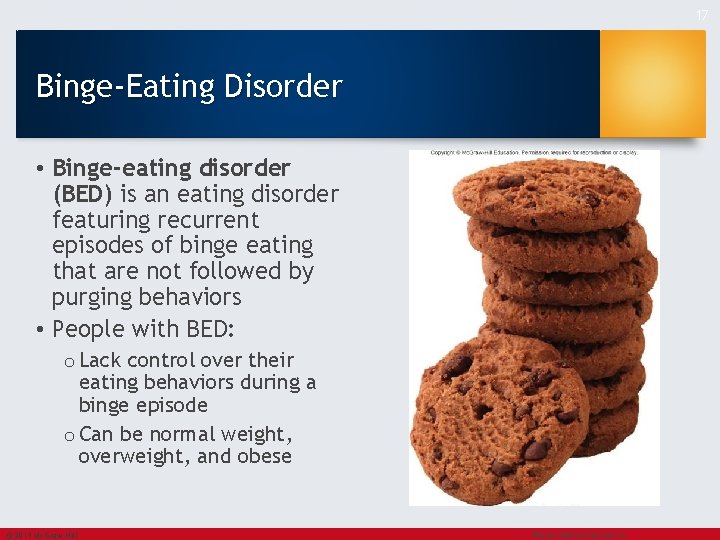
17 Binge-Eating Disorder • Binge-eating disorder (BED) is an eating disorder featuring recurrent episodes of binge eating that are not followed by purging behaviors • People with BED: o Lack control over their eating behaviors during a binge episode o Can be normal weight, overweight, and obese © 2019 Mc. Graw-Hill • ©Ingram Publishing/Super. Stock RF
18 Common Signs and Symptoms of Binge-Eating Disorder • Is extremely distressed over the binge-eating behavior • Eats large amounts of food when not hungry • Eats more rapidly than normal and until uncomfortably full • Eats alone because of feeling embarrassed by how much is consumed • Feels depressed, guilty, or disgusted with him- or herself after the binge • Binge eats, on average, at least once a week for 3 months © 2019 Mc. Graw-Hill

19 Psychological Disorders Associated with Binge-Eating Disorder • People with BED often have other psychological disorders: o Bipolar disorder o Depressive disorder o Anxiety disorder o Substance use disorders © 2019 Mc. Graw-Hill
20 Binge-Eating Disorder Triggers • Stressful events and feelings can trigger a binge: o Loneliness o Anxiety o Depression o Anger o Isolation o Frustration © 2019 Mc. Graw-Hill
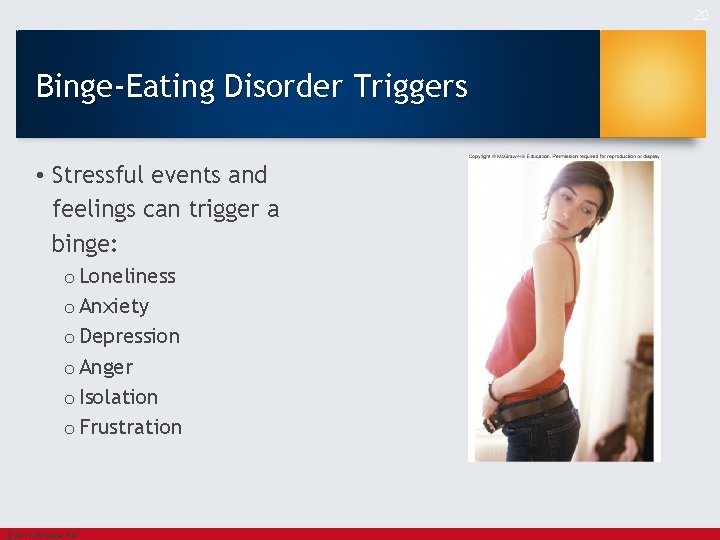
21 Feelings After Bingeing • While binging, the person feels better, but after the episode of overeating they usually feel: o Depressed o Ashamed o Guilty o Disgusted © 2019 Mc. Graw-Hill
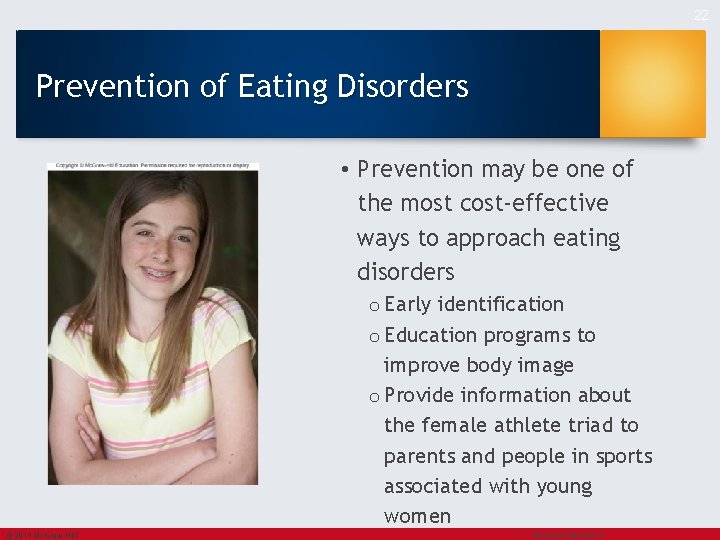
22 Prevention of Eating Disorders • Prevention may be one of the most cost-effective ways to approach eating disorders o Early identification o Education programs to improve body image o Provide information about the female athlete triad to parents and people in sports associated with young women © 2019 Mc. Graw-Hill • ©Purestock/Super. Stock RF
23 Treatment of Eating Disorders • Treatment of eating disorders requires professional help from a multidisciplinary group of experts: o Nutrition o Mental health o Medicine © 2019 Mc. Graw-Hill
24 Treatment Settings and Approaches • Treatment for eating disorders can occur in several settings: o Inpatient hospitalization o Residential care o Outpatient care § Group or family counseling o Support groups © 2019 Mc. Graw-Hill
25 Cognitive Behavioral Therapy • Cognitive behavioral therapy (CBT) - psychological treatment approaches that addresses unhealthy behavior by challenging current beliefs and replacing them with more realistic thoughts © 2019 Mc. Graw-Hill
26 Other Therapies • Dialectical behavioral therapy (DBT) - form of psychotherapy that strives to improve skills used to manage stress, anxiety, or feelings of inadequacy • Phototherapy - exposure to certain wavelengths of light by use of a specific lamp for prescribed amounts of time © 2019 Mc. Graw-Hill
27 Challenges to Recovery • A person with AN or BN may deny that there is a problem and resist treatment • Treatment is most effective when the patient is ready to make changes • AN becomes chronic in about 20% of cases • 60% of persons with bulimia nervosa improve with treatment © 2019 Mc. Graw-Hill
28 References • Byrd-Bredbenner, C. , Moe, G. , Berning, J. & Kelley, D. (2019). Wardlaw’s Perspectives in Nutrition. 11 th ed. Mc. Graw-Hill: New York. • Dudek, S. (2014). Nutrition Essentials for Nursing Practice. 7 th ed. Wolters Kluwer/Lippincott Williams & Wilkins: Philadelphia. • Smith, A. , Collene. , & Spees C. (2019). Wardlaw’s Contemporary Nutrition. 11 th ed. Mc. Graw-Hill: New York. • Stephenson, T. , & Schiff, W. (2019). Human Nutrition 2 nd ed. Mc. Graw-Hill: New York. © 2019 Mc. Graw-Hill
- Slides: 28