
1 DRUGS AFFECTING UTERINE MUSCLE CONTRACTILITY DRUGS PRODUCING


- Slides: 40
1 -DRUGS AFFECTING UTERINE MUSCLE CONTRACTILITY
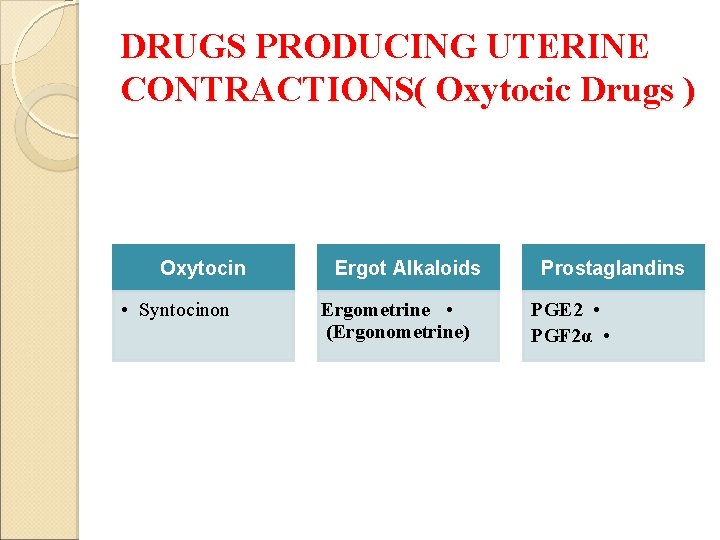
DRUGS PRODUCING UTERINE CONTRACTIONS( Oxytocic Drugs ) Oxytocin • Syntocinon Ergot Alkaloids Ergometrine • (Ergonometrine) Prostaglandins PGE 2 • PGF 2α •
OXYTOCIN (Syntocinon ) R Synthesis It is a posterior pituitary hormone secreted by the posterior pituitary gland, which is originally synthesized by the hypothalamus. Oxytocin secretion occurs by sensory stimulation from areas of the cervix , vagina , and by suckling at the breast.
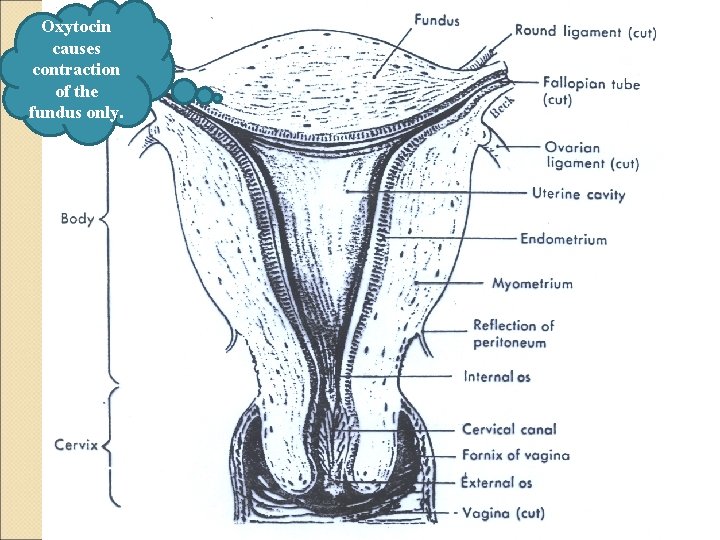
Oxytocin causes contraction of the fundus only.
Pharmacokinetics of oxytocin Absorption, Metabolism and Excretion Not effective orally Administered intravenously* Also as nasal spray (to improve milk ejection, 2 -3 minutes before breast feeding) Not bound to plasma proteins Catabolized by liver & kidneys Half life = 5 minutes *S. C or IM difficult to monitor
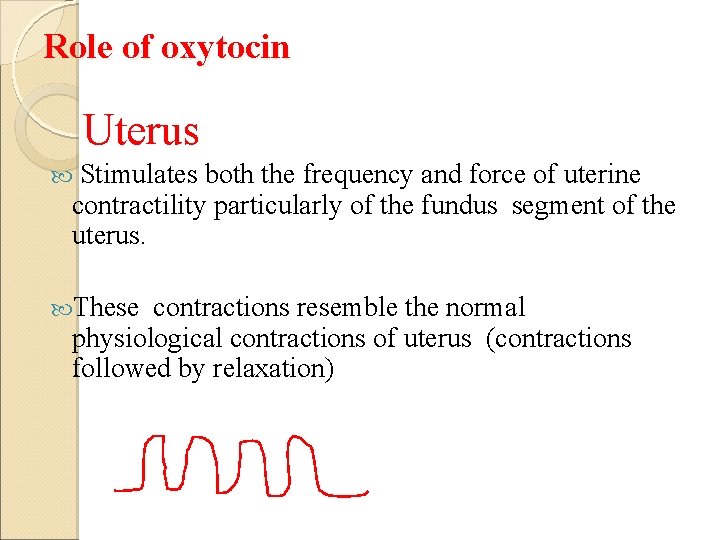
Role of oxytocin Uterus Stimulates both the frequency and force of uterine contractility particularly of the fundus segment of the uterus. These contractions resemble the normal physiological contractions of uterus (contractions followed by relaxation)
Immature uterus is resistant to oxytocin. Causes the contraction of at-term uterine smooth muscles only. Sensitivity increases to 8 fold in the last 9 weeks and 30 times in early labor. Clinically oxytocin is given only when uterine cervix is soft and dilated. see next slide
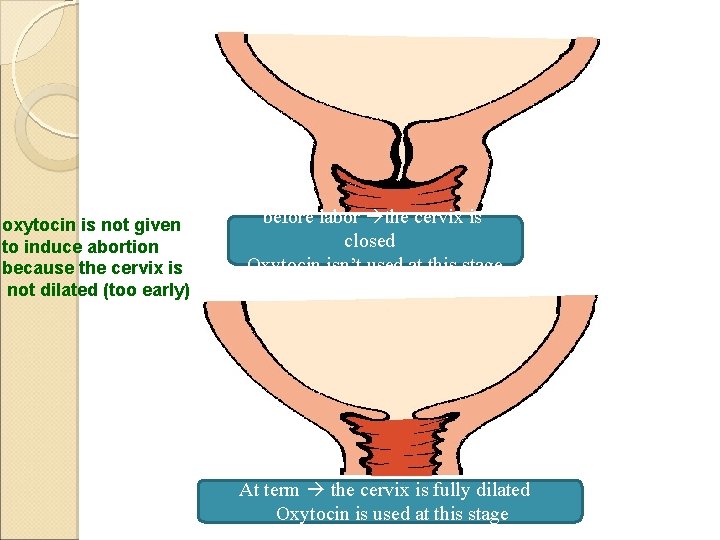
oxytocin is not given to induce abortion because the cervix is not dilated (too early) before labor the cervix is closed Oxytocin isn’t used at this stage At term the cervix is fully dilated Oxytocin is used at this stage
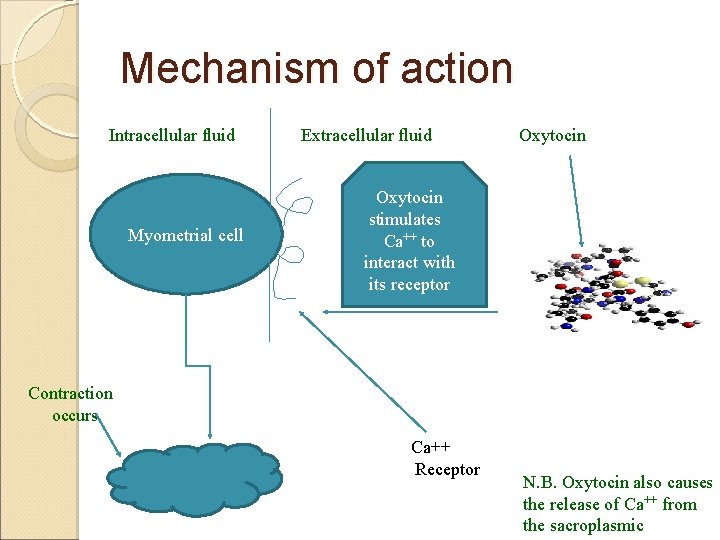
Mechanism of action Intracellular fluid Myometrial cell Extracellular fluid Oxytocin stimulates Ca++ to interact with its receptor Contraction occurs Ca++ Receptor N. B. Oxytocin also causes the release of Ca++ from the sacroplasmic
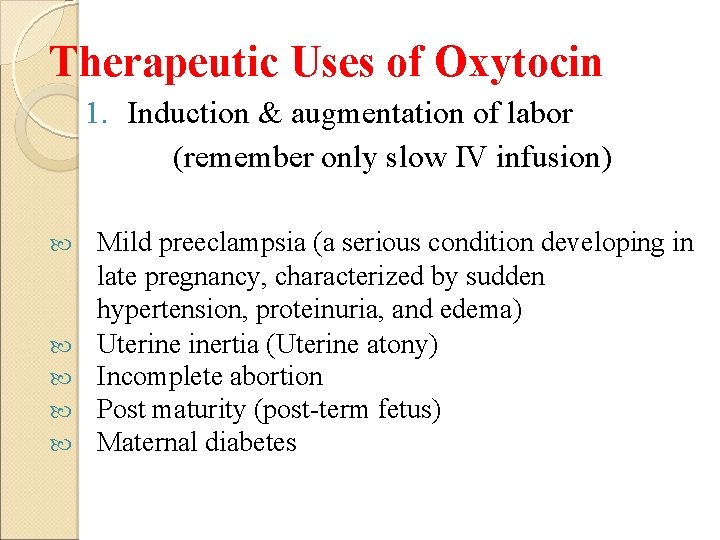
Therapeutic Uses of Oxytocin 1. Induction & augmentation of labor (remember only slow IV infusion) Mild preeclampsia (a serious condition developing in late pregnancy, characterized by sudden hypertension, proteinuria, and edema) Uterine inertia (Uterine atony) Incomplete abortion Post maturity (post-term fetus) Maternal diabetes
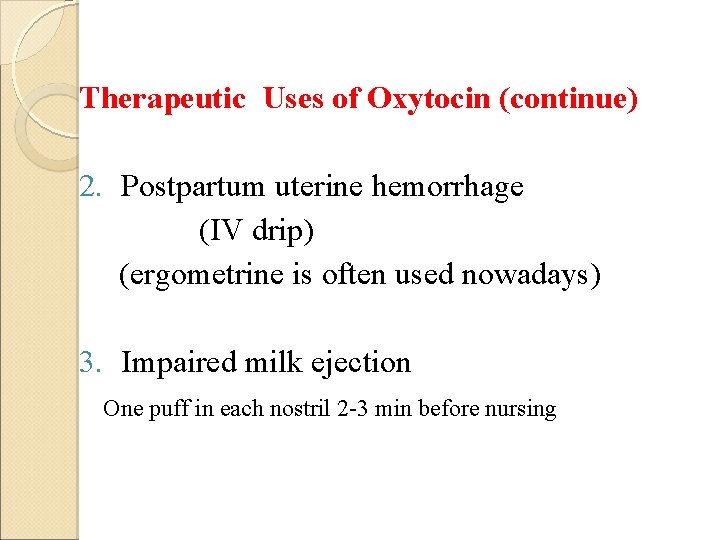
Therapeutic Uses of Oxytocin (continue) 2. Postpartum uterine hemorrhage (IV drip) (ergometrine is often used nowadays) 3. Impaired milk ejection One puff in each nostril 2 -3 min before nursing
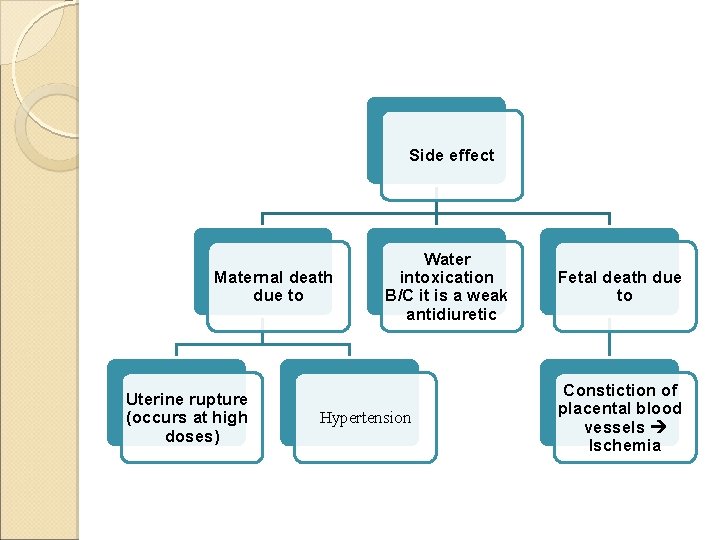
Side effect Maternal death due to Uterine rupture (occurs at high doses) Water intoxication B/C it is a weak antidiuretic Hypertension Fetal death due to Constiction of placental blood vessels Ischemia
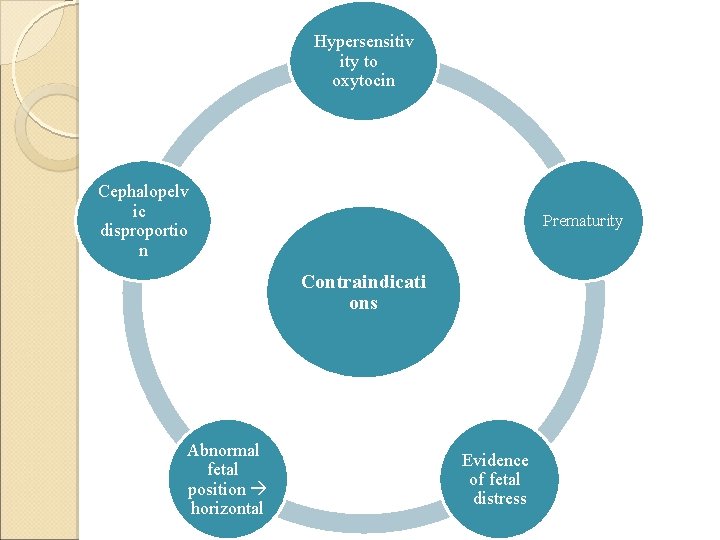
Hypersensitiv ity to oxytocin Cephalopelv ic disproportio n Prematurity Contraindicati ons Abnormal fetal position horizontal Evidence of fetal distress
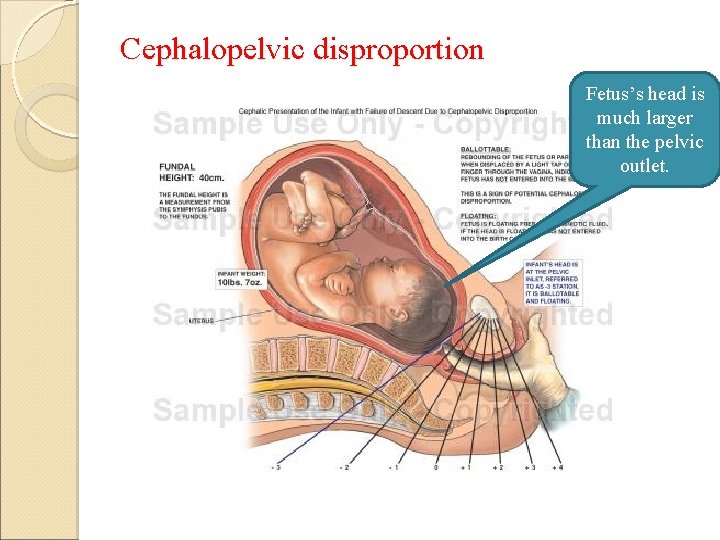
Cephalopelvic disproportion Fetus’s head is much larger than the pelvic outlet.
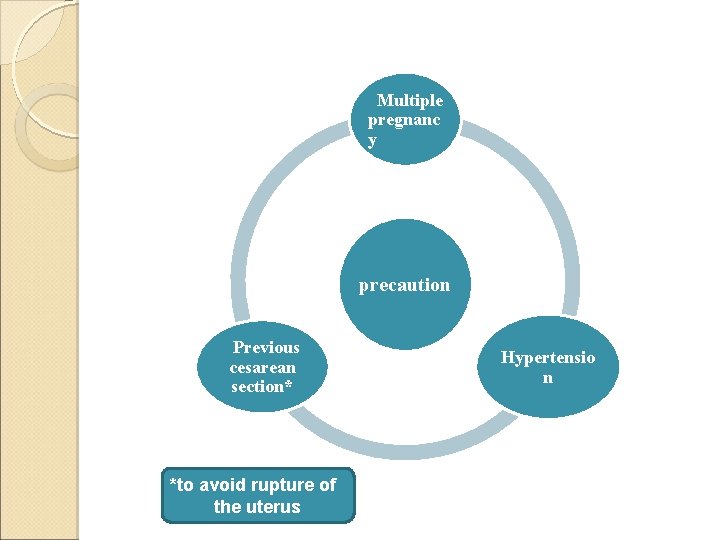
Multiple pregnanc y precaution Previous cesarean section* *to avoid rupture of the uterus Hypertensio n
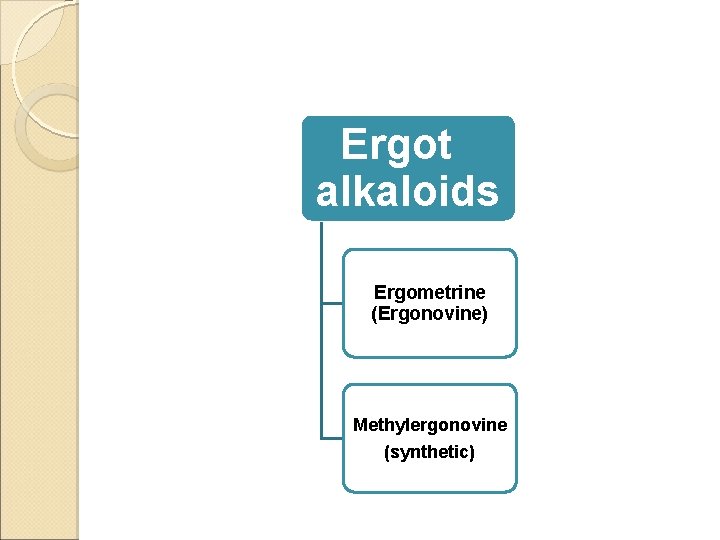
Ergot alkaloids Ergometrine (Ergonovine) Methylergonovine (synthetic)
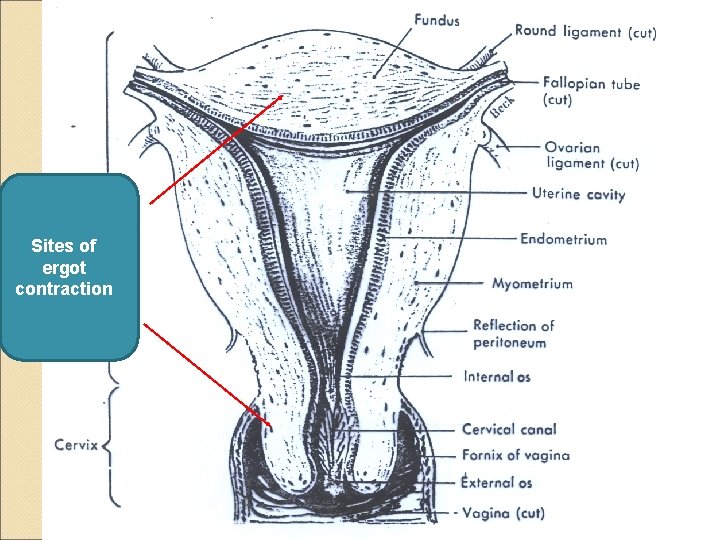
Effects on the Uterus Alkaloid derivatives induce TETANIC CONTRACTION of uterus without relaxation in between (unlike the normal physiologic contractions) It causes contractions of the uterus as a whole i. e. fundus and cervix (tends to compress rather than actually expelling the fetus) Not used anymore for labor augmentation.
Sites of ergot contraction
Ergot alkaloids (pharmacokinetics) Absorption fate and excretion Absorbed orally from the GIT (tablets) Usually given IM NOT given IV because it causes severe vasoconstriction Extensively metabolized in the liver 90% of metabolites are excreted in bile Uterus responds to Ergots more than Oxytocin
Clinical uses Postpartum hemorrhage (used only at the 3 rd stage of labor, when the baby’s head or shoulder start to appear)
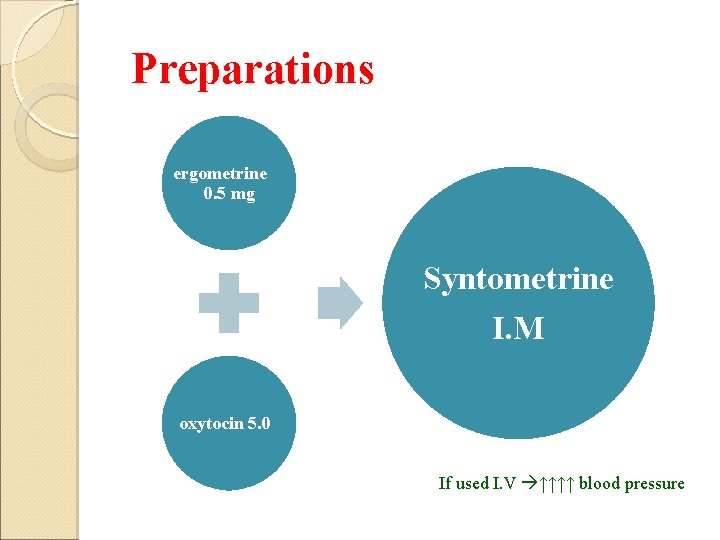
Preparations ergometrine 0. 5 mg Syntometrine I. M oxytocin 5. 0 If used I. V ↑↑↑↑ blood pressure
Why should we use this combination ? Ergots have slow onset of action (7 min) but have a long half-life. Yet, oxytocin has a fast onset of action, 12 minutes, with a short half-life.
Side effects Nausea, vomiting, diarrhea Hypertension because contraction of blood vessels Vasoconstriction of peripheral blood vessels ( toes & fingers) which can lead Gangrene
Contraindications: 1. Induction of labour 2. 1 st and 2 nd stage of labor 3. vascular disease 4. Severe hepatic and renal impairment 5. Severe hypertension
PROSTAGLANDINS (PGE 2 & PGF 2α) Therapeutic uses 1. Induction of abortion (pathological)** (used because the uterus is sensitive to PGs in early stages). 2. Induction of labor (fetal death in utero) 3. Postpartum hemorrhage
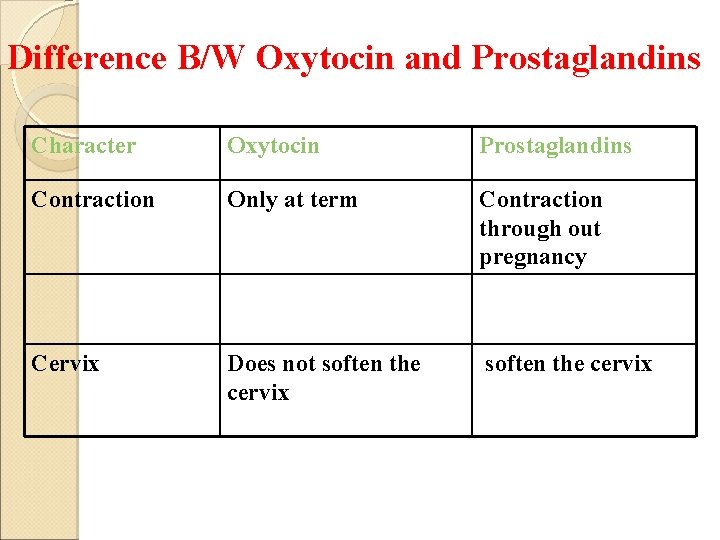
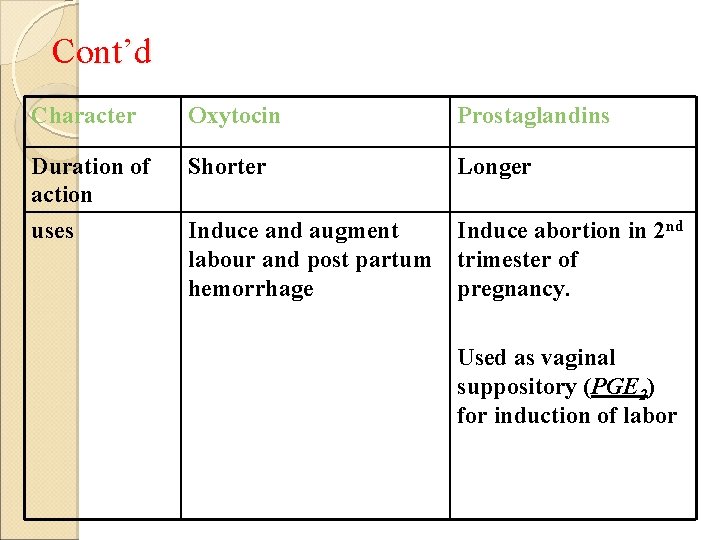
Difference between PGS and Oxytocin: PGs contract uterine smooth muscle not only at term(as with oxytocin), but throughout pregnancy. PGs soften the cervix; whereas oxytocin does not. PGs have longer duration of action than oxytocin. N. B. PGs at low doses physiologic contraction at high doses Tetanic contraction
Side Effects ◦ Nausea , vomiting ◦ Abdominal pain ◦ Diarrhea ◦ Bronchospasm (PGF 2α) ◦ Flushing (PGE 2). ◦ P. S. PGE 2 causes vasodilation of the mother’s vessels thus leading to cutaneous flushing. Yet, there is vasoconstriction of the umbilical cord’s vessels. ◦ PGE 2 is used as a vaginal suppository for cervical dilation and softening.
Contraindications: Mechanical obstruction of delivery Fetal distress (due to umbilical cord vessels’ vasocontriction) Predisposition to uterine rupture Precautions: Asthma Multiple pregnancy Glaucoma Uterine rupture
Difference B/W Oxytocin and Prostaglandins Character Oxytocin Prostaglandins Contraction Only at term Contraction through out pregnancy Cervix Does not soften the cervix
Cont’d Character Oxytocin Prostaglandins Duration of action Shorter Longer uses Induce and augment labour and post partum hemorrhage Induce abortion in 2 nd trimester of pregnancy. Used as vaginal suppository (PGE 2) for induction of labor
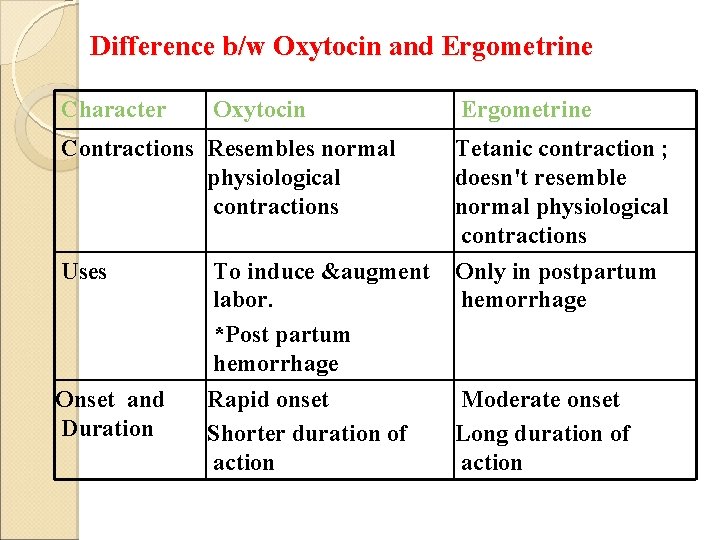
Difference b/w Oxytocin and Ergometrine Character Oxytocin Ergometrine Contractions Resembles normal physiological contractions Tetanic contraction ; doesn't resemble normal physiological contractions Uses Only in postpartum hemorrhage Onset and Duration To induce &augment labor. *Post partum hemorrhage Rapid onset Shorter duration of action Moderate onset Long duration of action
2 -UTERINE RELAXANTS
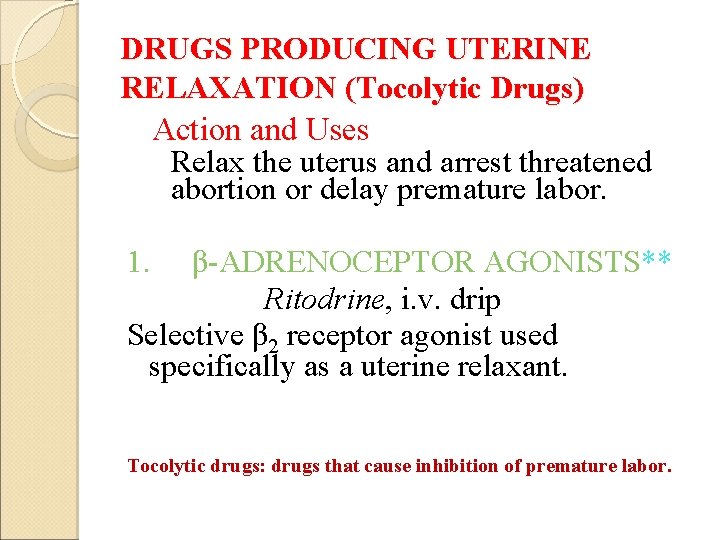
DRUGS PRODUCING UTERINE RELAXATION (Tocolytic Drugs) Action and Uses Relax the uterus and arrest threatened abortion or delay premature labor. 1. β-ADRENOCEPTOR AGONISTS** Ritodrine, i. v. drip Selective β 2 receptor agonist used specifically as a uterine relaxant. Tocolytic drugs: drugs that cause inhibition of premature labor.
β- adrenoceptor agonists e. g. β 2 selective agonists: ritodrine Mechanism of action Bind to β-adrenoceptors activating the enzyme adenylate cyclase increasing the level of c. AMP reducing intracellular calcium level. As the pregnancy progresses there is gradual increase of uterine β 2 receptors. This is an attempt to increase β 2 responsiveness to its agonist, an important role for the stability of fetal growth.
Side effects: Tremor Nausea , vomiting Flushing Sweating Tachycardia (high dose) Hypotension Hyperglycemia Hypokalaemia
2. CALCIUM CHANNEL BLOCKERS Nifedipine Causes relaxation of the myometrium Markedly inhibits the amplitude of spontaneous and oxytocin-induced contractions.
Unwanted effects Headache, dizziness Hypotension Flushing Constipation Ankle edema Coughing Wheezing Reflex tachycardia
3. Prostaglandin synthetase inhibitors The depletion of prostaglandins prevents stimulation of uterus NSAID, s e. g. Indomethacin Aspirin Ibuprofen
Adverse effects Ulceration Premature closure of ductus arterious.