
1 Dr R V S N Sarma M





- Slides: 81
1 Dr. R. V. S. N. Sarma, M. D. , M. Sc (Canada) Consultant Physician and Chest Specialist 1, Jayanagar, Tiruvallur, Chennai -602 001 (04116) – 260593, 263665 Mobile : +91 -98940 60593 subha-rani@eth. net Dr. Sarma
2 Best Wishes to You All From IMA Tamil Nadu Dr. Sarma
3 LIPIDS An overview of Normal and Abnormal Lipids Dr. Sarma
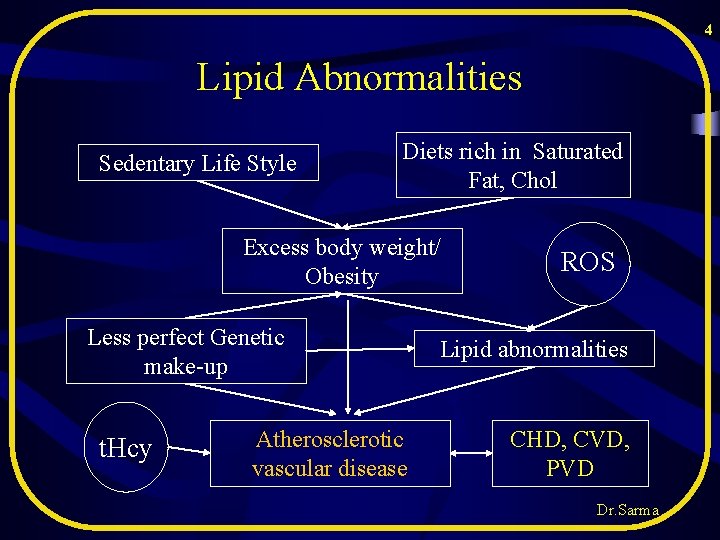
4 Lipid Abnormalities Sedentary Life Style Diets rich in Saturated Fat, Chol Excess body weight/ Obesity Less perfect Genetic make-up t. Hcy Atherosclerotic vascular disease ROS Lipid abnormalities CHD, CVD, PVD Dr. Sarma
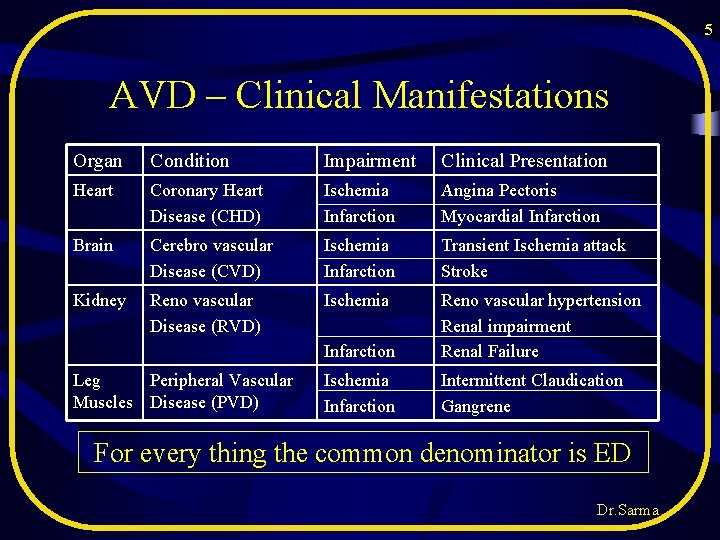
5 AVD – Clinical Manifestations Organ Condition Impairment Clinical Presentation Heart Coronary Heart Disease (CHD) Ischemia Infarction Angina Pectoris Myocardial Infarction Brain Cerebro vascular Disease (CVD) Ischemia Infarction Transient Ischemia attack Stroke Kidney Reno vascular Disease (RVD) Ischemia Infarction Reno vascular hypertension Renal impairment Renal Failure Ischemia Infarction Intermittent Claudication Gangrene Leg Peripheral Vascular Muscles Disease (PVD) For every thing the common denominator is ED Dr. Sarma
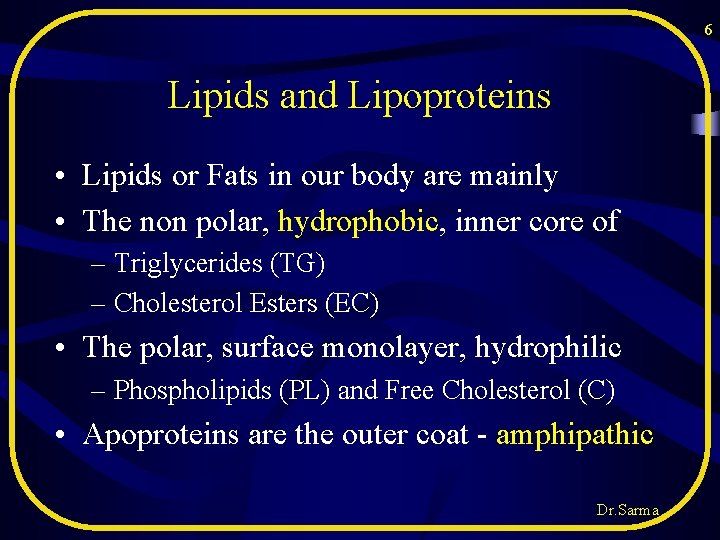
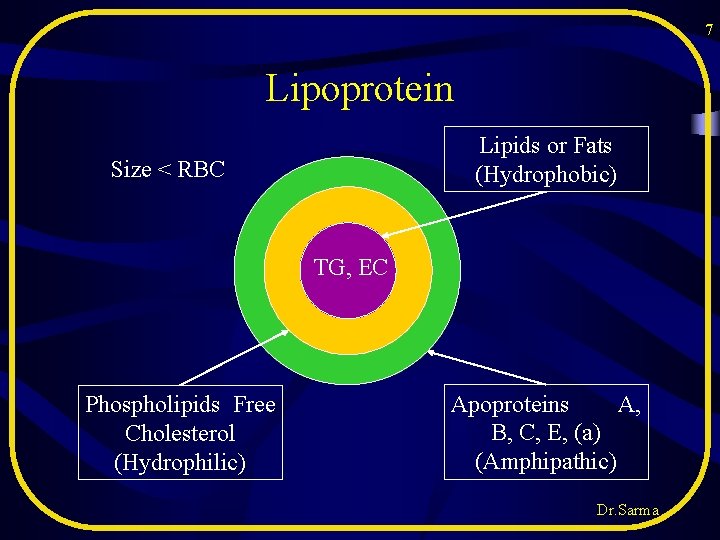
6 Lipids and Lipoproteins • Lipids or Fats in our body are mainly • The non polar, hydrophobic, inner core of – Triglycerides (TG) – Cholesterol Esters (EC) • The polar, surface monolayer, hydrophilic – Phospholipids (PL) and Free Cholesterol (C) • Apoproteins are the outer coat - amphipathic Dr. Sarma
7 Lipoprotein Lipids or Fats (Hydrophobic) Size < RBC TG, EC Phospholipids Free Cholesterol (Hydrophilic) Apoproteins A, B, C, E, (a) (Amphipathic) Dr. Sarma
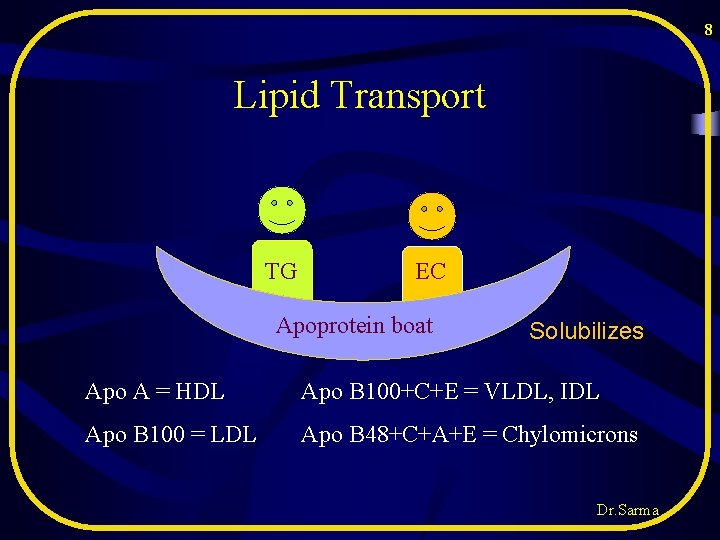
8 Lipid Transport TG EC Apoprotein boat Solubilizes Apo A = HDL Apo B 100+C+E = VLDL, IDL Apo B 100 = LDL Apo B 48+C+A+E = Chylomicrons Dr. Sarma
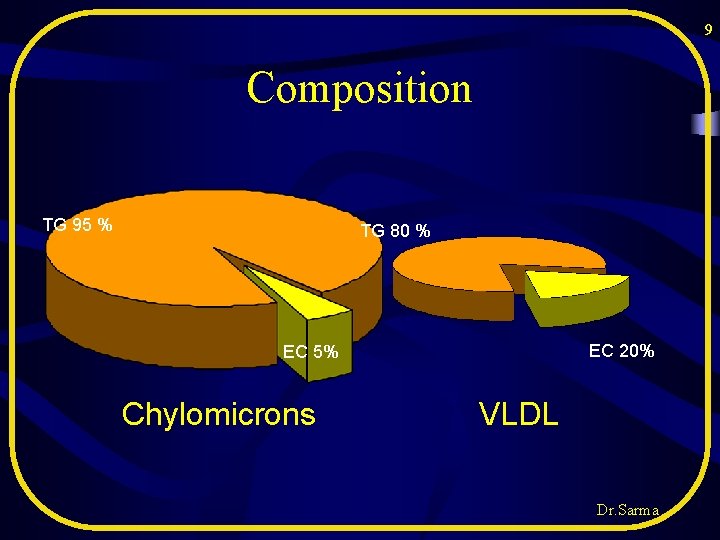
9 Composition TG 95 % TG 80 % EC 20% EC 5% Chylomicrons VLDL Dr. Sarma
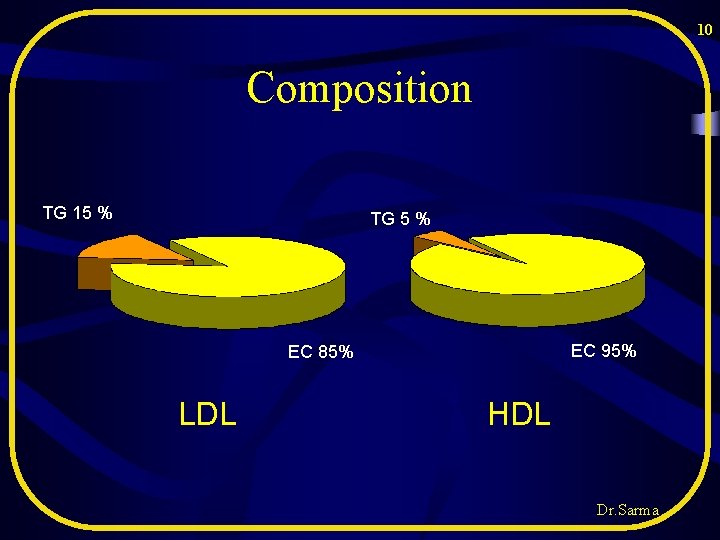
10 Composition TG 15 % TG 5 % EC 95% EC 85% LDL HDL Dr. Sarma
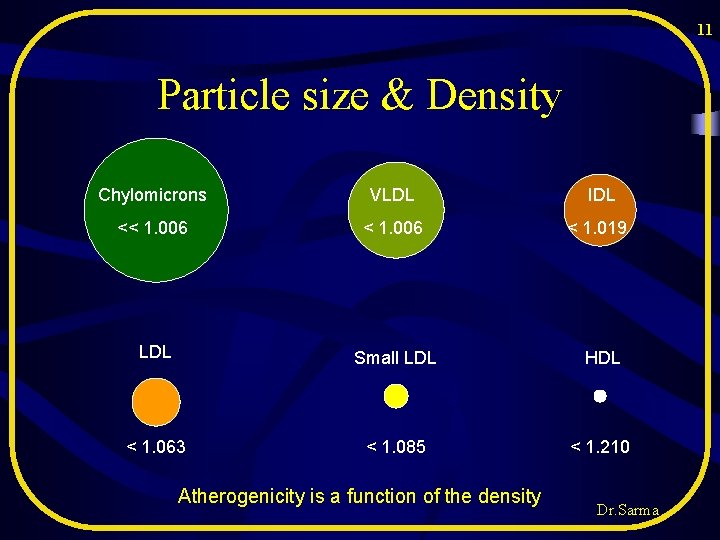
11 Particle size & Density Chylomicrons VLDL IDL << 1. 006 < 1. 019 LDL Small LDL HDL < 1. 063 < 1. 085 < 1. 210 Atherogenicity is a function of the density Dr. Sarma
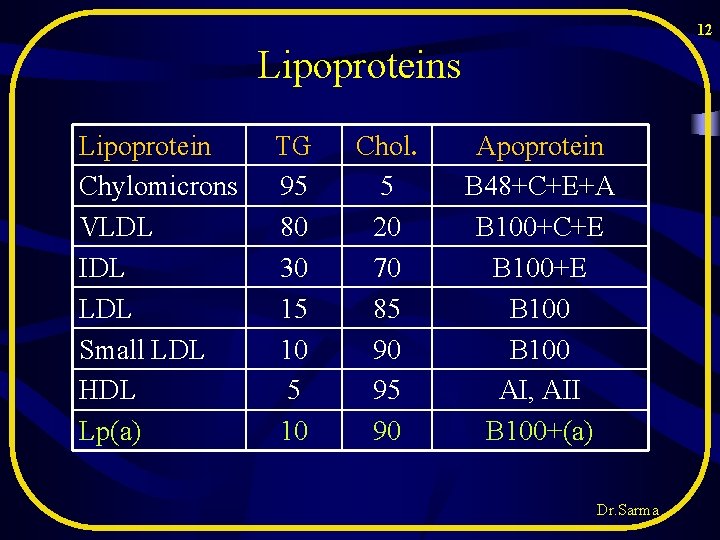
12 Lipoproteins Lipoprotein Chylomicrons VLDL IDL LDL Small LDL HDL Lp(a) TG 95 80 30 15 10 Chol. 5 20 70 85 90 95 90 Apoprotein B 48+C+E+A B 100+C+E B 100 AI, AII B 100+(a) Dr. Sarma
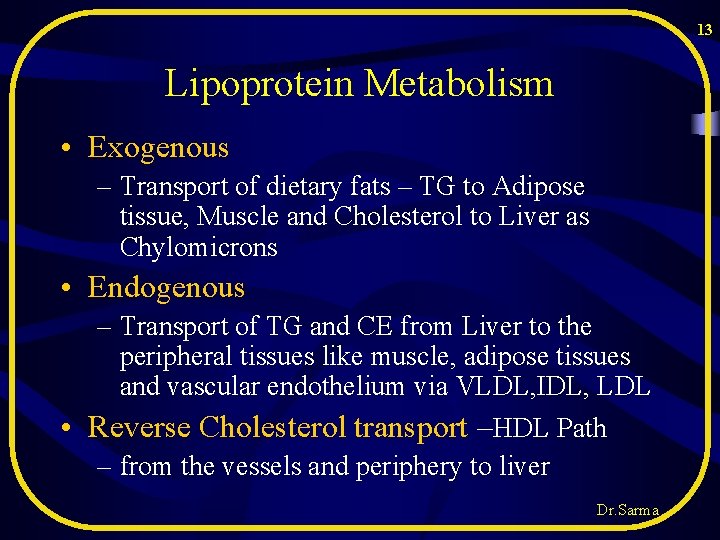
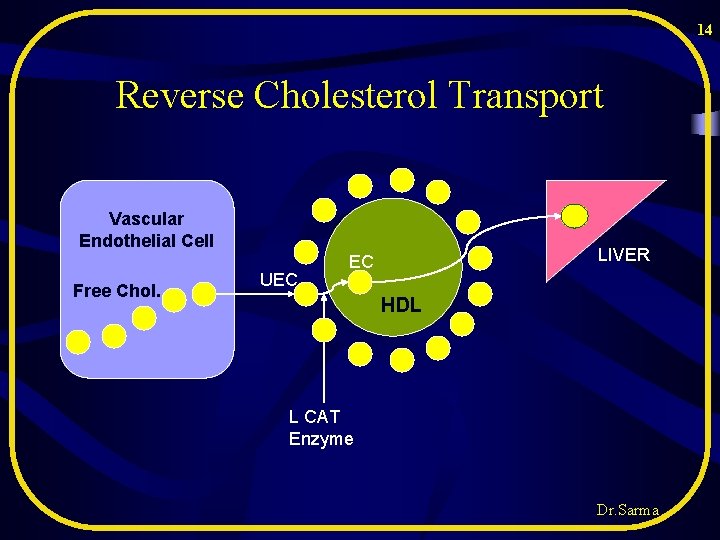
13 Lipoprotein Metabolism • Exogenous – Transport of dietary fats – TG to Adipose tissue, Muscle and Cholesterol to Liver as Chylomicrons • Endogenous – Transport of TG and CE from Liver to the peripheral tissues like muscle, adipose tissues and vascular endothelium via VLDL, IDL, LDL • Reverse Cholesterol transport –HDL Path – from the vessels and periphery to liver Dr. Sarma
14 Reverse Cholesterol Transport Vascular Endothelial Cell Free Chol. UEC LIVER EC HDL L CAT Enzyme Dr. Sarma
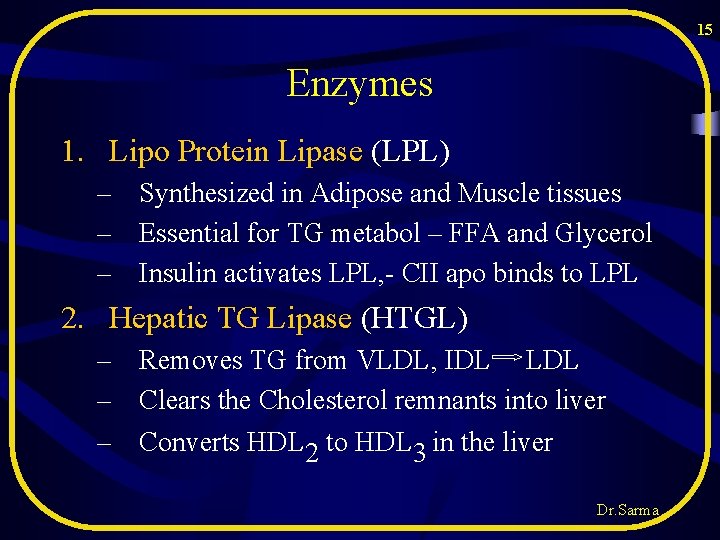
15 Enzymes 1. Lipo Protein Lipase (LPL) – Synthesized in Adipose and Muscle tissues – Essential for TG metabol – FFA and Glycerol – Insulin activates LPL, - CII apo binds to LPL 2. Hepatic TG Lipase (HTGL) – Removes TG from VLDL, IDL LDL – Clears the Cholesterol remnants into liver – Converts HDL 2 to HDL 3 in the liver Dr. Sarma
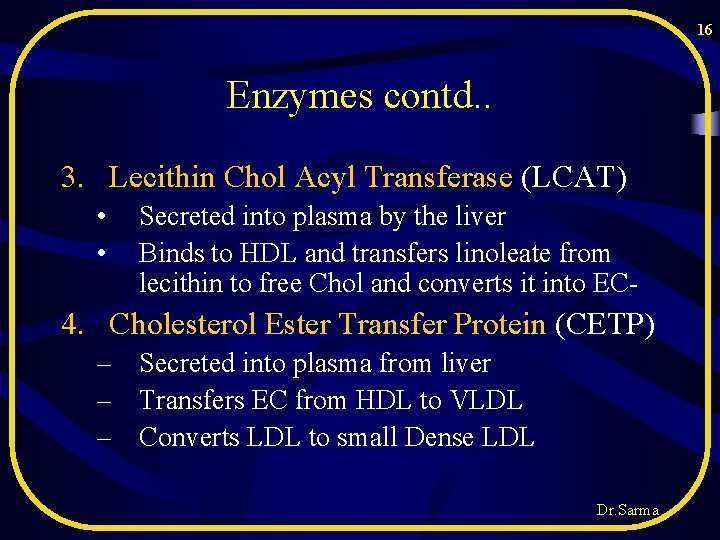
16 Enzymes contd. . 3. Lecithin Chol Acyl Transferase (LCAT) • • Secreted into plasma by the liver Binds to HDL and transfers linoleate from lecithin to free Chol and converts it into EC- 4. Cholesterol Ester Transfer Protein (CETP) – Secreted into plasma from liver – Transfers EC from HDL to VLDL – Converts LDL to small Dense LDL Dr. Sarma
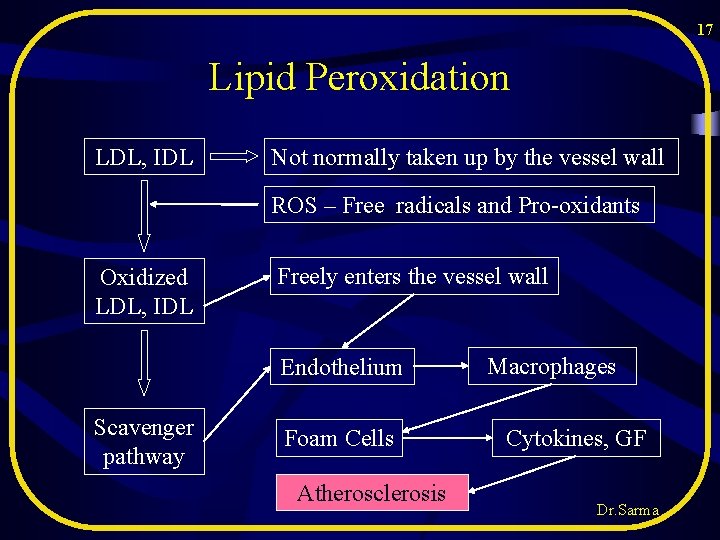
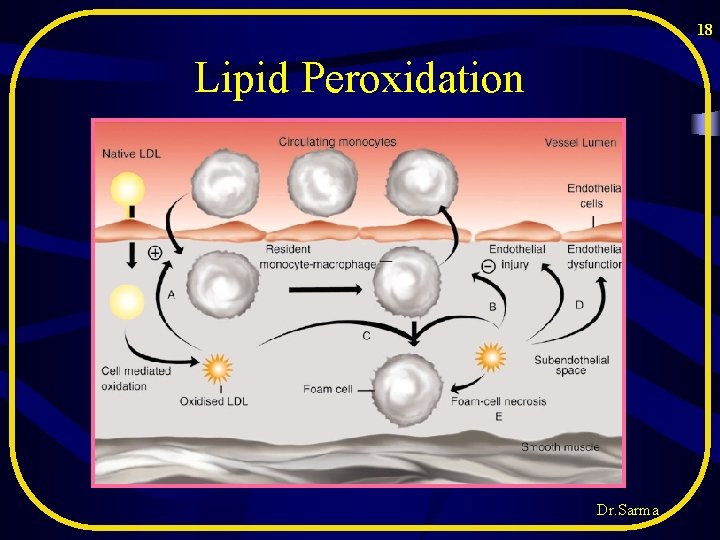
17 Lipid Peroxidation LDL, IDL Not normally taken up by the vessel wall ROS – Free radicals and Pro-oxidants Oxidized LDL, IDL Freely enters the vessel wall Endothelium Scavenger pathway Foam Cells Atherosclerosis Macrophages Cytokines, GF Dr. Sarma
18 Lipid Peroxidation Dr. Sarma
19 Dr. Sarma
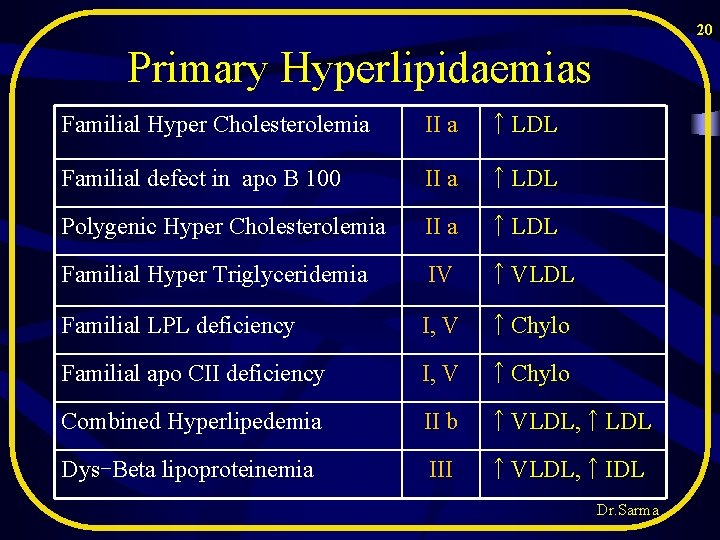
20 Primary Hyperlipidaemias Familial Hyper Cholesterolemia II a ↑LDL Familial defect in apo B 100 II a ↑LDL Polygenic Hyper Cholesterolemia II a ↑LDL Familial Hyper Triglyceridemia IV ↑VLDL Familial LPL deficiency I, V ↑Chylo Familial apo CII deficiency I, V ↑Chylo Combined Hyperlipedemia II b ↑VLDL, ↑LDL Dys-Beta lipoproteinemia III ↑VLDL, ↑IDL Dr. Sarma
21 Secondary Hyperlipidemia Cholesterol TG Nephrotic syndrome. Obesity Hypothyroidism Diabetes Obstr. liver disease Uraemia Anorexia nervosa Alcoholism, Smoking Acute Int. Porphyria Oral contraceptives Progestogens Beta blockers Thiazides Pregnancy Anabolic steroids Steroids, Thiazides Dr. Sarma
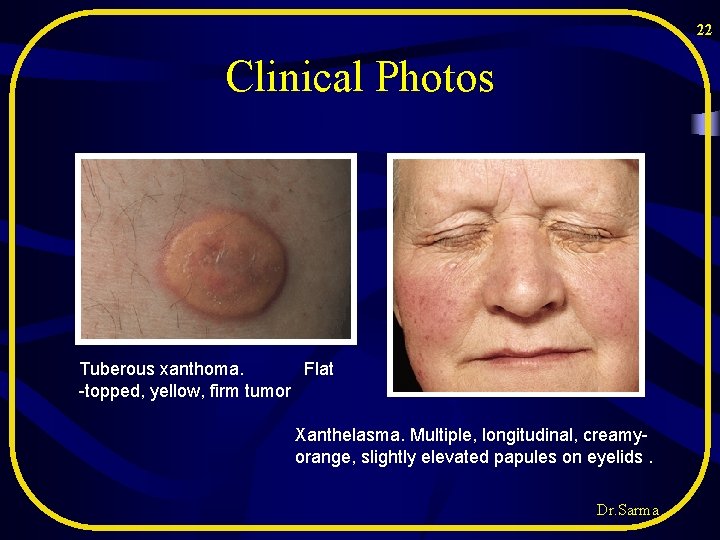
22 Clinical Photos Tuberous xanthoma. Flat -topped, yellow, firm tumor Xanthelasma. Multiple, longitudinal, creamyorange, slightly elevated papules on eyelids. Dr. Sarma
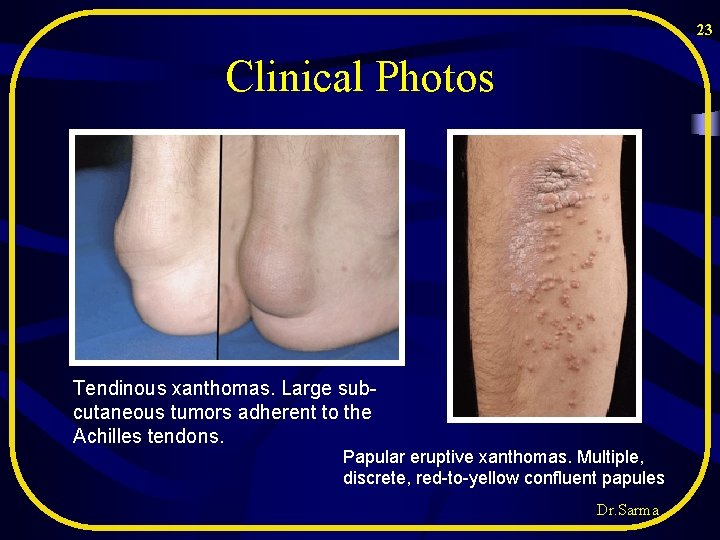
23 Clinical Photos Tendinous xanthomas. Large subcutaneous tumors adherent to the Achilles tendons. Papular eruptive xanthomas. Multiple, discrete, red-to-yellow confluent papules Dr. Sarma
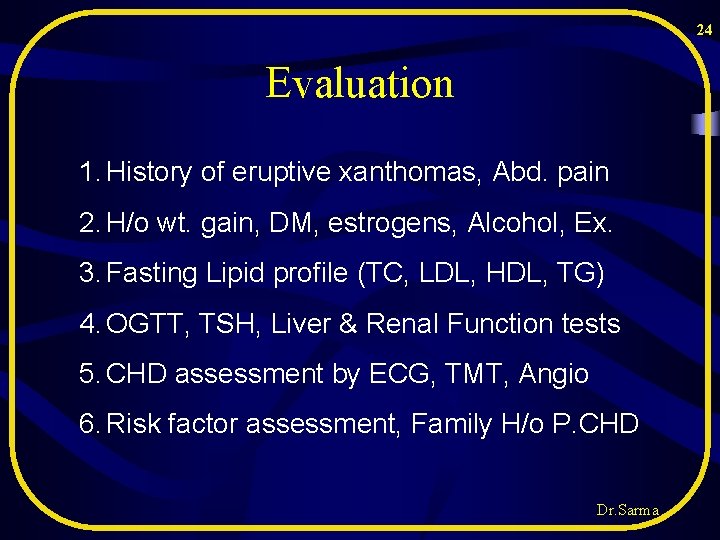
24 Evaluation 1. History of eruptive xanthomas, Abd. pain 2. H/o wt. gain, DM, estrogens, Alcohol, Ex. 3. Fasting Lipid profile (TC, LDL, HDL, TG) 4. OGTT, TSH, Liver & Renal Function tests 5. CHD assessment by ECG, TMT, Angio 6. Risk factor assessment, Family H/o P. CHD Dr. Sarma
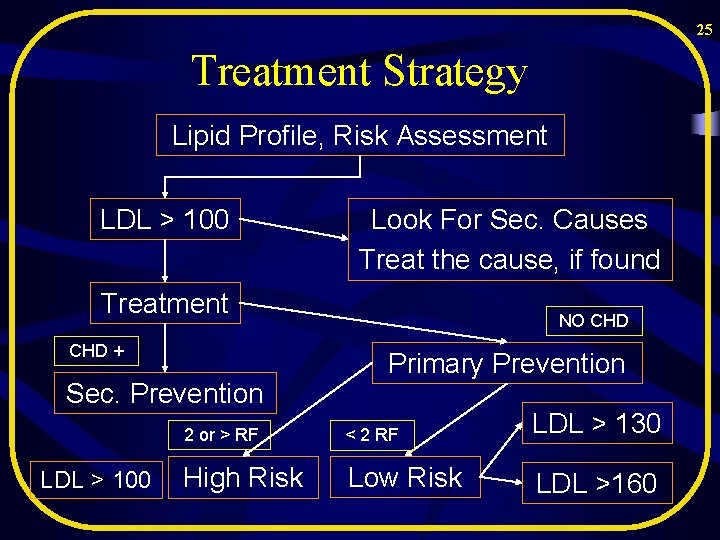
25 Treatment Strategy Lipid Profile, Risk Assessment LDL > 100 Look For Sec. Causes Treat the cause, if found Treatment CHD + Sec. Prevention LDL > 100 NO CHD Primary Prevention 2 or > RF < 2 RF LDL > 130 High Risk Low Risk LDL >160 Dr. Sarma
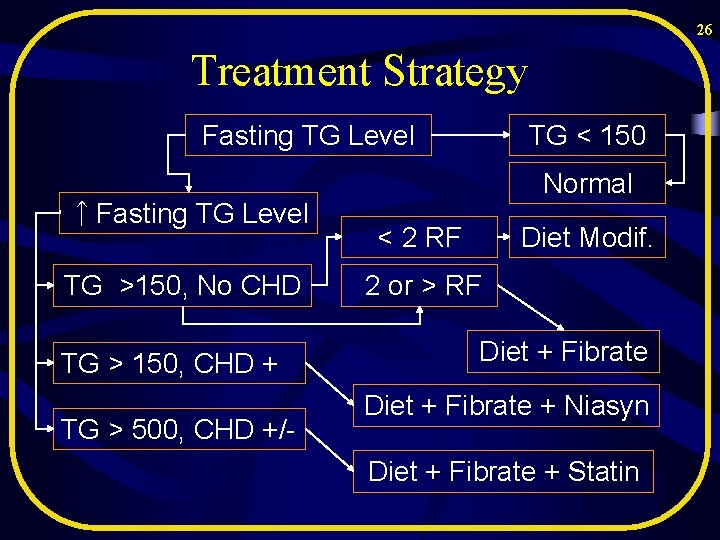
26 Treatment Strategy Fasting TG Level ↑Fasting TG Level TG >150, No CHD TG > 150, CHD + TG > 500, CHD +/- TG < 150 Normal < 2 RF Diet Modif. 2 or > RF Diet + Fibrate + Niasyn Diet + Fibrate + Statin Dr. Sarma
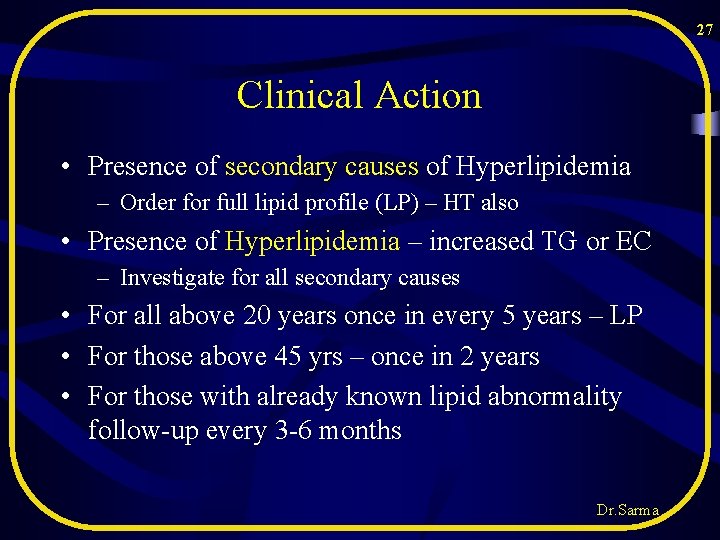
27 Clinical Action • Presence of secondary causes of Hyperlipidemia – Order for full lipid profile (LP) – HT also • Presence of Hyperlipidemia – increased TG or EC – Investigate for all secondary causes • For all above 20 years once in every 5 years – LP • For those above 45 yrs – once in 2 years • For those with already known lipid abnormality follow-up every 3 -6 months Dr. Sarma
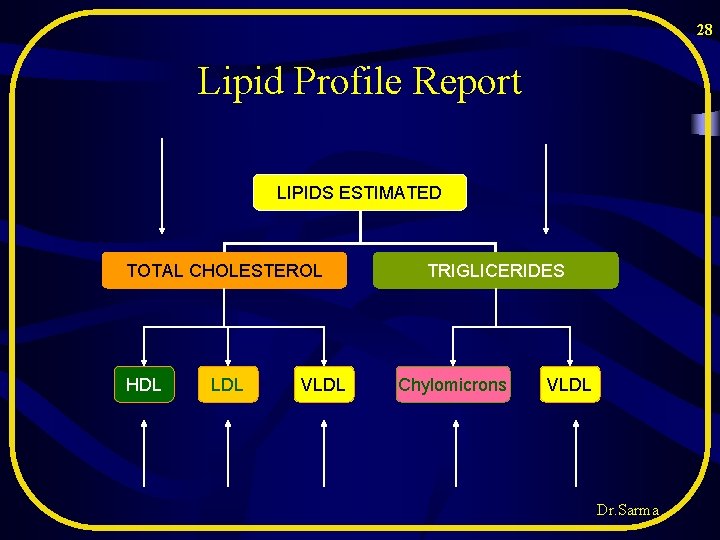
28 Lipid Profile Report LIPIDS ESTIMATED TOTAL CHOLESTEROL HDL LDL VLDL TRIGLICERIDES Chylomicrons VLDL Dr. Sarma
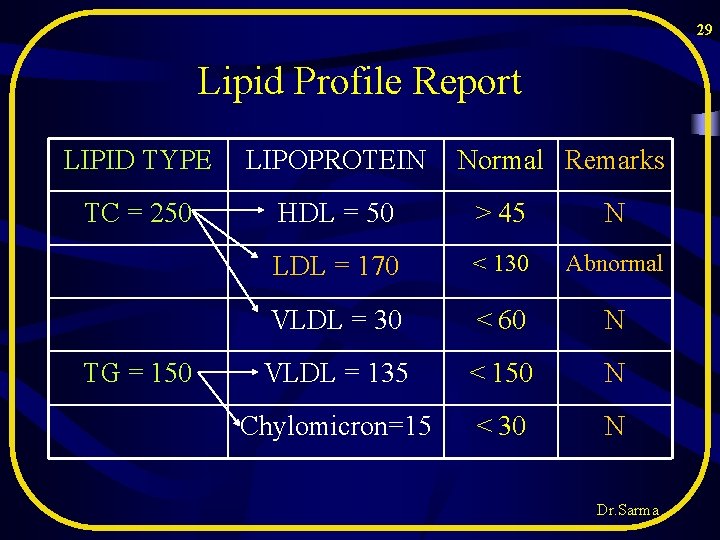
29 Lipid Profile Report LIPID TYPE LIPOPROTEIN TC = 250 HDL = 50 > 45 N LDL = 170 < 130 Abnormal VLDL = 30 < 60 N VLDL = 135 < 150 N Chylomicron=15 < 30 N TG = 150 Normal Remarks Dr. Sarma
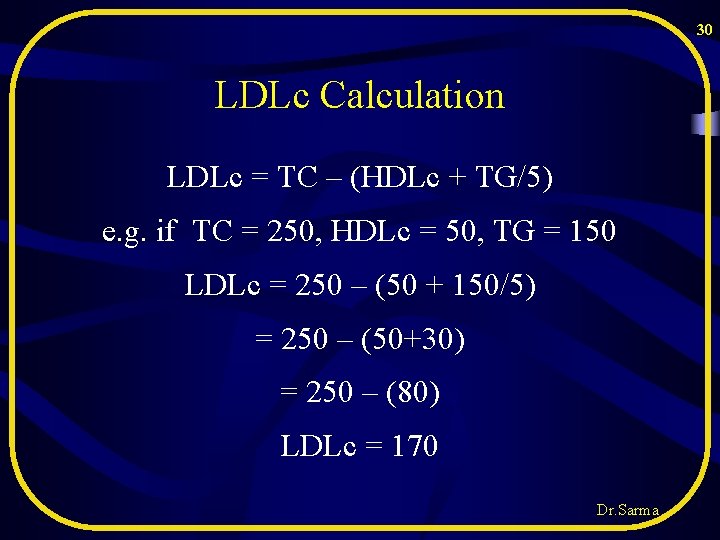
30 LDLc Calculation LDLc = TC – (HDLc + TG/5) e. g. if TC = 250, HDLc = 50, TG = 150 LDLc = 250 – (50 + 150/5) = 250 – (50+30) = 250 – (80) LDLc = 170 Dr. Sarma
31 National Cholesterol Education Program - NCEP Adult Treatment Panel III (ATP III) Guidelines -2002 Dr. Sarma
32 Categories of Risk Factors 1. Major, independent risk factors 2. Life-habit risk factors 3. Emerging risk factors 4. CHD risk equivalents Dr. Sarma
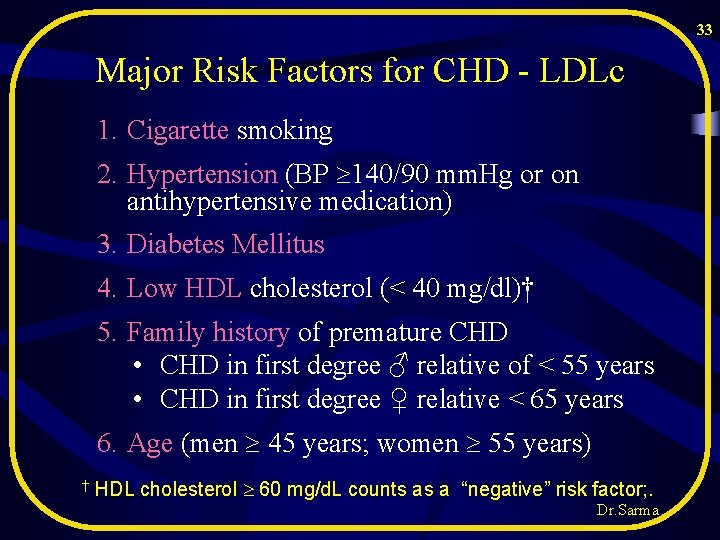
33 Major Risk Factors for CHD - LDLc 1. Cigarette smoking 2. Hypertension (BP 140/90 mm. Hg or on antihypertensive medication) 3. Diabetes Mellitus 4. Low HDL cholesterol (< 40 mg/dl)† 5. Family history of premature CHD • CHD in first degree ♂ relative of < 55 years • CHD in first degree ♀ relative < 65 years 6. Age (men 45 years; women 55 years) † HDL cholesterol 60 mg/d. L counts as a “negative” risk factor; . Dr. Sarma
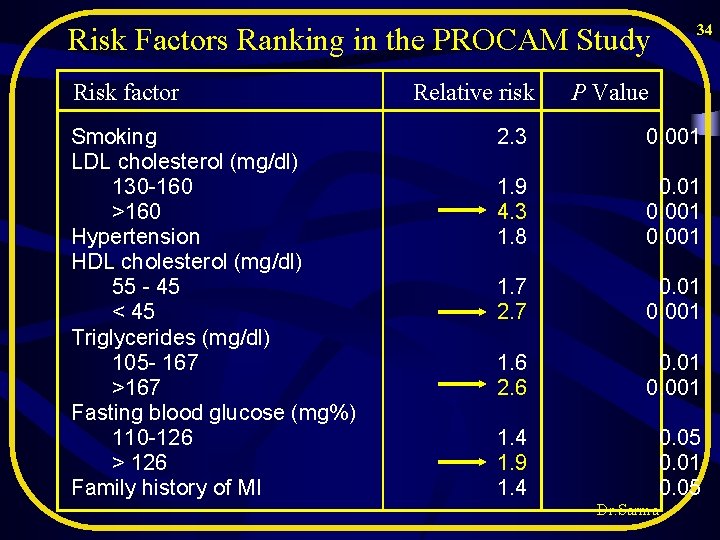
34 Risk Factors Ranking in the PROCAM Study Risk factor Smoking LDL cholesterol (mg/dl) 130 -160 >160 Hypertension HDL cholesterol (mg/dl) 55 - 45 < 45 Triglycerides (mg/dl) 105 - 167 >167 Fasting blood glucose (mg%) 110 -126 > 126 Family history of MI Relative risk P Value 2. 3 0. 001 1. 9 4. 3 1. 8 0. 01 0. 001 1. 7 2. 7 0. 01 0. 001 1. 6 2. 6 0. 01 0. 001 1. 4 1. 9 1. 4 0. 05 0. 01 0. 05 Dr. Sarma
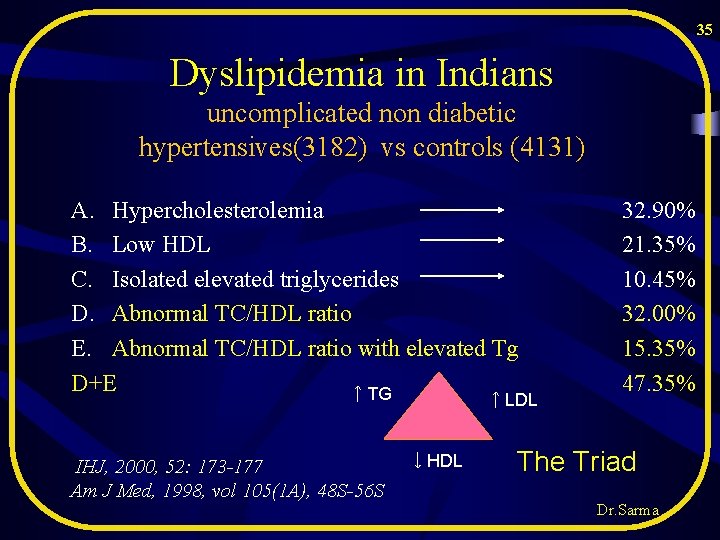
35 Dyslipidemia in Indians uncomplicated non diabetic hypertensives(3182) vs controls (4131) A. Hypercholesterolemia B. Low HDL C. Isolated elevated triglycerides D. Abnormal TC/HDL ratio E. Abnormal TC/HDL ratio with elevated Tg D+E ↑TG ↑LDL IHJ, 2000, 52: 173 -177 Am J Med, 1998, vol 105(1 A), 48 S-56 S ↓HDL 32. 90% 21. 35% 10. 45% 32. 00% 15. 35% 47. 35% The Triad Dr. Sarma
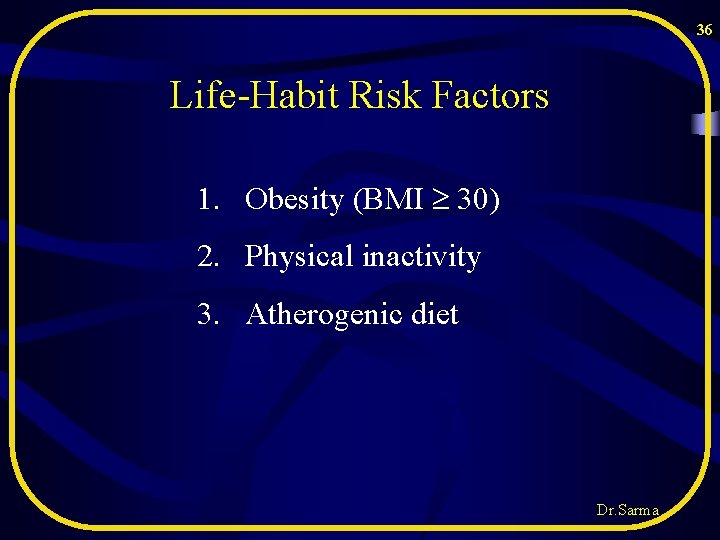
36 Life-Habit Risk Factors 1. Obesity (BMI 30) 2. Physical inactivity 3. Atherogenic diet Dr. Sarma
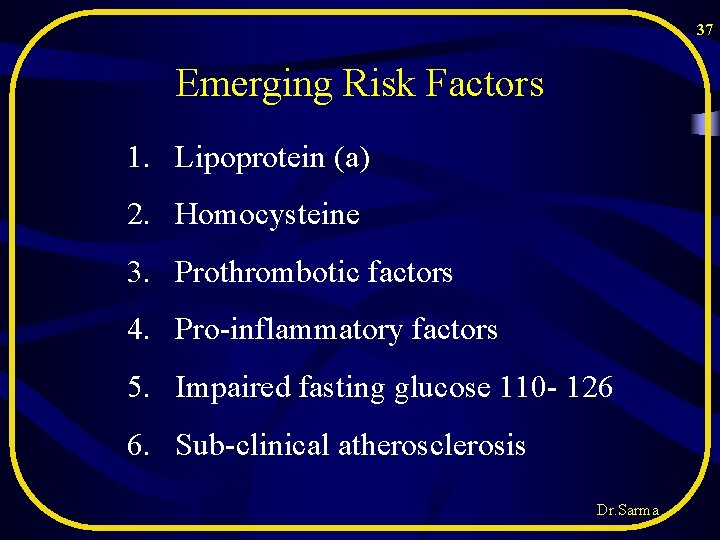
37 Emerging Risk Factors 1. Lipoprotein (a) 2. Homocysteine 3. Prothrombotic factors 4. Pro-inflammatory factors 5. Impaired fasting glucose 110 - 126 6. Sub-clinical atherosclerosis Dr. Sarma
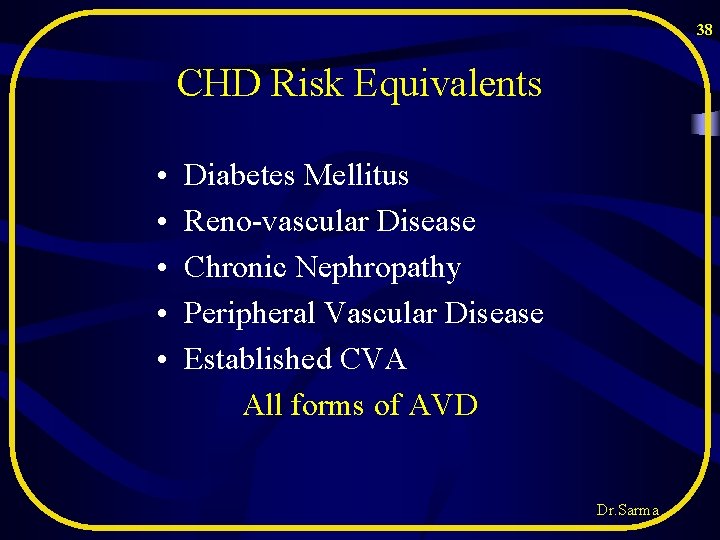
38 CHD Risk Equivalents • • • Diabetes Mellitus Reno-vascular Disease Chronic Nephropathy Peripheral Vascular Disease Established CVA All forms of AVD Dr. Sarma
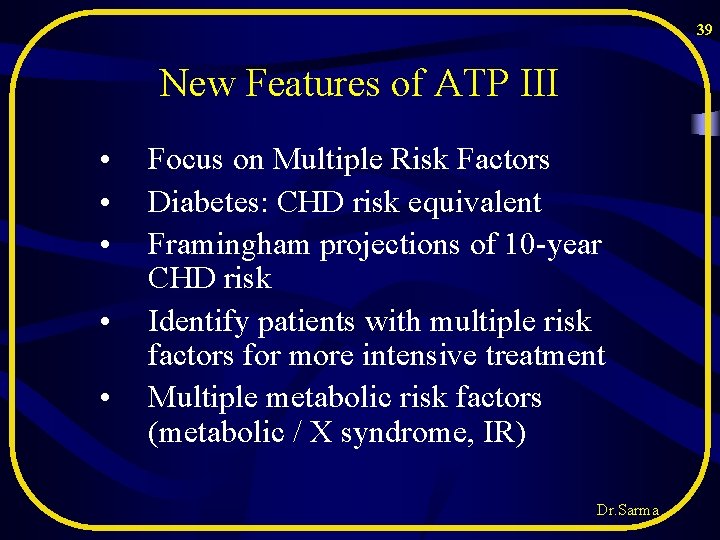
39 New Features of ATP III • • • Focus on Multiple Risk Factors Diabetes: CHD risk equivalent Framingham projections of 10 -year CHD risk Identify patients with multiple risk factors for more intensive treatment Multiple metabolic risk factors (metabolic / X syndrome, IR) Dr. Sarma
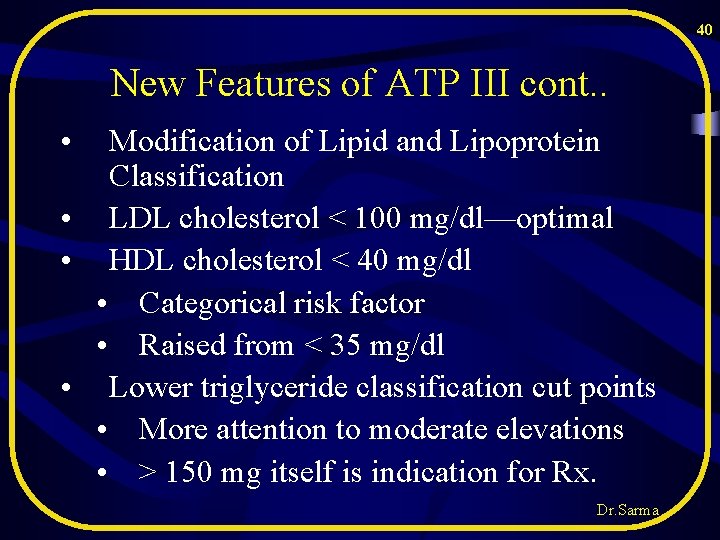
40 New Features of ATP III cont. . • Modification of Lipid and Lipoprotein Classification • LDL cholesterol < 100 mg/dl—optimal • HDL cholesterol < 40 mg/dl • Categorical risk factor • Raised from < 35 mg/dl • Lower triglyceride classification cut points • More attention to moderate elevations • > 150 mg itself is indication for Rx. Dr. Sarma
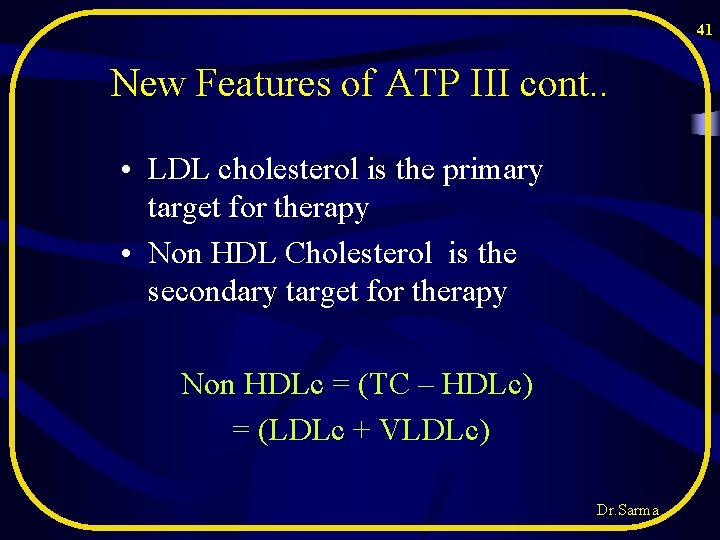
41 New Features of ATP III cont. . • LDL cholesterol is the primary target for therapy • Non HDL Cholesterol is the secondary target for therapy Non HDLc = (TC – HDLc) = (LDLc + VLDLc) Dr. Sarma
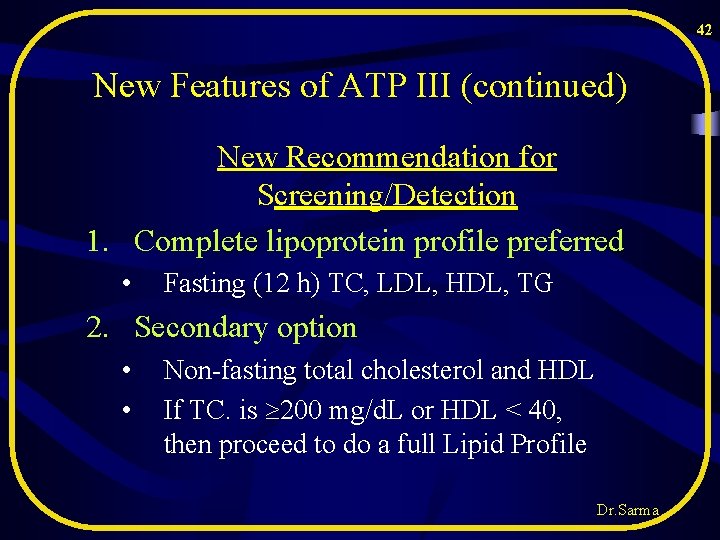
42 New Features of ATP III (continued) New Recommendation for Screening/Detection 1. Complete lipoprotein profile preferred • Fasting (12 h) TC, LDL, HDL, TG 2. Secondary option • • Non-fasting total cholesterol and HDL If TC. is 200 mg/d. L or HDL < 40, then proceed to do a full Lipid Profile Dr. Sarma
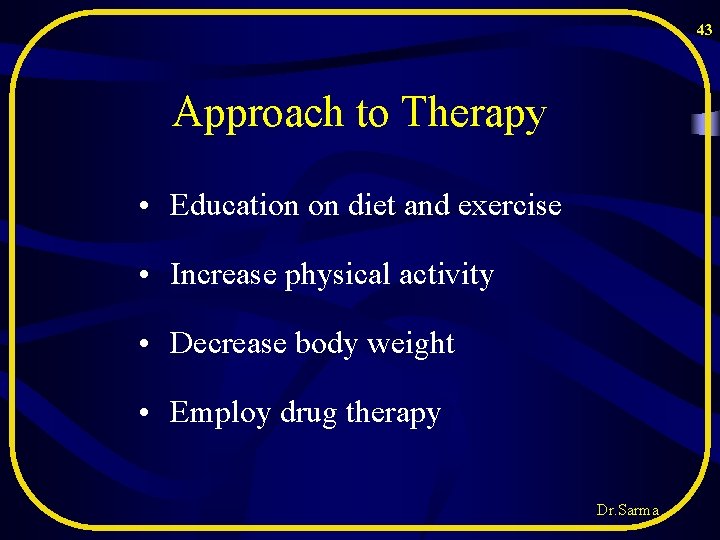
43 Approach to Therapy • Education on diet and exercise • Increase physical activity • Decrease body weight • Employ drug therapy Dr. Sarma
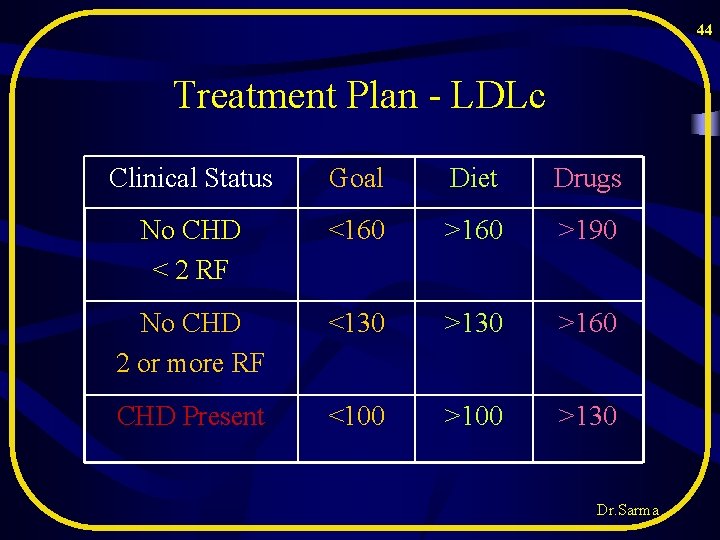
44 Treatment Plan - LDLc Clinical Status Goal Diet Drugs No CHD < 2 RF <160 >190 No CHD 2 or more RF <130 >160 CHD Present <100 >130 Dr. Sarma
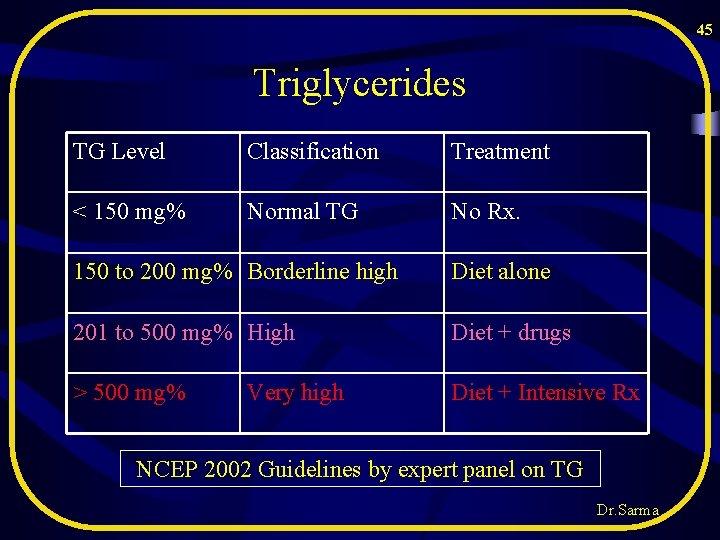
45 Triglycerides TG Level Classification Treatment < 150 mg% Normal TG No Rx. 150 to 200 mg% Borderline high Diet alone 201 to 500 mg% High Diet + drugs > 500 mg% Diet + Intensive Rx Very high NCEP 2002 Guidelines by expert panel on TG Dr. Sarma
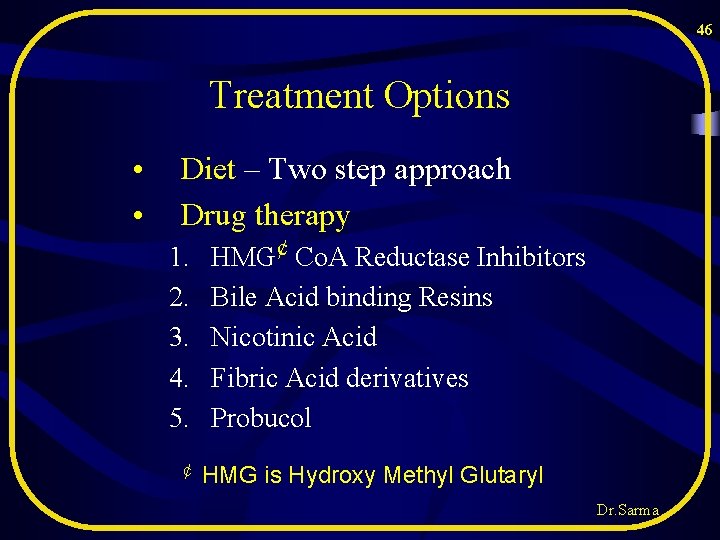
46 Treatment Options • • Diet – Two step approach Drug therapy 1. 2. 3. 4. 5. ¢ HMG¢ Co. A Reductase Inhibitors Bile Acid binding Resins Nicotinic Acid Fibric Acid derivatives Probucol HMG is Hydroxy Methyl Glutaryl Dr. Sarma
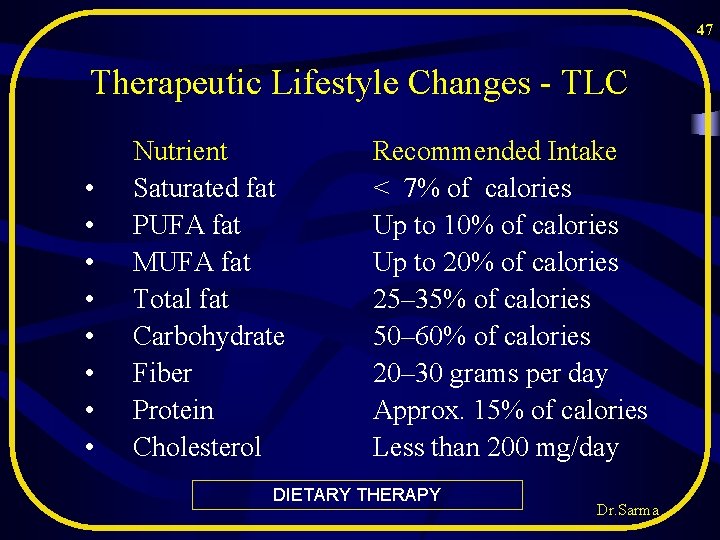
47 Therapeutic Lifestyle Changes - TLC • • Nutrient Saturated fat PUFA fat MUFA fat Total fat Carbohydrate Fiber Protein Cholesterol Recommended Intake < 7% of calories Up to 10% of calories Up to 20% of calories 25– 35% of calories 50– 60% of calories 20– 30 grams per day Approx. 15% of calories Less than 200 mg/day DIETARY THERAPY Dr. Sarma
48 ATP III Guidelines Drug Therapy Dr. Sarma
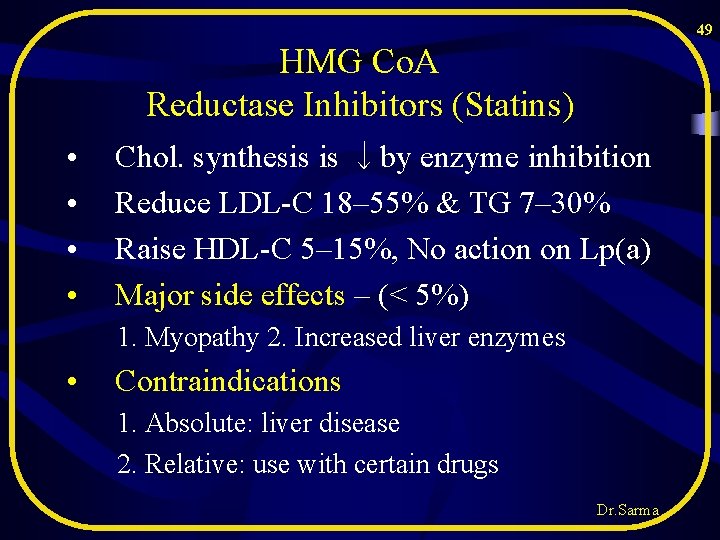
49 HMG Co. A Reductase Inhibitors (Statins) • • Chol. synthesis is ↓by enzyme inhibition Reduce LDL-C 18– 55% & TG 7– 30% Raise HDL-C 5– 15%, No action on Lp(a) Major side effects – (< 5%) 1. Myopathy 2. Increased liver enzymes • Contraindications 1. Absolute: liver disease 2. Relative: use with certain drugs Dr. Sarma
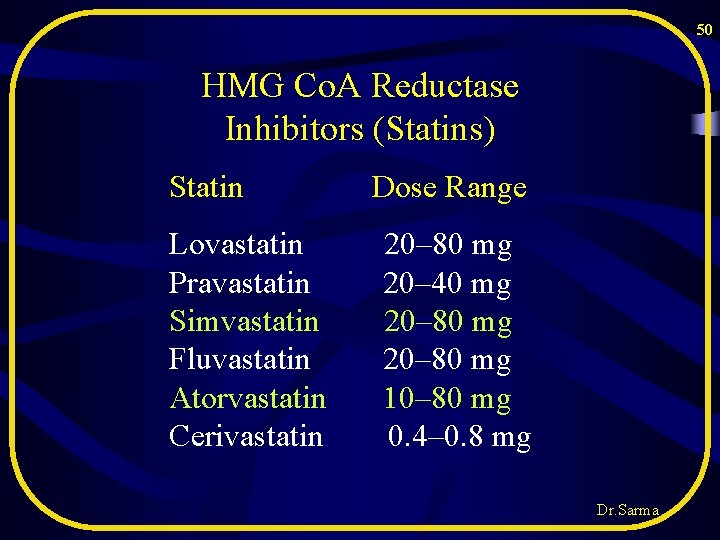
50 HMG Co. A Reductase Inhibitors (Statins) Statin Lovastatin Pravastatin Simvastatin Fluvastatin Atorvastatin Cerivastatin Dose Range 20– 80 mg 20– 40 mg 20– 80 mg 10– 80 mg 0. 4– 0. 8 mg Dr. Sarma
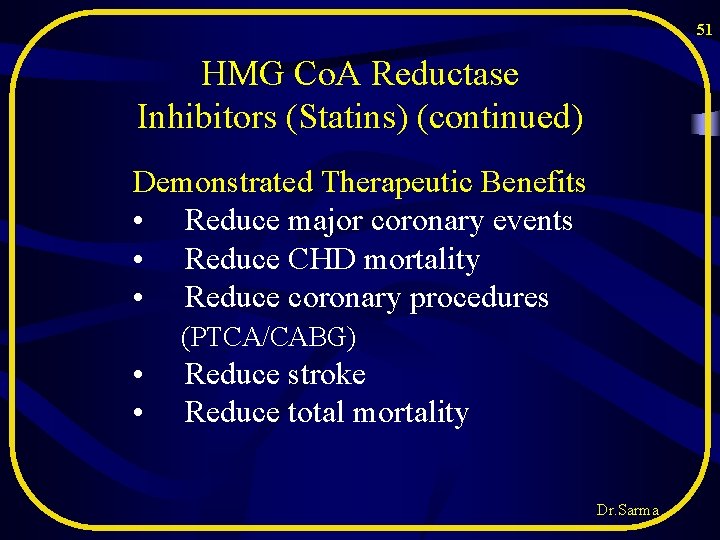
51 HMG Co. A Reductase Inhibitors (Statins) (continued) Demonstrated Therapeutic Benefits • Reduce major coronary events • Reduce CHD mortality • Reduce coronary procedures (PTCA/CABG) • • Reduce stroke Reduce total mortality Dr. Sarma
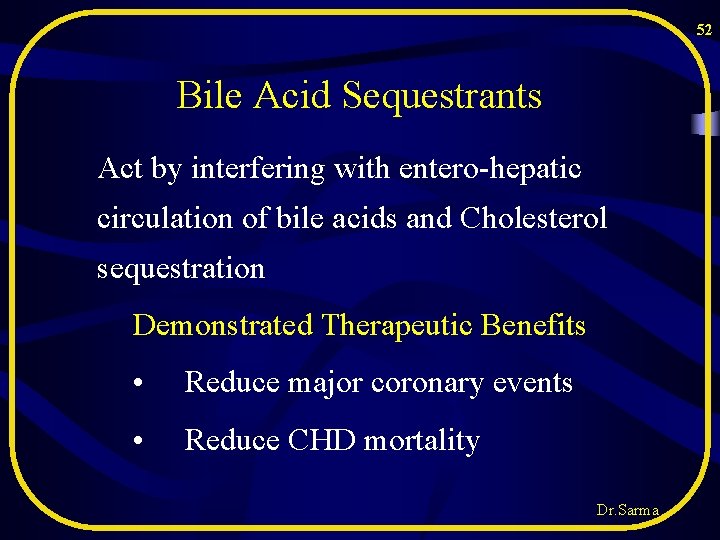
52 Bile Acid Sequestrants Act by interfering with entero-hepatic circulation of bile acids and Cholesterol sequestration Demonstrated Therapeutic Benefits • Reduce major coronary events • Reduce CHD mortality Dr. Sarma
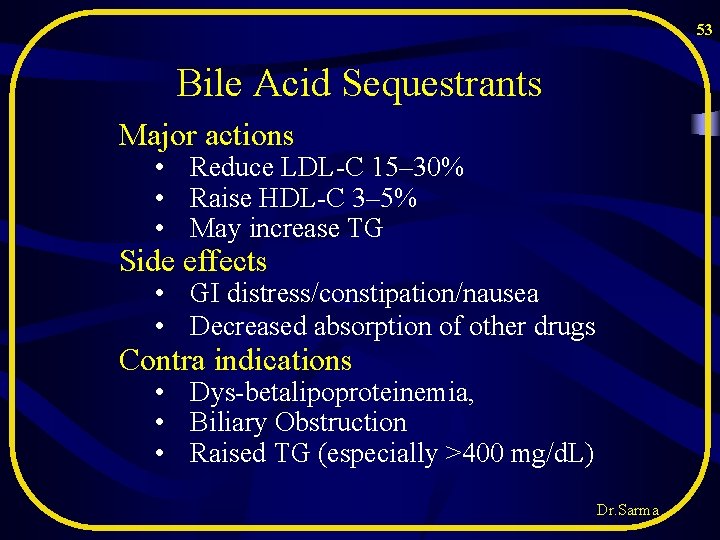
53 Bile Acid Sequestrants Major actions • Reduce LDL-C 15– 30% • Raise HDL-C 3– 5% • May increase TG Side effects • GI distress/constipation/nausea • Decreased absorption of other drugs Contra indications • Dys-betalipoproteinemia, • Biliary Obstruction • Raised TG (especially >400 mg/d. L) Dr. Sarma
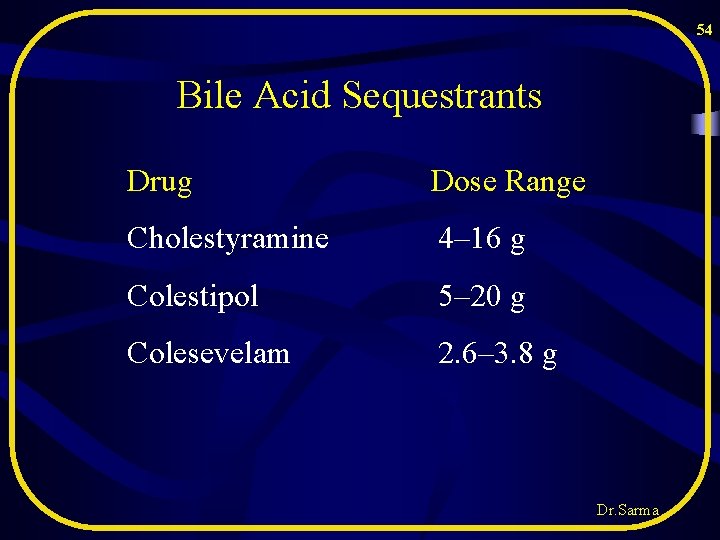
54 Bile Acid Sequestrants Drug Dose Range Cholestyramine 4– 16 g Colestipol 5– 20 g Colesevelam 2. 6– 3. 8 g Dr. Sarma
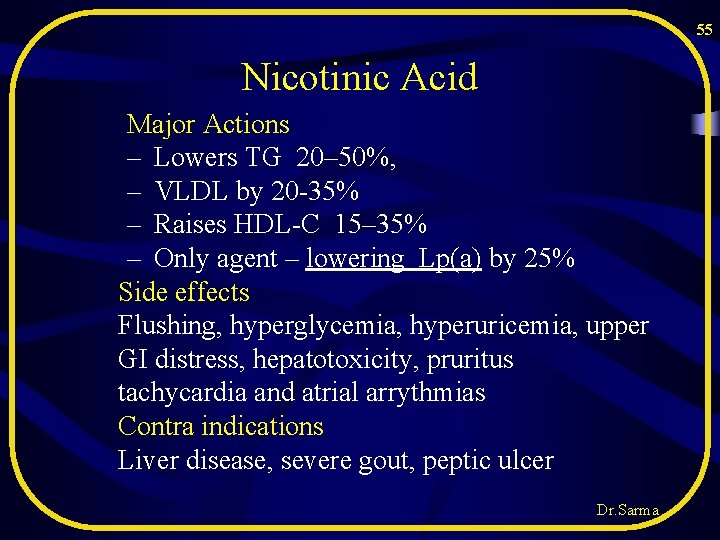
55 Nicotinic Acid Major Actions – Lowers TG 20– 50%, – VLDL by 20 -35% – Raises HDL-C 15– 35% – Only agent – lowering Lp(a) by 25% Side effects Flushing, hyperglycemia, hyperuricemia, upper GI distress, hepatotoxicity, pruritus tachycardia and atrial arrythmias Contra indications Liver disease, severe gout, peptic ulcer Dr. Sarma
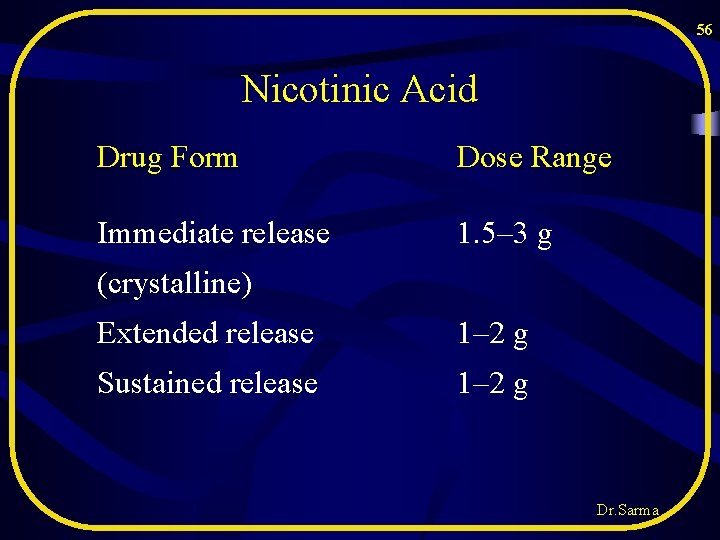
56 Nicotinic Acid Drug Form Dose Range Immediate release 1. 5– 3 g (crystalline) Extended release 1– 2 g Sustained release 1– 2 g Dr. Sarma
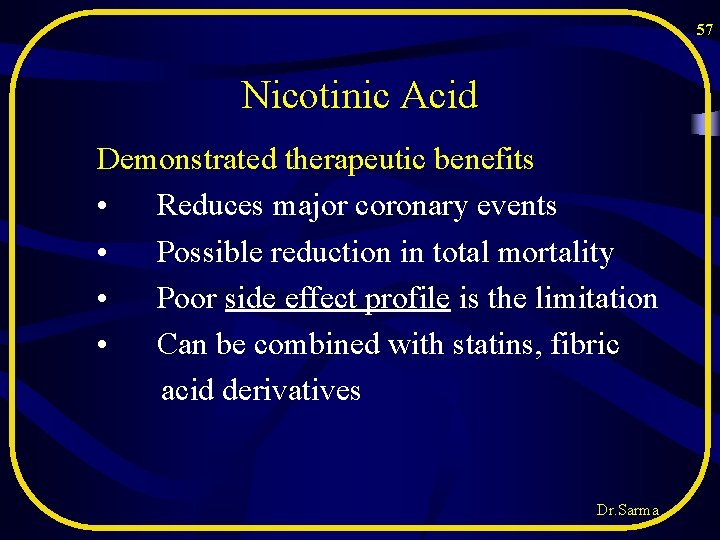
57 Nicotinic Acid Demonstrated therapeutic benefits • Reduces major coronary events • Possible reduction in total mortality • Poor side effect profile is the limitation • Can be combined with statins, fibric acid derivatives Dr. Sarma
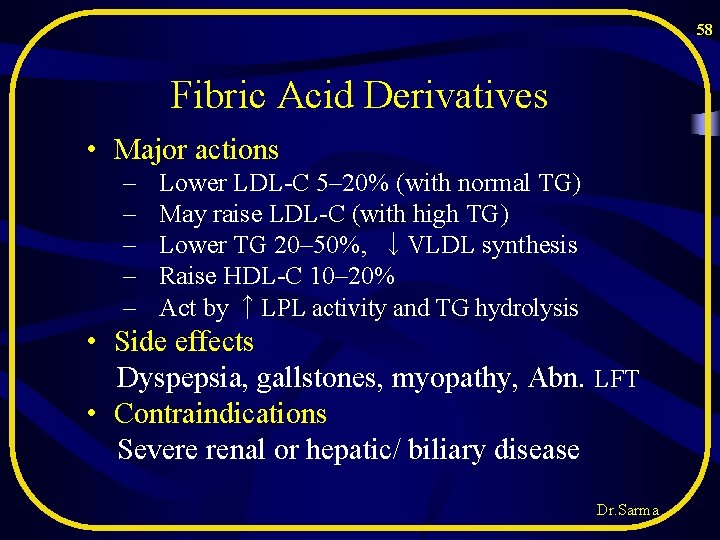
58 Fibric Acid Derivatives • Major actions – – – Lower LDL-C 5– 20% (with normal TG) May raise LDL-C (with high TG) Lower TG 20– 50%, ↓VLDL synthesis Raise HDL-C 10– 20% Act by ↑LPL activity and TG hydrolysis • Side effects Dyspepsia, gallstones, myopathy, Abn. LFT • Contraindications Severe renal or hepatic/ biliary disease Dr. Sarma
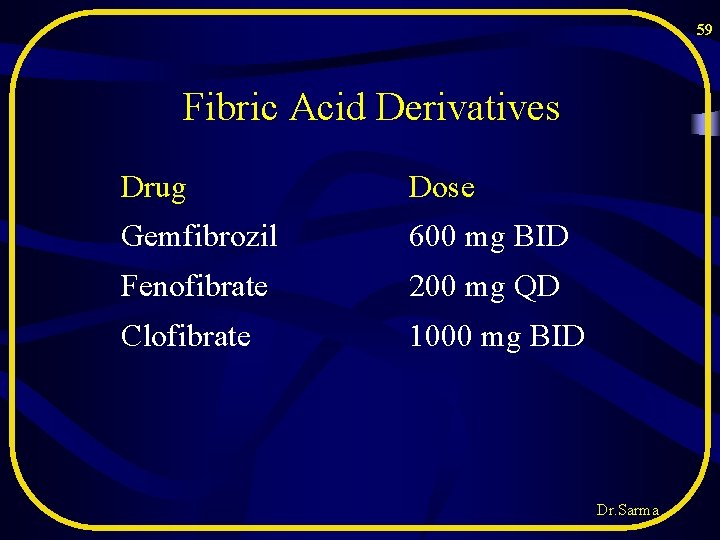
59 Fibric Acid Derivatives Drug Dose Gemfibrozil 600 mg BID Fenofibrate 200 mg QD Clofibrate 1000 mg BID Dr. Sarma
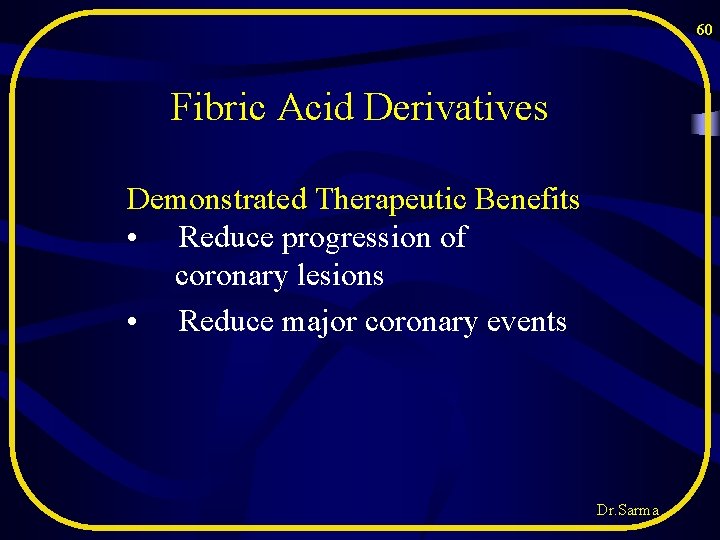
60 Fibric Acid Derivatives Demonstrated Therapeutic Benefits • Reduce progression of coronary lesions • Reduce major coronary events Dr. Sarma
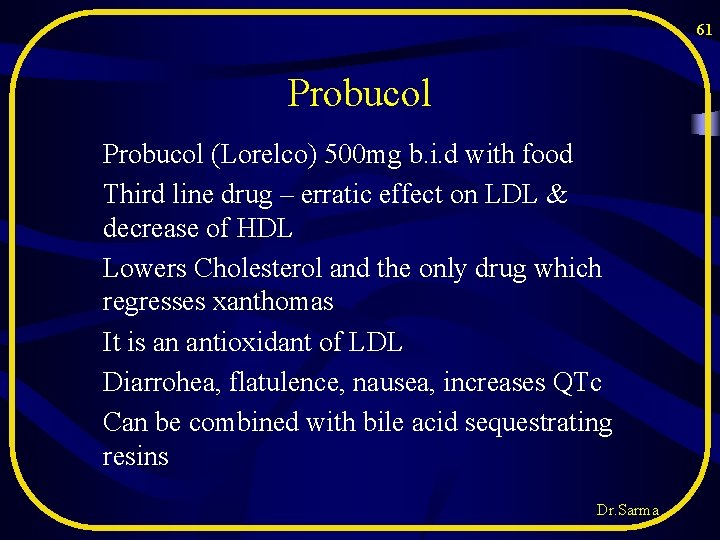
61 Probucol (Lorelco) 500 mg b. i. d with food Third line drug – erratic effect on LDL & decrease of HDL Lowers Cholesterol and the only drug which regresses xanthomas It is an antioxidant of LDL Diarrohea, flatulence, nausea, increases QTc Can be combined with bile acid sequestrating resins Dr. Sarma
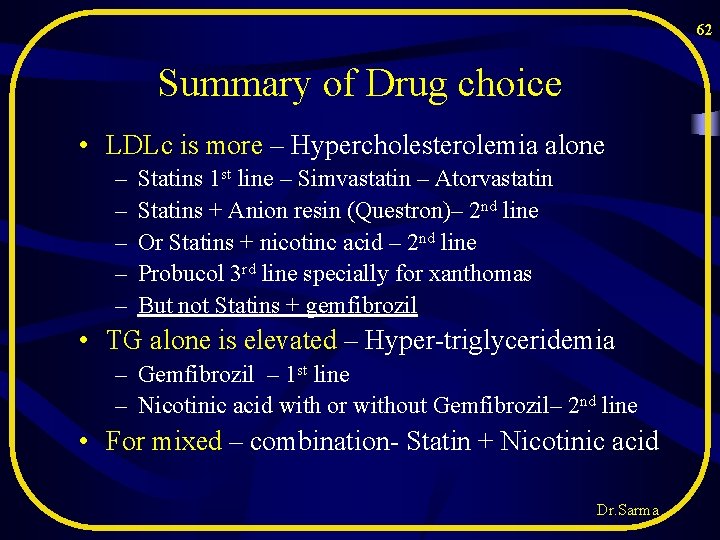
62 Summary of Drug choice • LDLc is more – Hypercholesterolemia alone – – – Statins 1 st line – Simvastatin – Atorvastatin Statins + Anion resin (Questron)– 2 nd line Or Statins + nicotinc acid – 2 nd line Probucol 3 rd line specially for xanthomas But not Statins + gemfibrozil • TG alone is elevated – Hyper-triglyceridemia – Gemfibrozil – 1 st line – Nicotinic acid with or without Gemfibrozil– 2 nd line • For mixed – combination- Statin + Nicotinic acid Dr. Sarma
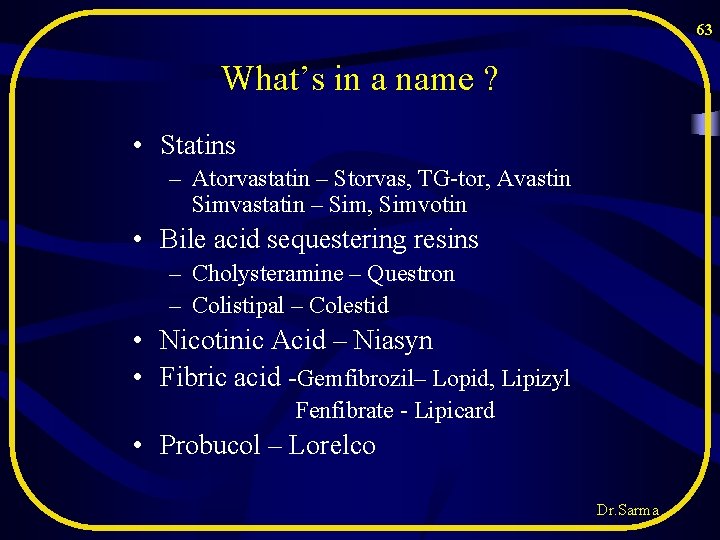
63 What’s in a name ? • Statins – Atorvastatin – Storvas, TG-tor, Avastin Simvastatin – Sim, Simvotin • Bile acid sequestering resins – Cholysteramine – Questron – Colistipal – Colestid • Nicotinic Acid – Niasyn • Fibric acid -Gemfibrozil– Lopid, Lipizyl Fenfibrate - Lipicard • Probucol – Lorelco Dr. Sarma
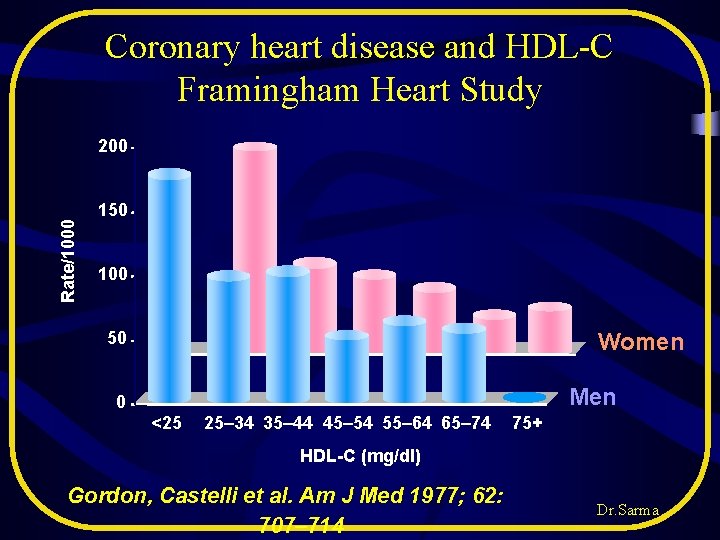
Coronary heart disease and HDL-C Framingham Heart Study Rate/1000 200 150 100 50 Women Men 0 <25 25– 34 35– 44 45– 54 55– 64 65– 74 75+ HDL-C (mg/dl) Gordon, Castelli et al. Am J Med 1977; 62: 707– 714 Dr. Sarma
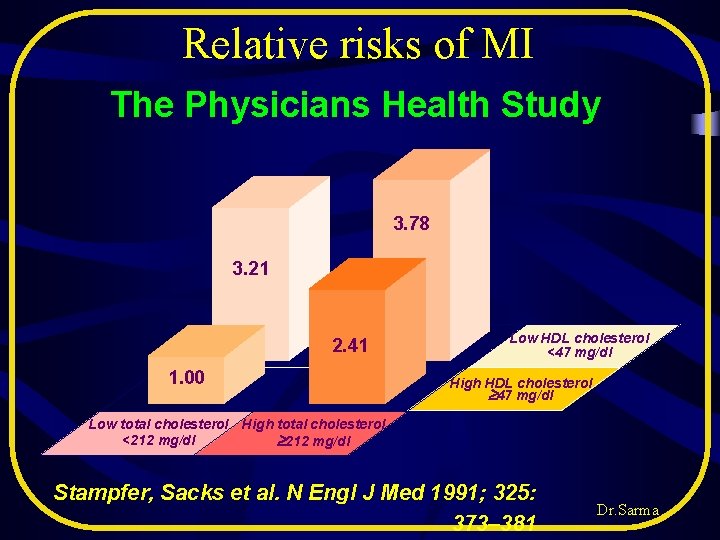
Relative risks of MI The Physicians Health Study 3. 78 3. 21 2. 41 1. 00 Low HDL cholesterol <47 mg/dl High HDL cholesterol 47 mg/dl Low total cholesterol High total cholesterol <212 mg/dl Stampfer, Sacks et al. N Engl J Med 1991; 325: 373– 381 Dr. Sarma
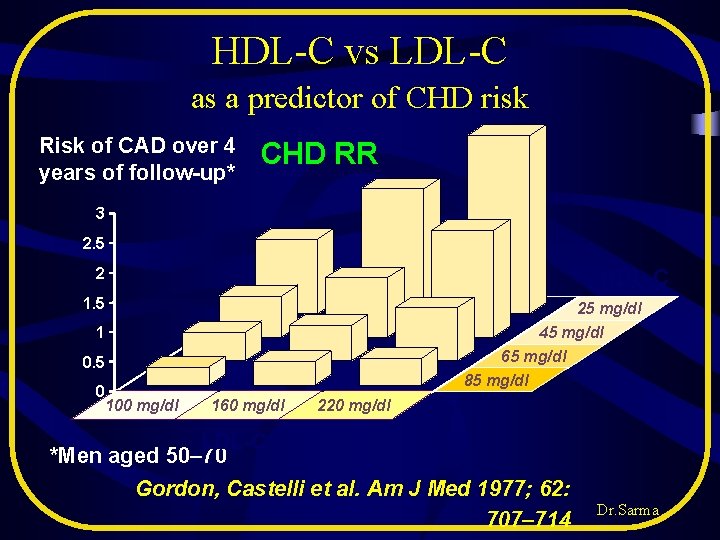
HDL-C vs LDL-C as a predictor of CHD risk Risk of CAD over 4 years of follow-up* CHD RR 3 2. 5 2 HDL-C 1. 5 25 mg/dl 45 mg/dl 65 mg/dl 85 mg/dl 1 0. 5 0 100 mg/dl 160 mg/dl 220 mg/dl LDL-C *Men aged 50– 70 Gordon, Castelli et al. Am J Med 1977; 62: 707– 714 Dr. Sarma
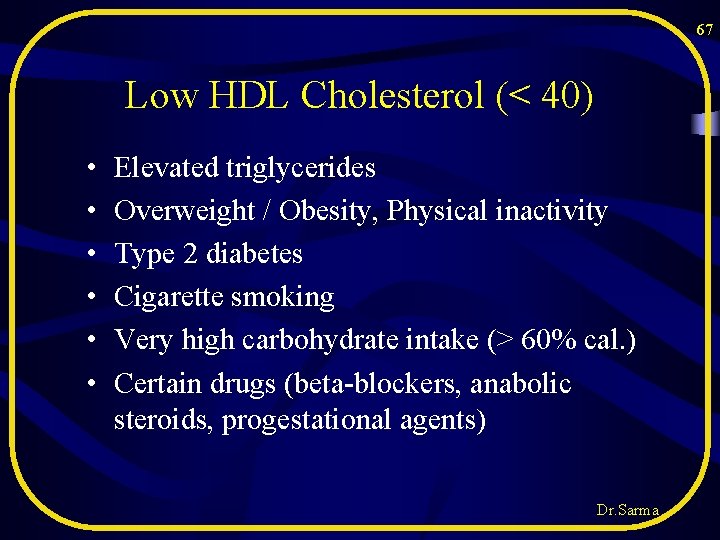
67 Low HDL Cholesterol (< 40) • • • Elevated triglycerides Overweight / Obesity, Physical inactivity Type 2 diabetes Cigarette smoking Very high carbohydrate intake (> 60% cal. ) Certain drugs (beta-blockers, anabolic steroids, progestational agents) Dr. Sarma
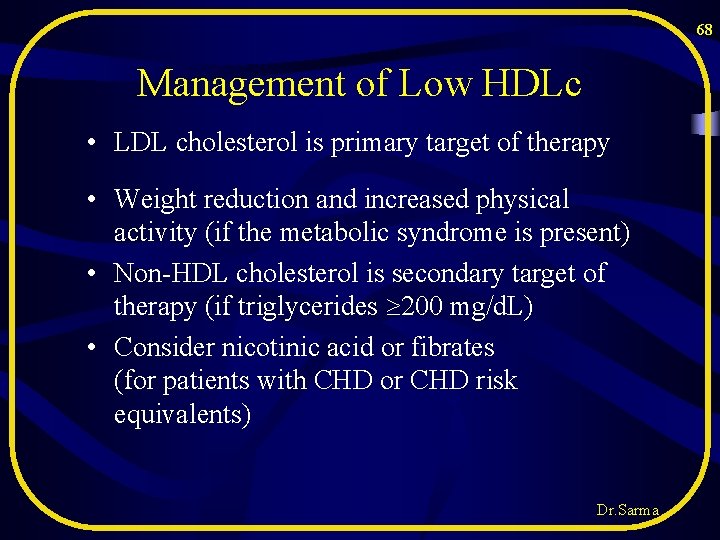
68 Management of Low HDLc • LDL cholesterol is primary target of therapy • Weight reduction and increased physical activity (if the metabolic syndrome is present) • Non-HDL cholesterol is secondary target of therapy (if triglycerides 200 mg/d. L) • Consider nicotinic acid or fibrates (for patients with CHD or CHD risk equivalents) Dr. Sarma
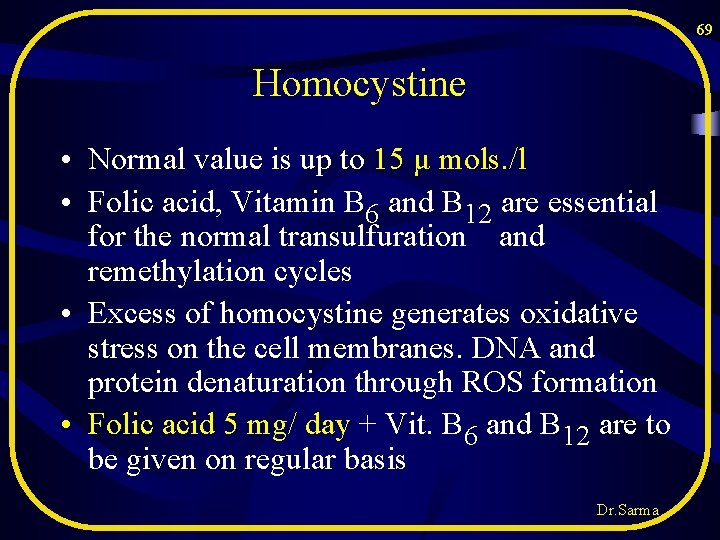
69 Homocystine • Normal value is up to 15 μ mols. /l • Folic acid, Vitamin B 6 and B 12 are essential for the normal transulfuration and remethylation cycles • Excess of homocystine generates oxidative stress on the cell membranes. DNA and protein denaturation through ROS formation • Folic acid 5 mg/ day + Vit. B 6 and B 12 are to be given on regular basis Dr. Sarma
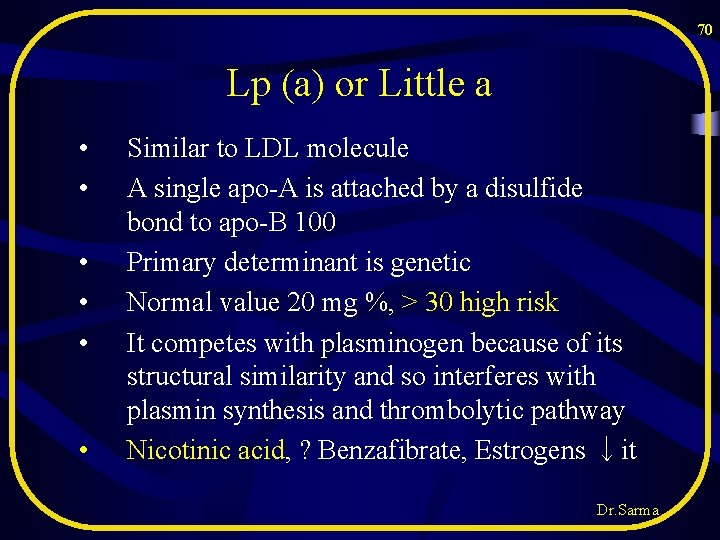
70 Lp (a) or Little a • • • Similar to LDL molecule A single apo-A is attached by a disulfide bond to apo-B 100 Primary determinant is genetic Normal value 20 mg %, > 30 high risk It competes with plasminogen because of its structural similarity and so interferes with plasmin synthesis and thrombolytic pathway Nicotinic acid, ? Benzafibrate, Estrogens ↓it Dr. Sarma
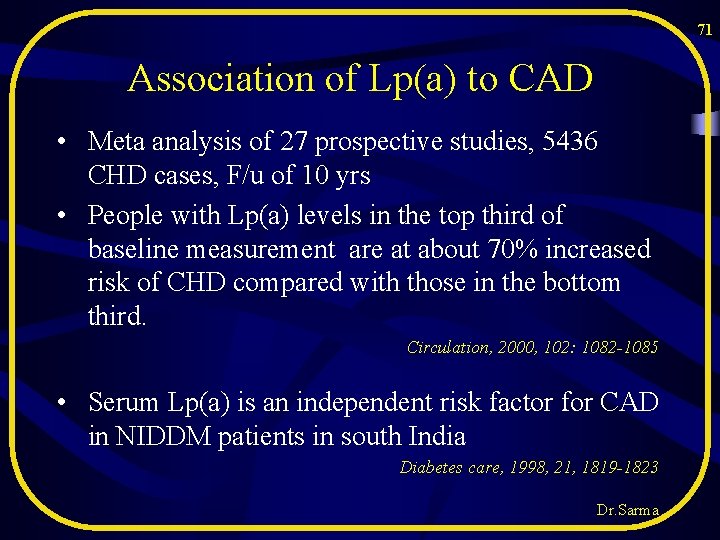
71 Association of Lp(a) to CAD • Meta analysis of 27 prospective studies, 5436 CHD cases, F/u of 10 yrs • People with Lp(a) levels in the top third of baseline measurement are at about 70% increased risk of CHD compared with those in the bottom third. Circulation, 2000, 102: 1082 -1085 • Serum Lp(a) is an independent risk factor for CAD in NIDDM patients in south India Diabetes care, 1998, 21, 1819 -1823 Dr. Sarma
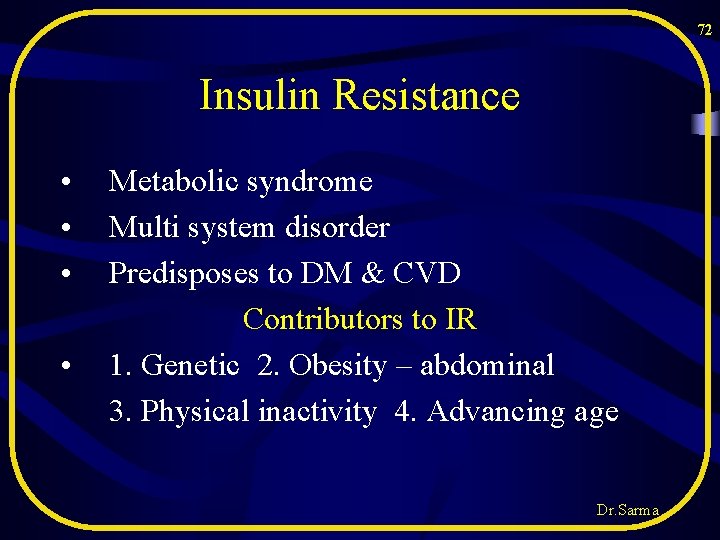
72 Insulin Resistance • • Metabolic syndrome Multi system disorder Predisposes to DM & CVD Contributors to IR 1. Genetic 2. Obesity – abdominal 3. Physical inactivity 4. Advancing age Dr. Sarma
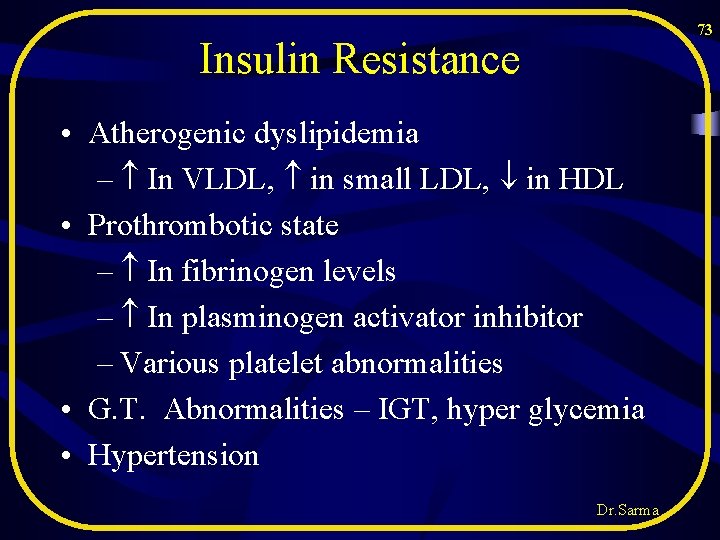
73 Insulin Resistance • Atherogenic dyslipidemia – In VLDL, in small LDL, in HDL • Prothrombotic state – In fibrinogen levels – In plasminogen activator inhibitor – Various platelet abnormalities • G. T. Abnormalities – IGT, hyper glycemia • Hypertension Dr. Sarma
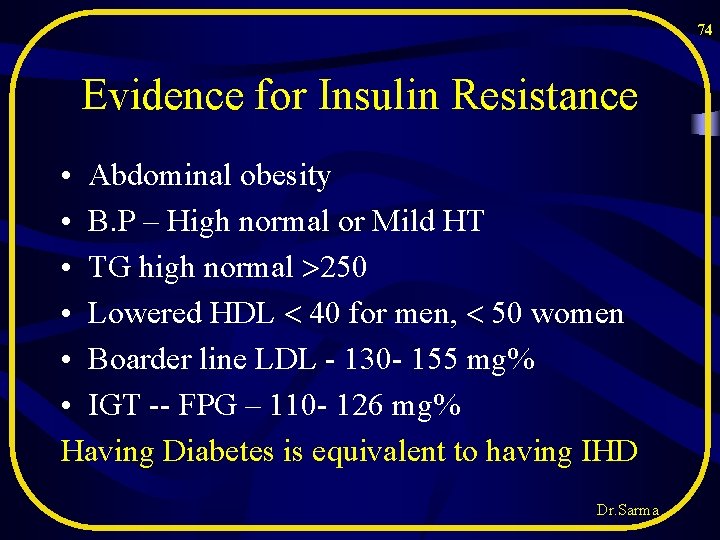
74 Evidence for Insulin Resistance • Abdominal obesity • B. P – High normal or Mild HT • TG high normal 250 • Lowered HDL 40 for men, 50 women • Boarder line LDL - 130 - 155 mg% • IGT -- FPG – 110 - 126 mg% Having Diabetes is equivalent to having IHD Dr. Sarma
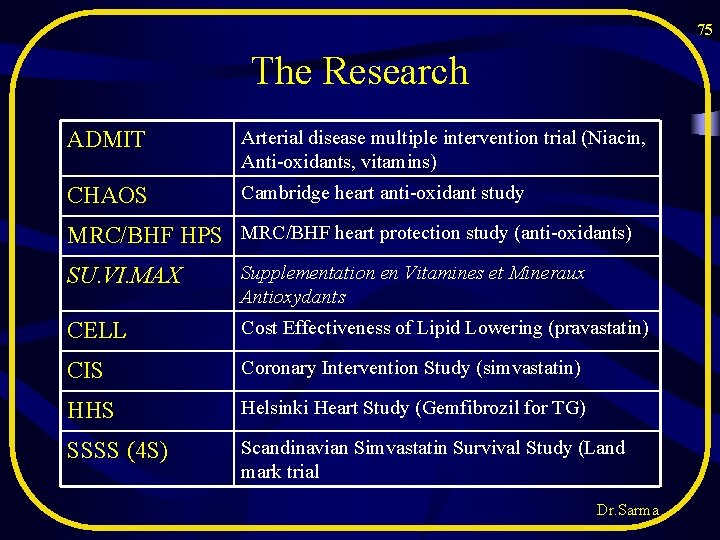
75 The Research ADMIT Arterial disease multiple intervention trial (Niacin, Anti-oxidants, vitamins) CHAOS Cambridge heart anti-oxidant study MRC/BHF HPS MRC/BHF heart protection study (anti-oxidants) SU. VI. MAX Supplementation en Vitamines et Mineraux Antioxydants CELL Cost Effectiveness of Lipid Lowering (pravastatin) CIS Coronary Intervention Study (simvastatin) HHS Helsinki Heart Study (Gemfibrozil for TG) SSSS (4 S) Scandinavian Simvastatin Survival Study (Land mark trial Dr. Sarma
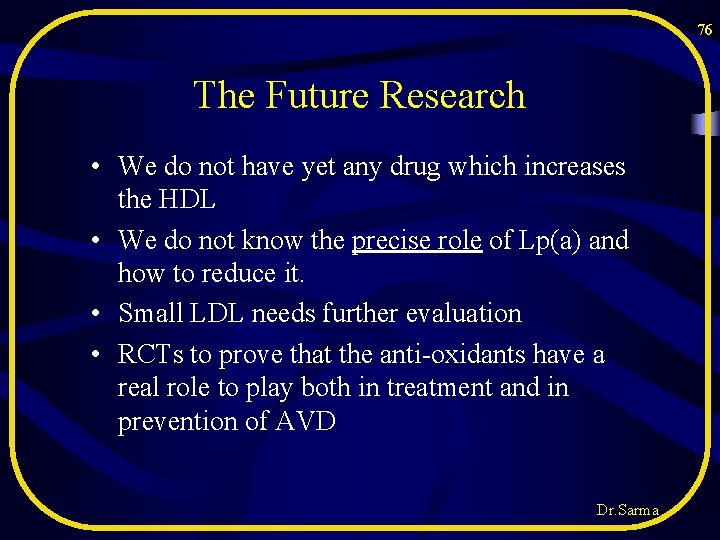
76 The Future Research • We do not have yet any drug which increases the HDL • We do not know the precise role of Lp(a) and how to reduce it. • Small LDL needs further evaluation • RCTs to prove that the anti-oxidants have a real role to play both in treatment and in prevention of AVD Dr. Sarma
77 The Almighty May pardon and grant me heaven – Even if I don't know a single letter about – Crutz Feld Jacob’s Disease – Tsutsugamushi Fever – Criggler Nazzar Syndrome – South American equine encephalitis and – Many and much more BUT Dr. Sarma
78 The Almighty Will drag me to hell and will not pardon my • Ignorance of even the minute details common diseases like DM, HT, IHD, Dyslipedimias etc. , • Indifference to apply current knowledge • Negligence in screening for Lipid abnormalities • Despondency about preventing CHD, DM, IR • Inadequacy in maintaining my patients as normo- tensive, normo-glycemic, and normo-lipemic as possible (This is applicable to all common diseases) Dr. Sarma
79 Do You Who I am ? I am the primary care physician on whom my patients bestow all trust Dr. Sarma
80 Thanks Everyone Dr. Sarma
81 Best Wishes for a Sarvae Jana Sukhino Bhavantu Happy New Year Dr. Sarma