
1 DNA DNA is the blueprint of life
1

DNA • DNA is the blueprint of life because it contains the instructions for making proteins. 2
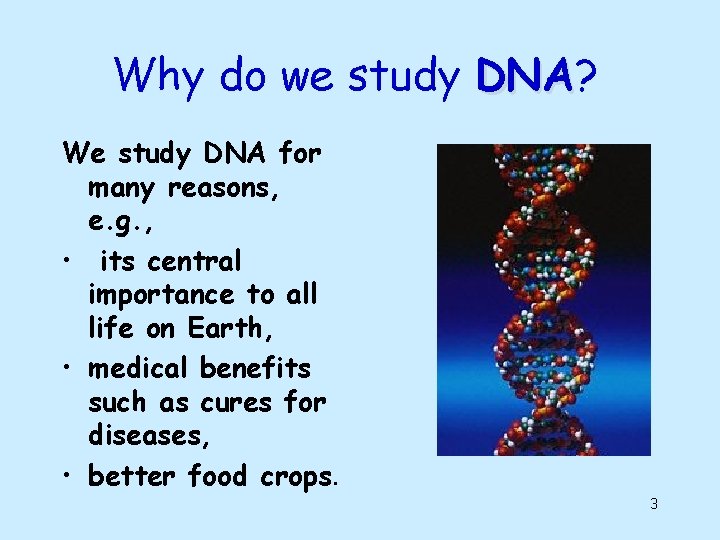
Why do we study DNA? DNA We study DNA for many reasons, e. g. , • its central importance to all life on Earth, • medical benefits such as cures for diseases, • better food crops. 3
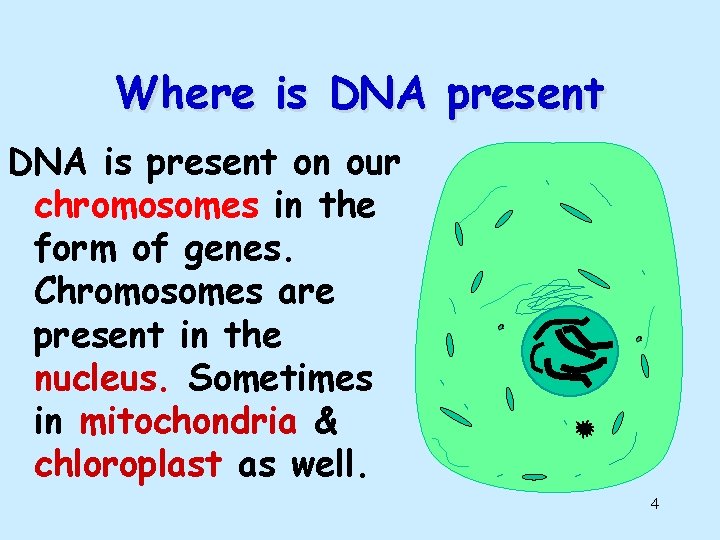
Where is DNA present DNA is present on our chromosomes in the form of genes. Chromosomes are present in the nucleus. Sometimes in mitochondria & chloroplast as well. 4
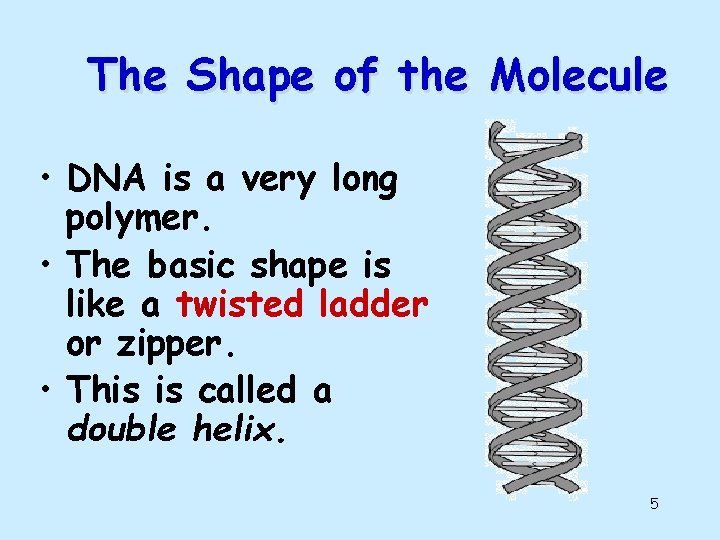
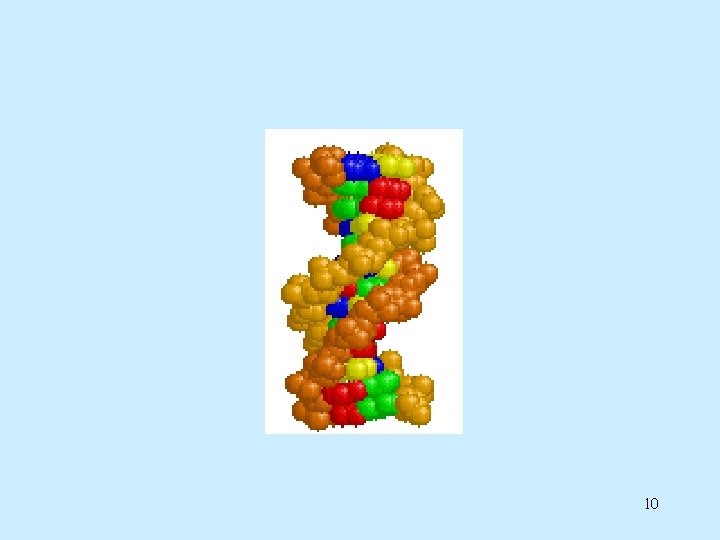
The Shape of the Molecule • DNA is a very long polymer. • The basic shape is like a twisted ladder or zipper. • This is called a double helix. 5
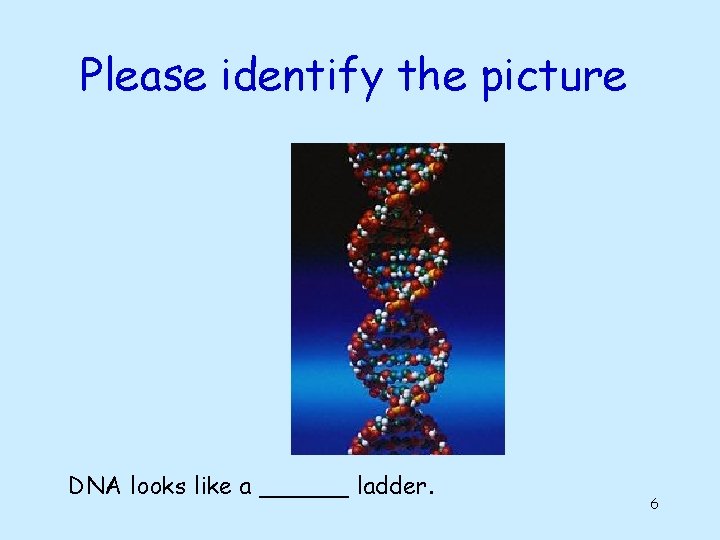
Please identify the picture DNA looks like a ______ ladder. 6
What we learned so far…… • DNA is called blue print of life because_____ • Why do we study DNA? • DNA Molecules looks like what? • DNA is found mainly in nucleus, but some it is also found in ___ and chloroplast. 7
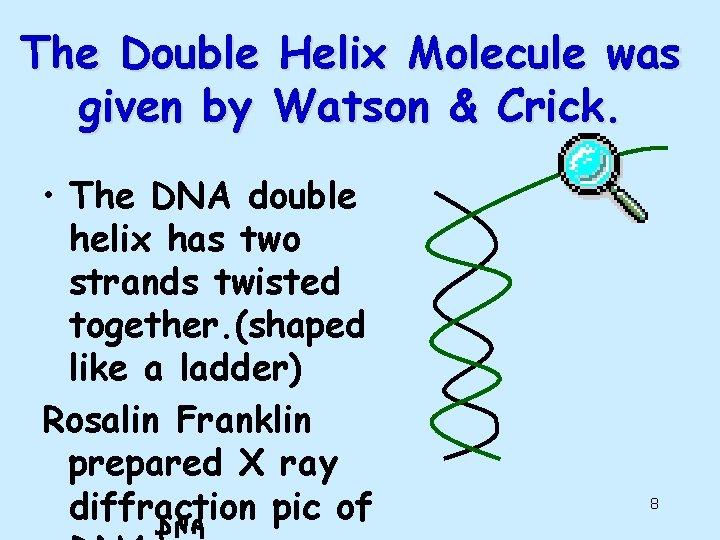
The Double Helix Molecule was given by Watson & Crick. • The DNA double helix has two strands twisted together. (shaped like a ladder) Rosalin Franklin prepared X ray diffraction pic of 8
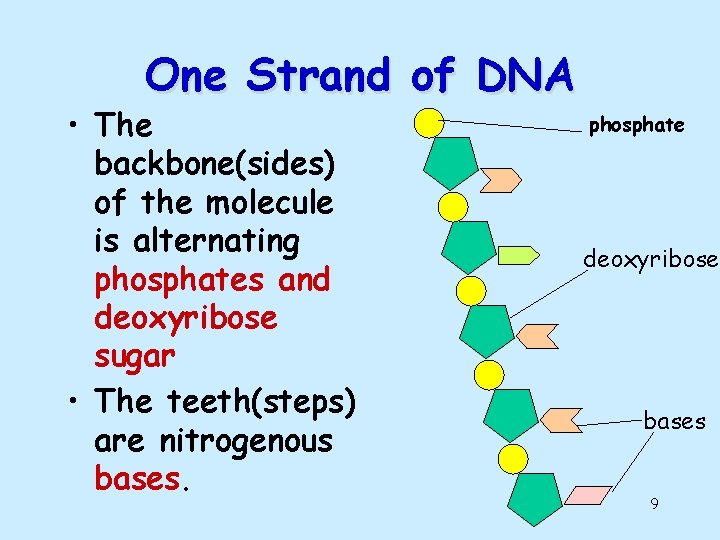
One Strand of DNA • The backbone(sides) of the molecule is alternating phosphates and deoxyribose sugar • The teeth(steps) are nitrogenous bases. phosphate deoxyribose bases 9
10
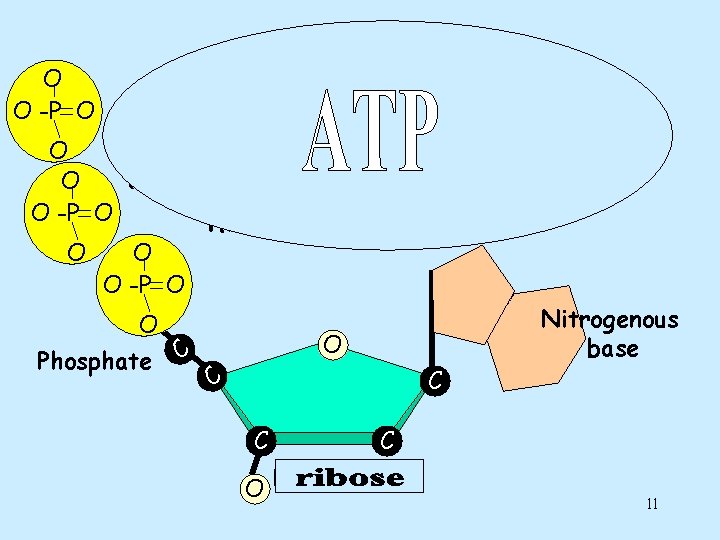
Nucleotides O O -P O O One deoxyribose together with its phosphate and base make a nucleotide. O O -P O O O C C C Phosphate Nitrogenous base C C O Deoxyribose 11
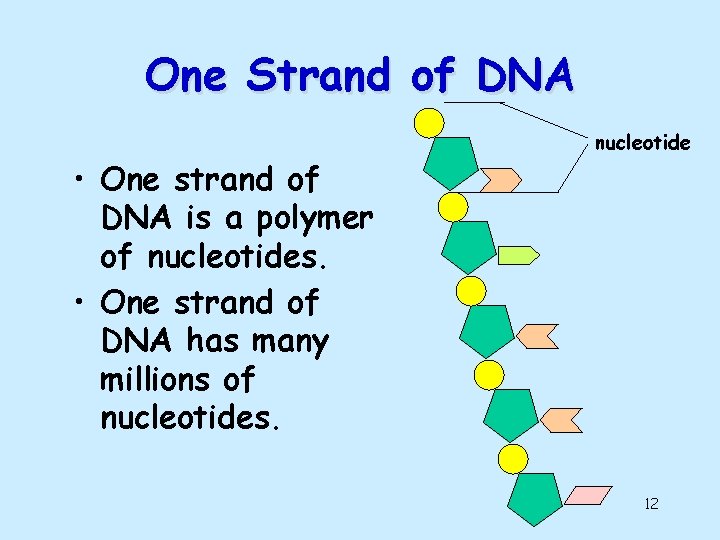
One Strand of DNA • One strand of DNA is a polymer of nucleotides. • One strand of DNA has many millions of nucleotides. nucleotide 12
Let us see… • A DNA molecule is a monomer or a polymer? ? ? • It is a polymer because it is made up of many ____. 13
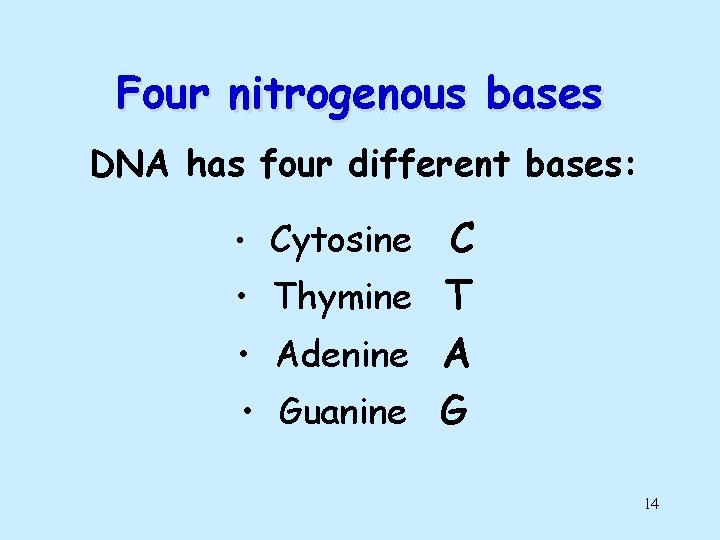
Four nitrogenous bases DNA has four different bases: C • Thymine T • Adenine A • Guanine G • Cytosine 14
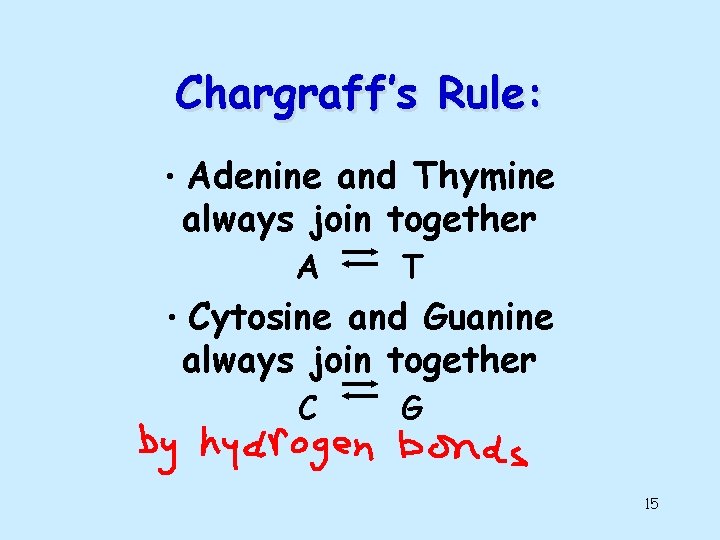
Chargraff’s Rule: • Adenine and Thymine always join together A T • Cytosine and Guanine always join together C G 15
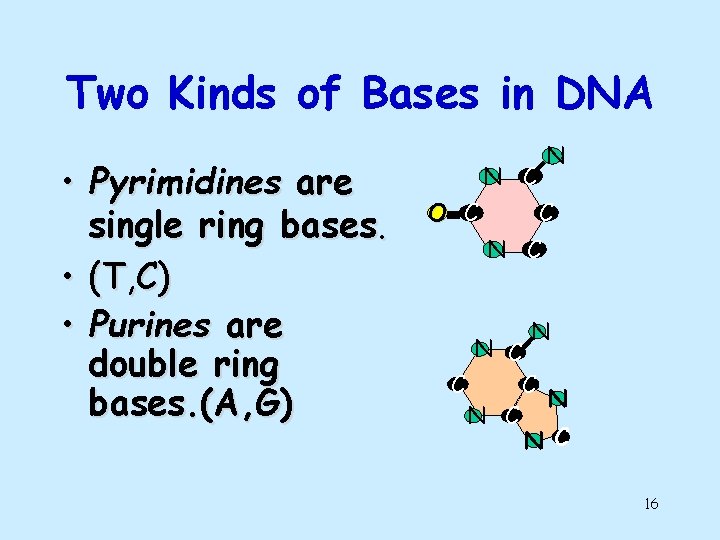
Two Kinds of Bases in DNA • Pyrimidines are single ring bases. • (T, C) • Purines are double ring bases. (A, G) N N C O C C N N C 16
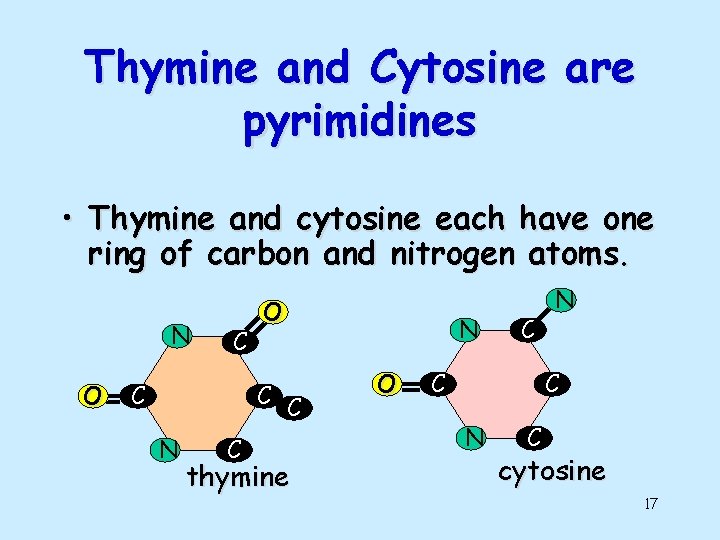
Thymine and Cytosine are pyrimidines • Thymine and cytosine each have one ring of carbon and nitrogen atoms. N O C C N C thymine N O C C N C cytosine 17
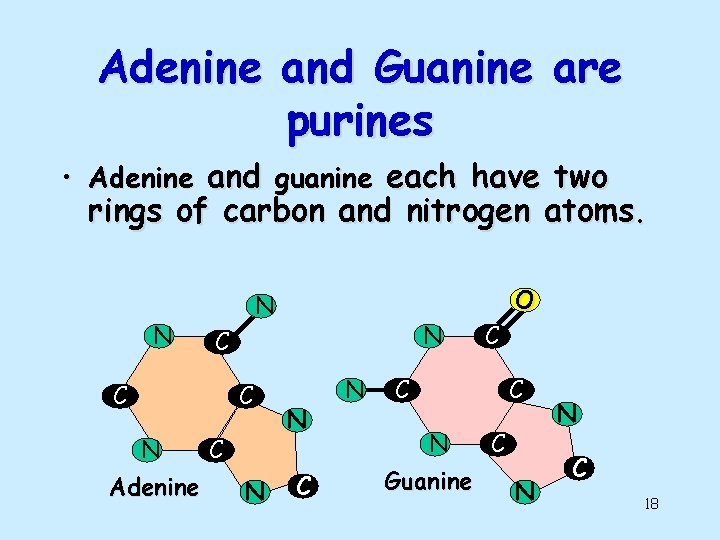
Adenine and Guanine are purines • Adenine and guanine each have two rings of carbon and nitrogen atoms. N C Adenine N C C N O N C N C C C N Guanine C N N C 18
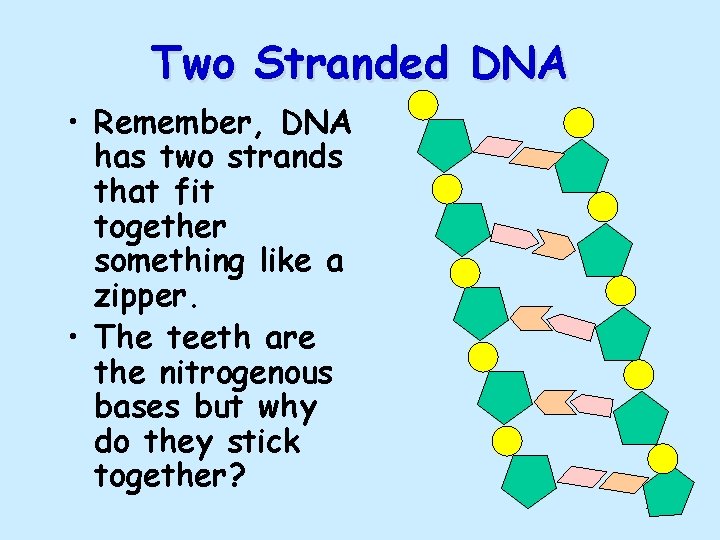
Two Stranded DNA • Remember, DNA has two strands that fit together something like a zipper. • The teeth are the nitrogenous bases but why do they stick together? 19
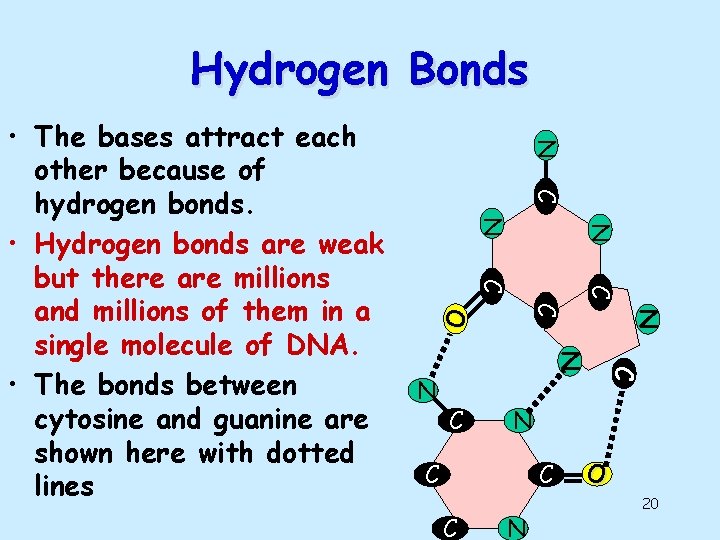
Hydrogen Bonds N C N N C C N C O N C C C C N • The bases attract each other because of hydrogen bonds. • Hydrogen bonds are weak but there are millions and millions of them in a single molecule of DNA. • The bonds between cytosine and guanine are shown here with dotted lines N O 20
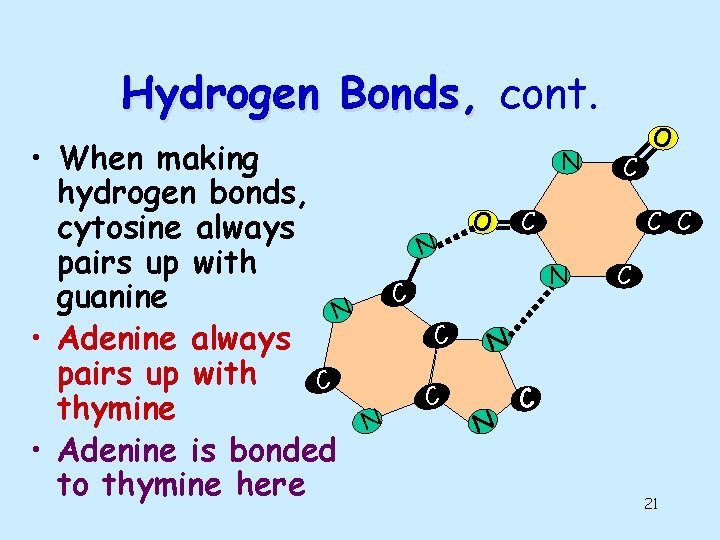
Hydrogen Bonds, cont. • When making hydrogen bonds, cytosine always pairs up with guanine N • Adenine always pairs up with C thymine • Adenine is bonded to thymine here N N O C N C C C O C N N C 21
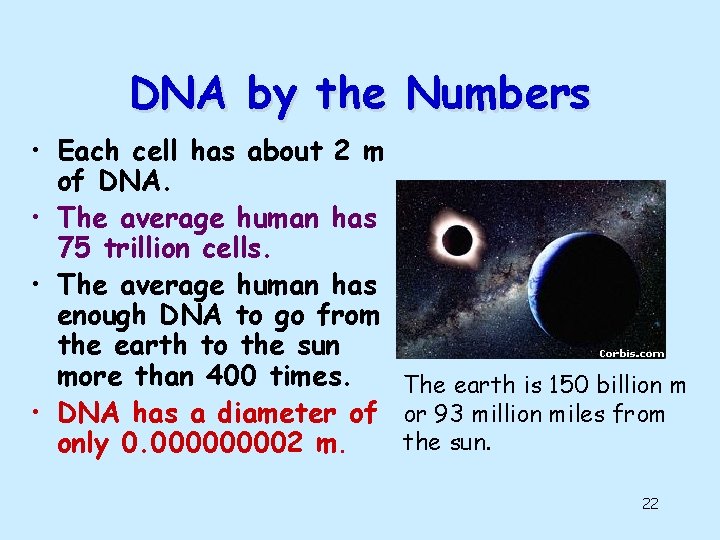
DNA by the Numbers • Each cell has about 2 m of DNA. • The average human has 75 trillion cells. • The average human has enough DNA to go from the earth to the sun more than 400 times. The earth is 150 billion m • DNA has a diameter of or 93 million miles from the sun. only 0. 00002 m. 22
- Slides: 22