
1 D Kinematics Questions Reference frames position displacement

- Slides: 16
1 -D Kinematics • • Questions Reference frames, position, displacement. Average velocity and speed. (examples) Instantaneous velocity. Acceleration. (examples) Position, Velocity, and Acceleration examples.
Question • Web. Assign procedures • Questions
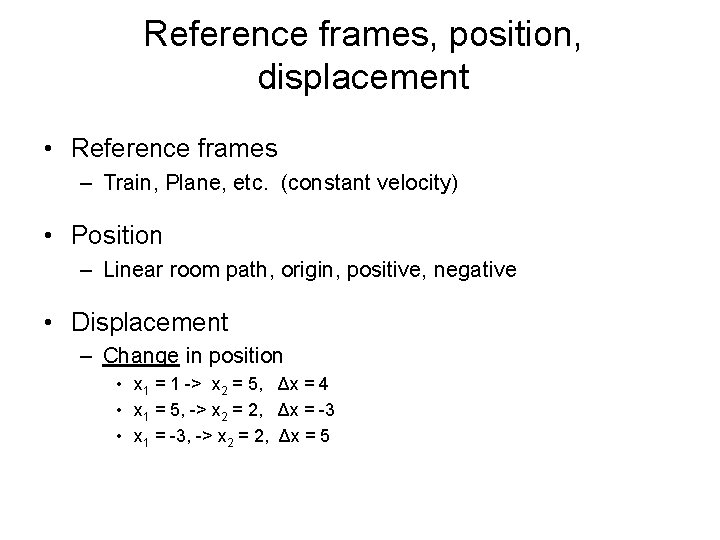
Reference frames, position, displacement • Reference frames – Train, Plane, etc. (constant velocity) • Position – Linear room path, origin, positive, negative • Displacement – Change in position • x 1 = 1 -> x 2 = 5, Δx = 4 • x 1 = 5, -> x 2 = 2, Δx = -3 • x 1 = -3, -> x 2 = 2, Δx = 5
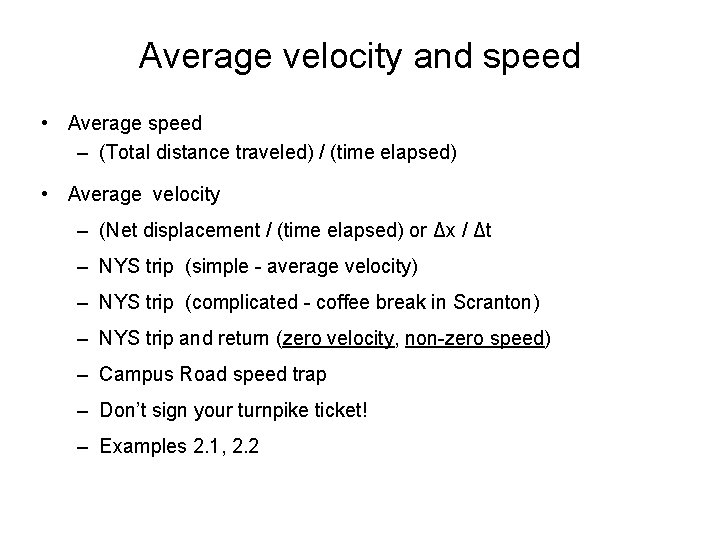
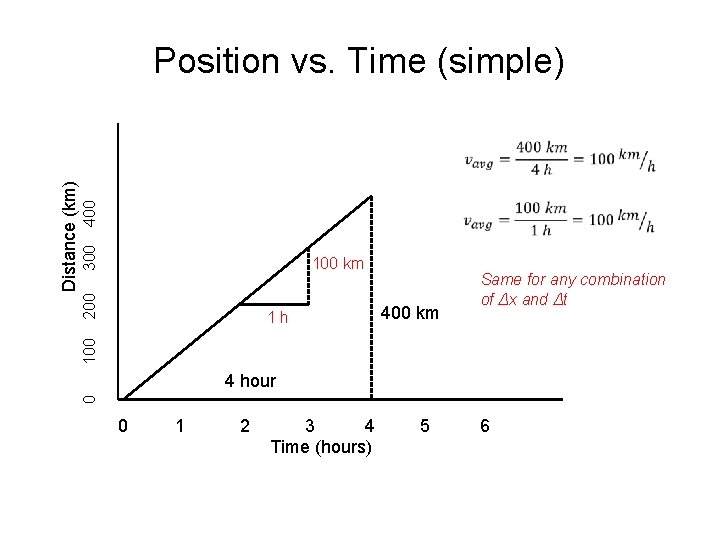
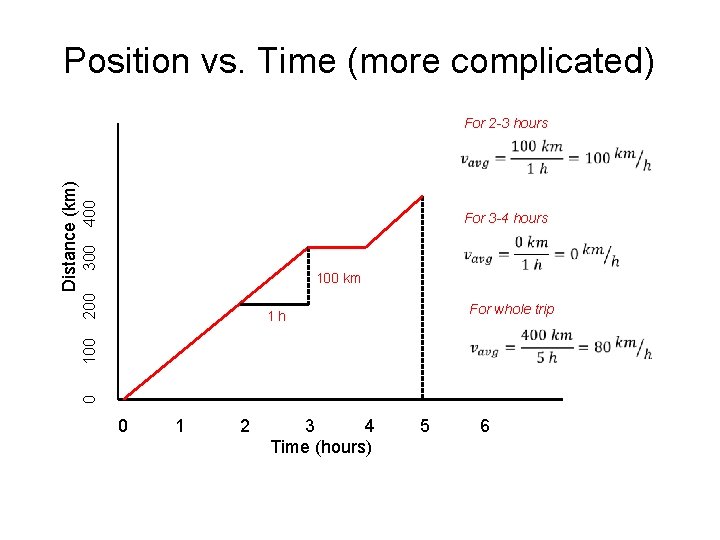
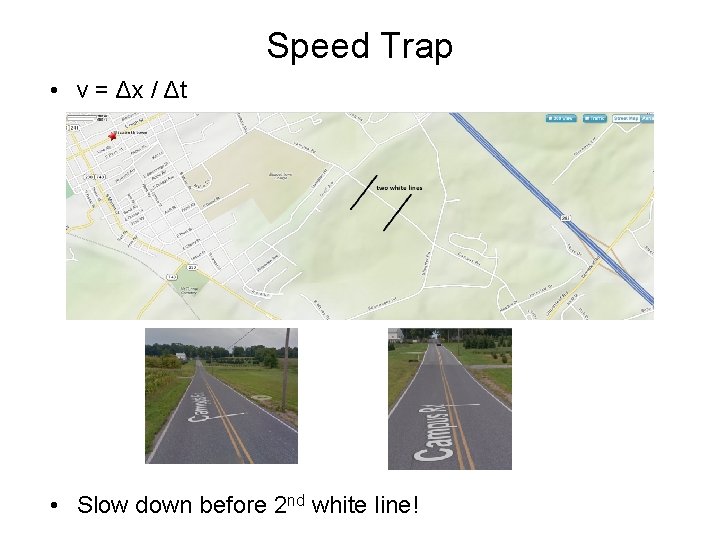
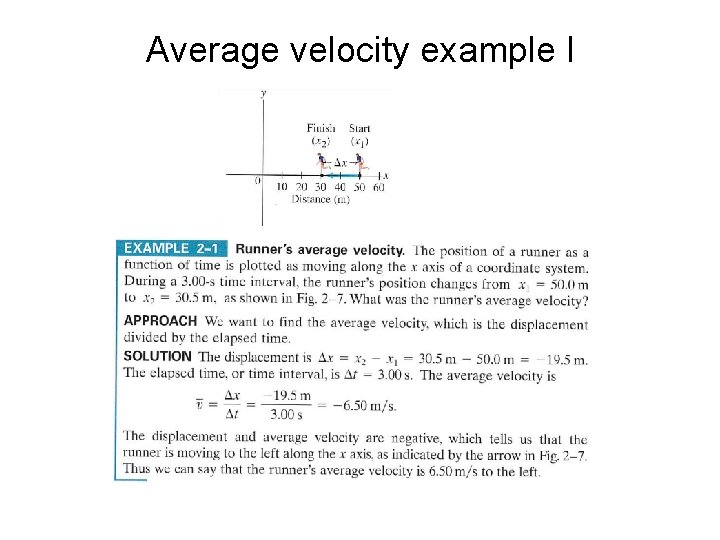
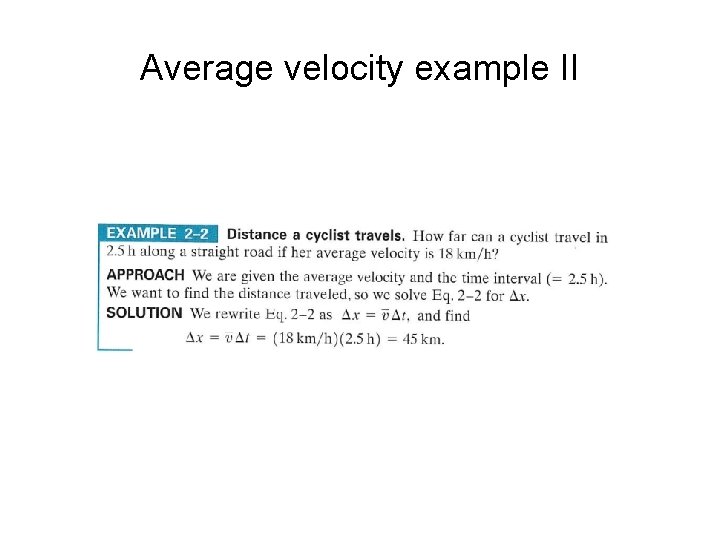
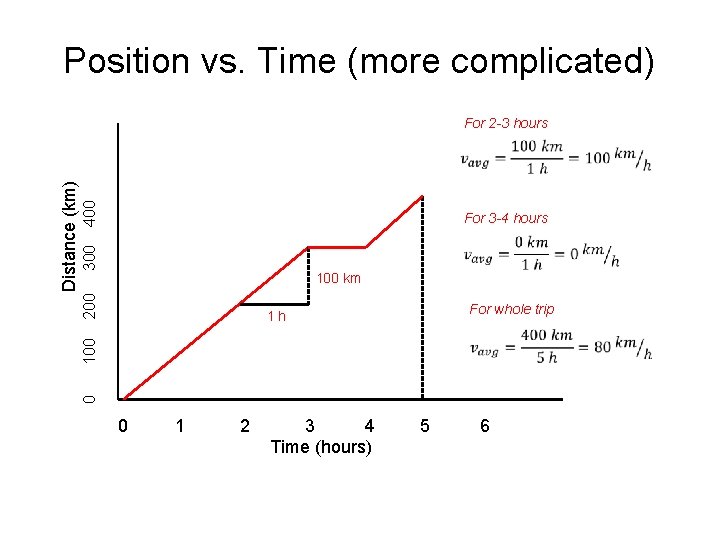
Average velocity and speed • Average speed – (Total distance traveled) / (time elapsed) • Average velocity – (Net displacement / (time elapsed) or Δx / Δt – NYS trip (simple - average velocity) – NYS trip (complicated - coffee break in Scranton) – NYS trip and return (zero velocity, non-zero speed) – Campus Road speed trap – Don’t sign your turnpike ticket! – Examples 2. 1, 2. 2
400 300 200 100 km 400 km 100 1 h Same for any combination of Δx and Δt 4 hour 0 Distance (km) Position vs. Time (simple) 0 1 2 3 4 Time (hours) 5 6
Position vs. Time (more complicated) 400 300 For 3 -4 hours 200 100 km For whole trip 100 1 h 0 Distance (km) For 2 -3 hours 0 1 2 3 4 Time (hours) 5 6
Speed Trap • v = Δx / Δt • Slow down before 2 nd white line!
Average velocity example I
Average velocity example II
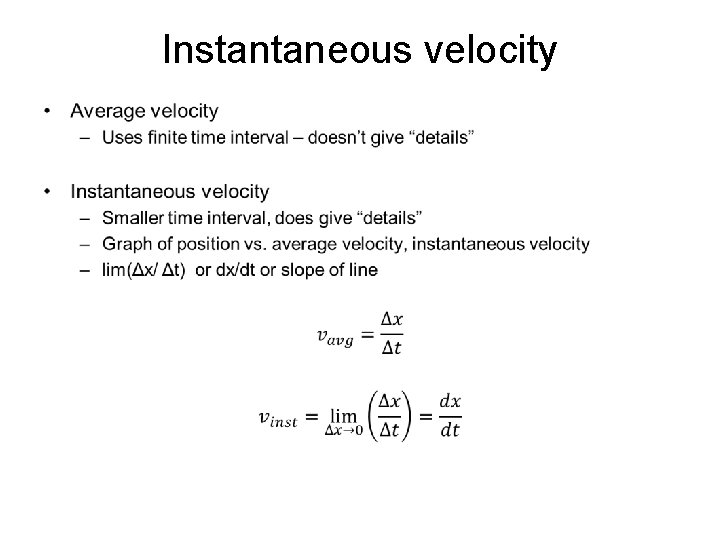
Instantaneous velocity •
Position vs. Time (more complicated) 400 300 For 3 -4 hours 200 100 km For whole trip 100 1 h 0 Distance (km) For 2 -3 hours 0 1 2 3 4 Time (hours) 5 6
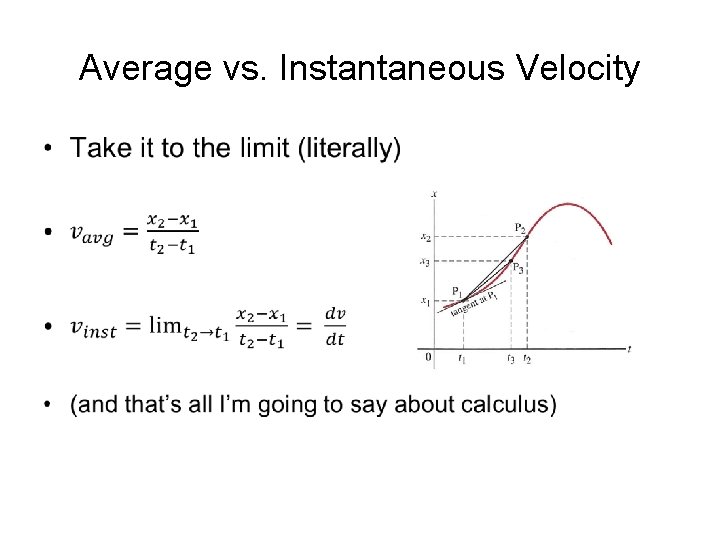
Average vs. Instantaneous Velocity •
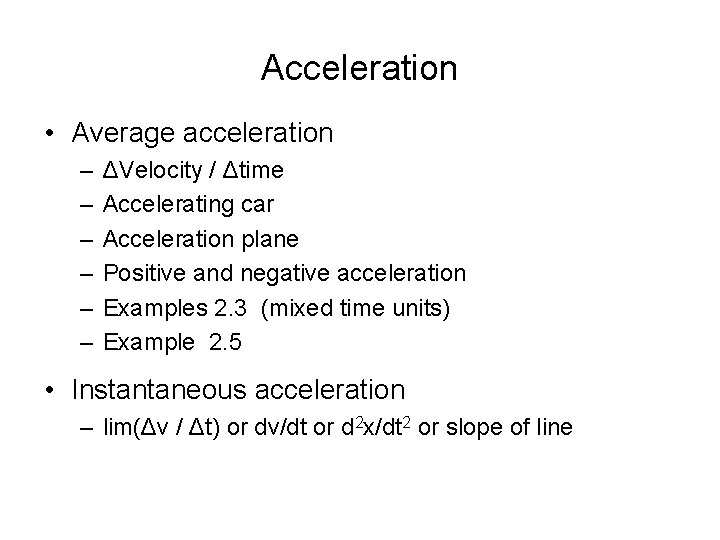
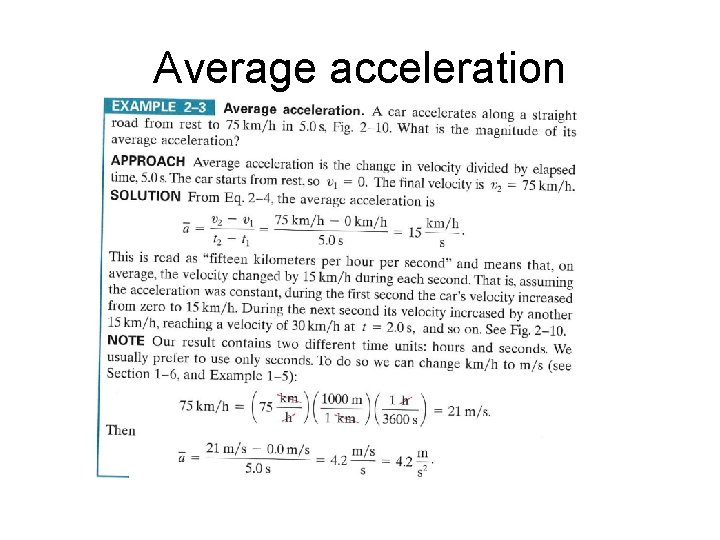
Acceleration • Average acceleration – – – ΔVelocity / Δtime Accelerating car Acceleration plane Positive and negative acceleration Examples 2. 3 (mixed time units) Example 2. 5 • Instantaneous acceleration – lim(Δv / Δt) or dv/dt or d 2 x/dt 2 or slope of line
Average acceleration
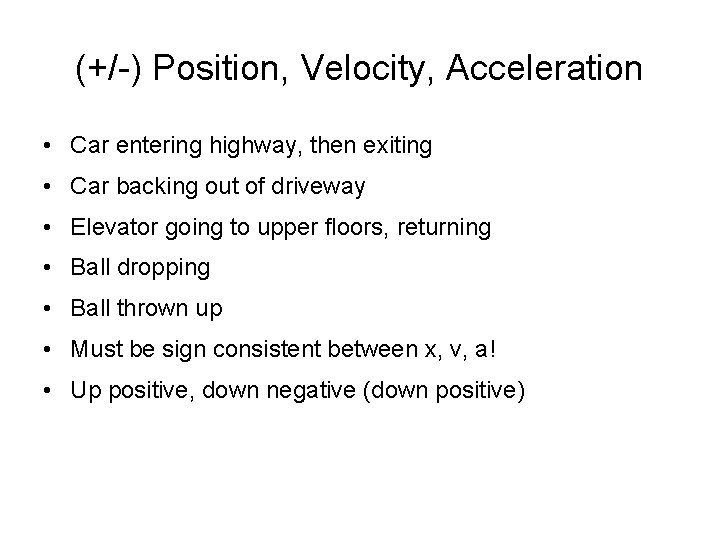
(+/-) Position, Velocity, Acceleration • Car entering highway, then exiting • Car backing out of driveway • Elevator going to upper floors, returning • Ball dropping • Ball thrown up • Must be sign consistent between x, v, a! • Up positive, down negative (down positive)
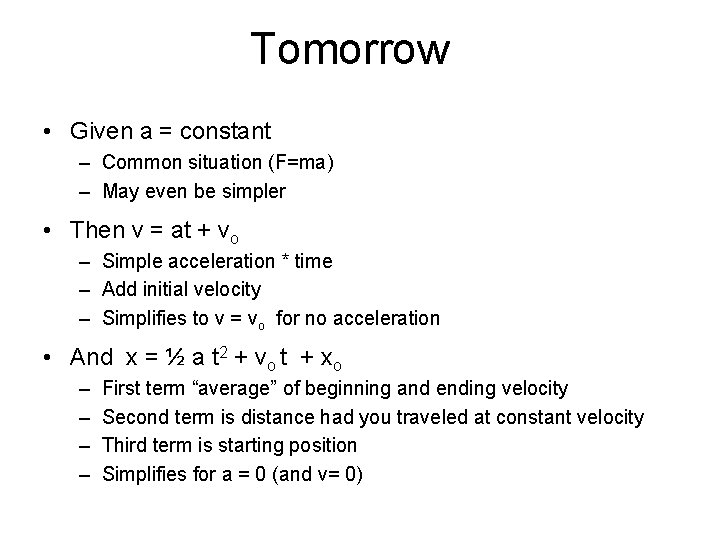
Tomorrow • Given a = constant – Common situation (F=ma) – May even be simpler • Then v = at + vo – Simple acceleration * time – Add initial velocity – Simplifies to v = vo for no acceleration • And x = ½ a t 2 + vo t + xo – – First term “average” of beginning and ending velocity Second term is distance had you traveled at constant velocity Third term is starting position Simplifies for a = 0 (and v= 0)