
1 COVALENT COMPOUNDS 2 Ionic vs Covalent Compound


- Slides: 10
1 COVALENT COMPOUNDS
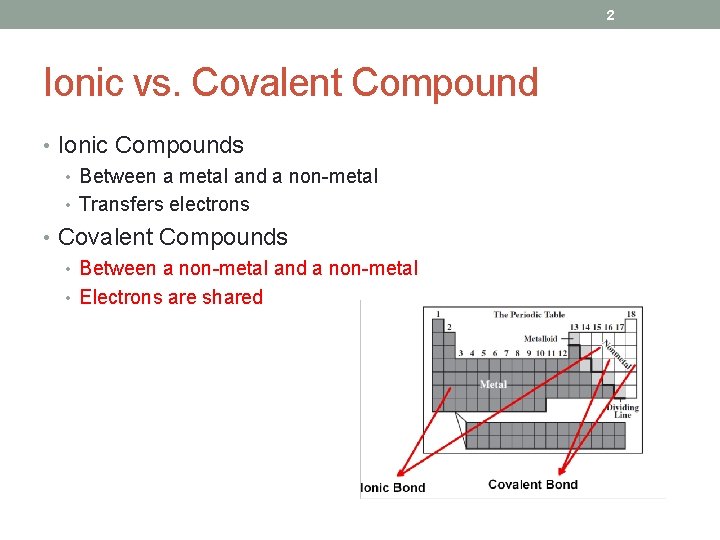
2 Ionic vs. Covalent Compound • Ionic Compounds • Between a metal and a non-metal • Transfers electrons • Covalent Compounds • Between a non-metal and a non-metal • Electrons are shared
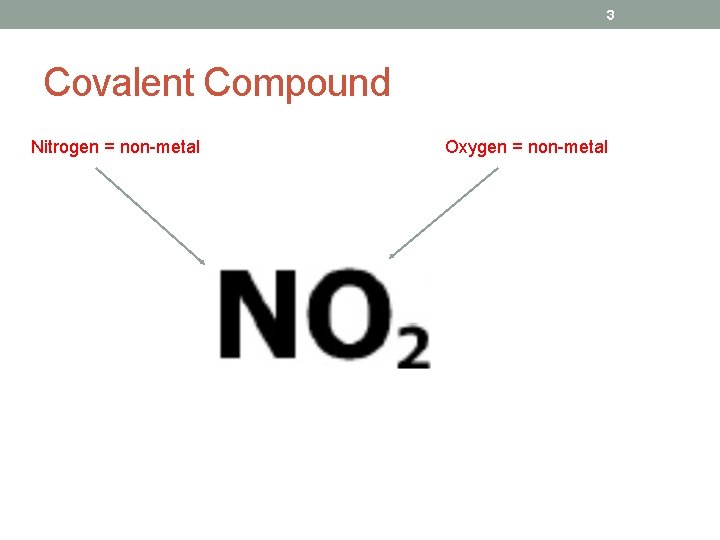
3 Covalent Compound Nitrogen = non-metal Oxygen = non-metal
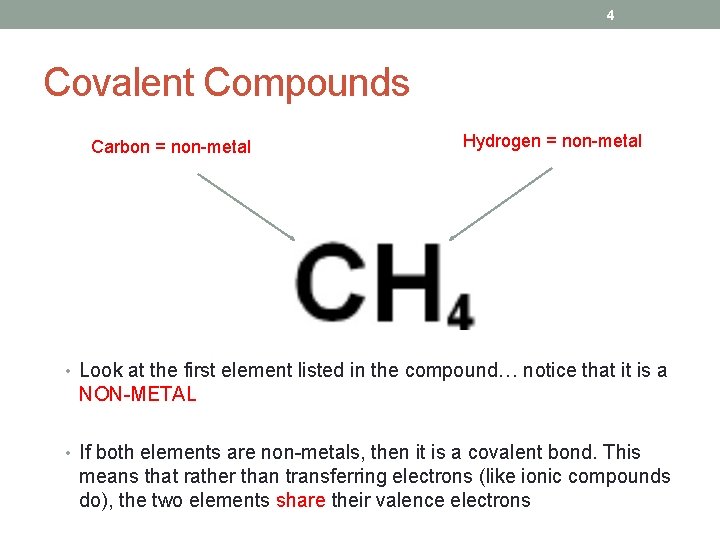
4 Covalent Compounds Carbon = non-metal Hydrogen = non-metal • Look at the first element listed in the compound… notice that it is a NON-METAL • If both elements are non-metals, then it is a covalent bond. This means that rather than transferring electrons (like ionic compounds do), the two elements share their valence electrons
5 Naming Covalent Compounds Prefixes are used to indicate how many of each atom are in the compound. Prefixes are written in front of each element Prefixes • 1 = mono • 6 = hexa • 2 = di • 7 = hepta • 3 = tri • 8 = octa • 4 = tetra • 9 = nona • 5 = penta • 10 = deca
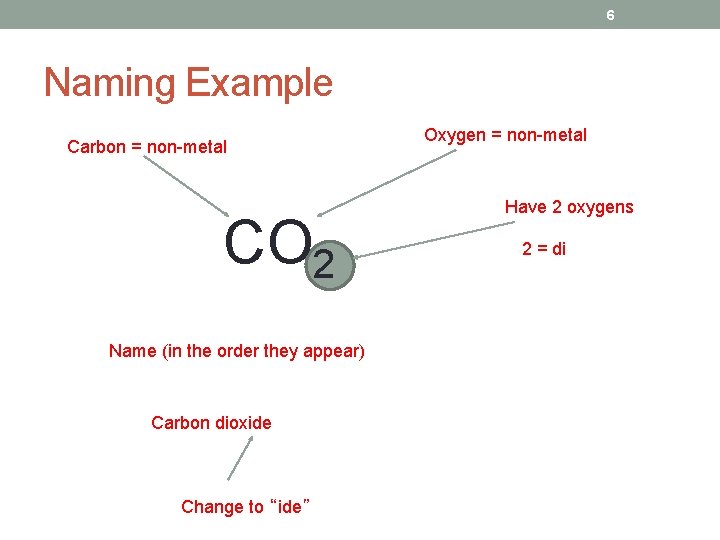
6 Naming Example Carbon = non-metal CO 2 Name (in the order they appear) Carbon dioxide Change to “ide” Oxygen = non-metal Have 2 oxygens 2 = di
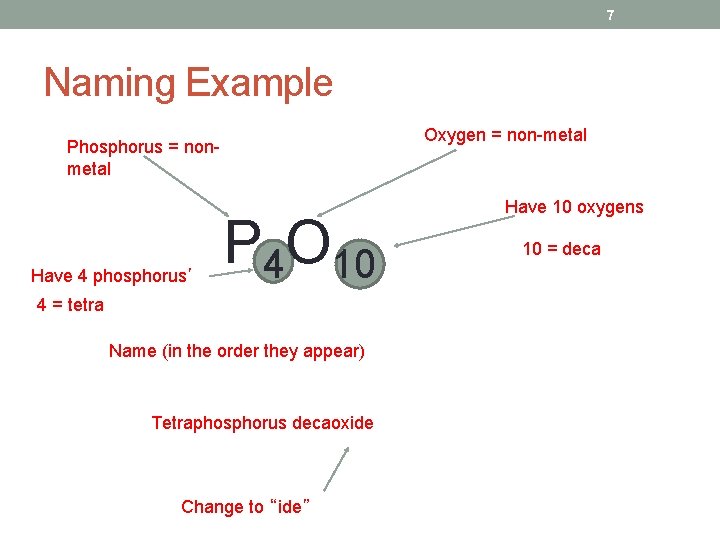
7 Naming Example Oxygen = non-metal Phosphorus = nonmetal Have 4 phosphorus’ P 4 O 10 4 = tetra Name (in the order they appear) Tetraphosphorus decaoxide Change to “ide” Have 10 oxygens 10 = deca
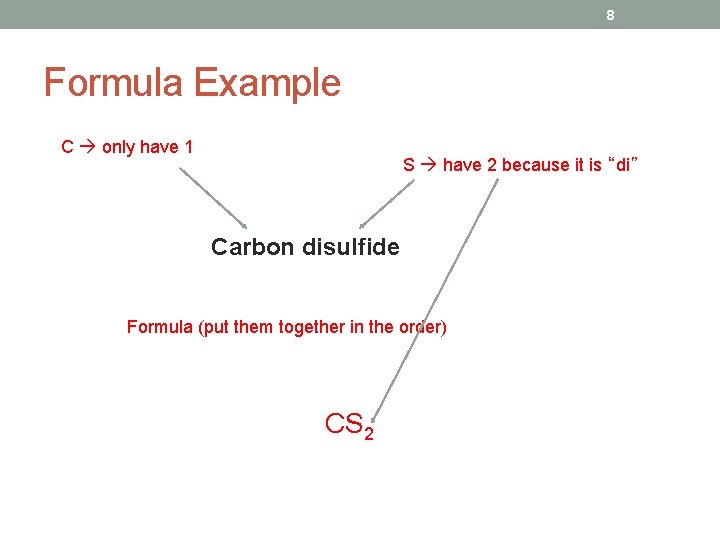
8 Formula Example C only have 1 S have 2 because it is “di” Carbon disulfide Formula (put them together in the order) CS 2
9 Formula Example C have 2 (di) Cl have 4 (tetra) Dicarbon tetrachloride Formula (put them together in the order) C 2 Cl 4
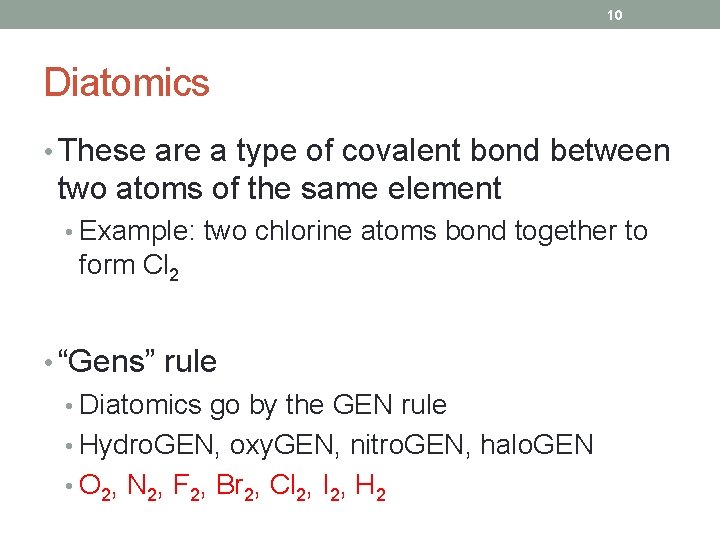
10 Diatomics • These are a type of covalent bond between two atoms of the same element • Example: two chlorine atoms bond together to form Cl 2 • “Gens” rule • Diatomics go by the GEN rule • Hydro. GEN, oxy. GEN, nitro. GEN, halo. GEN • O 2, N 2, F 2, Br 2, Cl 2, I 2, H 2